










50 Ton Portal Crane
Products Description
A 50-ton portal crane is a heavy-duty lifting machine characterized by its iconic gantry-like structure, or "portal," which allows it to straddle a wide work area such as a railway, roadway, or assembly line. The "50-ton" designation refers to its maximum lifting capacity, meaning it can hoist loads up to 50 metric tons (approximately 55 US tons).
These cranes are essential in environments requiring immense strength and a large operational footprint without obstructing ground-level traffic.
Types of 50T Portal Cranes:
Single Girder Gantry Crane: Lighter, cost-effective, and ideal for medium-duty applications.
Double Girder Gantry Crane: More robust, provides higher stability, and is suited for heavy-duty lifting.
Rubber-Tired Gantry (RTG) Crane: Mobile and flexible for outdoor applications.
Rail-Mounted Gantry (RMG) Crane: Runs on fixed tracks for precise and efficient operation.
Core Components:Bearing, Gear, Gearbox, Motor
Place of Origin:Henan, China
Warranty:1 Year
Weight (KG):2000 kg
Video outgoing-inspection:Provided
Machinery Test Report:Provided
Keywords:gantry crane
Color: Customized
Size: Customized
Design: computer optimization design
Safety: High flexible flat cable power
Application: construction industrial,workshop,warehouse
Working class: A3-A8
Certification: ISO,CE,BV,S GS,TUV
Power Source: 380~480V,customized

Pictures & Components
Portal Legs (4): The vertical legs that support the entire crane. They are designed to withstand immense compressive forces. The distance between the legs (the portal clearance) determines the width of the area the crane can straddle (e.g., a container row plus a truck lane).

Main Girder / Bridge Girder: The large horizontal beam that connects the tops of the legs, spanning the entire working width. It carries the trolley and the hoisting machinery. It is designed to resist heavy bending moments.
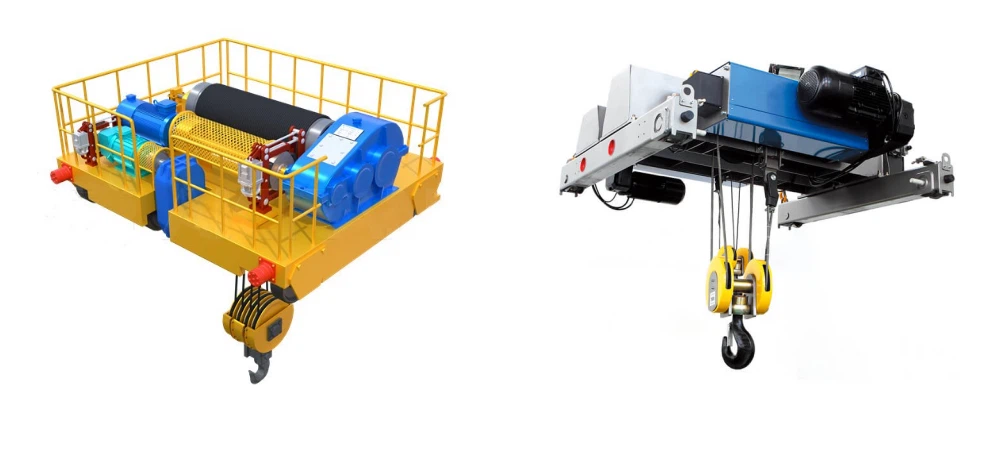
End Carriages / Bogies: The reinforced structures at the top of each leg that house the wheels and drives for the long-travel motion (see below). They connect the main girder to the legs.

2. The Hoisting Mechanism (The "Muscles")
This system is responsible for lifting and lowering the load.
Hoist Winch / Drum: A large, motor-driven drum around which the hoist wire rope is wound and unwound. It is located on the crane's machinery house or on the trolley.
Hoist Motor: A high-power electric motor that provides the torque for lifting the full 50-ton load.
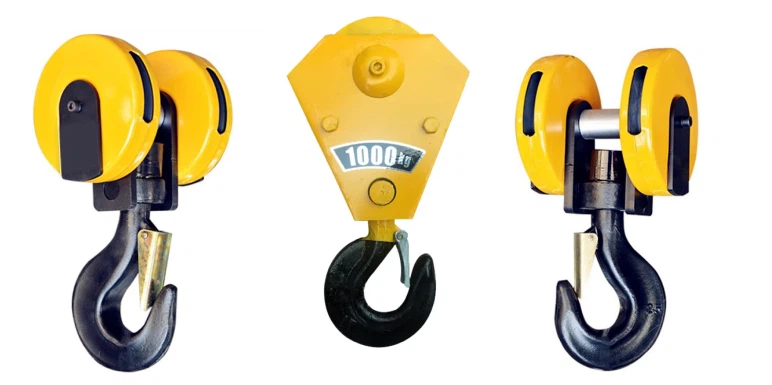
Hoist Rope / Wire Rope: A high-strength, multi-strand steel cable that runs from the winch, over sheaves, and down to the spreader.
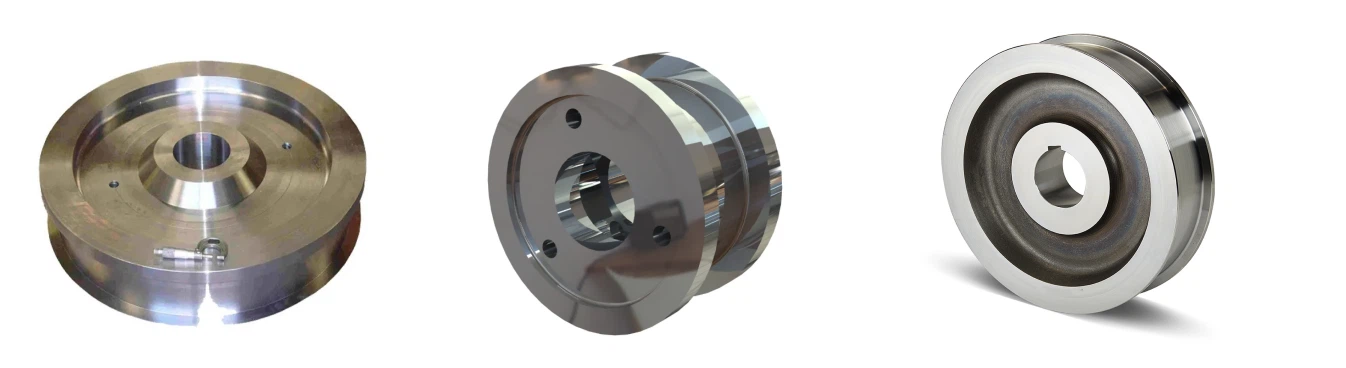
Sheaves / Pulleys: Grooved wheels that guide the wire rope, providing mechanical advantage and directing its path.
3. The Trolley (The "Horizontal Carrier")
The trolley carries the hoisting mechanism and travels along rails on the main girder, moving the load back and forth across the width of the crane's portal.
Trolley Frame: The structure that holds the hoist winch, motors, and sheaves.
Trolley Wheels: The wheels that ride on the rails mounted on the main girder.
Trolley Drive Motors: Motors that propel the trolley along the girder for precise positioning.
4. The Spreader (The "Hands")
This is the specialized lifting attachment that connects to the load, specifically designed for shipping containers.
Twistlocks: Hydraulically or mechanically operated locking pins that engage into the corner castings of a shipping container to secure it.
Spreader Beam: The rigid frame that holds the twistlocks. It can often be adjusted hydraulically to handle containers of different standard lengths (20ft, 40ft, 45ft).
Guidance System: Often includes optical or laser systems to help the operator align the spreader accurately over the container.

.
5. The Motion Systems (The "Legs")
These systems allow the entire crane to move.
Long-Travel (Gantry) Motion: The system that moves the entire crane along the yard or dock on parallel rails.
Long-Travel Wheels: Multiple wheels on each leg, grouped into bogies.
Long-Travel Drive Motors: Powerful motors that drive the wheels. Drives are typically synchronized to prevent skewing the crane.
Rail and Rail Clamps: The crane runs on heavy-duty rails. Rail clamps can be deployed to lock the crane in position during high winds or when not in use.
Slewing Motion (if applicable): Some portal cranes have a slewing mechanism on the trolley that allows the spreader to rotate, providing more flexibility for positioning containers. Not all portal cranes have this feature.

6. The Machinery House (The "Heart")
An enclosed area, typically located on the main girder, that houses the primary power and control equipment.
Main Power Supply: This can be a cable reel system (for electric power via a trailing cable), a conductor bar (rigid bars along the crane's path), or a diesel generator for full mobility.
Variable Frequency Drives (VFDs): Electronic devices that control the speed and torque of the hoist, trolley, and gantry motors, allowing for smooth and precise movement.
Transformers and Switchgear: To manage and distribute the high-voltage electrical power typically used by such a large machine.
Programmable Logic Controller (PLC): The "brain" of the crane, which executes control logic, manages safety interlocks, and monitors system health.
7. The Operator's Cab (The "Brain")
The control center for the crane.
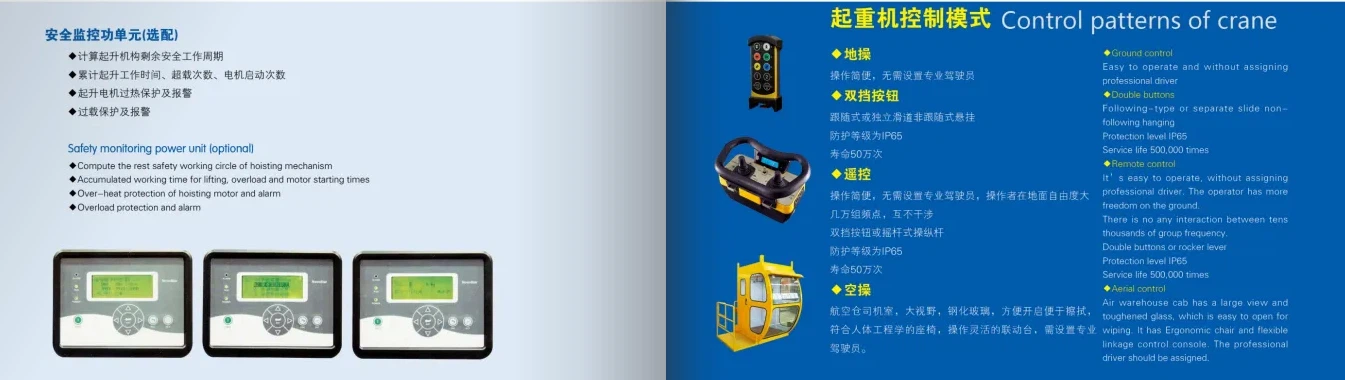
Location: Usually mounted on the trolley, giving the operator a direct, birds-eye view of the load and the work area. Some modern cranes can be operated remotely from a control room.
Control Interfaces: Joysticks, buttons, and touchscreens for controlling all crane functions (hoist, trolley, gantry, spreader).
Instrumentation: Displays showing load weight, crane position, status alerts, and safety system information.
8. Safety Systems (The "Reflexes")
Critical components to protect personnel, the load, and the crane itself.
Load Moment Indicator (LMI): A computer system that monitors the load weight and the crane's configuration to prevent overloads.
Anti-Collision Systems: Sensors or radar to prevent the crane from colliding with other cranes, stationary objects, or personnel.
Anemometer and Wind Speed Indicator: Measures wind speed and alarms or automatically stops crane operations if safe limits are exceeded.
Limit Switches: Devices that automatically cut power at the extreme limits of travel for the hoist, trolley, and gantry motions.
Emergency Stop Buttons: Located at key points on the crane to allow for immediate shutdown.
Bumpers / Buffers: Installed at the end of the crane's travel rails to absorb energy in case of an over-travel incident.
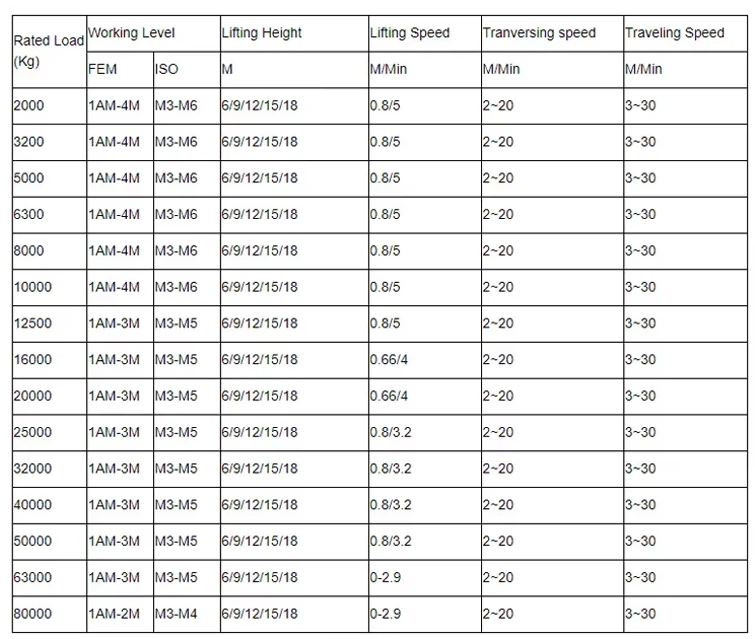
12.Sketch
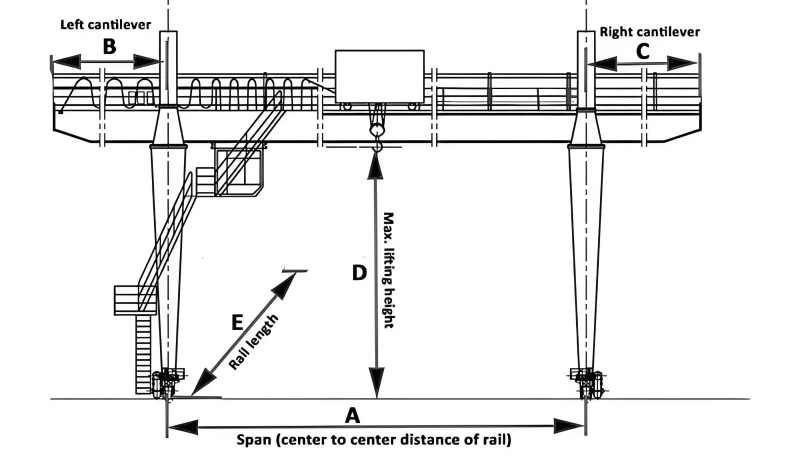
Main technical
Advantages
1. Unmatched Mobility and Large Coverage Area
This is the single biggest advantage.
Rail-Mounted Movement: The crane travels on dedicated rails, allowing it to cover a very long, linear work area (e.g., the entire length of a ship under construction or a large storage yard).
Full Area Coverage: It can service the entire rectangular area defined by the length of its rails and the width of its gantry (the distance between its legs). This eliminates the "dead zones" common with stationary cranes.
Precise Positioning: Operators can precisely position the hook by combining three movements: hoisting, trolleying across the bridge, and traveling along the rails.
2. High Lifting Capacity and Heavy-Duty Performance
Substantial Capacity: A 50-ton (approximately 45-metric ton) capacity is significant, allowing it to handle heavy, bulky loads like ship engines, large steel sections, industrial modules, and heavy machinery.
Robust Structure: Portal cranes are built with a heavy-duty steel structure designed for repeated, high-capacity lifts, ensuring reliability and a long service life.
3. Frees Up Ground-Level Space
Clear Passageway: Because the crane is elevated on legs, the ground area beneath it is completely clear. This "portal" allows for the uninterrupted movement of trucks, trains, forklifts, and personnel. This is critical in busy yards and ports where logistics are complex.
4. Superior Stability
Wide Leg Base: The wide spacing between the legs provides exceptional stability against tipping, especially when lifting heavy loads at the maximum radius. This inherent stability is a major safety advantage over mobile cranes of similar capacity, which require extensive outriggers.
5. Versatility and Customization
Multiple Hook Configurations: Many portal cranes are equipped with a main hook (50-ton) and a smaller auxiliary hook (e.g., 10-15 ton). This allows them to handle a wide range of loads efficiently without needing a second crane for smaller tasks.
Special Attachments: They can be fitted with various attachments like grabs for bulk materials (e.g., scrap metal, coal), magnets, or spreader beams for containers, making them highly versatile.
6. Efficiency and Productivity
Continuous Workflow: By covering a large area and not obstructing ground traffic, portal cranes enable a smooth and continuous workflow. Materials can be moved directly from storage areas to the work site (e.g., from the yard to the ship) without intermediate handling.
High Speeds: Modern portal cranes have high hoisting, trolley, and travel speeds, which translates into faster cycle times and increased productivity.
7. All-Weather Operation
Designed for Outdoors: These cranes are built to operate reliably in harsh outdoor environments, including rain, wind, and extreme temperatures, often from an enclosed, climate-controlled cabin.
8. Integration with Other Systems
Part of a Larger System: In ports and large yards, portal cranes are often integrated into a complex logistics system, working in tandem with other cranes, rail systems, and automated guided vehicles (AGVs).
Application
Common Applications & Use Cases
The 50-ton capacity is a sweet spot for many industrial tasks.
Primary Application: Ports and Intermodal Yards
This is the most classic application. The crane is ideal for:
Container Handling: Loading and unloading shipping containers from vessels to yard trucks (or yard tractors) and vice-versa. It can efficiently stack containers 2-4 high in the yard.
General Cargo: Handling break-bulk cargo like steel coils, lumber, machinery, and project cargo that isn't containerized.
Ro-Ro (Roll-on/Roll-off) Operations: Occasionally used for handling accessories or parts in Ro-Ro terminals.
Heavy Industry and Fabrication
Shipbuilding and Repair: Moving large steel plates, engine blocks, and prefabricated ship sections around the shipyard. The portal allows other equipment and workers to pass underneath safely.
Large-Scale Steel Fabrication: Handling large beams, girders, and assembled structures within a fabrication bay. The crane can service multiple workstations along its runway.
Power Plant Construction: Lifting heavy components like transformers, turbines, and heat exchangers during construction and maintenance.
Major Construction Projects
Precast Concrete Plants: Handling heavy precast elements like bridge beams, wall panels, and hollow-core slabs.
Bridge Construction: Assembling segments of a bridge, especially in a yard where components are prefabricated.
Specialized Applications
Railway Depots: For handling locomotives and railcar components for maintenance and repair. The portal design is perfect for spanning railway tracks.
Logistics Hubs: In very large warehouses or logistics centers that handle heavy machinery or industrial products.
3. Major Advantages
Spatial Efficiency: The ability to have traffic pass underneath the crane eliminates the need for complex traffic management and maximizes the usable area of the yard or facility.
High Productivity: Combines long travel, hoisting, and slewing motions to cover a large rectangular area very efficiently. It doesn't need to be repositioned as often as a mobile crane.
Heavy Lift Capability in a Fixed Path: Offers the high capacity of a fixed crane with the flexibility of movement along a defined path. It is more stable for heavy lifts than a mobile crane of similar capacity.
Weather Resilience: Generally more stable in windy conditions compared to tall mobile cranes due to its fixed rail track and robust structure.
Dedicated Workflow: Creates a highly organized and predictable material flow, which is essential for port and terminal operations.
4. Important Considerations
High Initial Investment: The cost of the crane itself, plus the installation of heavy-duty rail tracks and electrical infrastructure, is significant.
Infrastructure Dependency: Requires a strong, level, and perfectly aligned concrete foundation with embedded rails. This is a major civil engineering project.
Limited Mobility: The crane is confined to its runway. It cannot travel on roads or be easily relocated to another site. Its coverage is a long, rectangular area.
Maintenance Intensive: The rail system, travel motors, and complex hoisting machinery require a rigorous and scheduled maintenance program to ensure safety and reliability.
Operational Expertise: Requires highly trained and certified crane operators for safe and efficient operation.

Workshop view:
The company has installed an intelligent equipment management platform, and has installed 310 sets (sets) of handling and welding robots. After the completion of the plan, there will be more than 500 sets (sets), and the equipment networking rate will reach 95%. 32 welding lines have been put into use, 50 are planned to be installed, and the automation rate of the entire product line has reached 85%.




Hot Tags: 50 ton portal crane, China 50 ton portal crane manufacturers, suppliers, factory
You Might Also Like


Send Inquiry