







Magnetic Double Girder Overhead Crane
Products Description
What is a Magnetic Double Girder Overhead Crane?
A magnetic double girder overhead crane is a heavy-duty industrial crane designed specifically to handle ferromagnetic materials (like steel and iron) using a powerful electromagnetic lifter. It integrates the structural strength of a double girder bridge with the efficiency of an electromagnetic lifting system, replacing the traditional hook and sling.
This combination is ideal for high-speed, high-volume material handling of items like steel plates, coils, scrap, and pipes.
Critical Considerations and Safety Features
Load Safety is Paramount: The system is entirely dependent on electrical power. The Battery Backup Unit (BBU) is not an optional extra; it is a mandatory life-saving device. Regular testing of the BBU is required.
Material Thickness and Condition: The magnet's effectiveness depends on the material's thickness, surface condition (rust, paint, dirt can reduce holding force), and temperature (heat weakens magnetism).
Residual Magnetism: Some materials may retain a slight magnetic charge after release, which can be a minor hazard.
Training: Operators require specific training to understand the magnet's capabilities, limitations, and safety procedures, particularly regarding power failure protocols.
Comparison: Electromagnet vs. Permanent Magnet
It's worth noting that while electromagnets are common, permanent magnet lifters are also an option. These use permanent magnets and a mechanical mechanism to engage/disengage the magnetic field without continuous power. They are inherently safer from power failure but are generally better suited for smaller, standardized loads and lack the easily adjustable power of an electromagnet.
In summary, a magnetic double girder overhead crane is a high-productivity solution for specific industries, but its operation demands a rigorous focus on safety systems and operator training due to the inherent risk of load drop from power loss.
Core Components:Bearing, Gearbox, Motor, Pump
Place of Origin:Henan, China
Warranty:1 Year
Weight (KG):2000 kg
Video outgoing-inspection:Provided
Machinery Test Report:Provided
Design:Double beam
Effectiveness:high efficiency
Operating speed:High speed operation
Stability:Anti-swing function
Color:Optional
Power Source:110V/220V/230V/380V/440V,customized
Span:7.5-31.5m

Pictures & Components
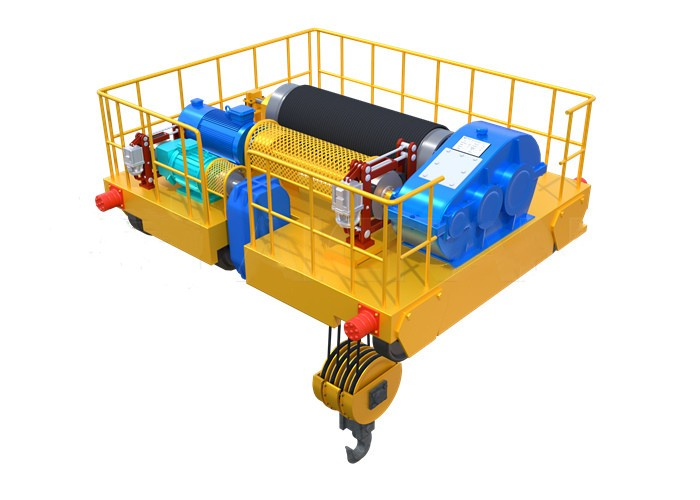
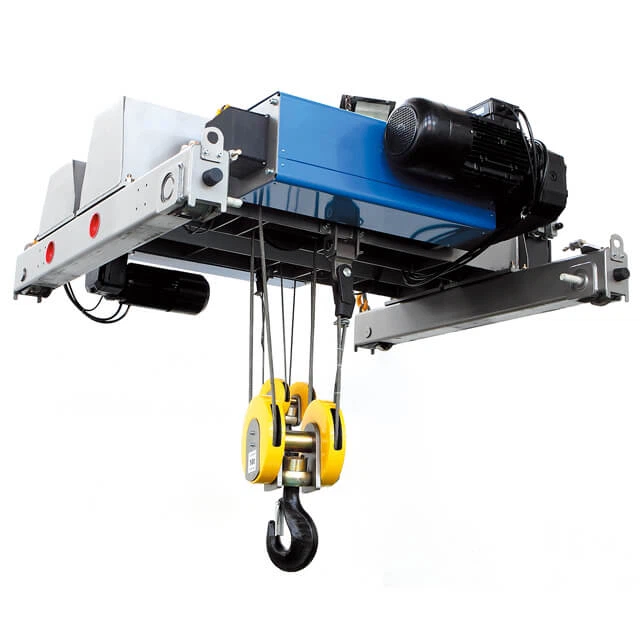
Here is a detailed breakdown of the components of a Magnetic Double Girder Overhead Crane, categorized by system for clarity.
1. Bridge and Structural Components
These form the primary frame of the crane, allowing it to move along the bay.
Bridge Girder(s): Two main, parallel horizontal beams (typically box girders or I-beams) that form the primary load-bearing structure. They support the trolley, the magnet, and the load.
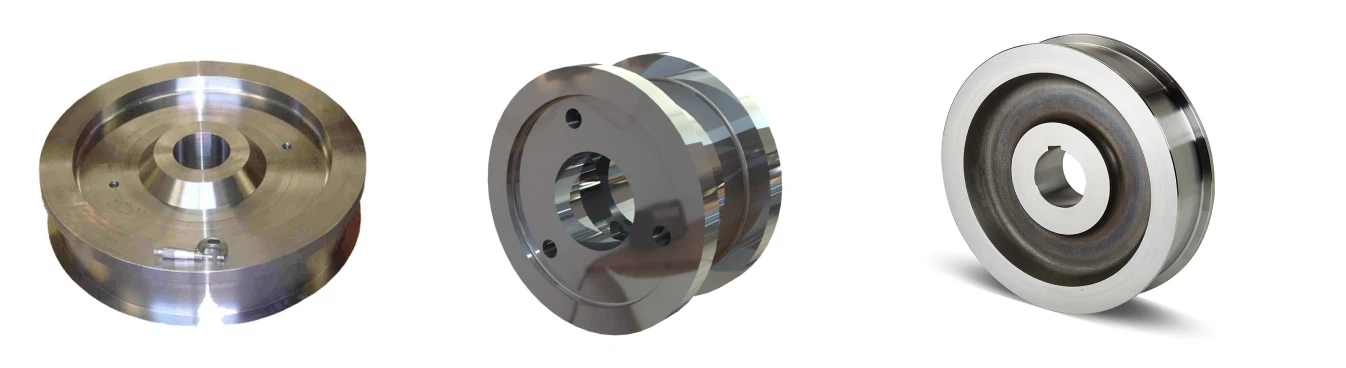
End Trucks: Assemblies located at each end of the bridge girders. They house the wheels, bearings, axles, and drive motors for moving the entire crane along the runway rails.
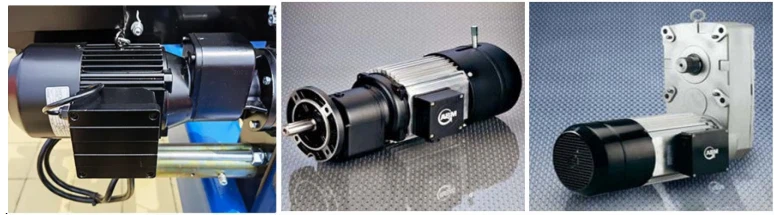
Bridge Drive Motors: Motors that power the wheels in the end trucks to move the crane forward and backward (long travel) along the runway.
Runway and Rails: The fixed structural path (often attached to the building columns) on which the crane travels. The crane's wheels run on these rails.
 |
 |
2. Trolley and Cross Travel Components
This system moves the magnet from side to side across the width of the crane bridge.
Trolley Frame: The structure that carries the hoist mechanism and the magnet. It moves laterally on rails mounted on the top of the bridge girders.
Trolley Drive Motor: The motor that powers the trolley wheels to move the trolley and magnet side to side (cross travel).
Trolley Wheels: The wheels that engage with the rails on the bridge girders.
 |
 |
3. Lifting and Magnetic Handling Components
This is the specialized core of the crane, responsible for the actual lifting and holding of the load.
Electromagnet (Lifter): The core component. A large, circular or rectangular unit containing a copper coil. When energized with DC power, it creates a powerful magnetic field to lift ferromagnetic materials.
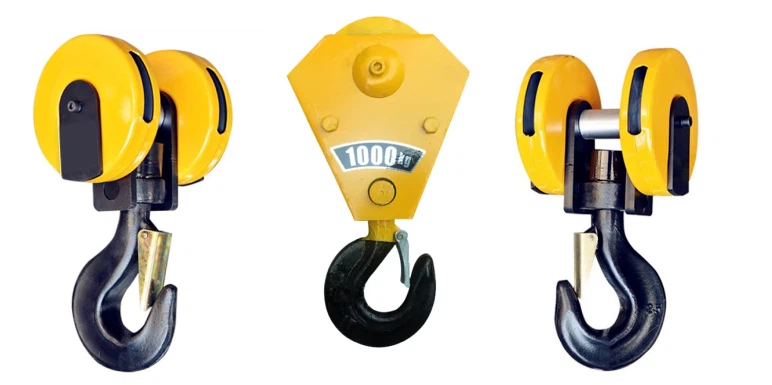
Lift Mechanism (Hoist Unit): The machinery that raises and lowers the magnet. It consists of:
Hoist Motor: Provides the power for lifting and lowering.
Hoist Drum or Sprocket: The drum that winds the cable (for wire rope hoists) or the sprocket that drives the chain (for chain hoists).
Brakes: Automatic, fail-safe brakes that engage if power is lost.
Cable Reel System: A motorized drum that automatically pays out and retracts the heavy-duty flexible power cable connecting the crane's DC supply to the magnet. This is essential for preventing cable damage during hoisting.
Rigging:
Lifting Beam / Spreader Bar: A rigid bar from which the magnet is suspended. It helps distribute force evenly and prevents cable twisting.
Wire Ropes or Chains: Connect the hoist mechanism to the lifting beam/magnet.
4. Power and Control Systems
These components provide and manage the electrical power for both crane movement and the magnet, as well as operator control.
Main AC Power Supply: The incoming plant power that energizes the entire crane.
DC Power Supply (Magnet Controller / Rectifier Panel): A crucial component that converts the AC power into controlled Direct Current (DC) for the electromagnet. It often uses thyristors to allow precise control of the magnetic force.
Battery Backup Unit (BBU): A critical safety system. It automatically supplies power to the magnet in the event of a main power failure, preventing a catastrophic load drop and allowing the operator to safely lower the load.

Operator Control:
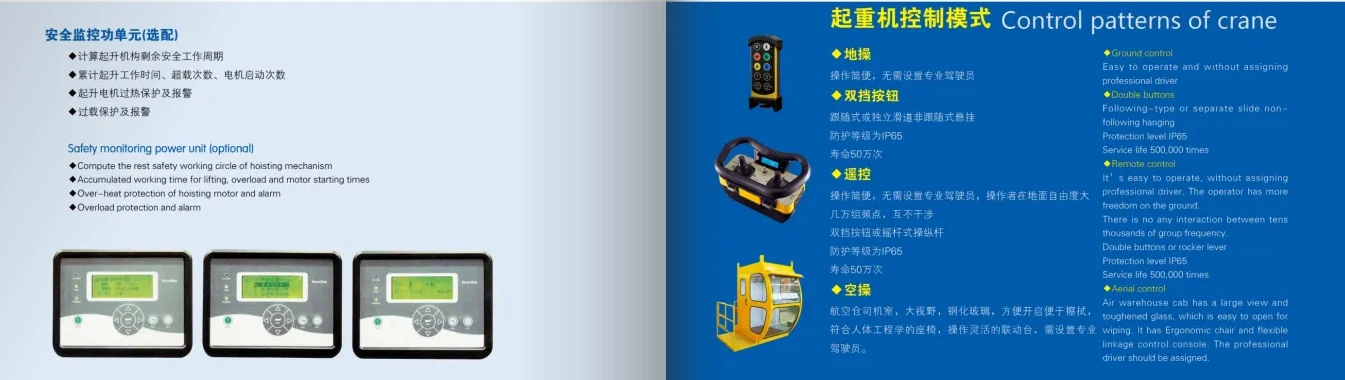
Pendant Station: A handheld or floor-mounted control unit suspended from the crane, allowing the operator to control all functions (bridge travel, trolley travel, hoist, magnet on/off) from the floor.
Operator's Cab: An enclosed cab mounted on the crane for the operator to sit in, providing better visibility for complex lifts.
Collector System (Festoon or Conductor Bar): The system that delivers electrical power from the fixed building structure to the moving crane. It consists of sliding collectors that run along electrified bars or a festooned cable system.

Sketch

Main technical

Advantages
Advantages of Magnetic Double Girder Overhead Cranes
This combination of a robust double girder structure with an electromagnetic lifter creates a highly efficient and powerful solution with distinct benefits.
1. Superior Efficiency and Productivity
Rapid Handling: The biggest advantage is speed. Loads can be picked up and released instantly with the flip of a switch, eliminating the time-consuming process of attaching slings, chains, or hooks. This leads to a dramatically faster cycle time.
Continuous Operation: Ideal for high-volume, repetitive tasks like loading/unloading trucks or feeding production lines, as there is no manual intervention required for each lift.
2. Enhanced Load Safety and Integrity
No Surface Damage: The magnet's flat, contact-based lifting avoids the scratches, dents, and deformations that hooks and chains can cause on finished surfaces (e.g., polished sheets, painted coils).
Secure Grip on Challenging Loads: Electromagnets can effectively handle uneven, curved, or irregularly shaped items like scrap metal, machined parts, or bundles of pipes, which are difficult and unsafe to secure with traditional rigging.
3. Improved Operational Safety
Reduced Personnel Risk: Workers do not need to be near the load to attach or detach it, minimizing exposure to struck-by and crush hazards.
Stability: The double girder design provides exceptional stability during lifting and travel, preventing load swing and ensuring precise placement.
4. Cost-Effectiveness
Labor Savings: Requires fewer personnel for material handling operations.
Reduced Damage: Preserving the quality of the product (like steel coils) reduces financial losses from damaged goods.
Versatility: One magnet can handle a wide range of material sizes and shapes without the need for changing attachments, unlike a hook which may require different slings or fixtures.
5. Optimal Use of Space
High Hook Lift: The double girder design allows the hoist to be positioned between the girders, providing maximum lift height in a building. This is crucial for stacking materials high.
Full Floor Coverage: The crane can place a load anywhere within its span, getting close to walls and maximizing the utilization of the available floor space.
Application:
Applications of Magnetic Double Girder Overhead Cranes
These cranes are indispensable in industries that handle large volumes of ferrous materials. Their application is defined by the need for speed, safety, and handling specific material types.
1. Steel Service Centers and Warehouses
This is the most common application. The cranes are used for:
Moving Steel Coils: Transporting heavy coils from storage to processing lines (e.g., slitting, blanking).
Handling Steel Sheets/Plates: Stacking, loading, and unloading large plates and sheets without surface damage.
Managing Structural Steel: Handling I-beams, channels, and rebar.
2. Scrap Metal Recycling Yards
Ideal for the chaotic nature of scrap handling:
Loading/Unloading: Moving scrap from trucks and railcars.
Sorting and Processing: Separating and piling fragmented ferrous scrap. The magnet can easily pick up irregularly shaped pieces.
3. Foundries and Metalcasting Facilities
Used for handling raw materials and finished products:
Raw Materials: Moving pig iron, cast iron scrap, and other ferrous charges to furnaces.
Finished Castings: Transporting large, finished metal castings.
4. Ports, Terminals, and Rail Yards
For the rapid transfer of heavy steel goods:
Ship Loading/Unloading: Efficiently moving steel products like coils, plates, and pipes to and from cargo ships.
Railcar and Truck Loading: Transferring materials between different transportation modes.
5. Heavy Fabrication and Shipbuilding
Shipbuilding: Transporting massive steel plates for hull construction to cutting and welding stations.
Heavy Machinery Manufacturing: Moving large fabrications, such as frames and booms.
6. Forging and Stamping Plants
Feeding Production: Moving steel blanks or billets into forging presses or stamping machines.
Crane production procedure
The production of a QD Model Double Girder Bridge Overhead Crane is a meticulous process that blends heavy steel fabrication, precise machining, electrical assembly, and rigorous quality control.
Stage 1: Design & Engineering (Pre-Production)
Order Review & Technical Clarification: Engineers review the customer's specifications (capacity, span, lift height, duty class, control mode, etc.).
Detailed Design & Calculation:
Structural Design: Using CAD software (e.g., AutoCAD, SolidWorks), engineers create detailed drawings for every component (girders, end trucks, trolley frame). The girder design is critically analyzed for deflection, strength, and fatigue life.
Electrical Design: Schematics for the power and control systems are developed, including the bill of materials for motors, panels, cables, and pendants.
Load Calculation & FEM Analysis: Modern factories use Finite Element Method (FEM) software to simulate stress, strain, and deflection under load, optimizing the design before any metal is cut.
Stage 2: Raw Material Preparation & Processing
Material Procurement: Steel plates (typically Q235B or Q345B for main structures), profiles (beams, channels), rails, and purchased parts (motors, gearboxes, wheels, electrical components) are sourced from certified suppliers.
Material Testing: Incoming steel plates are often tested for conformity to grade specifications (ultrasonic testing is common).
Cutting & Forming:
CNC Cutting: Steel plates for the main girders are cut to precise dimensions using Computer Numerical Control (CNC) plasma or flame cutting machines. This ensures high accuracy.
Drilling & Machining: Holes for connections are drilled using magnetic base drills or CNC machining centers. The ends of the main girders are machined to ensure a perfect, square fit with the end trucks.
Stage 3: Main Girder Fabrication (The Core Process)
This is the most critical welding process.
Assembly & Jigging: The cut plates (web and flange) are placed in a large, rigid assembly jig. This jig holds everything in perfect alignment during welding to prevent distortion and ensure the girder is straight and cambered correctly.
Welding: Main girder welding is performed by certified welders using Submerged Arc Welding (SAW) for long, main seams (which provides deep penetration and high-quality welds) and Manual Metal Arc Welding (MMA) or Gas Metal Arc Welding (GMAW/MIG) for smaller attachments.
Cambering: A pre-defined upward camber (curvature) is built into the girder to counteract deflection under the load's weight. This is achieved by the jig design and welding sequence.
NDT (Non-Destructive Testing): Critical welds are inspected by quality inspectors. Methods include:
Ulasonic Testing (UT): For detecting internal flaws in welds.
Magnetic Particle Testing (MT): For detecting surface cracks.
Fitting Attachment: After welding, the rails for the trolley are meticulously aligned and welded or bolted onto the top of the finished girders.
Stage 4: End Truck & Trolley Frame Fabrication
Fabrication: The end truck housings and trolley frame are fabricated from steel plate, following similar processes of cutting, drilling, and welding.
Machining: Key areas, such as the bearing housings for the wheels and the drive shafts, are machined to high tolerances to ensure perfect alignment and smooth operation.
Assembly: Wheels, bearings, axles, drive motors, and gearboxes are assembled onto the end trucks. The same is done for the trolley frame.
Stage 5: Surface Treatment & Painting
Shot Blasting: All structural components are fed into a shot blasting machine where high-speed steel abrasives clean the surface of rust, mill scale, and dirt. This creates a rough, clean surface ideal for paint adhesion.
Priming: Immediately after blasting, a high-quality anti-rust primer is applied to prevent oxidation.
Painting: The topcoat is applied, usually according to customer-specified color and thickness requirements. This is often done using spray painting for an even finish.
Stage 6: General Assembly & Electrical Installation
Pre-Assembly: The main girders are connected to the end trucks to form the complete bridge. The trolley is placed on the bridge rails. The entire structure is checked for squareness and dimensional accuracy.
Mechanical Installation: The hoist unit (QD-type hoist) is installed onto the trolley frame. All drives are connected.
Electrical Installation: Electricians wire the entire crane:
Install the main panel and resistance box on the bridge.
Run cables along the bridge to the trolley and end truck drives.
Install the festoon system or conductor bar for power collection.
Install limit switches, safety devices, and warning lights.
Connect the control pendant or test the radio remote control.
Stage 7: Testing & Inspection (Factory Acceptance Test - FAT)
This is a mandatory step before dismantling for shipment.
No-Load Test: The crane is operated without a load. All functions are tested: bridge travel, trolley travel, hoisting up and down. Limits, brakes, and controls are checked.
Static Load Test: A test load of 125% of the rated capacity is lifted just off the ground (typically with test weights or calibrated water bags). The crane is held for 10+ minutes to check for any deformation, and the brakes are checked for holding ability.
Dynamic Load Test: A test load of 110% of the rated capacity is lifted and put through all motions: traveling, trolleying, and hoisting. This tests the functionality and safety under stress.
Dimensional Inspection: Key dimensions (span, lift height, etc.) are verified against the order.
Documentation: All test results, certificates for materials and welds, and equipment manuals are compiled into a final delivery dossier for the customer.
Stage 8: Dismantling, Packaging & Shipping
Dismantling: The crane is carefully disassembled into logical, shippable components (e.g., two main girders, two end trucks, trolley unit, hoist, electrical panels, runway rails).
Packaging: Components are packaged to prevent damage during sea or land transport. Structural parts are often bundled on wooden crates. Electrical components are boxed and stored in wooden cases.
Shipping: All parts are marked for easy identification and site reassembly. They are then shipped to the customer's site for installation by the manufacturer's technicians or the customer's own team.
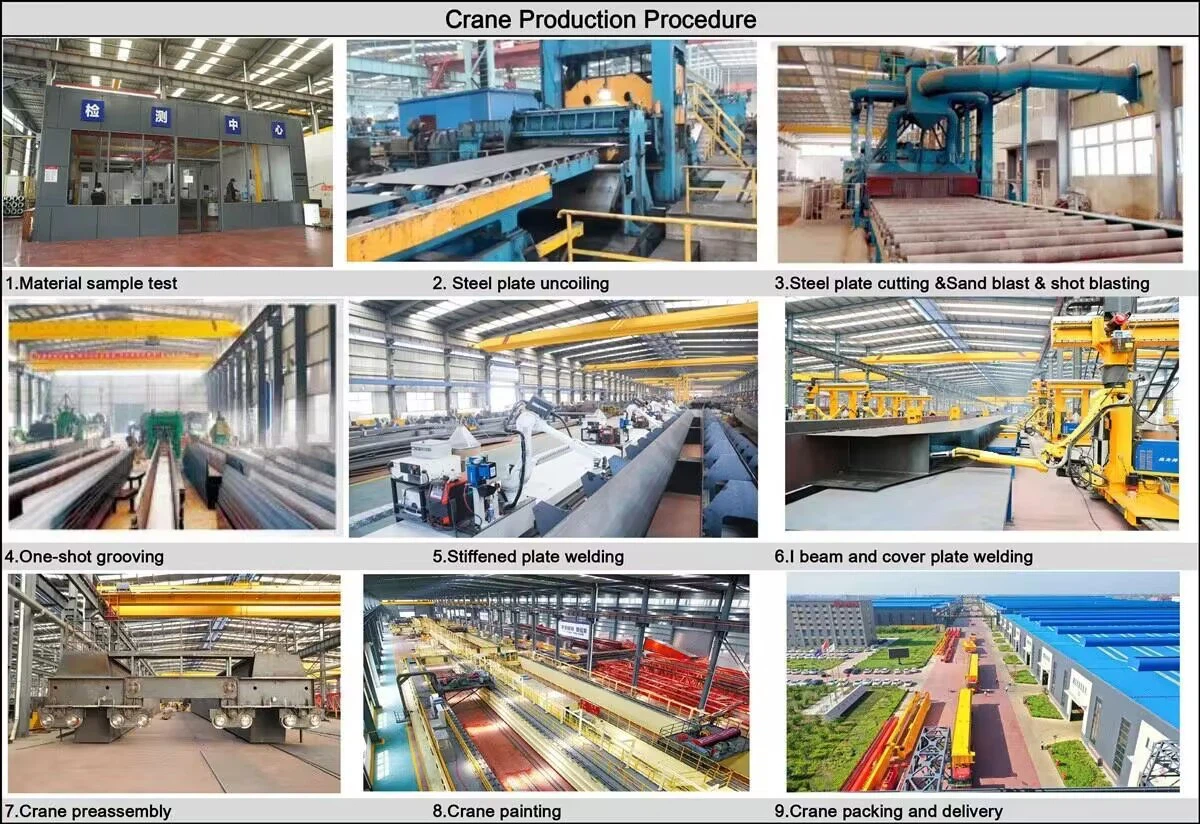
Workshop view:
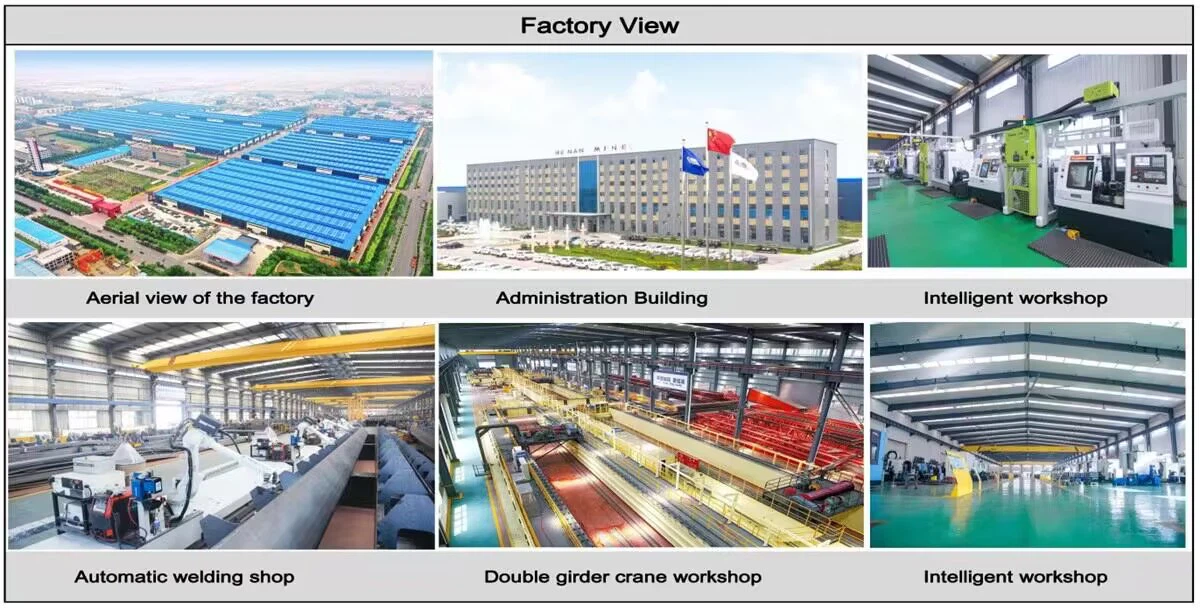
The company has installed an intelligent equipment management platform, and has installed 310 sets (sets) of handling and welding robots. After the completion of the plan, there will be more than 500 sets (sets), and the equipment networking rate will reach 95%. 32 welding lines have been put into use, 50 are planned to be installed, and the automation rate of the entire product line has reached 85%.


Hot Tags: magnetic double girder overhead crane, China magnetic double girder overhead crane manufacturers, suppliers, factory, Double Girder Overhead Travelling Crane, Double Girder Overhead Crane
You Might Also Like


Send Inquiry