







Rolling Mill Overhead Crane
The rolling mill overhead crane is designed to convey materials in a safe and efficient way. It is equipped with various safety features, such as overload protection, emergency stop buttons, and limit switches, to ensure the safety of workers and the integrity of the equipment.
The crane's lifting capacity is dependent on the size and weight of the materials being handled. It can lift and transport a wide range of objects, from small steel plates to large steel coils weighing several tons.
Rolling mill overhead cranes are typically operated by a remote control unit. This allows the crane operator to move the crane, without being physically present at the crane. This helps to improve safety, as the operator can control the crane from a safe distance.
In addition to its lifting and transporting capabilities, the rolling mill overhead crane can also be used for maintenance tasks. It can be equipped with a hoist system or a work platform, which allows workers to perform maintenance tasks at elevated heights.
Overall, the rolling mill overhead crane is an essential piece of equipment in the steel industry. It plays a key role in the production process, helping to transport materials efficiently and safely, while also improving the safety of workers.
- Capacity: 5-800/50ton
- Span length: 4-35m
- Lifting height: 3-50m
- Work duty: A4, A5, A6,A7
- Raged voltage: 220V~690V, 50-60Hz, 3ph AC
- Work environment temperature: -25℃~+50℃, relative humidity ≤85%
- Crane control mode: Floor control / Remote control / Cabin room

Pictures & Components
1) Rolling mill overhead cranes are specially designed cranes used for the movement of heavy loads and materials in a rolling mill. These cranes are typically used for handling hot steel coils, ingots, and other heavy materials involved in the steel rolling process.
2) The cranes are equipped with a range of safety features and are designed to operate in extreme conditions such as high temperatures and harsh environments. They typically have a high lifting capacity, often ranging from 5 to 100 tons.
3) Rolling mill overhead cranes are essential equipment for the smooth operation of a rolling mill, and they play a critical role in moving and handling heavy loads efficiently and safely. These cranes are used in various industries, including steel manufacturing, paper mills, and oil and gas refineries.

2. Main girder
A rolling mill overhead crane main girder is a horizontal beam that spans the length of the crane and supports the hoist and trolley. It is the backbone of the crane and provides the strength and stability to support heavy loads during the lifting and moving process. The main girder is typically made of structural steel and can be designed to different shapes and sizes depending on the specific requirements of the crane and the rolling mill facility. The choice of the main girder can affect the overall efficiency and productivity of the crane, as well as the safety of the operation. Therefore, it is important to select a high-quality and durable main girder that can withstand the demands of the rolling mill environment.

3. Lifting System
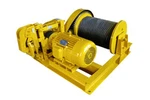
1) A rolling mill overhead crane lifting system is a type of material handling equipment commonly used in the steel industry. It is specifically designed to transport heavy steel rolls and other heavy components around the rolling mill facility to facilitate the manufacturing process.
2) The system consists of a crane that is suspended from an overhead runway, which can be either a single girder or double girder design depending on the application. The crane is equipped with a hoist that can lift and move the steel rolls horizontally and vertically.
3) The lifting capacity of the crane varies depending on the weight and size of the steel rolls being transported. In addition to the hoist, the crane may also be equipped with other accessories such as grabs or clamps for handling specific types of loads.
4) Safety is a crucial consideration with any overhead crane system. To ensure safe operation, the system is equipped with several safety features such as limit switches, emergency stop buttons, and overload protection devices. The crane also undergoes regular maintenance and inspection to ensure it is in good working condition.
5) Overall, the rolling mill overhead crane lifting system is an essential piece of equipment that enables efficient and safe material handling operations in the steel industry.
4. End Carriages
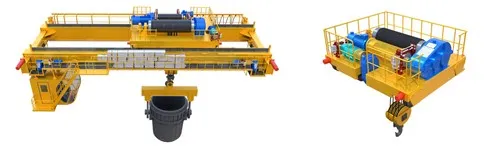
1) Rolling mill overhead crane end carriages are the components that support the bridge of the crane and allow it to move along the runway rails. They typically consist of a frame and wheels that are mounted to the bridge of the crane. The wheels ride on rails that are attached to the runway beams, allowing the crane to move back and forth along the length of the building.
2) End carriages are critical components of an overhead crane system, and they must be designed and manufactured to withstand the stresses and loads placed on them during operation. They must also provide a smooth and reliable ride for the bridge of the crane.
3) End carriages are available in a range of sizes and configurations to accommodate the unique needs of different rolling mill applications. They may be equipped with various features, such as multiple drives, anti-skew devices, and safety features, to ensure safe and efficient operation.
4) Overall, rolling mill overhead crane end carriages are essential components that allow overhead cranes to perform their critical role in the steel manufacturing process.
5. Crane traveling mechanism
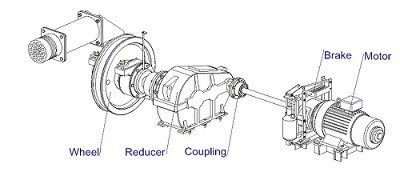
1) The crane traveling mechanism refers to the system that allows the crane to move along the runway or track. In the case of a rolling mill overhead crane, this mechanism is typically comprised of a set of wheels or rollers that are mounted to the bottom of the crane. These wheels or rollers run along a raised runway or track that is installed above the rolling mill area.
2) The traveling mechanism of the rolling mill overhead crane is typically powered by a motorized drive system, which is controlled by the crane operator. The drive system is responsible for providing the necessary torque and speed to move the crane along the runway or track. The controls of the traveling mechanism typically include a pendant or radio control system, which allows the operator to move the crane forwards or backwards, as well as to control its speed and direction of travel.
3) The traveling speed of a rolling mill overhead crane can vary depending on the specific requirements of the application. For example, in some cases, the crane may need to move quickly in order to keep up with the pace of production in the rolling mill. In other cases, the crane may need to move slowly and carefully in order to handle delicate or heavy materials with precision.
4) Overall, the traveling mechanism is an essential component of the rolling mill overhead crane, as it allows the crane to move to different areas of the rolling mill in order to perform various tasks and operations.
6. Trolley traversing mechanism
The rolling mill overhead crane trolley traversing mechanism is a machine used to move the trolley back and forth along the length of the crane. It is used in rolling mills to transport heavy loads of materials such as steel coils and plates from one end of the mill to the other. The traversing mechanism is typically operated by a motor and gear drive system that moves the trolley along the rails. The trolley itself is fitted with wheels that roll along the rails and can be adjusted to accommodate different sized loads. The traversing mechanism is an essential part of any rolling mill crane and is designed to be strong, durable, and reliable to ensure safe and efficient operation.
7. Crane wheel
1) A rolling mill overhead crane is a type of crane used in steel mills to lift and move heavy loads such as coils, slabs, and billets. The crane consists of a bridge, trolley, and hoist. The crane is designed to operate in the harsh steel mill environment and can handle high-temperature materials. The overhead crane moves along a runway and can lift and transport loads in all directions.
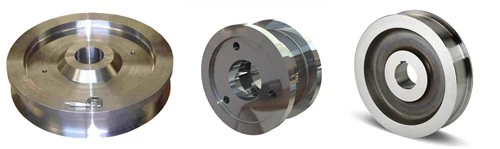
2) The crane wheel is an essential part of the overhead crane. It is attached to the trolley and runs along the runway. The wheel is usually made of steel and has a flange on the outer edge that keeps the crane on the track. The wheel must be durable and able to withstand the weight of the load being lifted.
3) The rolling mill overhead crane is a critical piece of equipment in steel mills. It allows the movement of heavy loads around the mill, making production more efficient. The crane wheel needs to be regularly maintained to ensure that it remains in good working order, as it is one of the most critical components of the overhead crane.
8. Crane hook
1) A rolling mill overhead crane is a type of crane used in the metalworking industry to handle heavy loads such as steel bars, rods, and plates. This crane is designed to operate in an environment where extreme heat, heavy loads, and high speeds are present.
2) The crane hook is an important component of the rolling mill overhead crane, used to lift and move the load. It is attached to the end of the crane's hoist rope with a safety latch to prevent accidental disengagement.
3) The crane hook is designed to withstand the weight of the load, and can be fitted with different types of lifting devices, such as magnets or grabs, depending on the nature of the load being handled.
4) The rolling mill overhead crane and crane hook work together to facilitate the movement of heavy materials in a safe and efficient manner. This equipment is used in various industries, including construction, manufacturing, and steel production.

9. Motor
1) Rolling Mill Overhead Crane Motor is a type of electric motor used in rolling mills to control the overhead cranes that move and transport heavy materials. Rolling mills are used for the production of various metal products where the material is rolled into desired shapes and sizes.
2) These cranes are usually operated at high speeds and require a reliable motor that can handle the load and provide consistent performance. The Rolling Mill Overhead Crane Motor is designed to provide the necessary power and speed to move materials smoothly and safely throughout the facility.
3) These motors are typically AC induction motors and can be designed to meet specific application requirements. They are available in various sizes and power ratings to suit different crane configurations and loads. Other characteristics include high efficiency, low maintenance, and long service life.
4) Overall, the Rolling Mill Overhead Crane Motor is a critical component in the successful operation of rolling mills and helps to ensure that materials are moved efficiently and safely throughout the production process.

10. Sound and light alarm system & limit switch
1) Rolling mills are complex industrial machinery that require careful monitoring and control. Overhead cranes are commonly used to move heavy objects around the mill, including raw materials, finished products, and machinery components.
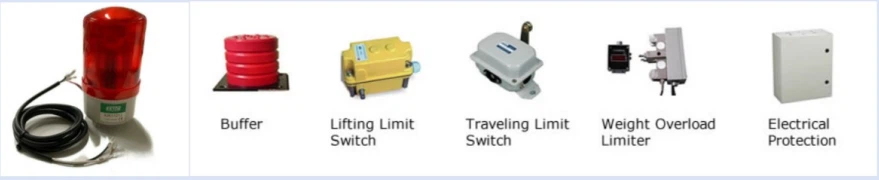
2) To ensure safe operation of the overhead crane, a sound and light alarm system linked to a limit switch can be installed. The limit switch is a safety device that triggers an alarm when the crane reaches its maximum load capacity or moves beyond its designated working area.
3) The sound and light alarm system provides a warning to operators and other workers in the vicinity of the crane. The sound component emits a loud and distinctive noise, while the light component flashes a bright and attention-grabbing signal. This system improves safety in the workplace, reduces the risk of accidents, and protects workers from potential harm.
4) Overall, the combination of rolling mill overhead crane, sound and light alarm system, and limit switch ensures a safe and efficient working environment that promotes productivity, quality, and worker welfare.
11. Safety Devices
There are several safety devices that should be in place when operating a rolling mill overhead crane. These devices include:
1) Overload protection: A limit switch should be installed to prevent the crane from operating if it exceeds the maximum weight capacity.
2) Emergency stop switch: An emergency stop switch should be easily accessible and located in a prominent position. This switch should be able to stop the crane immediately in the event of an emergency.
3) Anti-collision devices: These devices prevent the crane from colliding with other cranes or objects in the work area. This can be achieved using sensors, warning systems, or physical barriers.
4) Limit switches: These switches are used to limit the movement of the crane along the bridge and the trolley running on the rails.
5) Warning devices: These devices include caution lights, horns, and signals to warn operators and pedestrians of the crane's movement.
6) Overhead protection: This can be achieved through the use of bollards, fencing, or other physical barriers to prevent workers from being struck by the crane or its load.
Implementing these safety devices can greatly reduce the risk of accidents while operating a rolling mill overhead crane. It is important to regularly inspect and maintain these devices to ensure they are functioning properly.
12. Control Mode
There are different control modes for overhead cranes in a rolling mill, including:
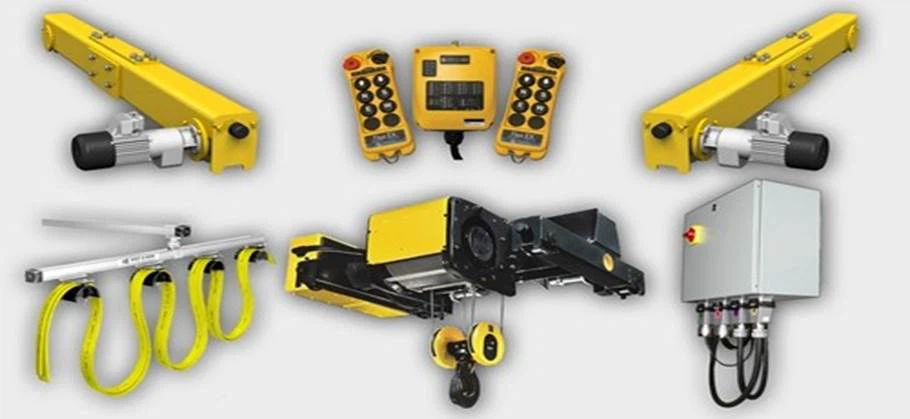
1) Pendant control: This is the most common type of control for overhead cranes. The operator uses a pendant or a handheld controller to operate the crane's movements, such as lifting, lowering, hoisting, and traveling.
2) Radio control: This control mode allows the operator to control the crane wirelessly using a remote control. It provides greater flexibility and safety by allowing the operator to move around freely while controlling the crane.
3) Cabin control: In this mode, the crane is operated from a cabin or a control room located on the crane itself. This provides a better view of the load and the working area, and allows the operator to work in a comfortable environment.
4) Automated control: This mode uses sensors, cameras, and other automation technologies to control the crane's movements. The crane can be programmed to move on predefined paths, and can also be integrated with other equipment in the rolling mill to optimize the production process.
The choice of control mode depends on the type of rolling mill, the nature of the work to be performed, and the operator's preferences and skills.

13. Sketch
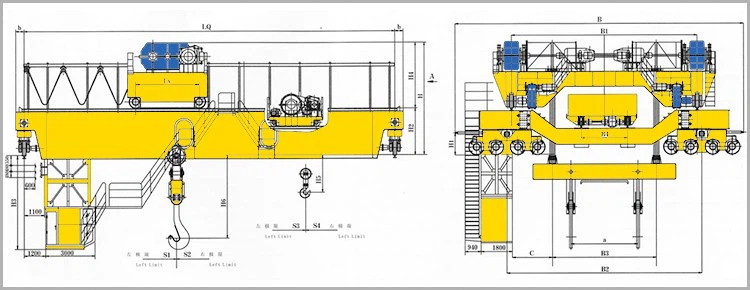
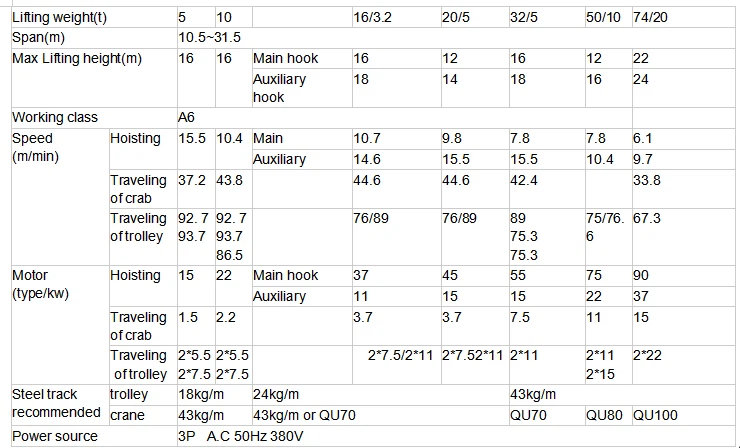
Main Technical Data
Advantages
1. High lifting capacity: Rolling mill overhead cranes are designed to handle heavy loads commonly found in steel mills and other metalworking plants, with lifting capacities ranging from 5 to 500 tons.
2. Efficient material handling: The overhead crane's large lifting hook and versatile movement make it an efficient tool for moving materials around the rolling mill. This helps reduce the need for manual labor and improves productivity.
3. Enhanced safety: Safety features such as overload protection, limit switches, and emergency stop buttons are integrated into the crane's design, along with visual and audible alerts to keep workers aware of potential hazards.
4. Long service life: The design, construction, and materials used in manufacturing rolling mill overhead cranes ensure that they have a long service life with minimal maintenance requirements.
5. Increased maneuverability: The overhead crane's ability to move in multiple directions, including forward and backward, up and down, and side-to-side, makes it highly maneuverable in tight spaces.
6. Enhanced production speeds: The use of rolling mill overhead cranes can significantly increase production speeds by reducing handling times and minimizing material damage.
7. Energy efficiency: Modern overhead cranes are designed to optimize energy efficiency, reducing operating costs and environmental impact.
Application
Rolling mills are used in the manufacturing process of steel and other metals, and they require specialized overhead cranes to handle the heavy loads involved in the process. These cranes are essential for ensuring safety, productivity, and cost efficiency of the rolling mill operation. Here are some common applications of overhead cranes in rolling mills:
1. Raw material handling: Overhead cranes are used to transport raw materials such as ingots, billets, and slabs from the casting area to the rolling mills. These cranes have specialized lifting attachments such as hooks, magnets, and grabs to safely and efficiently handle the different types of raw materials.
2. Furnace charging: Overhead cranes are used to charge the furnaces with raw materials, which are heated to high temperatures before rolling. These cranes have special lifting attachments such as tongs or forks that can handle the hot materials safely.
3. Rolling mill line handling: Overhead cranes are used to move the rolled products from the rolling line to cooling beds or other processing areas. These cranes have specialized lifting attachments such as hooks or clamps that can handle the hot or heavy rolled products safely and efficiently.
4. Maintenance and repair: Overhead cranes are used to perform maintenance and repair operations on the rolling mills and associated equipment. These cranes have specialized lifting attachments such as slings or spreader bars that can safely handle the heavy and awkward components of the equipment.
Overall, overhead cranes are essential for the safe and efficient operation of rolling mills, and they play a critical role in the manufacturing process of steel and other metals.
Crane Production Procedure
The production procedure for a Rolling Mill Overhead Crane typically involves the following steps:
1. Design and Engineering: This involves the designing and engineering of the crane, considering the customer's specific requirements and the operating environment.
2. Fabrication: Once the design is finalized, the fabrication of the crane begins. This includes constructing the crane's structural frame, manufacturing the hoist, trolley, and other essential components, and assembling them together.
3. Installation: Once the crane is manufactured, it is transported to the customer's site, where it is installed. This includes the assembly of the crane's structural components, hoist, trolley, and electrical control system.
4. Testing and Commissioning: After installation, the crane undergoes rigorous testing to ensure that it meets the specified functional and safety requirements. This includes load testing and checking the crane's overall performance under various load conditions.
5. Training and Handover: Once the crane is certified for safe operation, the crane operator and maintenance staff receive training on how to operate and maintain the equipment properly. This enables them to use the crane safely and effectively, leading to increased productivity and longevity of the crane.
6. Maintenance and Service: To ensure the crane's longevity, regular maintenance and servicing are essential. This includes routine inspections, lubrication, and replacement of worn-out components. Regular maintenance helps to extend the crane's lifespan and minimize costly downtime.

Workshop View
The company has installed an intelligent equipment management platform, and has installed 310 sets (sets) of handling and welding robots. After the completion of the plan, there will be more than 500 sets (sets), and the equipment networking rate will reach 95%. 32 welding lines have been put into use, 50 are planned to be installed, and the automation rate of the entire product line has reached 85%.


Hot Tags: rolling mill overhead crane, China rolling mill overhead crane manufacturers, suppliers, factory, Ladle Foundry Bridge Crane, Steel Factory Overhead Crane, Steel Mill Overhead Cranes, Ladle Foundry and Casting Steel Mill Overhead Crane, Casting Steel Overhead Crane, Rolling Mill Overhead Crane
Previous
Ladle Foundry Bridge CraneNext
No InformationYou Might Also Like


Send Inquiry