







Single Girder Overhead Crane Radio Remote Control
Products Description
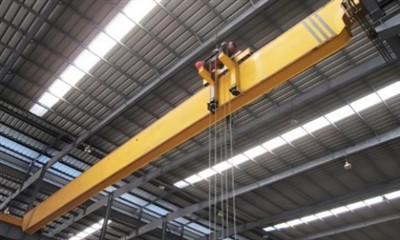
A single girder overhead crane with radio remote control is a modern lifting solution designed for efficient, safe, and flexible material handling. It combines the simplicity and cost-efficiency of a single girder structure with the convenience and enhanced safety of wireless remote operation.
Core Components: Gearbox, Motor, Gear
Place of Origin: Henan, China
Warranty: 1 Year
Weight (KG): 10000 kg
Video outgoing-inspection: Provided
Machinery Test Report: Provided
Selling Units: Single item
Single package size: 600X300X300 cm
Single gross weight: 200.000 kg
Pictures & Components
1.Main beam
Design Features
Type: I-beam or box-type girder depending on span and capacity.
Material: High-strength structural steel (Q235B or Q345B).
Fabrication:
CNC cutting and automatic submerged arc welding.
Flange and web plate are precisely assembled and welded.
Deflection and camber are controlled as per crane standards (e.g., FEM, DIN, GB).
Surface Treatment:
Sandblasted to Sa2.5 standard.
Anti-rust primer + topcoat (color customizable).
2.Lifting System
1)Electric Hoist
Type: Wire rope hoist (commonly CD/MD model) or electric chain hoist.
Mounting: Suspended from the bottom flange of the main beam, side-mounted or central.
Lifting Capacity: Ranges from 0.5 ton to 20 tons (for single girder cranes).
Lifting Height: Typically 6m to 30m, customizable.
Motor: High-efficiency squirrel cage or pole-changing motor with thermal protection.
Gearbox: Helical or planetary gears with high torque and precision.
2)Rope Drum & Wire Rope
Drum: Precision-machined, grooved to prevent rope overlap.
Wire Rope: Galvanized or non-galvanized steel wire rope, high tensile strength, anti-rotation type (if needed).
3)Hook Block
Material: Forged steel, heat-treated.
Design: Single or double sheave; 360° rotation optional.
Safety: Equipped with safety latch and overload sensor (optional).
 |
 |
3.End carriage
1)Structure & Design
Material: High-quality Q235B or Q345B steel.
Construction: Welded box-type or U-beam structure, stress-relieved after fabrication.
Connection: Bolted or welded to the main beam for easy assembly and maintenance.
Precision Machining: All wheel axles, pin holes, and motor mountings are CNC machined for alignment and smooth operation.
2)Components Included
Travel Wheels: Forged carbon steel with double flange; surface-hardened for long wear life.
Drive Unit (if applicable): Integrated with motor and reducer for motorized travel.
Buffer Devices: Rubber bumpers or spring buffers mounted at ends to absorb impact during travel.
Rail Sweeper (optional): Prevents debris on runway rails.
Limit Switches: Installed at both ends to stop the crane when reaching travel limits.
 |
 |
4.Crane travelling mechanism
1)Drive Configuration
Type: Motorized drive using a motor + reducer assembly.
Arrangement: Typically one drive unit per end carriage (either one-side drive or dual-side synchronized drive).
Transmission: Gear coupling or direct connection between motor and wheel axle.
Wheel Drive: Rubber or steel-coated driving wheels, anti-slip, hardened for wear resistance.
2)Electric Motor & Reducer
Motor Type: Squirrel cage or pole-changing motor (single/double speed).
Protection: IP54 or higher; equipped with thermal overload protection.
Gearbox: Helical or planetary reducer with high torque, compact structure, and low noise.
5.Trolley travelling mechanism
1)Structure & Type
Configuration: The trolley is usually a low-headroom type electric hoist (either wire rope or chain) mounted to run along the bottom flange of the single girder.
Travel Path: Moves laterally along the main beam's lower flange (I-beam or custom track rail).
Construction: Compact frame made from steel plates and structural profiles, CNC machined for precision.
2)Drive System
Drive Mode: Motor + reducer direct or geared drive to the trolley wheels.
Motor:
Squirrel cage motor or brake motor.
Optional VFD (variable frequency drive) for smooth acceleration/deceleration.
Travel Speed:
Single-speed: e.g., 20 m/min.
Dual-speed or variable: e.g., 20/5 m/min for precise load handling.
6.Crane wheel
The crane wheels of a single girder overhead crane with radio remote control are critical components that support and guide the crane along the runway beams. These wheels ensure smooth and stable longitudinal movement (crane travel) while bearing the entire load of the crane structure and lifted materials.

7.Crane Hook
1)Type
Single Hook: Commonly used in single girder cranes due to lighter capacity (typically up to 20 tons).
Hook Style:
Forged C-type hook (standard).
Swivel hook with safety latch to prevent load slippage.
2)Material & Manufacturing
Material: High-strength alloy steel (e.g., 20Mn, 34CrMo4).
Manufacturing:
Forged and heat-treated for high load-bearing capacity.
Stress-relieved to eliminate internal stress and prevent failure.
Surface Finish: Anti-corrosive coating or paint.

8.Motor
1)Lifting Motor
Function: Powers the hoist to raise and lower the load.
Type: Cone rotor or squirrel cage motor (brake motor).
Features:
High starting torque.
Integrated electromagnetic brake for instant stop.
Optional Variable Frequency Drive (VFD) for soft start/stop.
2)Trolley Traveling Motor
Function: Drives the trolley across the girder.
Type: Compact AC motor, often with a gear reducer.
Features:
Low noise.
Smooth acceleration via VFD or dual-speed control.
Thermal protection for long service life.
3)Crane Traveling Motor
Function: Moves the entire crane along the runway rails.
Type: AC brake motor or geared motor, sometimes mounted in a drive unit.
Features:
Synchronized with trolley and hoist movement.
Equipped with travel limit switches and optional anti-collision sensors.

.
9.Sound and light alarm system & limit switch
The sound and light alarm system and limit switches of a single girder overhead crane with radio remote control are essential safety and operational components designed to enhance awareness, prevent accidents, and ensure reliable crane performance.
1)Sound and Light Alarm System
Purpose
To warn personnel in the area during crane operation.
Alert workers of crane movement, start-up, lifting activity, or fault conditions.
2)Limit Switches
Construction
Mechanical or electronic.
Enclosed in IP65-rated housing for durability in industrial settings.
Mounted on hoist drum, trolley rails, or end carriages.

10.Safety Devices
1)Overload Protection
Function: Prevents the crane from lifting a load that exceeds its rated capacity.
Operation:
Overload sensors in the hoist mechanism detect when the load exceeds a preset limit.
Automatic cut-off or warning system (sound and light alarm) is triggered.
Benefits: Avoids crane damage, ensures safe operation.
2)Limit Switches
Function: Prevents the crane from operating beyond safe limits.
Lifting Height Limit Switch: Stops the hoist if it reaches the upper or lower travel limit to prevent over-hoisting or over-lowering.
Trolley Travel Limit Switch: Prevents the trolley from traveling past the end of the girder.
Crane Travel Limit Switch: Stops the crane from traveling off the rails or runway.
3)Emergency Stop Button
Function: Allows the operator to stop the crane immediately in case of an emergency.
Activation: Available on both the crane control panel and the radio remote control.
Safety Feature: Redundant buttons may be located at multiple locations to ensure quick access.
4)Anti-collision Device
Function: Prevents collisions between cranes on the same track or between the crane and other objects in the area.
Operation:
Uses proximity sensors or radar to detect obstacles or other cranes.
Automatically halts crane movement or triggers an alarm when an obstacle is detected.
5)Brake System
Function: Ensures that the crane stays in place when not in operation and when load is lifted.
Types:
Electromagnetic Brakes: Hold the crane stationary when no power is supplied.
Dynamic Braking: Slows down crane during operation.
Benefits: Prevents accidental movement, ensuring stability when the crane is idle.
6)Load Moment Limiter
Function: Measures the load and boom angle to ensure the crane is not overloaded.
Operation:
If the crane is close to its maximum lifting capacity, it will activate a warning or automatically halt lifting.
Can be integrated with the radio remote control system to show real-time load information.
11.Control Mode
1)Radio Remote Control
Primary Control: Most modern single girder overhead cranes with radio remote control are operated via wireless radio signals. The operator uses a handheld remote that communicates with the crane's control system.
Functions:
Hoist Control: Raise and lower the load.
Trolley Travel: Move the trolley along the girder.
Crane Travel: Move the crane along the runway.
Emergency Stop: Stops all movements instantly if necessary.
Speed Control: Allows operators to control the speed of lifting, lowering, and travel movements.
Features:
Multiple buttons or joysticks for different crane movements.
Safety features like emergency stop, load control alarms, and limit switches integrated into the remote.
Range: The remote typically has a control range of 20–100 meters depending on the model and working environment.
Rechargeable Batteries: Wireless remotes often come with rechargeable batteries for continuous operation.
2)Pendant Control (Wired Control)
Backup Control Mode: In case of radio signal interference or failure, cranes can be equipped with a wired pendant control as a backup.
Functionality: The pendant provides similar functions to the radio remote, but with a direct physical connection to the crane, often used when the remote control cannot be used for any reason.
3)Control Modes Based on Movement
Hoisting Control:
Single-speed or dual-speed hoist control allows the operator to adjust the speed of lifting and lowering loads. In some cases, variable speed drives are incorporated for smooth operation.
Travel Control:
Single or dual-speed control for both crane and trolley travel mechanisms.
Synchronized movement allows the operator to control the crane, trolley, and hoist simultaneously or independently, depending on the crane's control setup.
Joystick or Push-button Control:
Joystick control: Allows for smooth, multi-axis control, commonly used for more precise movements.
Push-button control: Suitable for simpler or more limited functions, often found in less complex systems.
4)Safety Features Integrated with Control Modes
Emergency Stop: A red emergency stop button on the remote, pendant, and the crane itself immediately halts all crane functions when pressed.
Limit Switches: Ensure the crane doesn't exceed pre-set limits, like hoisting to unsafe heights or trolley movement past end stops.
Overload Protection: Alerts and stops the crane if the load exceeds the rated lifting capacity, ensuring the safety of the crane and operator.
Anti-collision Sensors: In some advanced setups, collision sensors prevent the crane from colliding with other objects or cranes.

Sketch

Main technical

Advantages
1. Improved Operator Safety
Increased Distance from Hazardous Areas: With radio remote control, operators can stay at a safe distance from potential hazards like heavy loads, moving machinery, or extreme working conditions, minimizing the risk of injury.
Control from a Safe Location: The operator can control the crane from anywhere within the operational range (usually 20-100 meters), providing better visibility of the load and surrounding environment.
2. Enhanced Operational Efficiency
Simultaneous Control: The remote allows the operator to control multiple crane functions simultaneously (e.g., hoist, trolley, and crane movement), leading to faster and more efficient operations.
Precise Control: Radio remotes, especially those with joystick functions, enable fine-tuned control for lifting, lowering, and positioning loads, improving accuracy in tasks that require delicate handling.
Faster Setup: The crane setup and operation are faster with remote control, as the operator does not need to constantly move between control stations and the crane.
3. Convenience and Flexibility
Wireless Freedom: The operator isn't restricted by cables, allowing them to move freely within the operational area, follow the load, and maintain better awareness of the work environment.
Multiple Crane Operations: In some cases, one remote can control several cranes (especially in large facilities), improving overall efficiency without needing separate operators for each crane.
User-friendly Interface: Many radio remotes have intuitive controls, making them easy to operate with minimal training.
4. Increased Productivity
Reduced Downtime: Because the operator can remain in one location with better visibility, tasks such as adjusting the crane, setting up loads, or aligning materials are done more quickly.
Remote Control for Troubleshooting: Remote control can be used to diagnose crane issues or adjust settings while the crane is not in full operation, leading to faster responses in case of minor problems.
5. Greater Precision
Smooth Movements: Many remote-controlled cranes feature variable-speed controls, allowing smooth, gradual movements, which is especially beneficial for precise operations like delicate lifting or transporting sensitive materials.
Fine-tuning of Load Placement: Joystick controls enable minute adjustments to load positioning, increasing accuracy in placing items in tight or restricted spaces.
6. Cost-Effective Operation
Reduced Labor Costs: By allowing the operator to work more efficiently from a remote location, the overall time spent operating the crane is reduced, contributing to cost savings.
Reduced Risk of Damage: Better control reduces the chances of accidents that could lead to costly repairs or replacements of equipment, including the crane itself, the load, or other machinery in the area.
Application:
1. Manufacturing & Assembly
Assembly Lines: In manufacturing plants, especially those assembling large or heavy components, the overhead crane is used for lifting and positioning parts along the assembly line. The remote control system allows operators to efficiently control the crane while focusing on the task at hand.
Automobile Production: In the automotive industry, cranes are used to lift car parts, engines, and sub-assemblies. The remote control system enables precise handling and faster operation, improving production efficiency.
2. Warehousing & Logistics
Material Handling: In warehouses, cranes equipped with remote control systems are used to move goods or materials across large storage spaces. Operators can manage the crane without having to be close to the load, increasing efficiency and safety.
Loading and Unloading: Overhead cranes with radio remote controls are used for loading and unloading cargo, especially heavy or bulky items, from trucks, containers, or storage shelves in distribution centers and ports.
3. Construction
Construction Sites: Cranes on construction sites handle a wide range of materials such as steel beams, cement blocks, and other building materials. The ability to control the crane remotely allows operators to adjust the crane's position and load handling more efficiently and safely in areas with limited access.
Heavy Lifting: For tasks such as lifting pre-fabricated modules, steel frames, and machinery, a single girder overhead crane with radio remote control ensures smooth and precise movements, which are critical in construction.
4. Steel Industry
Steel Production Plants: Cranes are commonly used to transport molten metal, steel ingots, or large rolls of steel. The ability to control the crane remotely from a safe distance is essential in such high-risk environments, preventing exposure to heat or hazardous materials.
Handling Heavy Metal Sheets: The crane is used to lift, transport, and position large sheets of steel, aluminum, or other metals within the production area. Remote control ensures that operators are far enough away from the high-temperature zones.
5. Shipyards & Marine Applications
Shipbuilding: In shipyards, overhead cranes with radio remote control are used to move heavy parts like ship hull sections, engines, and cargo. The remote control system enables operators to position these large components with great precision in narrow spaces.
Maintenance and Repair: When repairing or maintaining large vessels, cranes are used to remove or replace heavy equipment, parts, and materials. Remote control improves safety by allowing operators to stay clear of potentially hazardous areas.
6. Energy Sector
Power Plants: In power plants, overhead cranes are employed to move large equipment such as turbines, generators, and transformers. The remote control system ensures that operators can position these heavy components accurately in tight spaces.
Wind Turbine Manufacturing and Maintenance: Cranes are also used for lifting large parts of wind turbines during manufacturing and maintenance. The radio remote control system enables easy control in environments where the load may be at great heights or difficult to access.
Crane production procedure
1. Design and Engineering
Initial Consultation: The process begins with discussions between the manufacturer and the customer to understand the crane's operational requirements, such as load capacity, span, lifting height, and environment (e.g., indoor or outdoor use, temperature conditions, etc.).
Engineering & Customization: The design team customizes the crane, including the structure, lifting system, and radio remote control features. Detailed engineering drawings and specifications are prepared, ensuring the crane meets all required standards and safety codes.
Control System Design: The radio remote control system is integrated into the design, with attention to ease of use, range, safety features (emergency stop, overload protection), and compatibility with the crane's other systems.
2. Material Selection and Procurement
Structural Materials: High-quality materials like steel are sourced for the crane's main beam, girder, end carriages, and other structural components. These materials are selected for their strength, durability, and ability to withstand heavy loads.
Mechanical Components: The components for the hoisting system, trolley, crane wheel, motors, gearboxes, and radio remote control system are procured from reliable suppliers.
Electrical Components: Wiring, electrical panels, switches, safety devices, and other electrical components for the crane's control system are also sourced.
3. Fabrication and Manufacturing
Main Beam Construction: The steel is cut, welded, and assembled to form the main girder (single beam) of the crane. This process often involves precision cutting, bending, and welding to meet specific design tolerances.
End Carriage Fabrication: The end carriages, which support the crane's travel mechanism, are fabricated and assembled. These components are designed for stability and strength, ensuring smooth crane movement along the tracks.
Assembly of Lifting Mechanism: The hoist, hook, and lifting mechanism are assembled, with motors, gears, and pulleys integrated into the system. The lifting system is tested for load-bearing capacity and smooth operation.
Trolley and Crane Traveling Mechanisms: The trolley and crane traveling mechanisms are built and assembled. This includes the wheels, motor, and rail system, ensuring smooth movement of the crane along the rails.
Radio Remote Control Installation: The radio remote control system is installed. This includes fitting the necessary receivers, antennas, and integrating the control system with the crane's electrical and mechanical systems.
4. Electrical and Control System Integration
Wiring and Electrical Systems: The electrical wiring is installed, connecting the hoisting system, control panel, motors, and radio remote control system. The wiring is tested for safety and compliance with electrical codes.
Control Panel Assembly: The crane's control panel is assembled and integrated with the radio remote control system. It is tested for responsiveness and safety features, including emergency stop and overload protection.
Safety Features: Safety devices such as limit switches, overload sensors, and sound and light alarms are installed and integrated into the control system. These systems ensure safe crane operation and prevent damage.
5. Testing and Quality Control
Load Testing: The crane is subjected to a load test to ensure it can handle the specified weight capacity. The test is done using calibrated weights to verify the crane's performance under operational conditions.
Operational Testing: The crane undergoes a full operational test, where it is run through its motions (lifting, lowering, traveling, etc.) using the radio remote control. The crane's response to commands, including emergency stop and safety alarms, is closely monitored.
Electrical & Mechanical Testing: All electrical systems, including the radio remote control, are tested for functionality and safety. The motors, brakes, and electrical wiring are inspected for proper operation.
Inspection for Compliance: The crane is inspected for compliance with local and international standards (such as ISO, CE, or OSHA) to ensure it meets safety regulations. The structure, load-bearing components, and safety systems are thoroughly checked.
6. Final Assembly
Final Assembly and Inspection: After testing, the crane is fully assembled, with all components securely attached and double-checked for accuracy. The radio remote control is configured, and the system is tested one last time to ensure seamless integration.
Painting & Finishing: The crane is painted with protective coatings to prevent corrosion and improve its appearance. The final finishing touches are added to the structure, including any labeling or safety markings.
Documentation: All necessary documentation, including manuals, certificates of compliance, test reports, and warranty information, are prepared for the customer.

Workshop view:
The company has installed an intelligent equipment management platform, and has installed 310 sets (sets) of handling and welding robots. After the completion of the plan, there will be more than 500 sets (sets), and the equipment networking rate will reach 95%. 32 welding lines have been put into use, 50 are planned to be installed, and the automation rate of the entire product line has reached 85%.


Hot Tags: single girder overhead crane radio remote control, China single girder overhead crane radio remote control manufacturers, suppliers, factory, Single Girder Overhead Crane, Single Girder Overhead Travelling Crane
You Might Also Like




Send Inquiry