







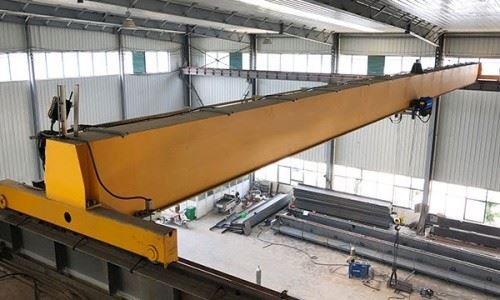

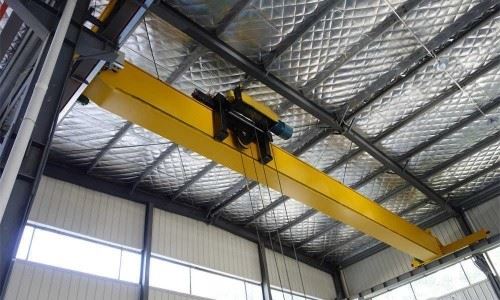
New Condition Single Beam Bridge Crane
Products Description
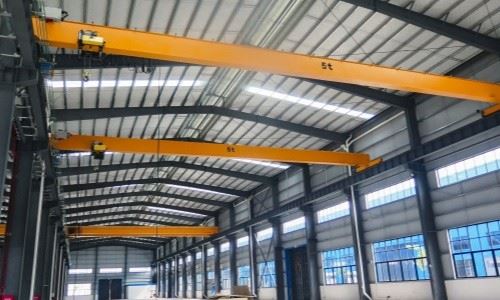
1.ingle Girder Design: Uses one main beam (typically an I-beam or box girder) for the bridge, making it lighter and more economical than double-girder cranes.
2.Electric-Powered: Operates via an electric hoist/trolley system for smooth lifting and traversing.
3.Moderate Capacity: Generally rated for 1 to 20 tons, with spans up to 30 meters (varies by manufacturer).
4.Compact & Space-Saving: Ideal for facilities with limited headroom.
5.Easy Installation: Simpler to assemble compared to double-girder cranes.
Core Components: Gearbox, Motor, Gear
Place of Origin: Henan, China
Warranty: 1 Year
Weight (KG): 10000 kg
Video outgoing-inspection: Provided
Machinery Test Report: Provided
Selling Units: Single item
Single package size: 600X300X300 cm
Single gross weight: 200.000 kg
Pictures & Components
1.Main beam
Single beam bridge cranes typically use one of the following beam designs:
1)olled Steel I-Beam (Standard Duty)
Made from hot-rolled steel (e.g., Q235B, Q345B in China; A36 in the US).
Economical but has lower load capacity (usually ≤ 10 tons).
Used in light-duty applications.
2)Welded Box Girder (Heavy Duty)
Fabricated from steel plates for higher strength and rigidity.
Better load distribution (up to 20 tons or more).
Resists deflection better than I-beams.
Common in European and high-end cranes.
3)European Standard (EN) Girder
Optimized profile for reduced weight while maintaining strength.
Often used with electric chain hoists for precision lifting.
2.Lifting System
1)How the Lifting System Works
Vertical Lifting: The hoist motor drives the chain/wire rope to raise/lower the load.
Horizontal Movement:
The trolley moves the hoist along the girder (cross travel).
The entire crane moves along the runway rails (long travel).
Positioning: Combined movements allow precise load placement.
2)Key Features of a New System
✔ Smooth Start/Stop: Anti-sway technology minimizes load swing.
✔ Overload Protection: Automatic cut-off if load exceeds capacity.
✔ Variable Speed: Adjustable lifting/travel speeds (common in premium models).
✔ Thermal Protection: Prevents motor overheating.
✔ Braking System: Fail-safe mechanical brakes for emergency stops.
 |
 |
3.End carriage
Key Components of the End Carriage
1)Frame Structure
Made of welded steel plates (Q235B/Q345B or equivalent) for durability.
Designed to support the main beam, hoist, and load weight.
2)Travel Wheels
Material: Forged alloy steel (e.g., 65Mn or 42CrMo) with hardened treads.
Types:
Double-Flanged Wheels: Common for most runways (prevents derailment).
Single-Flanged or Flat Wheels: Used with specific rail guides.
Quantity: Typically 4 wheels per end carriage (2 per side).
3)Drive Mechanism
Motor: 3-phase AC or DC motor (0.2–5 kW, depending on crane capacity).
Gearbox: Reduces speed and increases torque for smooth starts/stops.
Brakes: Electromagnetic or hydraulic brakes for safe stopping.
4)Buffers & Bumpers
Spring or Hydraulic Buffers: Absorb shock during collisions.
Rubber Bumpers: Protect against minor impacts.
5)Rail Clamps
Optional anti-drift devices to secure the crane when not in use.
 |
 |
4.Crane travelling mechanism
1)Traveling Motors:
Usually electric motors that drive the crane along the runway.
May include soft start, variable frequency drive (VFD), or traditional motor with brake.
2)Gearboxes:
Transmit the motor power to the wheels.
Help control speed and torque.
3)Wheels / End Carriages:
The crane runs on these wheels, which are mounted on end carriages.
Usually made from high-strength steel or forged material for long durability.
4)Rail or Track:
Fixed on the runway beams.
The wheels roll on these rails.
5)Braking System:
To stop or slow down the crane's movement.
Electromagnetic or hydraulic brakes are common.
6)Control System:
Could be pendant control, remote control, or cabin control.
Allows the operator to move the crane forward/backward along the track.
7)Buffer and Limit Switches (optional but common):
Prevent the crane from colliding with the end of the runway.
Limit switches automatically stop movement when a boundary is reached.
5.Trolley travelling mechanism
1)Trolley Frame
A compact steel structure that carries the hoisting mechanism.
Designed to travel along the bottom flange of the I-beam or box-type beam.
2)Trolley Wheels
Mounted on the trolley frame; usually 4 wheels.
Made of forged steel for durability.
Fit to run smoothly along the beam's track.
3)Travel Motor
Powers the movement of the trolley.
May be a single-speed or dual-speed motor; VFD options available for smoother control.
4)Gearbox / Drive System
Connects the motor to the trolley wheels.
Reduces motor speed and increases torque.
5)Braking System
Ensures the trolley stops precisely when required.
Typically includes electromagnetic brakes.
6)Electrical Components / Wiring
Includes cables, festoon system, or cable chain for safe power supply and control signals.
7)Limit Switches
Installed at the ends of the beam to prevent over-travel.
Enhances safety by cutting power before collision.
6.Crane wheel
Key Features of the Crane Wheel:
1)Material:
Made from high-strength forged steel (e.g., 42CrMo, 45# steel, or similar).
Heat-treated for durability, wear resistance, and impact resistance.
2)Types of Wheels:
Drive Wheels: Connected to the motor and gearbox to move the crane.
Idle Wheels: Roll freely, supporting the structure.
Single Flange or Double Flange: Keeps the wheel aligned on the rail track.
3)Mounting Location:
End Carriages (for crane traveling)
Trolley Frame (for trolley traveling)
4)Precision Machined:
To ensure perfect roundness and smooth operation.
Reduces wear on both the wheel and rails.

7.Crane Hook
Key Features of the Crane Hook:
1)Material
Typically made from high-strength forged alloy steel (e.g., 20Mn, 35CrMo).
Heat-treated for tensile strength, durability, and crack resistance.
2)Types of Hooks
Single Hook: Most common for light to medium-duty lifting.
Double Hook (or Ramshorn Hook): Used for heavier loads requiring better balance.
C-Hook or Special Hook: For coil lifting or specific applications (custom).
3)Hook Safety Latch
Spring-loaded latch prevents the load from slipping off accidentally.
Standard on most modern cranes for safety compliance.
4)Hook Swivel / Rotation (optional)
Some hooks are mounted on a rotatable block, allowing 360° rotation.
Can be manual or motorized for precise positioning.

8.Motor
Types of Motors on a Single Beam Bridge Crane:
1)Hoisting Motor (Lifting)
Powers the lifting and lowering of the load.
Typically a high-torque squirrel cage or slip ring induction motor.
Often paired with a gearbox and brake.
May include dual-speed or variable frequency drive (VFD) for smooth lifting.
2)Trolley Travel Motor
Drives the movement of the trolley across the bridge girder.
Compact, often with built-in gearbox.
Smooth acceleration/deceleration via soft start or VFD.
Quiet operation and high positioning precision.
3)Crane Travel Motor
Drives the entire bridge crane along the runway beams.
Usually a pair of motors (on each end carriage) working in sync.
Includes brakes, gearboxes, and shock absorbers for smooth operation.

.
9.Sound and light alarm system & limit switch
1)Sound and Light Alarm System
This system serves as a visual and audible warning device, typically activated during crane operations such as lifting, traveling, or in emergency conditions.
2)Limit Switches
Limit switches are electromechanical devices used to control the travel limits of the crane, trolley, and hoist, preventing over-travel and mechanical damage.

10.Safety Devices
1)Overload Limiter / Overload Protection Device
Detects if the lifted load exceeds the crane's rated capacity.
Automatically cuts off lifting operation or triggers an alarm.
Can be a mechanical device or integrated with electronic sensors/load cells.
Prevents structural damage and motor burnout.
2)Limit Switches
Prevent over-travel in lifting, trolley movement, and crane travel.
Automatically stop motion at pre-set positions.
Hoist limit switch: Prevents hook from overwinding.
Trolley limit switch: Stops trolley at bridge ends.
Crane travel limit switch: Stops crane at runway ends.
3)Emergency Stop Button
Mounted on the pendant control or remote.
Instantly shuts off all operations in case of emergency.
Quick and easy access for the operator.
4)Sound and Light Alarm System
Activates when the crane is in motion or when an unsafe condition occurs.
Alerts surrounding workers with audible siren and flashing lights.
Increases situational awareness and reduces accident risk.
5)Brake System
Integrated into the motors (electromagnetic or hydraulic brakes).
Automatically activates when the crane stops or loses power.
Prevents unwanted load drop or drift.
6)Buffer and End Stopper
Installed at both ends of crane runway and trolley path.
Absorb kinetic energy to prevent hard impacts.
Reduce wear and risk of mechanical damage.
11.Control Mode
1)Pendant Control (Wired Controller)
Handheld device suspended from the crane or trolley.
Connected via cable or festoon system.
Features push buttons for:
Up/Down (hoist)
Left/Right (trolley)
Forward/Backward (crane travel)
Emergency stop
Durable and cost-effective.
Ideal for small workshops or where operators walk along with the load.
2)Wireless Remote Control
Radio frequency remote with handheld transmitter.
Allows operator to control the crane from a safe distance.
Enhances flexibility, efficiency, and safety, especially in:
High-risk zones
Large spans
Confined or obstructed workspaces
Comes with digital display (optional), signal strength indicator, and emergency stop.
3)Cabin Control (Optional for Larger Cranes)
Operator sits in an enclosed or open cabin mounted on the crane.
Uses joysticks or switches to control all movements.
More common on double beam cranes, but optional for heavy-duty single beam models.
Suitable for long working hours or harsh outdoor environments.
4)Automatic / PLC-Controlled System (Advanced Option)
Integrated with PLC (Programmable Logic Controller) or industrial automation.
Enables pre-programmed movement or integration with automated production lines.
Can include:
Anti-sway technology
Load positioning memory
Intelligent diagnostics
Useful for smart factories or high-precision repetitive tasks.

Sketch

Main technical

Advantages
1. Cost-Effective Solution
Lower Initial Investment –
More affordable than double girder cranes due to simpler design.
Reduced structural requirements (lighter weight = cheaper support steel).
Reduced Maintenance Costs –
Fewer moving parts than double girder cranes.
Easy access to components (hoist, trolley, motors) for servicing.
Energy Efficient –
Smaller motors consume less power compared to larger overhead cranes.
2. Space-Saving Design
Compact Structure –
Single girder design minimizes headroom usage, ideal for low-clearance warehouses.
Allows more vertical storage space beneath the crane.
Flexible Layout Options –
Can be installed in narrow aisles or confined spaces.
Top-running or underhung configurations available.
3. Easy Installation & Relocation
Modular Components –
Pre-assembled sections simplify installation.
Can be disassembled and relocated if warehouse layout changes.
Minimal Foundation Work –
Requires less structural reinforcement than heavier cranes.
4. High Load Capacity with Smooth Operation
10-Ton Capacity –
Handles heavy pallets, machinery, and industrial loads effortlessly.
Equipped with overload protection for safety.
Precise Load Control –
Variable Frequency Drives (VFDs) enable smooth acceleration/deceleration.
Anti-sway technology (optional) reduces load swinging.
5. Versatile & Customizable
Multiple Control Options –
Pendant control (basic wired operation).
Wireless remote (for flexible movement).
Automated PLC control (for repetitive tasks).
Adaptable to Various Environments –
Explosion-proof motors for hazardous areas.
Corrosion-resistant coatings for humid/dusty warehouses.
6. Safety & Reliability
Integrated Safety Features –
Limit switches (prevents over-travel).
Emergency stop (instant power cutoff).
Fail-safe brakes (spring-applied, electrically released).
Compliance with Standards –
Meets ISO, OSHA, FEM, and CE safety regulations.
7. Improved Productivity
Faster Load Handling –
Quicker than forklifts for heavy or bulky items.
Reduces manual labor and worker fatigue.
24/7 Operation Capability –
Durable construction supports high-duty cycles.
Application:
1. Manufacturing & Assembly Plants
Lifting components, tools, and machinery.
Ideal for assembly lines and production processes.
Supports workstations in automotive, electronics, and general engineering industries.
2. Warehousing & Logistics
Moving materials between storage racks and loading zones.
Efficient for loading/unloading and internal material handling.
Enhances workflow speed and space utilization.
3. Maintenance Workshops
Used in power stations, mechanical repair shops, and maintenance areas.
Lifts engines, motors, pumps, and heavy parts for inspection or repair.
4. Steel & Metal Processing
Handles steel plates, profiles, bars, and metal components.
Can be equipped with special hooks or magnets for metalwork.
5. Construction Industry
Used in fabrication yards, pre-cast beam plants, and structure assembly areas.
Supports handling of construction tools and heavy materials.
6. Textile, Paper, and Food Industries
Used for machine maintenance and raw material handling.
Stainless steel or anti-corrosion versions available for clean environments.
7. Power Plants & Substations
For moving turbines, transformers, and large components.
Suitable for indoor maintenance operations.
Crane production procedure
1. Design and Engineering
Pre-production planning: Engineering team collaborates to finalize specifications based on client requirements (lifting capacity, span, control mode, environment).
Design approval: Structural and mechanical designs are created using CAD software and approved by the client or internal team.
Material selection: Materials like steel plates, beams, motors, and electrical components are selected based on strength, weight, and cost-efficiency.
2. Material Procurement
Order materials: Steel plates, I-beams, motors, control systems, hooks, cables, etc., are ordered from approved suppliers.
Quality checks: Materials undergo quality inspection for consistency and compliance with standards (e.g., ISO, CE).
3. Cutting and Welding of Steel Components
Beam Fabrication:
Steel plates and beams are cut using CNC machines or laser cutting equipment.
Welding: Skilled welders perform precise welding on I-beams, supports, and structural components.
Surface treatment: Parts undergo sandblasting or shot blasting for cleaning, followed by painting for corrosion protection.
4. Assembly of Structural Components
Main girder assembly: The main single beam (girder) is assembled by welding or bolting pre-fabricated components.
End carriages: End carriages, which include wheels and motors, are installed on either side of the bridge.
Trolley assembly: The trolley (hoisting unit) is assembled with motors, hook, and hoist equipment.
5. Installation of Electrical and Control Systems
Wiring and control panel: The electrical components, such as wiring, switchgear, and the control panel (pendant, remote control, or cabin system), are installed.
Motor installation: Motors for hoisting, crane traveling, and trolley traveling are mounted and wired to the control system.
Safety devices: Overload limiters, emergency stops, limit switches, and alarm systems are integrated.
6. Assembly of Hoisting Mechanism
Hook and lifting gear: The hook, block, and hoist mechanisms are installed on the trolley.
Chain or wire rope: The appropriate lifting medium (chain or wire rope) is installed and tested for secure attachment.
7. Testing and Inspection
Static testing: All components are checked for proper alignment, structure integrity, and functionality in a static state (no load).
Dynamic testing: The crane is tested under load conditions to ensure smooth hoisting, trolley, and crane travel movements.
Safety checks: Overload tests, limit switch testing, and emergency stop functionality are confirmed.
Final inspection: Quality assurance team conducts a final inspection to ensure the crane meets all design and safety standards.
8. Commissioning and Client Training
Site preparation: The crane is delivered to the client site, and the rails or runway system is set up if needed.
Installation: Final assembly and installation are carried out on-site, including rail installation and calibration.
Client training: Operators and maintenance personnel are trained on the crane's operation, safety procedures, and maintenance protocols.
9. Final Delivery and Handover
Documentation: All relevant documentation, including user manuals, warranty information, and maintenance schedules, is handed over to the client.
Performance warranty: The crane is officially handed over with an agreed performance warranty period.

Workshop view:
The company has installed an intelligent equipment management platform, and has installed 310 sets (sets) of handling and welding robots. After the completion of the plan, there will be more than 500 sets (sets), and the equipment networking rate will reach 95%. 32 welding lines have been put into use, 50 are planned to be installed, and the automation rate of the entire product line has reached 85%.


Hot Tags: new condition single beam bridge crane, China new condition single beam bridge crane manufacturers, suppliers, factory, Single Girder Overhead Travelling Crane, Single Girder Overhead Crane
You Might Also Like


Send Inquiry