







Freestanding Bridge Crane
Products Description
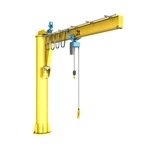
The freestanding bridge crane is an efficient and versatile lifting solution designed to improve productivity and ensure safety in material handling operations. This self-supporting system is ideal for environments where overhead structures cannot support traditional crane systems.
The freestanding bridge crane has a self-supporting design that does not require building reinforcement; and is ideal for standalone use.
It also has a high load capacity, which is suitable for handling a variety of heavy loads.
What's more, the freestanding bridge crane is flexible to install and can be easily relocated and reconfigured to meet changing operational needs.
It has a smooth running mechanism and is also equipped with precision-engineered components for reliable and safe operation.
For different requirements, this crane can also be customized. For example, tailor-made spans, heights and lifting capacities to meet your specific project requirements.
Core Components:Engine
Place of Origin:Henan, China
Warranty :1 Year
Weight (KG):500 kg
Video outgoing-inspection:Provided
Machinery Test Report:Provided
Max. Lifting Height:30 meter
Span:7.5~40m
Color:Customized Color Acceptable
Voltage:220v~660v 50hz/60hz
Mode of operation:floor control & cab control
Lifting speed:3 to 12mmin customizable
Lifting capacity:3~500t
The speed of the cart:6 to 60m/min can be customized
Car speed :3 to 40m/min can be customized

Pictures & Components
1.Main beam
The main beam of a freestanding bridge crane is a critical structural component that spans the crane's runway supports and carries the trolley and hoist.
The main beam of a freestanding overhead crane is made of high-quality materials and a solid structure. The material of the main beam is high-strength steel, which is manufactured through multiple hammering to withstand heavy loads.
On the other hand, the single-beam design of the main beam usually uses an I-beam, while the double-beam design may use a box beam to increase strength and reduce deflection.
The load capacity of the main beam is extremely important. The design and size of the main beam are based on the maximum load capacity of the crane, including considerations for dynamic forces and safety factors.
The length of the main beam is determined by the width of the area to be covered by the crane. The larger the span, the more additional reinforcement may be required to prevent sagging.
Freestanding overhead cranes are usually modular, which means that the main beam is designed to be easy to install, adjust or replace.

Lifting System
A freestanding bridge crane lifting system is a versatile and effective material handling solution used in various industries. A freestanding bridge crane is an overhead crane system supported by floor-mounted columns, independent of a building's structural framework. It's ideal for spaces without sufficient overhead support or where installing roof-mounted systems is impractical.
Bridge:A horizontal beam that moves along the runway system.It supports the hoist and trolley.
Runways:Tracks mounted on freestanding columns along which the bridge travels.It can be designed as single or double runway systems.
Hoist:The device responsible for lifting and lowering loads.

3.End carriage
The end carriage of a freestanding bridge crane refers to the structural component that supports and guides the bridge beam along the crane runway. It is a critical part of the crane's design, enabling smooth horizontal movement of the bridge and facilitating load lifting and positioning operations.
End carriages are equipped with wheels that run along the runway beams.Wheels may be steel or polyurethane-coated, depending on the application and the need to reduce wear or noise.End carriages attach to the main bridge beam, either bolted or welded, depending on the crane's specifications.
In a freestanding bridge crane, the end carriage plays a vital role in ensuring the bridge beam moves efficiently along the runway, which is often supported by independent columns. The system does not rely on a building structure, making it ideal for temporary setups, warehouses, or spaces where overhead support is unavailable.

4.Crane travelling mechanism
The crane traveling mechanism of a freestanding bridge crane refers to the system that enables the crane to move along its runway rails. It ensures smooth, stable, and controlled motion of the crane's bridge structure across its designated working area.
Working Principle:
The motors receive electrical power through a conductor system, such as a festoon cable system or conductor bars.The motors drive the wheels through the gearboxes, moving the bridge crane along the runway rails.Motion is typically bi-directional, allowing the crane to move forward or backward as needed.Modern systems use VFDs for precise speed regulation, enabling smooth starts and stops to prevent load swing.
5.Trolley travelling mechanism
Manually Operated Trolleys:These trolleys rely on manual force for movement, typically found in smaller or lighter-duty systems.
Electric Trolleys:Common in modern bridge cranes, these trolleys are powered and controlled electrically for higher precision and efficiency.
Explosion-Proof Trolleys:Used in hazardous environments, they are designed to prevent sparks and are equipped with specialized motors and components.
Working Principle:
When the control system sends a signal, the motor is activated. The power is transmitted through the gearbox to the driving wheels, causing the trolley to move along the rails.The motor direction determines whether the trolley moves forward or backward.
Speed can be constant or variable (with VFD systems), depending on the crane's requirements.The trolley supports the hoist and the load, enabling horizontal positioning while the hoist manages the vertical lifting and lowering.
6.Crane wheel
The crane wheel of a freestanding bridge crane is a critical component of the crane's travel mechanism. These wheels allow the bridge crane to move along its runway or tracks, enabling smooth and precise operation.
Key Features of Crane Wheels Usually made of high-strength materials such as forged or cast steel, it can withstand heavy loads and wear. It is heat-treated for durability and is not easily deformed.
Flange wheels feature a flange design to prevent derailment and maintain track alignment. The tread profile is precisely machined for smooth rolling and even weight distribution.

7.Crane Hook
A crane hook is a critical component of a freestanding bridge crane system, responsible for safely lifting and moving heavy loads.
Crane hooks are usually made of forged carbon steel or alloy steel high-strength materials to ensure durability and resistance to wear. The hook has a wide throat design that can be easily locked onto a variety of slings or chains. This shape ensures that the load remains stable during lifting.
The load capacity of the crane hook should match the rated capacity of the crane, which can range from a few tons to hundreds of tons, depending on the specific application.

Motor
A motor for a freestanding bridge crane is a key component responsible for powering the movement of the crane's bridge, trolley, or hoist. Depending on the crane's configuration and purpose, several types of motors may be used.
Hoist Motor:Powers the hoist mechanism, enabling the lifting and lowering of loads.Typically a three-phase electric motor for industrial use, ensuring high torque and efficiency.Variable Frequency Drives (VFDs) are often added to allow smooth speed control and prevent abrupt motions.
Trolley Motor:Drives the trolley that moves horizontally along the bridge.Typically a geared motor or direct drive motor, depending on the load and speed requirements.Low-maintenance options like AC induction motors are common.
Bridge Drive Motor:Responsible for moving the entire bridge along the runway beams.Generally uses a synchronous motor or AC motor with a gearbox for precise movement.

.
Sound and light alarm system & limit switch
A sound and light alarm system for a freestanding bridge crane is a crucial safety feature designed to alert workers in the vicinity of potential hazards or ongoing crane operations.
Audible Alarm (Sound):Emits a loud warning signal to notify workers of crane movement or other potential hazards.Common types include sirens, buzzers, or voice alarms.Adjustable sound levels to comply with workplace noise regulations.
Visual Alarm (Light):Flashing or rotating lights, usually in red, yellow, or blue.LED technology is commonly used for durability and visibility.Often mounted on the crane or its support structure for maximum visibility.
2) Limit switch
A limit switch for a freestanding bridge crane is an important safety device used to control the travel and movement of the crane's hoist, trolley, and bridge. It ensures the crane doesn't exceed certain preset positions and helps prevent damage to the equipment or surrounding infrastructure.
Over-travel Protection: Prevents the crane from moving beyond its designed travel limits.
Positioning: Helps in ensuring that the hoist or trolley stops at the correct location during operation.
Safety: Ensures the crane stops automatically before it can cause any structural damage or fail mechanically.
Emergency Stops: Limits the movement in case of an emergency situation.

10.Safety Devices
Crane Travel Limiters: These devices limit the movement of the crane bridge and the trolley to prevent them from traveling beyond the safe operating zone, reducing the risk of collisions or tipping.
Safety Sensors and Cameras: Modern cranes may be equipped with sensors and cameras to detect obstacles or personnel in the crane's path, automatically stopping movement if there is a risk of collision.
Hoist Motor Brakes: These brakes are essential for holding the load securely and preventing the load from falling when the crane is not in motion.
Horn or Alarm System: Audible warning devices can alert nearby personnel when the crane is in operation or about to move, improving safety in busy areas.
Load Weighing Systems: These systems monitor the weight of the load being lifted, providing real-time data to the operator to ensure safe lifting practices.
Guardrails and Safety Barriers: Some crane systems are equipped with guardrails to prevent workers from getting too close to dangerous areas, such as the path of the crane or near lifting equipment.
Crane Inspections and Maintenance Devices: Regular inspection devices ensure that all mechanical parts, including ropes, pulleys, and gears, are in good condition to prevent failures during operation.
11.Control Mode
Pendant Control:The operator uses a handheld pendant or remote control to operate the crane. The pendant typically has buttons to control the movement of the crane, such as hoisting, lowering, traveling (bridge movement), and trolley movement.
Radio Remote Control: A wireless control system that allows the operator to control the crane from a distance, typically using a portable remote with joysticks and buttons.
Cab Control: The operator is positioned in a cabin or operator's seat fixed to the crane. The control is typically done using joysticks or buttons located inside the cabin.
Automated/Automatic Control: In highly automated settings, the crane might be controlled by pre-programmed logic or via a centralized control system. The crane can operate with minimal human intervention, performing repetitive or routine tasks.
Fixed Control Station: A control panel is mounted at a fixed location, usually on the floor or on a pedestal near the crane. The operator manually operates the crane from this station.

Sketch

Main technical

Advantages
No Need for Building Modifications: Since these cranes do not require modifications to the building structure, they can be installed in facilities with limited ceiling height or where structural modifications are not feasible.
High Load Capacity: They can support heavy loads with ease, making them suitable for industries that handle large, heavy items or machinery.
Improved Safety: With no need for complex building integration, freestanding cranes reduce the risk of structural failures or damage to the building. They also often come with safety features like anti-collision systems, load monitoring, and emergency stop controls.
Lower Installation Costs: These cranes typically cost less to install compared to integrated cranes that require building modifications or special foundation work. The ability to use existing floor space for installation further reduces overall costs.
Easier Maintenance and Inspection: Because they are independent structures, maintenance can be easier and more straightforward, without the need to access hard-to-reach parts of a building's infrastructure.
Scalability: If your business grows or requires additional lifting capacity, freestanding bridge cranes can be added or expanded more easily than built-in alternatives.
Application
Manufacturing and Assembly:Freestanding bridge cranes are used in factories and assembly lines to move parts or materials from one station to another. They can lift heavy items, such as motors, engine parts, or metal components, to speed up the production process.
Warehousing and Distribution:In warehouses, these cranes help with the loading and unloading of goods, particularly in environments where forklifts are not efficient due to space limitations.
Heavy Equipment Maintenance:In service centers, especially for automotive, aerospace, or industrial machinery, freestanding bridge cranes are used to move parts or equipment during maintenance or repairs.
Construction:These cranes are often used on construction sites to move materials like steel beams, cement, or pre-fabricated structures. Their flexibility and mobility allow them to adapt to different layouts and site constraints.
Shipyards:Freestanding bridge cranes are essential in shipbuilding and repair, where they help in lifting large and heavy components such as engines, ship hulls, or machinery.
Railway Maintenance:In railway yards, they assist in handling heavy locomotive components, such as engines and wheels, or materials used for maintenance.
Crane production procedure
1. Design and Engineering
Specification: The first step is determining the specific requirements for the crane, including the load capacity, span, lifting height, and type of service. This involves coordination between the customer and engineers.
Design: Structural engineers create detailed designs for the crane structure, including the bridge, runway, trolley, hoist, and other components.
Safety and Compliance: Ensure the design complies with relevant standards and regulations (e.g., ANSI, ISO, or other local standards).
2. Material Selection and Procurement
Steel: The main material for crane construction is high-strength steel. Components like beams, girders, and columns are sourced or fabricated from steel plates and profiles.
Hoisting Equipment: Hoists, motors, wheels, and other specialized parts are sourced from suppliers or fabricated in-house.
Other Components: Electrical wiring, control panels, brakes, and safety equipment are also procured.
3. Fabrication of Structural Components
Beam and Girder Fabrication: The crane's bridge consists of main beams (often I-beams or box girders) that support the load. These are cut, welded, and assembled.
Columns and Supports: Vertical support columns or towers are fabricated and welded, ensuring they meet the required strength for the load-bearing capacity.
Runway Rails: Runway beams or rails are prepared to guide the crane along the structure.
4. Assembly
Bridge Assembly: The crane bridge is assembled by connecting the beams and girders. This can be done using welding or bolting.
Trolley and Hoist Installation: The trolley system, which moves along the bridge, is equipped with the hoisting mechanism. The hoist, which includes a motor, wire rope, and other parts, is installed onto the trolley.
Wheel Assembly: The wheels that allow the crane to move along the runway are mounted on the bridge and trolley.
5. Electrical Installation
Wiring and Controls: Electrical systems are installed, including wiring for the hoist, motors, controls, and safety systems. This includes the connection to the crane's power supply.
Control Panel: The operator control panel is installed, allowing the crane to be operated remotely or from a fixed station.
Safety Features: Safety systems such as overload protection, limit switches, emergency stop, and other features are wired into the crane.

Workshop view:
The company has installed an intelligent equipment management platform, and has installed 310 sets (sets) of handling and welding robots. After the completion of the plan, there will be more than 500 sets (sets), and the equipment networking rate will reach 95%. 32 welding lines have been put into use, 50 are planned to be installed, and the automation rate of the entire product line has reached 85%.


Hot Tags: freestanding bridge crane, China freestanding bridge crane manufacturers, suppliers, factory, Single Girder Overhead Travelling Crane, Single Girder Overhead Crane
You Might Also Like


Send Inquiry