






New Condition Single Beam Crane
Products Description
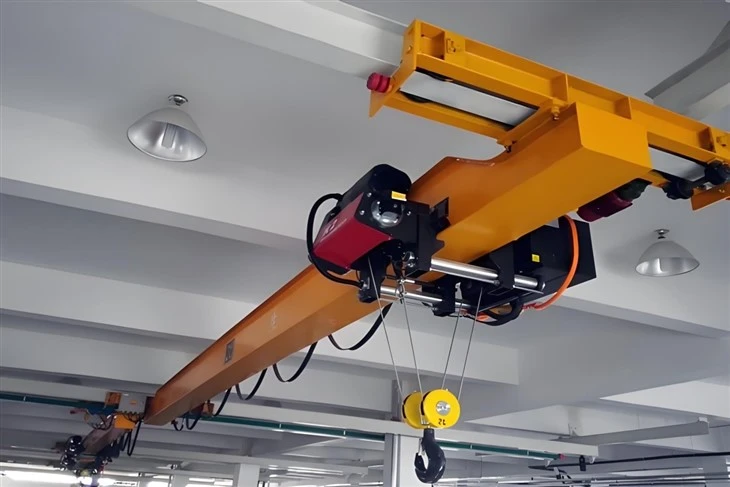
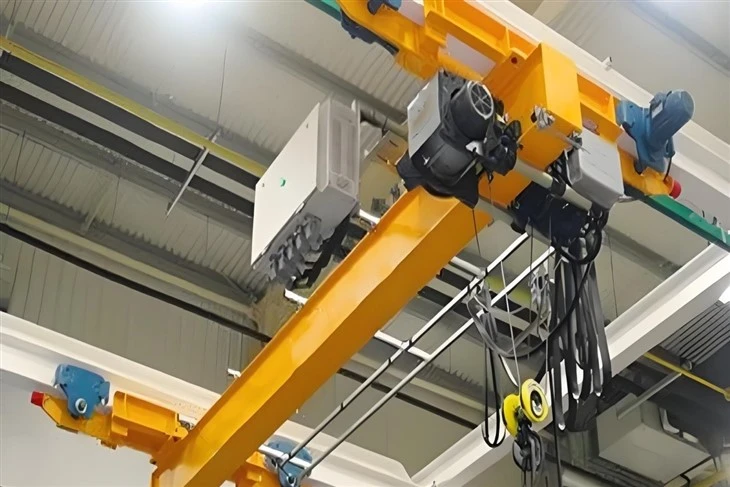
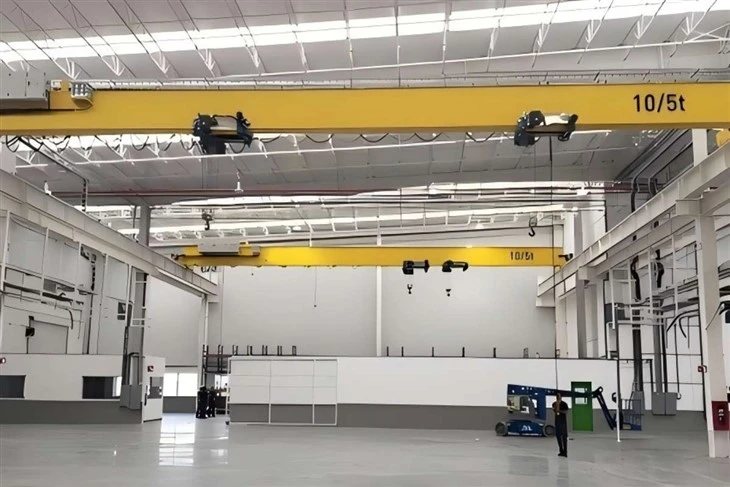
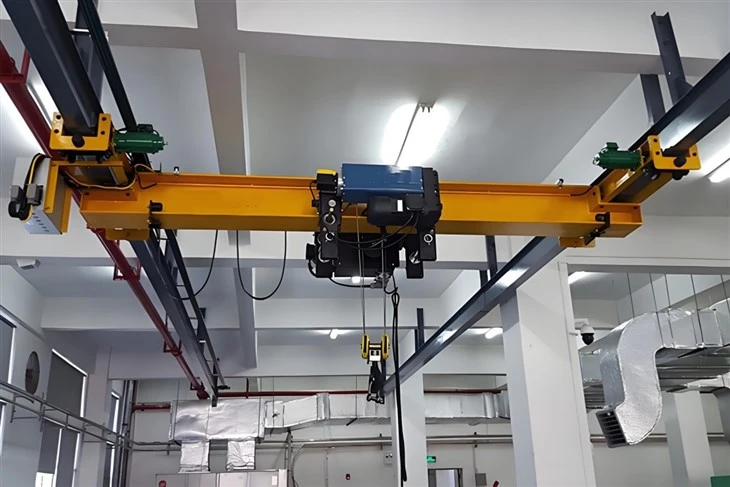
A new condition single beam crane is an overhead lifting system designed for efficient material handling in workshops, warehouses, manufacturing plants, and other industrial environments. It features a simple yet robust design, making it suitable for light to medium-duty lifting applications.
Key Features:
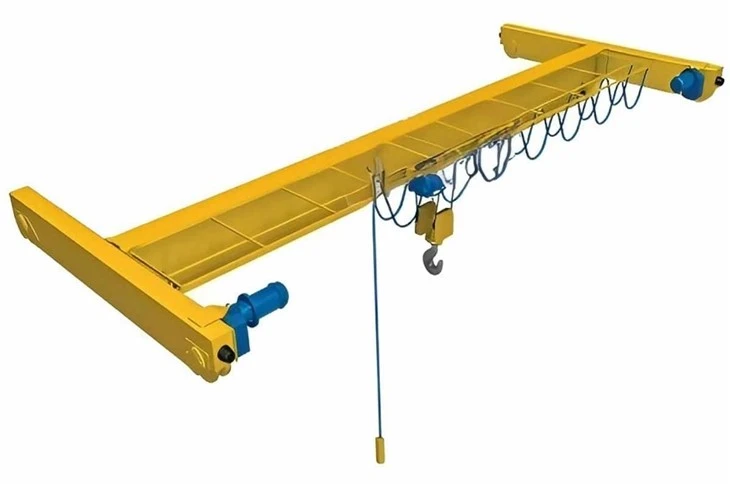
Single Girder Design: Consists of a single main beam (usually an I-beam or box girder) supported by end trucks, providing a cost-effective and space-saving solution.
Hoist & Trolley: Equipped with an electric or manual hoist that moves along the beam, allowing precise load positioning.
Smooth Operation: Powered by reliable electric motors for lifting and traversing, ensuring smooth and controlled movements.
Durable Construction: Made from high-quality steel with corrosion-resistant coatings (e.g., painted or galvanized) for long-term durability.
Safety Features: Includes overload protection, limit switches, emergency stop buttons, and secure braking systems.
Customizable Options: Available in various spans, lifting capacities (typically 1-20 tons), and power supply configurations (220V/380V/415V or customized).
Easy Installation: Designed for quick assembly and integration into existing structures or as part of a new facility setup.
Single Girder vs. Double Girder for 10-Ton Capacity
| Feature | Single Girder (LD) | Double Girder (QD) |
|---|---|---|
| Max Span | Up to 25m | Up to 35m+ |
| Lifting Height | Standard (6-18m) | Higher (up to 30m) |
| Hook Approach | Limited | Better (more space under girder) |
| Duty Cycle | Medium (A3-A4) | Heavy (A5-A6) |
| Cost | Lower | Higher (20-30% more) |
Lifting Capacity: 10 metric tons (10,000 kg)
Span (L): Typically 5m to 30m (customizable based on workshop width)
Lifting Height (H): 6m to 30m (adjustable based on building height)
Work Duty Class: A3 (Medium Duty) to A5 (Heavy Duty) (depending on usage frequency)
Operating Speed:
Hoisting: 3~8 m/min (adjustable with VFD for precision)
Trolley Travel: 10~20 m/min
Bridge Travel: 20~30 m/min
Power Supply: 3-Phase, 380V/50Hz (or 480V/60Hz for some regions)
Control Method: Pendant control / Radio remote / Cabin operation

Pictures & Components
A new condition single beam crane typically consists of the following key components:
1. Main Beam (Single Girder)
The primary load-bearing structure, usually made of rolled steel (I-beam or box-type design).
Designed for lightweight to moderate lifting capacities (typically up to 20 tons).
2. End Trucks (End Carriages)
Located at both ends of the main beam, equipped with wheels for movement along the runway rails.
Includes buffers to absorb shocks when reaching travel limits.
 |
 |
3. Hoist & Trolley
Electric Hoist: The lifting mechanism (chain hoist or wire rope hoist) mounted on a trolley.
Trolley: Moves horizontally along the bottom flange of the main beam for precise load positioning.
4. Runway System
Consists of runway beams (supported by columns or wall brackets) and rails for smooth crane movement.
May include crane stops to prevent over-travel.
 |
 |
5. Electrical System
Power Supply: Typically via festoon system, cable reels, or conductor bars.
Control System: Pendant control (push-button pendant) or radio remote control for operation.
Limit Switches: Prevent over-hoisting and over-travel.
6. Drive Mechanism
Travel Motors: For bridge movement (longitudinal travel).
Trolley Motor: For cross-travel (if motorized trolley is used).

7. Safety Components
Overload Protection: Prevents lifting beyond rated capacity.
Emergency Stop Button: For immediate shutdown.
Anti-Collision Devices (if multiple cranes operate in the same area).
8. Optional Features (Depending on Model & Use Case)
Variable Frequency Drives (VFDs): For smoother acceleration/deceleration.
Cabin Operated Controls (for larger cranes).
Weighing System: Integrated load measurement.

Common Standards & Certifications
Complies with ISO, FEM, DIN, or CMAA standards.
CE Marking (for Europe) or OSHA Compliance (for the USA).

.

| 🔩 Option | 📋 Use |
|---|---|
| Variable Frequency Drives (VFD) | For smooth speed control of hoisting/travel motion. |
| Anti-sway Control | Minimizes load swing, especially useful for longer spans. |
| Load Display System | Shows real-time lifted weight on digital screen. |
| Maintenance Platform | For easy access to hoist and motor systems (common in double girder designs). |

Sketch

Main technical

Advantages
A new condition single beam crane offers several advantages, especially when compared to older or used models. Here are the key benefits:
1. Enhanced Safety Features
Modern safety mechanisms like overload protection, limit switches, and emergency stop functions.
Sturdy construction with high-quality materials, reducing the risk of structural failures.
Compliance with the latest safety standards (e.g., ISO, OSHA, CE).
2. Improved Efficiency & Performance
Smooth and precise operation due to advanced motor and control systems.
Higher lifting capacity with optimized load distribution.
Energy-efficient motors reduce power consumption.
3. Low Maintenance & Longevity
New components (wires, hooks, motors, etc.) ensure minimal wear and tear.
Durable coatings (anti-rust, heat-resistant) extend lifespan.
Fewer breakdowns compared to used cranes, lowering maintenance costs.
4. Advanced Control Systems
Variable speed control for better handling of loads.
Remote control & automation options for safer and more convenient operation.
User-friendly interface with diagnostics for easy troubleshooting.
5. Customization Options
Can be tailored to specific workshop/warehouse needs (span, lifting height, capacity).
Choice of manual, electric, or radio-controlled operation.
Optional features like anti-sway technology or smart monitoring.
6. Cost-Effective in the Long Run
Lower repair costs compared to second-hand cranes.
Higher resale value if maintained properly.
Warranty coverage from manufacturers (unlike used cranes).
7. Compliance with Latest Regulations
Meets current industry standards, avoiding legal or compliance issues.
Certified load testing ensures reliability.
8. Quieter & Smoother Operation
Reduced noise pollution due to modern gear systems.
Minimal vibrations, ensuring safer material handling.
Application:
Common Applications
Manufacturing Facilities
Assembly line operations
Machine loading/unloading
Component positioning in production areas
Material transfer between workstations
Warehousing & Logistics
Loading/unloading trucks
Moving pallets and heavy packages
Inventory management operations
Storage area organization
Construction Sites
Material handling in prefabrication areas
Equipment installation
Moving construction materials (steel beams, concrete forms)
Maintenance Shops
Engine and heavy component handling
Equipment repair operations
Facility maintenance tasks
Crane production procedure
1. Design & Engineering
Customer Requirements Analysis: Determine load capacity, span, lifting height, duty cycle, and operating environment.
Structural Design:
Main beam design (box-type or I-beam) based on load and span.
End carriage design for stability and movement.
Electrical & Mechanical Design:
Hoist selection (electric chain hoist or wire rope hoist).
Motor, gearbox, and brake specifications.
Control system (pendant control or radio remote).
Safety Compliance: Ensure compliance with ISO, FEM, DIN, or ASME standards.
2. Material Procurement
Steel Beams: High-quality Q235B/Q345B steel for main and end beams.
Electrical Components: Motors, brakes, limit switches, and control panels.
Mechanical Parts: Wheels, gears, bearings, and wire ropes/chains.
3. Fabrication Process
A. Main Beam Fabrication
Cutting: Steel plates are cut using CNC plasma/laser cutting.
Welding:
Main beam welding (automatic submerged arc welding for strength).
Reinforcement ribs welded for added rigidity.
Shot Blasting & Painting:
Surface treatment to remove rust.
Primer and topcoat (anti-corrosion paint).
B. End Carriages Fabrication
Frame Assembly: Welded steel frame with wheels for movement.
Wheel Installation: Fitted with bearings and drive mechanisms.
C. Hoist & Trolley Assembly
Electric hoist mounted on trolley for horizontal movement.
Brakes, motors, and gearboxes installed.
D. Electrical System Integration
Wiring of motors, limit switches, and control panel.
Pendant or remote control system setup.
4. Quality Control & Testing
Dimensional Inspection: Verify beam straightness and alignment.
Welding Inspection: Ultrasonic or X-ray testing for critical welds.
Load Testing:
No-load test: Check smooth movement of crane and hoist.
Static load test: 125% of rated load for 10 minutes.
Dynamic load test: 110% of rated load with operational checks.
Electrical Safety Test: Insulation resistance, emergency stop function.
5. Packaging & Delivery
Disassembly (if needed): For easy transportation.
Protective Packaging: Anti-rust treatment and wooden crating.
Documentation: Manuals, test reports, and certifications provided.
6. Installation & Commissioning (Optional)
On-site assembly (if required).
Final operational checks and handover to the customer.

Workshop view:
The company has installed an intelligent equipment management platform, and has installed 310 sets (sets) of handling and welding robots. After the completion of the plan, there will be more than 500 sets (sets), and the equipment networking rate will reach 95%. 32 welding lines have been put into use, 50 are planned to be installed, and the automation rate of the entire product line has reached 85%.


Hot Tags: new condition single beam crane, China new condition single beam crane manufacturers, suppliers, factory, Single Girder Overhead Crane, Single Girder Overhead Travelling Crane
You Might Also Like


Send Inquiry