










Girder Overhead Crane
Products Description
Girder overhead crane is a kind of heavy lifting equipment widely used in industry and construction, which is specially used to carry and lift various heavy objects within a certain range. With its high efficiency, safety and reliability, it has become an important tool in factories, warehouses, ports and other places.
2.The design feature of Girder overhead crane is that its bridge spans between two parallel tracks, and a lifting mechanism (usually a hook or grab bucket) is suspended under the bridge, which can move laterally along the bridge, and the bridge can move longitudinally along the track to cover the entire working area. This crane can be a single-beam, double-beam or multi-beam structure, and different types are selected according to the specific load-bearing requirements and use environment.
3.Girder overhead crane is widely used in various industrial and construction sites with its strong load-bearing capacity and flexible operation. Its design and configuration can be customized according to specific needs to provide the best solution. As an important material handling equipment, bridge crane plays an important role in improving production efficiency and ensuring operation safety.
Max. Lifting Height:15M, 6M, 9M, 12M, 18M
Weight (KG):5000 kg
Max. Lifting Load:20 Ton
Span:1-28.5M
Color:Customize
Lifting Capacity:1-20 Ton
Lifting height:6-18m
Protection class:IP55
Industrial voltage:380v50hz/Customize
Lifting speed:0.8/5m/min

Pictures & Components
1.Main beam
1.The main beam of a girder overhead crane is an important part of the crane. It is usually the main load-bearing structure set horizontally on the crane track. It is responsible for supporting the crane's slings and loads, and transferring the weight of the load to the track through the crane's wheels.
2.The main beam is usually made of high-strength steel, and the design must meet certain rigidity and strength requirements to ensure that there will be no excessive deformation or breakage when lifting heavy objects. Depending on the specific design of the crane, the main beam can be a single beam or a double beam structure:
Single beam structure: This main beam structure is usually used for light bridge cranes, with the advantages of simple structure and light weight.
3.In addition, the main beam usually works with other components such as end beams, lifting mechanisms, running mechanisms, etc. to complete the various functions of the crane.

Lifting System
1. The lifting system of a girder overhead crane is its core part, which is mainly responsible for lifting and moving heavy objects from one location to another. The lifting system consists of several key components to ensure the safe and smooth lifting and lowering of heavy objects.
2. The following are the main components of the lifting system of a girder overhead crane:
Electric hoist or lifting mechanism
Electric hoist: Usually used in girder overhead crane with smaller and medium lifting capacities. The electric hoist integrates a motor, reducer, drum and hook system, and is able to lift or lower heavy objects by driving the rope drum through an electric motor.
Lifting mechanism: In heavy overhead cranes, the lifting mechanism is usually designed independently, including multiple components such as motor, reducer, brake, drum, wire rope, hook group, etc. This design can handle larger loads and has higher lifting speed and stability.
Wire rope or chain
Wire rope: Commonly used in the lifting system of most bridge cranes, it has high strength and durability and can withstand large pulling forces.
Chain: Sometimes used in light cranes, especially in situations where precise lifting control is required.
Hook assembly
The hook is the final actuator of the lifting system, used to hang and grab the weight. The hook is usually connected to the wire rope or chain through a pulley block, which can reduce the load on the electric hoist or lifting mechanism, allowing the crane to lift the heavy object more easily.
Drum
The drum is a winding device used to wind and release the wire rope. The rotation of the drum drives the wire rope to rise and fall, thereby controlling the rise and fall of the heavy object. The drum is usually directly connected to the lifting motor and the speed is adjusted through the reducer.
3.These components work together to form the overhead crane's lifting system, ensuring that heavy objects can be lifted, moved and lowered safely and reliably.
 |
 |
End Beam
1. The end beam of an overhead crane is a vital part of the crane structure. It connects the main beam and supports the movement of the entire crane on the track. The main function of the end beam is to provide lateral support for the main beam and evenly distribute the weight of the crane and the load of the hoisted objects on the track.
2. The following are the main features and functions of the end beam of an overhead crane:
The end beam is usually rectangular or box-shaped, and mainly plays a lateral support role to ensure the stability and horizontality of the main beam. The two ends of the end beam are connected to the main beam to form the overall frame structure of the bridge crane. The main beam and the end beam are fixed together by bolts, welding, etc. to ensure the overall rigidity and stability of the crane.
Buffers are usually equipped at both ends of the end beam to prevent the crane from colliding at the end of the track. The buffer can absorb impact and protect the crane and track system.
The end beam helps to evenly distribute the load carried by the main beam and the crane to each wheel, thereby ensuring the smooth operation of the entire crane system on the track.
The operating mechanism on the end beam includes a drive motor, a reducer and a wheel device. Through the drive device, the crane can move forward and backward along the track to achieve horizontal transportation.
3.The end beam of a overhead crane is an important load-bearing and operating component of the bridge crane, and has a vital impact on the safety, stability and operating efficiency of the crane.


Crane travelling mechanism
1. The crane system of a overhead crane is the key part that enables the entire crane to move horizontally along the track. The main function of this system is to move the crane and its load from one location to another, usually along a fixed route for horizontal transportation.
2. The following are the components of the trolley system of a overhead crane and their functions:
Wheel device
Driving wheel: The driving wheel in the Crane travelling mechanism is responsible for pushing the crane along the track. These wheels are usually driven by an electric motor through a reducer. Driven wheel: The driven wheel is not connected to the drive system, but passively follows the movement of the driving wheel. They help to disperse the weight of the crane and ensure smooth operation.
Drive device
Motor: The core of the Crane travelling mechanism is the drive motor, which drives the gears or chains through electrical energy and ultimately drives the wheel device. Usually, there is a motor on each side of the end beam of the bridge crane to ensure that the crane can run evenly and synchronously.
Control system
Speed control: The Crane travelling mechanism is usually equipped with a frequency converter or other type of speed control device to adjust the speed of the motor, thereby controlling the operating speed of the crane. The frequency converter can achieve smooth acceleration and deceleration of the crane and avoid the impact caused by sudden start or stop.
Cable and power supply system
Power supply system: The Crane travelling mechanism is usually powered by busbars or cable drums. Busbars are usually laid along the track to ensure that the motor and control system can obtain continuous power supply.
3. Summary The Crane travelling mechanism of the bridge crane is a key part of the horizontal movement of the entire crane. It ensures that the crane can move effectively and safely on the track. By accurately controlling the movement speed, direction and position of the trolley, the trolley operation system provides a basic guarantee for the efficient operation of the crane.
Trolley travelling mechanism
1. The trolley travelling mechanism of a overhead crane refers to the trolley device that moves horizontally on the main beam of the bridge crane. Its main function is to carry the crane's lifting system and move along the main beam within the working range of the bridge crane. The design and performance of the trolley running system directly affect the crane's working efficiency and operating accuracy.
2. The following are the main components and functions of the trolley travelling mechanism:
Trolley frame
The trolley frame is the basic framework of the trolley travelling mechanism. It usually adopts a high-strength steel structure and can carry the lifting device and its load. The trolley frame is usually designed as a box-type structure, which can provide sufficient strength and reduce weight. The trolley frame is installed above or below the main beam and is connected to the track of the main beam through the wheel set.
Transmission system
Gear transmission system is often used in trolley running system. It has the advantages of high efficiency and precision, and is suitable for the smooth operation of the trolley under high load. Chain drive is another common transmission method, especially in trolleys that require compact design or short transmission distance. Chain drive is simple, durable and easy to maintain.
Cable and power supply system
The trolley running system is usually powered by busbars. The busbar is laid along the main beam to ensure that the trolley can continuously receive power during the entire operation process. On some cranes, the trolley operation system may use a cable drum to power it, especially in situations where long distances need to be moved or frequent operations are required. The cable drum system can automatically retract and release the cable to prevent the cable from dragging on the ground or getting tangled.
3.Summary
The trolley travelling mechanism of the bridge crane is one of the most important parts of the crane, responsible for the movement of lifting equipment and heavy objects. Through precise control and stable operation, the trolley operation system enables the bridge crane to efficiently complete various lifting tasks and ensure the safety and reliability of the entire operation process.
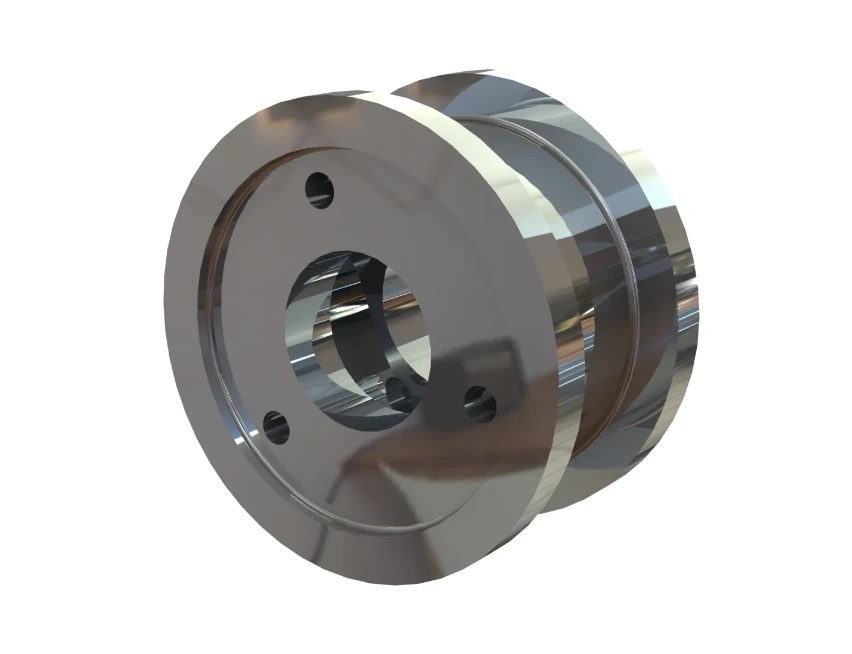
Crane wheel
1. The wheels of a overhead crane are key components in the crane's operating system. They carry the weight of the entire crane and move it along the track. The design, material, and installation method of the wheel directly affect the crane's operating efficiency, stability, and safety.
2. The following are the main features of overhead crane wheels and their functions:
Wheel type
Driving wheel: The driving wheel is the wheel connected to the drive motor, which drives the crane along the track through the power of the motor. Usually, the driving wheels of a bridge crane are installed on the end beams on both sides to ensure that the entire crane moves smoothly.
Driven wheel: The driven wheel is not connected to the drive system, but passively follows the movement of the driving wheel. They play a balancing and supporting role, helping to disperse the weight of the crane.
Material
Steel wheels are the most commonly used type of wheels in bridge cranes. They have high strength and wear resistance, and can withstand huge loads and frequent use. Steel wheels are usually heat treated to increase their hardness and durability. Cast iron wheels are also used in some cranes, especially in applications with lighter loads or lower requirements. Cast iron wheels have good compressive strength, but are relatively brittle and easily damaged under heavy loads or impacts.
Wheel Design
This type of wheel has only one raised rim on the outer edge to prevent the wheel from coming off the track. Single-rim wheels are usually used for shorter distances or where directional stability is not a high requirement. Double-rim wheels have rims on both the inner and outer sides. This design helps to better keep the wheel on the track and prevent derailment, which is suitable for long-distance and high-precision operation requirements.
3.Summary The wheels of a overhead crane are an important component that determines the efficiency and safety of the crane's operation. With careful design and regular maintenance, the wheels can ensure that the crane moves smoothly and accurately on the track while bearing the huge weight of the crane and its load.
 |
 |
 |
Crane hook
1. The hook of a overhead crane is a key component in the lifting system, used to grab and hang various heavy objects. The hook is connected to the lifting mechanism of the crane through a wire rope or chain, and is the direct actuator for lifting, moving and lowering heavy objects.
2. The following are the main features of the overhead crane hook and its functions:
Hook type
Single hook: The single hook is the most common type of hook and is suitable for most lifting operations. The single hook has a simple structure and is easy to operate. It is usually used to lift heavy objects of moderate weight and regular shape.
Structure of the hook
Hook body: The hook body is usually forged from high-strength alloy steel with good load-bearing capacity and impact resistance. The design of the hook body is usually C-shaped or S-shaped to allow easy mounting and unloading of heavy objects. Hook mouth: The hook mouth is the part of the hook opening that allows the sling or other mounting device to enter. In order to prevent the heavy object from accidentally falling off, the hook mouth is usually equipped with a safety lock or anti-slip tongue.
Materials and Manufacturing Process
Alloy steel: Hooks are usually made of high-strength alloy steel, which has good wear resistance and fatigue resistance and can withstand long-term and high-frequency lifting operations. Forging process: Most bridge crane hooks are made by forging. Forging makes the internal structure of the metal denser, thereby improving the strength and durability of the hook.
3. Summary
The hook of a overhead crane plays a vital role in lifting operations. Its design must take into account strength, safety and ease of operation. Through proper use and regular maintenance, the hook can maintain good working condition for a long time, providing protection for the safe and efficient operation of the crane.
 |
 |
 |
Motor
1. The motor of an overhead crane is one of its key power sources and is responsible for driving various moving parts of the crane, including the horizontal movement of the main beam, the horizontal movement of the trolley, and the lifting mechanism. The performance of the motor directly affects the working efficiency, stability, and safety of the crane.
2. The following are the main features and functions of overhead crane motors:
Motor type
AC Motor: Commonly used as the main drive system of bridge cranes. AC motors have the advantages of simple structure, easy maintenance, and stable operation. Common types of AC motors include asynchronous motors and synchronous motors. DC motor: In some cranes, especially in applications that require precise control, DC motors may be used. DC motors provide better starting and speed regulation performance and are suitable for occasions requiring high control accuracy.
Motor power
Power selection: The power of the motor is selected according to the design and use requirements of the crane. Motors with larger power are suitable for heavy cranes and high load operations, while motors with smaller power are suitable for light cranes and low load operations. Speed regulation capability: The power selection of the motor also needs to consider the speed regulation requirements of the crane. Modern cranes are usually equipped with frequency converters that can adjust the speed of the motor to adapt to different working requirements.
Cooling and protection
Cooling system: The motor generates heat during operation and is usually equipped with a cooling system (such as a fan or water cooling) to keep the motor within a safe temperature range. A good cooling system can improve the efficiency and life of the motor. Overload protection: The motor is usually equipped with an overload protection device, such as a thermal relay or circuit breaker, to prevent the motor from being damaged by overload or short circuit. The overload protection device will automatically cut off the power when the motor load is too high to protect the motor and related equipment.
3.Summarize
The electric motor of an overhead crane is the core component that realizes its various movements, affecting the operating efficiency and performance of the crane. Selecting the appropriate motor type and power and performing regular maintenance are the key to ensuring the safe and efficient operation of the crane.

. 

Sound and light alarm system & limit switch
1.The sound and light alarm system and limit switch of the overhead crane are important safety devices to ensure the safe operation of the crane. They respectively play the role of warning the operator and preventing excessive movement of the equipment, which helps to prevent accidents and protect the safety of equipment and operators.
Sound and light alarm system
Function:
Warning function: The sound and light alarm system is used to remind the operator and surrounding personnel of the operating status of the crane, especially when the crane is started, running or approaching a dangerous area. The sound and light alarm signal is usually conveyed through buzzers, sirens and flashing lights.
Abnormal reminder: If the crane encounters an abnormal situation during operation (such as overload, failure, etc.), the sound and light alarm system will automatically sound an alarm to remind the operator to take measures.
Components:
Sound alarm: Usually installed in the operating room or key parts of the crane, it emits a buzzer, sirens or other types of sound signals to alert the operator or surrounding personnel.
Light alarm: Usually a flashing light or indicator light, installed in a conspicuous position on the crane. When the crane is running or abnormal, the light will flash to attract attention.
Working principle:
When the control system of the crane detects a specific operating state or abnormal situation (such as the crane starts, is overloaded, moves to the limit switch, etc.), the sound and light alarm system will automatically start and sound the sound and light alarm.
The operator can respond in time by observing and listening to the sound and light alarm signals to ensure safe operation.
Applicable occasions:
Starting and running: When the crane starts or moves, the sound and light alarm system reminds the operator and surrounding personnel to stay alert and avoid entering the dangerous area by mistake.
Dangerous state: When the crane approaches the limit position or the load exceeds the safe range, the sound and light alarm system will sound an alarm to prevent accidents.
Limit switch
Function:
Limiting the range of motion: The limit switch is used to limit the range of motion of the crane or trolley to prevent the equipment from running beyond the design range and avoid accidents such as collision or derailment.
Automatic stop: When a part of the crane (such as the main beam, trolley or hook) reaches the preset limit position, the limit switch will automatically cut off the power supply or control signal to stop the crane from moving.
Components:
Mechanical limit switch: This is the most common type, which detects the position through physical contact. When the crane component touches the limit switch, the switch triggers the circuit to cut off the power supply.
Photoelectric limit switch: The position of the crane is detected by a photoelectric sensor. It is non-contact operation and is suitable for occasions with high precision requirements.
Magnetic limit switch: It uses magnetic field changes to sense position changes and is suitable for use in dusty or humid environments.
Working principle:
Mechanical limit: When the crane or trolley moves to the set limit position, the limit switch is triggered, cutting off the power supply to the motor to prevent further movement.
Automatic reset: Some limit switches have an automatic reset function. When the equipment returns to the normal position from the limit position, the limit switch automatically resets and restores the normal operation of the equipment.
Application scenarios:
Lifting limit: Limit the maximum lifting height of the hook to prevent the hook from over-lifting and causing wire rope breakage or other accidents.
Travel limit: Limit the travel range of the main beam and trolley to prevent it from hitting the end of the track or other obstacles.
Rotation limit: In some specific bridge cranes, the limit switch can also be used to limit the rotation angle of the boom or rotating platform.
2.Summary
The sound and light alarm system and limit switch of the overhead crane are key devices to ensure its safe operation. The sound and light alarm system sends out sound and light signals to remind the operator and surrounding personnel to pay attention to the status of the crane to prevent accidents; the limit switch limits the movement range of the crane to prevent it from exceeding the design range or colliding, ensuring the safety of operation and the integrity of the equipment. The combination of these two greatly improves the safety performance of the overhead crane and reduces the risk of operation.

Safety Devices
Overload protection device
Function: Prevent the crane from continuing to operate when it exceeds its rated load, thereby avoiding mechanical failure and safety accidents.
Working principle: The device monitors the load of the crane through sensors. When it detects that the load exceeds the safety limit, the system will sound an alarm and automatically cut off the lifting circuit of the crane, making it unable to continue lifting heavy objects.
Common forms: mechanical overload protection, electronic overload protection (such as torque limiter).
Limit switch
Function: Used to limit the extreme position of the crane's movement to prevent the main beam, trolley or hook from exceeding the predetermined range to avoid collision and damage.
Application: lifting limit, travel limit, rotation limit, etc.
Type: mechanical limit switch, photoelectric limit switch, magnetic limit switch, etc.
Sound and light alarm system
Function: By emitting sound and light signals, the operator and surrounding personnel are reminded of the operating status of the crane, especially in dangerous or abnormal conditions.
Application: Crane start-up, overload warning, prompt when limit is triggered, etc.
Emergency stop device
Function: In an emergency, the operator can quickly cut off the power supply of the crane through the emergency stop button to stop all operations immediately.
Location: Usually installed in an accessible location in the operating room, control cabinet or crane for quick operation in an emergency.
Windproof device
Function: Used to prevent the crane from overturning or derailing due to strong winds when working outdoors.
Composition: Windproof rail clamp, windproof anchor, windproof alarm, etc.
Buffer
Function: The buffer is installed at the end of the track to prevent the crane trolley or car from hitting the end of the track in extreme cases and reduce the impact force.
Type: Spring buffer, hydraulic buffer, etc.
Control Mode
PLC control system
Function: PLC (Programmable Logic Controller) is the core of the bridge crane control system, responsible for executing operation commands, monitoring equipment status, and realizing automatic control.
Features: It has the advantages of flexible programming, rapid response, high reliability, etc., and can realize complex control logic and automatic operation.
Application: Travel control, lifting control, limit control, etc. of large and small cars.
Frequency conversion control system
Function: By adjusting the frequency of the motor, the crane can be started smoothly, the speed can be adjusted accurately, and the energy-saving operation can be realized.
Advantages: Reduce the starting current impact, improve the operation accuracy, extend the mechanical life, and save energy.
Application: Travel control of large and small cars, lifting speed control.
Remote control system
Function: Allow the operator to control the operation of the crane through a wireless remote control in a safe position away from the crane.
Advantages: Improve the safety and flexibility of operation, especially in complex or dangerous working environments.
Application: Remote control of the crane's start, stop, travel, lifting and other operations.
HMI (Human Machine Interface) System
Function: The HMI system provides a friendly human-machine interface, where the operator can directly monitor and operate various functions of the crane through a touch screen or control panel.
Features: Intuitive operation interface, real-time monitoring and diagnostic functions, alarm display and data recording.
Application: Display the operating status, load conditions, fault information, etc. of the crane.
Data Monitoring and Management System
Function: Used to monitor the operating data of the crane (such as load, speed, position, etc.) in real time, and record and analyze the data.
Advantages: Improve operating efficiency, preventive maintenance, and optimize management.
Application: Remote monitoring, fault diagnosis, operation data analysis and recording.

12.Sketch

Main technical data


Advantages
1. Strong carrying capacity
Large load capacity: The structural design of bridge cranes enables them to withstand very large loads and are usually suitable for heavy industrial operations, such as steel mills, shipyards, machinery manufacturing plants, etc.
Multiple specifications available: Bridge cranes can be designed and manufactured according to specific needs to meet lifting requirements ranging from a few tons to hundreds of tons.
2. Efficient space utilization
Wide coverage: The main beam of a bridge crane is usually erected on the track of a factory or workshop, and can be moved throughout the entire operating area, making full use of the upper space without occupying ground space.
Strong flexibility: The crane can achieve full coverage in the horizontal and vertical directions, and flexibly handle material handling tasks at any location in the operating area.
3. High-precision operation
Precise positioning: Modern bridge cranes are usually equipped with sophisticated control systems (such as PLC control, frequency conversion control), which can achieve precise positioning of heavy objects and are suitable for occasions requiring high-precision handling.
Smooth movement: The application of frequency converters and buffer systems makes bridge cranes smoother during start-up, stop and operation, reducing the impact and shaking of the load.
4. Convenient operation
Multiple control methods: Bridge cranes can be operated through ground operation, cab operation or wireless remote control, adapting to different operating environments and requirements, improving the convenience and safety of operation.
Automation and intelligence: With the development of industrial automation, bridge cranes can integrate automation systems to realize automatic handling, precise stacking, remote monitoring and other functions, reduce manpower requirements and improve work efficiency.
5. High safety
Multiple safety devices: Bridge cranes are equipped with a variety of safety devices such as limit switches, overload protection devices, emergency stop devices, wind protection devices, etc., which effectively prevent accidents.
Redundant design: Key components usually adopt redundant design to ensure that the system can still operate safely when a part fails.
Application:
1. Manufacturing
Heavy machinery manufacturing: In machinery manufacturing plants, bridge cranes are used to move and assemble large machinery parts, such as engines, turbines, machine tools, etc. Its high-precision operation and strong carrying capacity make the assembly and transfer of heavy parts safer and more efficient.
Automobile manufacturing: Used to move auto parts, especially on automobile assembly lines, for the lifting and positioning of major components such as engines and car bodies.
2. Iron and steel metallurgy
Steel mills: Bridge cranes are used to move molten metals, ingots, and other heavy raw materials. In these high-temperature environments, cranes must have high heat resistance and safety.
Rolling mills: In rolling mills, bridge cranes are used to move steel coils, steel plates, and steel beams, helping to transfer rolled steel from production lines to warehouses or transportation equipment.
3. Warehousing and logistics
Large warehouses: Bridge cranes are widely used for cargo loading and unloading and stacking in large warehouses. It can efficiently utilize vertical and horizontal space and maximize the storage capacity of warehouses.
Logistics centers: In logistics centers, bridge cranes are used to quickly move and sort heavy goods, supporting efficient logistics operations.
4. Ports and docks
Container handling: In ports and docks, bridge cranes are used for container loading and unloading operations. They can quickly move large containers between ships, trucks and warehouses to ensure the rapid transfer of goods.
Bulk cargo handling: Bridge cranes are also used for loading, unloading and stacking of bulk cargo (such as ore, coal, grain, etc.), helping to speed up cargo processing.
5. Power industry
Power plants: In thermal power plants, hydropower plants and nuclear power plants, bridge cranes are used to move and maintain large power generation equipment such as turbines, generator rotors, transformers, etc. These equipment are usually very heavy and require precise positioning.
Substations: Bridge cranes are used to lift and install large transformers, switchgear and power control equipment to ensure the safe and reliable operation of power infrastructure.
Crane production procedure
Material Inspection
Quality Inspection: Strict quality inspection is carried out on the purchased raw materials to ensure that they meet the design requirements and national standards.
Material Storage: Qualified materials are stored according to classification to prevent corrosion or damage.
Cutting and Forming
Steel Cutting: Use plasma cutting, laser cutting or flame cutting and other technologies to cut the steel according to the size of the design drawing.
Forming Processing: Form the steel plate through bending, rolling, welding and other processes to manufacture the main beam, end beam and other structural parts.
Welding
Component Welding: The cut and formed steel parts are welded into the main structures such as the main beam, end beam and trolley. The welding process needs to be strictly controlled to ensure the structural strength and welding quality.
Weld Inspection: Use non-destructive testing technology (such as ultrasonic testing, radiographic testing) to inspect the welds to ensure that there are no cracks or other defects.
Machining
Precision Machining: Precision machining is performed on the key components of the crane, such as wheel sets, bearing seats, pulleys, etc., to ensure their dimensional accuracy and surface quality.
Assembly of the whole machine
General assembly: On the basis of pre-assembly, the overall assembly of the crane is carried out, including the final installation of the main beam, end beam, lifting mechanism, walking mechanism, etc.
Commissioning and testing
Under dynamic conditions, the operating performance of the crane is tested, including the testing of lifting, walking, steering and other functions. The overall size of the assembled bridge crane is checked to ensure that all dimensions meet the design requirements.
Spraying and anti-corrosion treatment
Surface treatment Rust removal: Rust removal on the surface of the crane, common methods include sandblasting, pickling, etc. Primer spraying: Spray anti-corrosion primer on the treated surface to prevent metal oxidation and corrosion. Topcoat spraying Color spraying: Spray topcoat according to customer requirements or industry standards to give the crane a protective and decorative effect. Marking: After spraying, mark the crane's identification information in accordance with the specifications, such as model, rated load, etc.
Factory and installation
Packaging and transportation
Packaging protection: Protectively package the key components of the crane to prevent damage during transportation. Transportation arrangement: According to the equipment size and transportation conditions, select a suitable transportation method to transport the crane to the customer's site.
Acceptance and delivery
Customer acceptance
On-site acceptance: The customer conducts on-site acceptance of the crane according to the contract requirements and technical specifications to check the performance and quality of the equipment.
Problem rectification: If any problems are found, the manufacturer needs to rectify them in time to ensure that the equipment fully meets the customer's requirements. Delivery and use Operation training: The manufacturer usually trains the customer's operators to ensure that they can operate the crane correctly and safely.


Workshop view
Material Inspection
Quality Inspection: Strict quality inspection is carried out on the purchased raw materials to ensure that they meet the design requirements and national standards.
Material Storage: Qualified materials are stored according to classification to prevent corrosion or damage.
Cutting and Forming
Steel Cutting: Use plasma cutting, laser cutting or flame cutting and other technologies to cut the steel according to the size of the design drawing.
Forming Processing: Form the steel plate through bending, rolling, welding and other processes to manufacture the main beam, end beam and other structural parts.
Welding
Component Welding: The cut and formed steel parts are welded into the main structures such as the main beam, end beam and trolley. The welding process needs to be strictly controlled to ensure the structural strength and welding quality.
Weld Inspection: Use non-destructive testing technology (such as ultrasonic testing, radiographic testing) to inspect the welds to ensure that there are no cracks or other defects.
Machining
Precision Machining: Precision machining is performed on the key components of the crane, such as wheel sets, bearing seats, pulleys, etc., to ensure their dimensional accuracy and surface quality.
Assembly of the whole machine
General assembly: On the basis of pre-assembly, the overall assembly of the crane is carried out, including the final installation of the main beam, end beam, lifting mechanism, walking mechanism, etc.
Commissioning and testing
Under dynamic conditions, the operating performance of the crane is tested, including the testing of lifting, walking, steering and other functions. The overall size of the assembled bridge crane is checked to ensure that all dimensions meet the design requirements.
Spraying and anti-corrosion treatment
Surface treatment Rust removal: Rust removal on the surface of the crane, common methods include sandblasting, pickling, etc. Primer spraying: Spray anti-corrosion primer on the treated surface to prevent metal oxidation and corrosion. Topcoat spraying Color spraying: Spray topcoat according to customer requirements or industry standards to give the crane a protective and decorative effect. Marking: After spraying, mark the crane's identification information in accordance with the specifications, such as model, rated load, etc.
Factory and installation
Packaging and transportation
Packaging protection: Protectively package the key components of the crane to prevent damage during transportation. Transportation arrangement: According to the equipment size and transportation conditions, select a suitable transportation method to transport the crane to the customer's site.
Acceptance and delivery
Customer acceptance
On-site acceptance: The customer conducts on-site acceptance of the crane according to the contract requirements and technical specifications to check the performance and quality of the equipment.
Problem rectification: If any problems are found, the manufacturer needs to rectify them in time to ensure that the equipment fully meets the customer's requirements. Delivery and use Operation training: The manufacturer usually trains the customer's operators to ensure that they can operate the crane correctly and safely.


Hot Tags: girder overhead crane, China girder overhead crane manufacturers, suppliers, factory, Single Girder Overhead Crane, Single Girder Overhead Travelling Crane
You Might Also Like


Send Inquiry