










Free Standing Bridge Crane
Products Description
Overview
A free-standing bridge crane is a versatile and robust lifting solution designed to handle loads efficiently in various industrial environments. Unlike traditional bridge cranes, the free-standing bridge crane does not rely on existing building structures for support. Instead, it is supported by its own independent steel columns, making it ideal for facilities where overhead support structures are unavailable or insufficient.
Key Features;Independent Structure
1)Key Features;Independent Structure;A free-standing bridge crane is The crane system is mounted on self-supporting steel columns, making it adaptable to any facility layout.Customizable Span and Load Capacities Typically, spans range from 10 to 40 feet or more, and load capacities range from 500 lbs to 20 tons or higher, depending on the application.
Ease of Installation
A free-standing bridge crane is Its modular design ensures quick installation and easy integration into existing workflows without extensive facility modifications.Flexibility;Ideal for a variety of industries, including manufacturing, automotive, warehousing, and more.
Benefits
3)Cost-Effective Solution: Avoids the need for reinforcing building structures, saving significant costs.Enhanced Workflow Efficiency: Streamlines material handling, reduces downtime, and improves operational productivity.Portable Design: Can be relocated to different areas of a facility, offering flexibility for changing operational needs.Improved Safety: Reduces manual lifting, thereby minimizing the risk of workplace injuries.
Core Components Engine, Bearing, Gearbox, Motor, Gear
Place of Origin Henan, China
Warranty 1 Year
Weight (KG) 1000 kg
Crane Capacity 2t
Working duty A3
Lifting speed 0.8/5 M/min
Traveling Speed 11 m/min
Lifting mechanism Electric Chain Hoist
Warranty 2 years
Control method Ground Control+Remote Control
Crane feature Smooth traveling low noise

Pictures & Components
Main beam
A free-standing bridge crane is Key Features of the Main Beam;Material Construction;Typically made of high-strength steel or aluminum alloy (for lighter loads) to provide durability and reliability under heavy usage.Engineered to withstand bending, torsion, and other forces during operation.
A free-standing bridge crane is Profile Types;Single Girder: Used for lighter loads and smaller spans, featuring a compact design that reduces the crane's overall weight.Double Girder: Suitable for heavier loads, offering higher lifting capacities and greater stability.
A free-standing bridge crane is Precision Engineering;Fabricated to exacting standards to ensure straightness and rigidity, which are crucial for smooth trolley travel and accurate load positioning.
A free-standing bridge crane is Welded or Box-Type Construction;Main beams can have either a welded structure or a box-type girder design, depending on the required load capacity and application.
A free-standing bridge crane is Coating and Surface Treatment;The beam is typically painted or powder-coated to prevent rust and corrosion, ensuring long-term durability even in harsh environments.Some models may feature specialized coatings for use in cleanrooms or corrosive environments.

Lifting System
1)Purpose: The hoist is the primary mechanism responsible for lifting and lowering loads.Electric Hoist: Powered by an electric motor for efficient lifting.Manual Hoist: Operated manually, ideal for lighter loads or applications where power is unavailable.Air Hoist: Used in environments requiring non-sparking operations, such as chemical or explosive industries.Lifting Capacities: Vary from 500 lbs to over 20 tons, depending on the model and application.
2) Safety Features;Overload protection to prevent lifting loads beyond the crane's capacity.Emergency stop buttons for immediate shutdown during emergencies.Upper and lower limit switches to prevent the hoist from over-traveling.Anti-sway systems to stabilize loads during movement.
3) Control Systems;Pendant Controls: Allow the operator to control the hoist and trolley from a safe distance.Wireless Remote Controls: Offer enhanced mobility and safety for the operator.Variable Frequency Drives (VFDs): Provide smooth acceleration and deceleration for precise load handling.
4)Lifting Mechanisms;Wire Rope Hoist: Utilizes steel cables for heavy-duty applications, offering durability and higher lifting capacities.Chain Hoist: Uses a chain for lifting, commonly employed for medium-duty tasks and applications requiring compact designs.

3.End carriage
1) Free-Standing Bridge Crane: End Carriage Overview The end carriage, also known as end trucks, is a key component of a free-standing bridge crane. It is responsible for supporting and moving the main bridge along the crane's runway beams, enabling horizontal motion across the workspace.
2) Key Features of the End Carriage;Structural Design;Constructed from high-strength steel to provide durability and rigidity under heavy loads.Designed to support the main beam and distribute loads evenly across the runway.
3) Wheel System;Equipped with precision-engineered wheels that ensure smooth and consistent movement.Wheels are typically made from hardened steel or other durable materials to resist wear.
4) Types of wheels:Flanged Wheels: Guide the end carriage along the runway beam.Flat Wheels: Used in systems with external rail guiding mechanisms.
5) Motorization (Optional);Motorized end carriages are powered by electric motors for automatic movement along the runway.Geared Motors: Provide reliable and precise control of movement speed and direction.
6) Bearings and Axles;High-quality bearings and axles are integrated into the wheel assemblies to ensure long service life and minimal maintenance.Compact Design;The end carriage is designed to minimize the overall space required for the crane while maintaining load stability.

4.Crane travelling mechanism
1) Components of the Crane Travelling Mechanism End Carriages;Support the main beam and connect to the wheels and drive units that move the crane.
Designed for durability and to bear the dynamic forces during operation
Travel Wheels;Precision-engineered wheels enable smooth movement along the runway beams.Wheel Types:Flanged Wheels: Prevent derailment by keeping the crane aligned on the track.Flat Wheels: Used when the track includes external guiding systems.
Motors and Drives;Electric Motors: Provide power for crane travel, with energy-efficient options for long-term cost savings.Geared Drives: Deliver controlled power to the wheels for smooth and precise movement.Dual Drive System: Often used for larger cranes to ensure balanced power distribution.
Runway Tracks;Made of high-strength steel or rail-grade material to handle the crane's weight and ensure long-term durability.Control Systems;Operated via:Pendant Control: Wired control for precise, manual operation.Wireless Remote Control: Enhances mobility and safety for operators.Equipped with speed adjustment features for fine control of travel movements.
Buffers and Limit Switches;Installed at the ends of the runway to prevent collisions and protect the crane from over-travel.
5.Trolley travelling mechanism
1) Components of the Trolley Travelling Mechanism Trolley Frame;The rigid structure that houses the wheels, hoist, and motor (in motorized trolleys).Typically constructed from high-strength steel or other durable materials to withstand the weight of the load and dynamic forces during operation.
2) Trolley Wheels;Purpose: Enable the trolley to travel smoothly along the flange of the main beam.Types:Flanged Wheels: Provide stability by gripping the flange of the beam and preventing derailment.Flat Wheels: Used when an external guide rail or track ensures alignment.Made of hardened steel or other wear-resistant materials for longevity.Drive Mechanism (For Motorized Trolleys)
3) Motor: Powers the trolley's movement, often an electric motor.Gearbox: Transfers power from the motor to the wheels, ensuring efficient motion.Variable Speed Drives (VFDs): Allow adjustable travel speeds for precise control.
4) Control Systems;Manual Control: Operated using a pull chain or push/pull handles (for non-motorized trolleys).Electric Control: Operated using pendant or wireless remote controls for motorized trolleys.Can include speed adjustment and emergency stop features for enhanced safety.
6.Crane wheel
Key Features of Crane Wheels High-Strength Construction;Made from hardened steel, alloy steel, or other wear-resistant materials to withstand heavy loads and repetitive use.Designed to resist deformation under high stress and maintain durability over time.
Flange Design;Most crane wheels have flanges to ensure the crane remains aligned on the runway beam or rail.Single Flange, Double Flange, or Flangeless Options depending on the track and application.
Precision Machining;Manufactured with high precision to ensure smooth rolling, reduced friction, and minimal wear on both the wheels and the track.Load-Bearing Capacity Rated to handle specific load ranges, with capacities varying from a few tons to several hundred tons for heavy-duty applications.
Heat Treatment;Many crane wheels are heat-treated or surface-hardened to enhance strength, reduce wear, and extend service life.

7.Crane Hook
1) Key Features of a Crane Hook Material Composition;Typically made from high-strength alloy steel or forged carbon steel to ensure durability and resistance to wear, deformation, and stress.Often heat-treated to increase hardness and strength for heavy-duty applications.
2) Load Capacity;Designed to handle loads ranging from light-duty applications (a few hundred kilograms) to heavy-duty operations (hundreds of tons).
3) Hook Design;Single Hook: Used for lighter loads and straightforward lifting tasks.Double Hook: Provides better balance for lifting larger or bulkier loads.
4) Latch Mechanism;Hooks often feature a safety latch that closes the throat of the hook to prevent accidental disengagement of the load during lifting.
5) Precision Engineering;Designed with optimal hook curvature to ensure a secure grip and reduce stress concentration on the load.

Motor
Crane Travel Motor Key Features of Crane Motors High Efficiency Motors are designed to deliver maximum output with minimal energy consumption.Variable Frequency Drive (VFD) Compatibility Allows for smooth acceleration and deceleration, precise speed control, and energy savings.
Robust Construction;Built to withstand harsh operating conditions, such as dust, heat, and moisture.Compact Design;Lightweight and space-saving designs help optimize the crane's overall structure.
Thermal Protection;Equipped with thermal sensors to prevent overheating and ensure reliable operation.Low Noise and Vibration High-quality motors ensure quiet operation and minimal vibration, reducing wear on crane components.
High Efficiency;Motors are designed to deliver maximum output with minimal energy consumption.Variable Frequency Drive (VFD) Compatibility Allows for smooth acceleration and deceleration, precise speed control, and energy savings.
Robust Construction;Built to withstand harsh operating conditions, such as dust, heat, and moisture.Compact Design;Lightweight and space-saving designs help optimize the crane's overall structure.

.
Sound and light alarm system & limit switch
Sound and Light Alarm System The sound and light alarm system alerts workers in the vicinity about the crane's movement or potential safety risks. It is an integral part of the crane's safety protocol, ensuring compliance with workplace safety standards.
Key Features of the Alarm System Audio Alarms (Sound) Emit loud, distinct warning sounds to alert operators and nearby personnel.Common sound patterns include beeping, sirens, or voice alerts.Volume is adjustable and complies with industrial noise standards.
Visual Alarms (Light);Use LED flashing lights or rotating beacons to provide a visual warning.Lights are typically red, amber, or blue for high visibility.
Integrated Control Automatically activates during critical operations, such as crane travel, lifting, or when the crane approaches limits.Some systems allow manual activation for emergencies.
Durable Design;Constructed to withstand harsh environments, including dust, moisture, and vibrations.Benefits of the Alarm System Enhanced Safety: Prevents collisions or accidents by notifying personnel of crane operations.Compliance: Meets regulatory requirements for workplace safety.

10.Safety Devices
1. Key Safety Devices in a Free-Standing Bridge Crane Overload Protection Device Purpose: Prevents the crane from lifting loads exceeding its rated capacity.How It Works: Sensors monitor the load weight, and the device triggers an alarm or stops the lifting operation if the load exceeds safe limits.
2) Limit Switches;Purpose: Restrict the movement of the crane, hoist, or trolley within predefined safe boundaries.Types:Hoist Limit Switch: Prevents over-lifting or over-lowering of the load.trolley Limit Switch: Stops the trolley from traveling beyond the crane's main beam.Travel Limit Switch: Restricts crane movement along the runway to prevent overshooting.
3) Anti-Collision System Purpose: Prevents collisions between multiple cranes or between a crane and other structures.How It Works: Uses infrared or laser sensors to detect obstacles and automatically slows down or stops the crane.
4) Emergency Stop Button Purpose: Allows operators to immediately halt all crane movements in case of an emergency.How It Works: Strategically placed buttons on the crane or remote control disconnect power to the motors when activated.
5) Sound and Light Alarm System Purpose: Alerts workers about crane movements or potential hazards.Components:
Audio Alarm: Emits warning sounds, such as beeping or sirens.Visual Alarm: Flashing LED lights or rotating beacons for high-visibility warnings.
11.Control Mode
Common Control Modes for Free-Standing Bridge Cranes
Pendant Control;Overview:Operated using a wired control pendant that hangs from the crane.The pendant includes buttons or joysticks for controlling crane movements.Advantages:Direct, precise control over crane operations.Simple and cost-effective.Reduces the need for extensive operator training.
Remote Control (Wireless Control)Overview:Operated using a handheld wireless remote control device, typically equipped with joysticks or buttons.Communicates with the crane via radio frequency (RF) or infrared (IR) signals.
Cabin Control (Operator Cabin)Overview:The crane is operated from an enclosed cabin mounted on the crane structure.Includes joysticks, control panels, and monitors for comprehensive control.Advantages:Suitable for large-scale operations or environments requiring continuous monitoring.Provides excellent visibility of the work area and load.Keeps the operator protected from environmental hazards like dust, noise, and extreme temperatures.
Automated Control (Semi-Automatic or Fully Automatic Systems)Overview:Uses programmable logic controllers (PLCs), sensors, and software to automate crane movements.Can be fully automatic (requiring no operator input) or semi-automatic (operator sets parameters, and the system executes).Advantages:High precision and efficiency, ideal for repetitive tasks like warehouse logistics.Reduces the risk of human error.Enhances productivity in high-volume operations.

Sketch

Main technical

Advantages
Flexibility in Installation;Independent of Building Structure:A free-standing bridge crane does not rely on the existing building's support or framework.Ideal for facilities where structural reinforcement is not feasible or where overhead space is limited.Modular Design:Easy to relocate or expand as facility needs change.Can be customized for specific layouts or operational requirements.
Cost-Effective Solution;Lower Initial Investment:Avoids the cost of reinforcing building structures or installing extensive support systems.Reduced Installation Costs:Quick and straightforward installation minimizes downtime and labor costs.Long-Term Savings:Durable construction and efficient design reduce maintenance and repair costs over time.
Enhanced Safety and Ergonomics Improved Workplace Safety:Reduces the need for manual lifting, minimizing the risk of operator injury.Equipped with advanced safety features such as limit switches, overload protection, and sound/light alarms.Ergonomic Design:Makes material handling more efficient and less physically demanding for operators.
High Operational Efficiency Precise Load Handling: Provides smooth and accurate lifting, lowering, and positioning of loads.Increased Productivity:Reduces material handling time compared to manual methods or forklifts.Supports Heavy Loads:Capable of handling loads from a few hundred kilograms to several tons, depending on the design.
5.Customizable to Meet Specific Needs Adaptable to Various Applications:Suitable for a wide range of industries, including manufacturing, warehousing, assembly lines, and more.Multiple Configurations:Options for single-girder or double-girder designs, different spans, and lifting capacities.Control Options:Available with pendant control, remote control, or even automated systems for enhanced versatility.
Application
Flexibility in Installation Independent of Building Structure:A free-standing bridge crane does not rely on the existing building's support or framework.Ideal for facilities where structural reinforcement is not feasible or where overhead space is limited.Modular Design:Easy to relocate or expand as facility needs change.Can be customized for specific layouts or operational requirements.
Cost-Effective Solution Lower Initial Investment:Avoids the cost of reinforcing building structures or installing extensive support systems.Reduced Installation Costs:Quick and straightforward installation minimizes downtime and labor costs.Long-Term Savings:Durable construction and efficient design reduce maintenance and repair costs over time.
Enhanced Safety and Ergonomics Improved Workplace Safety:Reduces the need for manual lifting, minimizing the risk of operator injury.Equipped with advanced safety features such as limit switches, overload protection, and sound/light alarms.Ergonomic Design:Makes material handling more efficient and less physically demanding for operators.
High Operational Efficiency Precise Load Handling:Provides smooth and accurate lifting, lowering, and positioning of loads.Increased Productivity:Reduces material handling time compared to manual methods or forklifts.Supports Heavy Loads:Capable of handling loads from a few hundred kilograms to several tons, depending on the design.
Customizable to Meet Specific Needs Adaptable to Various Applications:Suitable for a wide range of industries, including manufacturing, warehousing, assembly lines, and more.Multiple Configurations:Options for single-girder or double-girder designs, different spans, and lifting capacities.Control Options:Available with pendant control, remote control, or even automated systems for enhanced versatility.
Crane production procedure
1. Design stage: Determine the parameters of the crane, such as rated load, span and lifting height, according to the customer's needs and working environment. Carry out detailed structural design, including main beam, end beam, crane, lifting mechanism, etc., to ensure that the design meets safety standards and usage requirements. Select appropriate materials according to the design, usually high-strength steel to ensure the stability and durability of the structure.
2. Manufacturing stage: Prepare the required raw materials and parts according to the design drawings. Cut, bend and shape the steel to prepare structural components such as main beams and end beams. Weld the various components and assemble them into an overall structure. This step requires guaranteed welding quality to ensure strength and stability.
3. Machining: Machining key components such as motors, gears, bearings, etc. to ensure that their size and accuracy meet the requirements. Anti-corrosion treatment of components, such as painting and galvanizing, increases the durability and aesthetics of the equipment.
4. Electrical system installation: Install electrical components such as motors, controllers, switches, sensors and alarm systems. Connect and wire cables to ensure the normal operation of the electrical system.
5. Assembly phase: Assemble all components and systems as a whole, connect the lifting mechanism, trolley running mechanism and control system. Perform a comprehensive inspection of the assembled crane to ensure that all components and systems are working properly, and perform preliminary debugging.
6. Testing phase: Perform static load test on the crane to check the structural strength and stability. Perform dynamic test on the crane, including tests on lifting, moving, braking and other functions, to ensure that its performance meets the design requirements. Check the functions of safety devices, such as limit switches, overload protection, etc., to ensure the safety of the equipment during operation.
7. Quality control: Perform quality control on each link in the production process to ensure compliance with industry standards and customer requirements. Record various data and inspection results in the production process for subsequent traceability and analysis.
8. Delivery and installation: Pack and prepare the completed crane for transportation to ensure that it is not damaged during transportation. Deliver the crane to the customer's site for installation, and perform on-site debugging and acceptance. Provide operation training to customers to ensure that they are proficient in the use and maintenance of the crane.

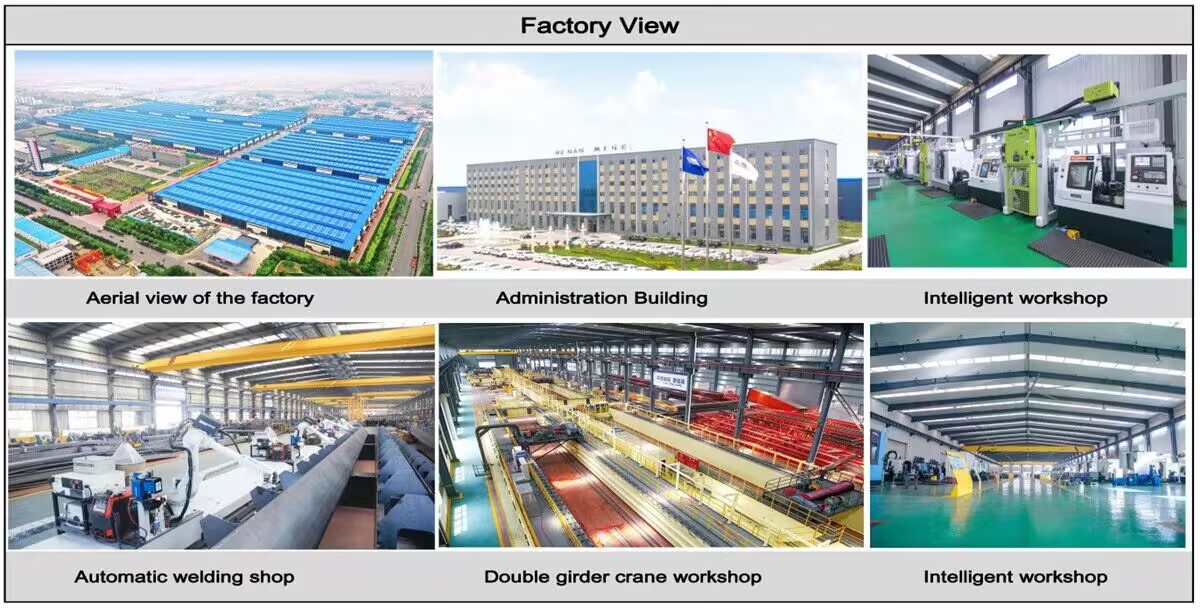
Workshop view:
The company has installed an intelligent equipment management platform, and has installed 310 sets (sets) of handling and welding robots. After the completion of the plan, there will be more than 500 sets (sets), and the equipment networking rate will reach 95%. 32 welding lines have been put into use, 50 are planned to be installed, and the automation rate of the entire product line has reached 85%.


Hot Tags: free standing bridge crane, China free standing bridge crane manufacturers, suppliers, factory, Single Girder Overhead Crane, Single Girder Overhead Travelling Crane
Previous
Freestanding Bridge CraneYou Might Also Like


Send Inquiry