











High Performance Single Girder Bridge Crane
Products Description
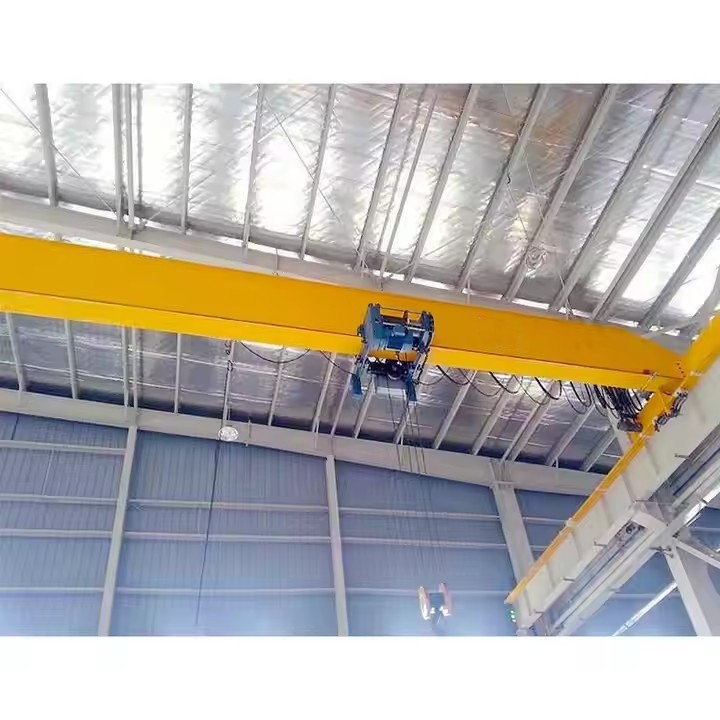
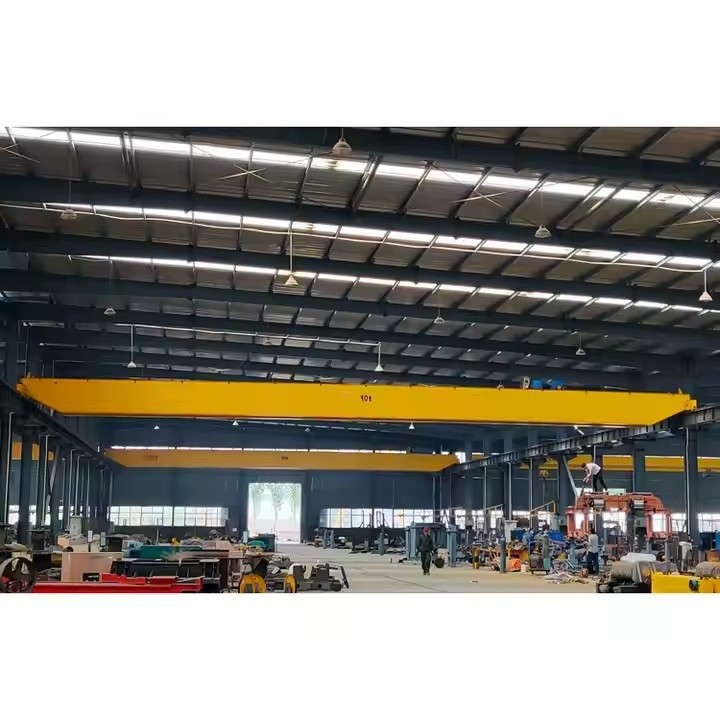
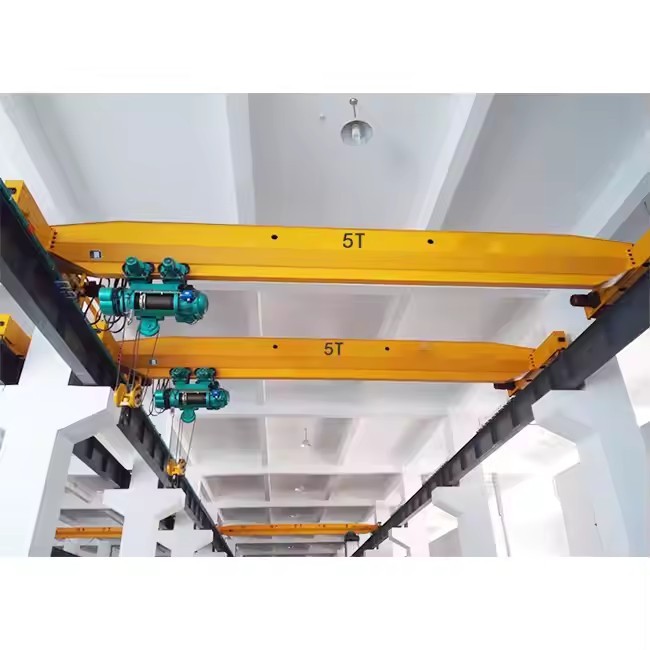
A single girder bridge crane (also known as an under-running bridge crane) is a type of overhead lifting system where the hoist and trolley run on the bottom flange of a single, primary beam (the bridge girder). This entire bridge girder is supported and moves along two runways, which are typically mounted to the building's roof structure or support columns.
Core Components: Gearbox, Motor, Gear
Place of Origin: Henan, China
Warranty: 1 Year
Weight (KG): 10000 kg
Video outgoing-inspection: Provided
Machinery Test Report: Provided
Selling Units: Single item
Single package size: 600X300X300 cm
Single gross weight: 200.000 kg
Pictures & Components
1.Main beam
It is the core load-bearing component of the crane, typically constructed from welded steel plates and I-beams in a box or I-shape. Spanning across the workshop, it directly bears and transfers the entire weight of the goods.
2.Lifting System
Electric hoist: This is the core component directly responsible for lifting goods, typically integrating a hoisting mechanism and a trolley traveling mechanism.
Hoisting mechanism: Driven by a motor, the drum rotates to wind and unwind the wire rope, enabling the hook to rise and fall.
Trolley traveling mechanism: Drives the electric hoist laterally along a track below the main beam (usually the lower flange of an I-beam), enabling the lateral lifting of goods.
Hook: Serves as the lifting device, directly contacting the lifted item.
 |
 |
3.Crane travelling mechanism
End beams: Located at both ends of the main beam, they are connected to the main beam by high-strength bolts, forming a bridge frame. They are responsible for transferring the load of the main beam to the trolley traveling mechanism.
 |
 |
6.Motor
Electric motor: This is the power source for the entire equipment, driving the main trolley, the auxiliary trolley, and lifting heavy objects.
Electrical control system: Includes control box, cables, remote control, etc. It is the "brain" of the crane, precisely controlling the movements of various mechanisms by controlling the start, stop, and speed of the motors.
Conduction conductor rail: A device that provides power transmission to the moving crane, typically laid along a track.

.

Sketch

Main technical

Advantages
Compact structure, space-saving: The main beam structure is simple and occupies little space, effectively reducing factory height and thus lowering civil engineering costs.
Lightweight, highly economical: Compared to double-girder cranes, it is lighter, placing less wheel pressure on the factory building, resulting in lower procurement and operating costs.
Precise operation, high efficiency: Typically equipped with wireless remote control and frequency conversion speed regulation, it can achieve millimeter-level precise positioning, and operates smoothly with minimal load sway, resulting in higher work efficiency.
Safe and reliable, easy maintenance: Key components such as the electric hoist are technologically mature, have a long service life, and come standard with multiple safety devices such as overload protection and limit switches.
Application:
Manufacturing: Machinery processing, auto parts, mold making, assembly lines, etc.
Logistics and Warehousing: Loading and unloading of goods in warehouses, freight stations, and packaging workshops.
Energy and Heavy Industry: Equipment maintenance and material handling in power plants, metallurgy, building materials, papermaking, and other industries.
Specific Fields: Railway maintenance, water conservancy projects, food processing, precision assembly, etc.
Applicable Limitations: Lifting capacity generally does not exceed 20 tons, and it is not suitable for flammable, explosive, or highly corrosive environments.
Crane production procedure
The production process of a single-girder bridge crane mainly revolves around its core component-the main girder-and generally follows these steps:
Raw Material Processing: Incoming steel plates, I-beams, and other profiles are inspected and rust-removed. Then, precise markings are made according to the design drawings to prepare for cutting.
Main Girder Manufacturing:
Cutting and Pre-fabrication of Camber: Profiles are cut and the required camber is pre-fabricated. This is a crucial process to prevent the crane from "sag" under heavy loads.
Assembly and Welding: Main girder, sub-girder, and other components are assembled and spot-welded in a strict sequence to ensure structural strength.
End Beam and Other Component Manufacturing: End beams, railings, and other components are manufactured using materials such as channel steel and machined to ensure dimensional accuracy.
Overall Assembly: The main girder, end beams, electric hoist, trolley traveling mechanism, and electrical system are assembled together to complete the overall machine assembly.
Inspection and Testing: Comprehensive quality inspection and static and dynamic load tests are conducted to ensure all performance standards are met before disassembly, packaging, or shipment of the entire machine.

Workshop view:
The company has installed an intelligent equipment management platform, and has installed 310 sets (sets) of handling and welding robots. After the completion of the plan, there will be more than 500 sets (sets), and the equipment networking rate will reach 95%. 32 welding lines have been put into use, 50 are planned to be installed, and the automation rate of the entire product line has reached 85%.


Hot Tags: high performance single girder bridge crane, China high performance single girder bridge crane manufacturers, suppliers, factory, Single Girder Overhead Crane, Single Girder Overhead Travelling Crane
You Might Also Like


Send Inquiry