










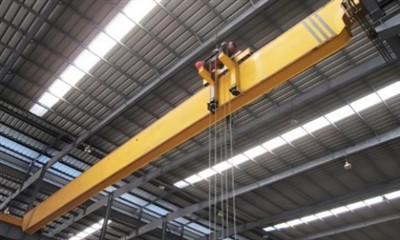
Hd Typen Single Beam Overhead Crane
Products Description
Why Choose an HD-Type Single Beam Crane?
✔ Cost-effective alternative to double-girder cranes (60% cost for similar capacity)
✔ Better precision & durability than standard single-girder models
✔ Customizable for harsh environments (corrosive, high-temp, explosive)
✔ Reduced downtime with heavy-duty components
A single beam overhead crane (HD type) is a cost-effective lifting solution consisting of:
Main Beam: Single box-girder design (typically European DIN/ISO standard or modified ASTM)
End Trucks: Reinforced steel housings with double-girder style wheels (unlike standard single-girder cranes)
Hoist Trolley: Underhung configuration with low headroom design
Key Distinction from Standard Single-Girder:
HD (Heavy Duty) types feature:
✔ 25-30% thicker web plates
✔ Full-length flange reinforcements
✔ Upgraded wheel bearings (ISO Class P5 precision)
Load Capacity & Span Parameters
| Specification | Standard Range | HD-Type Enhancement |
|---|---|---|
| Capacity | 1-20t | 5-32t |
| Span | 3-22.5m | 7.5-28.5m |
| Duty Cycle | FEM 1Am-2m | FEM 3m-4m |
| Max Wheel Load | 60kN | 140kN |
Core Components: Gearbox, Motor, Gear
Place of Origin: Henan, China
Warranty: 1 Year
Weight (KG): 10000 kg
Video outgoing-inspection: Provided
Machinery Test Report: Provided
Selling Units: Single item
Single package size: 600X300X300 cm
Single gross weight: 200.000 kg

Pictures & Components
1. Main Bridge Structure
| Component | Standard Single-Girder | HD-Type Upgrade |
|---|---|---|
| Main Beam | Rolled I-beam (Q235B) | Welded box girder (Q355C steel) with: • 25% thicker flanges • Internal stiffener plates • Full-length weld inspection |
| End Trucks | Single-wheel per side | Double-wheel assemblies with: • Forged steel wheels (DIN 15053) • Tapered roller bearings • Lubrication ports |
| Connections | Bolted splice plates | Flange-welded with: • UT/RT testing • Reinforcement gussets |

2. Hoist Trolley System
| Feature | Standard | HD-Type Specification |
|---|---|---|
| Frame | Channel construction | Box-section welded frame with: • 10mm wear plates • Replaceable guide rollers |
| Wheels | Cast iron | Alloy steel (60-62 HRC) with: • Double-flange design • V-groove for rail tracking |
| Load Sheave | Single-sheave | Duplex sheave assembly with: • Bronze bushings • Spline shaft connection |
 |
 |
3. Lifting Mechanism
Wire Rope Hoist (HD Version):
Drum: Machined grooves with 5x safety factor
Rope: 6x36 WS IWRC (anti-rotation type)
Brakes: Dual-disc failsafe system
Gearbox: Hardened helical gears (AGMA 13 precision)
Chain Hoist Option:
Grade 100 alloy chain
Load-controlled slippage clutch
IP65-rated motor enclosure
 |
 |
4. Runway System Components
| Item | HD-Type Features |
|---|---|
| Runway Beams | IPE400 minimum with: • Laser-aligned splice points • Wear pads at joints |
| Rail | A75 crane rail with: • Continuous weld • Ground running surface |
| Crane Buffers | Hydraulic dampers (50kJ capacity) |

5. Electrical Systems
Control Panel:
SIL3-rated safety relays
Harmonic filters for VFDs
Cable Reel:
Spring-driven with slip ring assembly
NEMA 4X enclosure
Limit Switches:
Rotary encoder type (0.5° resolution)
Redundant contacts

6. Safety Components
Overload Protection:
Strain-gauge sensor (±1% accuracy)
Two-stage alarm (90%/110% capacity)
Anti-Collision:
Millimeter-wave radar (24GHz)
Emergency Stop:
Dual-circuit mushroom button
Mechanical brake backup

7. HD-Specific Upgrades
Ladle Handling Package:
Heat shields (up to 300°C)
Special alloy hooks (Cr-Mo-V steel)
Corrosion Package:
Hot-dip galvanized trolley
Stainless steel fasteners
Precision Package:
Laser alignment targets
Wireless load cell (BLE 5.0)
.
Maintenance Checklist for HD Components
Monthly:
Wheel flange wear measurement
Rope lubrication (penetrating type)
Quarterly:
UT testing on weld points
Gearbox oil analysis
Annually:
Runway straightness survey (0.1mm/m tolerance)
Dynamic load testing (125% rated)

Comparison: HD vs Standard Components
| Failure Mode | Standard MTBF | HD-Type MTBF |
|---|---|---|
| Wheel Bearing | 8,000 hrs | 20,000 hrs |
| Girder Deflection | 1/600 span | 1/800 span |
| Hoist Brake Life | 500,000 cycles | 1.2M cycles |

Sketch

Main technical

Advantages
Key Advantages of HD-Type Single Beam Cranes
Higher Load Capacity & Durability
Supports 5–32 tons (vs. standard 1–20 tons)
Reinforced box-girder construction with thicker steel plates (Q355C grade)
Double-wheel end trucks for better load distribution
Extended Span & Stability
7.5–28.5m spans (vs. standard 3–22.5m)
1/800 L deflection limit (vs. standard 1/600) for precision lifting
Diagonal bracing available for long-span applications (>22m)
Heavy-Duty Performance
FEM 3m-4m duty class (suitable for intensive use)
200,000+ fatigue cycles (vs. ~100,000 for standard cranes)
Tapered roller bearings for smoother operation under heavy loads
Enhanced Safety Features
Dual-disc failsafe brakes (redundant braking system)
Overload protection (strain-gauge sensors with 90%/110% alarms)
Anti-collision radar (24GHz millimeter-wave detection)
Lower Lifetime Costs
30% less maintenance than standard cranes
2.7x longer service life in harsh environments
Energy-efficient (VFD-controlled hoists reduce power consumption)
Versatile Customization
Corrosion-resistant (hot-dip galvanized or stainless steel options)
High-temperature (up to 300°C) and explosion-proof variants
AI anti-sway control (±10mm precision at full speed)
Application:
Typical Applications of HD-Type Single Beam Cranes
1. Steel & Metal Processing
Coil handling (5–25 tons) – HD-type beams resist deformation from heavy steel coils
Ladle transfer – Reinforced trolleys with heat-resistant coatings
Scrap metal handling – Abrasion-resistant wheels and reinforced hooks
2. Manufacturing & Assembly
Automotive plants – Precise positioning of engines and chassis (AI anti-sway)
Machinery installation – Low deflection ensures alignment accuracy
Press line feeding – High-duty cycle (FEM 4m) for continuous operation
3. Logistics & Warehousing
Container handling – Long-span (28m) capability for large storage areas
Heavy pallet stacking – Dual-speed hoists for fast transport & precise placement
4. Construction & Precast Concrete
Hollow-core slab installation – Low-speed precision mode (±2mm)
Bridge girder positioning – High stability under dynamic loads
5. Power Plants & Heavy Industry
Turbine maintenance – 25-ton capacity with cleanroom-compatible models
Nuclear facilities – ATEX-rated explosion-proof options
6. Paper & Wood Processing
Paper roll handling – Corrosion-resistant (C4 protection) for humid environments
Timber beam transport – Reinforced trolleys for uneven loads
Crane production procedure
1. Design and Engineering
Initial Consultation: The process begins with discussions between the manufacturer and the customer to understand the crane's operational requirements, such as load capacity, span, lifting height, and environment (e.g., indoor or outdoor use, temperature conditions, etc.).
Engineering & Customization: The design team customizes the crane, including the structure, lifting system, and radio remote control features. Detailed engineering drawings and specifications are prepared, ensuring the crane meets all required standards and safety codes.
Control System Design: The radio remote control system is integrated into the design, with attention to ease of use, range, safety features (emergency stop, overload protection), and compatibility with the crane's other systems.
2. Material Selection and Procurement
Structural Materials: High-quality materials like steel are sourced for the crane's main beam, girder, end carriages, and other structural components. These materials are selected for their strength, durability, and ability to withstand heavy loads.
Mechanical Components: The components for the hoisting system, trolley, crane wheel, motors, gearboxes, and radio remote control system are procured from reliable suppliers.
Electrical Components: Wiring, electrical panels, switches, safety devices, and other electrical components for the crane's control system are also sourced.
3. Fabrication and Manufacturing
Main Beam Construction: The steel is cut, welded, and assembled to form the main girder (single beam) of the crane. This process often involves precision cutting, bending, and welding to meet specific design tolerances.
End Carriage Fabrication: The end carriages, which support the crane's travel mechanism, are fabricated and assembled. These components are designed for stability and strength, ensuring smooth crane movement along the tracks.
Assembly of Lifting Mechanism: The hoist, hook, and lifting mechanism are assembled, with motors, gears, and pulleys integrated into the system. The lifting system is tested for load-bearing capacity and smooth operation.
Trolley and Crane Traveling Mechanisms: The trolley and crane traveling mechanisms are built and assembled. This includes the wheels, motor, and rail system, ensuring smooth movement of the crane along the rails.
Radio Remote Control Installation: The radio remote control system is installed. This includes fitting the necessary receivers, antennas, and integrating the control system with the crane's electrical and mechanical systems.
4. Electrical and Control System Integration
Wiring and Electrical Systems: The electrical wiring is installed, connecting the hoisting system, control panel, motors, and radio remote control system. The wiring is tested for safety and compliance with electrical codes.
Control Panel Assembly: The crane's control panel is assembled and integrated with the radio remote control system. It is tested for responsiveness and safety features, including emergency stop and overload protection.
Safety Features: Safety devices such as limit switches, overload sensors, and sound and light alarms are installed and integrated into the control system. These systems ensure safe crane operation and prevent damage.
5. Testing and Quality Control
Load Testing: The crane is subjected to a load test to ensure it can handle the specified weight capacity. The test is done using calibrated weights to verify the crane's performance under operational conditions.
Operational Testing: The crane undergoes a full operational test, where it is run through its motions (lifting, lowering, traveling, etc.) using the radio remote control. The crane's response to commands, including emergency stop and safety alarms, is closely monitored.
Electrical & Mechanical Testing: All electrical systems, including the radio remote control, are tested for functionality and safety. The motors, brakes, and electrical wiring are inspected for proper operation.
Inspection for Compliance: The crane is inspected for compliance with local and international standards (such as ISO, CE, or OSHA) to ensure it meets safety regulations. The structure, load-bearing components, and safety systems are thoroughly checked.
6. Final Assembly
Final Assembly and Inspection: After testing, the crane is fully assembled, with all components securely attached and double-checked for accuracy. The radio remote control is configured, and the system is tested one last time to ensure seamless integration.
Painting & Finishing: The crane is painted with protective coatings to prevent corrosion and improve its appearance. The final finishing touches are added to the structure, including any labeling or safety markings.
Documentation: All necessary documentation, including manuals, certificates of compliance, test reports, and warranty information, are prepared for the customer.

Workshop view:
The company has installed an intelligent equipment management platform, and has installed 310 sets (sets) of handling and welding robots. After the completion of the plan, there will be more than 500 sets (sets), and the equipment networking rate will reach 95%. 32 welding lines have been put into use, 50 are planned to be installed, and the automation rate of the entire product line has reached 85%.


Hot Tags: hd typen single beam overhead crane, China hd typen single beam overhead crane manufacturers, suppliers, factory, Single Girder Overhead Travelling Crane, Single Girder Overhead Crane
You Might Also Like




Send Inquiry