










Suspension Single Girder Overhead Crane
Key Features of a Suspension Single Girder Overhead Crane
✔ Underhung Design – The crane runs on the bottom flange of the runway beams, which are themselves suspended from the ceiling.
✔ Space-Saving – No need for additional support columns, maximizing floor space.
✔ Light to Medium Duty – Typically used for loads up to 10-15 tons (varies based on structure).
✔ Modular & Adjustable – Can be reconfigured if layout changes.
Limitations & Considerations
⚠ Lower Capacity – Not suitable for very heavy loads (usually max 10-15 tons).
⚠ Dependent on Roof Strength – Requires a strong overhead structure.
⚠ Limited Span – Best for shorter spans (typically up to 30 ft without reinforcement).
When to Choose a Suspension Single Girder Crane?
✅ Low headroom facilities.
✅ Existing roof structure can support the load.
✅ Budget constraints (lower cost than top-running cranes).
✅ Light to medium-duty lifting needs (e.g., machine shops, warehouses).
Comparison with Other Crane Types
| Feature | Suspension Single Girder | Top-Running Single Girder | Gantry Crane |
|---|---|---|---|
| Support Structure | Ceiling-mounted | Freestanding runway beams | Floor-supported |
| Max Capacity | 1–15 tons | 1–20 tons | 1–50+ tons |
| Headroom Requirement | Low | Moderate to high | High |
| Installation Cost | Lower | Higher | Highest |
| Mobility | Fixed (but relocatable) | Fixed | Portable |
| Best For | Low-clearance, light loads | Medium-duty, longer spans | Outdoor/heavy-duty |

Pictures & Components
A suspension single girder overhead crane (also called an underhung crane) consists of several key components that work together to enable safe and efficient material handling. Below is a detailed breakdown of its main parts:
1. Runway Beams (Suspended Track)
Function: Provides the path for the crane bridge to travel.
Types:
Standard I-beams (e.g., S-beams or W-beams)
Enclosed track (box-style runway for smoother operation)
Mounting: Suspended from the ceiling/roof structure using hanger rods, brackets, or clamps.
Key Features:
Must be level and parallel for smooth movement.
Typically spans up to 30 ft without additional support.

2. Bridge Girder (Single Girder)
Function: The main horizontal beam that carries the hoist and trolley.
Construction:
Rolled steel I-beam
Fabricated box girder (for heavier loads)
Mounting: Connected to end trucks that ride along the runway beams.

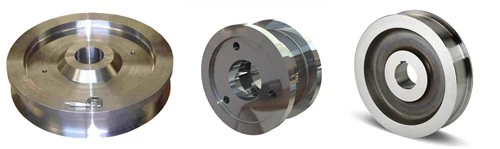
3. End Trucks (Bridge End Carriages)
Function: Allow the bridge to move along the runway beams.
Components:
Wheels (flanged or flat, depending on track type)
Drive mechanism (for motorized cranes)
Bumpers (end stops to prevent over-travel)

4. Hoist & Trolley
Function: Lifts, lowers, and moves loads horizontally along the girder.
Types:
Electric chain hoist (common for light/medium duty)
Wire rope hoist (for heavier loads)
Manual hoist (hand-operated for low-frequency use)
Trolley:
Motorized or push-type
Runs on the bottom flange of the girder
5. Suspension System
Function: Secures the runway beams to the overhead structure.
Components:
Hanger rods (threaded steel rods)
Adjustable brackets/clamps (for alignment)
Ceiling mounts (welded or bolted to roof supports)

6. Electrical System
Components:
Power supply: Festoon system, cable reels, or conductor bars.
Controls: Pendant station (wired) or wireless remote.
Safety devices: Limit switches, overload protection, emergency stop.


7. Bumpers & End Stops
Function: Prevent the bridge or hoist from over-traveling.
Types:
Rubber or polyurethane bumpers
Steel end stops

8. Optional Accessories
Below-the-hook devices (e.g., magnets, grabs, spreader bars)
Anti-sway systems (for precise load positioning)
Crane scales (for weighing loads)

SKETCH

Main Technical Data


Advantages
Advantages of Suspension Single Girder Overhead Cranes
Suspension single girder overhead cranes (underhung cranes) offer several benefits, making them ideal for specific industrial applications. Here are the key advantages:
1. Space-Saving Design
No floor obstructions – Since the crane is suspended from the ceiling, it doesn't require support columns, maximizing floor space.
Low headroom requirement – Ideal for facilities with height restrictions.
2. Cost-Effective Solution
Lower installation cost – No need for freestanding runway support structures.
Reduced foundation work – Uses existing roof/ceiling support, saving on civil engineering costs.
3. Easy Installation & Relocation
Modular design – Can be disassembled and reinstalled in a new location if needed.
Faster setup – Simpler than top-running cranes since it doesn't require runway columns.
4. Lightweight Yet Efficient
Suitable for light to medium loads (typically 1–15 tons).
Smooth operation – Enclosed track runways reduce vibration and ensure precise movement.
5. Versatile Applications
Can be used in low-clearance buildings where top-running cranes are impractical.
Compatible with manual or electric hoists, offering flexibility in operation.
6. Improved Safety & Ergonomics
Reduced risk of floor collisions (no columns or floor-mounted supports).
Ergonomic handling – Reduces worker strain compared to forklifts or manual lifting.
Application
Applications of Suspension Single Girder Overhead Cranes
These cranes are widely used in industries where space optimization and light-to-medium lifting are priorities. Common applications include:
1. Manufacturing & Assembly Lines
Automotive plants – For moving parts along assembly lines.
Machining workshops – Handling tools, molds, and components.
2. Warehousing & Logistics
Loading/unloading – Transporting packaged goods in distribution centers.
Storage facilities – Moving pallets or containers in tight spaces.
3. Maintenance & Repair Shops
Equipment servicing – Lifting motors, generators, or machinery parts.
Aircraft/vehicle maintenance – Used in hangars with limited headroom.
4. Paper & Printing Industry
Handling paper rolls, printing plates, and heavy machinery parts.
5. Food & Beverage Processing
Hygienic environments – Stainless steel options available for cleanrooms.
Bottling/packaging lines – Moving raw materials and finished products.
6. Small Workshops & Fabrication Units
Metalworking shops – Lifting steel sheets, beams, and welding fixtures.
Woodworking facilities – Transporting heavy lumber or furniture parts.
Types Of Cranes For Different Working Conditions

Crane Production Procedure
1.Design and Engineering
Pre-production Design:
Engineers assess customer requirements (load capacity, dimensions, environment).
Design includes detailed drawings, structural calculations, material specifications, and safety features.
Computer-aided design (CAD) software and simulation tools are used to finalize the crane design.
Approval Process:
Designs are reviewed and approved by both the engineering team and the customer (if necessary).
Compliance with relevant standards (ISO, FEM, CE, etc.) is ensured.
2. Material Procurement
Selection of Raw Materials:
High-strength steel plates (for the main girder and structural components).
Forged steel or alloy steel for key components such as hooks, wheels, and axles.
Electrical components like motors, switches, control panels, and wiring are sourced.
Optional accessories (e.g., VFDs, remote control systems) are ordered as per specifications.
Material Testing:
All materials undergo quality inspection, including tensile tests, hardness checks, and welding inspections.
Certifications and material traceability are maintained.
3. Fabrication of Main Components
Main Girder:
The single girder is fabricated from welded steel plates.
The girder is cut, welded, and machined to meet precise specifications.
The beam is tested for structural integrity using non-destructive testing (NDT), such as ultrasonic or X-ray testing.
End Carriages:
The end carriages are welded and assembled. These are the structures that allow the crane to travel along the runway rails.
They include motor mounts, wheels, and gearbox mounting points.
Hoist and Trolley:
The hoist unit (lifting mechanism) is assembled with its motor, brake system, and hook.
The trolley system is fabricated, which carries the hoist along the girder beam.
4. Mechanical Assembly
Main Girder and End Carriages:
The main girder is lifted into place and connected to the end carriages to form the basic structure of the crane.
Wheels and axles are installed on the end carriages to allow movement along the runway.
Travel Mechanism:
The crane traveling system is installed, which includes the motor, gearbox, and control systems that drive the crane along the rails.
Trolley and Hoist Installation:
The trolley system is mounted onto the girder and connected to the hoist mechanism.
Hooks, wire ropes, and hoist drums are installed.
5. Electrical and Control Systems
Wiring and Connection:
All electrical components, including the motor, control panel, limit switches, safety alarms, and lights, are wired and connected to the system.
Control System Installation:
The control system is installed, either as a pendant control or radio remote control (if specified).
Variable Frequency Drives (VFDs) are installed for smooth, controlled movement (optional).
Testing:
Electrical systems undergo thorough testing to ensure proper function, safety, and comply with standards.
Electrical insulation tests and control signal checks are performed.
6. Testing and Quality Control
Initial Testing:
The crane is powered up and static tests are performed on all components to check for basic functionality.
Load testing is done by gradually lifting a test weight (typically 125% of the rated load capacity) to check the crane's performance under stress.
Dynamic Testing:
The crane is run through all motions: lifting, traveling along the runway, and trolley movement.
Safety systems like overload protection, limit switches, and braking systems are thoroughly tested.
Quality Assurance:
After initial tests, a final inspection is conducted to ensure all components meet specifications.
The crane is inspected for defects in welding, painting, assembly, and alignment.
Documentation and Certification:
A performance report and certification of compliance are generated.
The crane's serial number is recorded for future maintenance tracking.
7. Painting and Surface Treatment
Surface Preparation:
All metal surfaces are cleaned and treated to remove rust and contaminants.
Anti-corrosion coatings are applied to ensure longevity.
Painting:
The crane is painted with industrial-grade paints, typically with high-visibility colors for safety (e.g., yellow or orange).
Weather-resistant paint is used for outdoor cranes.
8. Final Assembly and Testing
Assembly:
All components (motors, controls, wheels, hooks) are assembled and securely fastened.
The crane is assembled in its final configuration.
Final Load Test:
The crane is tested under full load capacity (7 tons) to ensure smooth operation and proper load handling.
Any adjustments needed are made during this phase.
9. Packaging and Delivery
Shipping Preparation:
The crane is disassembled into transportable components (if necessary) and securely packaged for shipping.
Assembly instructions, manuals, and other necessary documentation are provided.
Delivery:
The crane is delivered to the client's location, either fully assembled or for final on-site assembly, depending on the order.
10. On-Site Installation and Commissioning
Installation:
The crane is installed at the customer's site, including connecting the runway rails, hoist, and control systems.
Final Testing and Training:
Commissioning is done on-site to ensure everything works as expected.
Operators are trained on safe usage, basic troubleshooting, and maintenance.

Workshop View
The company has installed an intelligent equipment management platform, and has installed 310 sets (sets) of handling and welding robots. After the completion of the plan, there will be more than 500 sets (sets), and the equipment networking rate will reach 95%. 32 welding lines have been put into use, 50 are planned to be installed, and the automation rate of the entire product line has reached.


Hot Tags: suspension single girder overhead crane, China suspension single girder overhead crane manufacturers, suppliers, factory, Single Girder Overhead Crane, Single Girder Overhead Travelling Crane
You Might Also Like


Send Inquiry