



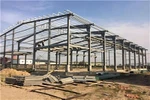
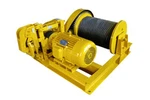


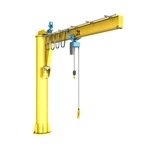


Bottom Block Overhead Crane
Products Description
1.A bottom block overhead crane is a versatile, efficient, and cost-effective material handling solution widely used in various industries, including manufacturing, warehousing, maintenance, and logistics. Designed for optimal performance in light to medium-duty applications, this crane type is characterized by its simple yet robust construction.
2.Key Features and Components
Single Girder Design:
Features a single horizontal beam (girder) supported by end trucks, making it lightweight and economical.
Ideal for lower headroom requirements.
Electric Hoist:
Equipped with an electric wire rope or chain hoist for lifting and lowering loads.
Smooth and precise operation with variable speed options.
Runway System:
Travels along parallel runway beams mounted on the building structure.
Provides full coverage of the working area.
Control Options:
Manual pendant control, wireless remote control, or an automated system for ease of operation.
Load Capacity and Span:
Typically handles loads from 1 to 20 tons, with custom options for higher capacities.
Standard spans range from 6 to 30 meters, adjustable based on customer requirements.
Warranty:1 Year
Weight (KG):3000 kg
Video outgoing-inspection:Provided
Machinery Test Report:Provided
Color:Customized
Crane feature:Easy Operated Girder Bridge Crane
Capacity:0.5-10t
Type:suspension bridge crane
Power supply:110V/220V/230V/380V/440V
Control Method:Ground Control+ Remote Control (customized)
MOQ:1 Set
Lifting mechanism:Electric Hoist
Work Duty:A3-A5
After Warranty Service:Video technical support

Pictures & Components
Pictures & Components
1.Main beam
Design Features
1)Structural Profile
The main beam is typically fabricated from high-quality steel in an I-beam or box girder profile for strength and rigidity.
The design ensures durability while minimizing the beam's weight to reduce overall crane load.
2)Dimensions
The dimensions of the main beam depend on the bottom block overhead crane's capacity, span, and working environment.
Engineers design it to withstand dynamic and static forces, considering factors such as deflection limits and load distribution.
3)Flange and Web Construction
The flange (top and bottom parts of the beam) bears horizontal loads, while the web (vertical section) handles vertical loads.
Welded or rolled steel profiles enhance stability and load-bearing capacity.
4)Connection Points
The main beam connects to the end carriages or trucks, which allow the crane to move along the runway system.
Mounting brackets or attachments accommodate the hoist, ensuring smooth operation.

Lifting System
1)Control Systems
Pendant Control:
A handheld control device for manual operation of the lifting and trolley movement.
Wireless Remote Control:
Enables the operator to manage crane operations from a safe distance.
Automated Systems:
Computerized controls for repetitive lifting tasks in advanced operations.
2)Safety Features
Overload Protection:Prevents lifting loads beyond the bottom block overhead crane's rated capacity.
Limit Switches:Stops the hoist at pre-set upper and lower points to prevent over-travel.
Emergency Stop:Ensures immediate cessation of operations during emergencies.
Anti-Sway Technology (Optional):Reduces swinging of the load for safer operation.
 |
 |
3.End carriage
1)Features of the End Carriage
Precision Alignment:Ensures that the bottom block overhead crane operates smoothly along the rails, reducing wear and tear.
Misalignment can lead to uneven load distribution and system failure.
Compact Design:Optimized for minimal weight while maintaining structural integrity.Helps reduce the overall load on the crane runway.
Anti-Derailment System:Safety mechanisms prevent the wheels from derailing during operation.
2)Materials and Manufacturing
Materials:Fabricated from high-grade steel for strength and resistance to deformation under heavy loads.Corrosion-resistant coatings are applied for outdoor or harsh environments.
Manufacturing Process:Precision machining ensures accurate alignment and dimensions.Quality control tests, including load and stress analysis, verify performance and safety.
 |
 |
4.Crane travelling mechanism
1)Working Principle
The electric motors drive the wheels through a gearbox and coupling system.
As the wheels turn, the bottom block overhead crane moves along the runway beams, allowing it to position the load as needed.
The movement can be controlled manually via a pendant or remotely using wireless controls.
2)Maintenance and Inspection
Regular Lubrication:Apply grease or oil to wheels, gearboxes, and bearings to minimize friction.
Alignment Checks:Ensure proper alignment of wheels and rails to prevent uneven wear and derailment.
Inspection:Periodically check for wear on wheels, motors, and couplings.
Replacement:Replace worn-out or damaged parts promptly to avoid operational delays.
5.Trolley travelling mechanism
1)Working Principle
The motor generates power, which is transmitted to the gearbox.
The gearbox reduces the motor's speed and increases torque to drive the wheels.
The wheels roll along the girder flange, moving the trolley horizontally.
The operator controls the trolley's direction and speed using a pendant, remote, or automated system.
2)Features and Benefits
Smooth Operation:High-quality wheels and precision drives ensure consistent and smooth movement.
Load Versatility:Can handle a wide range of load capacities, depending on the bottom block overhead crane's specifications.
Positioning Accuracy:Variable speed control allows precise positioning of the hoist for lifting tasks.
Durability:Robust construction and wear-resistant materials extend the mechanism's service life.
6.Crane wheel
Types of Wheels
1)Flanged Wheels
Design: Have flanges on the edges to keep the bottom block overhead crane aligned with the rails.
Applications: Commonly used for cranes operating on standard rail systems.
2)Flat Wheels
Design: Lack flanges and rely on external guidance systems for alignment.
Applications: Suitable for guided tracks or specific industrial setups.
3)Double-Flanged Wheels
Design: Feature flanges on both sides, providing extra stability.
Applications: Ideal for high-precision or heavy-duty applications.

7.Crane Hook
Key Components of a Crane Hook
1)Hook Body:The curved structure that holds the load.Precision-forged and heat-treated for strength and durability.
2)Safety Latch:A spring-loaded latch that ensures the load remains secured during lifting.Prevents the load from slipping off the hook.
3)Bearing or Swivel Assembly:Allows the hook to rotate freely for better load alignment.Reduces stress on the bottom block overhead crane rope or chain.
4)Shank or Eye:Connects the hook to the crane's lifting mechanism (e.g., wire rope or chain).

Motor
Motor Features
1)Power Rating
Designed based on the bottom block overhead crane's capacity and operational requirements, ranging from a few kilowatts for light-duty cranes to higher ratings for heavy-duty cranes.
2)Variable Frequency Drive (VFD)
Controls motor speed and ensures smooth acceleration and deceleration.
Reduces energy consumption and mechanical wear.
3)Brake System
Built-in electromagnetic or disc brakes ensure quick and safe stopping during emergencies.
4)Duty Cycle
Rated for intermittent duty cycles to match crane operation patterns (e.g., S3, S4 duty ratings).
5)Protection Class
Enclosures with protection ratings such as IP54 or IP65 to safeguard against dust, water, and other environmental factors.
6)Cooling System
Motors are equipped with cooling mechanisms, such as fan cooling, to maintain optimal performance during prolonged use.

.
Sound and light alarm system & limit switch
Integration and Operation
1)Sound and Light Alarm System
Automatically activates when the crane is in motion, lifting a load, or during emergency situations.
Can also be manually operated as a warning signal during maintenance or hazard situations.
2)Limit Switch
Installed at critical points such as the hook's upper and lower limits, the trolley's end positions, and the runway ends.
Interacts seamlessly with the crane's electrical control system to stop operations instantly when limits are reached.

10.Safety Devices
1. Limit Switches
Function: Prevent over-travel of the crane, trolley, or hoist.Protects crane components and enhances operator control.
2. Overload Protection Device
Function: Monitors the weight being lifted and prevents the crane from operating if the load exceeds its rated capacity. Protects against equipment failure and ensures workplace safety.
3. Sound and Light Alarm System
Function: Alerts nearby personnel of crane operations through loud audible signals and flashing lights.Reduces the risk of accidents in busy or noisy environments.
4. Emergency Stop Button
Function: Instantly halts crane operations in case of an emergency.Ensures quick response to prevent accidents or equipment damage.
5. Anti-Collision System
Function: Prevents collisions between two cranes operating on the same runway or with nearby structures.Enhances safety in multi-crane environments.
6. Buffer Stops
Function: Absorbs the kinetic energy of the crane to prevent hard impacts at the runway ends.Protects the crane structure and runway from damage.
7. Anti-Sway Control System
Function: Reduces the swaying of the load during lifting or travelling operations. Improves precision and safety in load handling.
8. Overheat Protection for Motors
Function: Monitors motor temperature and stops operation if overheating occurs. Prevents motor damage and reduces downtime.
11.Control Mode
1)Pendant Control:A wired controller suspended from the crane.
Operated by an individual standing on the ground near the crane.
2)Wireless Remote Control:Uses radio frequency (RF) or infrared (IR) signals to control the crane wirelessly.
3)Cabin Control (Driver's Cabin):A cabin is installed on the crane where an operator directly controls the crane using joysticks, buttons, or a control panel.
4)Automated/Programmed Control:The crane is programmed to perform specific tasks autonomously without direct manual input during operation.

12.Sketch

Main technical

Advantages
1. Cost-Effective
Lower Initial Investment:
Requires less material for construction compared to double girder cranes, making it more affordable.
Simple design reduces manufacturing and installation costs.
2. Lightweight Design
Lower Dead Weight:
The single girder structure is lighter, reducing the overall load on the building structure or supporting columns.
3. Space Efficiency
Compact Design:
Requires less vertical and horizontal space, making it suitable for facilities with low ceilings or limited workspace.
4. Easy Installation
Simpler Structure:
The single girder design is quicker and easier to install compared to double girder systems.
5.Energy Efficiency
Lower Power Consumption:
Operates with lighter components and motors, consuming less energy than heavier double girder systems.
Application:
1. Manufacturing Industry
Transporting raw materials and finished products across production lines.
Assisting in assembly operations for machinery, vehicles, and equipment.
2. Warehousing and Logistics
Loading and unloading goods in warehouses and distribution centers.
Organizing inventory by lifting and placing heavy items on shelves.
3. Construction Industry
Lifting construction materials like steel beams, concrete panels, and tools.
Assisting in assembly processes on construction sites.
4. Maintenance and Repair Workshops
Handling machinery and equipment for repair and servicing.
Transporting components within workshops or service bays.
5. Steel and Metal Processing
Transporting raw steel and metal sheets between processing machines.
Lifting and positioning heavy metal components during cutting, welding, or assembly.
6. Chemical and Pharmaceutical Industry
Lifting drums, tanks, and other containers in chemical processing plants.
Assisting in the assembly and maintenance of equipment in cleanrooms.
Crane production procedure
1. Requirement Analysis and Design:
Analyze the client's operational needs, including capacity, span, lifting height, and working environment.Develop a technical design using CAD software.Include detailed specifications for the main components: girder, hoist, end carriages, and controls.Ensure the design adheres to international standards such as ISO, FEM, and CMAA.
2. Material Procurement:High-quality steel plates for the main girder and end carriages.Standardized components for hoists, motors, and trolleys.Verify materials meet required specifications and standards before production.
3. Fabrication of Components
a. Main Girder:Steel plates are cut to size using CNC plasma or laser cutting machines.Weld sections of the girder (e.g., I-beams or box beams) using robotic or manual welding techniques.
Ensure precision to maintain strength and dimensional accuracy.
b. End Carriages:Machine and assemble steel sections for the end carriage.Attach wheel assemblies and bearings.
c. Hoist and Trolley:Procure pre-manufactured hoists or assemble them in-house.Mount lifting mechanisms, motors, brakes, and controls onto the trolley.
d. Electrical Systems:Assemble the electrical control box with contactors, inverters, and safety relays.Install wiring for motors, limit switches, and sensors.
4. Surface Treatment:Use sandblasting or shot-blasting to remove rust and impurities from steel surfaces.Apply anti-corrosion primer and finish with a durable topcoat.Use specialized coatings for environments like chemical plants or outdoor installations.
5. Component Assembly:Attach the hoist and trolley to the main girder.
Mount end carriages and wheels to the girder ends.Install the electrical control panel, wiring, and other accessories.Check alignment and mechanical integrity during assembly.
6. Quality Inspection:Ensure all dimensions match the design specifications.Verify welds using NDT methods for structural integrity.Conduct static and dynamic load tests to verify performance under rated loads.Test electrical systems for functionality, safety, and reliability.
7. Pre-Delivery Testing:Simulate real-world operations, including lifting, traveling, and stopping.Verify the functionality of limit switches, overload protection, and alarms.Ensure smooth and consistent operation under various conditions.
8. Packaging and Transportation:Disassemble large components (e.g., girder and end carriages) for easier transportation.Wrap components in protective material to prevent damage during transit.Provide manuals, testing certificates, and compliance documentation.

Workshop view:
The company has installed an intelligent equipment management platform, and has installed 310 sets (sets) of handling and welding robots. After the completion of the plan, there will be more than 500 sets (sets), and the equipment networking rate will reach 95%. 32 welding lines have been put into use, 50 are planned to be installed, and the automation rate of the entire product line has reached 85%.


Hot Tags: bottom block overhead crane, China bottom block overhead crane manufacturers, suppliers, factory
You Might Also Like


Send Inquiry