







3 Ton Overhead Crane
Products Description
3 ton bridge crane is a versatile and reliable material handling solution
The 3 ton bridge crane is a compact and efficient lifting solution. The crane is made of high-quality steel, which is strong and not easy to deform. The design is a single beam, smooth operation, minimal noise and energy consumption.
The crane is rated for a maximum load of 3 tons and is used to handle loads up to 3 tons. It also provides manual, semi-automatic or fully automatic control systems for seamless operation.
This crane is designed with durability, safety and versatility in mind, so it is equipped with advanced safety features such as overload protection, limit switches and emergency stop system.
Core Components:Engine
Place of Origin:Henan, China
Warranty:1 Year
Weight (KG):2000 kg
Video outgoing-inspection:Provided
Machinery Test Report:Provided
Lifting mechanism:Wire Rope Electric Hoist
Painting Color: According to your demand
Core Components:Engine, Bearing, Motor
Control method:Ground Control+Remote Control
Lifting Capacity:3-32 Tons
Power Source:3 Phase 380V 50hz/Custmized
Color:Customized Color Acceptable

Pictures & Components
1.Main beam
The main beam of a 3-ton overhead crane is an important structural component that supports the load and transfers it to the truck and wheels at the end of the crane.
The design is sophisticated, and the main beam is usually an I-beam, H-beam or box beam, depending on the design and capacity. It needs to have sufficient strength and rigidity to prevent deformation under load.
The main beam of a 3-ton overhead crane uses high-strength structural steel to ensure durability and load-bearing capacity. Common steel grades include Q235B, Q345B or similar grades according to local standards.
The size and thickness of the main beam depends on the span, load capacity (3 tons in this case) and design criteria. For a 3-ton crane, the span is usually between 5 and 30 meters, which affects the size of the beam.

Lifting System
The Lifting system of a 3 ton overhead crane is a key component designed to safely and efficiently handle and lift heavy loads.
Motor: Provides power to lift or lower the load.
Drum or sprocket: Winds or unwinds the lifting medium (wire rope or chain).
Wire rope or chain: Connects the hoist to the load hook.
Braking system: Ensures that the load remains stationary when lifting or lowering stops.
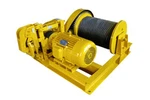
Hoisting mechanism: The hoist is the main part of the hoisting system. It is responsible for lifting and lowering the load. It consists of a drum or electric winch that pulls a steel cable or chain to lift the load.
Motor: The hoisting mechanism is driven by an electric motor. The motor provides the torque required to lift the heavy load. It can operate at different speeds, depending on the design of the crane.
Lifting capacity: The 3 ton lifting capacity refers to the maximum weight that the hoist can lift safely. This is ensured by the power of the motor, the strength of the hoisting cable or chain, and the structural integrity of the hoist components.

3.End carriage
The end beam of a 3 ton overhead crane refers to the part of the crane that supports the trolley and allows it to travel along the rail beam. It usually consists of a frame, wheels, and motorized components to allow for smooth movement. The end beam is an important part of the overall structure of the crane and plays a key role in maintaining the load and providing stability.
For a 3 ton overhead crane, the end beam should be designed to support the weight of the crane itself, the load being lifted (up to 3 tons), and the dynamic forces that occur during operation.
The frame is usually made of welded steel or other strong material that can withstand the load. It houses the wheels and motors. The wheels are mounted on the frame and are used to move the crane along the rails. These wheels are usually made of durable steel or forged steel to ensure smooth operation and longevity. The end frame usually includes electric motors to drive the wheels and allow movement. These motors are usually powered by a rail-type conductor system or an external power source. Bearings are used to reduce wheel friction and help maintain smooth movement.
The end frame also includes a braking mechanism, which is very important for controlling the movement of the crane and ensuring safety when stopping or holding the crane position. An integrated control system is included to ensure safe operation, including sensors, remote controls, and overload protection.
When selecting or designing an end frame, you must ensure that the components are rated appropriately for the crane's capacity, environment (indoor or outdoor), and expected loading conditions.

4.Crane travelling mechanism
1) Operation principle
Power transmission comes first, the motor generates torque and transmits it to the wheels through the gearbox. Then comes motion control, the control system allows the operator to move the crane forward or backward along the runway. Variable frequency drives (VFD) can be used for smooth acceleration and deceleration. Braking is also provided, and mechanical or electromagnetic brakes ensure precise positioning and safety during operation. Due to the large load, load distribution is carried out, and the end frame and wheel assembly ensure that the load is evenly distributed on the runway beam to avoid structural stress.
2) Functional characteristics
Maintains smooth movement, reduces vibration and wear of components.
Efficient operation, through optimized power transmission and control, for efficient operation.
Safe and stable, anti-collision sensors and overload protection enhance operational safety.
5.Trolley travelling mechanism
The trolley running mechanism of a 3 ton bridge crane consists of several parts that work together to enable the trolley (carrying the crane and load) to move along the crane's bridge.
Main Components
1. Trolley frame: A sturdy structure that supports the crane and other parts of the running mechanism.
2. Hoist: Mounted on the trolley, it includes a motor, rollers, and wire ropes or chains for lifting and lowering the load.
3. Wheels: There are usually four wheels that roll along the rails of the bridge beam. Two wheels are driven by a motor, while the other two wheels serve as idlers. The wheels are usually made of forged steel or cast iron to withstand heavy loads and resist wear.
6.Crane wheel
The crane wheel of a 3 ton overhead crane is a key component of the crane's traveling mechanism. It enables the crane to move smoothly along its runway or track.
The wheels are usually made of high-quality alloy steel (e.g. 42CrMo, 45# steel) for durability and wear resistance. The hardened and heat-treated surface ensures longer service life.
The wheel types are generally single-flange or double-flange wheels to match the track type and reduce the risk of derailment. Non-flange wheels are also available for special designs.
The load capacity of the wheels is 3 tons.
The diameter and width of the wheel depends on the track size and crane design. Custom wheels can be manufactured to match specific track profiles. Usually hardened to 300-380 HB or higher for better wear resistance.

7.Crane Hook
The crane hook of a 3 ton bridge crane is a key component used to safely lift and carry heavy objects. It is designed to handle weights up to 3 tons safely and efficiently.
Load Capacity of Hook: Rated at 3 tons (or 3000 kg). It is made of high-strength alloy steel to ensure durability and wear resistance. Usually has a single hook or double hook, depending on the application. May include a safety latch to prevent the load from accidentally sliding off.
Manufacturing Standard of Hook: Conforms to industrial standards such as DIN, ISO or ASME. Some crane hooks offer 360° rotation for increased maneuverability.

Motor
The motor of a 3-ton overhead crane is a critical component for lifting and moving loads. Its specifications depend on the design, purpose, and operating conditions of the crane.
Three-phase AC motors are commonly used for electric motors because of their high efficiency and durability.
AC squirrel cage motors or wound rotor motors are common motors for cranes.
The motor power depends on the lifting speed, load capacity, and crane design. For a 3-ton crane, the motor power may be between 2 kW and 10 kW, depending on the specific application.
Common voltages include 380V, 400V, or 415V, depending on regional power standards. Typically, crane motors are low-speed motors with high torque. The RPM (revolutions per minute) may be between 750 and 1500 RPM, and a gearbox can further reduce the lifting speed.

.
Sound and light alarm system & limit switch
1) Sound and light alarm system
Sound and light alarm systems are an important safety feature for overhead cranes, especially for industrial use (e.g. 3 ton overhead cranes). The system contains safety alarms that warn workers of crane movement or operation to prevent accidents. Signals dangerous conditions such as overload or obstruction.
Audible alarm (sound): Usually a loud horn, siren or buzzer. Adjustable sound level (usually between 85-110 dB) to ensure it can be heard in noisy environments.
Visual alarm (light): Contains flashing LED beacons or strobe lights. High visibility colors such as red, orange or yellow. Usually mounted in a visible position on the crane. Activated at the same time as the audible alarm.
2) Limit switch
The limit switch for a 3 ton overhead crane is an important safety device designed to control and limit the movement of the crane. It prevents overtravel, which can lead to mechanical damage or safety hazards.
Hoist limit switches are mounted on the hoist mechanism and their function is to limit the vertical movement of the hook to prevent it from moving too high (overlift) or too low. They activate when the hook reaches the upper or lower limit, cutting power to the hoist motor.
Travel limit switches are mounted on the crane bridge or trolley and engage when the crane or trolley reaches the end of its designated track, controlling the horizontal travel of the crane on the runway or bridge to avoid collision or exceeding the operating area.
Rotation limit switches are attached to the swivel mechanism and are used in cranes with rotating parts to limit angular movement.

10.Safety Devices
1. Overload protection device
Prevents the crane from lifting loads that exceed its rated capacity.
If the load exceeds the safe limit, it alerts the operator or stops the lifting operation.
2. Limit switch
Crane upper/lower limit switch: stops the lifting when the crane reaches the highest or lowest allowed point.
Travel limit switch: prevents the trolley or crane from exceeding the preset boundaries on the runway.
3. Emergency stop button
Allows the operator to immediately stop all crane operations in an emergency.
4. Anti-collision device
Ensures that the crane or trolley does not collide with other equipment or structures on the same runway.
5. Load indicator or load display
Shows the weight of the load currently being lifted, ensuring that the operator is always aware of the load.
6. Overheat protection
Prevents the motor from overheating by shutting down the motor when the temperature exceeds the safe operating range.
7. Wire Rope Safety Features
Includes rope guides and drum guards to ensure the wire rope is properly wound and prevent slippage or tangling.
11.Control Mode
1. Hanging control is a wired control device hanging from the crane, and the operator can control the crane while walking beside the crane. It can be controlled directly and is simple to use.
2. Radio/remote control is a wireless remote control that allows the operator to control the crane from a distance. It provides better visibility and safety. At the same time, the operator can move freely.
3. Cab control is that the crane is operated by a cab connected to the crane bridge. It can provide an elevated and clear operating view.
4. Semi-automatic control is that the crane uses a combination of manual and programmed control to perform certain repetitive tasks.
5. Fully automatic control is that the crane operates autonomously through pre-programmed instructions or sensors. It uses advanced sensors and software for precise operation and is also well suited for high-tech or highly controlled environments (such as warehouses or manufacturing plants).

12.Sketch
Main technical

Advantages
With high efficiency and productivity, it can handle materials quickly and efficiently, reduce downtime and improve overall productivity, so that heavy objects can be easily transferred between different workstations.
Space can be optimized. The bridge crane operates above the workspace, freeing up ground space for other operations and activities.
Reduce costs. Compared with large, high-capacity cranes, it reduces labor and related costs.
High safety performance, compared with manual handling of heavy objects, it reduces the risk of accidents. At the same time, the product is equipped with safety features such as overload protection and emergency stop function.
Customizable. In order to meet different needs, this part of the crane can be customized, such as specific accessories such as hooks, magnets or grab hooks. Optional functions are also provided, such as remote control operation, which is more efficient and safe to use.
Application
Manufacturing: Move parts during assembly. Transport molds or heavy tools between workstations. Assist in maintenance and repair of heavy machinery.
Warehousing and Logistics: Move goods in loading docks or trucks. Place heavy goods on shelves. Move large or heavy materials within warehouses.
Automotive: Precision assembly and installation of large components such as car engines. May also lift car bodies or parts to facilitate maintenance.
Construction sites: Move precast panels, beams or other concrete elements, and position steel beams or trusses.
Metal Fabrication and Processing: Transport large metal sheets or plates for cutting or forming. Position workpieces for machining or welding.
Power Plants: Handle turbines, pumps, and generators during assembly or repair. Perform material supply, such as transporting raw materials such as coal or tools.
7. Mining and Mineral Processing: Lift ore, mining tools or other heavy objects. Assist in repairing heavy mining equipment.
Crane production procedure
1. Preparation: Communicate with customers to understand their needs, including span, lifting height, working environment, working cycle and power supply. Use CAD software to create technical drawings and models for design according to customer requirements.
2. Purchase required materials: Select high-quality materials such as steel plates, profiles and components. Purchase standard parts such as motors, gears, bearings, hoists and electrical components.
3. Cutting and manufacturing: Use laser cutting, plasma cutting or flame cutting machines to cut steel plates and profiles according to the design. Weld the cut pieces into major components, including crane girders, end cars and hoist frames. Follow welding standards and check welds for defects. Precision machine key components such as wheel sets, shafts and rollers to ensure accurate dimensions.
4. Assembly of components: Assemble the main beam, end car, crane, trolley and wheels. Install safety devices such as limit switches, overload protection devices and buffers. Install electrical systems, including control panels, cables and motors.
5. Surface treatment: Clean the surface of steel parts to remove rust, grease and contaminants. Apply anti-corrosion primer and topcoat to protect the crane from environmental damage and enhance its appearance.
6. Quality Inspection: Check all components and assemblies for dimensional accuracy, welding quality and surface treatment. Test mechanical components such as crane and trolley for proper operation.
7. Load Testing: Perform no-load, static load and dynamic load tests to verify the capacity, stability and safety of the crane under different operating conditions. Test safety devices such as limit switches, brakes and emergency stop systems.
8. Disassembly and Packing: Disassemble large components for transportation (if required). Pack all components securely to prevent damage during transportation.
9. Delivery and Installation: Transport the crane to the customer site. Install the crane on site, including aligning the tracks, assembling the crane and testing its operation. Operators and maintenance personnel are also trained.

Workshop view:
The company has installed an intelligent equipment management platform, and has installed 310 sets (sets) of handling and welding robots. After the completion of the plan, there will be more than 500 sets (sets), and the equipment networking rate will reach 95%. 32 welding lines have been put into use, 50 are planned to be installed, and the automation rate of the entire product line has reached 85%.


Hot Tags: 3 ton overhead crane, China 3 ton overhead crane manufacturers, suppliers, factory
Previous
Overhead Shop CraneYou Might Also Like


Send Inquiry