








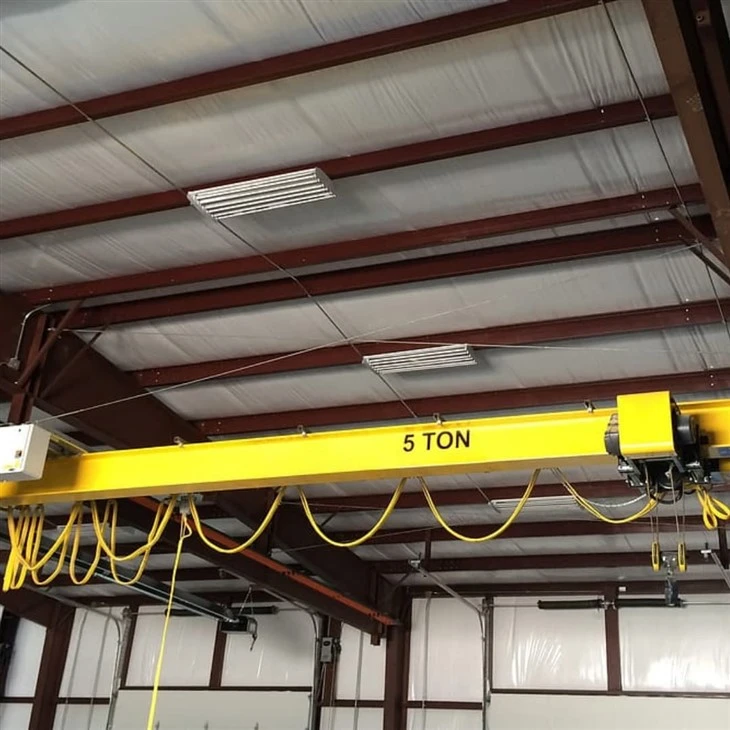

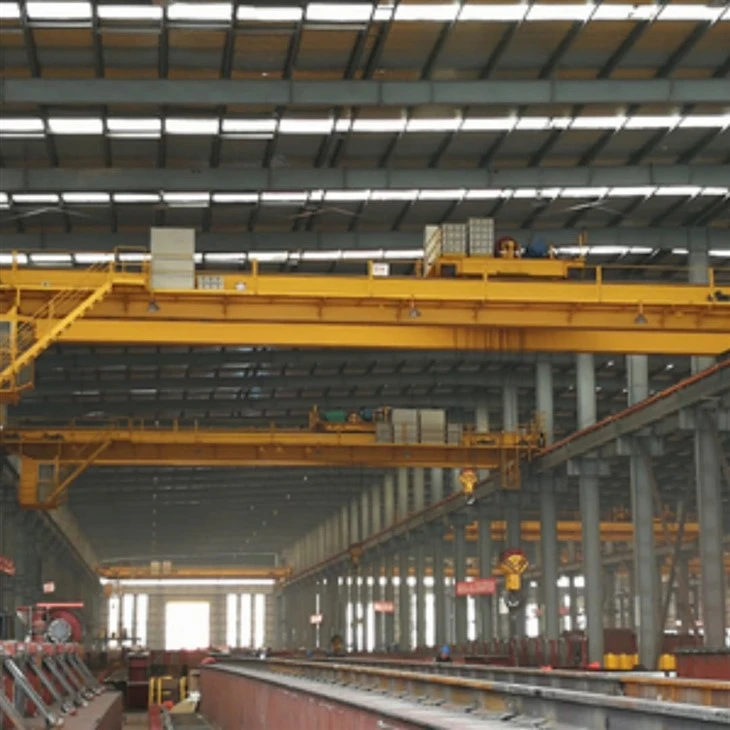
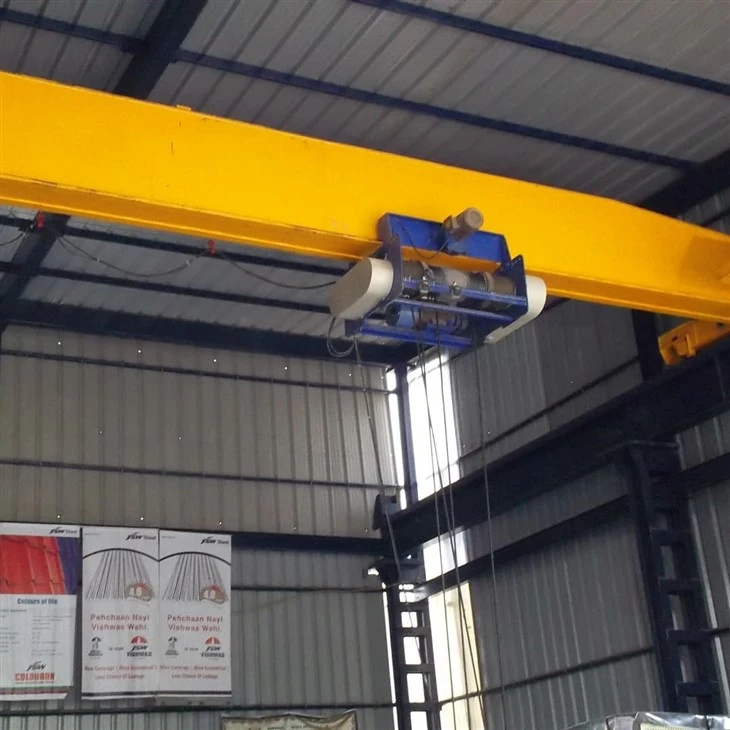


Remote Control Overhead Crane
Products Description
A remote control overhead crane is an industrial lifting machine that is operated wirelessly using a remote control device, allowing operators to control the crane's movements from a distance. This type of crane is commonly used in manufacturing, construction, warehouses, and other industries where heavy materials or equipment need to be lifted, moved, and placed with precision.
Key Features:
Wireless Remote Control: The crane is operated using a handheld remote control, which communicates wirelessly with the crane's control system. The remote allows the operator to control functions such as lifting, lowering, trolley movement, and bridge travel without needing to be physically near the crane.
Improved Safety: By allowing the operator to control the crane from a distance, a remote control overhead crane enhances safety, as the operator can stand in a safe position away from potential hazards, especially in environments where lifting heavy or dangerous loads is involved.
Increased Flexibility: Remote control operation provides greater flexibility in controlling the crane's movements, as operators can move around the workspace to gain a better view of the load being lifted or transported.
Precision Handling: Modern remote control systems feature variable-speed controls, enabling operators to fine-tune the crane's movements with accuracy, making it ideal for delicate or precise lifting operations.
Reduced Operator Fatigue: Since operators do not need to be stationed at a fixed control panel or inside a control cabin, they experience reduced physical strain, improving overall efficiency and comfort.
Easy to Use: Remote control systems are designed to be user-friendly, with clearly labeled buttons or joysticks for controlling the crane's various functions, making it easy to operate even in complex lifting scenarios.
Enhanced Visibility: By being able to move around freely, operators can choose the best vantage point for observing the load during lifting and placement, reducing the risk of collisions or improper load positioning.
Applications:
Manufacturing: For lifting machinery, materials, and components on production lines.
Warehousing: For moving heavy goods, pallets, and containers.
Construction: For lifting and placing construction materials such as steel beams or prefabricated sections.
Logistics: For loading and unloading large cargo in ports and freight terminals.
Steel Mills and Foundries: For handling hot or heavy materials like steel coils and molten metal.
In summary, a remote control overhead crane provides enhanced operational safety, flexibility, and precision, making it a popular choice in industries that require efficient and accurate material handling.
Warranty:2 years
Weight (KG):10000 kg
Feature:Bridge Crane
Painting color:Yellow or red or client's demands
Consultation:Free
Main electrical parts:Siemens or Schneider
Operational method:press button or remote control or cab for chosen
Oversea installation:Supply
After-sales Service:Supply

Pictures & Components
Monorail Overhead Crane
1.Bridge
The bridge is the main structure of the crane that spans the width of the work area. It supports the trolley and hoist and moves along the runway rails. The bridge can be:
Single-Girder: A single beam structure, generally used for lighter loads or shorter spans.
Double-Girder: A stronger structure with two parallel girders, used for heavier loads and higher lifting heights.

Trolley
The trolley moves along the length of the bridge and carries the hoist. It allows horizontal movement of the load across the crane's span. The trolley is either top-running (on top of the bridge girders) or under-running (beneath the girders).
Hoist
The hoist is the component responsible for lifting and lowering the load. It consists of a motor, drum, wire rope or chain, and a hook. The hoist can be wire-rope or chain-based, depending on the application and load capacity:
Wire Rope Hoist: Ideal for heavy-duty applications with higher lifting speeds and capacities.
Chain Hoist: Typically used for lighter loads.
 |
 |
3.End carriage
1) The end beam is located at both ends of the main beam of the single beam bridge crane and is an important component connecting the main beam and the walking mechanism. The end beam not only supports the main beam, but also allows the crane to move on the track through its wheels. The main function of the end beam is to support the main beam and bear the load generated by the lifting object. Meanwhile, the wheels on the end beam are responsible for the lateral movement of the crane, enabling the entire equipment to cover a larger working area.
2) The end beam is usually formed by welding U-shaped channel steel formed by rolling steel plates, which ensures sufficient strength and is easy to install and maintain. In the design of end beams, the connection method with the main beam, such as bolt connection or welding, is usually considered. The manufacturing process of end beams includes multiple steps such as cutting, forming, and welding. Accurate processing and high-quality welding are key factors in ensuring the performance of end beams. The quality of the weld seam directly affects the overall strength and service life of the end beam.
3) Each crane must be clearly labeled with its rated lifting capacity to ensure that the operator understands its carrying capacity. During work, no one is allowed on the bridge or using hooks to transport people, in order to prevent accidents from occurring. No one is allowed to drive the crane without an operating license or under the influence of alcohol, to ensure the safety awareness and reaction ability of the operators.
 |
 |
4.Crane travelling mechanism
1) The driving mode of the large vehicle operating mechanism is mainly divided into two forms: centralized driving and separate driving. Centralized drive is driven by an electric motor through a transmission shaft to move the wheels on both sides, while separate drive is driven by two motors of the same specifications through couplings and reducers to drive the wheels of the large vehicle. The large vehicle operating mechanism must be equipped with brakes to ensure safe parking within the allowable braking range after power failure. When the sliding distance of the large vehicle exceeds the specified value after power failure during normal operation, the brake should be adjusted immediately to ensure that its braking meets the requirements.
2) The large vehicle should be equipped with a terminal to form a limit device, and corresponding limit device safety touch gauges should be installed at the two terminals of the large vehicle travel to ensure that the limit device rotating arm is touched and the normally closed contact is opened before the large vehicle reaches the end of the track to cut off power and stop the vehicle; Corresponding limit safety contact gauges should be installed between two cranes on the same track. When two vehicles collide, they should touch each other's limit switch arm and open the contact to cut off power, in order to prevent the collision of the two vehicles.
3) The four corners of the bridge frame of the overhead crane must be equipped with spring or hydraulic buffers, and metal frame type stoppers with hardwood or rubber pads must be installed at the end of each track of the crane. This can prevent the crane from derailing, absorb the kinetic energy of the crane's movement, buffer and reduce vibration, and protect the building of the crane from damage.
5.Trolley travelling mechanism
1) Basic concept: The running mechanism of a small car is usually composed of an electric motor, a reducer, a transmission shaft, wheels, etc. Through the collaborative work of these components, the smooth movement and precise positioning of the small car are achieved.
2) Main function: The main function of the trolley operating mechanism is to support the cargo and enable it to move laterally on the main beam, thereby meeting the lifting requirements at different positions. At the same time, it also undertakes the task of partial load transmission, transferring the weight of the goods to the main beam through the trolley.
3) Design features: The design of the trolley operating mechanism needs to consider various factors, such as load capacity, operating speed, track conditions, etc. In order to ensure the smooth operation and safety of the car, high-quality materials and advanced manufacturing processes are usually used.
4) Safety precautions: When using the trolley operating mechanism, special attention should be paid to safety precautions. For example, the fastening and wear of each component should be checked regularly to ensure the reliability and effectiveness of the brake; During the operation, it is necessary to avoid violations such as overloading and diagonal pulling and lifting; Suspend use in adverse weather conditions, etc.
5) Maintenance: In order to extend the service life of the car's operating mechanism and ensure its normal operation, regular maintenance work is required. This includes cleaning, lubricating, tightening, and adjusting various components, as well as timely replacement of damaged parts.
6.Crane wheel
1) A wheel is usually composed of an axle, a hub, and a rim. The axle is connected to the small or large vehicle of the crane, the hub is fixed to the axle, and the rim is the part in contact with the track. The design and manufacturing quality of the wheels directly affect the operational stability and safety of the crane.
2) The main function of the wheels is to support the weight of the crane and enable it to move smoothly on the track. At the same time, the wheels also need to withstand various forces from the crane, such as vertical loads, horizontal loads, and impact loads. Therefore, the wheels need to have sufficient strength and wear resistance to ensure their long-term stable operation.
3) The design of wheels needs to consider various factors, such as load capacity, operating speed, track conditions, etc. Generally speaking, the larger the diameter of the wheel, the better its load-bearing capacity and operational stability. However, the diameter of the wheels should not be too large, otherwise it will increase the height and cost of the crane. In addition, the material and manufacturing process of the wheels can also affect their performance and lifespan.

7.Crane Hook
1) Hooks are usually made of high-quality steel with sufficient strength and wear resistance to ensure they can withstand the weight of goods and remain stable during lifting. The design and manufacturing quality of the hook directly affect the efficiency and safety of the crane.
2) The main function of the hook is to connect the crane and the cargo, allowing the cargo to be lifted and transported vertically. At the same time, the hook also needs to withstand various forces from the cargo, such as gravity, inertia, and wind force. Therefore, the hook needs to have sufficient strength and stability to ensure that it will not break or deform during the lifting process.
3) The design of the hook needs to consider multiple factors, such as load capacity, cargo type, working environment, etc. Generally speaking, the shape and size of the hook will be customized according to the characteristics and requirements of the goods. For example, for some heavy goods, larger sized hooks may be required; For some light goods, smaller sized hooks can be used. In addition, the material and manufacturing process of the hook can also affect its performance and lifespan.
4) When using a hook, some safety precautions need to be taken into account. For example, the wear and crack condition of the hook should be checked regularly to ensure its normal operation; During the operation, it is necessary to avoid violations such as overloading and diagonal pulling and lifting; Suspend use in adverse weather conditions, etc.

Motor
1) An electric motor is a device that converts electrical energy into mechanical energy, typically consisting of a stator, rotor, and bearings. In a single beam bridge crane, the electric motor is connected to various operating mechanisms of the crane through a reducer and transmission shaft to provide power.
2) The main function of the electric motor is to provide power for the crane and drive its various operating mechanisms to work. Meanwhile, the electric motor can also adjust the operating speed and direction of the crane as needed to meet different lifting requirements.
3) The design of an electric motor needs to consider various factors, such as load capacity, operating speed, working environment, etc. Generally speaking, the power and speed of the electric motor will be customized according to the needs of the crane. In addition, the material and manufacturing process of the electric motor can also affect its performance and lifespan.
4) In order to extend the service life of the electric motor and ensure its normal operation, regular maintenance work is required. This includes cleaning, lubricating, tightening, and adjusting the motor, as well as timely replacement of damaged components.

.
Sound and light alarm system & limit switch
1) The sound and light alarm system is a safety device that can emit sound and light signals, usually consisting of a buzzer, flash, and control circuit. In Monorail Overhead Crane, the sound and light alarm system is used to remind operators to pay attention to the operating status and abnormal situations of the crane. The main function of the sound and light alarm system is to issue an alarm signal when the crane encounters abnormal situations, reminding operators to take timely measures to avoid accidents. At the same time, limit switches can restrict the operating range of the crane, preventing it from exceeding the predetermined area and causing dangerous situations such as collisions or falls.
3) The design of sound and light alarm system needs to consider various factors, such as alarm volume, light brightness, control circuit, etc. Generally speaking, the alarm volume and light brightness need to be large enough to ensure that they can attract the attention of operators; The control circuit needs to have high sensitivity and good reliability to ensure the accuracy and timeliness of the alarm signal. The design of limit switches needs to consider factors such as sensitivity, accuracy, and installation position to meet the needs of different occasions.
4) Regular maintenance and upkeep are necessary to extend the service life of the equipment and ensure its normal operation. This includes cleaning, lubricating, tightening, and adjusting the equipment, as well as timely replacement of damaged parts. At the same time, attention should be paid to the storage environment of the equipment to avoid being affected by factors such as humidity, high temperature, or corrosive gases.

10.Safety Devices
Monorail Overhead Crane
1) Overload protection device: prevent the crane from overloading. When the actual load of the crane exceeds the rated lifting weight, the overload protection device will automatically cut off the power supply or sound an alarm to prevent damage to equipment and personnel.
2) Emergency stop device: used to manually stop the operation of the crane in an emergency. The operator can quickly cut off the power supply of the equipment by triggering the emergency stop button to prevent accidents.
3) Windproof device: prevent the crane from being blown by strong winds when working outdoors. The windproof device can be a mechanical locking device or an electric locking device. When the wind speed exceeds the safety standard, the crane will automatically lock to prevent the equipment from being dangerous due to wind.
4) Electrical protection device: prevent equipment damage or safety accidents caused by electrical faults. Electrical protection devices include short-circuit protection, undervoltage protection, phase failure protection, etc., which can automatically cut off the power supply when the electrical system is abnormal to prevent damage to the equipment or affect safety.
5) Anti-sway device: reduce or prevent the swing of the hook and load during lifting, ensure the stability of material handling, and prevent the material from falling off due to swinging.
6) Buffer device: A buffer is installed at the terminal position of the crane. When the equipment or vehicle approaches the end of the track, the buffer device can absorb part of the impact force to avoid damage to the equipment or personnel.
11.Control Mode
1) Ground handle control: The operator controls the operation of the crane by holding a control handle connected by a cable. There are multiple buttons on the handle, which are used to control the lifting, lateral movement and trolley movement of the crane. The cable is generally of a certain length, allowing the operator to operate at a safe distance.
2) Wireless remote control: The operation of the crane is controlled by a wireless remote control, which usually has buttons or rockers to control lifting, lateral movement and trolley operation. Without cable connection, the operator can move freely and operate the equipment at a long distance.
3) Cab control: The operator sits in the cab installed on the crane and operates directly through handles, buttons or joysticks. The cab is usually installed on the trolley or car of the crane, and the operator can directly observe the lifting operation site.
4) Centralized control (PLC control system): Use a programmable logic controller (PLC) for automated control to control the various actions of the crane through pre-programmed programs. The operator can control and monitor the operating status of the crane in the central control room or remotely through the human-machine interface (HMI).

Sketch

Main technical

Advantages
A remote control overhead crane offers numerous advantages, particularly in terms of safety, efficiency, and flexibility in material handling. Below are the key benefits:
1. Enhanced Safety
Distance from Load: Operators can control the crane from a safe distance, reducing the risk of accidents caused by falling objects, swinging loads, or equipment malfunction. This is particularly useful in hazardous environments such as construction sites, steel mills, or chemical plants.
Clear View of Operations: The operator can move around freely to find the best vantage point, allowing for more precise load placement and reducing the chance of human error or collisions.
Emergency Stop: Remote control units are typically equipped with an emergency stop button, allowing the operator to halt operations instantly in case of any safety concerns.
2. Increased Flexibility
Freedom of Movement: Operators are not confined to a control cabin or a fixed pendant station. They can move around the worksite and operate the crane from various positions, improving their ability to monitor the load and surrounding area.
Multiple Operators: Remote control cranes allow for multiple operators to take control when necessary, improving collaboration and coordination in busy work environments.
Versatility: Remote control cranes can be used in a wide range of environments, including confined spaces, outdoors, or high-risk areas where direct operator involvement may not be safe.
3. Improved Efficiency
Quick Load Handling: Remote control cranes offer fast and accurate load movement, reducing the time spent on manual adjustments and enabling efficient material handling. Operators can position themselves to optimize load transfer and placement.
Reduced Downtime: By improving safety and operational flexibility, remote-controlled cranes minimize downtime caused by accidents or misalignment of loads, keeping production moving smoothly.
Single-Person Operation: Unlike manual or cabin-controlled cranes that may require additional personnel for load monitoring, remote control cranes allow one operator to manage both load handling and movement, reducing labor costs and increasing productivity.
4. Precision and Control
Fine-Tuned Movements: Remote control systems offer variable speed control, allowing operators to make fine-tuned adjustments to lifting, lowering, and movement speeds, which is particularly important for delicate or sensitive loads.
Reduced Load Swing: By being able to adjust the crane's movements with precision, the operator can reduce the likelihood of load sway, making for safer and more controlled operations.
Anti-Sway Technology (Optional): Some remote-controlled cranes come with anti-sway systems that help prevent unwanted swinging of the load, ensuring even more precise control.
5. Increased Productivity
Optimized Workflow: By reducing manual intervention, a remote control crane streamlines operations, enabling faster material handling and improved workflow across different sections of the work area.
Multitasking: The operator can oversee multiple cranes or perform other tasks while controlling the crane remotely, improving overall efficiency in environments with multiple lifting operations.
Continuous Operation: Remote controls allow operators to manage crane operations continuously without the need to take breaks to change positions, as is often required with cabin-controlled cranes.
6. Reduced Operator Fatigue
Comfortable Operation: Remote control cranes eliminate the need for operators to climb into control cabins or remain in fixed positions for long periods. The operator can control the crane from a comfortable standing position, reducing physical strain and fatigue, which can improve focus and operational accuracy.
No Exposure to Harsh Conditions: In industrial settings with extreme temperatures, dust, noise, or hazardous substances, remote control operation keeps the operator safely out of harm's way, reducing health risks and discomfort.
7. Cost Savings
Reduced Labor Costs: With remote control cranes, a single operator can manage the crane, reducing the need for additional personnel to monitor load placement or communicate with the operator.
Lower Maintenance Costs: By allowing for more precise load handling and reducing the likelihood of operator error or accidents, remote-controlled cranes experience less wear and tear, leading to lower maintenance costs over time.
Improved Equipment Longevity: Precision control reduces the strain on mechanical components, extending the life of the crane and reducing the frequency of repairs or replacements.
8. Increased Safety in Hazardous Environments
Hazardous Area Operations: Remote control overhead cranes are ideal for environments where direct operator involvement could be dangerous, such as steel mills, foundries, chemical plants, or nuclear power stations. Operators can safely control the crane from a distance, avoiding exposure to high heat, toxic fumes, radiation, or other hazards.
Heavy Load Handling: When handling extremely heavy or oversized loads, remote control operation reduces the risk to the operator, who can position themselves at a safe distance from the load.
9. No Need for a Fixed Control Cabin
Space Savings: Without the need for a control cabin, the design of the crane becomes more compact, saving space in the work environment. This also provides more flexibility in terms of crane installation, especially in facilities with limited space.
Cost Savings on Cabin Installation: By eliminating the control cabin, the overall cost of the crane system can be reduced, both in terms of initial installation and long-term maintenance.
10. Better Ergonomics for the Operator
User-Friendly Controls: The handheld remote control unit is ergonomically designed with simple buttons, joysticks, or dials, reducing the likelihood of strain or injury to the operator during prolonged use.
Customization: Remote controls can be customized to fit specific operational needs, allowing operators to control various functions of the crane with minimal effort.
11. No Ground-Level Congestion
Reduced Traffic and Clutter: Remote control cranes operate overhead, freeing up floor space and reducing congestion at ground level, making it easier for other machinery, workers, or vehicles to move around without obstruction.
12. Adaptable to Different Types of Cranes
Wide Application: Remote control systems can be adapted to a variety of overhead cranes, such as single-girder cranes, double-girder cranes, gantry cranes, and jib cranes. This makes it a versatile solution across many different industries and applications.
In conclusion, a remote control overhead crane enhances safety, precision, flexibility, and efficiency in lifting operations, while also reducing operator fatigue and cutting down on labor and maintenance costs. It is an excellent solution for industries that require fast, accurate, and safe material handling in various work environments.
Application:
Remote control overhead cranes are versatile lifting systems that find application in a wide range of industries and environments. These cranes enhance safety, precision, and flexibility by allowing operators to control the crane from a distance, making them suitable for handling heavy or dangerous loads in various settings. Here are some of the primary applications of remote control overhead cranes:
1. Manufacturing and Assembly Lines
Automotive Industry: Used for lifting and positioning heavy components like engines, frames, and large body parts during the assembly process.
Aerospace Industry: Essential for handling delicate and expensive components, such as aircraft parts, ensuring precise movement and positioning.
Heavy Machinery: Ideal for moving large and heavy machine parts or fully assembled machinery within a manufacturing facility.
Metal Fabrication: Facilitates the handling of metal sheets, beams, and other raw materials in fabrication shops.
2. Warehousing and Logistics
Material Handling: Remote control overhead cranes are used for loading, unloading, and moving large or heavy materials, pallets, and containers in warehouses and logistics centers.
Inventory Management: Efficient for stacking and storing goods at varying heights, allowing quick access and optimized space utilization in large storage facilities.
Loading and Unloading: In freight terminals or ports, remote-controlled cranes move cargo, containers, and bulky materials between trucks, trains, and storage areas.
3. Construction
Building Materials: Cranes are used to lift and place construction materials, such as steel beams, concrete slabs, and prefabricated structures, onto construction sites.
Modular Building Assembly: Ideal for precise lifting and placement of modular building components, reducing the risk of misalignment.
Bridge and Infrastructure Construction: Remote control cranes are employed in building large infrastructure projects like bridges, where heavy components must be lifted with precision.
4. Steel Mills and Metal Processing
Steel Coil Handling: Used to lift and transport large, heavy steel coils or slabs in steel mills. The remote control provides safety in hot and harsh environments.
Molten Metal Handling: In foundries and steel plants, remote-controlled cranes handle molten metal containers, protecting operators from heat and other hazardous conditions.
Scrap Metal Handling: Helps move and organize scrap metal in recycling plants or steel production facilities.
5. Shipbuilding and Marine Industry
Shipyard Operations: Used for lifting and positioning large ship components like hull sections, engines, and other heavy equipment during the shipbuilding process.
Cargo Handling: Remote control cranes are employed at ports for handling containers and heavy cargo, improving efficiency and safety in loading and unloading operations.
Offshore Platforms: Remote-controlled cranes are used in offshore drilling rigs or oil platforms to lift and position heavy equipment, ensuring safe and efficient operations.
6. Power Plants and Energy Sector
Nuclear Power Plants: Remote control cranes are used in handling radioactive materials or spent fuel rods, keeping operators safe from radiation exposure.
Hydropower Plants: In hydropower facilities, these cranes are used to lift heavy turbines, gates, and other equipment for maintenance and repair work.
Wind Turbine Maintenance: Employed to move large wind turbine components such as blades, hubs, and nacelles during installation or repair.
7. Mining Industry
Ore Handling: Remote control cranes are used in mines to move heavy loads of raw materials like ores or minerals from one location to another.
Equipment Maintenance: Cranes are used for lifting and moving heavy mining machinery and equipment during maintenance and repairs, ensuring safe handling in rugged environments.
8. Paper and Pulp Industry
Roll Handling: Used to lift and transport heavy rolls of paper or pulp between various stages of production in paper mills, ensuring delicate handling of materials.
Warehouse Operations: In paper mills, remote-controlled cranes are employed to stack and store large paper rolls in storage areas efficiently.
9. Chemical and Pharmaceutical Industry
Hazardous Material Handling: In chemical plants, remote control cranes handle hazardous chemicals or materials from a safe distance, reducing operator exposure to dangerous substances.
Equipment Maintenance: Remote control cranes assist in moving heavy machinery and equipment for maintenance and repairs in sterile environments like pharmaceutical manufacturing.
10. Automotive and Railcar Maintenance
Automotive Maintenance: Used in maintenance facilities to lift heavy vehicle components, such as engines, transmissions, or chassis, for repair and servicing.
Railcar Maintenance: Remote control cranes help in the repair, assembly, and disassembly of railcars by lifting large components such as wheels, bogies, and engines.
11. Waste Management and Recycling
Scrap Yard Operations: Remote-controlled cranes are employed in scrap yards to lift and move scrap materials, such as metal, plastic, and rubber, for recycling purposes.
Waste-to-Energy Facilities: Used to handle heavy containers of waste material for sorting, incineration, or processing in energy recovery plants.
12. Food and Beverage Industry
Bulk Material Handling: In facilities that handle large quantities of raw materials (e.g., grain, sugar, flour), remote control cranes move bulk materials to and from storage areas and production lines.
Storage Operations: Remote control cranes manage heavy loads in refrigerated or dry storage warehouses, ensuring proper handling and organization of goods.
13. Aviation Industry
Aircraft Maintenance: In aviation maintenance facilities, remote control cranes lift and transport large aircraft components, such as wings, fuselages, or engines, during repair, assembly, or disassembly.
Hangar Operations: Used to move heavy equipment or aircraft parts around hangars efficiently and safely.
14. Automated Production Lines
Integration with Automation Systems: Remote control cranes are often integrated into automated production lines where material handling must be precise and synchronized with other machinery.
15. Emergency Services
Rescue Operations: In disaster recovery, remote-controlled cranes may be used to move heavy debris or obstacles, assisting in rescue efforts without placing operators at risk.
Firefighting: In certain industrial environments, remote control cranes are used to safely remove flammable materials from the vicinity of a fire.
16. Specialty Applications
Art Installations: Used to install large sculptures or other heavy artworks in public spaces or galleries.
Entertainment Industry: In film production or theme parks, remote-controlled cranes are used to move large set pieces or equipment during setup or filming.
Conclusion
Remote control overhead cranes are indispensable in industries that require precise, safe, and efficient lifting and material handling. Whether in manufacturing, construction, warehousing, or specialized industries like aerospace and nuclear power, the flexibility and safety advantages of remote control operation make these cranes a vital tool for modern industrial applications.
Crane production procedure
Monorail Overhead Crane
1. Design stage: Determine customer needs and understand the use environment, load capacity and technical specifications of the crane. Engineers make preliminary designs based on the needs, including structural drawings, material selection and performance parameters.
2. Material preparation: Purchase the required steel, motors, control systems and other accessories according to the design plan. Perform quality inspection on the purchased materials to ensure that they meet the design requirements.
3. Processing stage: Cut the steel according to the design drawings to make the required beams, supports and other structural parts. Weld the cut parts to form the main beam, bridge and other structural parts to ensure that the welding quality meets the standards. Machining the welded parts to ensure accurate size and fit.
4. Assembly: Preliminary assembly of various components (main beam, running wheels, hooks, control systems, etc.) to check the fit and accuracy of each part. Install motors, control systems and safety devices to ensure the normal operation of the electrical system.
5. Testing stage: Perform static load tests to check the stability and safety of the crane under no load and full load conditions. Perform dynamic load tests to check the operating performance, speed, braking and safety device functions of the crane. Debug according to the test results to ensure that all performance indicators meet the design requirements.
6. Spraying and anti-corrosion treatment: Clean, sandblast and rust-proof the assembled crane. Spray anti-corrosion paint on the surface of the crane to ensure its durability and aesthetics.
7. Packaging and transportation: Pack the completed crane reasonably to prevent damage during transportation. Arrange transportation according to customer needs and deliver the crane to the customer's designated location.
8. Installation and commissioning: Install and commission the crane at the customer's site to ensure its normal operation. Train operators and explain the operation and maintenance precautions of the equipment.


Workshop view
Monorail Overhead Crane
Material Inspection
Quality Inspection: Strict quality inspection is carried out on the purchased raw materials to ensure that they meet the design requirements and national standards.
Material Storage: Qualified materials are stored according to classification to prevent corrosion or damage.
Cutting and Forming
Steel Cutting: Use plasma cutting, laser cutting or flame cutting and other technologies to cut the steel according to the size of the design drawing.
Forming Processing: Form the steel plate through bending, rolling, welding and other processes to manufacture the main beam, end beam and other structural parts.
Welding
Component Welding: The cut and formed steel parts are welded into the main structures such as the main beam, end beam and trolley. The welding process needs to be strictly controlled to ensure the structural strength and welding quality.
Weld Inspection: Use non-destructive testing technology (such as ultrasonic testing, radiographic testing) to inspect the welds to ensure that there are no cracks or other defects.
Machining
Precision Machining: Precision machining is performed on the key components of the crane, such as wheel sets, bearing seats, pulleys, etc., to ensure their dimensional accuracy and surface quality.
Assembly of the whole machine
General assembly: On the basis of pre-assembly, the overall assembly of the crane is carried out, including the final installation of the main beam, end beam, lifting mechanism, walking mechanism, etc.
Commissioning and testing
Under dynamic conditions, the operating performance of the crane is tested, including the testing of lifting, walking, steering and other functions. The overall size of the assembled bridge crane is checked to ensure that all dimensions meet the design requirements.
Spraying and anti-corrosion treatment
Surface treatment Rust removal: Rust removal on the surface of the crane, common methods include sandblasting, pickling, etc. Primer spraying: Spray anti-corrosion primer on the treated surface to prevent metal oxidation and corrosion. Topcoat spraying Color spraying: Spray topcoat according to customer requirements or industry standards to give the crane a protective and decorative effect. Marking: After spraying, mark the crane's identification information in accordance with the specifications, such as model, rated load, etc.
Factory and installation
Packaging and transportation
Packaging protection: Protectively package the key components of the crane to prevent damage during transportation. Transportation arrangement: According to the equipment size and transportation conditions, select a suitable transportation method to transport the crane to the customer's site.
Acceptance and delivery
Customer acceptance
On-site acceptance: The customer conducts on-site acceptance of the crane according to the contract requirements and technical specifications to check the performance and quality of the equipment.
Problem rectification: If any problems are found, the manufacturer needs to rectify them in time to ensure that the equipment fully meets the customer's requirements. Delivery and use Operation training: The manufacturer usually trains the customer's operators to ensure that they can operate the crane correctly and safely.


Hot Tags: remote control overhead crane, China remote control overhead crane manufacturers, suppliers, factory
Previous
No InformationYou Might Also Like


Send Inquiry