







Crane With Grab
Products Description
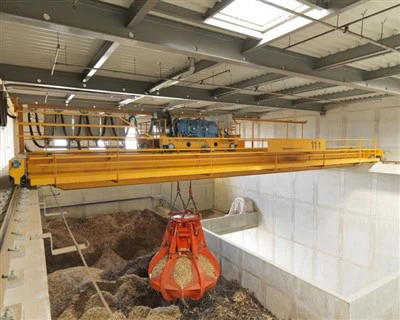
Crane With Grab Grab-type double-beam bridge crane is an efficient lifting equipment specially designed for handling and loading and unloading bulk materials, ore and other heavy objects. It has a stable structure and flexible operation, and is widely used in metallurgy, construction, ports, mining and other industries.
This crane adopts a double-beam structure, which enhances the carrying capacity and stability, and is suitable for heavy object handling. Equipped with various types of grabs (electric or hydraulic), it can efficiently grab, lift and place materials. Both the walking trolley and the whole machine can move on the track to achieve a wide range of operations. Ground control or wireless remote control can be selected, which is simple and safe to operate.
3)Crane With Grab Grab-type double-beam bridge crane drives the drum through an electric motor to lift or lower the grab. The opening and closing of the grab is usually driven by a hydraulic cylinder or a motor. The trolley moves on the main beam to achieve horizontal transfer of materials. The trolley is generally driven by a motor and the speed is adjustable. The crane can move along the track to expand the operating range.
Warranty:2 Years
Weight (KG):5000 kg
Feature:Bridge Crane
Condition:New
Span:10.5~31.5m
Trolley travelling:40-50m/min
Lifting height:12m 16m 30m
Working System:A7-A8
Power Source:3 Phase 380V 50hz

Pictures & Components
Crane With Grab
1.Main beam
The main beam of a grab type double girder bridge crane is an important part of its structure and is mainly responsible for carrying the weight and load of the crane. Here are some key points about the main beam:
1)Material
High-strength I-beam or H-beam is usually used to ensure sufficient load-bearing capacity and rigidity.
2)Design
The design of the main beam takes into account load distribution, bending strength and torsional rigidity to achieve optimal performance and safety.
3) Span
The span of the main beam is usually customized according to the needs of the workplace, generally between 10 meters and 40 meters.
4)Installation
The main beam is fixed to the frame of the crane through a supporting structure to ensure overall stability and safety.
5)Maintenance
Regularly check the welding parts and connection points of the main beam to ensure that there are no cracks or damage to extend the service life of the equipment.

Lifting System
1)Motor: Provides power, usually an asynchronous motor, which can realize the lifting and lowering movement of the crane.
2)Reducer: Reduces the high-speed rotation of the motor and converts it into a low-speed, high-torque output suitable for lifting.
3)Drum: Used to wind and release the lifting wire rope, and the load is lifted and lowered by the rotation of the drum.
4)Wire rope: Connects the grab and drum, responsible for carrying and transferring the weight of the heavy object.
5)Grab: The working part of the crane, which can clamp and transport materials, usually composed of two or more claws, suitable for different types of materials.
Braking system: Ensures the safety of the load when stopping, usually using electromagnetic brakes or mechanical brakes.

3.End carriage
1) Grab-type double-girder bridge crane is a kind of lifting equipment widely used in the industrial field, especially in the environment where bulk materials need to be handled. The design of this crane allows it to load, unload and transport goods efficiently and safely in different environments. As an important part of the crane, the end beam is responsible for ensuring the stable operation and safe operation of the entire machine.
The end beam is mainly composed of anti-torsion box profiles and a full set of walking devices. This design not only enhances the structural strength of the end beam, but also improves its carrying capacity, enabling it to adapt to different load requirements. The end beam is compact in size and adopts a modular design. It can be flexibly configured according to different load requirements to adapt to various working environments and load conditions.
 |
 |
4.Crane travelling mechanism
1) The crane running mechanism is mainly composed of a drive unit, a transmission shaft, wheels and a braking system. These components work together to enable the crane to move smoothly laterally on the laid track, thereby expanding the operating range and improving the efficiency and flexibility of material handling.
2) The drive unit usually uses a motor with a reducer to transmit power to the wheels through the transmission shaft to drive the entire crane to move along the track. This design not only ensures sufficient driving force, but also controls the movement speed of the crane by adjusting the speed of the motor.
3) The design of the crane running mechanism focuses on high efficiency and stability, which can ensure the safety of operation while ensuring rapid movement. For example, the use of advanced three-in-one drive technology, that is, the integrated design of the drive unit, transmission device and braking system, not only simplifies the structure, but also improves the response speed and reliability.
4) Modern crane running mechanisms are equipped with intelligent control systems such as PLC and frequency converters, which can accurately control the start, operation and stop of the crane, and automatically adjust when necessary to adapt to different operating conditions and environmental requirements.
5.Trolley travelling mechanism
1) Basic structure and function:
The trolley operating mechanism mainly includes lifting motor, running motor, transmission device, wheels and braking system. These components work together to enable the trolley to move horizontally on the bridge, thereby performing precise material handling in a smaller working area.
The lifting motor is responsible for driving the lifting and lowering of the grab, while the running motor controls the horizontal movement of the trolley on the bridge. This design enables the trolley to move both vertically and horizontally, greatly improving its operational flexibility and efficiency.
2) Technical features and advantages:
The three-in-one drive technology is adopted, that is, the drive unit, transmission device and braking system are integrated together, which not only simplifies the structure, but also improves the response speed and reliability of the system.
The trolley design allows it to run on different tracks to adapt to different working environments and requirements. At the same time, the intelligent control system equipped with PLC and inverter can achieve precise speed control and position adjustment to meet the needs of complex operations.
6.Crane wheel
1) Advantages:
Made of high-strength materials, such as high-quality steel, to ensure sufficient load-bearing capacity and wear resistance. This design allows the wheel to maintain good performance even under long-term high-load operation.
The design of the wheel takes into account different working environments, such as the difference between indoor and outdoor use, and whether a rain cover is required. This flexibility allows the grab-type double-beam bridge crane to adapt to a variety of industrial scenarios.
2) Safety maintenance:
In addition to basic mechanical strength, the wheel is also equipped with safety facilities such as a braking system and a limit switch to prevent accidents. These devices can quickly stop the rotation of the wheel in an emergency to ensure safe operation.
Regular maintenance is essential to ensure the reliability of the wheel and extend its service life. This includes checking the lubrication status of the bearings, replacing worn parts in a timely manner, and keeping the wheel rim clean and in good condition.

7.Crane Hook -Crane With Grab
1) Hook structure: The hook is usually made of high-strength steel and is designed to withstand heavy loads while having a certain degree of elasticity and toughness to prevent breakage when overloaded.
2) Motor drive: The crane's motor drives the drum through a reducer, and the wire rope wound on the drum is connected to the hook. The start and stop of the motor controls the lifting and lowering of the hook.
3) Grab bucket connection: The hook is connected to the grab bucket, and the grab bucket opens and closes under the control of the motor under the guidance of the hook. When the grab bucket is clamping materials, the lifting and lowering of the hook can lift the grab bucket to the required height.
4) Control system: The control system equipped with the crane (usually remote control or control room control) can accurately control the movement of the hook to ensure the safety and efficiency of grabbing and releasing materials.
Safety device: To prevent accidental falling, the hook is usually equipped with a safety lock to ensure that the grab bucket does not accidentally fall off during operation.

Motor
1) Type: Three-phase asynchronous motors are usually used because of their simple structure, high reliability and suitability for long-term operation.
2) Power selection: The power of the motor is determined according to the design load and frequency of use of the crane to ensure smooth operation under full load.
3) Drive mode: The motor is connected to the drum through a reducer, which converts the high-speed rotation of the motor into a low-speed, high-torque rotation to lift the hook and grab.
4) Control system: Modern crane motors are usually equipped with frequency converters, which allow precise control of the motor speed, achieve smooth lifting and lowering, and reduce impact loads.
5) Heat dissipation and protection: The motor is usually equipped with heat dissipation devices and overload protection functions to prevent damage caused by overheating and overloading.
Maintenance: Regularly check the insulation, lubricating oil and cooling system of the motor to ensure that it operates in optimal conditions.

.
Sound and light alarm system & limit switch
1) Sound and light alarm system
Function and importance: The sound and light alarm system promptly alerts the operator to potential dangers or abnormal equipment status by emitting sound and light signals. This instant feedback is essential to prevent accidents, especially in workplaces with poor visibility or noisy environments.
Technical features: Modern sound and light alarms are designed with advanced integrated circuits, with strong anti-interference capabilities and stable working performance. Its casing is usually made of low-carbon steel plate material and is treated with imported paint spraying, which is both durable and generous.
2) Limit switch
Basic composition and function: The limit switch is a switch used to control the movement position of the mechanism. When the crane runs to the set position, the limit switch will trigger, cut off the power supply or change the circuit, thereby stopping the further movement of the mechanism.
Type and application: Common limit switches include heavy hammer type, fire-off type and pressure plate type. For example, the worm gear height limiter achieves precise control through a worm gear combination, which is suitable for occasions requiring delicate operation.

10.Safety Devices
1) Height limiter
Function and importance: The height limiter is used to prevent the lifting mechanism from exceeding the preset height limit when lifting the cargo, thereby avoiding overwinding and collision accidents. This device is essential to ensure the safe operation of the crane in the vertical direction.
2) Anti-collision device
Function and implementation method: The anti-collision device is used to prevent the crane from colliding with other objects during horizontal movement. This includes buffers, stops, etc. installed on the trolley or carriage running mechanism.
3) Braking device
Basic function: The braking device is one of the important safety guarantees of the crane. It can quickly stop the operation of the crane in an emergency and prevent further danger caused by inertia.
4) Sound and light alarm system
Function and importance: The sound and light alarm system promptly alerts the operator to potential dangers or abnormal equipment status by emitting sound and light signals. This instant feedback is essential to prevent accidents.
5) Maintenance and inspection
Regular maintenance: To ensure the reliability of these safety devices, regular maintenance and inspection are essential. This includes testing the sensitivity of the alarm system, checking the accuracy of the limit switch, and replacing worn parts in time.
11.Control Mode
1) Ground control method: The operator directly controls the movement of the crane using a joystick or button on the ground. This method is simple and intuitive, and is suitable for simple lifting tasks. The operator can observe the lifting process in real time, which is convenient for adjusting the operation strategy and improving the work efficiency.
2) Cab control method: The operator is located in the cab on the crane and controls the various functions of the crane through the control device. This method provides a better field of view and operating environment and is suitable for complex lifting tasks. The cab is usually equipped with comfortable seats, air conditioning and other facilities, which improves the working environment and comfort of the operator.
3) Remote control method: The movement of the crane is remotely controlled using a wireless remote control. This method allows the operator to operate away from the crane and is suitable for dangerous or inaccessible working environments. The remote control method has the characteristics of high flexibility and good safety, and is widely used in various complex and dangerous lifting tasks.
4) Automation and intelligent control: The automation and intelligent control of the crane is realized by integrating advanced sensors, control systems and algorithms. This method can automatically complete the lifting task, reduce manual intervention, and improve work efficiency and safety.
5) Networked control: Connect multiple cranes through the network to achieve centralized control and collaborative operation. This method is suitable for large-scale engineering projects and scenarios that require multi-machine collaborative operation. Networked control can improve operating efficiency and safety and reduce the possibility of misoperation and accidents.

12.Sketch-Crane With Grab

Main technical-Crane With Grab

Advantages
Strong and durable: The grab type double girder bridge crane is made of high-quality steel, which ensures the strength and durability of the equipment. This material selection means that the equipment can maintain good performance even under long-term high-load operation, reducing maintenance costs and downtime.
High efficiency: Through optimized design and advanced manufacturing processes, the crane is able to achieve efficient material handling operations. For example, the use of laser-assisted height measurement technology can more accurately locate cargo, thereby improving operating efficiency.
Flexible and changeable: The crane is equipped with a remote-controlled operating system, allowing operators to control the movement of the crane at a safe distance, which not only improves safety but also increases operational flexibility.
Strong adaptability: Whether it is an indoor or outdoor environment, the grab type double girder bridge crane can adapt to different working environments. For occasions where it needs to be used outdoors, devices such as rain covers can also be added to adapt to adverse weather conditions.
Comprehensive safety protection: In order to ensure safety during operation, the crane is equipped with a variety of safety devices, such as limit switches, overload protection devices and emergency stop buttons. These devices can cut off the power supply or sound an alarm in time under abnormal circumstances, effectively preventing accidents.
6) Reliable control system: The electrical control system adopts PLC control, which has the characteristics of high degree of automation and simple operation. This control system not only improves the accuracy and reliability of operation, but also reduces the risks caused by operational errors.
Application:
Power Plant: In power plants, grab double girder bridge cranes are used to load and unload bulk materials such as coal and limestone. These materials are usually in large quantities and require efficient and reliable equipment for handling and storage.
Cargo Yard: In the cargo yard, this crane is used to load and unload various bulk goods such as grains, fertilizers, etc. Due to the diverse operating environment of the cargo yard, the flexibility and efficiency of the grab double girder bridge crane make it an ideal choice.
Workshop: In the workshop of the manufacturing industry, this crane is used to move raw materials or finished products. For example, in the cement manufacturing process, it is used to move raw materials such as limestone and mineral powder.
Wharf: At the port terminal, grab double girder bridge cranes are used to load and unload bulk cargoes such as iron ore and coal on ships. The environment of the wharf requires the equipment to adapt to different weather conditions, and the waterproof design of this crane meets this demand.
Metallurgical Industry: In the metallurgical industry, this crane is used to move heavy objects such as ore and coke. The working environment of the metallurgical industry is usually harsh, and the ruggedness of this crane ensures its reliability in such environments.
Construction industry: At construction sites, this crane is used to transport building materials such as sand, gravel, and cement. The construction industry has high requirements for the efficiency and safety of material handling, and the operating performance and safety measures of this crane can meet these requirements.
7) Oil and gas industry: In the oil and gas industry, this crane is used to transport drilling equipment and materials. This industry has extremely high requirements for the accuracy and reliability of equipment, and the high-performance control system of this crane can meet these requirements.
Crane production procedure
1) Design stage: Before starting the design, the manufacturer will conduct market research to understand user needs and industry development trends. According to the market research results, detailed technical requirements are formulated, including key parameters such as lifting weight, span, and lifting height. Complete the design drawings of the crane, including structural drawings, electrical drawings, etc., to ensure that each component is accurately calculated and planned.
2) Material preparation: Select suitable materials such as high-quality steel, motors, cables, etc. according to the design requirements. The quality and performance of the materials will directly affect the durability and safety of the crane. Cut and shape the selected materials according to the design drawings to prepare for subsequent assembly.
3) Component manufacturing: Including the production of main load-bearing structures such as main beams, end beams, and trolleys. These components usually use welding technology to ensure the strength and stability of the structure. Some precision components are machined, such as bearing seats, gears, etc., to meet specific size and shape requirements.
4) Assembly process: Assemble the manufactured components according to the design drawings. Install the electrical control system, including motors, cables, control cabinets, etc. The reliability of the electrical system is directly related to the operational safety and efficiency of the crane.
5) Quality inspection: Perform preliminary inspection during assembly to ensure that each component meets the design requirements. After assembly is completed, a comprehensive quality inspection is carried out, including load testing, running testing, etc., to ensure the overall performance and safety of the crane.
6) Surface treatment: Paint the metal structure to improve its corrosion resistance and aesthetics. The painting process needs to be strictly controlled to ensure that the coating is uniform and has strong adhesion. Install necessary safety signs and operating instructions on the crane to remind operators to pay attention to safety.
7) Packaging and transportation: According to the size and transportation method of the crane, appropriate packaging is carried out to prevent damage during transportation. Arrange suitable transportation tools to deliver the crane to the location specified by the customer.
8) On-site installation: Install and debug the crane at the customer's site to ensure that it can operate normally. Provide customers with necessary operation training and technical support to ensure that they can use the crane correctly and safely.


Workshop view
Material Inspection
Quality Inspection: Strict quality inspection is carried out on the purchased raw materials to ensure that they meet the design requirements and national standards.
Material Storage: Qualified materials are stored according to classification to prevent corrosion or damage.
Cutting and Forming
Steel Cutting: Use plasma cutting, laser cutting or flame cutting and other technologies to cut the steel according to the size of the design drawing.
Forming Processing: Form the steel plate through bending, rolling, welding and other processes to manufacture the main beam, end beam and other structural parts.
Welding
Component Welding: The cut and formed steel parts are welded into the main structures such as the main beam, end beam and trolley. The welding process needs to be strictly controlled to ensure the structural strength and welding quality.
Weld Inspection: Use non-destructive testing technology (such as ultrasonic testing, radiographic testing) to inspect the welds to ensure that there are no cracks or other defects.
Machining
Precision Machining: Precision machining is performed on the key components of the crane, such as wheel sets, bearing seats, pulleys, etc., to ensure their dimensional accuracy and surface quality.
Assembly of the whole machine
General assembly: On the basis of pre-assembly, the overall assembly of the crane is carried out, including the final installation of the main beam, end beam, lifting mechanism, walking mechanism, etc.
Commissioning and testing
Under dynamic conditions, the operating performance of the crane is tested, including the testing of lifting, walking, steering and other functions. The overall size of the assembled bridge crane is checked to ensure that all dimensions meet the design requirements.
Spraying and anti-corrosion treatment
Surface treatment Rust removal: Rust removal on the surface of the crane, common methods include sandblasting, pickling, etc. Primer spraying: Spray anti-corrosion primer on the treated surface to prevent metal oxidation and corrosion. Topcoat spraying Color spraying: Spray topcoat according to customer requirements or industry standards to give the crane a protective and decorative effect. Marking: After spraying, mark the crane's identification information in accordance with the specifications, such as model, rated load, etc.
Factory and installation
Packaging and transportation
Packaging protection: Protectively package the key components of the crane to prevent damage during transportation. Transportation arrangement: According to the equipment size and transportation conditions, select a suitable transportation method to transport the crane to the customer's site.
Acceptance and delivery
Customer acceptance
On-site acceptance: The customer conducts on-site acceptance of the crane according to the contract requirements and technical specifications to check the performance and quality of the equipment.
Problem rectification: If any problems are found, the manufacturer needs to rectify them in time to ensure that the equipment fully meets the customer's requirements. Delivery and use Operation training: The manufacturer usually trains the customer's operators to ensure that they can operate the crane correctly and safely.


Hot Tags: crane with grab, China crane with grab manufacturers, suppliers, factory, Grab Overhead Crane, Grab Bucket Overhead Crane
Previous
Crane And GrabYou Might Also Like




Send Inquiry