







Single Girder Crane
Products Description
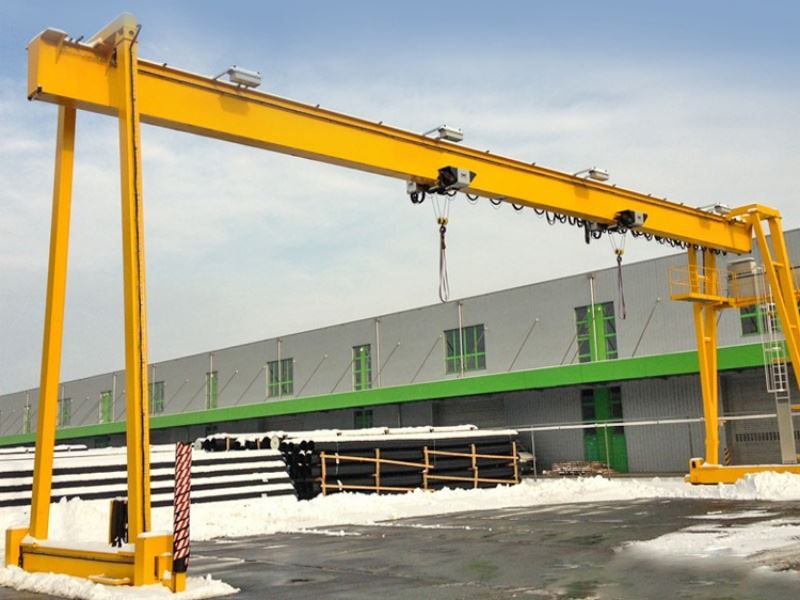
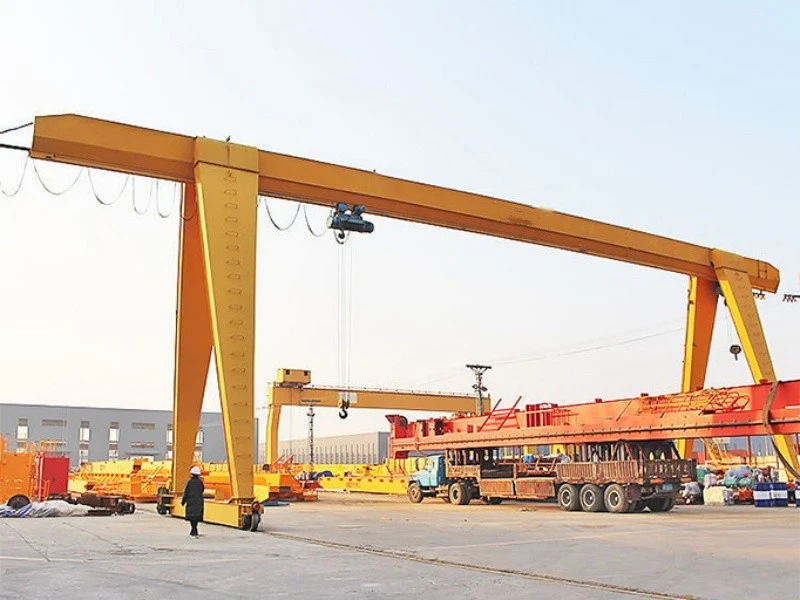
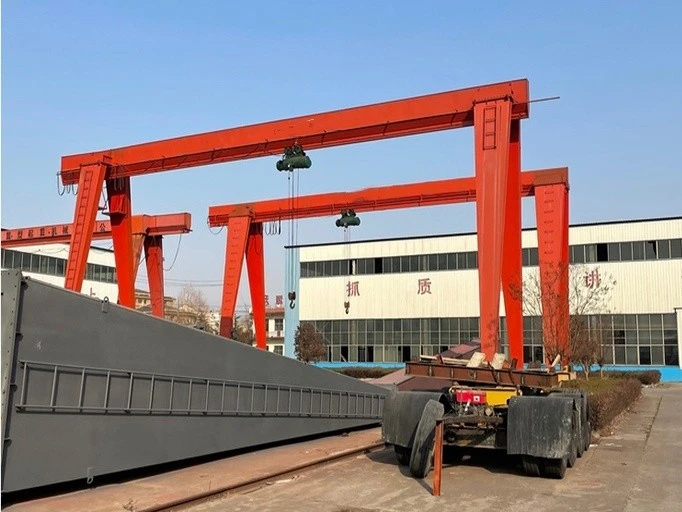
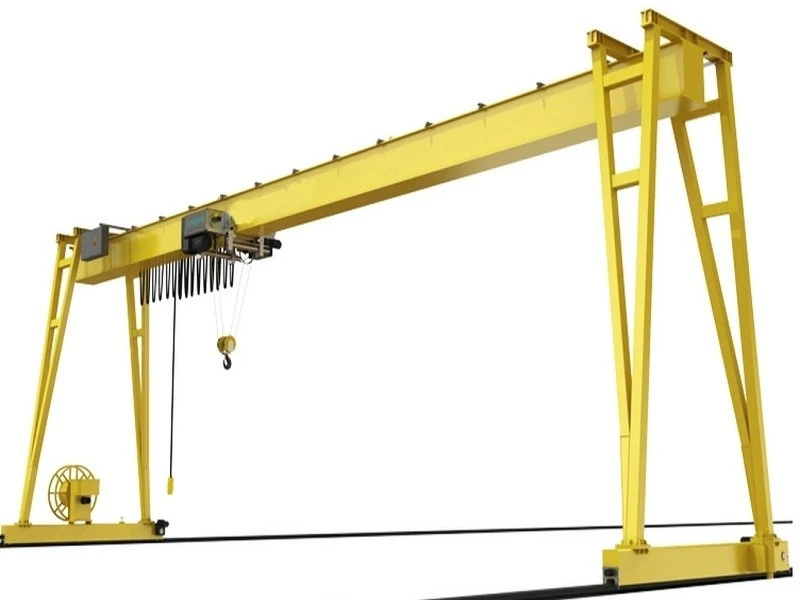
On a single girder crane, the bridge consists of one girder beam supported on each side by an end truck. The trolley and hoist are most commonly under hung-meaning they run on the bottom flange of the bridge. The bridge itself can either be top running or under running in design.

Warranty of core components:2 years
Core Components:Motor
Place of Origin:Henan, China
Warranty:2 years
Weight (KG):10000 kg
Feature:Bridge Crane
Condition:New
Max. Lifting Load:30t
Span:9-33m
Product Name:Gantry Crane
Lifting Capacity:1 Ton-20 Ton
Span:9-33m
lifting height:4-15m
Control method:Wireless Remote Control
Lifting mechanism:Electric Hoist
Power Source:3 Phase 380V 50hz/Customized
Color:Optional

Pictures & Components
1.Girder:A crane girder is a preformed metal beam on which the crab or hoist head of a traveling overhead crane runs. Such girders are typically "I" profile beams that may be reinforced at various points depending on the loads and crane configuration involved.

2.Lifting Mechanism:The generally Single Girder Crane is a medium sized crane, travelling in track , usually equipped with standard CD MD electric hoist as the lifting mechanism, and the electric hoist traversing along the lower flange of the I- steel of the main girder, which is made of high quality steel plates, such as, C-steel ...

Remote control:The remote control of the gantry crane adopts the 8-button double speed button control and the control method of transmitting signals through the remote control transmitter and receiving signals from the receiver to drive the operation of the mechanism.

4.Hoist: This part controls the vertical lifting and lowering. It is fixed to the trolley component, which allows it to move back and forth across the bridge as needed. Its load capacity depends on its design and construction.

Brake system:This type uses brake shoes or pads that are pressed against a drum or disc to stop the movement of whole machine. Another type of brake system is the hydraulic brake system. This system uses hydraulic pressure to apply the brakes, and it is commonly used in larger cranes.

6.Sketch:

Main technical data


Advantages
1.Less space required: Single girder cranes take up less space, which can be an advantage in smaller workplaces or where real estate is at a premium.
2.Energy efficiency: They may consume less energy compared to double girder cranes due to their lighter structure and simpler operation.
3.Maintenance: Generally, single girder cranes have fewer components that require maintenance, potentially reducing maintenance costs and downtime.
4.Better maneuverability: In some cases, the lighter and simpler design allows for more agile movement within the work envelope.
5.Sufficient for the task: If the lifting requirements are not extreme, a single girder crane can perform the tasks needed just as effectively as a more complex and costly double girder crane.
6.Adaptability: Single girder cranes can often be customized more easily to fit specific applications or tight spaces.

Application:
1.Agriculture: In agricultural settings, single girder cranes might be used for loading and offloading bales of hay, grain sacks, or other farm equipment.
2.Automotive repair and detailing: Smaller auto shops might use single girder cranes for lifting engines or other car parts that are within the crane's weight capacity.
3.Maintenance and installation services: Service technicians who need to lift HVAC units, electrical equipment, or plumbing fixtures often use single girder gantry cranes.
4.Railway maintenance: For maintenance-of-way tasks on railways, such as replacing rails or ties, single girder cranes provide the necessary lifting power without the complexity of heavier cranes.
5.Shipyards and marinas: Smaller craft and vessels can be serviced using single girder gantry cranes for rigging, repairs, or refitting.
6.Light industrial maintenance: For lifting lighter machinery or industrial components for maintenance or replacement, a single girder crane is often sufficient.
7.Foundries and molding operations: Moving molds, castings, or other items within a foundry setting may only require the capacities offered by a single girder crane.

Global market

Crane production procedure

Workshop view
Material Inspection
Quality Inspection: Strict quality inspection is carried out on the purchased raw materials to ensure that they meet the design requirements and national standards.
Material Storage: Qualified materials are stored according to classification to prevent corrosion or damage.
Cutting and Forming
Steel Cutting: Use plasma cutting, laser cutting or flame cutting and other technologies to cut the steel according to the size of the design drawing.
Forming Processing: Form the steel plate through bending, rolling, welding and other processes to manufacture the main beam, end beam and other structural parts.
Welding
Component Welding: The cut and formed steel parts are welded into the main structures such as the main beam, end beam and trolley. The welding process needs to be strictly controlled to ensure the structural strength and welding quality.
Weld Inspection: Use non-destructive testing technology (such as ultrasonic testing, radiographic testing) to inspect the welds to ensure that there are no cracks or other defects.
Machining
Precision Machining: Precision machining is performed on the key components of the crane, such as wheel sets, bearing seats, pulleys, etc., to ensure their dimensional accuracy and surface quality.
Assembly of the whole machine
General assembly: On the basis of pre-assembly, the overall assembly of the crane is carried out, including the final installation of the main beam, end beam, lifting mechanism, walking mechanism, etc.
Commissioning and testing
Under dynamic conditions, the operating performance of the crane is tested, including the testing of lifting, walking, steering and other functions. The overall size of the assembled bridge crane is checked to ensure that all dimensions meet the design requirements.
Spraying and anti-corrosion treatment
Surface treatment Rust removal: Rust removal on the surface of the crane, common methods include sandblasting, pickling, etc. Primer spraying: Spray anti-corrosion primer on the treated surface to prevent metal oxidation and corrosion. Topcoat spraying Color spraying: Spray topcoat according to customer requirements or industry standards to give the crane a protective and decorative effect. Marking: After spraying, mark the crane's identification information in accordance with the specifications, such as model, rated load, etc.
Factory and installation
Packaging and transportation
Packaging protection: Protectively package the key components of the crane to prevent damage during transportation. Transportation arrangement: According to the equipment size and transportation conditions, select a suitable transportation method to transport the crane to the customer's site.
Acceptance and delivery
Customer acceptance
On-site acceptance: The customer conducts on-site acceptance of the crane according to the contract requirements and technical specifications to check the performance and quality of the equipment.
Problem rectification: If any problems are found, the manufacturer needs to rectify them in time to ensure that the equipment fully meets the customer's requirements. Delivery and use Operation training: The manufacturer usually trains the customer's operators to ensure that they can operate the crane correctly and safely.


Hot Tags: single girder crane, China single girder crane manufacturers, suppliers, factory, Gantry Crane, Single Girder Gantry Crane, Electric Hoist Single Girder Gantry Crane
Previous
Electromagnetic Door CraneNext
Electric CraneYou Might Also Like


Send Inquiry