







Wall Mounted Jib Cranes
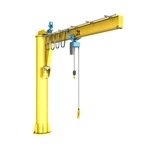
A Wall Mounted Jib Cranes is a type of material handling equipment designed to lift, move, and position loads within a specific area. Unlike traditional floor-mounted jib cranes, wall-mounted ones are attached to the existing structure of a building, utilizing vertical wall space and leaving the floor area unobstructed. This makes them particularly useful in settings where floor space is limited or where a freestanding crane may not be practical.

Key Features
1. Space Efficiency:
- Wall Mounted Jib Cranes are ideal for facilities with limited floor space, as they are attached to the existing structure, saving valuable ground space.
- They provide 180-degree or full 360-degree rotation, allowing for maximum coverage within the designated work area.
2. Installation and Maintenance:
- These cranes are relatively easy to install, as they utilize the structural support of the building.
- Maintenance is generally straightforward, as the crane's components are easily accessible.
3. Load Capacity:
- Wall Mounted Jib Cranes come in a range of load capacities, making them suitable for a variety of applications.
- They are available in both light-duty and heavy-duty models, accommodating different industries and lifting requirements.
4. Versatility:
- Wall Mounted Jib Cranes can be customized with various options and accessories, such as different types of hoists, trolleys, and control systems.
- They are versatile and can handle a wide range of materials and loads.
5. Safety Features:
- Wall Mounted Jib Cranes are equipped with safety features, such as limit switches, overload protection, and emergency stop functions.
- Compliance with industry standards and regulations ensures a safe working environment.
6. Cost-Effective Solution:
- Wall Mounted Jib Cranes are often a cost-effective solution compared to more complex overhead crane systems.
- They provide efficient material handling without the need for extensive modifications to the building structure.
7. Applications:
- Common applications include manufacturing facilities, workshops, warehouses, and assembly lines.
- They are suitable for lifting and positioning materials, equipment, and products in a variety of industries.

Parts & Components
Wall Mounted Jib Cranes consist of several key parts and components that work together to facilitate material handling and ensure the crane's functionality and safety. Here are the main parts and components of a typical wall-mounted jib crane:
- Wall Bracket or Mast: The wall bracket or mast is the structural component that attaches the crane to the building's vertical surface. It provides support and stability for the entire crane system.
- Boom or Jib Arm: The boom, also known as the jib arm, is the horizontal beam that extends outward from the wall bracket. It supports the hoist and trolley, allowing for lateral movement and positioning of the load.
- Hoist: The hoist is the lifting mechanism that raises and lowers the load. It is typically mounted on the jib arm and can have various configurations, such as electric chain hoists or wire rope hoists.
- Trolley: The trolley is a movable carriage that travels along the length of the jib arm. It supports the hoist and allows for lateral movement, enabling precise positioning of the load.
- End Stops or Bumpers: End stops or bumpers are installed at the ends of the jib arm to prevent the trolley from traveling beyond the designated limits. They help protect the crane and the building structure from accidental collisions.
- Rotation Assembly: The rotation assembly allows the crane to rotate horizontally. It typically includes a bearing assembly that enables smooth rotation of the jib arm. Some cranes offer 180-degree rotation, while others provide a full 360-degree rotation.
- Electrical Controls: The electrical control system includes components such as push-button pendant controls or radio remote controls. These devices allow the operator to control the movement of the hoist and trolley, as well as the rotation of the jib arm.
- Limit Switches: Limit switches are safety devices that prevent the crane from exceeding specified travel limits. They can be installed to control the rotation angle and prevent over-rotation or over-travel of the trolley.
- Foundation or Mounting Hardware: The foundation or mounting hardware is used to secure the wall bracket to the building structure. It is crucial for ensuring the stability and load-bearing capacity of the crane.
- Optional Accessories: Depending on specific requirements, wall-mounted jib cranes can be equipped with optional accessories such as festoon systems for managing electrical cables, secondary brakes for added safety, and specialized hooks or lifting attachments.

Parameters

Sketch

Advantages
Wall Mounted Jib Cranes offer several advantages, making them a popular choice for material handling in various industrial and commercial settings. Here are some key advantages of wall-mounted jib cranes:
- Space Efficiency: One of the primary advantages is their ability to save floor space. Wall-mounted jib cranes are attached to the building structure, leaving the floor unobstructed for other activities, machinery, or storage.
- Easy Installation: Installation is typically simpler and more cost-effective compared to freestanding jib cranes. Wall-mounted cranes utilize the existing building structure, reducing the need for additional supports and foundations.
- 360-Degree Rotation: Many Wall Mounted Jib Cranes offer a full 360-degree rotation, providing greater flexibility in positioning and accessing loads throughout the work area.
- Cost-Effective Solution: Wall Mounted Jib Cranes are often more cost-effective than more complex overhead crane systems. Their design minimizes the need for extensive modifications to the building structure.
- Versatility: These cranes are versatile and can be customized to suit specific lifting requirements. They can handle a variety of loads, and options such as different hoists, trolleys, and lifting attachments provide adaptability to different applications.
- Improved Productivity: Wall-mounted jib cranes enhance productivity by facilitating efficient material handling. Operators can easily position and transport loads within their reach, reducing the time and effort required for manual lifting.
- Accessibility: The design of wall-mounted jib cranes allows them to reach and access areas that may be challenging for other types of cranes. This accessibility is particularly beneficial in manufacturing, assembly, and maintenance processes.
- Safety Features: Wall Mounted Jib Cranes come equipped with various safety features, including limit switches, emergency stop functions, and overload protection. These features enhance the overall safety of crane operations.
- Easy Maintenance: Wall-mounted jib cranes are designed for easy access to maintenance points. This accessibility simplifies routine inspections and maintenance tasks, contributing to the longevity of the crane system.
- Customization Options: Users can choose from a variety of customization options to tailor the crane to specific needs. This includes selecting the appropriate load capacity, hoist type, control system, and additional accessories.
- High Adaptability: Wall Mounted Jib Cranes can be installed in existing buildings without the need for major structural modifications, making them suitable for retrofitting into established facilities.

Application
Wall Mounted Jib Cranes find applications in a variety of industries and settings where efficient material handling and space optimization are essential. Some common applications include:
- Manufacturing and Production: Wall Mounted Jib Cranes are often used in manufacturing plants and production facilities for tasks such as loading and unloading materials, moving workpieces between workstations, and assembling products.
- Workshops and Maintenance Shops: These cranes are valuable in workshops and maintenance areas where they can be utilized for lifting and positioning heavy machinery, tools, and parts during repair and maintenance activities.
- Warehousing and Distribution Centers: In warehouses and distribution centers, wall-mounted jib cranes can efficiently handle the movement of goods, pallets, and containers. They are useful for loading and unloading trucks, as well as organizing and stacking inventory.
- Metalworking and Fabrication: Wall-mounted jib cranes are commonly used in metalworking and fabrication shops for manipulating large metal sheets, transporting metal components, and positioning materials during welding and machining processes.
- Automotive Industry: Within the automotive industry, these cranes are employed for tasks such as moving engines, positioning car parts on assembly lines, and facilitating the assembly or disassembly of vehicles.
- Aerospace Industry: Wall Mounted Jib Cranes play a role in the aerospace industry by assisting in the handling and positioning of aircraft components, engines, and other heavy parts during the manufacturing and assembly process.
- Woodworking and Lumber Yards: In woodworking and lumber yards, these cranes are utilized for lifting and transporting large timber, sheets of plywood, and other wood materials.
- Chemical and Processing Plants: Wall-mounted jib cranes are employed in chemical and processing plants for lifting and positioning heavy equipment, containers, and materials involved in the manufacturing of chemical products.
- Food and Beverage Industry: Within the food and beverage industry, these cranes can be used for handling ingredients, moving packaging materials, and facilitating the production and packaging processes.
- Textile and Garment Industry: In textile and garment manufacturing, wall-mounted jib cranes are utilized for moving rolls of fabric, transporting finished products, and assisting in various stages of the production line.
- Pharmaceutical and Healthcare: Wall Mounted Jib Cranes can be found in pharmaceutical facilities for handling materials in the production of medicines and medical devices, as well as in healthcare settings for lifting and positioning equipment.
- Retail and Supermarkets: In retail environments and supermarkets, these cranes can be used for tasks such as restocking shelves, moving goods in storage areas, and facilitating logistics operations.

Production Procedure
The production procedure of wall-mounted jib cranes involves several stages, from design and fabrication to assembly and testing. Here's a general overview of the production process:
- Design and Engineering: The process begins with the design and engineering phase. Engineers consider factors such as load capacity, reach, rotation angle, and other specifications based on the intended application and customer requirements.
- Material Selection: High-quality materials are selected for the various components of the jib crane, including the wall bracket, jib arm, trolley, hoist, and other structural elements. Common materials include steel for strength and durability.
- Cutting and Shaping: Raw materials are cut and shaped according to the design specifications. Advanced cutting tools, such as laser or plasma cutters, may be used to achieve precision.
- Welding: Components are welded together to form the main structure of the wall-mounted jib crane. Skilled welders follow established welding procedures to ensure the integrity and strength of the welds.
- Surface Treatment: The welded structure undergoes surface treatment processes such as sandblasting or shot blasting to remove any impurities or scale. This prepares the surface for coatings and improves the adhesion of paint.
- Coating and Painting: The crane components are coated with anti-corrosive coatings to protect them from environmental factors. After coating, the components are painted according to customer specifications or industry standards.
- Assembly: The painted and coated components are assembled to form the complete wall-mounted jib crane. This includes attaching the jib arm, hoist, trolley, rotation assembly, and other necessary components.
- Electrical Installation: If the jib crane is equipped with an electric hoist and control system, the electrical components are installed and connected. This includes wiring, installation of limit switches, and other electrical accessories.
- Quality Control and Testing: The assembled jib crane undergoes rigorous quality control checks to ensure that all components meet specified tolerances and standards. Functional tests are conducted to verify proper operation, including rotation, hoisting, and trolley movement.
- Packaging and Shipping: Once the jib crane passes quality control and testing, it is prepared for shipping. The crane components may be disassembled for easier transportation. Proper packaging is essential to prevent damage during transit.

Workshop View
Henan Mine Crane Co., Ltd has implemented a smart equipment management platform and deployed 310 sets of handling and welding robots. Upon the fulfillment of the initiative, the total number of sets will exceed 500, achieving a 95% equipment networking rate. Currently, 32 welding lines are operational, with plans to install an additional 50. The overall automation rate for the entire product line has already reached 85%.


Hot Tags: wall mounted jib cranes, China wall mounted jib cranes manufacturers, suppliers, factory
Previous
Wall Mounted CraneYou Might Also Like


Send Inquiry