










Grab Bucket Overhead Crane
A grab bucket overhead crane typically consists of a bridge, runway, hoisting mechanism, grab bucket, and trolley system. The grab bucket is designed to open and close automatically, allowing it to pick up and release materials easily.
One of the significant advantages of a grab bucket overhead crane is its ability to handle multiple material types quickly and efficiently. It can be designed with optional features such as a rotating grab bucket, advanced safety features, and remote control operation.
Grab bucket overhead cranes are available in various configurations, including single girder, double girder, and gantry crane designs. The capacity and specifications of these cranes can be customized to meet specific operational requirements based on the application and desired production output.
In summary, grab bucket overhead cranes are an essential tool for any operation that requires efficient bulk material handling. Its advanced features, reliable performance, and customizable design make it an ideal solution for various industrial applications.
- Capacity: 5-800/50ton
- Span length: 4-35m
- Lifting height: 3-50m
- Work duty: A4, A5, A6,A7
- Raged voltage: 220V~690V, 50-60Hz, 3ph AC
- Work environment temperature: -25℃~+50℃, relative humidity ≤85%
- Crane control mode: Floor control / Remote control / Cabin room

Pictures & Components
1. Whole set crane
Overhead crane with grab bucket is a type of material handling crane that is used for lifting and transferring bulk materials in different industries such as mining, construction, and shipping. The crane system consists of a bridge with a trolley and a grab bucket attached to the end of a hoist. The grab bucket is operated by the chain hoist mechanism, which lifts and drops the materials as required. The overhead crane with grab bucket is an efficient and cost-effective solution to handle large quantities of materials quickly and safely. It can also be customized to suit specific needs and requirements.

2. Main girder
1) The main beam of a grab bucket overhead crane refers to the horizontal beam that runs along the length of the crane's structure. This beam is typically located above the operator's cab and is designed to support the weight of the grab bucket and any materials being lifted. The main beam is typically made from heavy-duty steel and is designed to withstand the stresses associated with lifting heavy loads.
2) In order to ensure safe operation, the main beam of a grab bucket overhead crane should be inspected regularly for signs of damage or corrosion. Any issues should be addressed promptly by a qualified professional to ensure that the crane remains safe and reliable to use. Additionally, proper maintenance and lubrication of the main beam and other components can help to extend the lifespan of the crane and prevent costly downtime due to breakdowns or malfunctions.
3. Lifting System
1) The Grab Bucket Overhead Crane Lifting System is a type of crane that uses a grab bucket to lift and transport heavy materials. This type of crane is commonly used in industries such as mining, construction, and manufacturing.
2) The crane consists of a trolley that moves along the length of the crane bridge, which is supported by two parallel runways. The grab bucket is suspended from the trolley and can be lowered and raised by a hoist mechanism.
3) The grab bucket itself is designed to hold materials such as sand, gravel, coal, and ore. It consists of two hinged jaws that are operated by a hydraulic or mechanical system. The jaws can be opened and closed to scoop up the material and then release it at the desired location.
4) The Grab Bucket Overhead Crane Lifting System provides a flexible and efficient solution for handling heavy materials, as it allows for precise positioning and controlled dumping. It also eliminates the need for manual labor, making it a safer and more cost-effective option for large-scale material handling.

4. End Carriages
Grab bucket overhead crane end carriage is a type of crane component that is responsible for supporting and moving the grab bucket mechanism of an overhead crane. The grab bucket is a specialized attachment that is used to lift and move bulk materials such as sand, gravel, or rocks. The end carriage is a beam that runs along the length of the crane runway and is supported by the runway rails. It is usually powered by an electric motor and gear system, which allows it to move the grab bucket from one location to another. The grab bucket overhead crane end carriage is an important part of an overhead crane system and is designed to be strong, durable, and reliable.


5. Crane traveling mechanism
The crane traveling mechanism on a grab bucket overhead crane refers to the component that allows the crane to move along the length of the runway. This movement is controlled by a motorized drive system that is responsible for driving the wheels or tracks that are attached to the bottom of the crane. The crane traveling mechanism is designed to ensure smooth and precise movement of the crane, allowing it to access different areas of the workspace and position the grab bucket precisely where it is needed. The mechanism generally consists of an electric hoist, trolley, and bridge, all of which work together to facilitate efficient crane travel.
6. Trolley traversing mechanism
1) The grab bucket overhead crane trolley traversing mechanism is a system that allows a crane to move horizontally along a rail or track. This mechanism consists of a motor, gearbox, and wheels that enable the crane trolley to traverse back and forth along a runway beam.
2) The grab bucket is attached to the crane trolley and an electric hoist is used to lower and raise the grab bucket. The grab bucket is used to move materials such as sand, gravel, or coal from one location to another.
3) The trolley traversing mechanism is essential for the efficient movement of materials within a warehouse or construction site. This mechanism ensures that the crane can move heavy loads quickly and safely, without the need to constantly reposition the crane in order to access the materials.
4) Overall, the grab bucket overhead crane trolley traversing mechanism is a necessary component of any material handling operation that requires the movement of heavy loads over long distances.
7. Crane wheel
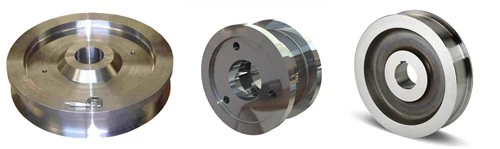
1) The crane wheel is a key component of the overhead crane, and it is designed to support the weight of the crane as it moves along the runway. The crane wheel is typically made of steel or cast iron, and it is mounted on a shaft that is connected to the motor or drive system of the crane.
2) The crane wheel must be designed to withstand the heavy loads and constant motion of the crane, as well as any external factors such as extreme temperatures or environmental conditions. Proper maintenance and inspection of the crane wheel is essential to ensure the safe and efficient operation of the overhead crane.
3) The corner box type wheel sets are all led out by oil pipes, which is convenient for oiling and maintenance
The wheel material adopts ZG340-640, and is subjected to advanced power frequency heat treatment and quenching
8. Crane hook &Grab Bucket
1) Grab bucket: A grab bucket is a type of attachment for cranes that is used to lift and transport loose materials such as sand, gravel, and dirt. The grab bucket can be opened and closed to allow the material to be loaded and unloaded efficiently and accurately.
2) Crane hook: A crane hook is an attachment that is mounted on the end of a crane arm and is used to lift and hoist heavy materials. The hook can be adjusted to handle different load sizes and shapes and can be equipped with safety features such as latches and locks to securely hold onto the load.
3) Grab bucket overhead crane: A grab bucket overhead crane is a type of crane that combines the function of a grab bucket and an overhead crane. This type of crane is used to lift and move loose materials around an industrial facility and is especially useful when loading or unloading trucks or other storage containers.
4) Crane hook grab bucket: A crane hook grab bucket is a type of grab bucket that is attached to a crane hook. This allows the grab bucket to be easily lifted and moved around the facility to load and unload materials. Crane hook grab buckets are typically used in situations where a fixed grab bucket is not practical.


9. Motor
Crane Motor: It is a special type of motor designed to rotate the drive shaft of a crane to move its different components, such as the bridge, trolley, and hoist. These motors are specifically designed to handle the high loads and stresses involved in crane operation.

10. Sound and light alarm system & limit switch& safety parts
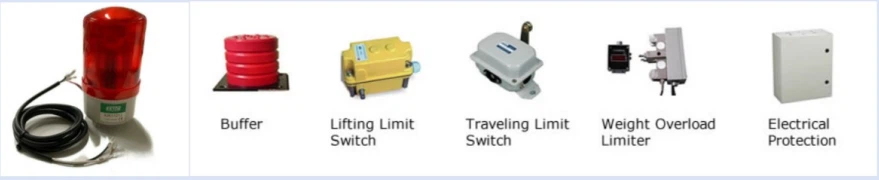
1) An overhead crane sound and light alarm system typically includes a limit switch to ensure the safe operation of the crane. The limit switch acts as a safety device and prevents the crane from traveling beyond a specified point, which could otherwise result in damage to the crane or injury to workers.
2) When the crane approaches the limit switch, it triggers an alarm system that activates sound and light alerts, notifying the crane operator and nearby workers that the crane has reached its limit. The system is designed to provide an audible and visual warning, allowing workers to take appropriate measures to avoid any potential risks or hazards.
3) Limit switches are typically installed at both ends of the crane's travel path, providing added safety and protection for operators and workers. They can also be programmed to shut down the crane automatically if it reaches its limit, preventing any further movement until the issue is resolved.
4) Overall, an overhead crane sound and light alarm system with a limit switch is an essential safety feature that ensures the safe operation of the crane and protects workers from potential hazards.
11. Safety devices
Grab buckets are commonly used in overhead cranes to lift and transfer bulk materials. Safety devices can be installed to ensure the safe use of grab buckets in overhead cranes. Some commonly used safety devices are:
1) Overload protection: An electronic device can be installed to monitor the weight of the load being lifted. If the weight exceeds the safe limit, the device will automatically stop the crane from lifting the load.
2) Limit switches: These switches are installed at the end of the crane's travel path. They detect when the grab bucket has reached the end of its travel and stop the crane from moving further.
3) Anti-collision devices: These devices ensure that two cranes do not collide with each other while working in the same area. They use sensors and warning systems to alert crane operators when they are too close to each other.
4) Emergency stop buttons: These buttons allow operators to quickly stop the crane in an emergency.
5) Warning alarms and lights: These devices warn workers when the crane is about to move, and when it is carrying a load.
By installing these safety devices, the risk of accidents and injuries can be greatly reduced, ensuring the safe use of grab buckets in overhead crane operations.
12. Control Mode
The Grab Bucket Overhead Crane Control Mode refers to the mode of operation of an overhead crane that is specifically designed for heavy-duty material handling. The crane is equipped with a grab bucket that can be lowered and raised by a hoist mechanism connected to a crane trolley that runs on rails mounted on the ceiling or structural beams.
The control mode of a Grab Bucket Overhead Crane varies depending on the type of crane and the manufacturer. However, most modern cranes have advanced control systems that allow for remote operation from a control panel or operator cab.
The Grab Bucket Overhead Crane Control Mode typically includes the following functions:
1) Start/Stop: This function allows the crane operator to start and stop the crane's movement.
2) Lifting/Lowering: This function controls the movement of the crane hoist mechanism, which raises and lowers the grab bucket.
3) Trolley Movement: This function controls the movement of the crane trolley along the length of the crane bridge.
4) Crab Movement: This function controls the movement of the crane crab, which allows the crane to move in a sideways direction.
5) Emergency Stop: This function immediately stops all crane movements in case of an emergency.
The Grab Bucket Overhead Crane Control Mode enables the crane operator to move heavy loads with precision and efficiency, providing a safe and efficient material handling solution for various applications.

13. Sketch

Main Technical Data

Advantages
1. High lifting capacity: Double girder EOT cranes have a higher lifting capacity than single girder EOT cranes. They can lift up to 500 tons or even more.
2. Better stability: Double girder EOT cranes have better stability compared to single girder EOT cranes, especially when lifting heavier loads. The double girder structure provides more support and reduces the risk of sway.
3. Larger span: Double girder EOT cranes can span larger distances than single girder EOT cranes. This is particularly useful in warehouses and factories where a large area needs to be covered.
4. Increased height: Double girder EOT cranes can be designed to lift heavy loads to greater heights. This makes them suitable for industries where vertical lifting is required.
5. Improved safety: Double girder EOT cranes have a higher level of safety than single girder EOT cranes due to their enhanced stability and larger lifting capacity.
6. Better load distribution: Double girder EOT cranes are designed to distribute the load evenly across the two girders, reducing the pressure on any one point.
7. Decreased maintenance: Double girder EOT cranes require less maintenance than single girder EOT cranes, due to their improved stability and less wear and tear on the components.
8. Versatility: Double girder EOT cranes can be modified to meet specific requirements, such as adding a cabin or a platform for maintenance purposes.
Application
1. Increased Efficiency: An overhead crane with a grab bucket can significantly increase the efficiency of material handling processes. This is because the grab bucket can pick up and move large quantities of materials at once, reducing the number of trips needed to transport materials.
2. Reduced Labor Costs: The use of an overhead crane with a grab bucket can also reduce labor costs. This is because the operator can easily move materials without the need for manual labor, reducing the risk of injury and increasing productivity.
3. Versatility: Overhead cranes with grab buckets can be used for a variety of applications, including loading and unloading ships, moving bulk materials, and handling waste materials. This versatility makes them ideal for use in a range of industries, including construction, manufacturing, and logistics.
4. Safety: Overhead cranes with grab buckets are designed with safety in mind. They are equipped with safety features such as emergency stop buttons, overload protection, and limit switches, which help to prevent accidents.
5. Improved Accuracy: The use of an overhead crane with a grab bucket can also improve material handling accuracy. This is because the crane operator can easily position the grab bucket to pick up and move materials with precision.
6. Space Efficient: Overhead cranes with grab buckets are also space-efficient. They can be installed in areas with limited space and can move materials vertically and horizontally, allowing for efficient use of warehouse and factory floor spaces.
7. Durability: Overhead cranes with grab buckets are built to last. They are designed with high-quality materials and components, ensuring they can withstand harsh environments and heavy use.
Crane Production Procedure
1. Gather materials: steel beams, pulleys, cable, motor, and control panel.
2. Assemble the structure: Connect the steel beams to create a sturdy overhead framework. This framework will support the crane and control panel.
3. Mount the pulleys: Install the pulleys on the beams, making sure that they are evenly spaced and connected securely.
4. Install the cable: Place the cable onto the pulleys, ensuring that it is taut and does not become tangled. Attach the grabbing bucket to the cable.
5. Install the motor: Attach the motor to the crane, making sure that it is securely fixed and aligned with the cable and pulleys.
6. Install the control panel: Fit the control panel to the framework and connect it to the motor. Test the crane's movements to ensure that it is functioning correctly.
7. Test the crane's lifting capacity: Once the crane has been installed and tested, carefully test its lifting capacity to ensure that it can effectively lift and move heavy loads.
8. Train crane operators: Ensure that the crane operators are trained and experienced in operating the crane safely, efficiently, and effectively.
9. Perform regular maintenance: Regular maintenance and inspections are crucial to keep the crane operating at optimal performance and to prevent accidents or breakdowns.

Workshop View
The company has installed an intelligent equipment management platform, and has installed 310 sets (sets) of handling and welding robots. After the completion of the plan, there will be more than 500 sets (sets), and the equipment networking rate will reach 95%. 32 welding lines have been put into use, 50 are planned to be installed, and the automation rate of the entire product line has reached 85%.


Hot Tags: grab bucket overhead crane, China grab bucket overhead crane manufacturers, suppliers, factory, Grab Bucket Overhead Crane, Grab Overhead Crane
Previous
Grab Bridge CraneNext
No InformationYou Might Also Like


Send Inquiry