










Crane With Grab Bucket
A Crane with Grab Bucket is a specialized lifting and material-handling equipment designed for efficiently grabbing, lifting, and transporting bulk materials such as sand, gravel, coal, scrap metal, and waste. This type of crane is widely used in ports, steel plants, power stations, waste treatment facilities, and construction sites.
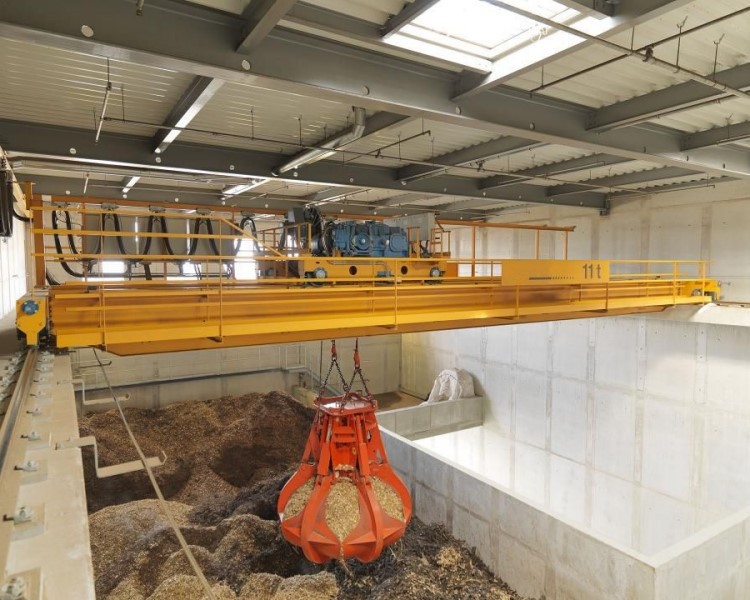
Crane type:Double Girder bridge crane
Max. Lifting Height:20M Or Customized
Electric Motor Voltage:AC380V or customized
Application:Factory, workshop, warehouse, power stain, logistic
Color:Customer's Requirements
Control method:Wireless Control/Pendent Control/Cabin
Span:10~35m or customized
Lifting Mechanism:Wire rope electric hoist or chain electric hoist
Pictures & Components

A bridge crane with a grab bucket (also called an overhead crane with a grab) is a type of lifting equipment used for handling bulk materials like sand, coal, grain, scrap metal, and minerals. It consists of:
Bridge Structure – A horizontal beam spanning the working area.
Hoist Mechanism – Moves the grab bucket up and down.
Grab Bucket – A specialized attachment designed to scoop and lift materials. It can be mechanical (rope-operated) or hydraulic (motor-powered).
Trolley System – Moves the hoist and grab bucket along the bridge.
Runway System – Supports the crane and allows it to move along the length of the workspace.
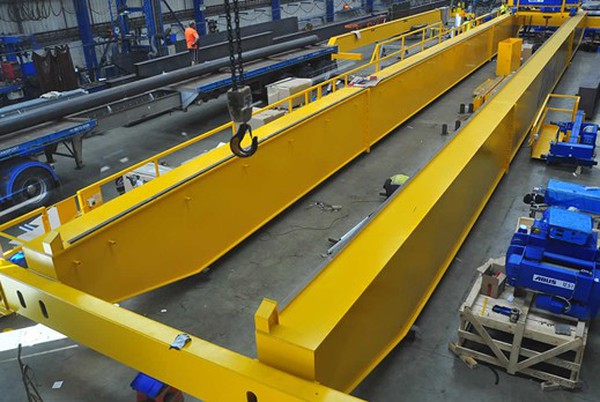
Hoisting mechanism: The hoisting mechanism of a crane with a grab bucket is a crucial component responsible for lifting, lowering, and maneuvering loads using a specialized bucket designed for handling bulk materials like sand, gravel, coal, or scrap metal.

Grab: A grab is an attachment used to lift and carry loads, which can be manually or hydraulically operated and designed for the type of material being handled. Top, front loading and side loading grabs are available.

Crank mechanism: The crank mechanism of a crane with a grab bucket is a mechanical system that converts rotational motion into reciprocating motion to operate the grab bucket. This mechanism plays a crucial role in controlling the opening and closing of the bucket, allowing it to grab and release materials effectively.
How It Works
The crank rotates, moving the connecting rod back and forth.
This movement is transferred to the grab bucket arms via a linkage system.
When the mechanism pulls, the grab bucket closes to grab material.
When released, the bucket opens to drop the material at the desired location.

Main technical data

Advantages

1. Efficient Material Handling
Ideal for handling bulk materials like sand, coal, gravel, scrap metal, and waste.
Reduces manual labor and speeds up operations.
2. Versatility
Can be used in ports, construction sites, steel plants, and waste management facilities.
Works with various materials, from fine sand to heavy scrap metal.
3. Increased Productivity
The grab bucket can hold and move large volumes of material at once.
Reduces loading/unloading time compared to manual or conventional methods.
4. Enhanced Safety
Reduces the need for human contact with hazardous or heavy materials.
Minimizes the risk of injuries and accidents.
5. Cost-Effective Operations
Reduces labor costs by automating the material handling process.
Lower operational costs compared to other bulk material handling methods.
Application

A crane with a grab bucket (also called a grab crane or clamshell crane) is used for handling bulk materials like sand, gravel, coal, scrap metal, and agricultural products. The grab bucket is an attachment with two or more hinged jaws that open and close to grab materials.
Applications of Crane with Grab Bucket
1. Ports & Shipping Industry
Loading and unloading bulk cargo (coal, grain, ores, etc.) from ships.
Handling materials in ports and dockyards.
2. Construction Industry
Moving sand, gravel, and cement for construction projects.
Excavating soil and filling dump trucks.
3. Mining & Quarrying
Transporting raw materials such as coal, stone, and minerals.
Removing waste materials from mining sites.
4. Waste Management & Recycling
Handling scrap metal in recycling yards.
Moving waste materials in landfills and waste treatment plants.
5. Power Plants & Heavy Industry
Feeding coal into boilers in thermal power plants.
Moving slag and ash waste in steel plants.

Crane production procedure
The production procedure of a crane with a grab bucket involves several key steps, from design to final assembly and testing. Below is a structured outline of the process:
1. Design & Engineering
Customer Requirements Analysis: Determine the crane's lifting capacity, working environment, and bucket type (e.g., clamshell, orange-peel).
Technical Design & Drawings: Engineers create blueprints, including structural, electrical, and hydraulic systems.
Material Selection: Choose high-strength steel and durable components.
2. Raw Material Preparation
Procurement of Steel & Components: Order steel plates, beams, motors, control systems, and hydraulic parts.
Cutting & Shaping: Use CNC machines, laser cutters, or plasma cutters to shape structural components.
Pre-Treatment: Sandblasting and priming to prevent rust.
3. Fabrication & Welding
Crane Structure Assembly: Weld the main crane components (girder, support legs, trolley frame).
Grab Bucket Manufacturing: Cut, weld, and assemble the grab bucket with hydraulic cylinders or rope mechanisms.
Machining of Precision Parts: Machine gears, bearings, and shafts for smooth operation.
Welding Inspection & Quality Control: Perform ultrasonic or X-ray testing for defect detection.
4. Mechanical & Electrical Assembly
Crane Mechanism Installation: Attach the hoisting, trolley, and traveling mechanisms.
Electrical System Installation: Wire motors, PLC controls, limit switches, and safety systems.
Hydraulic System Setup (if applicable): Install hydraulic cylinders, pumps, and hoses for grab bucket control.
Testing of Mechanisms: Ensure smooth movement of the crane and grab bucket.
5. Surface Treatment & Painting
Shot Blasting: Remove surface impurities.
Primer & Final Coating: Apply anti-corrosion paint and specialized coatings for harsh environments.
6. Final Assembly & Testing
Full System Integration: Assemble the crane with the grab bucket and ensure all connections are secure.
Load Testing: Conduct load capacity and operational tests.
Safety Inspection: Ensure compliance with international standards (e.g., CE, ISO, FEM).
Customer Inspection & Approval: Allow customers to inspect before shipment.
7. Packaging & Delivery
Disassembly for Transport: If required, disassemble large parts for easy shipping.
Packaging: Use protective wrapping and steel frames for secure transport.
Shipping & Logistics: Transport to the installation site.

Workshop view
The company has installed an intelligent equipment management platform, and has installed 310 sets (sets) of handling and welding robots. After the completion of the plan, there will be more than 500 sets (sets), and the equipment networking rate will reach 95%. 32 welding lines have been put into use, 50 are planned to be installed, and the automation rate of the entire product line has reached


Hot Tags: crane with grab bucket, China crane with grab bucket manufacturers, suppliers, factory, Grab Overhead Crane, Grab Bucket Overhead Crane
Previous
Grab Bucket Eot CraneNext
Crane And GrabYou Might Also Like



Send Inquiry