







Mobile A Frame Gantry Crane
Products Description
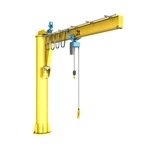
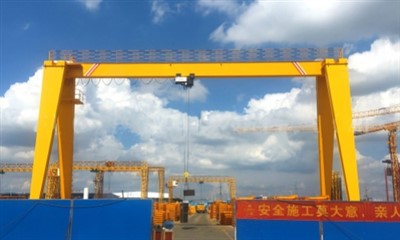
Mobile A Frame Gantry Crane is a common lifting equipment, widely used in factories, warehouses, ports, construction sites and other places for handling, loading and unloading and moving materials. Its main features include simple structure, low cost and flexible operation.
Mobile A Frame Gantry Crane moves horizontally through the electric trolley on the main beam, while the legs move longitudinally on the ground track to achieve multi-directional material handling. The electric hoist or hook on the trolley can lift the material up and down through the lifting mechanism, thereby achieving multi-dimensional movement of materials. Compared with the double-beam gantry crane, the single-beam structure is simple, the manufacturing and maintenance costs are relatively low, and it is suitable for small and medium-sized lifting tasks. Because it is a gantry structure, the legs are directly installed on the ground track, and no additional plant or steel frame support is required, saving floor space. This type of crane generally adopts electric control, which is simple to operate, highly flexible, and easy to adapt to different working scenarios.
3) In order to ensure the safety and service life of the Mobile A Frame Gantry Crane, regular inspection and maintenance are very important, including inspection and maintenance of components such as tracks, steel structures, and electric hoists. This type of crane is suitable for light to medium lifting tasks, is easy to operate, and has a high cost-effectiveness. It is a very practical industrial equipment.
Warranty of core components:1 Year
Core Components:Bearing, Gearbox, Motor, Gear
Condition:New
Warranty:1 Year
Weight (KG):1000 kg
Feature:Gantry Crane
Application:Outdoor
Rated Lifting Moment:Load Capacity
Product Name:Gantry crane
Crane feature:Easy Operated gantry Crane
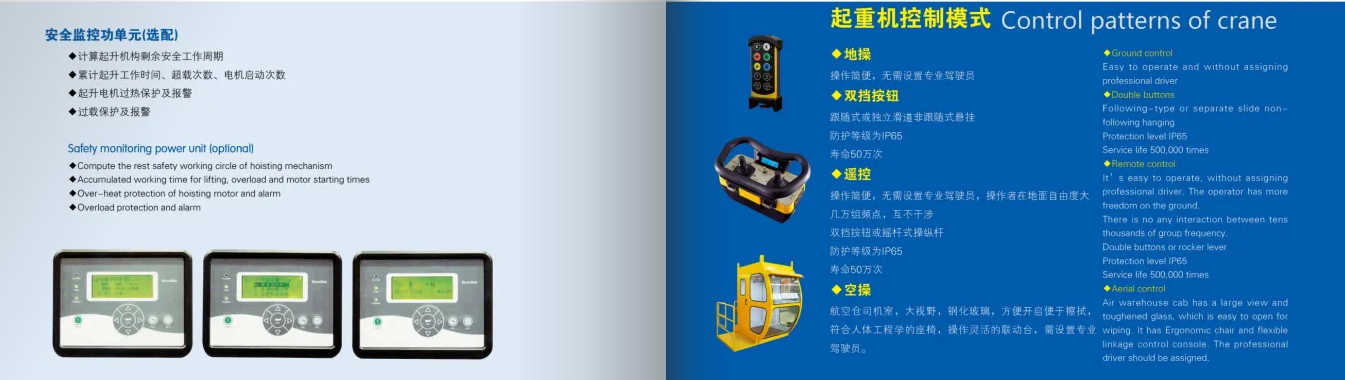
Control method:wireless Remote Controller or handle
Power Source:3 Phase 380V 50hz or be customized
Lifting speed:20m/min 30m/min or can be customized

Pictures & Components
1.Main beam
1) The main beam is generally made of high-quality carbon steel or low-alloy steel, which has good load-bearing capacity and fatigue resistance. Commonly used steel types include Q235, Q345, etc. The thickness and strength of the steel are designed according to the requirements of the lifting weight and span.
2) The main function of the main beam is to carry the lifting trolley and the load it lifts, and to evenly distribute the load to the supporting structure of the crane through the connection with the outrigger. The main beam needs to have sufficient strength and rigidity to ensure that it does not produce excessive deformation or vibration during operation.
3) In order to reduce the deadweight of the equipment and improve energy efficiency, the main beam is usually designed as a light-weight and high-strength structure, which helps to reduce the deadweight of the entire crane and reduce the pressure on the track and the ground. The main beam will be affected by various forces such as trolley movement and load changes during operation, so its structural design needs to have good bending and torsion resistance, especially when the span is large. This design is particularly important. The main beams of many Mobile A Frame Gantry Crane adopt standardized designs for easy manufacturing, installation and maintenance. Some main beams also adopt modular designs for easy transportation and on-site assembly.

Lifting System
1) Types of electric hoists
The lifting system of Mobile A Frame Gantry Crane usually adopts electric hoists. Common electric hoists are of the following two types:
Wire rope electric hoist: Uses wire rope as the lifting medium, suitable for lifting needs with larger lifting weights. Wire rope has strong tensile strength, strong durability, and a wide lifting height range.
Chain electric hoist: Uses chain as the lifting medium, suitable for small and medium-sized lifting weights, simple structure, easy maintenance, usually used for lower lifting height requirements.
2) Working principle
The working principle of the lifting system is to drive the electric hoist through an electric motor. The electric hoist transmits the power of the motor to the drum through the reducer. The drum is wound with wire rope or chain, thereby driving the hook and the material it lifts to perform lifting operations. The operator adjusts the lifting speed through the control system to ensure that the material is lifted smoothly and safely.
 |
 |
3.End carriage
1) Function of the end beam
The end beam plays the following important roles in Mobile A Frame Gantry Crane:
Supporting the main beam: The end beam is connected to the main beam through a crossbeam and a connecting plate, bears the weight of the main beam, and transfers the weight to the ground through the legs.
Achieving longitudinal movement: The walking wheels on the end beam are driven by an electric motor to achieve longitudinal movement of the crane on the ground track, allowing the crane to move freely in the work area.
Maintaining balance: The design of the end beam ensures that the crane remains stable during longitudinal movement, prevents the main beam from tilting or shaking, and ensures the safety of the lifting operation.
2) Design features of the end beam
High-strength material: The end beam is usually made of high-strength carbon steel or low-alloy steel, with good load-bearing capacity and fatigue resistance, and can cope with long-term high-load working environments.
Anti-torsion structure: The box-type or I-shaped design of the end beam has good torsion resistance, ensuring that it will not bend or deform during operation, especially in the case of large spans and heavy loads.
Standardized design: The end beam is usually designed according to standardized dimensions, which is easy to manufacture and assemble, and is also convenient for use in cranes of different specifications.
 |
 |
4.Crane travelling mechanism
The crane running mechanism consists of the following key components:
1) Traveling wheel set: usually includes driving wheel and driven wheel. The driving wheel is driven by the motor to realize the longitudinal movement of the crane crane. The driven wheel follows the driving wheel.
2) Motor: The crane running mechanism is usually equipped with one or more motors to drive the traveling wheel set.
3) Reducer: The motor converts the high-speed motor speed into a low speed suitable for the crane to travel through the reducer to ensure the smooth movement of the crane.
4) Brake: used to quickly lock the traveling wheel when the crane stops to prevent the crane from continuing to slide due to inertia and ensure stable parking.
5) Buffer: installed at both ends of the crane running mechanism. When the crane approaches the end of the track, the buffer plays a shock-absorbing and protective role to prevent the crane from colliding violently with the end of the track.
6) Track: The crane running mechanism moves on the laid ground track. The track is usually made of steel and fixed on the ground to ensure the moving route of the trolley.
5.Trolley travelling mechanism
1) Working principle
The working principle of the trolley running mechanism is as follows:
Motor start: The motor is started through the control system, the motor drives the reducer, and the reducer transmits power to the travel wheel.
Travel wheel movement: The travel wheel rolls on the track of the main beam, so that the trolley moves along the main beam.
Lifting and lowering: The electric hoist drives the hook through a wire rope or chain to achieve the lifting and lowering of materials.
Parking: The stop of the trolley is controlled by the brake to ensure that the trolley can stop safely at any position.
2) Design features of the trolley
Strong structure: The trolley frame is made of high-strength steel and is designed as a box-type or frame structure with good load-bearing capacity and bending resistance.
High-precision manufacturing: The clearance design between the trolley's travel wheel and the main beam track needs to be kept within a reasonable range to reduce friction and wear and ensure smooth operation.
Safety: The trolley running mechanism should have protective measures, such as limit switches, anti-collision devices, etc., to ensure safety during operation.
6.Crane wheel
1) Design requirements for wheels
Carrying capacity: The wheels must be able to withstand the total weight and load of the crane, and the safety factor must be fully considered during the design.
Wear resistance: Due to the frequent contact between the wheels and the rails, wear is inevitable, and high wear-resistant materials are selected to extend the service life.
Stability: The diameter and width of the wheels should be designed to ensure that they will not tilt or deviate from the track during movement, ensuring the stability of the crane.
2) Material selection
The wheels are usually made of the following materials:
Carbon steel: The main material used to make wheels, with good strength and toughness, suitable for high load conditions.
Alloy steel: To improve wear resistance and strength, some high-load applications may use alloy steel to make wheels.
Surface treatment: The surface of the wheel is usually heat treated or sprayed to improve wear resistance and corrosion resistance.

7.Crane Hook
1) Working principle of the hook
The working principle of the hook is as follows:
Connection: The hook is connected to the electric hoist or wire rope through a hanging ring to form a part of the lifting system.
Load: The hook directly bears the weight of the material during lifting and moving.
Safety lock: After the object is lifted, the lock prevents the material from accidentally falling off during movement to ensure safety.
2) Material and manufacturing of the hook
Material: The hook is usually made of high-strength alloy steel or carbon steel with good load-bearing capacity and toughness. The surface is usually heat treated to improve wear resistance and corrosion resistance.
Manufacturing process: The manufacturing process of the hook requires forging, heat treatment, finishing and other processes to ensure its strength and reliability under high load conditions.

Motor
1) Working principle of the motor
The working principle of the motor is based on the principle of electromagnetic induction:
Current passes through the winding: When the stator winding of the motor is energized, a rotating magnetic field is generated.
Rotor movement: The rotor is placed in a rotating magnetic field and rotates under the action of electromagnetic force to generate mechanical power.
Drive load: The rotor transmits power to the operating mechanism or lifting mechanism of the crane through the reducer to drive the movement of the trolley or hook.
2) Selection of motor
When selecting a suitable motor, the following factors should be considered:
Power: Select the motor power according to the rated load and operating speed of the crane, and usually add a certain safety factor on the basis of the rated load.
Speed: The speed of the motor needs to match the operating requirements of the crane to ensure the appropriate operating speed and lifting speed.
Working environment: The motor should select an appropriate protection level (such as IP level) according to the characteristics of the working environment (such as temperature, humidity, dust, etc.).

.
Sound and light alarm system & limit switch
1) The working principle of the sound and light alarm system is as follows:
Monitoring: The system monitors the operating status of the crane (such as load, travel, etc.) in real time.
Triggering conditions: When an abnormality (such as overload, overtravel, etc.) is detected, the controller immediately triggers the alarm.
Alarm output: The sound transmitter emits an alarm sound, and the light indicator emits a corresponding flashing signal to alert the operator and surrounding personnel.
2) The working principle of the limit switch is as follows:
Set position: Install limit switches at key positions of the crane, usually with upper limit switches and lower limit switches.
Contact: When the moving parts of the crane (such as the trolley or hook) contact the limit switch, the contacts of the switch are triggered.
Signal output: The limit switch sends a signal to the control system, and the control system stops the operation of the crane according to the signal to protect the safety of equipment and personnel.

10.Safety Devices
1: Overload protection device
The overload protection device is used to prevent accidents when the crane lifts objects that exceed its rated load. When the weight carried by the crane's hook or sling exceeds the rated load, the overload protection device will sound an alarm and stop the lifting operation to avoid structural damage and safety accidents.
2) Limit switch
The limit switch prevents the crane from exceeding its travel range during operation to avoid collisions or equipment damage. Limit switches are usually installed at the operating limit positions of the crane's trolley and trolley, as well as the upper and lower limit positions of the lifting height. When the crane moves to the limit position, the limit switch automatically cuts off the power supply and stops the equipment from running.
3) Sound and light alarm system
The sound and light alarm system is used to send sound and light signals when the crane is running or fails, reminding the operator and surrounding personnel to pay attention to safety.
4) Anti-collision device
The anti-collision device is used to prevent multiple cranes or cranes from colliding with other objects. Prevent the crane from colliding with adjacent lifting equipment or obstacles when running on the track, thereby avoiding equipment damage and safety accidents.
5) Buffers
The buffers are installed at the end of the travel of the crane's trolley or car to reduce the impact force when the crane reaches the limit position.
When the crane or trolley runs to the limit position on the track, the buffer can absorb part of the energy, reduce the impact, and protect the equipment from damage.
6) Windproof device
The windproof device is mainly used for outdoor Mobile A Frame Gantry Crane to prevent the crane from being pushed off the track by strong winds in windy weather, causing overturning or other dangers. When the wind speed exceeds the safe value, the system will trigger the emergency brake device to lock the wheels of the crane's trolley to prevent it from being pushed by the wind.
7) Emergency stop device
The emergency stop device is a manually or automatically triggered device used to immediately stop all operations of the crane in the event of an emergency.
11.Control Mode
1) Manual control:
Manual control is the most basic control method. The operator directly controls the various functions of the crane by manually manipulating the controller. The operator directly controls, which is easy to understand and master. The equipment cost is low and is suitable for small cranes or short-term use. Suitable for a variety of working environments and operating needs.
2) Electric control
The electric control system uses electrical equipment to control the operation of the crane, and operates through motors and controllers. The electric control system responds quickly and lifts and lowers smoothly. It can achieve a variety of preset working modes to meet different working needs. Electrical component failures are easy to diagnose and replace.
3) Wireless remote control
The wireless remote control system controls the operation of the crane through a remote control, allowing the operator to operate at a safe distance. The operator can stay away from dangerous areas to improve safety. Suitable for various working environments, especially large or complex sites. The operator can control at different locations for easy visual monitoring.
4) Wired control
The wired control system is connected to the crane through a control cable, and the operator controls the operation of the crane through the controller. The signal is stable and not easily interfered with. The operation method is similar to manual control and easy to master.
5) PLC automatic control
PLC (Programmable Logic Controller) automatic control system realizes automatic control of cranes through programming, which is suitable for complex operation requirements. It can realize customized operation procedures and adapt to complex work processes. It can monitor the operation status in real time and record the working data for later analysis.
Sketch

Main technical

Advantages
1. Simple structure and low manufacturing cost
Design structure: The design of the Mobile A Frame Gantry Crane is relatively simple, mainly composed of the main beam, end beam, hoisting equipment and motor, etc., which is easy to manufacture and install.
Cost-effectiveness: Due to its simple design, the manufacturing and installation costs are low, suitable for enterprises with limited budgets.
2. Small space occupation
High space utilization: The overall structural design of the Mobile A Frame Gantry Crane is compact, and the space occupied is relatively small, which is suitable for use in limited working spaces.
Strong adaptability: It is particularly suitable for environments with limited space such as warehouses and workshops.
3. Flexible operation
Multi-directional operation: The Mobile A Frame Gantry Crane can be flexibly moved in both horizontal and longitudinal directions, and the operator can perform lifting operations more conveniently.
Adapt to various work needs: A variety of lifting and transportation work can be carried out according to actual needs to improve work efficiency.
4. High safety
Equipped with safety devices: such as overload protection, limit switch, sound and light alarm, etc., to ensure safe operation.
Good stability: The structural design of the crane ensures good stability and reduces the risk of overturning and accidents.
5. Easy maintenance
Low maintenance cost: The structure of the Mobile A Frame Gantry Crane is simple, and the maintenance work is relatively easy, which is convenient for regular inspection and maintenance.
Easy to replace parts: Common wearing parts (such as motors, pulleys, etc.) are easy to replace, which reduces maintenance costs.
6. Wide range of applications
Multiple industry applications: Widely used in manufacturing, logistics, construction, metallurgy and other industries to adapt to different work needs.
Strong flexibility: It can be customized according to needs, such as different lifting heights, spans and load capacities.
Application:
1. Warehousing and logistics
Cargo handling: Mobile A Frame Gantry Crane can be used to carry and stack goods in warehouses, especially heavy items such as machinery and equipment, raw materials, etc.
Loading and unloading operations: On the loading and unloading platform, goods can be loaded or unloaded efficiently to improve work efficiency.
2. Manufacturing industry
Production line operations: In the production workshop, Mobile A Frame Gantry Crane can be used to carry raw materials and transfer finished products to support the efficient operation of the production line.
Equipment installation and maintenance: During equipment installation, commissioning and maintenance, Mobile A Frame Gantry Crane can help carry heavy equipment and components.
3. Construction site
Building material lifting: At the construction site, Mobile A Frame Gantry Crane can be used to lift steel, concrete components, bricks and other building materials.
Construction assistance: In high-altitude operations, it can provide convenient material transportation to ensure smooth construction.
4. Metallurgical industry
Steel production: In steel mills, Mobile A Frame Gantry Crane can be used to carry cast steel, cast iron and other heavy metal materials.
High temperature environment: Suitable for material handling in some high temperature and harsh working environments.
5. Chemical Industry
Chemical Raw Materials Handling: Used to handle chemical raw materials and finished products to ensure safety and efficiency.
Equipment Maintenance: In chemical plants, Mobile A Frame Gantry Crane are used for equipment installation, maintenance and overhaul.
6. Ports and Wharfs
Container Loading and Unloading: Mobile A Frame Gantry Crane can be used for container loading and unloading operations at ports to improve operating efficiency.
Ship Services: At the wharf, cranes can be used for loading and unloading of various materials to meet a variety of transportation needs.
Crane production procedure
1. Demand Analysis and Design
Confirmation of Customer Demand: Communicate with customers to understand their specific needs, including the crane's load capacity, span, lifting height, working environment, etc.
Preliminary Design: Conduct preliminary design based on demand, including the crane's structural diagram, component dimensions, material selection, etc.
Detailed Design: Use CAD software for detailed design and generate engineering drawings of each component.
2. Material Procurement
Material Selection: Select appropriate materials according to design requirements, such as steel, welding materials, electrical components, etc.
Supplier Review: Select qualified material suppliers to ensure that the material quality meets the standards.
Material Acceptance: Inspect the materials after they arrive at the factory to ensure that the specifications and quality of the materials meet the requirements.
3. Parts Processing
Cutting and Forming: Cut, form and process the steel according to the design drawings to produce main components such as main beams, end beams, wheels, etc.
Welding: Weld each structural component to ensure the stability and load-bearing capacity of the structure.
Surface Treatment: Surface treatment of the processed parts, such as spraying, galvanizing, etc., to improve rust and wear resistance.
4. Assembly
Component pre-assembly: pre-assemble each component, check the fit, and ensure that the connection of each component is stable.
Overall assembly: perform overall assembly on a dedicated assembly platform, and assemble the main beam, end beam, wheels, hoisting equipment and other components into a complete crane.
Electrical system installation: install electrical equipment such as motors, control systems, alarm systems, etc. to ensure the safety and reliability of the electrical system.
5. Debugging and testing
Functional testing: perform functional testing of the crane, including testing of lifting, moving, braking, limit switches and other functions to ensure that all functions operate normally.
Safety testing: test the safety devices of the crane, such as overload protection, limit switch sensitivity test, etc.
Load testing: perform actual load testing to ensure the stability and safety of the crane under rated load.
6. Quality inspection
Quality inspection: conduct a comprehensive quality inspection of the whole machine to ensure that each component and system meets the design and safety standards.
Record and feedback: record the test results, organize the quality inspection report, and promptly feedback and rectify any problems found.
7. Packaging and delivery
Packaging: package the completed crane to ensure safety during transportation.
Delivery: transport the crane to the customer's designated location and assist the customer in unloading.
8. Installation and commissioning
On-site installation: on-site installation according to customer requirements to ensure that the crane is firmly connected to the track and other equipment.
Final commissioning: final commissioning and testing on site to ensure the normal operation of the crane in the actual use environment.
User training: training customer operators to explain the operating procedures and maintenance points of the crane.
9. After-sales service
Maintenance and care: provide corresponding maintenance and care guidance to ensure the long-term safe operation of the crane.
Customer feedback: communicate with customers regularly to understand the usage and promptly handle customer feedback issues.

Workshop view:
The company has installed an intelligent equipment management platform, and has installed 310 sets (sets) of handling and welding robots. After the completion of the plan, there will be more than 500 sets (sets), and the equipment networking rate will reach 95%. 32 welding lines have been put into use, 50 are planned to be installed, and the automation rate of the entire product line has reached 85%.

Workshop view
Material Inspection
Quality Inspection: Strict quality inspection is carried out on the purchased raw materials to ensure that they meet the design requirements and national standards.
Material Storage: Qualified materials are stored according to classification to prevent corrosion or damage.
Cutting and Forming
Steel Cutting: Use plasma cutting, laser cutting or flame cutting and other technologies to cut the steel according to the size of the design drawing.
Forming Processing: Form the steel plate through bending, rolling, welding and other processes to manufacture the main beam, end beam and other structural parts.
Welding
Component Welding: The cut and formed steel parts are welded into the main structures such as the main beam, end beam and trolley. The welding process needs to be strictly controlled to ensure the structural strength and welding quality.
Weld Inspection: Use non-destructive testing technology (such as ultrasonic testing, radiographic testing) to inspect the welds to ensure that there are no cracks or other defects.
Machining
Precision Machining: Precision machining is performed on the key components of the crane, such as wheel sets, bearing seats, pulleys, etc., to ensure their dimensional accuracy and surface quality.
Assembly of the whole machine
General assembly: On the basis of pre-assembly, the overall assembly of the crane is carried out, including the final installation of the main beam, end beam, lifting mechanism, walking mechanism, etc.
Commissioning and testing
Under dynamic conditions, the operating performance of the crane is tested, including the testing of lifting, walking, steering and other functions. The overall size of the assembled bridge crane is checked to ensure that all dimensions meet the design requirements.
Spraying and anti-corrosion treatment
Surface treatment Rust removal: Rust removal on the surface of the crane, common methods include sandblasting, pickling, etc. Primer spraying: Spray anti-corrosion primer on the treated surface to prevent metal oxidation and corrosion. Topcoat spraying Color spraying: Spray topcoat according to customer requirements or industry standards to give the crane a protective and decorative effect. Marking: After spraying, mark the crane's identification information in accordance with the specifications, such as model, rated load, etc.
Factory and installation
Packaging and transportation
Packaging protection: Protectively package the key components of the crane to prevent damage during transportation. Transportation arrangement: According to the equipment size and transportation conditions, select a suitable transportation method to transport the crane to the customer's site.
Acceptance and delivery
Customer acceptance
On-site acceptance: The customer conducts on-site acceptance of the crane according to the contract requirements and technical specifications to check the performance and quality of the equipment.
Problem rectification: If any problems are found, the manufacturer needs to rectify them in time to ensure that the equipment fully meets the customer's requirements. Delivery and use Operation training: The manufacturer usually trains the customer's operators to ensure that they can operate the crane correctly and safely.


Hot Tags: mobile a frame gantry crane, China mobile a frame gantry crane manufacturers, suppliers, factory, Electric Hoist Single Girder Gantry Crane, Gantry Crane, Single Girder Gantry Crane
You Might Also Like



Send Inquiry