







Single Beam Eot Crane
Products Description
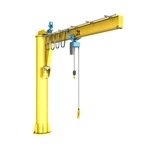
A Single Beam EOT (Electric Overhead Traveling) Crane is a versatile lifting solution widely used in various industries for material handling tasks. Designed with a single girder (beam) and supported by an electric hoist, it offers an efficient and cost-effective way to lift and transport loads within a defined area.
Single beam EOT crane consists of a horizontal beam supported by end frames. Electric hoist moves along the beam for lifting and moving. Can be adapted to various span lengths and lifting heights to meet operational needs. Controlled by pendant control, remote control or operator cab for convenience and safety. Made of high-strength materials to ensure long-term performance. Minimal maintenance requirements reduce downtime.
A Single Beam EOT Crane is an essential tool for efficient and safe material handling in modern industries. Its affordability, flexibility, and reliability make it a popular choice for businesses looking to optimize their operations.
Single girder EOT cranes are suitable for lighter loads, reducing initial investment and maintenance costs. Occupies minimal space while maximizing operational efficiency. Has simpler setup than double girder alternatives. Suitable for a variety of industries including manufacturing, warehouses and assembly lines.
Core Components:Engine, Motor, Gear
Place of Origin:China
Warranty 1 Year
Video outgoing-inspection:Provided
Machinery Test Report:Provided
Application:crane
Lifting height:3meters as standard
Capacity:10
Voltage:220V-690V/50Hz
Color:Yellow
Control Voltage:24V
Key words:crane
Power type:Manual Walking
Model:LD
Product Type:Overhead crane
After Warranty Service:Video technical support, Online support
Local Service Location:None
After-sales Service :Provided Video technical support, Online support

Pictures & Components
1.Main beam
1) The main beam of a Single Beam EOT (Electric Overhead Traveling) Crane is a critical structural component designed to carry and distribute the load across the crane span. It works in conjunction with the end carriages, hoisting mechanism, and traveling components.
The main beam of a single beam EOT (Electric Overhead Travel) crane is usually an I-beam or box beam. Made of structural steel, it ensures high strength and durability. Designed to resist bending and deflection under load.
3) The main girder of a single-girder EOT (Electric Overhead Travel) crane usually supports the weight of the crane and the load being lifted. The load is evenly transferred to the end truck and the supporting runway. The length and cross-section of the main girder are designed depending on the span and lifting capacity of the crane. It is designed to minimize deflections within the permitted range according to standards such as FEM, ISO or CMAA.
2.Lifting System
Motor: The motor of the lifting system in a Single Beam EOT (Electric Overhead Traveling) Crane plays a crucial role in the crane's operation. This motor is typically part of the hoisting mechanism, which lifts and lowers the load.
Reducer: The reducer in the lifting system of a Single Beam Electric Overhead Traveling (EOT) Crane is a critical component designed to manage speed and torque transfer from the motor to the hoist mechanism. It plays a crucial role in ensuring smooth, efficient, and reliable operation during the lifting process.The reducer is mounted between the motor and the hoist drum.
Drum: The drum lifting system in a Single Beam EOT (Electric Overhead Traveling) Crane is a critical component designed to ensure efficient and safe lifting operations.The drum is responsible for winding and unwinding the wire rope, which raises or lowers the load. It ensures smooth operation by transferring the hoist's mechanical energy into the movement of the load.
Wire rope:The wire rope in the lifting system of a Single Beam EOT (Electric Overhead Traveling) Crane is a critical component that handles the load-lifting process. Its design and selection are crucial for ensuring safe and efficient crane operation.The wire rope connects the hook or other lifting attachments to the hoisting mechanism and bears the load's entire weight.
Pulley block: A pulley block in the lifting system of a Single Beam EOT (Electric Overhead Travelling) Crane is a critical component used to lift and move loads. It is part of the hoisting mechanism and works in conjunction with the wire rope and hook assembly.The pulley block works on the principles of mechanical advantage. By increasing the number of sheaves, the force required to lift a given load is reduced.
Lifting device: The lifting device of a Single Beam EOT (Electric Overhead Traveling) Crane is a crucial component designed to handle the load safely and efficiently. The lifting motor powers the drum or sprocket, which winds or unwinds the wire rope/chain. The motion is transmitted to the hook, raising or lowering the load. Simultaneously, the trolley enables horizontal load movement along the beam, making the crane versatile for various applications.
 |
 |
3.End carriage
The end carriage of a Single Beam EOT (Electric Overhead Travelling) Crane is a critical structural and mechanical component that allows the crane to traverse along the gantry rails. The end carriage supports the crane girder and enables the entire crane system to move horizontally along the runway rails. It provides mobility to the crane to access the entire span of the workspace.
The end beam frames are made of high-strength steel or structural plate and provide the structural foundation for the wheel assembly and motor.
Top-running End Carriage: Runs on top of the runway beams, suitable for heavy-duty applications.Under-running End Carriage: Suspends beneath the runway beams, often used for lighter loads or low headroom spaces.
Installed at the ends to prevent collisions or over-travel on the rails.Brakes are Integrated into the drive system to ensure precise stopping and safety during operation.
 |
 |
4.Crane travelling mechanism
1) Working principle
The traveling mechanism is driven by electric motors mounted on the end carriages.These motors transmit power to the wheels via reduction gearboxes, ensuring controlled speed and torque.The gearbox reduces the motor speed while increasing torque, making the crane suitable for heavy loads.The motion is transmitted to the wheels using either a direct coupling or a chain/shaft drive system.The wheels, usually flanged, are guided by rails fixed on the gantry structure, ensuring precise and stable movement along the crane's runway.Variable Frequency Drives (VFDs) or contactor-based control systems regulate the speed and direction of the crane movement.The operator can control acceleration, deceleration, and braking to handle the load safely.
2) Functions of the crane operating mechanism
Horizontal Movement (Traveling):The primary function of the crane traveling mechanism is to provide the movement of the crane along the runway rails, enabling the load to be moved from one side of the building or yard to the other. This is achieved through a motor-driven system, typically with a gear system or a chain drive, depending on the design.
Lifting and Lowering Loads:Although the lifting and lowering of loads is primarily handled by the hoisting mechanism, the traveling mechanism allows the crane to position the hook or load at the required location by traveling across the beam. This adds versatility and ensures precise load placement.
Smooth Operation:The traveling mechanism helps ensure smooth and efficient movement of the crane, minimizing vibrations and jerks. It allows the crane to travel at varying speeds, ensuring controlled and precise movement, especially when dealing with delicate or critical loads.
Load Distribution:The crane traveling mechanism helps evenly distribute the weight of the crane and the load over the rails. This prevents undue stress on any one part of the crane or structure, ensuring safe operation.
Drive System Integration:The mechanism incorporates the drive system, typically an electric motor, coupled with a gearbox. The motor provides the necessary power to move the crane, while the gearbox allows for control over the speed and torque, depending on the load being lifted.
Braking and Stopping:The crane traveling mechanism includes braking systems that enable the crane to stop safely at desired locations. This is essential for positioning the load accurately or halting the crane to prevent overtravel beyond the runway's limits.
Directional Control:The mechanism allows for both forward and reverse motion of the crane. Directional control can be achieved through the motor's power supply direction or by using a variable-speed drive system for more precise control.
Protection and Safety:Safety features like limit switches, which stop the crane at the end of the runway, and anti-sway devices are often integrated into the traveling mechanism to prevent accidents or damage to the crane and load.
Support for Bridge Structure:In a single beam EOT crane, the traveling mechanism is mounted on the ends of the bridge beam, supporting the entire structure as it moves. This ensures the stability and balance of the crane during its operation.
Energy Efficiency:Modern crane traveling mechanisms are designed to operate with minimal energy consumption. Advanced motor control systems (like variable frequency drives) can optimize energy usage and enhance the crane's efficiency while reducing operational costs.
5.Trolley travelling mechanism
1) Structural composition
1. Trolley Frame:The trolley frame is the main structure of the traveling mechanism and provides support to all the other components. It is typically made of steel to ensure strength and durability.The frame consists of the main body that holds the hoist mechanism and other critical parts.It is designed to fit the beam of the crane, allowing movement along the length of the beam.
2. Drive Mechanism (Motor and Gearbox):A motor drives the trolley movement. The motor is usually an electric motor that is connected to a reduction gearbox, which adjusts the speed and torque to the required levels for smooth operation.The motor and gearbox are mounted on the trolley frame to directly drive the trolley wheels.
3. Trolley Wheels:These are typically steel wheels mounted on axles, which roll on the overhead beam's rails (also known as the monorail or track).The wheels are designed to carry the weight of the trolley and the load it transports while allowing smooth movement along the beam.
4. Track (Rail):The track or rail is a crucial part of the trolley traveling mechanism. It is a metal rail system, typically mounted on the overhead beam, along which the trolley moves.The track ensures that the trolley moves in a straight line and bears the weight of the trolley and load.
5. Hoisting Mechanism (Hoist and Hook):The hoist is an integral part of the trolley and is responsible for raising and lowering the load. It usually consists of a drum, hoisting rope, and hook.The hoist system is mounted on the trolley frame and can move along the beam, allowing the load to be positioned along the crane's length.
6. End Carriages:These are the structures at the ends of the beam and provide support for the entire crane mechanism. The trolley frame is connected to the end carriages, which help guide the movement along the crane's beam.The end carriage wheels run along the main beam rails, and their primary function is to support the weight and stability of the crane.
7. Control System:The movement of the trolley is controlled by an electrical control system, which includes a joystick or pendant control, a variable frequency drive (VFD), and limit switches to ensure smooth and safe movement.The control system regulates the speed, direction, and stops of the trolley and ensures safety features like overload protection.
8. Brakes:Braking systems are essential to stop the trolley at the desired position. These can include mechanical brakes (such as disc brakes or drum brakes) and electrical brakes that engage when needed to ensure controlled stopping and load holding.
9. Buffer Springs (Optional):Buffer springs or shock absorbers may be added to the trolley to absorb sudden impacts or forces during the movement. This ensures smooth operation, especially when the trolley is near its end travel points.
10. Support Structure:The entire crane structure, including the beam and the trolley, rests on a supporting framework, which could include girders or beams. These are designed to bear the load and ensure the stability of the trolley and crane during operation.
2) Function of the trolley operating mechanism
Trolley Movement Across the Beam
The primary function of the trolley is to move the load along the horizontal beam (or girder) of the crane.It moves in a longitudinal direction (typically left to right) on the crane's bridge, allowing the load to be positioned precisely over a particular location on the work surface.
Load Handling
The trolley supports the hoisting mechanism, such as the hook or lifting device, which can raise or lower the load.As the trolley moves along the beam, it ensures that the load is moved across the crane's span to different positions, enabling efficient material handling.
Powered Mechanism
The trolley is usually driven by a motorized system connected to wheels that run along rails or tracks mounted on the beam.
These motors are often electric, powered through a conductor rail or cable system.
Control of Motion
The movement of the trolley is typically controlled by an operator, either manually or through automated controls, allowing precise positioning of the load.
Efficiency and Flexibility
The trolley system allows the crane to be highly efficient in material handling, as it can position loads across the entire beam, from one end to the other, optimizing workspace utilization.
Safety and Stability
The design of the trolley system also focuses on maintaining stability during load transport. This includes mechanisms to prevent swinging or swaying of the load while in motion.
6.Crane wheel
The crane wheel of a Single Beam EOT (Electric Overhead Traveling) Crane is a key component that enables the movement of the crane along the overhead track. It is typically part of the crane's trolley mechanism and works in tandem with other elements to allow the crane to move horizontally along the beams.
Crane wheels are typically made of high-strength steel or forged steel for durability and load-bearing capacity. The material choice helps handle the significant weight and forces during operation.The wheels are designed to run on rails (usually I-beam tracks) installed along the crane runway. The wheels often have a tapered or flanged edge, which helps them stay centered on the track and maintain stable movement.
These wheels carry the weight of the entire crane structure, including the load being lifted by the crane's hook. The wheels must support both static loads and dynamic forces during crane motion.The wheels are typically equipped with roller bearings or ball bearings to reduce friction and ensure smooth movement. These bearings allow the crane wheels to rotate efficiently, ensuring that the crane can travel with minimal effort.

7.Crane Hook
1) A crane hook in a single beam EOT (Electric Overhead Traveling) crane is a crucial component used for lifting and transporting loads. The hook is designed to attach to the load being lifted, usually through a chain, rope, or sling, and is operated via the crane's hoisting mechanism. The crane hook can be either fixed or swivel. A fixed hook remains stationary, while a swivel hook can rotate, allowing the load to turn freely during transportation.The crane hook is a vital part of the hoisting system, working in conjunction with the hoist drum, trolley, and beam to ensure the efficient and safe lifting of loads.
2) The hook is generally designed in the shape of a "J" or "C" with a pointed tip for easy attachment to the load. It may also feature a latch (safety catch) to prevent accidental disengagement.The hook's lifting capacity depends on the design of the crane. Single beam EOT cranes are often designed for light to medium-duty operations and may have lifting capacities ranging from a few tons to several hundred tons.The hook may include a latch to secure the load, preventing it from slipping off during lifting. Some advanced hooks are equipped with anti-tilt devices or overload limiters for enhanced safety.

Motor
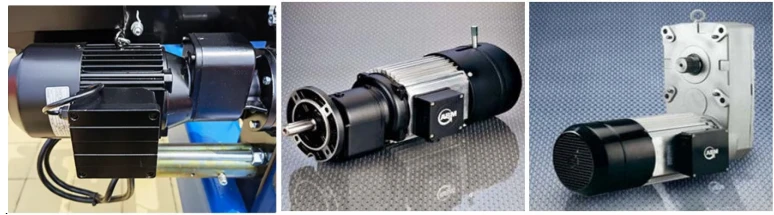
The motor of a Single Beam EOT (Electric Overhead Traveling) crane is a critical component in the crane's operation, responsible for driving the movement of the crane along its beam (girder) and lifting or lowering the load.
Types of Motors Used in EOT Cranes:
Induction Motors:
Commonly used in EOT cranes because of their robustness and simplicity. These motors operate on the principle of electromagnetic induction and are typically squirrel-cage type motors.They are used for both hoisting and trolley movement.
DC Motors:
DC motors are used for applications requiring precise speed control and high starting torque. However, they are less common in newer designs due to the maintenance requirements and the cost of the brushes and commutators.
AC Motors:
Modern EOT cranes are increasingly using AC motors (both induction and synchronous motors) because they are energy-efficient, require less maintenance, and have better speed regulation compared to DC motors.
3)Hoist Motor: This motor drives the lifting mechanism of the crane, enabling it to raise and lower the load. It is often a high-torque motor designed for intermittent operation.
4)Key Motor Features for Single Beam EOT Cranes:
Variable Frequency Drives (VFDs): VFDs are used to control the speed of the motor and ensure smooth acceleration and deceleration, enhancing the overall performance of the crane.
Brake Mechanisms: Motors are typically paired with electric brakes to hold the load in position when the motor is not running and to prevent the load from dropping suddenly.
Overload Protection: The motors used in EOT cranes are equipped with protection devices to prevent overheating, overloading, or any electrical faults.

.
Sound and light alarm system & limit switch
1) Sound and light alarm system
Audible Alarm (Buzzer or Siren):Emits a loud and distinct sound to alert workers of crane movement.Typically has adjustable sound levels to suit the ambient noise levels of the work environment.
Visual Alarm (Flashing Beacon or LED Light):A bright, attention-grabbing light (often strobe or rotating) that flashes during crane operation.Provides a visual cue for those who may not hear the audible alarm.
2) Limit switch
A limit switch in a single beam EOT (Electric Overhead Traveling) crane is a critical safety device designed to prevent overtravel of the crane's hook, trolley, or bridge. It ensures operational safety by automatically stopping motion beyond predetermined limits, avoiding damage to the crane, its components, or nearby equipment.
Functions: Overload Protection:Prevents the hook from moving beyond the highest safe point (upward travel limit).
Types of Limit Switches in EOT Cranes:
Rotary Limit Switch:Used for hoisting applications.Converts rotational movement of the motor shaft to electrical signals to stop the motor when a preset rotation is reached.
Gravity Limit Switch:Often used for preventing overhoisting.Works based on a mechanical weight that trips a switch when the hookreaches its maximum safe height.
Lever/Plunger Limit Switch:Used for trolley and bridge travel.Engaged when the trolley or bridge reaches its end position.
Proximity Limit Switch:Detects the position without physical contact using magnetic, optical, or ultrasonic sensors.Common in modern, automated cranes.
Micro Limit Switch:Compact and used for precise control of motion.

10.Safety Devices
1. Limit Switches
Hoist Limit Switch: Prevents over-hoisting or over-lowering by cutting off power when the hook reaches the upper or lower limits.
Travel Limit Switch: Stops the crane or trolley when it reaches the end of the permissible travel path to avoid collisions or derailments.
2. Overload Protection
Detects excessive load on the crane and prevents operation if the load exceeds the crane's rated capacity.
Overload sensors or electronic load monitoring systems are commonly used.
3. Emergency Stop Button
Allows the operator to immediately stop all crane operations in case of an emergency.
Typically located on the control panel or pendant control.
4. Anti-Collision Devices
Sensors or systems that prevent two cranes on the same runway from colliding by automatically stopping or slowing down the crane.
5. Braking Systems
Hoist Brake: Automatically engages to hold the load when the hoisting motor is not powered.
Travel Brake: Prevents unintended movement of the crane or trolley.
6. Overheating Protection
Thermal overload relays protect the crane's motors from overheating by shutting them down when temperatures exceed safe limits.
7. Wire Rope or Chain Safety Features
Rope guides or chain guides to ensure proper winding on the drum.
Load chains or ropes are designed to meet specific safety factors to prevent failure under load.
8. Buffer and Shock Absorbers
Installed at the ends of the crane runway to absorb the impact if the crane reaches the end of its travel range.
9. Under-Voltage Protection
Protects the crane from operating under insufficient voltage conditions, which can damage electrical components.
10. Audio-Visual Alarms
Warning sirens, lights, or bells alert personnel in the vicinity of crane movement.
11. Hook Safety Latch
Prevents the load from accidentally slipping off the hook.
12. Anti-Derailment Devices
Ensures the crane stays securely on the track during operations.
13. Load Swing Reduction
Some advanced systems include sensors to minimize load swing, enhancing operational safety.
14. Inspection and Monitoring Systems
Cameras, load indicators, or digital displays provide real-time monitoring of the crane's operations, aiding in safer use.
11.Control Mode
Pendant Control
Description: A wired pendant hanging from the crane allows the operator to control its movements.
Radio Remote Control
Description: A wireless handheld or belt-mounted controller enables remote operation.
Cabin Control
Description: The operator sits in a cabin mounted on the crane, controlling it using joysticks or levers.
Automatic or Semi-Automatic Control
Description: The crane operates based on pre-programmed instructions, either fully autonomous or with limited human intervention.
Combined Control Modes
Some EOT cranes offer multiple control modes (e.g., pendant + remote control) for versatility. Operators can switch between modes based on operational needs. 
Sketch

Main technical

Advantages
Products Description
1. Cost-Effective
Lower Initial Cost: Since it uses a single girder, the material costs for construction are reduced, making it more affordable than a double beam crane.Reduced Maintenance Costs: With fewer parts and a simpler design, maintenance costs are generally lower.
2. Space Efficiency
Compact Design: The single beam design takes up less vertical space, making it ideal for areas with height constraints.Optimized for Small to Medium Loads: It is well-suited for light to medium-duty applications, where high lifting capacities are not required.
3. Simplicity in Operation and Design
Less Complex: The single beam design is mechanically simpler, reducing the chances of mechanical failure and making it easier to operate and maintain.Ease of Installation: The crane can be installed quickly due to the simpler structure, reducing installation time and associated costs.
4. Energy Efficiency
Lower Power Consumption: Since single beam cranes typically handle lighter loads, they consume less power compared to double beam cranes, making them more energy-efficient for smaller applications.
5. Flexibility and Versatility
Adjustable Lift Height: The hoist unit can be adjusted to accommodate varying load heights, providing flexibility in handling different types of materials.Suitable for Different Applications: It can be used in warehouses, factories, garages, and assembly lines where lifting heavy loads is not a constant requirement.
6. Ease of Maintenance
Fewer Components: With fewer parts involved, maintenance is typically easier and requires less downtime.Simplified Troubleshooting: The simpler structure means fewer components to troubleshoot, allowing for quicker repairs and reducing the likelihood of serious malfunctions.
7. Smooth Operation
Stable Lifting: The single beam crane offers stable and smooth lifting of loads, as the hoist moves along the single beam without excessive sway or instability.
8. High Lifting Speed
Fast Lifting Rates: The design allows for faster operation in lifting lighter loads, which can improve overall productivity in environments with high turnover of materials.
9. Reduced Building Load
Lightweight: The crane itself is lighter, which reduces the load on the building structure, allowing it to be used in facilities with lower load-bearing capacities.
Application:
1. Material Handling in Factories and Warehouses
Loading and Unloading: Single beam EOT cranes are often used to load and unload materials from trucks, railcars, or other transport vehicles.
Moving Goods in Storage Areas: In warehouses, they help in transporting heavy goods across different sections of the facility, particularly in narrow aisles or tight spaces where other types of equipment might be inefficient.
2. Assembly Lines
Assembly Process: In manufacturing environments, such as automotive or electronics factories, single beam cranes are used to lift and move parts along assembly lines, improving production efficiency.
Precision Handling: These cranes are especially useful when precision in the movement of parts is required, such as for delicate or high-value items.
3. Steel and Metal Industries
Lifting Heavy Metal Sheets or Components: Single beam EOT cranes are widely used in steel and metal industries for lifting and transporting heavy metal sheets, billets, or structural components.
Foundries: In metal casting, these cranes are used to move molten metal and cast products around the production floor.
4. Construction Sites
Transporting Construction Materials: Single beam cranes can be used for lifting and moving materials like cement bags, steel rods, and other heavy construction materials on construction sites.
Erection of Prefabricated Structures: These cranes can also assist in the assembly and erection of prefabricated components on construction sites.
5. Power Plants
Maintenance and Repair: EOT cranes are used in power plants for lifting heavy equipment, turbine parts, generators, and other machinery during maintenance or replacement.
Transportation of Components: In both thermal and hydroelectric plants, these cranes are used to move large components such as transformers and reactors.
6. Shipyards
Shipbuilding and Maintenance: In shipyards, single beam EOT cranes are employed for handling heavy ship components and assisting in the assembly of vessels.
Lifting Ship Parts: They also assist in lifting large parts like ship hulls or machinery components to be installed in ships.
7. Mining
Material Handling: Single beam EOT cranes are used for handling materials like ores, minerals, and coal within mining facilities.
Equipment Movement: They are also used for lifting heavy mining equipment or parts for maintenance purposes.
8. Airports and Logistic Hubs
Cargo Handling: EOT cranes are utilized in cargo terminals to lift and transport heavy or bulky items such as aircraft parts or large cargo containers.
Crane production procedure
1. Design and Engineering
Initial Planning: The design phase begins with gathering requirements for the crane, including load capacity, span, lifting height, and operational conditions.Engineering Drawings: Based on the requirements, detailed engineering drawings and calculations are created, including structural components, electrical systems, and safety features.
2. Material Selection
Frame and Structural Components: High-quality steel (like IS 2062 or equivalent) is used for the crane frame, cross beams, and other structural parts.Electrical Components: The crane's motor, gearbox, hoist mechanism, and electrical panel are sourced according to specifications.
3. Fabrication of Components
Girder Fabrication: The main beam (girder) is fabricated by welding together plates of steel. The girder is the primary load-bearing structure.End Carriages: These are fabricated separately. They include the wheels, axles, and support structures that allow the crane to travel along the track.Bridge Assembly: The crane's bridge is assembled by connecting the girder with the end carriages. This assembly includes installing supports for the hoist and trolley.
4. Machining and Drilling
Precision Cutting and Drilling: The steel plates and components are cut to size, and holes are drilled for assembly and to mount other parts like rails, wheels, and motors.Welding: All parts are welded together according to the design specifications. Special attention is given to ensure the welds are strong and meet quality standards.
5. Hoist and Trolley Assembly
Hoist Mechanism: The hoist mechanism is assembled, including the drum, wire rope, hoist motor, and gearbox.Trolley Fabrication: The trolley, which holds the hoist mechanism and moves along the bridge, is fabricated and installed with the necessary wheel and motor systems.
6. Electrical Wiring and Control Panel
Electrical Installation: The electrical wiring is laid out, including connections to the motors, control systems, and safety sensors.
Control Panel Assembly: The electrical control panel, which will manage the crane's operations, is assembled, tested, and installed.This panel includes switches, overload protection, and variable speed controls.
7. Assembly of Crane
Bridge Installation: The fabricated girder and end carriages are connected to form the bridge. It is then mounted on rails to move along the runway beams.Hoist and Trolley Installation: The hoist and trolley are placed on the bridge, ensuring they are correctly aligned with the track.
8. Testing
Pre-Operational Testing: Before full-scale testing, checks are made to verify that the crane components are installed correctly, such as the alignment of the trolley, wheels, and hoist.Load Testing: A load test is performed to ensure that the crane can safely lift the required load. The crane is tested under load conditions to check its stability, functionality, and safety mechanisms.Operational Testing: The crane is tested for smooth operation across its entire range, including speed, braking, and all control systems. Any issues or defects are rectified.
9. Safety and Quality Checks
Inspection: Thorough inspections are performed on all mechanical, electrical, and safety features of the crane to ensure compliance with safety standards and operational requirements.Final Quality Check: The crane undergoes a final quality check to ensure all systems are operational and meet the required specifications.
10. Commissioning and Delivery
Packaging and Transport: Once the crane passes all tests, it is carefully packaged and prepared for transportation to the installation site.On-Site Installation: Upon delivery, the crane is installed at the customer's facility, and final commissioning is done, including on-site testing and adjustments.
11. Training and Handover
Operator Training: Operators are trained on how to safely operate the crane, including safety protocols, control systems, and maintenance.Documentation: A complete set of documents, including user manuals, maintenance schedules, and safety instructions, is handed over.

Workshop view:
The company has installed an intelligent equipment management platform, and has installed 310 sets (sets) of handling and welding robots. After the completion of the plan, there will be more than 500 sets (sets), and the equipment networking rate will reach 95%. 32 welding lines have been put into use, 50 are planned to be installed, and the automation rate of the entire product line has reached 85%.


Hot Tags: single beam eot crane, China single beam eot crane manufacturers, suppliers, factory, Double Girder Overhead Cranes, Eot Crane, Single Girder Overhead Crane Company
Previous
Eot Overhead CraneYou Might Also Like


Send Inquiry