







Double Girder Eot Crane
Products Description
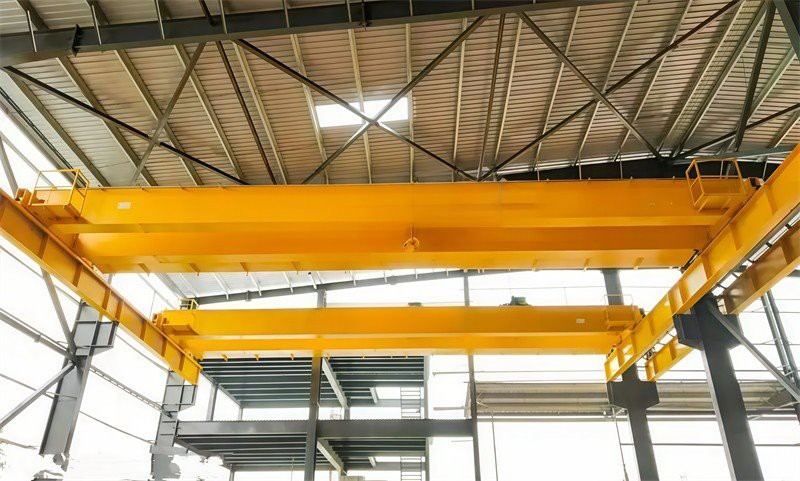
Double Girder EOT Crane Product Introduction;A Double Girder EOT Crane is a robust and reliable lifting solution widely used in various industrial sectors for material handling. Designed for high-performance applications, this type of crane provides exceptional lifting capabilities and operational efficiency.
1)A Double Girder EOT Crane is Key Features;Structure:Comprises two parallel girders that form the main support system.The hoist and trolley are mounted on top of the girders, enabling maximum hook height and improved lifting capacity.Capacity:Capable of handling heavy loads ranging from 5 tons to 500 tons, depending on the specific model and configuration.
A Double Girder EOT Crane is Span:Can cover spans of up to 40 meters or more, adaptable to various factory or warehouse layouts.Precision:Equipped with advanced control systems for precise load positioning and smooth operation.Options for radio remote control or cabin operation ensure operator safety and convenience.
A Double Girder EOT Crane is Durability:Built using high-quality materials like steel, ensuring longevity even in harsh environments.Suitable for applications requiring continuous and intensive usage.
4)A Double Girder EOT Crane is Optional Features;Variable frequency drives (VFD) for smooth speed control.Explosion-proof components for hazardous environments.Automatic lubrication systems for easier maintenance.Integration with IoT for real-time performance monitoring and diagnostics.A Double Girder EOT Crane is an indispensable tool for industries where efficient and safe material handling is crucial. Its versatility and reliability make it a preferred choice for businesses looking to optimize their workflow and productivity.
Rated Loading Capacity 10
Rated Lifting Moment 10
Max. Lifting Height 6m~30m
Span 10m
Weight (KG) 5000
Core Components Gearbox, Motor
Place of Origin Henan, China
Warranty 3 months
Application Workshops
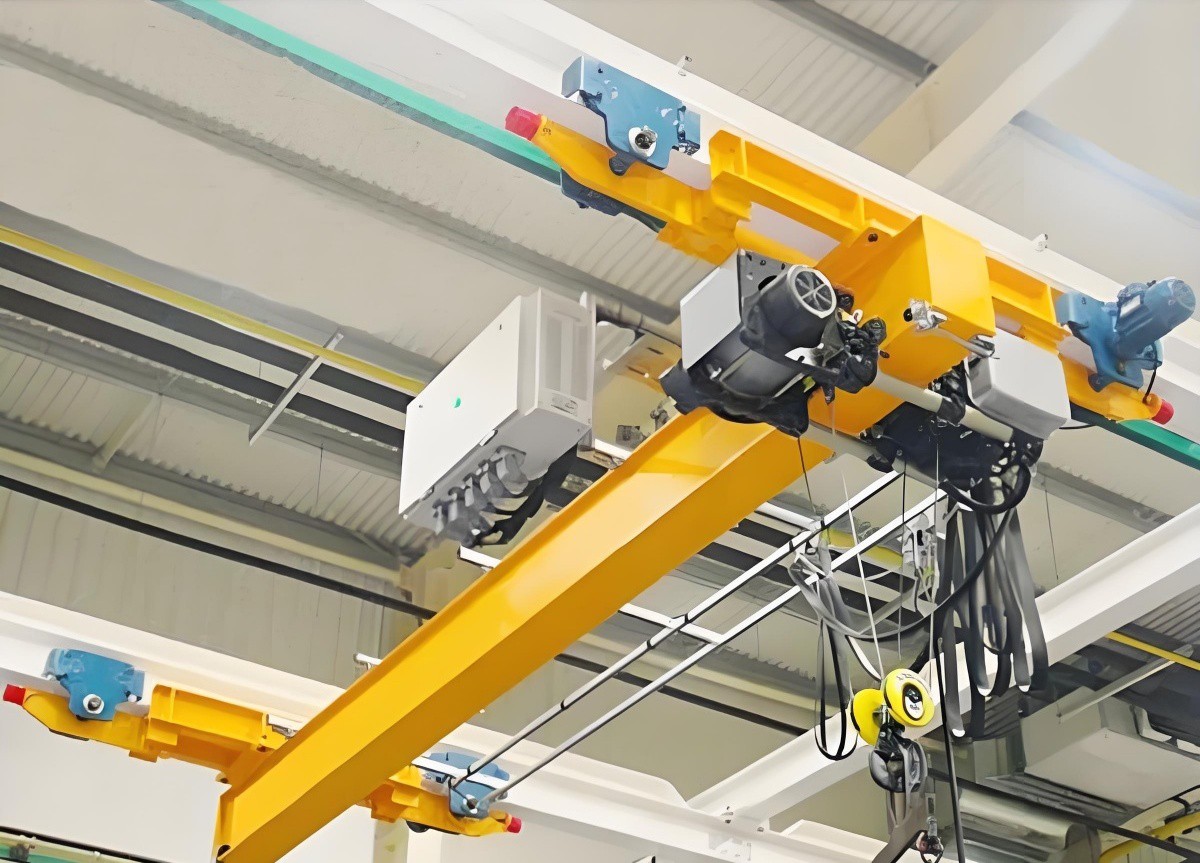
Pictures & Components
1.Main beam
1)Double Girder EOT Crane Main Beam Overview;The main beam of a Double Girder EOT Crane is a critical structural component that provides the primary support for the crane's lifting system. It is designed to ensure strength, durability, and stability during lifting operations.
2)Structure and Design;Double Girder Configuration:The main beam consists of two parallel girders connected by cross members, forming the primary load-bearing structure of the crane.These girders work together to distribute weight evenly and enhance load-carrying capacity.
3)Material:Typically constructed from high-strength structural steel to handle heavy loads and resist bending or deformation under stress.Welded box-type girders or I-beam profiles are commonly used depending on the design and application.
4)Dimensions:The dimensions of the main beam, such as its height, width, and thickness, depend on the crane's span, load capacity, and operational requirements.
Fabrication:Precision-engineered using advanced welding techniques, ensuring minimal stress concentration points and maximizing durability.Adheres to international standards like ISO, FEM, and CMAA for safety and quality.
5)Corrosion Resistance:The beams are coated with protective finishes such as paint or galvanization to prevent corrosion, especially in outdoor or harsh environments.Key Features;High Strength and Rigidity:Designed to support heavy loads without excessive deflection, ensuring stable and safe lifting operations.
6)Optimized Weight:The structure is lightweight yet strong, minimizing the load on the crane's supporting structure while maximizing lifting efficiency.Rail Installation:The main beams include rails or tracks for the movement of the trolley and hoist, ensuring smooth and precise load handling.

Lifting System
1)Key Components of the Lifting System Hoist Mechanism:Main Function: Performs the vertical lifting and lowering of loads.Type;Wire Rope Hoist: Commonly used for higher load capacities, featuring robust wire ropes and sheaves for heavy-duty operations.Chain Hoist: Typically used for lighter loads.Construction:Equipped with high-strength wire ropes, drums, and a braking system to handle heavy loads with precision.
2)Trolley System:Main Function: Moves the hoist along the crane's main girders horizontally.Type:Monorail Trolley: Simple design for straightforward applications.Double Rail Trolley: Used for heavy-duty lifting and more complex operations.
3)Lifting Motor:Power Source: Electric motor drives the hoisting and lowering operations.Features:High torque output to lift heavy loads smoothly.Integrated with Variable Frequency Drives (VFD) for precise speed control.Overload protection to prevent damage to the motor and system.
4)Double Girder EOT Crane is Gearbox:Transmits power from the motor to the hoist mechanism, providing efficient torque and speed adjustment.Designed for durability and low maintenance.
5)Brake System:Electromagnetic or hydraulic brakes ensure the load remains stationary during lifting and lowering operations.Emergency braking systems enhance safety by halting the operation in case of power failure or system malfunction.

3.End carriage
1) Double Girder EOT Crane End Carriage Overview;The end carriage is a vital structural and operational component of a Double Girder EOT (Electric Overhead Traveling) Crane. It serves as the support and movement mechanism for the crane bridge, ensuring smooth travel along the runway beams. The end carriage is designed to provide stability, durability, and precision during crane operations.
2) Key Components of the End Carriage;Frame Structure:Material: Made from high-quality steel plates or rolled steel sections, ensuring robust construction to withstand heavy loads and continuous use.Design: The end carriage is compact yet strong, engineered to distribute the crane's weight evenly on the runway.
3) Travel Wheels:Type: Forged steel or cast steel wheels designed for durability and wear resistance.Mounting: Mounted on anti-friction bearings to ensure smooth and efficient movement.Alignment: Precisely aligned to minimize wear on the wheels and rails, reducing maintenance needs.
4)Wheel Drive System:Driving Wheels: One or more wheels are powered by electric motors via a gearbox to propel the crane along the runway.Driven Wheels: The remaining wheels ensure smooth rolling along the rail.
5)Gear Motor:Power Source: High-torque geared motors drive the end carriage wheels.Variable Speed: Often equipped with Variable Frequency Drives (VFD) for controlled acceleration and deceleration, ensuring smooth starts and stops.
6)Low Noise Operation:Optimized design minimizes noise during operation, providing a better working environment.Customization:Can be tailored to match the runway rail type, span, and crane load requirements.Corrosion Resistance:Coated with anti-corrosion paints or galvanization to enhance durability in harsh environments, such as coastal or outdoor sites.

4.Crane travelling mechanism
1)Components of the Crane Traveling Mechanism;End Carriages:Located at both ends of the crane bridge, these house the wheels and driving units.Support the entire bridge structure and enable movement along the runway rails.
2)Travel Wheels:Forged or cast steel wheels mounted on the end carriages.Types:Driving Wheels: Powered by motors to move the crane.Idler Wheels: Free-rolling wheels that support the bridge and maintain balance.Designed for minimal wear and smooth movement on the rails.
3)Motors:Electric Motors: Provide the driving force for crane travel.Features:High torque for starting under load.Equipped with Variable Frequency Drives (VFD) for smooth acceleration and deceleration.Energy-efficient and low-maintenance designs.
4)Brakes:Electromagnetic Brakes: Engage automatically when power is cut off, preventing unintended movement.Enable precise stopping and enhance operational safety.Couplings:Flexible couplings connect the motor and gearbox, reducing vibrations and ensuring smooth torque transmission.
5)Buffer Systems:Shock-absorbing buffers are installed at both ends of the travel path to prevent collisions and damage to the structure.Anti-Collision Devices (Optional):Sensors or proximity switches detect nearby objects and prevent collisions with other cranes or obstacles.
5.Trolley travelling mechanism
1)Double Girder EOT Crane Trolley Traveling Mechanism;The trolley traveling mechanism is a key system in a Double Girder EOT (Electric Overhead Traveling) Crane, responsible for moving the hoist and trolley along the length of the main girders. This mechanism ensures precise and efficient horizontal movement for lifting and positioning loads.
2)Components of the Trolley Traveling Mechanism;Trolley Frame:Material: Built from high-strength steel for durability and rigidity.Design: Compact and lightweight yet strong enough to support the hoist and handle heavy loads.Houses all the traveling components, including wheels, motors, and the hoist system.
3)Trolley Wheels:Type:Forged or cast steel wheels designed to run smoothly on the rails of the crane girders.Driving Wheels: Powered by the motor for movement.Idler Wheels: Free-rolling wheels that provide balance and stability.Bearings: Equipped with anti-friction bearings to reduce wear and ensure smooth travel.
4)Couplings:Flexible couplings connect the motor and gearbox, ensuring smooth power transmission while absorbing vibrations.Braking System:Electromagnetic or hydraulic brakes stop the trolley precisely and hold it in place during operations.Emergency brakes prevent unintended movement in case of power failure or malfunction.
6.Crane wheel
1)Double Girder EOT Crane Wheel Overview;The crane wheels are essential components of a Double Girder EOT (Electric Overhead Traveling) Crane, enabling smooth movement of the crane bridge and trolley on their respective rails. These wheels are designed to bear heavy loads while minimizing wear and tear on both the wheels and rails, ensuring efficient and stable operation over long periods.
2)Types of Crane Wheels;Bridge Crane Wheels:Used for the horizontal movement of the crane bridge along the runway rails.Mounted on the end carriages.Trolley Crane Wheels:Used for the movement of the trolley across the main girders of the crane.Smaller and lighter compared to bridge wheels, but equally robust.Components of a Crane Wheel Assembly
3)Wheel Material:Made of high-grade forged steel or cast steel.Hardened and tempered to ensure durability and resistance to wear under high loads.Wheel Design:Flanged Wheels: Most common type; the flange keeps the wheels aligned on the rail and prevents derailment.Flat Wheels: Used in specific applications where guide rollers or external alignment systems are present.
4)The wheels are mounted on robust steel axles, which are supported by anti-friction bearings.Bearings:Anti-friction bearings, such as roller or ball bearings, reduce friction and ensure smooth rotation.Bearings are housed in protective casings to prevent contamination from dust and debris.Wheel Tread:The part of the wheel that comes into contact with the rail.Hardened to withstand the stresses of continuous operation.

7.Crane Hook
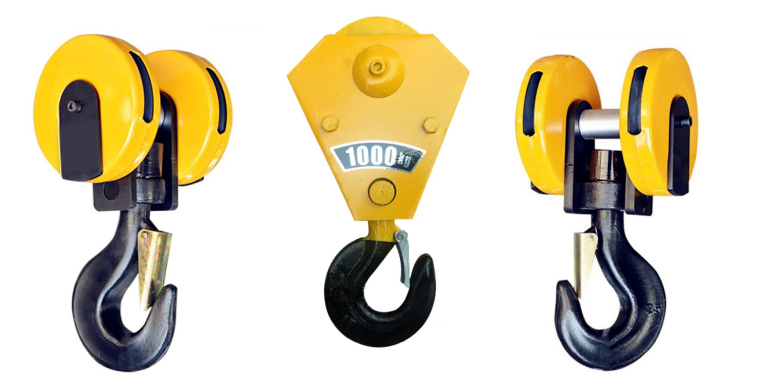
1)Double Girder EOT Crane Hook Overview;The crane hook is one of the most critical components of a Double Girder EOT (Electric Overhead Traveling) Crane, designed to securely attach and lift loads. The hook directly handles the lifting process, making it a key element in the safe and efficient operation of the crane. Crane hooks are engineered to handle heavy loads while ensuring safety and durability.
2)Types of Crane Hooks;Single Hook:Design: A single piece of curved steel.Application: Suitable for relatively lighter loads and less complex lifting operations.Double Hook:Design: Two hooks joined together to distribute load evenly.Application: Used for lifting heavy loads with better stability and balance.
3)Ramshorn Hook:Design: Features two curved arms resembling a ram's horns.Application: Ideal for heavy and bulky loads, offering better load distribution and safety.
4)Shank Hooks:Design: Includes a threaded shank to be secured in place with nuts or other fasteners.Application: Used in heavy-duty lifting where fixed and secure attachments are required.
Motor
Double Girder EOT Crane Motor Overview;The motor is one of the most vital components of a Double Girder EOT (Electric Overhead Traveling) Crane, powering the various mechanisms responsible for lifting, trolley movement, and crane travel. The motors are designed to deliver the necessary torque and speed while ensuring efficient and safe operation under heavy-duty conditions.
Types of Motors Used in Double Girder EOT Cranes;Hoisting Motor:Powers the lifting mechanism of the crane.Designed to handle high starting torque and frequent starts and stops.Usually equipped with Variable Frequency Drives (VFD) for precise speed and load control.
Trolley Traveling Motor:Drives the horizontal movement of the trolley on the crane girders.Provides smooth and controlled acceleration and deceleration.Bridge Traveling Motor:Powers the movement of the crane bridge along the runway rails.Designed for high durability to operate over long distances.
Key Features of Crane Motors;High Torque Output:Designed to deliver high starting torque for lifting and heavy-load operations.Durable Construction:Made with robust materials to withstand high mechanical stresses, vibration, and harsh environments.Duty Cycle Compatibility:Rated for specific duty cycles (e.g., S2, S3, S4) to handle frequent starts and stops typical in crane operations.

..
Sound and light alarm system & limit switch
Double Girder EOT Crane Sound and Light Alarm System & Limit Switch;The sound and light alarm system and limit switch are critical safety and operational features of a Double Girder EOT (Electric Overhead Traveling) Crane, designed to ensure safe operation and prevent accidents during material handling.
Sound and Light Alarm System;Overview;The sound and light alarm system in a Double Girder EOT Crane serves as a warning mechanism to alert workers and operators about the crane's movements, potential hazards, or system malfunctions. This system is crucial for maintaining workplace safety in busy industrial environments.
Components of the Alarm System;Sound Alarm (Hooter or Siren):Emits a loud noise to warn nearby personnel of the crane's operation.Commonly used during bridge and trolley travel or before lifting and lowering operations.Light Alarm:Bright flashing or rotating lights (often LED or strobe lights) that visually signal crane movement or specific conditions.Colors like red, yellow, or blue are commonly used for better visibility.
Control Panel Integration:The alarm system is integrated with the crane's control panel and can be programmed to activate during specific operations, such as overload conditions or when the crane approaches its travel limits.Functions;Movement Warning: Alerts personnel when the crane is moving or lifting a load.Hazard Indication: Indicates potential hazards, such as load overcapacity or emergency stops.Operational Feedback: Can signal specific conditions, like reaching a specific travel limit or when an emergency brake is applied.

10.Safety Devices
1)Double Girder EOT Crane Safety Devices;Safety devices in a Double Girder EOT (Electric Overhead Traveling) Crane are crucial for ensuring secure and reliable crane operations. These devices are designed to prevent accidents, protect personnel, safeguard materials, and enhance the lifespan of the crane components.
2)Key Safety Devices in Double Girder EOT Cranes Overload Protection Device;Function: Prevents the crane from lifting loads exceeding its rated capacity.How It Works: Measures the weight of the load being lifted using load sensors or load cells and stops operations if the load exceeds the safe working load (SWL).
3)Limit Switches;Function: Controls and restricts the movement of crane components to prevent overtravel or collisions.
Types:Hoist Limit Switch: Stops the hook from traveling beyond the upper or lower safe limits.Trolley Travel Limit Switch: Stops the trolley at the end of the girder.Bridge Travel Limit Switch: Restricts the bridge crane from overtraveling at the runway ends
4)Anti-Collision Devices;Function: Prevents collisions between two cranes on the same runway or between the crane and the end of the runway.How It Works:Uses infrared sensors, ultrasonic sensors, or proximity sensors to detect obstacles and activate alarms or braking mechanisms.
11.Control Mode
1)Double Girder EOT Crane Control Modes' The control mode of a Double Girder EOT (Electric Overhead Traveling) Crane determines how the crane is operated and managed during its various functions, such as lifting, lowering, and traveling. Different control modes cater to specific operational requirements, enhancing safety, efficiency, and user convenience.
2)Types of Control Modes Pendant Control Overview: The crane is controlled through a wired pendant connected to the crane by a control cable.Features:Buttons for lifting, lowering, forward/reverse trolley travel, and bridge travel.Emergency stop button included for immediate shutdown in emergencies.
3)Remote Control Overview: The crane is operated using a wireless remote control system, typically with radio frequency (RF) or infrared (IR) signals.Features:Compact handheld device with buttons or joysticks for operation.Multiple channels to avoid interference when multiple cranes are used.
4)Cabin Control Overview: The crane is controlled from a dedicated operator cabin mounted on the crane itself.Features:A fully enclosed cabin with controls like joysticks, buttons, and displays.Provides a panoramic view of the operational area.Climate control (air conditioning or heating) for operator comfort in extreme environments

12.Sketch

Main technical

Advantages
Advantages of Double Girder EOT Cranes;Double Girder Electric Overhead Traveling (EOT) Cranes are a versatile and robust material handling solution for industrial applications. They offer superior load-handling capacity, efficiency, and adaptability compared to single girder cranes.
High Load Capacity Description: Double girder cranes can handle significantly heavier loads, typically ranging from 5 tons to 500 tons or more.Benefit:Suitable for heavy-duty industries such as steel plants, shipyards, power plants, and heavy machinery manufacturing.Ensures reliability for lifting large and bulky materials.
Greater Span and Hook Height Description: The design of double girders allows for:Wider spans across the working area.Higher hook positions compared to single girder cranes.Benefit:Maximizes vertical space utilization, making it ideal for tall warehouses or factories.Allows for operations in wider workspaces.
Versatility and Customization Description: Double girder cranes can be customized with various configurations and features, such as:Multiple lifting mechanisms.Auxiliary hoists.Specialized attachments like grabs or magnets.Benefit:Adaptable to diverse industrial needs.Can handle various types of loads, including hot metal, coils, and containers.
Efficient Material Handling Description: Equipped with advanced hoisting and traveling mechanisms, including:Variable frequency drives (VFDs) for speed control.Smooth and precise load handling.Benefit:Improves productivity by reducing time for material transport.Enhances operational efficiency and minimizes material damage.
Improved Safety Features Description: Double girder cranes are equipped with comprehensive safety devices, including:Overload protection.Limit switches for hoist and travel.Anti-collision systems.Benefit:Minimizes risks of accidents.Protects operators and equipment.
High Precision and Accuracy Description: Advanced control systems and automated features enable precise load positioning and movement.Benefit:Reduces handling errors.Suitable for applications requiring accurate material placement, such as assembly lines or machining operations.
Application:
Applications of Double Girder EOT Cranes;Double Girder Electric Overhead Traveling (EOT) Cranes are a powerful material handling solution widely used across industries due to their superior lifting capacity, durability, and adaptability. They are particularly suitable for environments requiring high-performance lifting operations, precision, and reliability.
Manufacturing Industry Applications:Transportation of raw materials (e.g., steel coils, sheets, or heavy components) to production areas.Assembly line operations requiring precise positioning of heavy parts.Loading and unloading of manufactured goods.Industries Served: Automotive, aerospace, heavy machinery, and equipment manufacturing.
Steel and Metal Processing Applications:Handling molten metal in foundries with specialized heat-resistant components.Transporting large metal sheets, pipes, or billets within steel plants.Coil handling in rolling mills.Key Features Required:High heat resistance and durability.
Shipbuilding and Marine Industry Applications:Handling heavy ship parts such as hull sections, engines, and anchor chains.Loading and unloading cargo in shipyards and docks.Key Features:Corrosion-resistant components for operation in salty, humid environments.Wide-span capabilities for large shipyards.
Construction Industry Applications:Lifting and placing heavy construction materials such as steel girders, beams, and prefabricated structures.Supporting large-scale infrastructure projects like bridges and dams.Key Features:High load capacity and rugged construction for harsh outdoor environments.Weatherproof designs and mobility for versatile construction sites.
Oil and Gas Industry Applications:Lifting heavy drilling equipment, pipes, and machinery in oil refineries and rigs.Supporting maintenance and installation tasks in offshore platforms.Key Features:Explosion-proof components for hazardous environments.High load capacity and reliability.
Railway Workshops Applications:Lifting and assembling railway components such as bogies, wheels, and locomotives.Maintenance and repair of trains and railway equipment.Key Features:Precision and durability for long-term operations.Safe handling of bulky components.
Crane production procedure
1. Design stage: Understand the specific needs of customers, including load-bearing capacity, span, height and use environment. Carry out preliminary design according to the needs and draw scheme drawings, including structural design, power system and control system design. Carry out structural strength, stability and dynamic analysis to ensure that the design meets relevant standards and specifications.
2. Material preparation: Select suitable materials according to design requirements, such as high-strength steel, aluminum alloy, etc., to ensure good mechanical properties and durability. Purchase the required raw materials and components according to the design drawings, including motors, reducers, hooks, control systems, etc.
3. Processing and manufacturing: Cut the steel and process the main beam, end beam and other structural parts according to the design dimensions. Connect the cut parts by welding to form the main structural frame of the crane. Finish the welded components, including drilling, turning and milling, to ensure the matching accuracy of each component.
4. Assembly: Preliminary assembly of the processed components to check the stability and matching of the structure. Install the lifting mechanism, trolley running mechanism and trolley running mechanism to ensure that all moving parts can run smoothly.
5. Electrical system installation: Install motors, inverters, control panels and other electrical components to ensure that the electrical system is connected correctly. Arrange the cable lines reasonably to ensure safety and beauty, and reduce interference and wear.
6. Commissioning and testing: Test the various functions of the crane, including lifting, moving, braking and alarm systems, to ensure that all functions are normal. Carry out safe load tests to ensure that the crane operates stably under maximum load and meets safety standards.
7. Inspection and quality control: Carry out quality inspections on each link of production to ensure that all components meet design and standard requirements. Carry out qualification certification according to relevant regulations to ensure that the equipment meets national and industry standards.
8. Delivery and installation: Transport the manufactured crane to the customer site. Install it at the customer site, including fixing the foundation, commissioning and connecting the power supply. Provide operation training to customers to ensure that they can use the equipment safely and effectively, and officially deliver it for use.

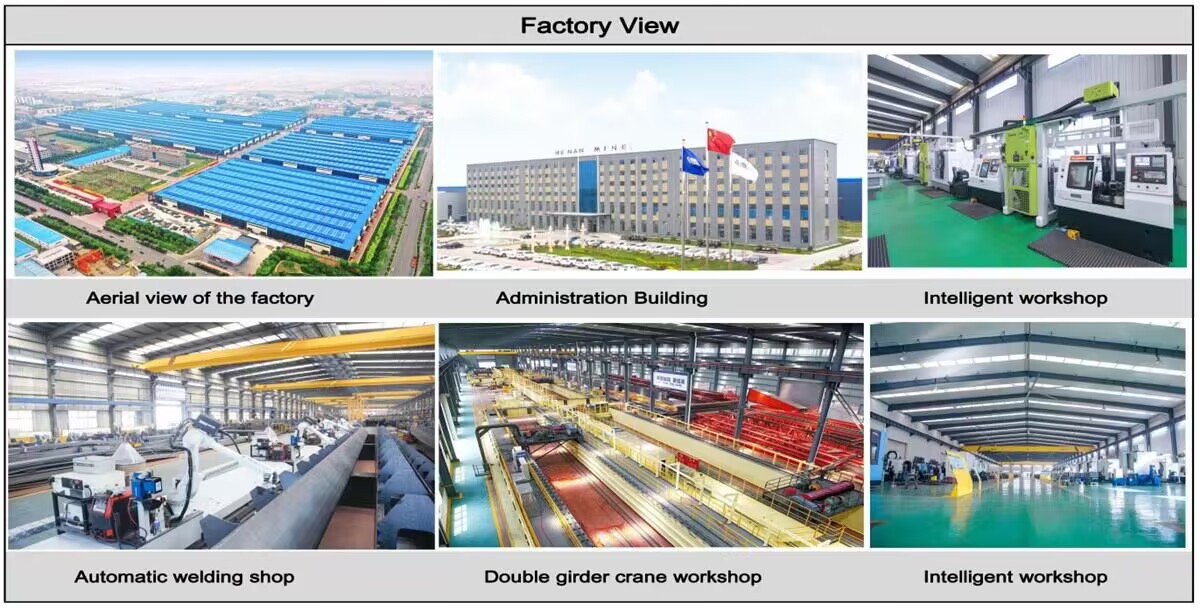
Workshop view:
The company has installed an intelligent equipment management platform, and has installed 310 sets (sets) of handling and welding robots. After the completion of the plan, there will be more than 500 sets (sets), and the equipment networking rate will reach 95%. 32 welding lines have been put into use, 50 are planned to be installed, and the automation rate of the entire product line has reached 85%.


Hot Tags: double girder eot crane, China double girder eot crane manufacturers, suppliers, factory, Double Girder Overhead Cranes, Eot Crane, Single Girder Overhead Crane Company
You Might Also Like


Send Inquiry