







20 Ton Double Girder Eot Crane
Products Description
20 Ton Double Girder EOT Crane Description
A 20 Ton Double Girder EOT Crane is a heavy-duty lifting equipment used primarily in industrial environments such as factories, warehouses, shipyards, and steel plants. It is designed for lifting, moving, and positioning loads up to 20 metric tons safely and efficiently.
Key Features:
Double Girder Design: Two parallel bridge girders provide extra strength and stability, allowing higher lifting heights and longer spans compared to single girder cranes.
Capacity: 20 Tons (20,000 kilograms).
Span: Customizable based on application needs (typically ranges from 10 meters to over 30 meters).
Lifting Height: Can be tailored (commonly 6–30 meters).
Crane Type: Electric Overhead Traveling (EOT) - moves along a pair of rails installed on runway beams.
Lifting Mechanism: Equipped with an electric wire rope hoist or trolley hoist that travels between the girders.
Operation: Can be operated through a pendant control, radio remote control, or cabin control.
Speed Options: Variable speed control for hoisting, cross-travel, and long-travel movements enhances operational flexibility and safety.
Safety Features: Overload protection, emergency stop, limit switches for safe travel and lifting, anti-collision devices, and thermal overload relays.
Rated Loading Capacity 10
Rated Lifting Moment 10
Max. Lifting Height 6m~30m
Span 10m
Weight (KG) 5000
Core Components Gearbox, Motor
Place of Origin Henan, China
Warranty 3 months
Application Workshops
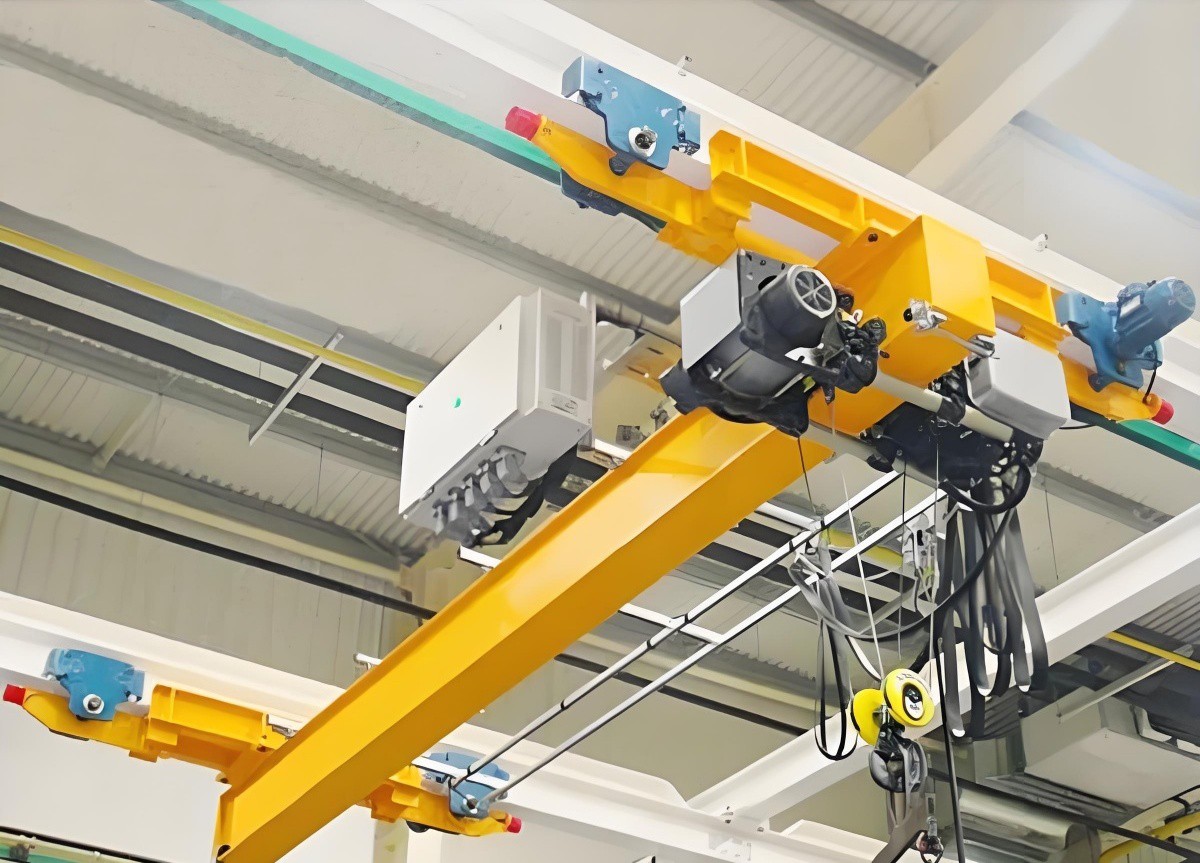
Pictures & Components
1.Main beam
1. Main Beam (or Bridge Girder) Overview
The main beam is the core load-bearing component of the crane.
In a double girder design, there are two parallel main beams, providing enhanced strength and stability compared to a single girder crane.
The crane trolley (which carries the hoist and the load) moves along the top or bottom flanges of these main beams.
2. Key Features of the Main Beam
Material: Typically high-strength structural steel, such as Q235B, Q345B, or European-standard S355JR.
Shape:
Usually a box-type welded beam or sometimes an I-beam reinforced with plates.
Box-type design is more common for better torsional (twisting) resistance.
Dimensions:
Depends on span, lifting height, and working conditions.
Cross-sectional design ensures a good balance of weight and strength.
Welding:
Automatic submerged arc welding (SAW) for seam quality.
Critical seams may be subjected to ultrasonic testing.
Camber:
The beam is fabricated with a pre-camber (slight upward curve) to counteract deflection under load.

Lifting System
Key Components of the Lifting System:
Double Girder Bridge:
Two main girders (beams) running parallel across the span.
Offers better strength and stability compared to a single girder.
Suitable for heavier loads and longer spans.
Crab (Hoist Trolley):
Runs along the girders.
Contains the hoist, motor, gearbox, and brake system.
The hoist lifts the load vertically.
The trolley moves horizontally across the girders.
Hoisting Mechanism:
Motor-driven wire rope hoist or chain hoist.
Typically involves a heavy-duty wire rope, a drum, and lifting hooks.
Includes limit switches for safety (upper and lower limits).
End Carriages:
Located at each end of the crane bridge.
House the travel wheels and motors that allow the whole crane to move along the runway beams.
Runway System:
Rails mounted on the building structure or standalone gantry structures.
Guides the crane along the length of the building.
Electrical Control System:
Panel controls hoisting, trolley travel, and bridge travel.
Operated by pendant control, wireless remote, or operator cabin.
Safety features like overload protection, emergency stop, and thermal protection.
Power Supply System:
Power fed via festoon system, cable reel, or conductor bars.

3.End carriage
Key Components of a 20-ton Double Girder EOT Crane End Carriage:
Wheel assemblies: Usually hardened steel wheels designed for long life.
Drive motors and gearboxes: Typically heavy-duty motors connected to gear reducers to drive the wheels.
Structure: Fabricated steel construction, often box-type for better load distribution.
Buffers: Shock absorbers at the ends to prevent damage.
Travel mechanism: Controlled via VFD (Variable Frequency Drives) or traditional contactor controls depending on the crane design.

4.Crane travelling mechanism
The traveling mechanism of a 20-ton double girder EOT (Electric Overhead Traveling) crane is a crucial component that enables the crane to move along the runway rails. Below is a detailed breakdown of its components, working principle, and key considerations:
1. Components of the Traveling Mechanism
The traveling system consists of the following main parts:
A. Drive Motors
Typically AC/DC electric motors (e.g., 3-phase induction motors with variable frequency drives for smooth operation).
Motors are mounted on the crane's end carriages and provide power to the wheels.
B. Gearboxes
Reduce motor speed to achieve optimal travel speed (usually 20-30 m/min for a 20-ton crane).
Provide high torque for smooth acceleration and deceleration.
C. Wheels & Wheel Assemblies
Double flanged wheels to prevent derailment.
Made of forged steel or alloy steel for high load capacity.
Wheels are mounted on end carriages (one driven, one idle or both driven depending on design).
D. Braking System
Electromagnetic brakes or hydraulic disc brakes to ensure safe stopping.
Fail-safe braking to prevent unintended movement during power loss.
E. Rail & Runway System
Crane travels on steel rails (typically PFC, UIC, or ASME standards).
Rails are mounted on runway beams (fixed to the building structure or free-standing).
F. Buffers & End Stops
Rubber or hydraulic buffers to absorb impact at the end of travel.
Limit switches to prevent over-travel.
2. Working Principle
Power Supply: Motors receive power from the crane's electrical panel via festoon systems or busbar systems.
Motion Transmission: Motors drive the gearbox, which rotates the wheels.
Movement: The crane moves along the runway rails (either single-speed, dual-speed, or variable speed depending on control).
Braking: Brakes engage when the motor stops or in case of power failure.
5.Trolley travelling mechanism
A 20-ton double girder EOT (Electric Overhead Traveling) crane trolley traveling mechanism is a critical component that enables the trolley to move horizontally along the crane bridge. Below are the key aspects of its design and functionality:
1. Components of the Trolley Traveling Mechanism
Traveling Motor: Typically an AC or DC electric motor with appropriate power (e.g., 2.2 kW to 7.5 kW, depending on speed and load).
Gearbox: Reduces motor speed to achieve the desired trolley travel speed (usually 10-30 m/min).
Wheel Assembly: Includes wheels (usually 4 or more) mounted on the trolley frame, running on rails attached to the crane bridge.
Braking System: Electromagnetic or hydraulic brakes for smooth stopping and safety.
Coupling: Connects the motor to the gearbox (flexible or rigid coupling).
Bearings & Shafts: Support the wheels and ensure smooth movement.
Limit Switches: Prevent over-travel at the ends of the bridge girder.
2. Key Specifications for a 20-ton Double Girder EOT Trolley
Load Capacity: 20 metric tons (including trolley weight).
Travel Speed: Typically 10-30 m/min (adjustable via VFD for variable speed control).
Wheel Material: Forged steel or alloy steel (hardened for durability).
Drive Type: Usually dual-motor drive (one motor on each side) for balanced movement.
Rail Type: Standard P-rail, QU-80, or A-120 crane rails depending on load and span.
Control: Pendant control, radio remote, or cabin-operated.
3. Working Principle
The traveling motor drives the gearbox, which rotates the wheels via shafts.
The trolley moves along the bridge girder rails, carrying the hoisting mechanism (hook, wire rope, etc.).
Brakes engage when power is cut to prevent unintended movement.
Limit switches stop the trolley at predetermined positions.
6.Crane wheel
A 20-ton double girder EOT (Electric Overhead Traveling) crane typically uses crane wheels that are designed to handle the load capacity, travel speed, and duty cycle of the crane. Here are the key aspects related to the crane wheels for such a system:
1. Wheel Material & Hardness
Forged Steel Wheels: Commonly used for heavy-duty applications (like a 20-ton crane) due to their high strength and durability.
Heat-Treated Wheels: Often hardened to HB 300-400 Brinell hardness to resist wear and deformation.
Alternative Materials: Some applications may use ductile iron or alloy steel wheels depending on rail conditions.
2. Wheel Diameter & Width
Diameter: Typically ranges from 300mm to 600mm (varies based on load distribution and rail size).
Width: Matches the rail head width (common rail types are A45, A55, or QU70/QU100 for heavy-duty cranes).
3. Wheel Flanges
Double Flange Wheels: Used on the driven side to prevent derailment.
Single Flange or Flangeless Wheels: Used on the non-driven side to allow for rail misalignment.

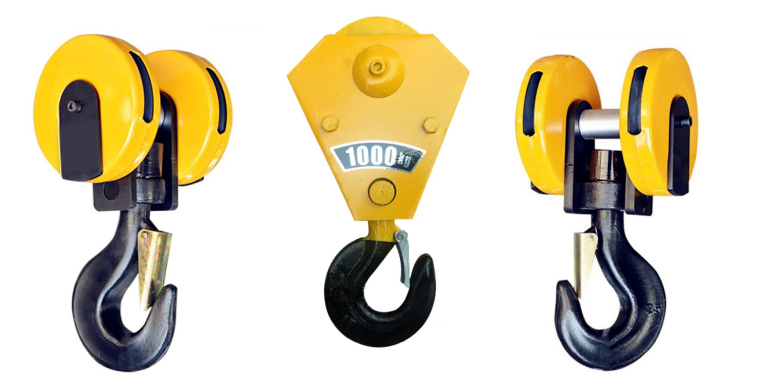
7.Crane Hook
20-ton double girder EOT (Electric Overhead Traveling) crane is a heavy-duty lifting system commonly used in industrial settings like factories, warehouses, and construction sites. The crane hook is a critical component responsible for lifting and securing loads. Below are key details about the crane hook for such a system:
Crane Hook Specifications for 20-Ton Double Girder EOT Crane:
Type of Hook:
Forged Hook (high-strength alloy steel, heat-treated for durability).
Swivel Hook (allows rotation to prevent load twisting).
Safety Latch (prevents slippage of slings/chains).
Load Capacity:
Rated for 20 metric tons (20,000 kg) with a safety factor (usually 3:1 or higher).
Material & Standards:
Made from high-grade alloy steel (e.g., DIN 15400, ASTM A668).
Compliant with ISO 4301, FEM 1.001, or DIN 15400 standards.
Hook Block Assembly:
Includes pulley sheaves, bearings, and shackles for wire rope reeving.
May have 2/3/4 sheaves depending on the hoisting mechanism (single/double fall).
Mounting:
Attached to the crane's hoist trolley via a hook block or directly to the wire rope.
Safety Features:
Safety latch (mandatory for overhead cranes).
Overload protection (via limit switches in the hoist).
Regular inspection points (for wear, cracks, or deformation).
Motor
A 20-ton double girder EOT (Electric Overhead Traveling) crane typically uses multiple motors for different functions, including hoisting, cross-travel (trolley movement), and long-travel (bridge movement).
Common Motors Used in a 20-Ton Double Girder EOT Crane:
Hoist Motor
Power: ~15–30 kW (20–40 HP), depending on speed and duty cycle
Type: AC (induction or slip ring) or DC (for precise control)
Modern Choice: Variable Frequency Drive (VFD)-controlled AC motors (e.g., 3-phase squirrel cage induction motor)
Speed: Dual-speed or variable speed for precise load handling
Trolley (Cross Travel) Motor
Power: ~3–7.5 kW (4–10 HP)
Type: AC induction motor (often with brake)
Control: May also use VFD for smooth acceleration/deceleration
Bridge (Long Travel) Motors
Power: ~2 x 3–7.5 kW (twin motors for synchronized movement)
Type: AC induction motors with brakes
Control: Often VFD-driven for smooth travel and alignment
Factors Affecting Motor Selection:
Duty Cycle (FEM/ISO Classification):
M4 (Medium Duty) or M5 (Heavy Duty) for frequent operations
Power Supply:
415V, 3-phase, 50Hz (standard in many countries)
Higher voltage (e.g., 690V) for large cranes
Control System:
VFD for smooth operation (reduces mechanical shock)
Pendant/Radio/Remote control options

..
A 20-ton double girder EOT (Electric Overhead Traveling) crane typically includes critical safety components such as a sound and light alarm system and limit switches to ensure safe operation. Below is an overview of these systems:
1. Sound and Light Alarm System
Purpose: Alerts personnel when the crane is in operation, especially during startup, movement, or emergencies.
Components:
Horn/Buzzer – Emits an audible warning before crane movement.
Strobe Light/Beacon – Provides a visual warning (flashing light) to indicate crane activity.
Activation:
Automatically sounds before crane startup.
May trigger during emergency stops or limit switch activation.
Can be manually operated by the crane operator.
2. Limit Switches (Safety Limit Devices)
Limit switches prevent the crane and hoist from over-traveling, protecting against collisions and mechanical damage. Types include:
a. Hoist Limit Switches
Upper Limit Switch: Stops the hoist before the hook block reaches the maximum safe height.
Lower Limit Switch: Prevents over-lowering of the hook (if equipped).
b. Travel Limit Switches (Long Travel & Cross Travel)
End Travel Limits: Stop the crane bridge or trolley before hitting the runway ends.
Buffers/Deceleration Limits: Slow down the crane before the final limit switch engages.
c. Anti-Collision Limit Switches (if multiple cranes operate on the same runway)
Prevents collisions between two cranes.

10.Safety Devices
1. Overload Limit Switch
Prevents the crane from lifting loads beyond its rated capacity (20 tons).
Automatically cuts off power if an overload is detected.
2. Emergency Stop Button (E-Stop)
Allows the operator to immediately halt all crane movements in case of an emergency.
Installed on the pendant control or cabin.
3. Limit Switches for Hook Height (Upper/Lower Limit)
Prevents over-hoisting (prevents the hook block from hitting the drum).
Lower limit switch prevents excessive lowering of the hook.
4. Travel Limit Switches (End Stopper)
Prevents the crane from over-traveling beyond the runway rails.
Installed at both ends of the bridge and trolley.
5. Anti-Collision Device
Used when multiple cranes operate on the same runway.
Prevents collisions between cranes or with other obstacles.
6. Braking System
Mechanical brakes (spring-loaded fail-safe brakes) for hoist, trolley, and bridge motions.
Regenerative braking for smooth deceleration.
7. Phase Failure & Under-Voltage Protection
Protects the crane from damage due to power supply issues (phase loss, voltage drop).
8. Insulated & Safety Hook with Latch
Prevents slings or loads from slipping off the hook.
Some hooks have safety latches for extra security.
9. Rail Clamps / Anchoring Devices
Secures the crane when not in use to prevent unintended movement (especially in outdoor cranes).
10. Warning Devices (Alarm & Light)
Buzzer/Horn – Sounds before crane movement.
Warning Lights – Flashing LED lights for visibility in low-light conditions.
11. Voltage Protection & Lightning Arrestor (for Outdoor Cranes)
Protects against power surges and lightning strikes.
12. Cage or Cabin with Fire Extinguisher (for Cabin-Operated Cranes)
Ensures operator safety with proper enclosures and fire protection.
13. Load Moment Indicator (Optional)
Displays real-time load weight to assist the operator.
14. Wind Speed Indicator & Anti-Sway System (for Outdoor Cranes)
Prevents operation in high winds and reduces load swing.
15. Safety Guards for Moving Parts
Covers for gears, chains, and rotating parts to prevent accidental contact.
11.Control Mode
1. Pendant Control (Push Button Pendant)
Operation: The crane is controlled via a pendant station (a handheld or hanging control box with buttons).
Features:
Simple and cost-effective.
Suitable for short-distance, frequent, and low-speed operations.
Available in wired or radio remote versions.
Best for: Workshops, warehouses, and indoor applications where the operator moves with the crane.
2. Radio Remote Control (Wireless)
Operation: Uses a wireless remote control (typically 2.4GHz frequency) for operation.
Features:
Provides freedom of movement for the operator.
Reduces risks by allowing operation from a safe distance.
Can include emergency stop, speed control, and multi-channel operation.
Best for: Hazardous environments, large workshops, or outdoor applications.
3. Cabin Control (Operator Cabin)
Operation: The crane is operated from an enclosed or open cabin mounted on the crane.
Features:
Better visibility and precision for heavy-duty operations.
Includes joysticks, foot pedals, and control panels.
Suitable for long-duration, high-speed, and heavy-load operations.
Best for: Steel plants, foundries, and heavy industrial applications.
4. Variable Frequency Drive (VFD) Control
Operation: Uses VFDs for smooth speed control of hoisting, trolley, and bridge movements.
Features:
Soft start/stop reduces mechanical stress.
Precise speed regulation for delicate loads.
Energy-efficient and reduces motor wear.
Best for: Applications requiring high precision, such as in glass, automotive, or precision manufacturing.
5. Automated/Semi-Automated Control (PLC-Based)
Operation: Uses Programmable Logic Controllers (PLC) for automated sequences.
Features:
Can integrate with sensors, limit switches, and positioning systems.
Enables repetitive, programmed movements.
Can be combined with radio remote or cabin control.
Best for: Production lines, automated warehouses, and repetitive lifting tasks.

12.Sketch

Main technical

Advantages
A 20-ton double girder EOT (Electric Overhead Traveling) crane is a heavy-duty lifting solution widely used in industries like manufacturing, steel plants, shipyards, and warehouses. Here are its key advantages:
1. Higher Load Capacity & Durability
Designed to handle 20 tons or more with ease.
Double girder construction provides better strength and stability than single girder cranes.
Suitable for heavy-duty, continuous industrial operations.
2. Greater Hook Height & Span
Offers higher hook height due to the double girder design, maximizing vertical lifting space.
Can cover longer spans (up to 30m or more) for large workshops.
3. Enhanced Safety & Stability
Reduced wheel load on runway beams due to better weight distribution.
Less deflection under heavy loads, ensuring smooth and safe operations.
Equipped with limit switches, overload protection, and emergency brakes.
4. Customizable Features
Can be fitted with multiple hoists (main + auxiliary hoist) for different lifting needs.
Options for variable speed control, remote operation, and automation.
Available in explosion-proof, heat-resistant, or corrosion-resistant variants.
5. Longer Service Life & Low Maintenance
Robust construction with high-quality steel ensures longevity.
Fewer stress points compared to single girder cranes, reducing wear and tear.
6. Smooth & Precise Handling
Dual-girder design minimizes swaying, allowing precise load positioning.
Suitable for high-precision industries like aerospace and automotive.
7. Cost-Effective for Heavy Lifting
More efficient than using multiple smaller cranes.
Reduces downtime and improves productivity in heavy industrial applications.
Application:
A 20-ton double girder EOT (Electric Overhead Traveling) crane is a heavy-duty lifting solution widely used in industrial and construction settings for handling large loads with precision and efficiency. Below are its key applications, features, and benefits:
Applications of 20-Ton Double Girder EOT Crane
Steel Plants & Foundries – Handling raw materials, molten metal, and finished steel products.
Power Plants – Lifting heavy generators, turbines, and transformers.
Heavy Machinery Manufacturing – Moving large machine parts during assembly.
Shipbuilding & Ports – Loading/unloading heavy ship components and containers.
Automotive Industry – Transporting car chassis, engines, and presses.
Construction Sites – Erecting pre-cast concrete structures and steel beams.
Mining & Cement Plants – Handling bulk materials like coal, ore, and cement.
Warehouses & Logistics – Managing heavy pallets, machinery, and storage systems.
Crane production procedure
The production procedure for a 20-ton Double Girder EOT (Electric Overhead Traveling) Crane involves several stages, from design and material procurement to fabrication, assembly, testing, and dispatch. Below is a detailed step-by-step procedure:
1. Design & Engineering
Customer Requirements Analysis: Determine span, lifting height, duty class (FEM/ISO), power supply, and operating conditions.
Structural Design:
Design the bridge girders (box-type or truss) to handle 20-ton load + dynamic factors.
Calculate wheel loads, deflection limits, and fatigue resistance.
Mechanical & Electrical Design:
Select hoist mechanism (20-ton capacity with appropriate rope/wire drum).
Choose end carriages, trolley, and crab unit.
Design power transmission (gearbox, motor, brakes).
Finalize control system (pendant/radio/cabin-operated).
Approvals: Ensure compliance with ISO, FEM, CMAA, or DIN standards.
2. Material Procurement
Main Girder & End Carriages:
Steel plates (S355JR or equivalent) for fabrication.
Hoist & Trolley Components:
Electric motor, gearbox, wire rope, hooks, brakes, and drum.
Electrical Components:
Variable Frequency Drives (VFDs), limit switches, festoon/cable reels, control panels.
Wheels & Rails:
Forged steel wheels, rails (QU80/QU100).
3. Fabrication Process
A. Main Girder Fabrication
Cutting & Welding:
CNC cutting of steel plates.
Welding (SAW/MIG) of box girders with proper stiffeners.
Stress Relieving: Heat treatment to remove welding stresses.
Machining: Drilling holes for connections.
B. End Carriage Assembly
Fabricate end frames with wheels, buffers, and drive mechanisms.
Install drive motors (for bridge travel) and brakes.
C. Trolley & Hoist Unit
Assemble trolley frame with wheels for cross-travel.
Mount 20-ton hoist (gearbox, motor, drum, wire rope, and hook block).
D. Electrical Panel & Wiring
Install control panel, VFDs, and safety devices (overload, limit switches).
Wire festoon system or cable reels for power supply.
4. Assembly & Erection
Bridge Assembly: Join two girders with end carriages.
Trolley Mounting: Place trolley on rails between girders.
Electrical Connections: Connect motors, sensors, and control systems.
5. Testing & Inspection
A. Load Testing
No-Load Test: Check smooth movement of bridge/trolley/hoist.
Static Load Test: 125% of SWL (25-ton test load for 10 mins).
Dynamic Load Test: 110% of SWL (22-ton test with movements).
B. Safety Checks
Verify braking, limit switches, emergency stop.
Check insulation resistance and earthing.
C. Certification
Issue test certificates (as per ISO 4310, FEM 9.755).
6. Painting & Finishing
Surface Preparation: Sandblasting (SA 2.5 grade).
Painting: Primer + epoxy coat (color as per customer specs).
7. Dispatch & Installation
Dismantling (if required for transport).
Shipping with proper packing.
On-site Installation (erection, alignment, final testing).
8. Commissioning & Handover
Perform final load test at customer site.
Train operators.
Hand over manuals, certificates, and warranties.

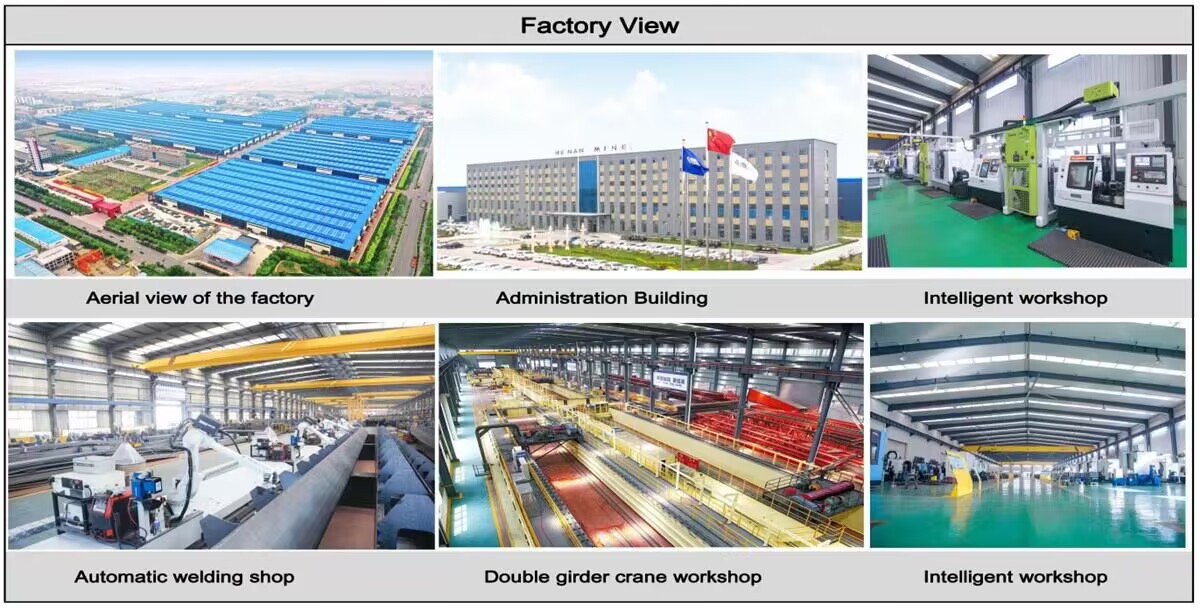
Workshop view:
The company has installed an intelligent equipment management platform, and has installed 310 sets (sets) of handling and welding robots. After the completion of the plan, there will be more than 500 sets (sets), and the equipment networking rate will reach 95%. 32 welding lines have been put into use, 50 are planned to be installed, and the automation rate of the entire product line has reached 85%.


Hot Tags: 20 ton double girder eot crane, China 20 ton double girder eot crane manufacturers, suppliers, factory, Eot Crane, Double Girder Overhead Cranes, Single Girder Overhead Crane Company
Previous
No InformationNext
Eot Hot CranesYou Might Also Like


Send Inquiry