










5 Ton Single Girder Eot Crane
5 ton single girder eot crane
Product Introduction
A 5 Ton Single Girder EOT (Electric Overhead Traveling) Crane is a highly efficient material handling solution designed to lift and transport heavy loads within a defined area, typically in industrial environments such as warehouses, manufacturing plants, and storage yards. This crane uses an electric motor to operate the hoisting mechanism and is ideal for moderate lifting tasks that do not require the capacity of larger, more complex systems.
5 ton single girder eot crane is Lifts up to 5 tons of load.Ideal for moderate-duty lifting tasks.Design:Single Girder Construction: The crane features a single girder design, offering a simpler structure and reduced weight compared to double girder systems.Compact & Space-Saving: The single girder design allows for a more compact system, maximizing workspace and reducing installation costs.
5 ton single girder eot crane is Electric Hoist:Equipped with a high-performance electric hoist for smooth and reliable lifting operations.Hoist may feature multiple lifting speeds, ensuring flexibility for different applications.Travel Mechanism:The crane moves horizontally along the rails on its runway beams, powered by an electric motor.Traveling Speed: Adjustable, with variable speeds to accommodate specific operational needs.
5 ton single girder eot crane is Control System:Operated via a wireless remote control or cabin control, offering ease of use and safety for operators.Safety Features: Includes overload protection, limit switches, and emergency stop buttons for enhanced safety.Durability:High-quality materials: Made of robust steel construction to withstand heavy-duty usage in industrial environments.Corrosion-resistant finish: Ensures long-term durability even in harsh working conditions.

Pictures & Components
1.Main beam
1)5 Ton Single Girder EOT Crane: Main Beam I-beam / Box Girder: The main beam is often made from an I-beam or box girder design. The I-beam is the most common for single girder cranes due to its simplicity and strength, while the box girder design can offer additional strength and resistance to bending under heavy loads.Material: Usually made from high-strength steel such as Q235 or Q345, which ensures durability, resistance to stress, and high load-bearing capacity.
Load Distribution: The main beam is designed to evenly distribute the weight of the load across its length, minimizing stress on individual sections of the crane's structure.Lightweight: In comparison to double girder systems, the single girder main beam is typically lighter, making the crane more cost-effective and requiring less material.
Load Capacity:The main beam of a 5-ton single girder EOT crane is specifically designed to safely support up to 5 tons of load, considering both the dead load (weight of the crane itself) and the live load (the load being lifted).Safety Factor: Typically, a safety factor of 1.5 to 2 is applied in the design to ensure the beam can handle occasional overloads without failure.
Manufacturing Process:The beam is typically fabricated using high-precision welding, cutting, and machining processes. This ensures that it can withstand both the vertical loads (lifting force) and horizontal forces (such as those from the crane's travel).End plates may be welded or bolted at the ends of the main beam for connecting the crane to the end trucks (which run on the runway beams).

Lifting System
1)5 Ton Single Girder EOT Crane: Lifting System The lifting system is the core of a 5-ton single girder EOT (Electric Overhead Traveling) crane, responsible for lifting and lowering loads with precision and safety. The lifting system typically consists of the hoist, trolley, and related components, each designed to work together seamlessly to ensure smooth and efficient material handling.
2)Key Components of the Lifting System:Electric Hoist:The electric hoist is the primary component responsible for lifting and lowering the load. It is mounted on the trolley, which moves along the main beam of the crane.Lifting Capacity: The hoist is designed to handle loads up to 5 tons, with safety features like overload protection to prevent lifting beyond the crane's rated capacity.Lifting Mechanism: Typically consists of a drum, wire rope, and hook. The wire rope is wound onto the drum and controlled by an electric motor to raise and lower the hook.
3)Control System:The lifting system can be controlled via a remote control or an operator cabin. Remote control allows for wireless operation from a distance, providing greater flexibility and safety for the crane operator.The control system includes buttons for lifting, lowering, trolley movement, and emergency stop, all of which are designed for ease of use and operator safety.
4)Hook:The lifting hook is attached to the end of the wire rope or chain and is used to connect the load to the hoist. The hook is designed for easy attachment and detachment of the load and typically features a safety latch to prevent accidental release.The hook's design can vary depending on the type of load eing lifted, with single hook, double hook, or specialized hooks (e.g., for lifting coils, containers, etc.) available.

3.End carriage
1)5 Ton Single Girder EOT Crane: End Carriage The end carriage is a critical component of a 5-ton single girder EOT (Electric Overhead Traveling) crane, providing the structure and support for the crane's movement along the runway. It consists of a set of wheels or rollers that enable the crane to travel horizontally along the length of the runway beams, transporting loads across the work area.The end carriage is designed to carry the weight of the entire crane structure, including the girder, hoist, trolley, and load, and to facilitate smooth, stable movement.
2)Key Features of the End Carriage:Structure:Main Frame: The end carriage consists of a robust, welded frame structure made from high-quality steel, often using Q235 or Q345 steel for strength and durability.The frame is designed to provide support for the end truck wheels (or rollers) and the girder. It is mounted at both ends of the crane's main beam, ensuring the crane can travel along the entire span of the runway.
3)Drive Mechanism (if applicable):The end carriage may be powered either by manual operation or an electric motor to facilitate horizontal travel. Powered end carriages typically include an electric motor, reduction gearbox, and drive system that transfers motion to the wheels.Variable Speed Control: For powered end carriages, variable speed drives (VSD) are often included to provide adjustable speeds for the crane's travel, giving operators flexibility for different material handling tasks.

4.Crane travelling mechanism
1) The crane traveling mechanism is a fundamental part of the 5-ton single girder EOT (Electric Overhead Traveling) crane, enabling it to move horizontally along the runway beams of the crane structure. This mechanism allows the crane to cover the entire span of its operating area, positioning the load precisely where it is needed. The traveling mechanism consists of various components, including the end carriage, wheels, motors, drive system, and control system that work together to ensure smooth, efficient, and safe horizontal movement.
2) Key Components of the Crane Traveling Mechanism:End Carriage (or End Truck):The end carriage (also called end trucks) is the supporting structure that carries the main beam (girder) and allows it to move horizontally along the runway.Each end of the single girder is mounted on a pair of end carriages, which house the wheels or rollers that facilitate movement along the rails.The end carriage is powered by an electric motor or can be manually operated, depending on the type of crane.
3) Gearbox (Reduction Gear):The reduction gearbox connects the motor to the wheels, reducing the motor's high rotational speed and converting it into the lower, more usable speed needed to move the crane along the rails.The gearbox ensures that the wheels rotate at the correct speed to transport the crane smoothly along the runway while providing sufficient torque to move the load.Gear ratios are designed to balance the speed and power needed for the crane's travel operation.
5.Trolley travelling mechanism
1) 5 Ton Single Girder EOT Crane: Trolley Traveling Mechanism The trolley traveling mechanism is an integral part of the 5-ton single girder Electric Overhead Traveling (EOT) crane, allowing the hoist trolley to move horizontally along the main girder of the crane. This mechanism plays a crucial role in positioning the load along the girder, enabling the crane to cover the entire span of the workspace and perform precise lifting and moving tasks.
2) Electric Motor:The electric motor provides the power to drive the trolley wheels. It is usually mounted on the trolley frame and connected to the wheels through a gearbox or reduction system.The motor typically operates on three-phase AC power and provides sufficient torque to move the trolley along the girder.Variable Speed Control: The motor can be controlled with a Variable Frequency Drive (VFD) or similar system, allowing for smooth acceleration and deceleration, as well as adjustable speeds for precision movement.
3) Drive Mechanism (Gearbox/Reduction Gear):The gearbox or reduction gear connects the electric motor to the trolley wheels. It reduces the motor's speed and increases the torque required to move the trolley.The gearbox ensures that the motor's high-speed rotation is converted into the low-speed, high-torque motion needed for the trolley to move smoothly across the girder.This reduction also ensures that the trolley travels at a controlled speed, which is especially important for handling heavy loads with precision.
6.Crane wheel
1) 5 Ton Single Girder EOT Crane: Crane Wheel The crane wheel is a key component of a 5-ton single girder Electric Overhead Traveling (EOT) crane. It is responsible for supporting the entire crane structure and facilitating its movement along the runway. The wheels allow the end carriages and trolley to travel smoothly on the rail system, carrying the weight of the crane, hoist, load, and additional components.
2) Key Features of the Crane Wheel:Wheel Material:Crane wheels are typically made from high-strength steel or cast iron. These materials are chosen for their durability, resilience under load, and resistance to wear and tear over time.Some wheels are heat-treated or hardened to increase their resistance to abrasion and deformation caused by high loads and friction.For specialized applications, the wheels may be made from alloy steels to withstand extreme working conditions such as high temperatures or exposure to harsh environments.
3) Wheel Flanges:Flanges are raised edges on the outside of the crane wheel that help guide the wheel along the rails, preventing the crane from derailing.The flanges help keep the wheels properly aligned with the track system, ensuring smooth and stable movement. If the flanges are worn or damaged, it can lead to instability and uneven wear on the wheels.
4) Wheel Tread:The tread of the crane wheel is the part that makes contact with the runway rail. It should have a smooth, durable surface to minimize friction and provide stable movement.Over time, the tread may experience wear due to constant contact with the rail, and periodic inspection and maintenance are required to ensure it remains in good condition.

Crane Hook
1) 5 Ton Single Girder EOT Crane: Crane Hook The crane hook is a vital component of a 5-ton single girder Electric Overhead Traveling (EOT) crane. It is used to secure and lift loads, connecting the lifting mechanism (typically the hoist or trolley system) to the load being moved. The crane hook must be designed for strength, safety, and durability to handle the crane's 5-ton capacity and to ensure safe operation throughout its lifecycle.
2) Load Capacity:The crane hook must be rated for the maximum lifting capacity of the crane. In the case of a 5-ton single girder EOT crane, the hook is designed to safely lift and support loads up to 5 tons (5000 kg).The hook's capacity is typically determined by the material properties and design of the hook, including its size, shape, and the quality of the steel used.
3) Design and Shape:Standard Hook Shape: Most crane hooks have a crescent shape with an opening (or throat) that allows the hook to grab the load securely.
The shape is designed to distribute the load evenly across the hook, minimizing stress concentrations that could cause failure.The hook is typically designed with a safety latch or safety catch to prevent the load from accidentally slipping off the hook during lifting. The latch can be manual or spring-loaded and serves as an additional safety feature.
4)Inspection and Maintenance:Regular inspection of the crane hook is essential to ensure its integrity and safety. The hook should be inspected for any signs of deformation, cracks, or wear that could compromise its strength.Inspection intervals should be based on the frequency of crane use and the working environment. For example, cranes used in harsh environments (e.g., corrosive environments or extreme temperatures) may require more frequent inspections.During inspections, the safety latch, hook throat, and pin should also be checked for proper operation and damage.

8.Motor
1) Type:
Asynchronous motor: The most commonly used type, with advantages such as simple structure, easy maintenance, and low cost, suitable for most crane applications.
DC motor: Used in situations where a wide speed regulation range and large starting torque are required, but it is usually more complex and requires high maintenance.
2) Power: The power of the motor is selected according to the rated lifting weight and working speed of the crane, usually between a few kilowatts and tens of kilowatts. The power selection must ensure that it can meet the working requirements under maximum load.
3) Braking system: The motor is usually equipped with a brake so that it can brake quickly and stably when the motor stops. Common braking methods include electromagnetic braking and mechanical braking. Electromagnetic braking can automatically maintain the braking state when the power is off to improve safety.
4) Protection level: According to the requirements of the working environment, the protection level of the motor (such as IP level) should adapt to different working conditions, such as dust and moisture resistance, to ensure the stable operation of the motor in harsh environments.

.
9.Sound and light alarm system & limit switch
1)The sound and light alarm system is a critical safety feature of a 5-ton single girder EOT crane, designed to alert nearby personnel and operators about crane movements or any potential hazardous conditions. This system improves workplace safety by ensuring workers are aware of the crane's operation in advance.
2)Audible Alarm (Sound):The alarm produces a loud and clear sound when the crane is in operation, especially during critical activities like:Lifting or lowering a load.Traveling of the trolley or crane across the workspace.The sound level typically ranges between 85 to 110 decibels (dB), ensuring it is audible in noisy industrial environments.
3)Visual Alarm (Light):The alarm system features a flashing light or rotating beacon that activates during crane operations.These lights are often LED-based for durability, energy efficiency, and high visibility, even in bright lighting conditions.The alarm lights are usually mounted on prominent parts of the crane, such as the main girder or hoist.
4)Durability and Design:The alarm system is enclosed in a weatherproof and dustproof casing, typically rated IP55 or higher, to withstand harsh industrial environments.It is resistant to vibrations, shocks, and impacts, ensuring long-term performance.

10.Safety Devices
1) 5 Ton Single Girder EOT Crane: Safety Devices Safety devices play a crucial role in ensuring the safe and efficient operation of a 5-ton single girder EOT crane. These devices protect the crane, operators, and nearby workers while minimizing the risk of accidents, equipment damage, and downtime. Below is an overview of the key safety devices typically included in a 5-ton EOT crane.
2) Emergency Stop System Function: Allows the operator to stop all crane operations immediately in case of an emergency.Working Principle: Emergency stop buttons are strategically located on the crane and control panel. Pressing the button cuts off power to the entire system.
Benefits:Provides an immediate response to hazardous situations.Reduces the risk of accidents and equipment damage.
3) Buffer and End Stops Function: Absorbs impact energy when the crane or trolley reaches the end of the runway or girder.Types:Rubber Buffers: Commonly used to absorb shocks.Hydraulic Buffers: Absorb energy more effectively for heavy-duty cranes.
4)Sound and Light Alarm System Function: Alerts workers to crane movements to prevent accidents.Features:Sound Alarm: Produces loud sounds (85–110 dB) during crane operation.Light Alarm: Flashing lights or rotating beacons for visual warnings.Benefits:Increases workplace awareness.Ensures compliance with safety regulations.
11.Control Mode
1) The control modes for a 5-ton single girder Electric Overhead Traveling (EOT) crane typically refer to the methods by which the crane is operated, and they can vary depending on the complexity and features of the crane. Here are the common control modes for EOT cranes:
2) Pendant Control (Wired)Description: This is a remote control system where the operator uses a hand-held pendant with a cable to control the crane movements.
Functions: The pendant typically controls the hoisting, trolley, and bridge motions (up/down, left/right, forward/backward).Advantages: Easy to use, cost-effective, and can provide a stable and secure control system.Limitations: Limited by the length of the cable and less mobility compared to wireless options.
3)Radio Remote Control (Wireless Control)Description: A wireless control system that uses radio frequency signals to operate the crane.Functions: Similar to pendant control but without the physical cable, providing more flexibility for the operator to move around.Advantages: Increased mobility and safety since the operator is not restricted by cables and can stay clear of potential hazards.Limitations: Can be affected by signal interference or range limitations.
4) Cabin Control Description: The operator sits inside a cabin that is mounted on the crane bridge. The cabin has all the necessary controls for operating the crane.Functions: The operator can control the crane's movements using joysticks or buttons inside the cabin.Advantages: Suitable for larger cranes or where precise control is necessary. Provides protection from environmental conditions.Limitations: Requires a larger crane structure, and the operator is confined to the cabin.

Sketch

Main technical

Advantages
1)A 5-ton single girder Electric Overhead Traveling (EOT) crane is widely used in various industrial applications due to its efficient performance and several advantages. Here are the key benefits of a single girder EOT crane
2)Cost-Effective Lower Initial Cost: Single girder cranes are generally more affordable than double girder cranes because they use fewer materials and simpler components.Reduced Maintenance Cost: Fewer components and simpler structure lead to lower maintenance costs compared to more complex cranes.
3)Space Efficiency Compact Design: The single girder design takes up less vertical space compared to double girder cranes, making it ideal for facilities with limited headroom.Maximized Working Area: The crane's design allows for maximum use of available space within the factory or warehouse, particularly in places where there are height restrictions.
4) Flexibility in Applications Versatile Usage: Suitable for lifting and transporting materials or loads within factories, warehouses, workshops, and construction sites.Ideal for Smaller Load Capacities: With a 5-ton capacity, it is well-suited for light-to-medium-duty tasks such as material handling in small workshops, assembly lines, and storage areas.
5) Ease of Operation User-Friendly Control: Typically controlled via pendant, radio remote, or cabin control, making it easy for operators to manage loads in a safe and efficient manner.Simple Design: The fewer components make the crane simpler to operate and maintain, which can lead to a shorter learning curve for operators.
6)Reduced Maintenance Fewer Components: The single girder crane has a simpler design compared to double girder systems, which translates to fewer parts and components that could need maintenance.Easier Accessibility: Maintenance tasks are generally easier to carry out, as the crane structure is more accessible, and there are fewer mechanical parts to service.
Application:
1)A 5-ton single girder Electric Overhead Traveling (EOT) crane is commonly used in various industrial applications that require reliable material handling, lifting, and transportation of moderate-weight loads.
2)Manufacturing and Assembly Lines Material Handling: A 5-ton EOT crane can be used to transport materials, parts, and sub-assemblies between different workstations on an assembly line.Assembly and Fabrication: It can help in positioning and lifting components during assembly or fabrication processes, improving workflow efficiency.Precision Lifting: Ideal for lifting sensitive or precisely assembled components without causing damage.
3)Warehouses and Distribution Centers Load Handling: The crane is commonly used for moving goods, equipment, or raw materials within a warehouse.Inventory Management: It can assist in placing or retrieving items from storage racks, particularly when space utilization and efficient handling are priorities.Packaging and Sorting: The crane can also assist in sorting and packaging materials by lifting and transporting containers, pallets, or boxes.
4)Automotive Industry Assembly Line Support: In automotive manufacturing, a 5-ton EOT crane can be used for lifting heavy engine parts, chassis, or other vehicle components. Component Handling: It can transport heavy vehicle parts to different stations along the production line, ensuring a smooth manufacturing process.Quality Control: Used for moving completed parts to inspection or testing areas.
5)Power Plants Maintenance and Repair: The crane is used to transport heavy equipment, turbines, or generators for maintenance and installation tasks.Component Lifting: Used for lifting large power plant components, such as transformers, pumps, and valves.
6)Aerospace Industry Aircraft Assembly: The crane is used in the assembly of aircraft components, such as fuselage sections, wings, and landing gears.Handling Aircraft Parts: It can lift and transport heavy and delicate parts within the facility without causing damage.
Crane production procedure
1. Design stage: Determine the parameters of the crane, such as rated load, span and lifting height, according to the customer's needs and working environment. Carry out detailed structural design, including main beam, end beam, crane, lifting mechanism, etc., to ensure that the design meets safety standards and usage requirements. Select appropriate materials according to the design, usually high-strength steel to ensure the stability and durability of the structure.
2. Manufacturing stage: Prepare the required raw materials and parts according to the design drawings. Cut, bend and shape the steel to prepare structural components such as main beams and end beams. Weld the various components and assemble them into an overall structure. This step requires guaranteed welding quality to ensure strength and stability.
3. Machining: Machining key components such as motors, gears, bearings, etc. to ensure that their size and accuracy meet the requirements. Anti-corrosion treatment of components, such as painting and galvanizing, increases the durability and aesthetics of the equipment.
4. Electrical system installation: Install electrical components such as motors, controllers, switches, sensors and alarm systems. Connect and wire cables to ensure the normal operation of the electrical system.
5. Assembly phase: Assemble all components and systems as a whole, connect the lifting mechanism, trolley running mechanism and control system. Perform a comprehensive inspection of the assembled crane to ensure that all components and systems are working properly, and perform preliminary debugging.
6. Testing phase: Perform static load test on the crane to check the structural strength and stability. Perform dynamic test on the crane, including tests on lifting, moving, braking and other functions, to ensure that its performance meets the design requirements. Check the functions of safety devices, such as limit switches, overload protection, etc., to ensure the safety of the equipment during operation.
7. Quality control: Perform quality control on each link in the production process to ensure compliance with industry standards and customer requirements. Record various data and inspection results in the production process for subsequent traceability and analysis.
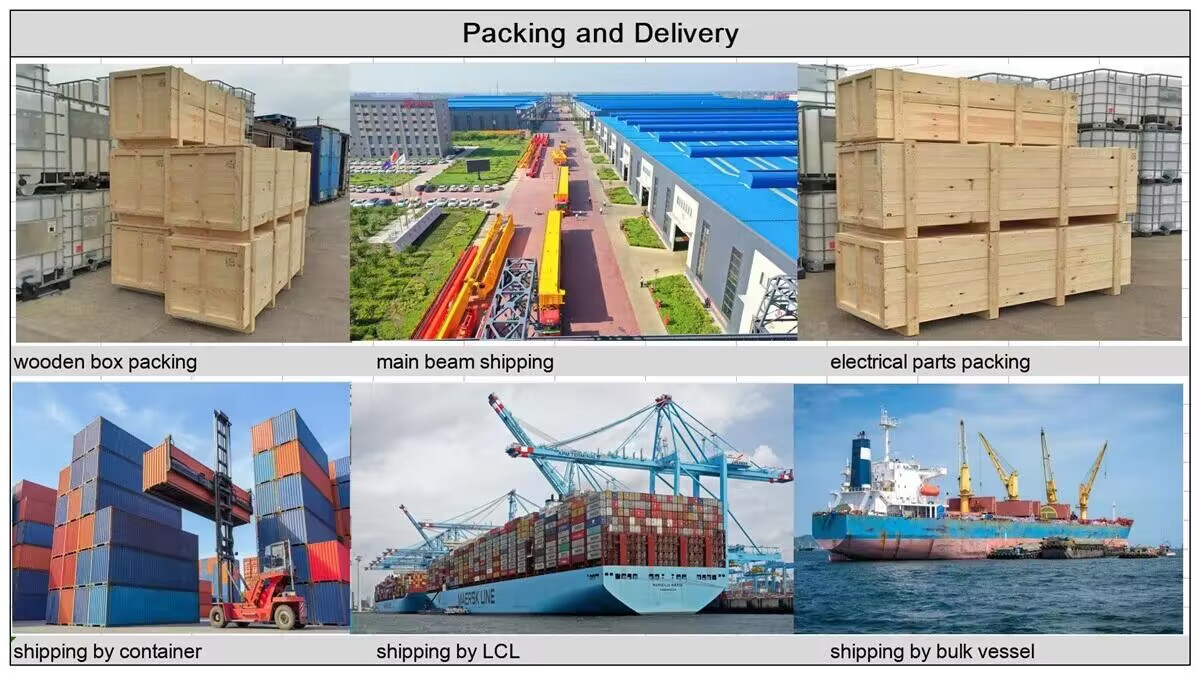
8. Delivery and installation: Pack and prepare the completed crane for transportation to ensure that it is not damaged during transportation. Deliver the crane to the customer's site for installation, and perform on-site debugging and acceptance. Provide operation training to customers to ensure that they are proficient in the use and maintenance of the crane.

Workshop view:
The company has installed an intelligent equipment management platform, and has installed 310 sets (sets) of handling and welding robots. After the completion of the plan, there will be more than 500 sets (sets), and the equipment networking rate will reach 95%. 32 welding lines have been put into use, 50 are planned to be installed, and the automation rate of the entire product line has reached 85%.


Hot Tags: 5 ton single girder eot crane, China 5 ton single girder eot crane manufacturers, suppliers, factory, Single Girder Overhead Crane Company, Eot Crane, Double Girder Overhead Cranes
Previous
Eot Crane HoistNext
5 Ton Eot CraneYou Might Also Like


Send Inquiry