







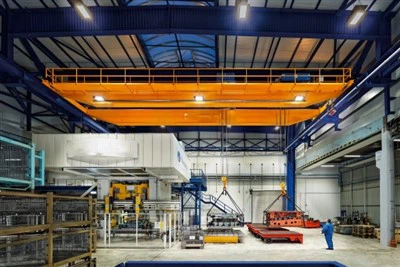
QC Electric Double Girder Overhead Crane

QC Electric Double Girder Overhead Crane

QC Electric Double Girder Overhead Crane

QC Electric Double Girder Overhead Crane

QC Electric Double Girder Overhead Crane

QC Electric Double Girder Overhead Crane

QC Electric Double Girder Overhead Crane

QC Electric Double Girder Overhead Crane

QC Electric Double Girder Overhead Crane
QC Electric Double Girder Overhead Crane
Products Description
Key Features of QC Electric Double Girder Overhead Crane
1. Robust Construction
Double girder design for higher load capacity (typically 5 to 550 tons).
Heavy-duty steel fabrication (Grade Q235B/Q345B) for long-term durability.
Welded & stress-relieved girders to prevent deformation.
2. High-Performance Electric Winch/Hoist
European-style or American-style hoist (depending on application).
Variable speed control (dual-speed or inverter-controlled for smooth operation).
Fail-safe braking system (electromagnetic + mechanical brakes).
3. Precision Movement & Control
Travel drives with sealed gearboxes for smooth bridge and trolley movement.
Anti-sway technology (optional) for precise load positioning.
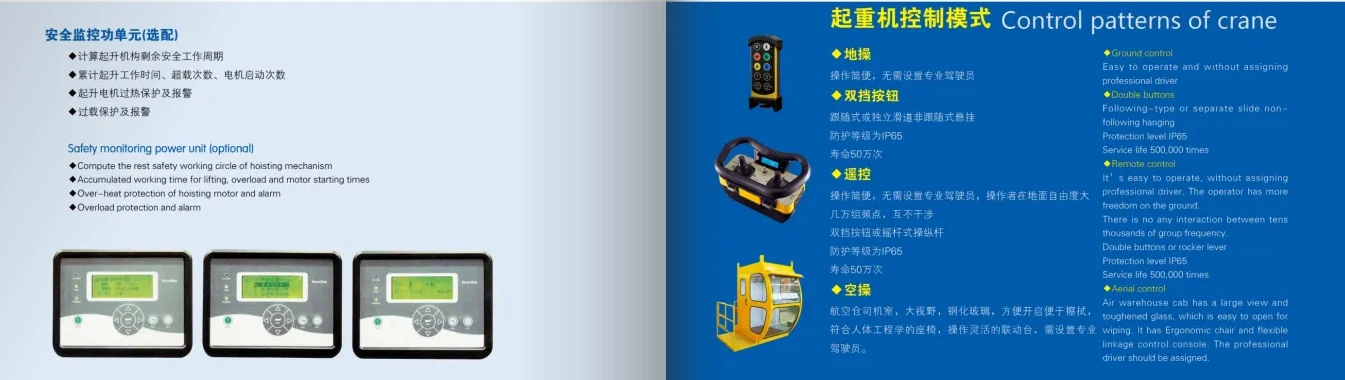
Radio remote control / pendant control for safe and flexible operation.
4. Enhanced Safety Features
Overload limit switch (prevents lifting beyond capacity).
Upper/lower limit switches (automatic cut-off at maximum height).
Emergency stop (E-stop) button for instant shutdown.
Crane runway end buffers to absorb impact.
Advantages Over Single Girder Cranes
| Feature | Double Girder Crane | Single Girder Crane |
|---|---|---|
| Load Capacity | Up to 550+ tons | Up to 20 tons |
| Span Length | Longer spans (up to 35m+) | Shorter spans |
| Lifting Height | Higher (no space lost to hoist above girder) | Lower (hoist hangs below girder) |
| Durability | More robust for heavy-duty cycles | Lighter-duty use |
| Precision | Better for high-precision tasks | Suitable for basic lifting |
Core Components:Bearing, Gearbox, Motor, Pump
Place of Origin:Henan, China
Warranty:1 Year
Weight (KG):2000 kg
Video outgoing-inspection:Provided
Machinery Test Report:Provided
Design:Double beam
Effectiveness:high efficiency
Operating speed:High speed operation
Stability:Anti-swing function
Color:Optional
Power Source:110V/220V/230V/380V/440V,customized
Span:7.5-31.5m

Pictures & Components
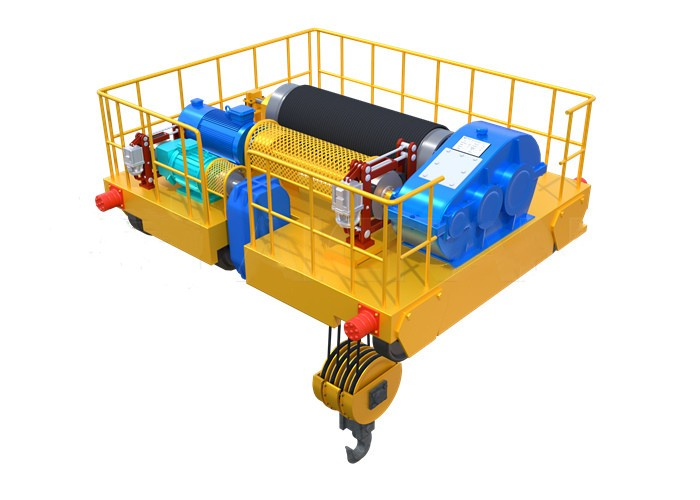
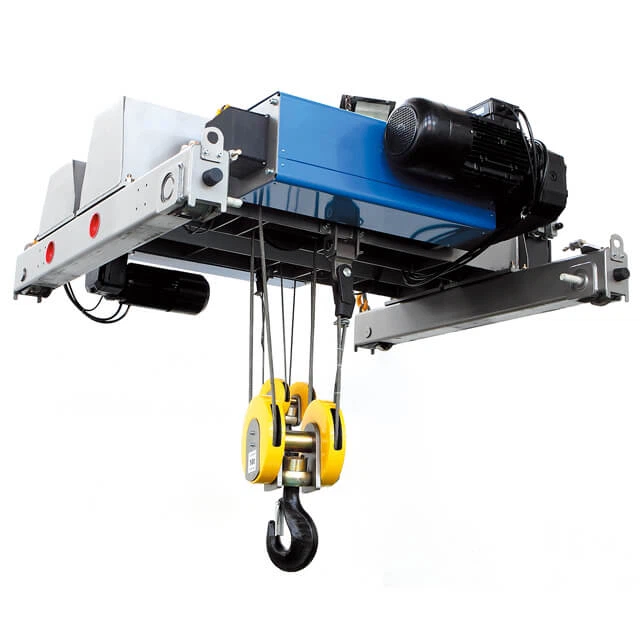
This professional-grade overhead crane consists of carefully engineered components that work together to provide safe, reliable heavy lifting performance. Here's a comprehensive breakdown:
1. Bridge Structure
Main girders (2) - Fabricated from high-grade steel (Q345B) with optimized I-beam or box-type design
End trucks - Heavy-duty assemblies with:
Driven wheels (for powered movement)
Idler wheels (for smooth travel)
Anti-derailment devices
Connection beams - Ensure parallel movement of both girders
 |
 |
2. Hoisting System
Electric wire rope hoist (standard):
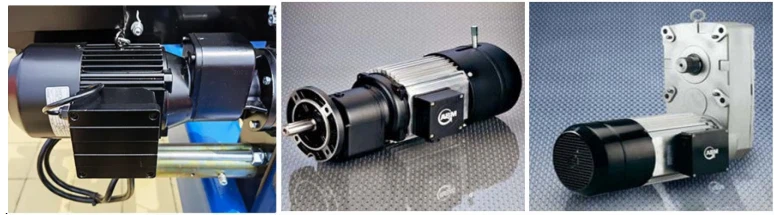
Gear-motor unit with thermal protection
Drum with precision grooving
Wire rope (rotation-resistant, ISO 2408 compliant)
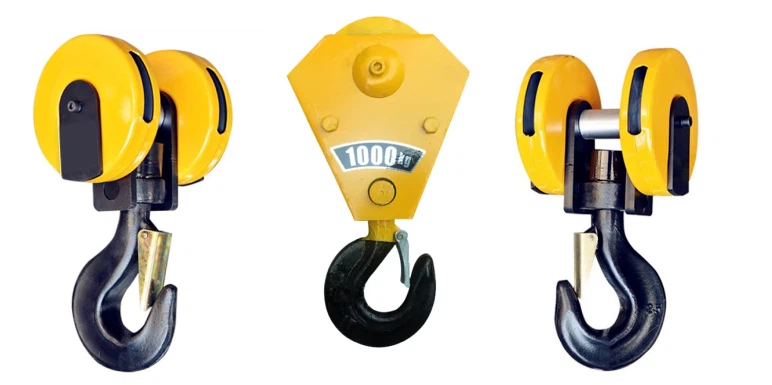
Hook block with safety latch
Overload limiter (mechanical or electronic)
Alternative options:
Chain hoist for lighter duty
Explosion-proof hoist for hazardous areas
 |
 |
3. Trolley Assembly
Frame construction - Steel welded structure
Drive mechanism:
Trolley travel motors (dual-motor for synchronization)
Gearboxes with forced lubrication
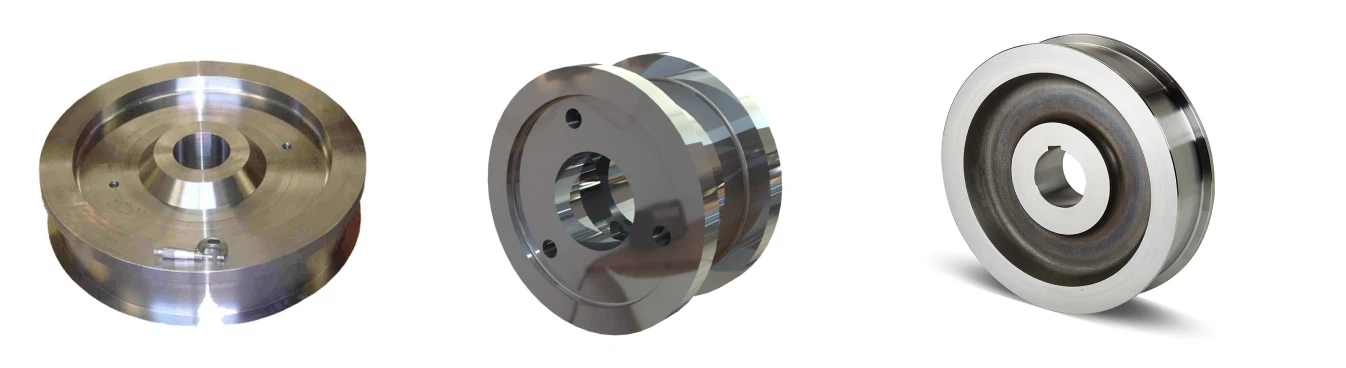
Rail wheels with hardened treads
Guiding system - Lateral rollers for smooth tracking
4. Runway System
Runway beams - Fabricated or rolled sections
Crane rails (typically QU80/QU100):
Properly aligned and leveled
Rail clamps for secure fastening
Rail joints ground smooth
Runway conductors:
Festoon system for power supply
Or conductor bars for heavy current
5. Electrical System
Power supply:
Main line contactor
Emergency stop circuit
Phase sequence protection
Control system:
Pendant control station (IP65 rated)
Or wireless remote control (2.4GHz)
Variable frequency drives (for premium models)
Safety devices:
Limit switches (travel and hoisting)
Anti-collision system (for multiple cranes)
Voltage protection

6. Safety Components
Buffers and bumpers - Hydraulic or spring type
Anemometer (for outdoor cranes)
Warning devices:
Beacon lights
Alarm buzzer
Emergency escape ladder (for cab-operated cranes)
.
7. Optional Components
Weighing system - Load cells with digital display
Automation package:
Programmable logic controller
Position sensors
Automated positioning system
Special coatings:
High-temperature paint
Corrosion-resistant finish
Cabin - Ergonomically designed operator station

8. Structural Reinforcements
Diagonal bracing - For increased rigidity
Stiffener plates - At high-stress points
Seismic restraints - For earthquake-prone areas
Each component undergoes rigorous QC testing including:
Dimensional verification
Non-destructive testing (UT, MPI)
Load testing (125% of SWL)
Electrical safety tests
Functional operation tests
The complete system is designed for:
Minimum 10-year structural life
Class A5-A8 duty cycle (FEM standard)
24/7 operation capability in industrial environments
12.Sketch

Main technical

Advantages
Superior Load Capacity
Handles 5-550+ tons (vs. single girder's 1-20 ton limit)
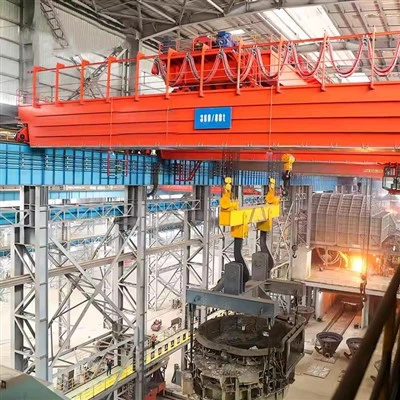
Ideal for heavy industrial applications like steel mills and power plants
Enhanced Structural Rigidity
Twin girders provide greater stability for precision handling
Minimizes deflection under heavy loads (≤1/800 of span length)
Higher Lifting Height
Hoist mounted between girders (vs. below single girder)
Gains additional 1-2m hook height - crucial for tall workshops
Advanced Safety Features
Dual braking systems (electromagnetic + mechanical)
Fail-safe overload protection (mechanical + electronic)
IP54/55 rated components for dust/water resistance
Precision Movement Control
Variable frequency drives enable 0.2m/min creep speed
Anti-sway systems achieve ±10mm positioning accuracy
Extended Service Life
FEM A6-A8 duty classification (up to 600,000 cycles)
Hardened rail wheels (HRC50+) for reduced wear
Smart Operation Options
Remote monitoring via IoT sensors
Automated positioning with laser guidance
Customization Flexibility
Modular design allows for:
Explosion-proof variants (ATEX certification)
High-temperature versions (up to 60°C ambient)
Corrosion-resistant coatings (C5-M marine grade)
Application:
1. Heavy Manufacturing
Steel mills: Handling coils (up to 40t), slabs, and molten metal
Automotive: Moving press dies (50-300t) with precision
2. Energy Sector
Power plants: Installing turbine rotors (200-400t)
Nuclear facilities: Remote-controlled fuel rod handling
3. Infrastructure Projects
Precast concrete: Positioning bridge segments (80-150t)
Shipbuilding: Turning ship blocks (100-500t)
4. Mining & Minerals
Processing plants: Lifting crushers (75-200t)
Smelters: Charging furnaces with 50t ladles
5. Specialized Applications
Aerospace: Clean room component handling
Ports: Grab bucket operations for bulk materials
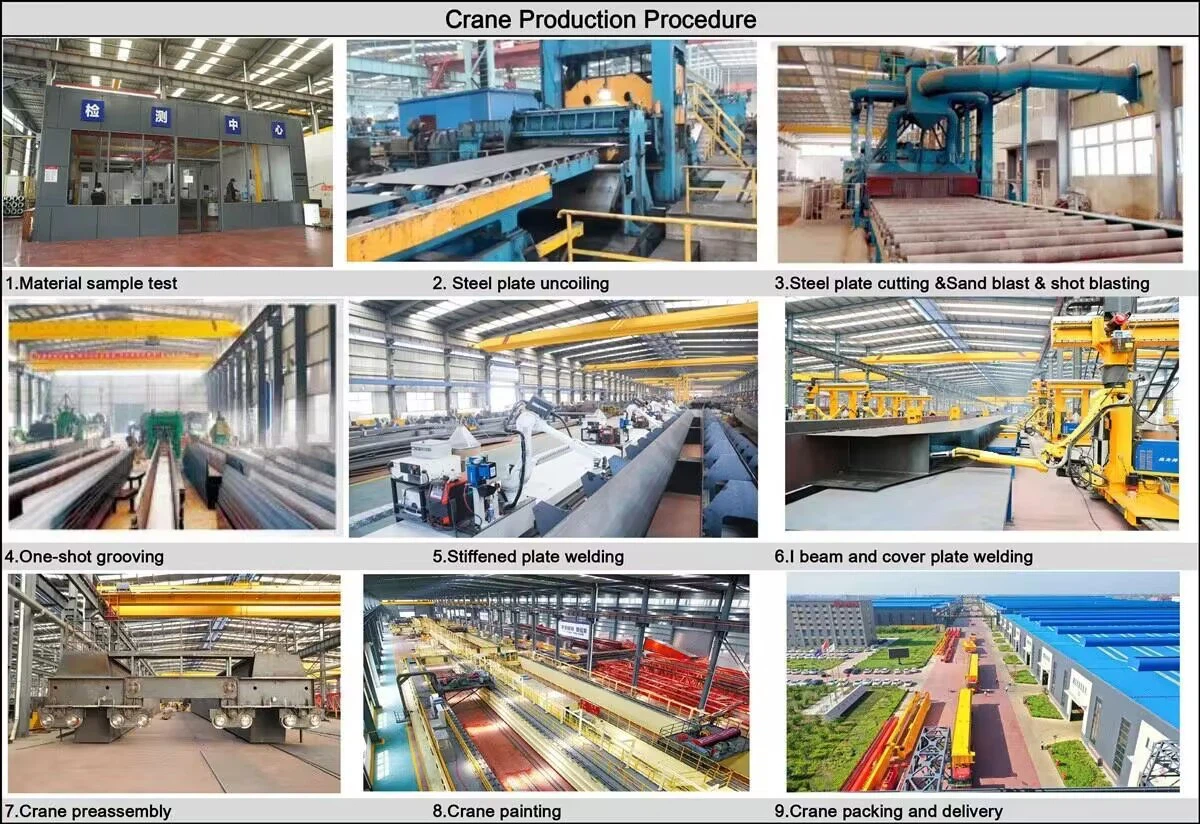
Crane production procedure
1. Design and Engineering
Initial Consultation: The process begins with understanding the specific requirements of the customer, including lifting capacity, span, lifting height, and operational environment. This helps in customizing the crane to meet the exact needs.
Detailed Engineering Design: The engineering team designs the crane based on the customer's specifications. This includes the structural design of the main beam, trolley, hoist, end carriages, and control systems. Calculations for load-bearing capacities, safety factors, and the integration of components are also done during this phase.
CAD Modeling: A Computer-Aided Design (CAD) model of the crane is created to visualize and test the design. The model is reviewed for any potential issues in terms of load distribution, operation, and stability.
2. Material Selection
Raw Material Procurement: High-quality materials such as steel plates, beams, and components for the main girder, hoist, trolley system, and other parts are sourced. The materials must meet industry standards for strength, durability, and resistance to wear.
Material Inspection: All materials are inspected to ensure they meet the required quality standards. This includes checking for any defects, such as cracks, rust, or deformation.
3. Fabrication and Manufacturing
Girder Fabrication:
Cutting and Shaping: Steel plates and sections are cut to the required dimensions based on the design specifications. The steel is then shaped into beams and girders using various methods such as welding and bending.
Welding: The individual pieces of the main girder and cross beams are welded together. The welding is performed according to strict quality standards to ensure the structural integrity of the crane.
Stress Relieving: After welding, the steel is heat-treated (stress-relieved) to eliminate any residual stresses from the welding process.
End Carriages and Trolley Fabrication:
The end carriages are fabricated, including wheel assemblies, frames, and supporting structures.
The trolley is assembled, including the hoist mechanism and the travel mechanism, such as wheels or rollers, which allow the trolley to move along the bridge.
Wheel Assembly: The crane wheels are manufactured and installed on the end carriages, ensuring that they are aligned and balanced for smooth movement along the bridge.
4. Hoisting Mechanism Production
Motor and Gearbox Assembly: The hoisting motor, gearbox, and other drive components are assembled. These are selected based on the required lifting capacity and speed.
Hoist Drum and Wire Rope: The hoist drum is manufactured and fitted with the wire rope that will be used to lift and lower the load. The wire rope is carefully selected for strength and durability.
Hoist Installation: The hoisting system, including the motor, gearbox, drum, and wire rope, is integrated into the trolley.
5. Crane Assembly
Main Girder Assembly: The fabricated main girder is placed on a flat surface, and the end carriages are attached to each end of the girder. The crane is then set up to be able to travel across the rails.
Trolley and Hoist Integration: The trolley is mounted on the main girder. It is designed to move horizontally along the girder, carrying the hoist and hook. The trolley's wheels are adjusted to ensure smooth operation.
Electrical Wiring and Control System: Electrical components such as motors, control panels, limit switches, and alarm systems are installed. The control system is connected, allowing the crane to be operated remotely or manually. This may include pendant controls, radio remote controls, or cabin controls, depending on the design.
Safety Devices Integration: Safety systems like limit switches, overload sensors, braking systems, and sound and light alarms are installed to ensure safe operation.
6. Testing and Quality Control
Initial Inspection: After assembly, the crane undergoes a series of inspections to ensure that all components are installed correctly and that the crane meets the design specifications.
Load Testing: The crane is subjected to load testing to ensure it can handle the specified lifting capacity without any issues. The load testing is done under controlled conditions, and the crane is observed for proper operation.
Operational Testing: The crane is tested for smooth operation, including movement along the bridge, the function of the trolley, and the hoist. The speed, braking system, and overall functionality are tested to ensure everything is in working order.
Safety Compliance Testing: Safety features, including limit switches, overload protection, and emergency stop mechanisms, are thoroughly tested to meet safety regulations.
Electrical Testing: All electrical components, including wiring, switches, and controls, are tested for proper functioning and compliance with electrical safety standards.
7. Final Adjustments and Calibration
Final Inspection: Once all tests are complete and successful, the crane undergoes a final inspection to ensure all components are properly calibrated and aligned.
Adjustments: If any issues are detected during the testing phase, adjustments are made to the crane, such as recalibrating the control systems or adjusting the alignment of the wheels and track.
8. Packaging and Shipping
Disassembly for Shipping: In many cases, the crane is partially disassembled for shipping to the customer's site. Components such as the hoist, trolley, and control panels are securely packaged.
Shipping: The crane is carefully transported to the client's location via road, rail, or sea, depending on the destination.
Delivery Documentation: Necessary documentation, including user manuals, maintenance guides, and certificates of compliance, are provided to the customer.
9. Installation and Commissioning
On-Site Assembly: Upon arrival at the customer's site, the crane is fully assembled, and final connections are made, including electrical wiring, safety systems, and control systems.
Site Testing: The crane is tested again at the installation site to ensure it operates correctly in its intended environment.
Operator Training: Operators and maintenance staff are trained on how to operate and maintain the crane. This includes safety procedures, control usage, and troubleshooting techniques.
Final Handover: After successful installation and testing, the crane is officially handed over to the customer for operation.
10. Post-Installation Support
Ongoing Maintenance and Support: The crane manufacturer provides post-installation support, which includes regular maintenance, spare parts, and technical assistance when needed.
Warranty and Service: A warranty period is usually provided, during which any defects or issues are resolved free of charge.
Workshop view:
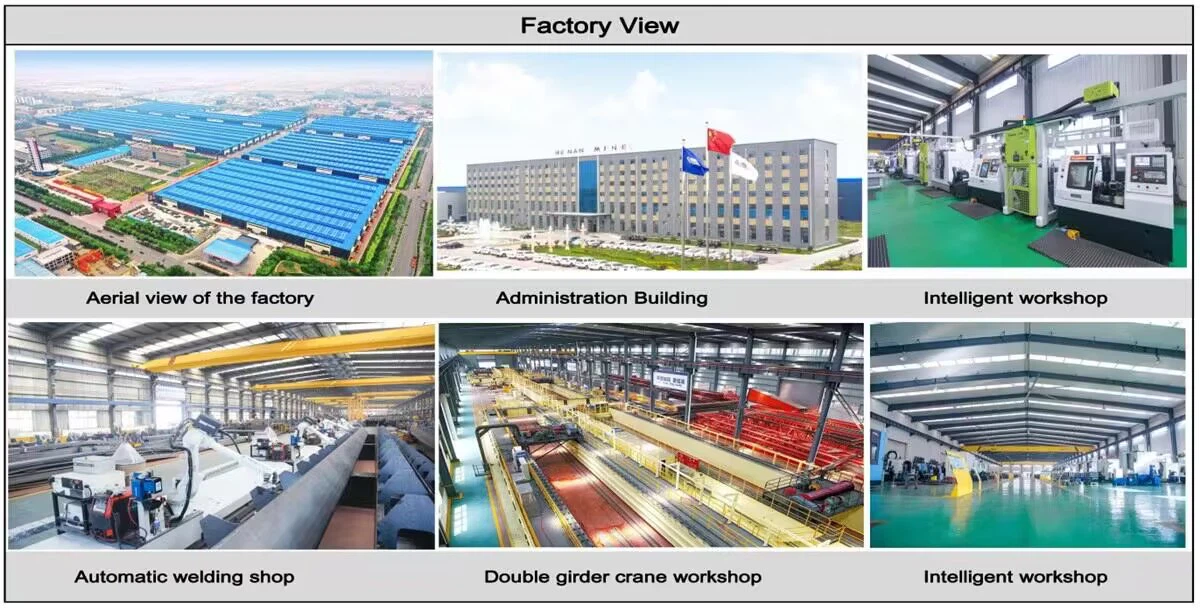
The company has installed an intelligent equipment management platform, and has installed 310 sets (sets) of handling and welding robots. After the completion of the plan, there will be more than 500 sets (sets), and the equipment networking rate will reach 95%. 32 welding lines have been put into use, 50 are planned to be installed, and the automation rate of the entire product line has reached 85%.


Hot Tags: qc electric double girder overhead crane, China qc electric double girder overhead crane manufacturers, suppliers, factory, Double Girder Overhead Crane, Double Girder Overhead Travelling Crane
You Might Also Like



Send Inquiry