










Double Girder Bridge Crane With Trolley
Products Description
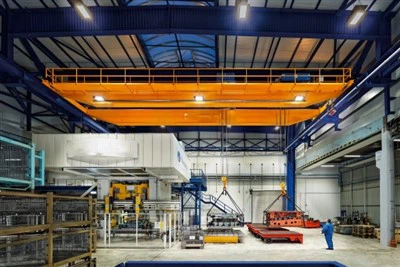
A Double Girder Bridge Crane with Trolley is a type of overhead crane that consists of two parallel girders (main beams) that provide strong support for the crane's lifting and moving mechanisms. It's one of the most common and versatile types of cranes used in industries that require efficient lifting and transportation of heavy loads.
Core Components:Bearing, Gearbox, Motor, Pump
Place of Origin:Henan, China
Warranty:1 Year
Weight (KG):2000 kg
Video outgoing-inspection:Provided
Machinery Test Report:Provided
Design:Double beam
Effectiveness:high efficiency
Operating speed:High speed operation
Stability:Anti-swing function
Color:Optional
Power Source:110V/220V/230V/380V/440V,customized
Span:7.5-31.5m
Pictures & Components
1.Main beam
Structural Function:
The main beam is the primary horizontal support element that spans across the width of the workspace.
It supports the weight of the crane's trolley system and the hoisting mechanism.
It transfers the load from the trolley and hoist to the crane's end trucks (carriages), which move along the rails.
The main beam is designed to withstand both vertical (lifting) and horizontal forces (traveling and movement), as well as dynamic forces created during the crane's operation.
2.Lifting System
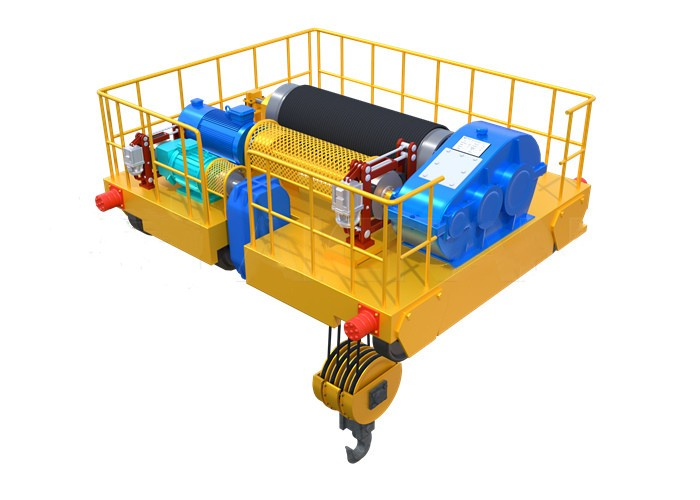
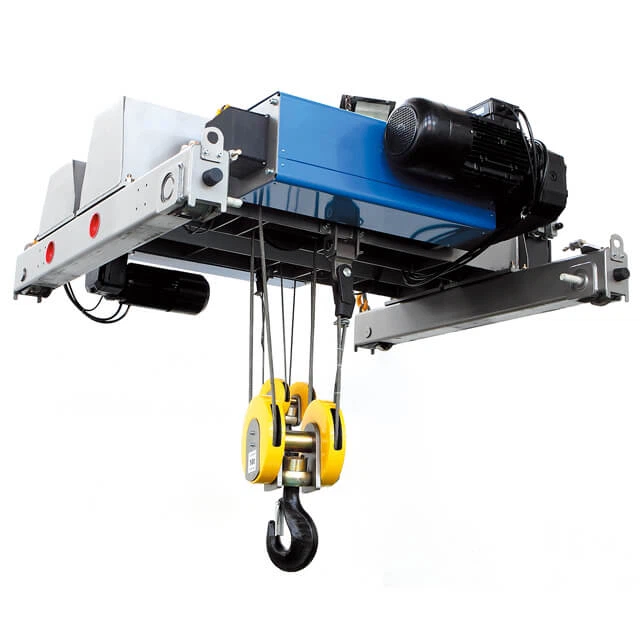
1)Hoist:
The hoist is the central component of the lifting mechanism and is responsible for raising and lowering the load.
Electric hoists are the most common type used in double girder bridge cranes. These hoists consist of a motor, drum, rope or chain, and hook.
There are generally two types of hoists used:
Wire Rope Hoists: Suitable for heavy-duty operations and can handle large loads.
Chain Hoists: Often used for lighter to medium-duty lifting.
2)Hoist Motor:
The hoist motor powers the hoisting process. It drives the drum or chain sprocket that raises and lowers the load.
The motor is typically an electric motor, and the hoist mechanism may be powered by an AC or DC motor, depending on the application.
The motor is equipped with overload protection to ensure the hoist does not lift beyond its capacity, thus preventing damage or accidents.
3)Drum or Chain Sprocket:
The drum (in wire rope hoists) or chain sprocket (in chain hoists) is a central element in the hoisting system. The drum or sprocket winds and unwinds the wire rope or chain to raise or lower the load.
The drum is powered by the motor and typically features a brake system to prevent the load from falling when the motor is turned off.
Wire Rope or Chain:
The wire rope or chain connects the hoist to the hook or load. It is designed to handle heavy loads and is made of high-strength material to ensure durability and safety.
For wire rope hoists, the wire rope runs over a series of pulleys or sheaves, while chain hoists use strong chains that run through sprockets.
 |
 |
3.End carriage
The end carriage typically includes the following components:
Wheels: The end carriage is equipped with heavy-duty wheels that run along the runway rails. The wheels are typically made from high-strength steel and are designed to bear the load of the entire crane structure. The wheels are mounted on axles and are critical for the smooth movement of the crane.
Drive System: The end carriage has a drive mechanism that powers the horizontal movement of the crane. This drive can be powered by:
Electric motors: Often used in modern cranes for precise and smooth operation.
Gearboxes: Gearboxes are used to transmit the motor's power to the wheels, allowing for movement along the rails.
Variable frequency drives (VFD): These allow for variable speed control and more efficient energy use, offering smoother acceleration and deceleration of the crane.
Axle Assembly: The axle assembly holds the wheels and the drive mechanism together. The axles are mounted to the frame of the crane, and they allow the crane to travel along the runway rails smoothly and efficiently.
Brakes: The end carriage is typically equipped with a braking system to control the movement of the crane and to stop the crane safely when required. This is especially important for ensuring precise positioning and safety during crane operations.
Frames: The frame of the end carriage is the structural support that holds all the components together. It is designed to withstand the stresses and forces of the crane's movements and the weight it carries. The frame is typically made from steel and may be welded or bolted together for added strength.
 |
 |
4.Crane travelling mechanism
1)Powering the Movement:
When the operator activates the crane, the traveling motor is powered up and starts rotating. This motor drives the gearbox, which in turn powers the wheels mounted on the end carriages.
2)Movement Along the Rails:
The wheels mounted on the end carriages run along the rails installed on the building or crane structure. The motorized end carriage moves the crane along the horizontal axis (typically the X-axis).
If the crane uses a double-drive system, both end carriages are powered, ensuring even load distribution and smoother, more controlled movement.
5.Trolley travelling mechanism
The trolley traveling mechanism of a Double Girder Bridge Crane with Trolley is a critical part of the crane's design that allows the trolley (which holds the lifting mechanism) to move horizontally along the crane's main beams. The trolley typically carries the hoist and lifting mechanism, allowing it to position loads precisely within the workspace. This mechanism enables the crane to work efficiently within its designated area by moving the load over the desired location.
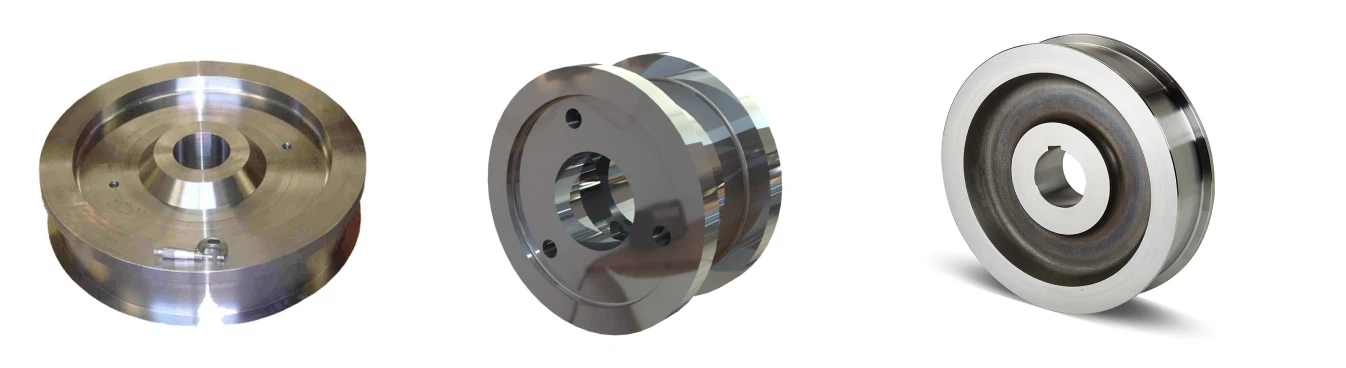
6.Crane wheel
1)Wheel Material:
High-strength steel: Crane wheels are typically made from high-quality steel to withstand the heavy loads and the continuous stresses of movement.
Steel composition: The wheels are often forged from alloy steel with high tensile strength and are sometimes treated with additional coatings to prevent wear and corrosion.
2)Wheel Shape and Design:
The wheels used on cranes are usually flanged wheels. The flange on the wheel helps guide it along the rails, preventing the wheel from jumping off the track or deviating from its intended path.
The wheel tread is the part of the wheel that makes contact with the rails. It needs to be carefully designed to reduce wear and tear on both the wheel and the rail. Over time, the tread can become worn, and regular maintenance is required.
7.Crane Hook
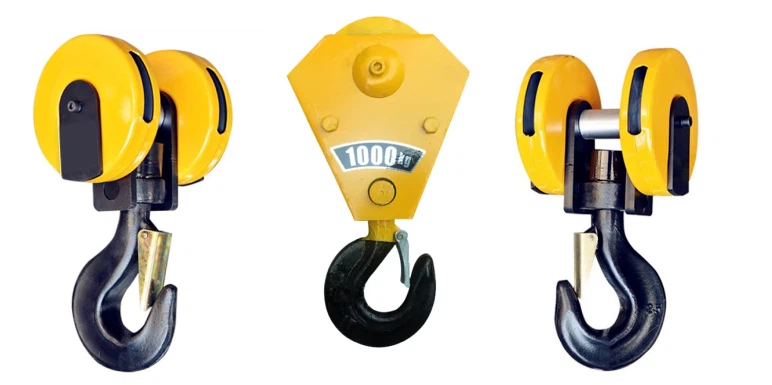
The hook of a Double Girder Bridge Crane with Trolley is a fundamental component of the crane's lifting mechanism. It serves as the point of attachment for the load, allowing the crane to lift, move, and position materials within its operational range. The hook is typically mounted on the trolley, which moves along the crane's main girder beams, and is part of the hoisting mechanism.
8.Motor
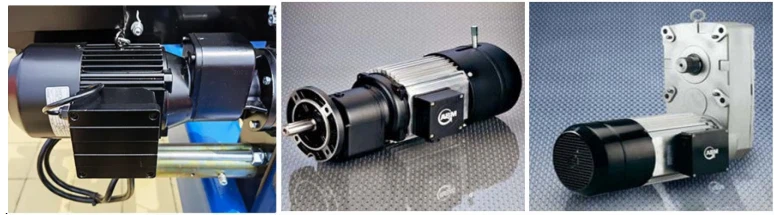
The motor of a Double Girder Bridge Crane with Trolley is one of the most critical components for driving the crane's lifting mechanism, traveling mechanism, and trolley. It provides the power necessary to move the crane and its components, such as the hoist, trolley, and bridge along the rails. The motor's performance, reliability, and control directly influence the crane's efficiency, safety, and precision.

.
9.Sound and light alarm system & limit switch
The sound and light alarm system and limit switches in a Double Girder Bridge Crane with Trolley play crucial roles in ensuring the safety of both the crane and its operators. These safety devices are designed to alert operators to potentially dangerous conditions, prevent overloading, and ensure proper operation within the designated working limits of the crane.
1)Sound and Light Alarm System:
The sound and light alarm system is an important safety feature that enhances the visibility and audibility of the crane's operational status. It is used to alert personnel to any potentially hazardous conditions, such as crane movement, overload, or emergency situations.
2)Limit Switches:
Limit switches are safety devices that restrict the movement of the crane and its components (such as the hoist, trolley, or bridge) to ensure that they operate within their designed boundaries. These switches are designed to prevent mechanical damage and to safeguard operators and workers.

10.Safety Devices
1)Overload Protection System
Purpose: To prevent the crane from lifting loads that exceed its rated capacity, which could cause mechanical damage or lead to dangerous situations.
Components:
Overload Limit Switch: This device detects when the load exceeds the crane's rated capacity and sends a signal to stop the hoisting mechanism immediately. It may also trigger the sound and light alarm system to alert the operator and nearby personnel.
Load Cell: A sensor often used to measure the weight of the load being lifted. It communicates with the crane's control system, providing real-time load data.
Functionality: If an overload condition is detected, the system will automatically stop the hoisting mechanism and prevent further lifting, ensuring safety and preventing damage to the crane.
2)Limit Switches
Purpose: To control the movement of the crane, ensuring that it does not exceed its designated travel or lifting limits.
Types of Limit Switches:
End Limit Switches: Installed at the ends of the travel path (for both the trolley and bridge), these switches prevent the crane from over-traveling and causing damage.
Hoisting Limit Switches: These switches prevent the hoist from lifting the load beyond the safe maximum height or from lowering it too far.
Travel Limit Switches: These are used to stop the crane when it reaches its maximum horizontal movement limit along the runway or bridge.
Functionality: Limit switches stop the crane's movement when it reaches its safe operational boundaries, preventing over-travel and potential damage to the crane, load, or surrounding structures.
3)Emergency Stop (E-Stop) Button
Purpose: To allow the operator or anyone nearby to immediately halt all crane movements in the event of an emergency.
Components:
Push-Button Switch: Typically red and easily accessible from the operator's cabin and along the crane structure, the emergency stop button can be pressed to stop the crane's motion immediately.
Safety Relay: The E-stop system is connected to a safety relay that shuts down power to the crane's motors when the emergency stop is triggered.
Functionality: In an emergency situation (e.g., a mechanical failure, personnel in danger, or an obstruction in the crane's path), the operator or bystander can activate the emergency stop to cut power to the motors and halt all crane movements.
4)Braking Systems
Purpose: To ensure that the crane can stop safely and hold its position when required, such as when lifting or lowering loads.
Components:
Electromagnetic Brakes: These brakes are typically used to stop and hold the hoist in place. They engage automatically when the motor is turned off, preventing the load from dropping.
Dynamic Braking: In some cases, dynamic braking is used in conjunction with the electromagnetic brakes to provide smoother deceleration and avoid abrupt stops.
Functionality: The braking system ensures that the crane and its load can be safely stopped and held in position, preventing accidents during operations or in case of power failure.
5)Sound and Light Alarm System
Purpose: To provide audible and visual warnings to the operator and other personnel about the crane's operational status and any dangerous conditions.
Components:
Warning Lights: Flashing lights or steady on/off lights mounted on the crane structure signal to personnel that the crane is in motion or that an alarm has been triggered.
Audible Alarms (Horn or Siren): These alarms are used to alert the operator and surrounding workers to the crane's operation or emergency condition, especially in noisy environments.
Functionality: The alarm system helps ensure that operators and workers are aware of the crane's status, including when it is moving, lifting, or in an emergency situation. It improves site safety by increasing awareness.
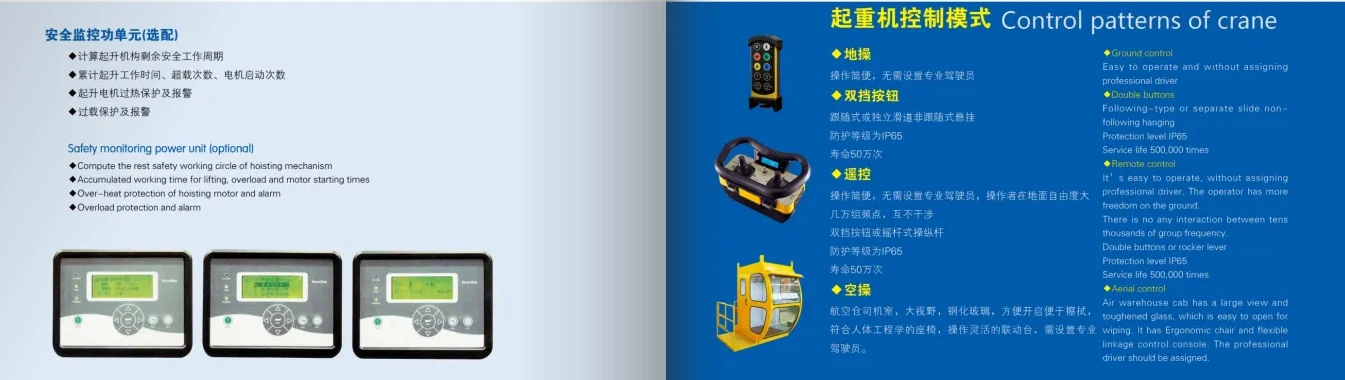
11.Control Mode
The control mode for a Double Girder Bridge Crane with Trolley significantly impacts the crane's operation, flexibility, and efficiency. The choice of control mode depends on the specific requirements of the task, such as precision, the environment, and the need for operator mobility. For simple operations, pendant control or radio remote control might be sufficient. However, for more complex or heavy-duty applications, cabins or automated systems may be more suitable to ensure safety, comfort, and precision.
12.Sketch

Main technical

Advantages
1. High Load Capacity
Increased Load Handling: The double girder design allows for the support of heavier loads compared to single girder cranes. The two parallel beams provide greater structural strength, allowing for the safe lifting and moving of large and heavy materials.
Improved Durability: With stronger load-bearing capabilities, a double girder crane typically lasts longer and can handle heavy-duty operations without structural failure.
2. Improved Stability and Safety
Enhanced Stability: The double girder configuration offers superior stability when lifting and moving loads. This reduces the risk of tipping or swaying, ensuring safe operations even with heavy or unbalanced loads.
Safer Operation: The crane is equipped with advanced safety features, such as limit switches, overload protection, and automatic braking systems, which reduce the likelihood of accidents or damage during operation.
Better Control: The use of a trolley system, which moves along the bridge, provides more precise control over load positioning, making it easier to avoid obstacles or perform complex movements.
3. Flexibility in Application
Versatile Use: Double girder bridge cranes with trolleys are suitable for a wide range of applications, including warehouses, factories, ports, construction sites, power plants, and more. They can handle both heavy and light loads, making them ideal for various industries.
Adaptability to Different Worksites: The crane can be easily integrated into existing facilities and can be customized to accommodate different lifting capacities, heights, and spans, depending on the operational needs.
4. Efficient Space Utilization
Compact Design: The double girder design allows for more efficient use of available space. The crane's trolley moves along the bridge, ensuring that there is no interference with other equipment or workflow.
High Hook Lifting Height: Due to the design, the crane typically allows for greater lifting heights, which is advantageous in industries that require high-level lifting, such as in construction and heavy manufacturing.
5. Precise Movement and Load Control
Smooth Lifting and Lowering: The hoisting mechanism and trolley system work together to ensure smooth and precise lifting and lowering of the load. This reduces the risk of swinging or damage to the materials being lifted.
Trolley Movement: The ability of the trolley to move along the girder allows for accurate positioning of the load, especially in confined spaces or areas with multiple overhead cranes.
6. Enhanced Productivity
Faster Operations: The crane's efficiency in moving loads horizontally and vertically can significantly reduce cycle times, improving productivity in environments where fast material handling is crucial.
Multiple Control Options: With options such as pendant control, radio remote control, and operator cabins, the crane can be operated quickly and efficiently, depending on the operator's preference and task requirements.
Application:
1. Heavy Manufacturing and Production Plants
Applications: Used in factories where large and heavy materials need to be transported, lifted, or positioned. This includes the handling of raw materials, machinery, and finished products.
Example Tasks:
Lifting heavy machinery during installation or maintenance.
Transporting large metal parts and components across production lines.
Handling casting molds, forging tools, and other heavy manufacturing equipment.
2. Steel Mills and Foundries
Applications: Steel mills, foundries, and other metalworking industries require cranes capable of lifting extremely heavy loads at high temperatures. The double girder design provides the strength and stability needed for these tough environments.
Example Tasks:
Moving molten metal containers or steel billets.
Lifting steel coils, plates, and beams from one workstation to another.
Handling foundry molds, scrap metal, and other heavy components.
3. Construction and Infrastructure Development
Applications: Used in construction sites for lifting heavy building materials such as steel beams, concrete slabs, and large prefabricated sections.
Example Tasks:
Lifting and placing precast concrete beams, columns, and walls.
Transporting construction equipment, such as cranes, bulldozers, and generators.
Lifting and positioning heavy construction tools or large scaffolding components.
4. Shipyards and Ports
Applications: In shipbuilding and port operations, double girder cranes are essential for handling massive loads, such as ship parts, containers, and equipment.
Example Tasks:
Moving large ship components, such as hull sections and engine parts.
Loading and unloading cargo containers and heavy cargo from ships.
Handling large equipment like cranes, winches, and dockside infrastructure.
5. Power Plants
Applications: Used in power plants, especially in areas dealing with large turbines, generators, and heavy machinery. The crane's precise control is crucial in such sensitive environments.
Example Tasks:
Lifting and moving turbines, generators, and other large power equipment.
Handling transformers, reactors, and other critical machinery during maintenance or installation.
Moving heavy parts or materials for plant upgrades or repairs.
6. Warehouses and Distribution Centers
Applications: In large warehouses and distribution centers, double girder cranes with trolleys are used for lifting and transporting bulky goods, especially in environments that require high stacking heights or handling large, heavy items.
Example Tasks:
Lifting and positioning pallets, storage racks, and bulk materials.
Moving large inventory items, such as industrial parts or machines, across wide warehouses.
Handling heavy containers during the sorting or packing process.
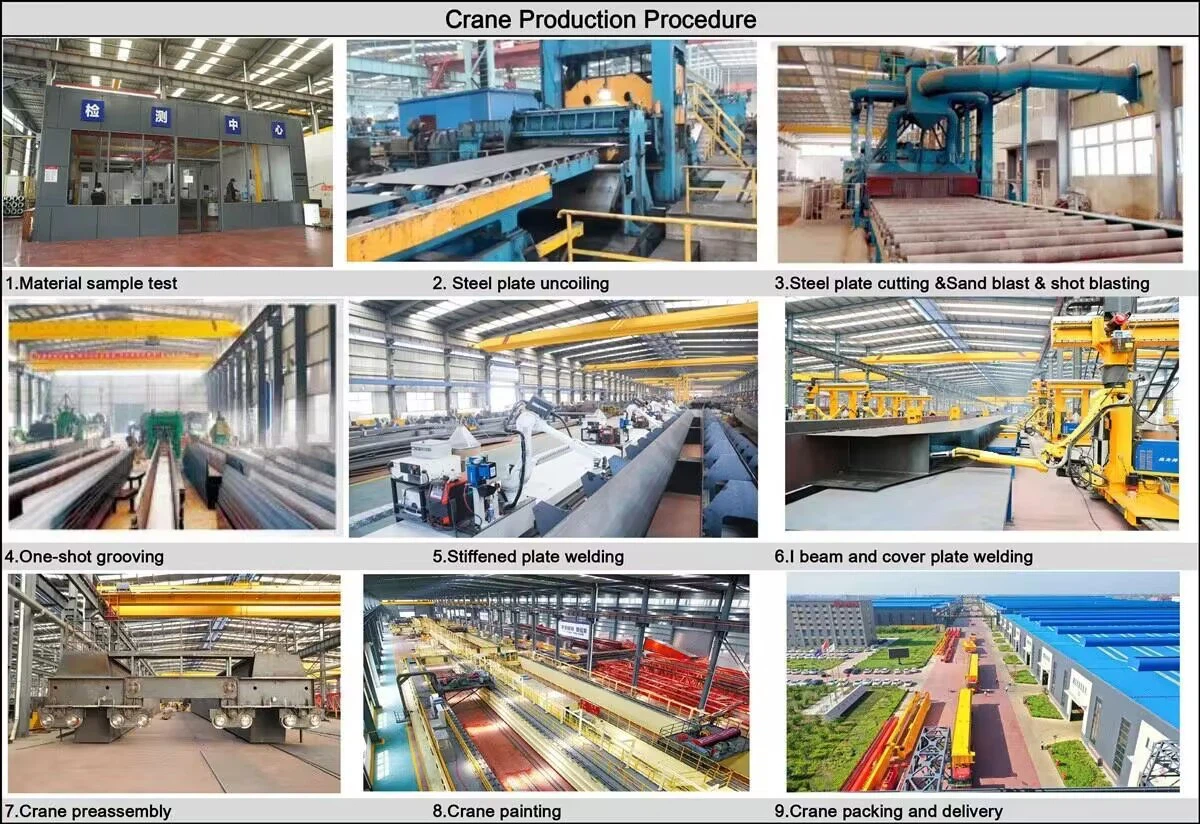
Crane production procedure
1. Design and Engineering
Initial Consultation: The process begins with understanding the specific requirements of the customer, including lifting capacity, span, lifting height, and operational environment. This helps in customizing the crane to meet the exact needs.
Detailed Engineering Design: The engineering team designs the crane based on the customer's specifications. This includes the structural design of the main beam, trolley, hoist, end carriages, and control systems. Calculations for load-bearing capacities, safety factors, and the integration of components are also done during this phase.
CAD Modeling: A Computer-Aided Design (CAD) model of the crane is created to visualize and test the design. The model is reviewed for any potential issues in terms of load distribution, operation, and stability.
2. Material Selection
Raw Material Procurement: High-quality materials such as steel plates, beams, and components for the main girder, hoist, trolley system, and other parts are sourced. The materials must meet industry standards for strength, durability, and resistance to wear.
Material Inspection: All materials are inspected to ensure they meet the required quality standards. This includes checking for any defects, such as cracks, rust, or deformation.
3. Fabrication and Manufacturing
Girder Fabrication:
Cutting and Shaping: Steel plates and sections are cut to the required dimensions based on the design specifications. The steel is then shaped into beams and girders using various methods such as welding and bending.
Welding: The individual pieces of the main girder and cross beams are welded together. The welding is performed according to strict quality standards to ensure the structural integrity of the crane.
Stress Relieving: After welding, the steel is heat-treated (stress-relieved) to eliminate any residual stresses from the welding process.
End Carriages and Trolley Fabrication:
The end carriages are fabricated, including wheel assemblies, frames, and supporting structures.
The trolley is assembled, including the hoist mechanism and the travel mechanism, such as wheels or rollers, which allow the trolley to move along the bridge.
Wheel Assembly: The crane wheels are manufactured and installed on the end carriages, ensuring that they are aligned and balanced for smooth movement along the bridge.
4. Hoisting Mechanism Production
Motor and Gearbox Assembly: The hoisting motor, gearbox, and other drive components are assembled. These are selected based on the required lifting capacity and speed.
Hoist Drum and Wire Rope: The hoist drum is manufactured and fitted with the wire rope that will be used to lift and lower the load. The wire rope is carefully selected for strength and durability.
Hoist Installation: The hoisting system, including the motor, gearbox, drum, and wire rope, is integrated into the trolley.
5. Crane Assembly
Main Girder Assembly: The fabricated main girder is placed on a flat surface, and the end carriages are attached to each end of the girder. The crane is then set up to be able to travel across the rails.
Trolley and Hoist Integration: The trolley is mounted on the main girder. It is designed to move horizontally along the girder, carrying the hoist and hook. The trolley's wheels are adjusted to ensure smooth operation.
Electrical Wiring and Control System: Electrical components such as motors, control panels, limit switches, and alarm systems are installed. The control system is connected, allowing the crane to be operated remotely or manually. This may include pendant controls, radio remote controls, or cabin controls, depending on the design.
Safety Devices Integration: Safety systems like limit switches, overload sensors, braking systems, and sound and light alarms are installed to ensure safe operation.
6. Testing and Quality Control
Initial Inspection: After assembly, the crane undergoes a series of inspections to ensure that all components are installed correctly and that the crane meets the design specifications.
Load Testing: The crane is subjected to load testing to ensure it can handle the specified lifting capacity without any issues. The load testing is done under controlled conditions, and the crane is observed for proper operation.
Operational Testing: The crane is tested for smooth operation, including movement along the bridge, the function of the trolley, and the hoist. The speed, braking system, and overall functionality are tested to ensure everything is in working order.
Safety Compliance Testing: Safety features, including limit switches, overload protection, and emergency stop mechanisms, are thoroughly tested to meet safety regulations.
Electrical Testing: All electrical components, including wiring, switches, and controls, are tested for proper functioning and compliance with electrical safety standards.
7. Final Adjustments and Calibration
Final Inspection: Once all tests are complete and successful, the crane undergoes a final inspection to ensure all components are properly calibrated and aligned.
Adjustments: If any issues are detected during the testing phase, adjustments are made to the crane, such as recalibrating the control systems or adjusting the alignment of the wheels and track.
8. Packaging and Shipping
Disassembly for Shipping: In many cases, the crane is partially disassembled for shipping to the customer's site. Components such as the hoist, trolley, and control panels are securely packaged.
Shipping: The crane is carefully transported to the client's location via road, rail, or sea, depending on the destination.
Delivery Documentation: Necessary documentation, including user manuals, maintenance guides, and certificates of compliance, are provided to the customer.
9. Installation and Commissioning
On-Site Assembly: Upon arrival at the customer's site, the crane is fully assembled, and final connections are made, including electrical wiring, safety systems, and control systems.
Site Testing: The crane is tested again at the installation site to ensure it operates correctly in its intended environment.
Operator Training: Operators and maintenance staff are trained on how to operate and maintain the crane. This includes safety procedures, control usage, and troubleshooting techniques.
Final Handover: After successful installation and testing, the crane is officially handed over to the customer for operation.
10. Post-Installation Support
Ongoing Maintenance and Support: The crane manufacturer provides post-installation support, which includes regular maintenance, spare parts, and technical assistance when needed.
Warranty and Service: A warranty period is usually provided, during which any defects or issues are resolved free of charge.
Workshop view:
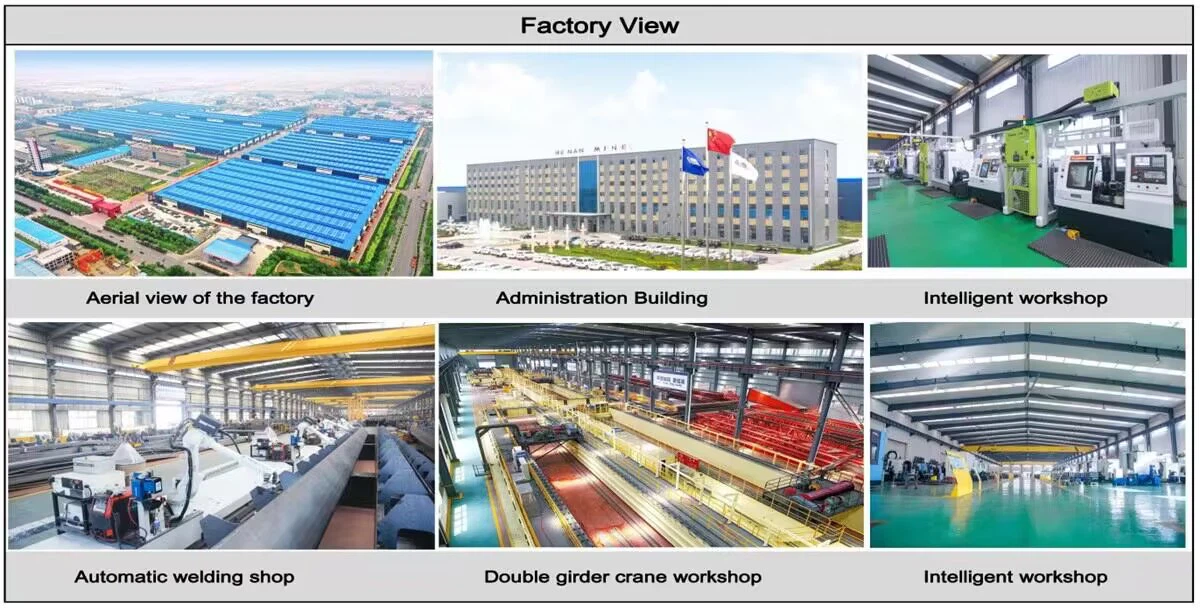
The company has installed an intelligent equipment management platform, and has installed 310 sets (sets) of handling and welding robots. After the completion of the plan, there will be more than 500 sets (sets), and the equipment networking rate will reach 95%. 32 welding lines have been put into use, 50 are planned to be installed, and the automation rate of the entire product line has reached 85%.


Hot Tags: double girder bridge crane with trolley, China double girder bridge crane with trolley manufacturers, suppliers, factory, Double Girder Overhead Crane, Double Girder Overhead Travelling Crane
Previous
Casting Overhead CraneYou Might Also Like


Send Inquiry