










Overhead Crane Construction
1.The overhead crane construction is a type of lifting equipment used to install, repair, and remove the beams of overhead cranes. It consists of a main beam, end beams, cross rails, walking wheels, electric hoist, electric drive system, electric control system, etc. The main beam adopts a box-type welded plate structure, and the end beams are box-type structures formed by steel plates, which are connected with the main beam through bolts. The cross rails are I-beam structures, which can be adjusted in height to meet the needs of different track spacing. The walking wheels are made of 45# steel and are heat-treated to improve their hardness and wear resistance.
2.The electric hoist is a key component of the overhead crane construction, mainly composed of a motor, brake, reducer, rolling sheave device, lifting sheave device, and other components. The electric drive system includes an electric hoist drive system and a walking wheel drive system. The electric hoist drive system is usually composed of a motor, brake, and gearbox, while the walking wheel drive system is usually composed of a motor, brake, gearbox, and driving wheel. The electric control system is mainly responsible for controlling the operation of the electric hoist and the walking mechanism, including starting, stopping, speed regulation, and direction control functions.
3.In addition, the overhead crane construction also has a safety protection device, which can effectively prevent the occurrence of accidents during use. For example, the overload limiter can protect the Overhead Crane Construction from being damaged due to overload; the limit switch can ensure that the crane operates within a safe range; the buffer stopper can prevent the crane from hitting the rail when it reaches the end of the track.
4.In summary, the overhead crane construction is a complex lifting equipment composed of multiple parts and systems. Its design and manufacture need to strictly follow relevant standards and regulations to ensure its safety and reliability in use.
Max. Lifting Height:20M
Warranty of core components:1 Year
Warranty:1 Year
Weight (KG):2000 kg
Rated Lifting Moment:50KN-3000KN
Max. Lifting Load:500ton
Span:10-80m
Capacity:1-20t
MOQ:1 Set
Work Duty:A3-A4

Pictures & Components
1.Main beam
1The main beam of an overhead crane construction is a core component that bears the lifting force and transfers it to the end beams, forming the main load-bearing structure of the crane. The design and material selection of the main beam directly affect the crane's overall performance, stability, and safety.
2.The main beam of an overhead crane construction is commonly made from high-quality carbon steel or alloy steel materials. These materials not only have good mechanical properties but also excellent weld ability and impact toughness, ensuring the main beam can withstand large forces and torques during operation. For special applications, such as corrosive environments, stainless steel or other anti-corrosion materials may be used.
3.Overall, the main beam is the soul of the overhead crane construction, bearing the weight of the crane and determining its overall performance. A well-designed and manufactured main beam can greatly improve the efficiency and reliability of the crane, ensuring the safety and stability of the entire crane system.

Lifting System
1.The lifting system of an overhead crane construction is a complex mechanical device composed of multiple parts, responsible for lifting and lowering heavy loads. It is one of the core components of the crane, directly affecting its performance and safety.
2.The following is a detailed introduction to the main components of the lifting system of an overhead crane:
Electric Hoist
The electric hoist is the power source of the lifting system, mainly composed of a motor, brake, gearbox, rolling sheave, and lifting sheave. The motor provides power, driving the sheave to rotate through the gearbox, thereby lifting or lowering the load. The brake ensures timely stopping of the load in case of an emergency or when stopping.
Sheaves and Ropes
Sheaves are an indispensable part of the lifting system, divided into rolling sheaves and lifting sheaves. Rolling sheaves are fixed on the crane beam, while lifting sheaves are connected to the load. The rope is wound around these sheaves, forming a closed loop to transfer force. The material and manufacturing precision of the sheaves and ropes directly affect the stability and safety of the lifting process.
Hook and Clamp
The hook and clamp are the direct connection points between the lifting system and the load. The hook is suitable for lifting materials with吊points, such as steel plates and large machinery; the clamp is suitable for lifting materials without吊points or requiring special handling. Both need to be reliably connected to the rope to ensure safe lifting of the load.
Lifting Mechanism
The lifting mechanism includes all mechanical devices that make up the lifting action. In addition to the electric hoist, it also includes various shafts, bearings, and connecting rods that support and transfer force. The design and installation accuracy of these mechanical devices ensure smooth opera
tion of the lifting system and prevent abnormal wear or failure.
3.In summary, the lifting system of an overhead crane construction is a complex mechanical system composed of multiple parts working together. Each component plays an important role, from the power output of the electric hoist to the control of the control system and the protection of safety devices. Only with reasonable design, precise manufacture, and correct use can the lifting system operate efficiently and safely.


3.End carriage
1.The end carriage of an overhead crane construction is a crucial component that connects the main beam to the track or support structure. It ensures smooth movement and stable support of the crane, playing a vital role in the entire crane system.
2.The following is a detailed introduction to the end carriage of an overhead crane:
Structure Composition
The end carriage generally consists of a beam, running wheel (or roller), bearing, and accessory components. The beam is connected to the main beam, transferring loads to the running wheel; the running wheel runs on the crane track, supporting the crane's movement; the bearing ensures smooth rotation of the running wheel; accessory components include fasteners, lubricants, etc., ensuring normal operation of the end carriage.
Function
Support and Transfer Load: The end carriage bears the weight of the main beam and the load, transferring these forces to the track through the running wheel.
Ensure Smooth Movement: The running wheel of the end carriage rolls on the track, ensuring smooth movement of the crane. The design of the running wheel and track also affects the crane's running stability and noise level.
3.In summary, the end carriage of an overhead crane construction is a critical part connecting the crane to the track, playing roles in support, transfer, adjustment, and safety protection. Reasonable design, precise manufacture, and correct use and maintenance are key to ensuring normal operation of the crane and personal safety.


4.Crane travelling mechanism
1.The traveling mechanism of an overhead crane construction is a key component that enables the crane to move horizontally along the plant's longitudinal or transverse direction, thereby transporting goods to designated areas. This mechanism directly affects the crane's operational efficiency and safety.
2.Working Principle
When the crane needs to move, the control system sends a signal to the drive device, starting the electric motor. The motor's power is transmitted to the gearbox through the coupling, reducing speed and increasing torque. Then, the gearbox transfers the amplified torque to the running wheel, driving the crane to move along the track. To stop or slow down, the control system actuates the brake, using friction to reduce the running wheel's speed until it stops.
3.Types
Traveling mechanisms can be classified into hand-pushed, hand-chain, electric, etc., according to the drive mode:
Hand-pushed: Suitable for light duty cranes, moved manually by operators.
Hand-chain: Operated by manual chain, suitable for small range movements of medium duty cranes.
Electric: Used for large duty cranes, capable of precise control over moving speed and direction through the control system.
In summary, the traveling mechanism of an overhead crane is a complex mechanical system responsible for the crane's horizontal movement, directly affecting the crane's performance and safety. Reasonable design, precise manufacture, and correct use and maintenance are key to ensuring normal operation of the crane and personal safety.
4.In summary, the traveling mechanism of an overhead crane construction is a complex mechanical system responsible for the crane's horizontal movement, directly affecting the crane's performance and safety. Reasonable design, precise manufacture, and correct use and maintenance are key to ensuring normal operation of the crane and personal safety.
5.Trolley travelling mechanism
1.The trolley traveling mechanism of an overhead crane construction is a crucial component that allows the trolley to move horizontally along the beam, thereby enabling the crane to transport goods transversely. This mechanism directly affects the crane's operational efficiency and safety in the transverse direction.
2.The trolley traveling mechanism typically includes the following components:
Running Wheel (or Roller): Mounted on the trolley, it runs along the beam.
Drive Device: Usually an electric motor, provides power for the trolley's movement.
Gearbox: Transmits the motor's power to the running wheel, controlling the trolley's moving speed and direction.
Brake: Ensures the trolley can stop promptly in case of an emergency or when stopping.
Coupling: Connects the drive device and gearbox, transferring power.
Working Principle
When the crane needs to move transversely, the control system sends a signal to the drive device, starting the electric motor. The motor's power is transmitted to the gearbox through the coupling, reducing speed and increasing torque. Then, the gearbox transfers the amplified torque to the running wheel, driving the trolley to move along the beam. To stop or slow down, the control system actuates the brake, using friction to reduce the running wheel's speed until it stops.
3.In summary, the trolley traveling mechanism of an overhead crane construction is a complex mechanical system responsible for the crane's transverse movement, directly affecting the crane's performance and safety in the transverse direction. Reasonable design, precise manufacture, and correct use and maintenance are key to ensuring normal operation of the crane and personal safety.
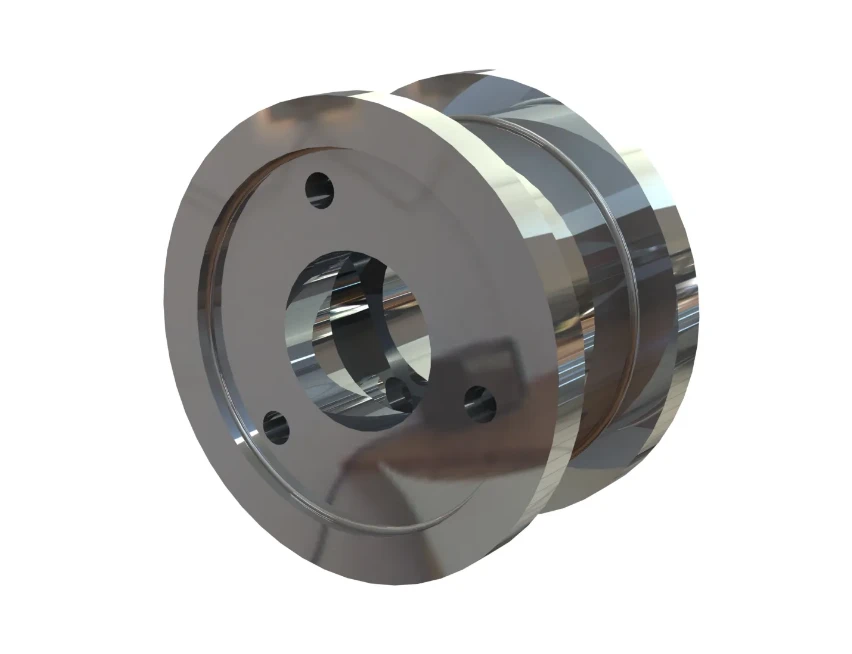
6.Crane wheel
1.The wheel of an overhead crane construction is a crucial component, belonging to the end carriage part of the crane. Its main function is to support the crane's own weight and the load, transferring these forces to the track, ensuring stable movement of the crane.
2.The wheel of an overhead crane typically includes wheels, bearings, axles, and mounting plates or seats. The wheel is mounted on the axle through the bearing, which in turn is fixed to the crane beam by the mounting plate or seat. This structure ensures free rotation of the wheel and transfers loads to the track.Crane wheels can be made of various materials such as carbon steel, alloy steel, stainless steel, etc. Different materials are chosen according to the crane's working environment and load requirements to ensure strength and durability of the wheel. For special environments (such as high corrosion), stainless steel or other anti-corrosion materials may be used.
3.In summary, the wheel of an overhead crane construction is a key component that supports the crane's movement and transfers loads, playing roles in support, transfer, adjustment, and safety protection. Reasonable design, precise manufacture, and correct use and maintenance are key to ensuring normal operation of the crane and personal safety.
 |
 |
 |
7.Crane Hook
1.The hook of an overhead crane construction is a key component used to directly connect to the load, lifting or lowering goods as needed. The design, materials, and manufacturing quality of the hook directly affect the crane's lifting capacity, operational safety, and efficiency.
2.When using the crane hook, the operator controls the handle to open or close the locking device, placing or removing the load. During lifting, the hook rotates freely around its axis due to force, keeping the load stable. After reaching the designated position, the operator controls the handle to release the locking device, placing the load accurately.
3.In summary, the hook of an overhead crane construction is a key component that directly contacts the load, playing roles in connecting, transferring, supporting, and safety protection. Reasonable design, precise manufacture, and correct use and maintenance are key to ensuring normal operation of the crane and personal safety.
 |
 |
 |
Motor
1.The motor of an overhead crane construction is the power source that drives the crane's movement and lifting operations. It converts electrical energy into mechanical energy, thereby realizing various actions of the crane. The performance of the motor directly affects the crane's operational efficiency and safety.
2.The motors used in overhead cranes construction mainly include:
AC Induction Motor: Commonly used in cranes, with simple structure, low cost, and easy maintenance. However, its starting torque is small and speed regulation performance is poor.
DC Motor: Features good speed regulation performance and large starting torque, suitable for heavy-duty cranes requiring high control precision. However, its structure is complex and maintenance is difficult.
Inverter Motor: Uses frequency conversion technology to achieve efficient speed regulation, saving energy and suitable for cranes with high speed and positioning requirements. Its initial investment is relatively high but long-term use can save more energy.
3.When the crane needs to operate, the control system sends a signal, starting the motor. The motor converts electrical energy into mechanical energy, driving the crane's lifting mechanism, trolley traveling mechanism, and bridge traveling mechanism through the transmission system (such as gearboxes, couplings, etc.). To stop or slow down, the control system sends a corresponding signal to reduce the motor's power output or brake.
4.In summary, the motor of an overhead crane construction is a key component that provides power for the crane's movement and lifting operations. Reasonable design, precise manufacture, and correct use and maintenance are key to ensuring normal operation of the crane and personal safety.


Sound and light alarm system & limit switch
1.The sound and light alarm system and limit switch of an overhead crane construction are crucial safety devices, ensuring the crane operates safely and stably in various environments. These devices play important roles in warning operators and surrounding personnel, as well as controlling the crane's movement range.Sound and
2.Light Alarm System
The sound and light alarm system of an overhead crane construction mainly includes signal indicators, alarm bells, and other devices, used to warn operators and surrounding personnel of potential safety hazards. This system typically contains the following parts:
Signal Indicator: Installed in visible locations on the crane, such as on the bridge or at both ends of the crane beam. It sends signals through different colors and flashing frequencies to indicate the crane's operating status and warning information.
Alarm Bell: Used to alert personnel in the crane's working area. When the crane starts or approaches a dangerous area, the alarm bell rings to remind personnel to pay attention.
Warning Light: Emitting strong light, it serves as a supplementary warning device for the alarm bell, especially effective in noisy environments or at night.
3.Limit Switch
The limit switch of an overhead crane construction is a position sensor used to detect the crane's mechanical position in order to control its movement range. When the crane reaches a predetermined position, the limit switch is triggered, sending a signal to the control system to stop or reverse the crane's movement, preventing accidents caused by over travel. The limit switch includes:
Travel Limit Switch: Controls the crane's horizontal moving range, ensuring it does not exceed the track's limits.
Lifting Limit Switch: Controls the crane's vertical lifting range, preventing the hook from lifting too high or dropping too low.
Operation Limit Switch: Controls the rotation and extension/retraction of specific mechanisms (such as rotating platforms, telescopic beams, etc.) within safe ranges.
In summary, the sound and light alarm system and limit switch of an overhead crane construction are key safety devices that ensure the crane operates safely and stably. They play roles in warning, control, protection, and automation, essential for crane design and operation. Regular maintenance and inspection of these devices are required to ensure their normal operation and timely replacement of damaged parts to prevent accidents.

10.Safety Devices
1. Limit Switch
The limit switch is used to control the moving range of the crane, preventing it from operating beyond its design limits. It includes traveling limit switches, lifting limit switches, operation limit switches, etc. When any part of the crane approaches its limit position, the limit switch is triggered, sending a signal to the control system to stop or reverse the crane's movement.
2. Anti-Swing Device
During crane operation, especially when lifting loads, the load may swing, posing a threat to safety. The anti-swing device can effectively reduce or eliminate load swing, improving operation stability and safety.
3. Load Meter
The load meter displays the weight of the load being lifted in real-time, helping the operator control the load within safe limits to prevent overloading.
4. Emergency Stop Button
The emergency stop button is a manually operated switch that can immediately cut off power to the crane, stopping all operations. It is usually located in a convenient location for the operator to use in emergencies.
5. Sound and Light Alarm System
The sound and light alarm system includes signal indicators, alarm bells, warning lights, etc., used to warn operators and surrounding personnel of potential safety hazards. When the crane starts or approaches a dangerous area, the alarm bell rings or the warning light flashes to remind personnel to pay attention.
6. Travel Mechanism Locking Device
The travel mechanism locking device can lock the crane's traveling wheels when necessary, preventing the crane from moving unexpectedly due to external forces (such as wind).
7. Overload Protection Device
The overload protection device automatically stops the crane from lifting when the load exceeds a set limit, preventing damage to the crane components due to overloading.
8. Earth Leakage Protection Device
The earth leakage protection device monitors the crane's electrical system in real-time, cutting off power in case of electric leakage to protect the crane and operator from electric shock.
11.Control Mode
1. Manual Control
Manual control is the most traditional crane control method. The operator controls the crane's movement by manually operating mechanical devices (such as levers, hand wheels) through mechanical linkages. This method is simple and reliable but requires considerable physical effort from the operator and has limited control precision.
2. Electric Control
Electric control uses buttons, switches, or joysticks to send electrical signals to the crane's motor, driving various actions. Compared to manual control, electric control significantly reduces the operator's labor intensity and improves control precision and convenience. It is currently the most widely used control method for overhead cranes.
3. Wireless Remote Control
Wireless remote control uses radio waves to transmit commands from a remote controller to a receiver on the crane, controlling the crane's movement without a physical connection between the operator and crane. This method improves operational flexibility and safety, especially suitable for hazardous environments.
4. Automatic Control
Automatic control uses various sensors and a computer system to automatically complete loading, transporting, unloading, and other operations according to preset procedures. This method greatly improves operational efficiency and safety but requires high technical content and equipment costs.
5. Joystick Control
Joystick control is a semi-automatic control method that uses a multi-axis joystick to control the crane's movement. The operator only needs to move the joystick in the corresponding direction to control the crane's complex actions, simplifying the operation process and improving precision and efficiency.
6. Network Control
Network control uses modern communication technology and network technology to achieve remote monitoring and control of the crane. Operators can control the crane from a remote location, suitable for modern intelligent factories and warehouses.
7. Simulator Control
Simulator control uses a simulation system to simulate the crane's operation, helping operators train and familiarize themselves with operations before actual use. This method enhances operational safety and efficiency but requires additional simulation software and hardware support.

12.Sketch

Main technical

Advantages
1. Space-Saving
One of the most significant advantages of overhead cranes is their space-saving design. The crane operates by hanging from a beam or track installed on the factory or warehouse ceiling, which means it does not occupy valuable floor space. Compared to ground-based lifting equipment like forklifts, overhead cranes free up more floor space for other uses, improving overall spatial efficiency.
2. High Lifting Capacity
Overhead cranes typically have a high lifting capacity, able to lift heavy items ranging from several hundred kilograms to hundreds of tons. This makes them extremely suitable for use in heavy industries such as steel, construction, and shipbuilding.
3. Flexible Movement
Overhead cranes can move along a fixed track or beam, providing flexibility in moving loads within a specific area. They can transport goods from one place to another quickly and efficiently, especially in production lines where materials need to be moved between different processing stations.
4. Improved Working Efficiency
Using an overhead crane can significantly improve working efficiency. Once installed, operators can control the crane to quickly and准确地 move materials to the desired location, reducing manual handling and waiting times.
5. Reduced Labor Intensity
With an overhead crane, workers no longer need to manually lift heavy objects, reducing physical labor and the associated risks of injury. This not only protects worker health but also reduces potential safety incidents.
6. Low Maintenance Costs
Compared to other lifting equipment, overhead cranes have relatively simple structures and low maintenance costs. Regular inspections and timely replacement of worn parts can ensure long-term stable operation of the crane.
7. High Safety
Overhead cranes are typically equipped with various safety devices, such as overload protection, limit switches, etc. These devices ensure operational safety, preventing accidents due to overloading or out-of-range movement.
Application:
1. Industrial Manufacturing
In industrial manufacturing settings, especially in heavy industries such as steel, machinery, and shipbuilding, overhead cranes are used for handling large or heavy materials. They play a crucial role in production processes, such as transporting semi-finished products between processing stations.
2. Warehouse Logistics
In warehouses and distribution centers, overhead cranes are commonly used for loading, unloading, stacking, and transporting goods. They improve operational efficiency by quickly moving goods within the warehouse to the designated locations.
3. Construction Sites
On construction sites, especially those with high structural requirements like bridges and tall buildings, overhead cranes are essential for lifting heavy materials such as steel bars, concrete, and prefabricated components.
4. Railway Yards
In railway yards, overhead cranes are used for loading and unloading goods from trains, as well as sorting goods at railway platforms.
5. Ports and Docks
At ports and docks, large overhead cranes are often used for loading and unloading containers and bulk cargoes. These cranes significantly enhance the efficiency of port operations.
6. Power Plants
In thermal power plants, coal yards, and ash disposal sites, overhead cranes are used for lifting, transporting, and distributing materials.
7. Assembly Lines
In factory assembly lines, especially in automobile and aircraft manufacturing, overhead cranes are used for accurate positioning and installation of large components.
8. Maintenance Work
Overhead cranes can also be used for maintenance work in various industries, such as lifting engines, gearboxes, and other large components out of their installed positions for maintenance or replacement.
9. Mining Industry
In the mining industry, overhead cranes are used for loading and unloading mining equipment and transporting minerals.
Crane production procedure
-
1. Design and Engineering
Detailed Engineering: Develop detailed engineering drawings and specifications, including the main beam, hoist, trolley, end carriages, and other components.
Simulation and Modeling: Use computer-aided design (CAD) and simulation tools to model the crane's performance and optimize its design.
-
2. Material Selection
Material Specifications: Select high-quality materials that meet the requirements for strength, durability, and heat resistance. Common materials include high-strength steel, alloys, and specialized coatings.
Procurement: Source materials from approved suppliers, ensuring they meet the necessary quality and certification standards.
-
3. Component Fabrication
Cutting and Shaping: Cut and shape raw materials into the required components, such as beams, columns, and brackets. This may involve processes like plasma cutting, laser cutting, and machining.Welding and Assembly: Weld components together to form the crane's structural elements. This includes welding the main beam, end carriages, and other load-bearing parts.
-
4. Assembly
Sub-Assembly: Assemble individual components, such as the hoisting system, trolley, and end carriages, into sub-assemblies. This involves fitting parts together and ensuring proper alignment.Main Assembly: Combine sub-assemblies to construct the complete crane structure. This includes mounting the hoist and trolley on the main beam, attaching the end carriages, and installing the control systems.
-
5. Integration of Systems
Electrical Systems: Install electrical components, including motors, control panels, wiring, and sensors. Ensure that the crane's electrical systems are properly integrated and tested.
Control Systems: Implement and configure control systems, such as programmable logic controllers (PLCs), remote controls, and safety devices. Verify that the control systems function correctly and are calibrated.
-
6. Testing and Quality Assurance
Pre-Operational Testing: Conduct pre-operational tests to check the crane's functionality, including load testing, operational testing of the lifting and traveling mechanisms, and control system checks.
Safety Testing: Verify that safety features, such as limit switches, alarms, and emergency stops, are working correctly and meet safety standards.
Inspection: Perform a detailed inspection of the crane's structure and components to ensure compliance with design specifications and quality standards.
-
7. Final Adjustments and Calibration
Fine-Tuning: Make any necessary adjustments to optimize the crane's performance and ensure smooth operation. This may include calibrating sensors, adjusting controls, and fine-tuning the lifting system.
Documentation: Prepare and review documentation, including operation manuals, maintenance guides, and safety instructions.
-
8. Delivery and Installation
Transport: Arrange for the transport of the crane to the installation site, ensuring that it is handled and shipped safely to prevent damage.
Installation: Oversee the installation of the crane at the customer's facility, including assembly, alignment, and connection to power sources and control systems.
Training: Provide training for operators and maintenance personnel to ensure they are familiar with the crane's operation and safety procedures.
-
9. Commissioning and Handover
Commissioning: Conduct final commissioning tests to verify that the crane operates correctly under real-world conditions and meets performance specifications.
Handover: Officially hand over the crane to the customer, providing all necessary documentation, including certificates of compliance, warranty information, and maintenance schedules.
Crane production procedure

Workshop view
The company has installed an intelligent equipment management platform, and has installed 310 sets (sets) of handling and welding robots. After the completion of the plan, there will be more than 500 sets (sets), and the equipment networking rate will reach 95%. 32 welding lines have been put into use, 50 are planned to be installed, and the automation rate of the entire product line has reached.


Hot Tags: overhead crane construction, China overhead crane construction manufacturers, suppliers, factory, Double Girder Overhead Travelling Crane, Double Girder Overhead Crane
You Might Also Like


Send Inquiry