










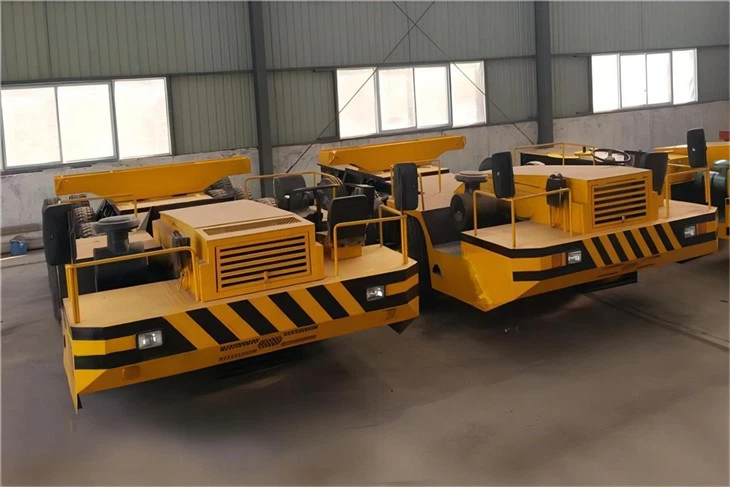


Precast Beam Transporter
A precast beam transporter is a specialized piece of equipment designed for the transportation of precast concrete beams. These beams are typically used in construction projects to create structural elements such as bridges, parking garages, and buildings. The precast beam transporter plays a crucial role in efficiently and safely moving these heavy and often oversized concrete components from the casting yard to the construction site.

Key Features
The key features of a precast beam transporter are designed to enhance efficiency, safety, and flexibility in the transportation of precast concrete beams. Here are the key features associated with such equipment:
- Heavy-Duty Construction: Precast beam transporters are built with a robust and durable frame to support the weight of large precast concrete beams. The construction is designed to withstand the challenging conditions of construction sites.
- Hydraulic Systems: These transporters often employ hydraulic systems to lift, lower, and maneuver the precast beams. Hydraulic mechanisms provide precision control and are capable of handling heavy loads with ease.
- Adjustable Configuration: The transporter may have an adjustable configuration to accommodate beams of different sizes and shapes. This adaptability is essential in handling the diverse range of precast concrete elements used in construction.
- Maneuverability: Precast beam transporters are designed for easy maneuverability around construction sites. This includes features such as multidirectional wheels or tracks, enabling the transporter to navigate tight spaces and challenging terrains.
- Safety Features: Safety is a top priority in construction, and precast beam transporters often come with safety features such as emergency braking systems, load monitoring, and alarms to alert operators and bystanders of potential risks.
- Efficiency and Time Savings: The use of precast beam transporters can significantly reduce the time and labor required to transport and position precast concrete beams compared to traditional methods. This contributes to overall project efficiency.
- Versatility: These transporters are versatile and can be used for various types of precast concrete elements, including beams, columns, and slabs. This versatility makes them valuable equipment in construction projects where multiple precast components are utilized.

Parts & Components
A precast beam transporter is a complex piece of machinery designed to transport heavy precast concrete beams efficiently. Its various parts and components work together to provide stability, maneuverability, and control during the transportation process. Here are the key parts and components commonly found in a precast beam transporter:
1.Chassis:
- The main framework that provides structural support for the entire transporter.
- Often made of heavy-duty steel to withstand the loads and stresses associated with transporting precast beams.
2.Hydraulic Systems:
- Hydraulic cylinders for lifting and lowering precast beams.
- Hydraulic steering systems for precise control during movement.
- Hydraulic power units to provide the necessary pressure for the hydraulic components.
3.Lifting Mechanism:
- Components responsible for lifting and lowering the precast beams.
- Adjustable arms or grips to securely hold the beams during transportation.
4.Control System:
- The interface that allows the operator to control the transporter.
- Remote control unit for wireless operation.
- Joysticks, buttons, or other control devices for maneuvering and lifting.
5.Wheels or Tracks:
- Multi-directional wheels or tracks that enable the transporter to move in various directions.
- Designed for easy navigation on construction sites and the ability to handle uneven terrain.
6.Braking System:
- Emergency braking systems to ensure quick stops if needed.
- Parking brakes for secure immobilization during loading and unloading.
7.Stabilization Mechanism:
- Components that provide stability during lifting and movement.
- Counterbalance systems to prevent tipping.
8.Load Monitoring System:
- Sensors and indicators to monitor the weight of the precast beams.
- Alarms or warnings to alert operators if the load exceeds safe limits.
9.Frame Extension Mechanism:
- Adjustable frames or extensions to accommodate precast beams of different lengths.
- Provides flexibility for transporting various sizes of beams.
10.Electrical System:
- Wiring, connectors, and electrical components for powering lights, indicators, and control systems.
- Batteries or power supply for electrically operated components.
11.Safety Features:
- Alarms, lights, or other warning systems to alert operators and bystanders.
- Safety barriers or guards to prevent accidents during operation.
12.Operator Cabin or Platform:
- The area where the operator stands or sits to control the transporter.
- Equipped with safety features and visibility enhancements for the operator.
13.Towing Hitch or Connection:
- A connection point for towing or transporting the transporter itself.
- Allows for easy movement around the construction site.
14.Lights and Signals:
- Headlights, brake lights, and turn signals for visibility and safety during operation, especially in low-light conditions.

Product Parameter

Sketch

Advantages
The use of a precast beam transporter in construction projects offers several advantages, contributing to increased efficiency, safety, and overall project success. Here are some key advantages of using a precast beam transporter:
1.Time Efficiency:
- Precast beam transporters significantly reduce the time required for transporting and placing precast concrete beams compared to traditional methods.
- Quick loading and unloading mechanisms contribute to faster project timelines.
2.Cost Savings:
- The faster installation and reduced labor requirements contribute to cost savings in construction projects.
- Increased efficiency minimizes the need for extensive on-site labor.
3.Improved Safety:
- Remote control capabilities allow operators to guide the transporter from a safe distance, reducing the risk of accidents.
- Safety features such as load monitoring and emergency braking enhance on-site safety.
4.Versatility:
- Precast beam transporters are versatile and can handle various types of precast concrete elements, not just beams.
- Adjustable configurations allow for the transportation of different sizes and shapes of precast components.
5.Precision and Control:
- Hydraulic systems provide precise control over the lifting, lowering, and positioning of precast beams.
- Operators can fine-tune the movements, ensuring accurate placement of beams in construction.
6.Maneuverability:
- Multi-directional wheels or tracks allow the transporter to navigate tight spaces and challenging terrains on construction sites.
- Compact design contributes to enhanced maneuverability.
7.Reduction in Site Disruption:
- Precast beam transporters minimize disruption to the construction site by efficiently transporting beams directly to the installation location.
- Reduced on-site handling of heavy components minimizes interference with other construction activities.
8.Adaptability to Various Beam Sizes:
- Adjustable configurations and lifting mechanisms make precast beam transporters adaptable to a range of beam sizes and weights.
- This adaptability accommodates the diverse requirements of construction projects.
9.Increased Productivity:
- The efficient transportation and placement of precast beams contribute to overall project productivity.
- Operators can handle more tasks in less time, leading to increased project output.
10.Enhanced Quality Control:
- Precise control during transportation and placement ensures that precast beams are positioned accurately according to design specifications.
- This contributes to the overall quality and structural integrity of the construction project.
11.Reduced Site Congestion:
- By streamlining the transportation process, precast beam transporters help reduce congestion on construction sites.
- This is especially beneficial in projects with limited space.
12.Environmental Benefits:
- The efficiency of precast beam transporters can lead to a reduction in fuel consumption and emissions compared to traditional on-site handling methods.
- The use of precast elements itself often contributes to environmental benefits due to reduced on-site concrete mixing.

Application
The application of a precast beam transporter is essential in the construction industry, particularly in projects where precast concrete beams are used. The transporter plays a crucial role in the efficient and safe handling of these heavy and often large structural components. Here are some key applications of precast beam transporters:
- Bridge Construction: Precast concrete beams are commonly used in the construction of bridges. A precast beam transporter facilitates the transportation of these beams from the casting yard to the construction site, and it aids in their precise placement.
- Parking Garage Construction: Precast concrete beams are utilized in parking garage construction for creating the structural framework. A precast beam transporter is employed to efficiently move and position these beams during the construction process.
- Industrial Facilities: Large industrial facilities often require the use of precast concrete beams for structural elements. Precast beam transporters are instrumental in handling the transportation and installation of these beams in industrial settings.
- Highway Construction: Precast concrete beams are employed in the construction of highway overpasses and underpasses. A precast beam transporter is used to transport these beams to the construction site and assist in their proper placement.
- Railway Infrastructure: In the construction of railway bridges and other railway infrastructure, precast concrete beams are commonly used. Precast beam transporters play a vital role in the transportation and installation of these beams.
- Airport Runway Construction: Precast concrete beams may be used in the construction of airport runways. A precast beam transporter is utilized to transport and position these beams with precision in airport construction projects.
- Commercial and Residential Construction: Precast concrete beams can be employed in various commercial and residential construction projects. Precast beam transporters facilitate the handling of these beams, contributing to the efficiency of the construction process.
- Tunnel Construction: In tunnel construction projects, precast concrete beams may be used as part of the structural elements. Precast beam transporters assist in transporting and placing these beams within tunnel structures.
- Modular Construction: In modular construction methods, precast concrete components, including beams, are often used for faster assembly. Precast beam transporters are crucial for the efficient movement of these components to the construction site.
- Infrastructure Rehabilitation: In projects involving the rehabilitation or retrofitting of existing structures, precast concrete beams may be used. Precast beam transporters aid in the transportation and installation of these beams without significant disruption to the existing infrastructure.

Production Procedure
- Design and Engineering: The production process begins with the design and engineering phase. Engineers develop detailed plans and specifications based on the requirements of the precast beam transporter, considering factors such as load capacity, dimensions, and functionality.
- Material Selection: The selection of high-quality materials is crucial for the construction of a durable and reliable precast beam transporter. Common materials include heavy-duty steel for the frame, hydraulics for lifting mechanisms, and various components such as wheels or tracks.
- Fabrication of Components: Fabrication involves the manufacturing of individual components based on the design specifications. This may include cutting, shaping, and welding steel components, as well as machining parts for the hydraulic systems.
- Hydraulic System Installation: The hydraulic system, a critical component of the precast beam transporter, is installed. This includes the integration of hydraulic cylinders, pumps, hoses, and control valves. Precision is essential to ensure proper functionality during lifting and maneuvering.
- Assembly of the Chassis: The chassis, which forms the structural foundation of the transporter, is assembled. This involves connecting and welding the fabricated steel components to create a sturdy and stable frame capable of supporting heavy loads.
- Installation of Wheels or Tracks: Depending on the design, the precast beam transporter may have wheels or tracks. The installation of these components is carried out, ensuring proper alignment and functionality for smooth movement.
- Integration of Control Systems: The control systems, including the operator interface and remote control functionality, are integrated into the transporter. This includes wiring, electronic components, and programming to ensure precise and reliable control.
- Lifting Mechanism Integration: The lifting mechanism, typically hydraulic arms or grips, is integrated into the transporter. This involves ensuring proper alignment and secure attachment to lift and transport precast concrete beams.
- Safety Features Installation: Safety features such as emergency braking systems, load monitoring sensors, and alarms are installed to enhance the overall safety of the transporter during operation.
- Testing and Quality Assurance: The assembled precast beam transporter undergoes rigorous testing to ensure that all components function as intended. This includes load testing, hydraulic system checks, and safety feature validation. Any necessary adjustments or corrections are made during this phase.
- Finishing and Painting: The precast beam transporter is finished with paint or protective coatings to enhance its durability and resistance to environmental conditions.
- Delivery and Installation: The completed precast beam transporter is delivered to the construction site or the client's location. Installation and commissioning are carried out by trained personnel to ensure proper functionality.

Workshop View
The company has installed an intelligent equipment management platform, and has installed 310 sets (sets) of handling and welding robots. After the completion of the plan, there will be more than 500 sets (sets), and the equipment networking rate will reach 95%. 32 welding lines have been put into use, 50 are planned to be installed, and the automation rate of the entire product line has reached 85%.


Hot Tags: precast beam transporter, China precast beam transporter manufacturers, suppliers, factory
Previous
Bridge Beam LauncherYou Might Also Like


Send Inquiry