









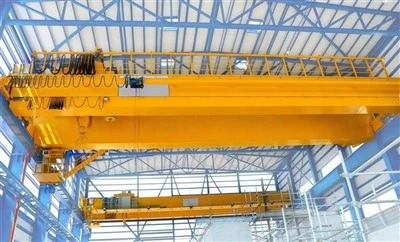
Overhead Crane Double Girder 30 Ton
Products Description
Advantages of Double Girder vs. Single Girder:
Higher load capacity (up to 550 tons or more).
Better hook height (no lower beam obstruction).
Suitable for longer spans and heavy-duty cycles.
Allows integration of auxiliary hoists or specialized lifting attachments.
Comparison with Single-Girder Cranes
| Feature | Double Girder (30T) | Single Girder (30T) |
|---|---|---|
| Hook Height | Higher (no lower beam obstruction) | Lower |
| Durability | More robust for heavy-duty use | Lighter duty |
| Span | Better for long spans (>25m) | Limited span |
| Cost | Higher initial cost | More economical |
Capacity: 30 metric tons (can be customized for higher loads if needed).
Span: Typically ranges from 10m to 35m (customizable based on workshop layout).
Lifting Height: Standard is 6m–30m (adjustable per requirements).
Work Class: A5–A7 (moderate to heavy-duty cycles).
Operating Speed:
Hoisting: 1.5–10 m/min (variable speed options).
Trolley Travel: 10–30 m/min.
Bridge Travel: 20–60 m/min.
Power Supply: 3-phase, 380V/415V, 50Hz (or as per regional standards).

Pictures & Components
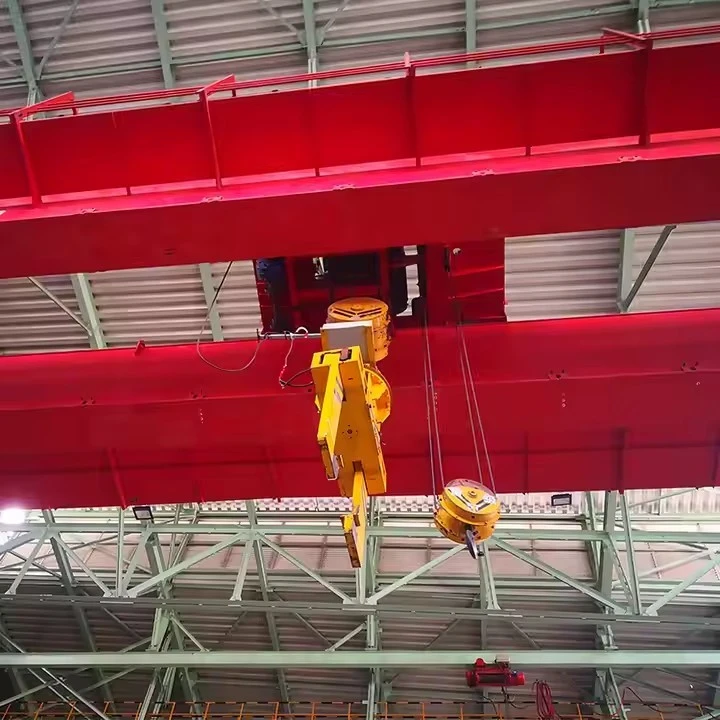
A 30-ton double girder overhead crane consists of several critical components working together to ensure safe and efficient lifting operations. Below is a detailed breakdown of its major components and their functions:
1. Bridge Girders (Main Beams)
Function: Primary load-bearing structure spanning the width of the crane runway.
Material: High-strength steel (Q235B, Q345B, or equivalent).
Design:
Box girder: Welded steel construction (common for 30-ton cranes).
Truss girder: Lighter but less common for heavy-duty applications.
Features:
Reinforced for rigidity and minimal deflection.
Supports the trolley and hoist movement.

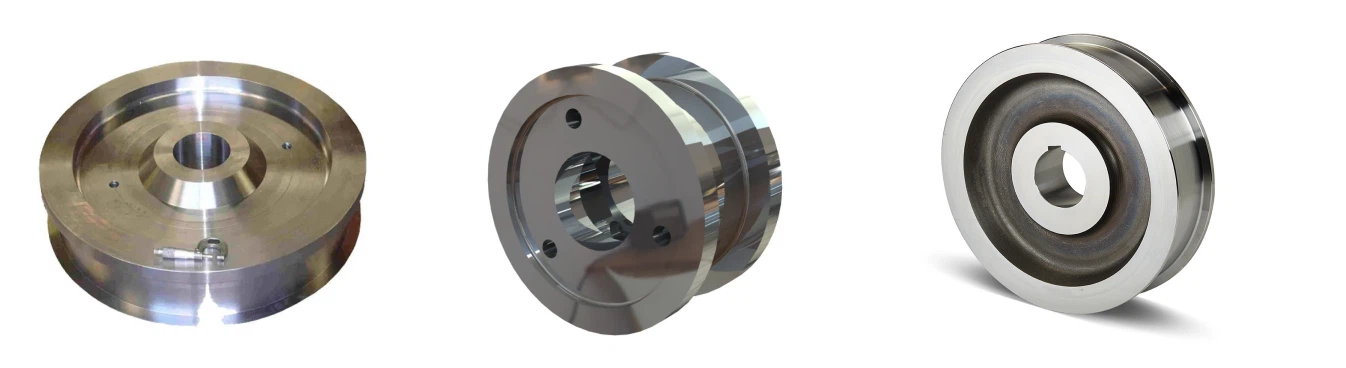
2. End Trucks (End Carriages)
Function: Support the bridge girders and enable crane movement along the runway rails.
Components:
Wheels: Forged steel or alloy wheels with bearings.
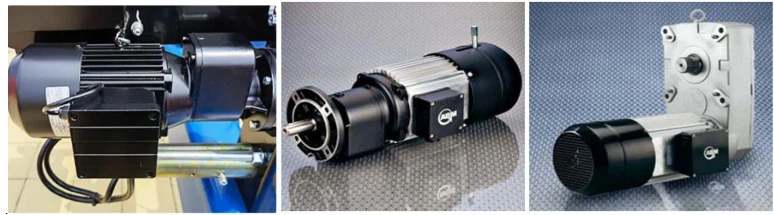
Drive Motors: AC/DC motors with brakes (one or both sides driven).
Buffers/Bumpers: Shock absorbers to prevent damage at travel limits.
Rail Sweepers: Remove debris from the runway.
 |
 |
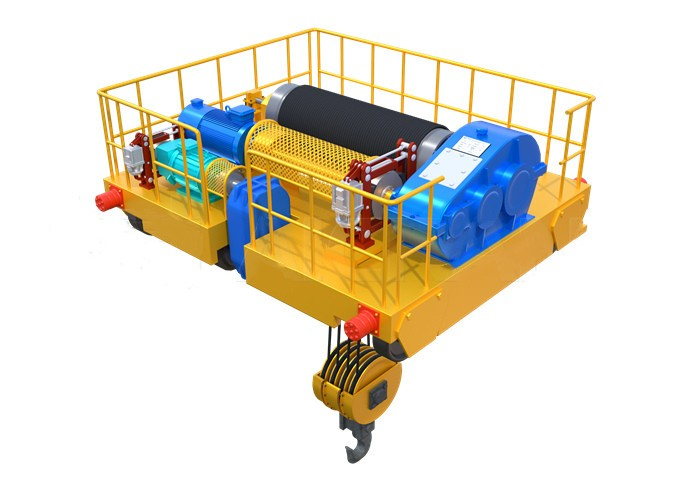
3. Hoisting Mechanism
Function: Lifts and lowers the load vertically.
Components:
Electric Hoist (or winch):
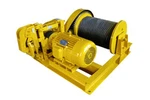
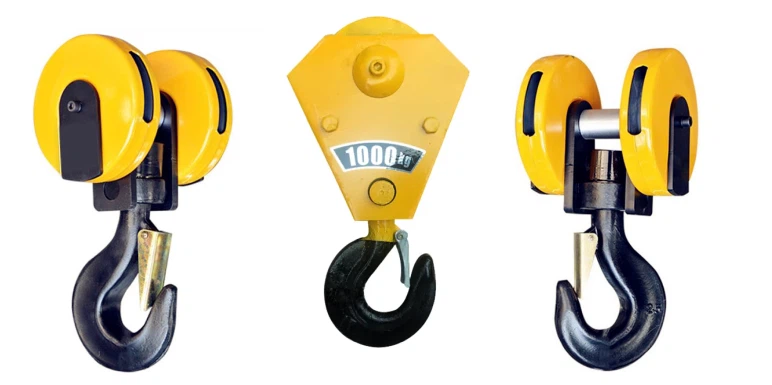
Wire Rope Drum: Holds the lifting cable.
Hook Block: Equipped with a 30-ton swivel hook.
Brakes: Dual-disc brakes for fail-safe operation.
Motor: High-torque, thermally protected (e.g., 30 kW for 30-ton lifting).
Reducer (Gearbox): Converts motor speed to lifting torque.
Rope Guide: Prevents wire rope tangling.
 |
 |
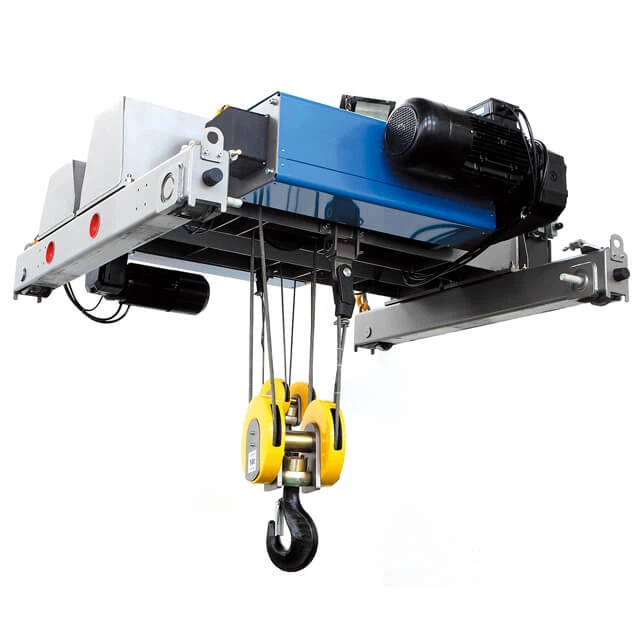
4. Trolley (Crab Unit)
Function: Moves the hoist horizontally along the bridge girders.
Components:
Frame: Steel structure with wheels.
Drive System: Motors, gears, and brakes for smooth travel.
Guide Rollers: Keep the trolley aligned on the girders.
5. Runway System
Function: Supports the crane's movement.
Components:
Runway Beams: Steel I-beams or fabricated box sections.
Crane Rails: P43, QU70, or QU100 (depending on load).
Rail Clamps: Secures rails to the supporting structure.
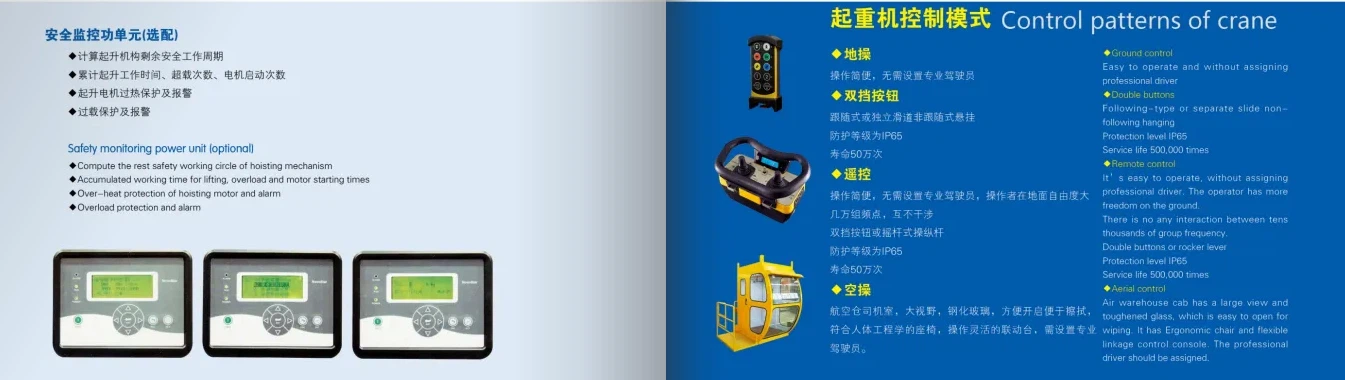
6. Electrical & Control System
Function: Powers and controls crane operations.
Components:
Control Panel: Includes contactors, overload relays, and PLC (if automated).
Operator Interface:
Pendant Control: Handheld wired controller.
Radio Remote: Wireless operation.
Cabin Control: For cranes with an operator cabin.
Limit Switches: For hoist upper/lower limits and trolley/bridge travel limits.
Festoon/Cable Reel: Manages power and signal cables.

.
7. Safety Components
Overload Limiter: Prevents lifting beyond 30-ton capacity.
Emergency Stop (E-Stop): Cuts power in emergencies.
Anti-Collision System: For multiple cranes on the same runway.
Warning Devices: Buzzer/horn and flashing lights.
Footwalk & Maintenance Platform: For inspections (if applicable).

8. Optional Accessories
Magnet/Grapple: For handling scrap metal or bulk materials.
Crane Scales: Weighing system integrated into the hook.
Variable Frequency Drives (VFDs): For smoother speed control.
Automation: RFID positioning, remote monitoring.
Sketch

Main technical

Advantages
Superior Load Capacity & Stability
Designed for heavy-duty 30-ton lifting with potential for higher capacities (up to 550+ tons).
Dual girders provide better load distribution, minimizing deflection and improving structural integrity.
Maximized Hook Height & Workspace
No lower girder obstruction (unlike single girder cranes), allowing full use of vertical space-critical for tall workshops or stacking heavy materials.
Longer Spans (10m–35m+)
Ideal for wide facilities (e.g., steel mills, shipyards) where single girder cranes would sag or require extra support.
Precision & Control
Variable Frequency Drives (VFDs) enable smooth acceleration/deceleration, reducing load swing.
Optional automation (PLC, anti-sway systems) for delicate operations (e.g., turbine installations).
Enhanced Safety & Redundancy
Dual brakes, overload limiters, and emergency stops.
Anti-collision systems for multi-crane environments.
Customization & Flexibility
Supports auxiliary hoists (e.g., 2x15-ton hoists for balanced lifting).
Compatible with magnets, grabs, or specialized hooks for diverse materials (coils, scrap, containers).
Durability & Low Maintenance
A5–A7 duty rating (heavy/continuous use).
Easy access for inspections via maintenance platforms.
Application:
1. Steel & Metal Processing
Hot metal handling: Ladles, ingots, and coils in foundries/rolling mills.
Fabrication shops: Moving large weldments or machined parts.
2. Energy & Power Plants
Turbine/generator installation (precision placement).
Transformer handling (30+ ton units).
3. Shipbuilding & Ports
Ship block assembly (lifting hull sections).
Dockyards: Loading/unloading heavy machinery.
4. Mining & Cement
Crushers, kilns, and bulk material handling (with grabs or magnets).
5. Automotive & Aerospace
Press lines: Exchanging 30-ton dies.
Aircraft components: Wing assemblies or engine mounts.
6. Infrastructure & Construction
Prefab concrete beams for bridges/high-rises.
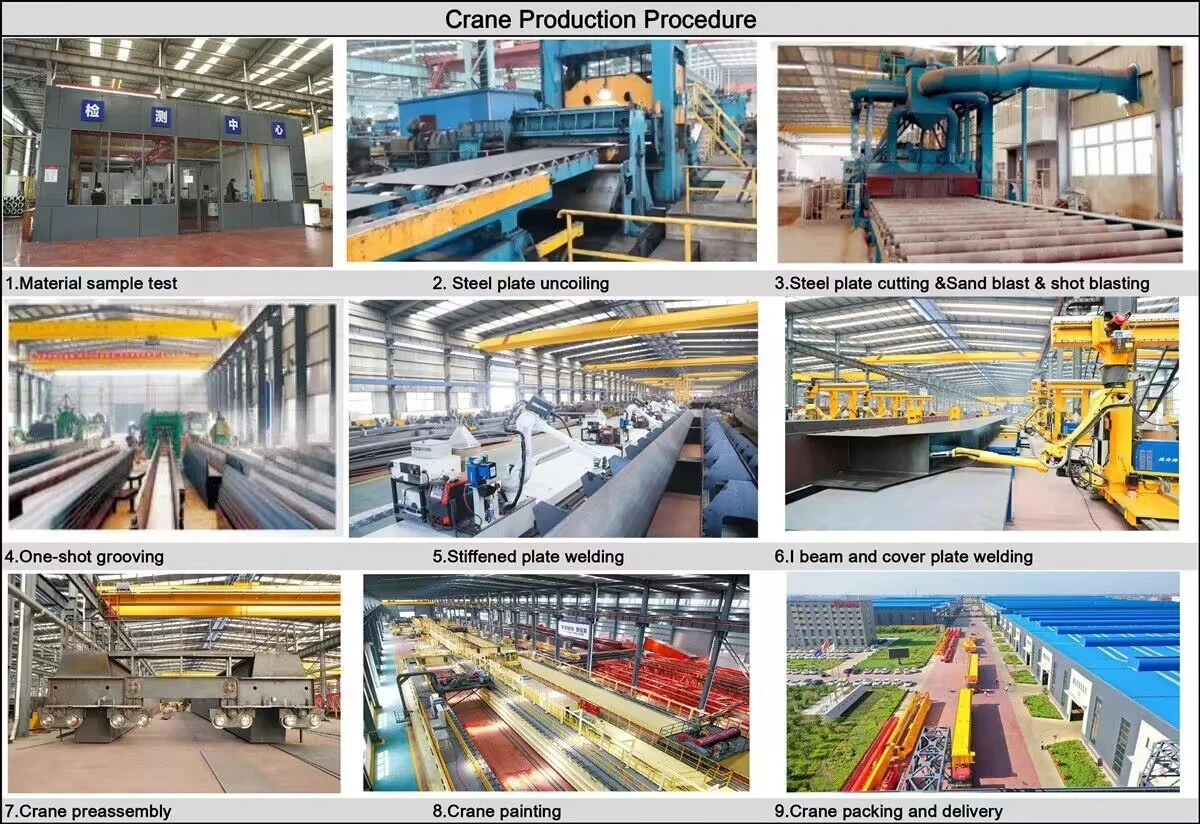
Crane production procedure
1. Design & Engineering
Define specifications (capacity, span, lifting height, speed, control mode).
Create detailed structural and electrical design drawings.
Perform stress analysis and simulation.
Obtain customer approval.
2. Material Procurement
Source high-quality steel plates, sections, motors, electrical components, and hardware.
Verify materials meet required standards (e.g., Q235B/Q345B steel for beams).
3. Cutting & Preparation
Cut steel plates and profiles using CNC plasma cutting or laser cutting machines.
Prepare components by cleaning, deburring, and shaping.
4. Welding & Assembly of Main Beams
Assemble beam components per design.
Use automated or manual welding (MIG, TIG, or submerged arc welding).
Perform stress relief heat treatment to reduce welding stresses.
5. Fabrication of End Carriages & Trolley
Manufacture end carriage frames, wheel assemblies, and trolley frames.
Assemble motors, gearboxes, brakes, and wheels onto frames.
6. Surface Treatment
Sandblast all steel parts to remove rust and impurities.
Apply primer coating followed by final painting (industrial-grade anti-corrosion paint).
7. Installation of Electrical & Control Systems
Install motors, control panels, wiring, limit switches, alarms, and sensors.
Set up pendant, cabin, or remote control units.
Integrate safety devices and test electrical connections.
8. Mechanical Assembly
Mount trolley onto the main beams.
Attach hoisting mechanisms including wire ropes, drums, hooks.
Assemble crane traveling mechanisms on end carriages.
9. Testing & Inspection
Perform no-load and full-load tests for hoisting, trolley travel, and crane travel.
Check limit switches, safety devices, alarms, and braking systems.
Conduct performance evaluation according to standards (ISO, FEM).
10. Final Adjustments & Quality Assurance
Make necessary calibrations and fine-tuning.
Conduct final inspections and certifications.
Package and prepare for delivery.
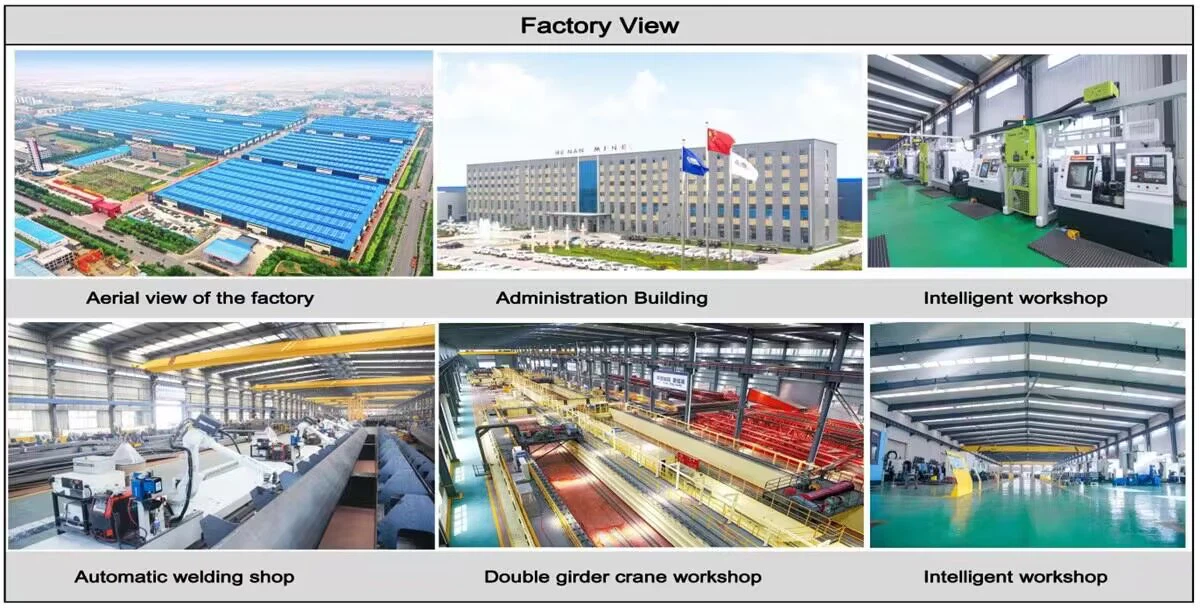
Workshop view:
The company has installed an intelligent equipment management platform, and has installed 310 sets (sets) of handling and welding robots. After the completion of the plan, there will be more than 500 sets (sets), and the equipment networking rate will reach 95%. 32 welding lines have been put into use, 50 are planned to be installed, and the automation rate of the entire product line has reached 85%.


Hot Tags: overhead crane double girder 30 ton, China overhead crane double girder 30 ton manufacturers, suppliers, factory, Double Girder Overhead Crane, Double Girder Overhead Travelling Crane
You Might Also Like


Send Inquiry