










Factory Casting Shop Bridge Crane
Products Description
What is a Casting Shop Bridge Crane?
It is an overhead traveling crane specifically engineered to handle ladles containing molten metal (such as iron, steel, or aluminum), perform furnace charging, and move heavy castings and molds. Safety, reliability, and precision are paramount due to the extreme risks involved.
Common Configurations and Types
Within a casting shop, different cranes may be assigned specific roles:
Ladle Crane (or Pouring Crane):
Primary Role: Transporting and pouring molten metal from the furnace into ladles, and then from ladles into molds.
Key Feature: Precise control is vital. These cranes often have a "micro-speed" or "inching" feature for controlled pouring. The hoist must provide smooth, jerk-free movement.
Charging Crane:
Primary Role: Loading raw materials (scrap metal, pig iron, alloys) into the furnace.
Key Feature: Often equipped with a magnet or a grapple for handling scrap, and a robust hook for charging buckets.
Mold Handling Crane:
Primary Role: Moving sand molds, core boxes, and finished castings.
Key Feature: May have a lower duty cycle but requires precision for positioning heavy, sometimes fragile, molds.
Key Specifications to Consider
When selecting a casting shop bridge crane, focus on:
Capacity: Ranges from 5 tons to over 500 tons, depending on the size of the ladles and furnaces.
Duty Class: Must be M7 (Severe Duty) or M8 (Very Severe Duty).
Lifting Height: Must be sufficient to lift a full ladle clear of all equipment and personnel.
Control System: Variable Frequency Drives (VFDs) for smooth speed control and a fully insulated, air-conditioned operator's cab for ladle cranes.
Safety Certifications: Must be designed and built to relevant safety standards (e.g., CMAA, FEM, ASME).
Conclusion: A Factory Casting Shop Bridge Crane is a sophisticated, mission-critical asset. It is not merely a lifting device but an integral part of the production process, where its performance directly impacts safety, product quality, and overall operational efficiency. Its design is a direct response to the severe demands of the foundry environment.
Core Components:Bearing, Gearbox, Motor, Pump
Place of Origin:Henan, China
Warranty:1 Year
Weight (KG):2000 kg
Video outgoing-inspection:Provided
Machinery Test Report:Provided
Design:Double beam
Effectiveness:high efficiency
Operating speed:High speed operation
Stability:Anti-swing function
Color:Optional
Power Source:110V/220V/230V/380V/440V,customized
Span:7.5-31.5m

Pictures & Components
The components of a Factory Casting Shop Bridge Crane are engineered for extreme duty, combining heavy-duty structural elements with specialized systems for handling molten metal and withstanding a harsh environment.
Here is a detailed breakdown of its key components.
1. Primary Structural System (The Backbone)
Double Main Girders: These are the primary horizontal beams, always in a double configuration for maximum strength and rigidity. They are typically fabricated as box girders from thick steel plate to resist twisting and sagging under extreme loads and high-duty cycles.
End Trucks (Legs): The massive vertical structures at each end of the girders. They house the long travel wheels, drives, and connections to the girders. Designed for exceptional stability to prevent sway when moving ladles of molten metal.
Runway & Rails: A reinforced system consisting of heavy-duty steel rails mounted on robust, often reinforced concrete, runway beams. The entire system must be perfectly aligned to handle the crane's immense weight and dynamic loads.
 |
 |
2. Lifting & Handling System (The Workhorse)
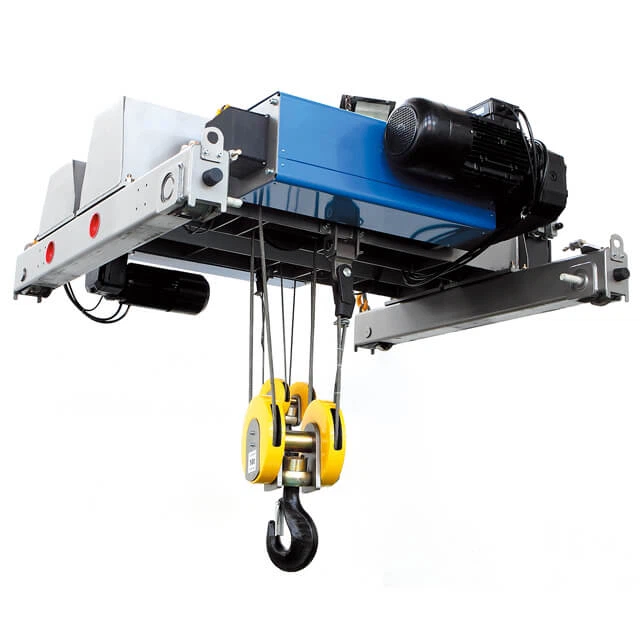
Main Hoist Unit (Severe-Duty):
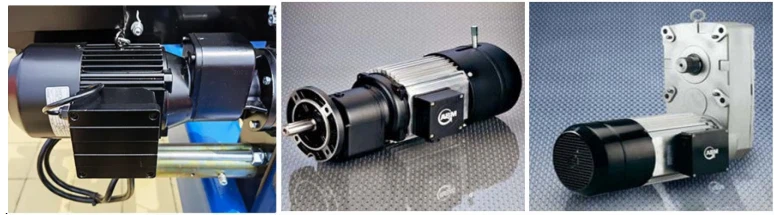
Hoist Motor: High-torque, high-duty cycle motor designed for frequent starts and stops under full load.
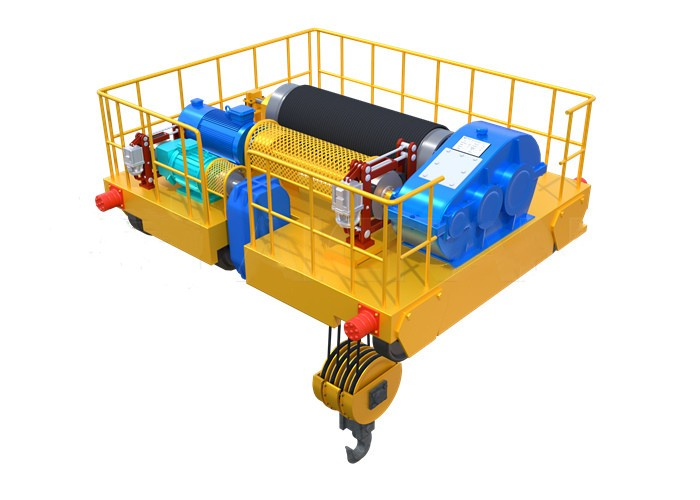
Wire Rope Drum: Machined drum with precise grooving to spool multiple layers of heavy-duty, heat-resistant wire rope.
Gearboxes: Heavy-duty gears designed to handle shock loads from starting and stopping heavy ladles.
 |
 |
Auxiliary Hoist: A second, smaller-capacity hoist on the same trolley for lighter duties like handling molds, cores, or performing maintenance, without using the main hoist.
Specialized Hooks & Attachments:
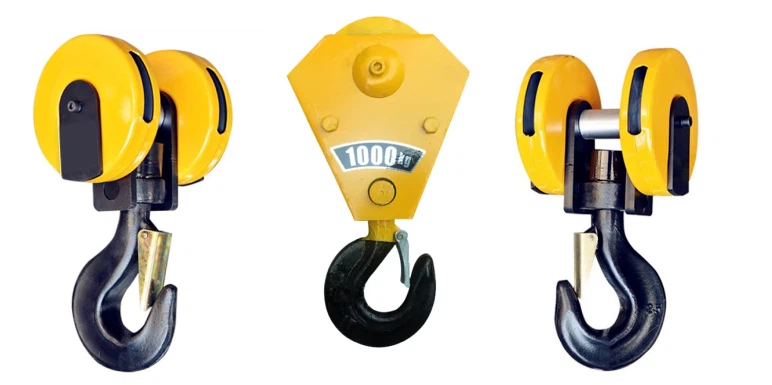
Foundry Ladle Hook: A C-hook or yoke designed to securely engage the trunnions of a molten metal ladle. Often includes a safety latch to prevent accidental disengagement.
Standard Hook: For general lifting of castings, molds, and equipment.
Trolley Frame & Drive: The structure that carries the main and auxiliary hoists. It features powerful drives and flanged wheels to travel smoothly along rails on top of the main girders.
3. Power, Control & Motion Systems (The Nerves)
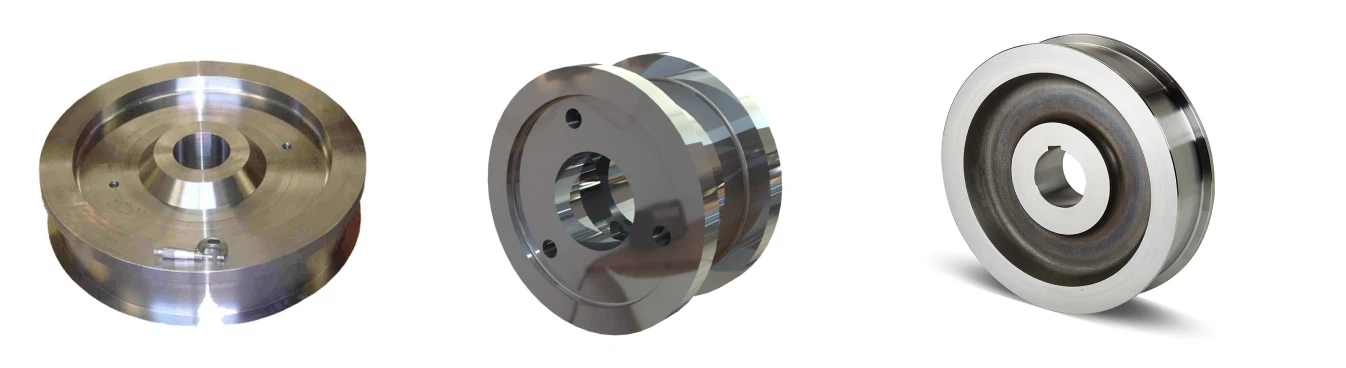
Long Travel Drive: The system that moves the entire crane along the runway. Includes motors, gearboxes, and large-diameter flanged wheels on each end truck.
Power Supply System:
Conductor Bar System (Enclosed Track): Preferred over festoon systems in a casting shop due to better resistance to dust, heat, and sparks. Provides reliable power to the moving crane.
Operator Control:
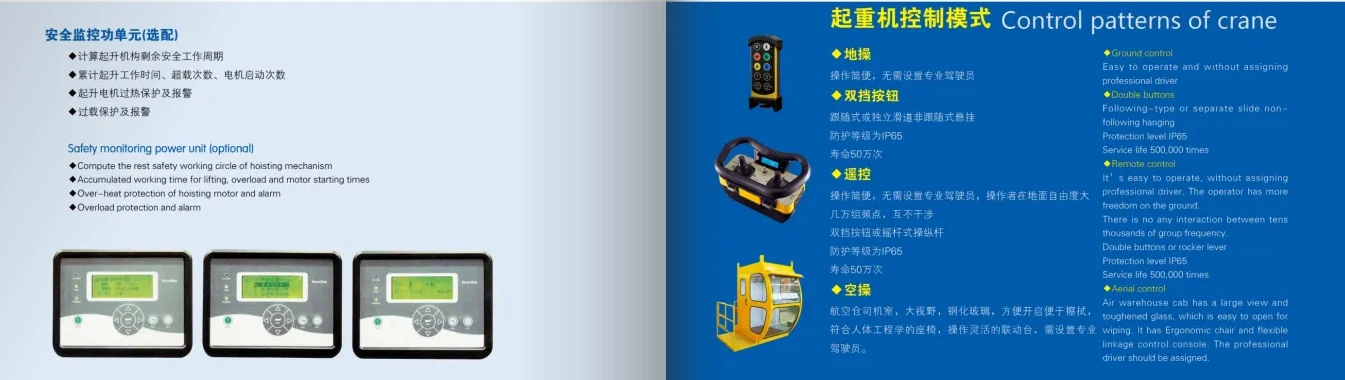
Insulated Pendant Station: A heat-resistant control pendant that allows the operator to walk alongside the load for visibility. The cable and controls are insulated for protection.
Operator's Cab: An air-conditioned and insulated cabin suspended from the crane bridge. This provides the operator with a safe, climate-controlled environment with optimal visibility for precise pouring operations. Cab controls are standard.

4. Critical Safety & Protection Systems (The Lifeline)
Heat and Spark Shielding: Physical barriers and shields made of refractory materials or special metals are installed to protect vital components like wire ropes, the hoist unit, and electrical panels from radiant heat and molten metal splatter.
Redundant Braking Systems:
Primary Hoist Brake: A high-capacity disc or caliper brake.
Secondary (Emergency) Brake: A fully independent backup brake that automatically engages in case of primary brake failure or power loss.
Motor Brakes: Brakes on the travel and trolley motions.

Load Moment Indicator (LMI): A critical instrument that constantly monitors the load weight, preventing overloads. It provides a visual readout to the operator and can automatically cut out hoisting functions if an overload is detected.
Limit Switches: Heavy-duty upper and lower limit switches for all hoisting and travel motions to prevent over-travel.
Emergency Power Down (EPD): Easily accessible buttons to cut all power to the crane in an emergency.
Insulated Wiring: All electrical wiring on the crane uses high-temperature, refractory insulation to prevent melting or short circuits from ambient heat.
Sketch

Main technical

Advantages
Advantages of a Factory Casting Shop Bridge Crane
These cranes offer critical benefits that go far beyond simple lifting, directly addressing the unique challenges of a metal casting environment.
1. Unmatched Safety for a Hazardous Environment
This is the single most important advantage. These cranes are engineered to prevent catastrophic incidents.
Fail-Safe Operation: Features like redundant braking systems and battery backups for controls ensure a ladle of molten metal can be controlled even in a power failure.
Load Security: Specialized ladle hooks with safety latches prevent accidental disengagement.
Overload Prevention: Integrated Load Moment Indicators (LMI) prevent overloading, a common cause of crane failure.
Operator Protection: Insulated, air-conditioned cabs shield operators from extreme heat, fumes, and noise, reducing fatigue and improving focus.
2. Maximized Productivity and Efficiency
Optimized Material Flow: Enables a seamless workflow from raw material charging to molten metal pouring and finished casting handling.
High-Speed Handling: Designed for severe-duty (M7/M8) cycles, allowing for frequent, rapid lifting and moving of heavy loads without downtime.
Dedicated Functionality: Having dedicated cranes (e.g., charging cranes, ladle cranes) eliminates bottlenecks and allows different stages of the process to occur simultaneously.
3. Superior Process Control and Precision
Smooth & Precise Movement: Equipped with Variable Frequency Drives (VFDs) and micro-speed controls for jerk-free operation, which is critical for:
Accurate Pouring: Preventing turbulence and splash when filling molds, which directly impacts casting quality.
Safe Ladle Transfer: Minimizing sway and oscillation of the ladle.
Consistent Operation: Reliable performance ensures repeatable processes, which is key to quality control in manufacturing.
4. Extreme Durability and Low Lifetime Cost
Built for Severity: Components are shielded from heat, sparks, dust, and mechanical shock, leading to a longer service life despite the abusive environment.
Reduced Maintenance: While maintenance is critical, the heavy-duty construction leads to less frequent breakdowns and a higher mean time between failures.
Cost-Effectiveness: The high initial investment is justified by unparalleled reliability, safety, and uptime over the crane's lifespan.
5. Operational Flexibility
Multiple Configurations: Can be equipped with main and auxiliary hoists, magnets, or other attachments to handle every task in the shop, from scrap metal to finished castings.
Comprehensive Coverage: Provides full coverage of the shop floor, maximizing the use of available space.
Application:
Applications in a Casting Shop
The casting shop bridge crane is integral to the entire production lifecycle, as illustrated below.
1. Furnace Charging
Crane Used: Charging Crane (often with a magnet or grapple).
Process: Lifting and loading raw materials (scrap metal, pig iron, alloys) into the melting furnace.
2. Molten Metal Handling
Crane Used: Ladle Crane (or Pouring Crane).
Process:
Tapping: Lifting an empty ladle to the furnace tap-hole to be filled with molten metal.
Transfer: Transporting the full ladle from the furnace to a treatment station or directly to the pouring area.
Pouring: The most critical operation. The crane precisely pours molten metal into molds on the conveyor line. The smooth control is essential for quality.
3. Mold and Casting Handling
Crane Used: Mold Handling Crane or the Auxiliary Hoist on a ladle crane.
Process:
Moving prepared sand molds to the pouring line.
Transporting filled molds to cooling areas.
Moving cooled castings to the shakeout station where castings are separated from the sand mold.
Lifting finished castings for cleaning, finishing, and shipment.
4. Maintenance and Support
Crane Used: Main or Auxiliary Hoist.
Process: Lifting heavy furnace components, replacing linings, and handling other large equipment for repair and maintenance.
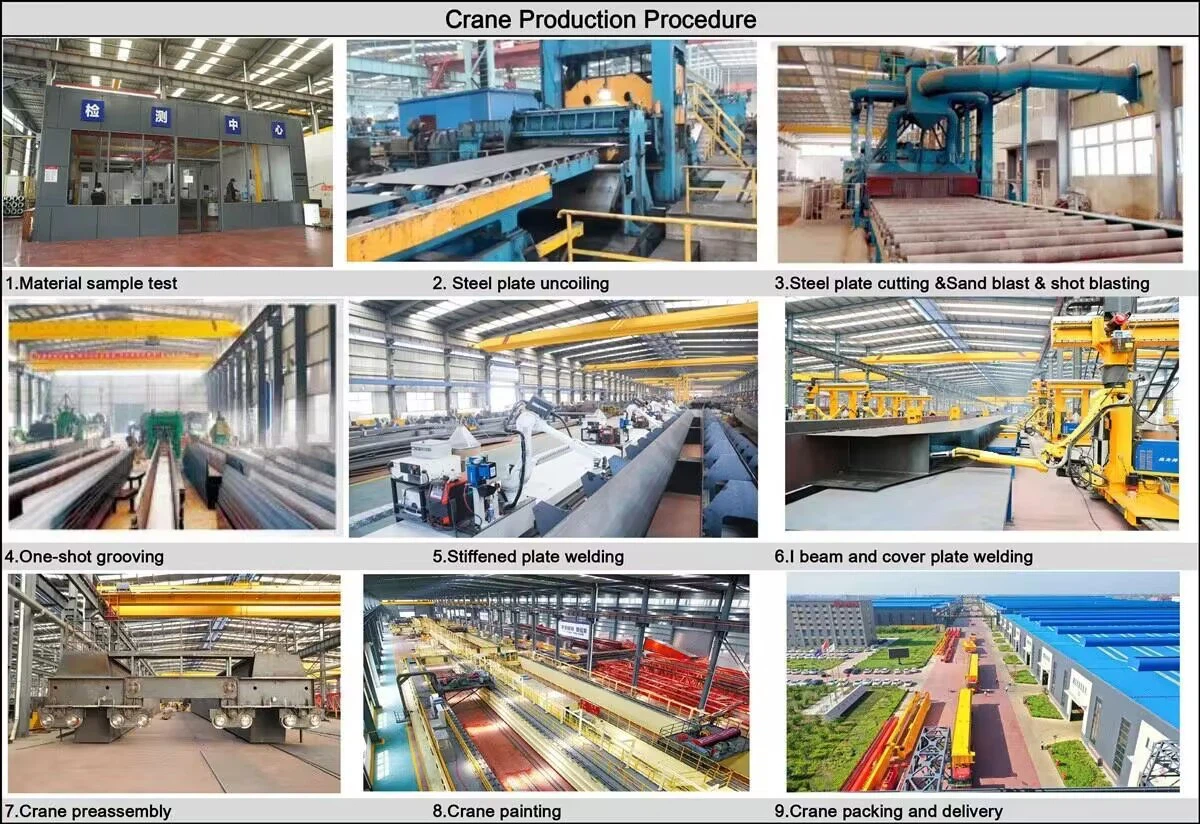
Crane production procedure
The production procedure for a Factory Casting Shop Bridge Crane is a complex, multi-stage process that combines heavy steel fabrication, precise mechanical assembly, and rigorous electrical installation and testing. It must adhere to strict quality and safety standards like ISO, CMAA, FEM, or ASME.
Here is a detailed breakdown of the production procedure.
Stage 1: Design & Engineering
This is the foundational stage where the crane is conceived and specified.
Customer Requirements Analysis: Reviewing capacity, span, lifting height, duty cycle (M7/M8), and specific foundry conditions (heat, dust).
Conceptual & Detailed Design:
Structural Analysis: Using Finite Element Analysis (FEA) to model the bridge girders and end trucks for stress, deflection, and fatigue under full load.
Mechanical Design: Selecting and designing the hoist units, trolley, travel drives, wheels, and shafts.
Electrical Design: Creating schematics for power supply, motor controls, safety circuits, and operator interfaces.
Special Features: Designing heat shields, insulated cab, and other foundry-specific protections.
Bill of Materials (BOM) Creation: A complete list of all raw materials, purchased components (motors, brakes, wire rope), and standard parts.
Stage 2: Material Procurement & Preparation
Procurement: Sourcing raw materials (steel plates, beams, etc.) and purchased components from certified suppliers. Critical items like hoists, motors, and brakes are often from specialized manufacturers.
Material Preparation: Steel plates are shot-blasted and primed for corrosion protection. They are then cut to size using CNC plasma or flame cutting machines for precision.
Stage 3: Structural Fabrication & Assembly
This is the core of the manufacturing process.
Girder Fabrication:
CNC Cutting: Steel plates are cut into the required web and flange profiles.
Sub-Assembly: Components are fit together using jigs to ensure straightness and squareness.
Welding: Automated Submerged Arc Welding (SAW) is used for long, critical welds to ensure deep penetration and high strength. Manual welding is used for smaller, complex areas.
Stress Relieving: The completed girders are heated in a large furnace to relieve internal stresses from welding, preventing future distortion.
Machining: The girder ends and trolley rail mounting surfaces are machined to ensure a perfect fit with the end trucks and smooth trolley travel.
End Truck Fabrication: A similar process of cutting, welding, and machining is used to create the rigid end truck structures that house the wheels and drives.
Stage 4: Mechanical Assembly
Bridge Assembly: The two main girders are bolted or welded to the end trucks to form the complete bridge.
Trolley Assembly: The trolley frame is built, and the main and auxiliary hoist units are mounted onto it. The hoist drums, gearboxes, and motors are aligned with precision.
Drive Unit Installation: The long travel drive assemblies (motor, gearbox, wheel) are installed onto the end trucks. The trolley travel drive is installed on the trolley frame.
Wheel & Rail Installation: All wheels are installed, and the crane rails are mounted on top of the girders for the trolley.
Stage 5: Electrical & Control System Installation
Cab Wiring: The operator's cab is fully wired with control pendants, joysticks, and instrumentation.
Bridge Wiring: Main control panels, Variable Frequency Drives (VFDs), and the conductor bar system are installed along the bridge.
Cable Reels & Trailing Cables: The cable reel for the magnet or hoist and all power and control cables are installed and connected.
Safety Devices: All limit switches, the Load Moment Indicator (LMI) system, anti-collision sensors, and emergency stop buttons are installed and wired.
Stage 6: Works Testing & Inspection (FAT - Factory Acceptance Test)
Before disassembly for shipment, the fully assembled crane undergoes rigorous testing in the factory.
Visual Inspection: Checking for workmanship, proper welding, and assembly.
Dimensional Verification: Ensuring all critical dimensions (span, wheelbase, etc.) match the drawings.
No-Load Test: Running all motions (hoist, trolley, bridge) without a load to check for smooth operation, noise, and alignment.
Load Testing:
Static Load Test: Lifting a test load of 125% of the rated capacity and holding it to check for structural integrity and brake holding capacity.
Dynamic Load Test: Lifting a test load of 110% of the rated capacity and running it through all motions to verify performance under dynamic conditions.
Safety Function Test: Verifying the operation of all limit switches, brakes, E-stops, and the LMI system.
Stage 7: Dismantling, Painting & Packaging
Dismantling: The crane is carefully disassembled into transportable pieces (girders, end trucks, trolley, etc.), with all components clearly marked.
Surface Preparation & Painting: All components are thoroughly cleaned, abrasive-blasted, and painted with a high-performance industrial coating system (often an epoxy primer and polyurethane topcoat) for corrosion protection.
Packaging: Components are packaged with protective covers on machined surfaces to prevent damage during transit.
Stage 8: Site Installation & Commissioning (SAT - Site Acceptance Test)
Site Preparation: Verifying the runway is complete, level, and correctly aligned.
Erection: Using mobile cranes to reassemble the bridge, trolley, and all components on the customer's runway.
Final Connections: Connecting electrical power, finalizing wiring, and checking alignments.
Site Commissioning & SAT: Repeating key functional and safety tests (often with the customer present) to ensure the crane performs perfectly in its final location. Operator training is also provided.
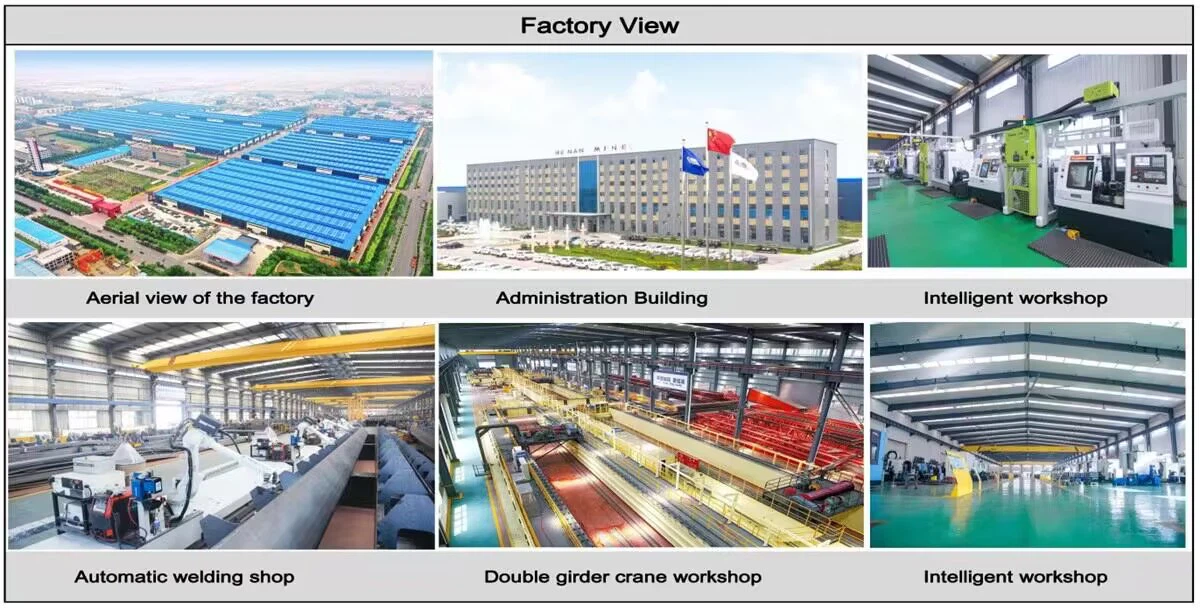
Workshop view:
The company has installed an intelligent equipment management platform, and has installed 310 sets (sets) of handling and welding robots. After the completion of the plan, there will be more than 500 sets (sets), and the equipment networking rate will reach 95%. 32 welding lines have been put into use, 50 are planned to be installed, and the automation rate of the entire product line has reached 85%.


Hot Tags: factory casting shop bridge crane, China factory casting shop bridge crane manufacturers, suppliers, factory, Double Girder Overhead Travelling Crane, Double Girder Overhead Crane
You Might Also Like


Send Inquiry