







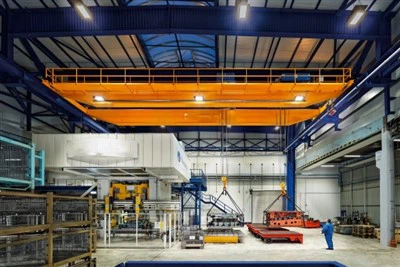
Double Girder Overhead Crane For Factory
Products Description
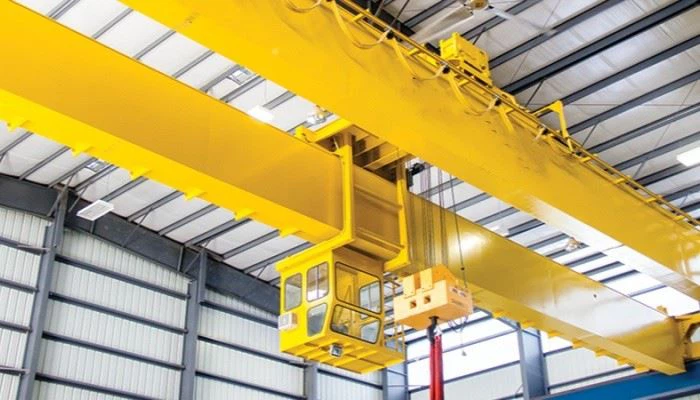
A Double Girder Overhead Crane consists of two parallel girders that support a traveling trolley with a hoist. It runs on top of runway beams mounted along the factory ceiling or building structure.
Core Components:Bearing, Gearbox, Motor, Pump
Place of Origin:Henan, China
Warranty:1 Year
Weight (KG):2000 kg
Video outgoing-inspection:Provided
Machinery Test Report:Provided
Design:Double beam
Effectiveness:high efficiency
Operating speed:High speed operation
Stability:Anti-swing function
Color:Optional
Power Source:110V/220V/230V/380V/440V,customized
Span:7.5-31.5m
Pictures & Components
1.Main beam
1)Structure
Box-type welded design (preferred for high load capacity and rigidity)
Or rolled I-beam with reinforcement (for lighter-duty or cost-sensitive applications)
Fully welded to the end carriages using high-strength welds
2)Material
High-strength low-alloy structural steel such as Q235B, Q345B, or equivalent
Enhanced fatigue resistance and durability
2.Lifting System
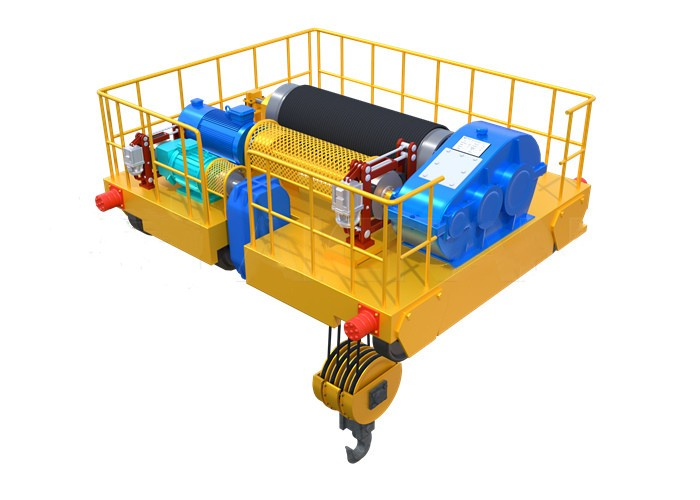
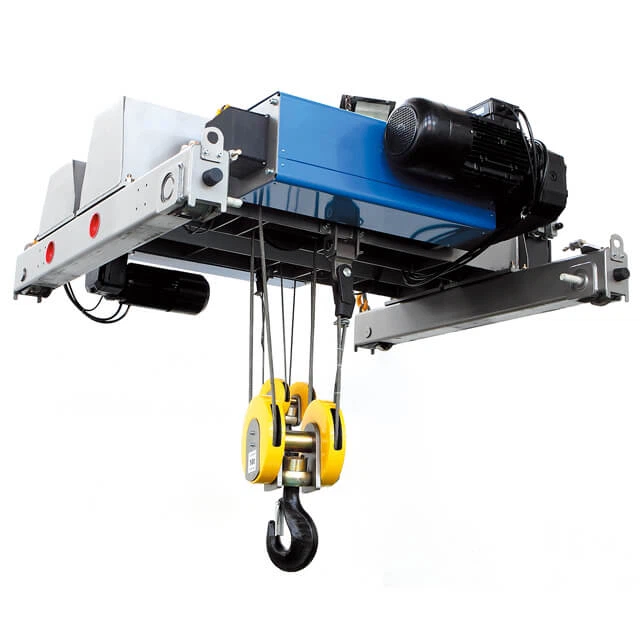
Hoisting Mechanism:Motor, gearbox, drum, wire rope, and hook block work together to lift the load.
Trolley Frame:Houses the hoist and moves along rails installed on top of the main girders.
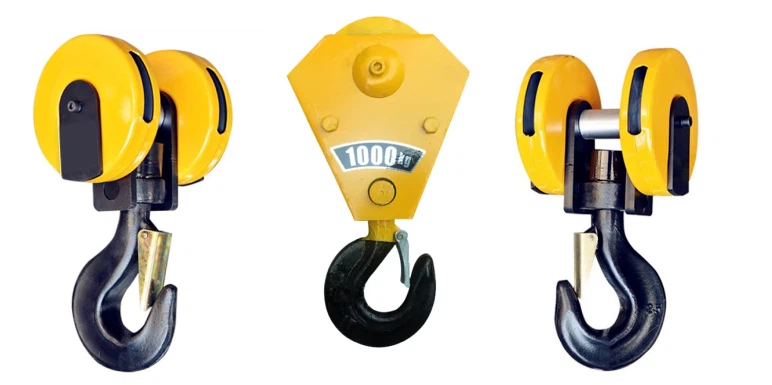
Hook Block:Attaches to the load and moves vertically via the wire rope.
Wire Rope:High-strength steel rope winds around a drum to raise or lower the hook.
Motor & Gearbox:Provides power and torque to the drum via reduction gears.
 |
 |
3.End carriage
Key Functions
Supports the main girders and connects them to the crane runway
Houses the traveling wheels that run on rails mounted on the runway beams
Contains the crane traveling drive system (motor + gearbox + brake)
Ensures smooth, aligned movement of the crane across the span of the factory
 |
 |
4.Crane travelling mechanism
Working Principle
Motor starts: Electrical energy powers the drive motor.
Gearbox engages: Motor output is reduced and torque is increased.
Drive shaft turns: Wheels rotate and move the crane along the runway rails.
Braking: Brake engages automatically when power is cut, holding the crane in place.
5.Trolley travelling mechanism
Design Features
Compact layout for low headroom and good hook approach
Four-wheel or six-wheel design depending on load and span
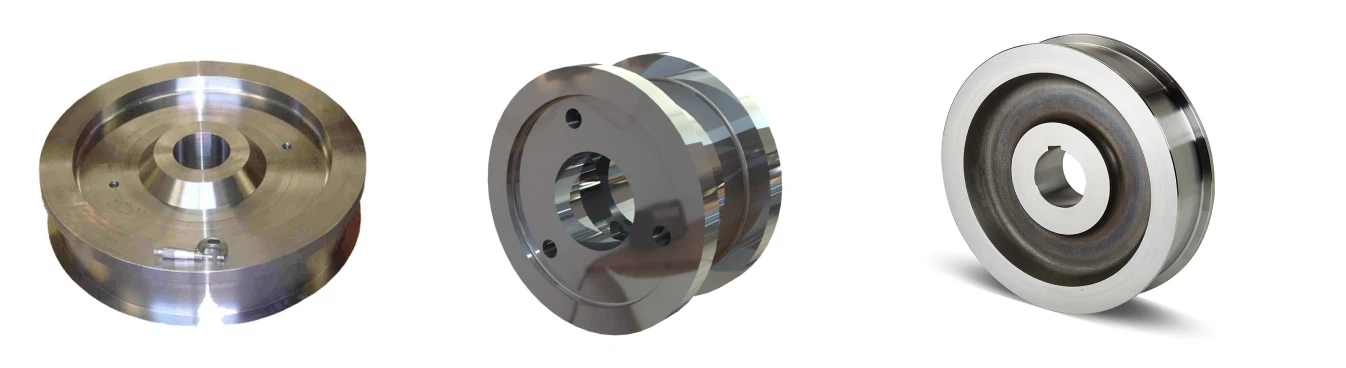
Wheels made of forged steel, heat-treated for wear resistance
Motors may be VFD-controlled for smoother acceleration and braking
Pinion or direct-wheel drive, depending on design and size
6.Crane wheel
1)Factory Use Case Benefits
High durability for heavy-duty, continuous use
Ensures precise tracking along rails even with variable loads
Low rolling resistance increases efficiency and reduces power consumption
Long service life with minimal maintenance if properly aligned and lubricated
2)Inspection & Maintenance Tips
Regularly check flange wear, tread condition, and bearing noise
Ensure alignment with runway rails to avoid abnormal wear
Use lubrication schedule to maintain optimal performance
Replace if flat spots, cracks, or flange damage occur
7.Crane Hook
Material and Manufacturing
Material:High-strength forged alloy steel (e.g., 20Mn, 34CrNiMo6, 35CrMo)
Heat Treatment:Normalized or quenched + tempered for toughness and fatigue resistance
Manufacturing Method:Closed die forging + CNC machining for accuracy and reliability
Surface Finish:Polished with anti-rust coating or blackened for corrosion resistance
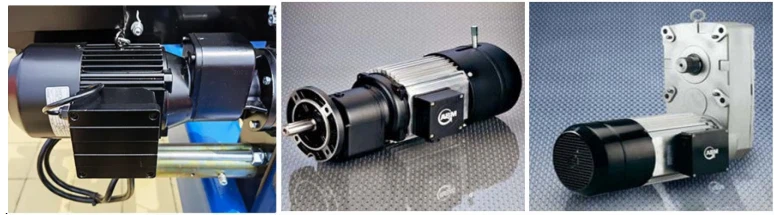
8.Motor
The motor is the powerhouse of a double girder overhead crane. Different motors are used for different crane movements, such as:
Hoisting motor – lifts and lowers the load
Trolley traveling motor – moves the trolley across the bridge girder
Crane traveling motor – drives the entire crane along the runway
Each motor is selected based on its duty cycle, torque, speed, and control precision.

.
9.Sound and light alarm system & limit switch
1)Sound and Light Alarm System
Purpose:
To warn workers of crane movement or abnormal conditions to prevent accidents and enhance operational safety.
2)Limit Switches
Purpose:
To automatically stop motion when a specific limit is reached (e.g., max hoist height, trolley position) to prevent mechanical damage or overtravel.

10.Safety Devices
Overload Protection Device:Prevents lifting loads beyond rated capacity by cutting off hoist power when overloaded
Upper and Lower Limit Switches:Stops hoisting motion at max/min hook travel to avoid cable overwinding or slack
Anti-Collision Device:Detects nearby cranes or obstacles to prevent collisions (using radar or infrared sensors)
Emergency Stop (E-Stop):Immediately cuts all power to crane motions when pressed, for rapid shutdown
Brake Monitoring System:Ensures crane brakes are functioning properly and engage when needed
Load Moment Indicator (LMI):Monitors load weight and boom angle (if applicable), warns or cuts power when unsafe
Crane Buffer Stops:Physical buffers at runway ends to absorb impact and prevent crane derailment
Travel Limit Switches:Prevent crane and trolley from moving beyond designated runway or girder ends
Wire Rope Slack Detector:Detects slack in hoisting rope to prevent entanglement or dropped load
Phase Failure Protection:Prevents motor damage or unsafe operation if electrical phase loss occurs
Over-speed Protection:Monitors and prevents unsafe speeds in hoisting or travel
Thermal Protection:Protects motors from overheating by monitoring temperature sensors
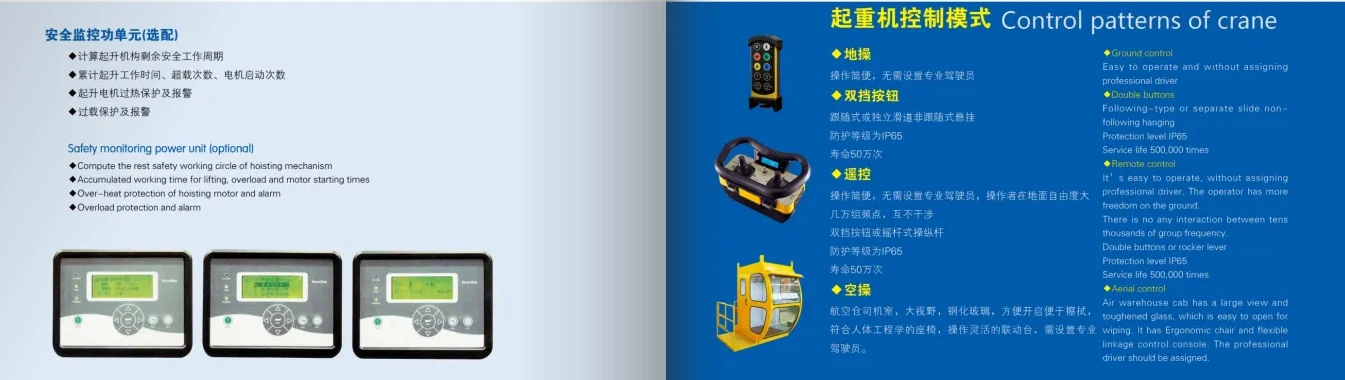
11.Control Mode
1)Pendant Control
Description: A wired control pendant with push buttons or joystick controls.
Advantages:
Simple and reliable
Operator stays close to the load for precise handling
Usage: Common in workshops or small factory setups.
2)Radio Remote Control
Description: Wireless handheld remote transmitter controlling crane motions.
Advantages:
Greater freedom of movement for the operator
Improved safety by operating at a safe distance
Features: Usually includes emergency stop and multiple control channels.
Usage: Widely used in large factories and outdoor applications.
3)Cabin Control
Description: Operator sits in a cabin mounted on the crane bridge.
Advantages:
Good visibility over the load and workspace
Suitable for heavy, large-scale, or continuous operations
Usage: Found in heavy industry plants and steel mills.
4)Semi-Automatic & Automatic Control
Description: Computerized control system with PLC and sensors.
Advantages:
Precise, repeatable motions
Reduced operator fatigue and increased productivity
Integration with factory automation (MES, ERP)
Usage: High-end factories and automated production lines.
5)Control Features Common to All Modes
Variable Frequency Drives (VFD): For smooth acceleration, deceleration, and speed control.
Emergency Stop: Immediately halts all crane motions.
Load Monitoring Integration: Prevents overload conditions.
Interlocking: Ensures safe sequence of operations.
12.Sketch

Main technical

Advantages
1. Higher Load Capacity
Supports heavier loads typically ranging from 10 tons up to 100 tons or more.
Double girders provide greater strength and stability compared to single girder cranes.
2. Greater Span Length
Can cover longer bridge spans to accommodate larger work areas.
Suitable for wide factory floors, warehouses, and heavy manufacturing plants.
3. Improved Stability and Rigidity
The dual girder design reduces deflection under load.
Ensures safer and smoother lifting with less vibration or sway.
4. Better Hoisting Height
Allows the use of larger hoists with deeper hooks, maximizing lifting height.
Useful in factories with high ceilings or where maximum hook approach is needed.
5. Enhanced Durability
Robust construction suited for heavy-duty industrial applications.
Longer service life with less frequent maintenance under heavy usage.
6. Flexibility and Customization
Can be fitted with advanced lifting equipment like magnetic lifters, spreader beams, or vacuum lifters.
Easy to customize controls, safety devices, and automation features.
7. Efficient Operation
Capable of faster lifting and traveling speeds, improving productivity.
Supports precise load positioning with advanced control modes (VFD, PLC).
8. Safety
Designed to integrate multiple safety devices for overload protection, limit switches, and emergency stops.
Reduces risk of accidents and equipment damage.
9. Cost-Effectiveness for Heavy Loads
More economical than multiple single girder cranes for the same capacity and span.
Lower total cost of ownership due to durability and efficiency.
Application:
1. Heavy Manufacturing
Handling heavy components in industries like automotive, aerospace, shipbuilding, and machinery production.
Moving raw materials, assemblies, and finished products efficiently on the factory floor.
2. Steel and Metal Processing
Transporting steel coils, plates, beams, and fabricated metal parts.
Used in rolling mills, foundries, and metal fabrication plants.
3. Power Plants and Energy Sector
Maintenance and installation of heavy equipment such as turbines, generators, and transformers.
Handling large parts for hydro, thermal, and nuclear power plants.
4. Construction and Precast Concrete
Lifting large precast concrete elements like beams, columns, and panels.
Material handling in precast factories or construction sites with factory-style layouts.
5. Warehousing and Logistics
Moving heavy pallets, containers, and bulky goods in large warehouses and distribution centers.
Loading and unloading heavy cargo from trucks or railcars.
6. Automotive Industry
Assembly line material handling of engines, chassis, and body parts.
Facilitates production flow and improves factory efficiency.
7. Shipyards and Offshore Industries
Transporting heavy ship components, engines, and offshore modules.
Handling bulky and oversized parts safely and precisely.
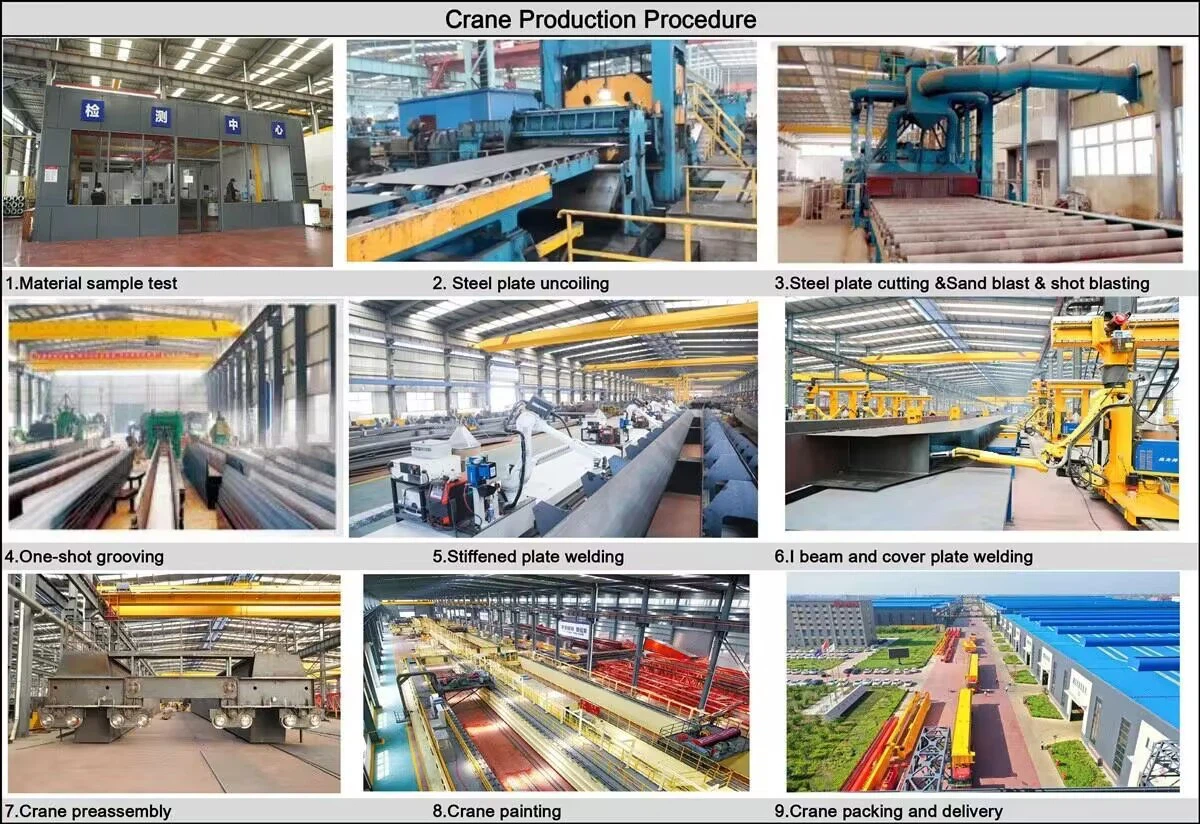
Crane production procedure
1. Design and Engineering
Requirement Analysis: Assess load capacity, span, lifting height, and operational conditions.
Structural Design: Design main girders, end carriages, trolley, and support structure using CAD software.
Component Specification: Select motors, brakes, control systems, safety devices, and electrical components.
Stress and Safety Calculations: Perform FEM (Finite Element Method) analysis to ensure strength and durability.
2. Material Procurement
Order high-quality raw materials such as structural steel plates, channels, and mechanical parts.
Source electrical and mechanical components from trusted suppliers.
3. Cutting and Fabrication
Steel Cutting: Cut steel plates and sections to size using CNC plasma or laser cutting machines.
Bending and Rolling: Shape steel parts like girders or beams if needed.
Welding: Assemble main girders, end carriages, and trolley frames through MIG/MAG welding.
Machining: Machine parts such as wheel shafts, gears, and bearing housings to precise tolerances.
4. Surface Treatment
Cleaning: Remove rust, oil, and dirt via sandblasting or shot blasting.
Priming and Painting: Apply primer and industrial-grade paint for corrosion protection and aesthetics.
5. Assembly
Mechanical Assembly: Assemble girders, trolley, end carriages, wheels, and motor mounts.
Installation of Mechanical Parts: Fit motors, brakes, gearboxes, limit switches, and alarms.
Electrical Wiring: Install control panels, connect motors, limit switches, and alarm systems.
6. Testing and Inspection
Static Load Test: Verify structural integrity under rated and overload conditions.
Operational Test: Run hoisting, trolley travel, and crane travel functions to check smoothness and control.
Safety Devices Test: Check all limit switches, overload protection, emergency stops, and alarms.
Quality Inspection: Ensure compliance with design specifications and standards (ISO, EN, ASME).
7. Packaging and Shipping
Disassemble (if required) for easier transport.
Secure packaging with protective materials to prevent damage during transit.
Ship to customer site with detailed manuals and installation instructions.
8. Installation and Commissioning
On-site assembly and installation by qualified technicians.
Final testing under operational conditions.
Training operators on safe use and maintenance.
Workshop view:
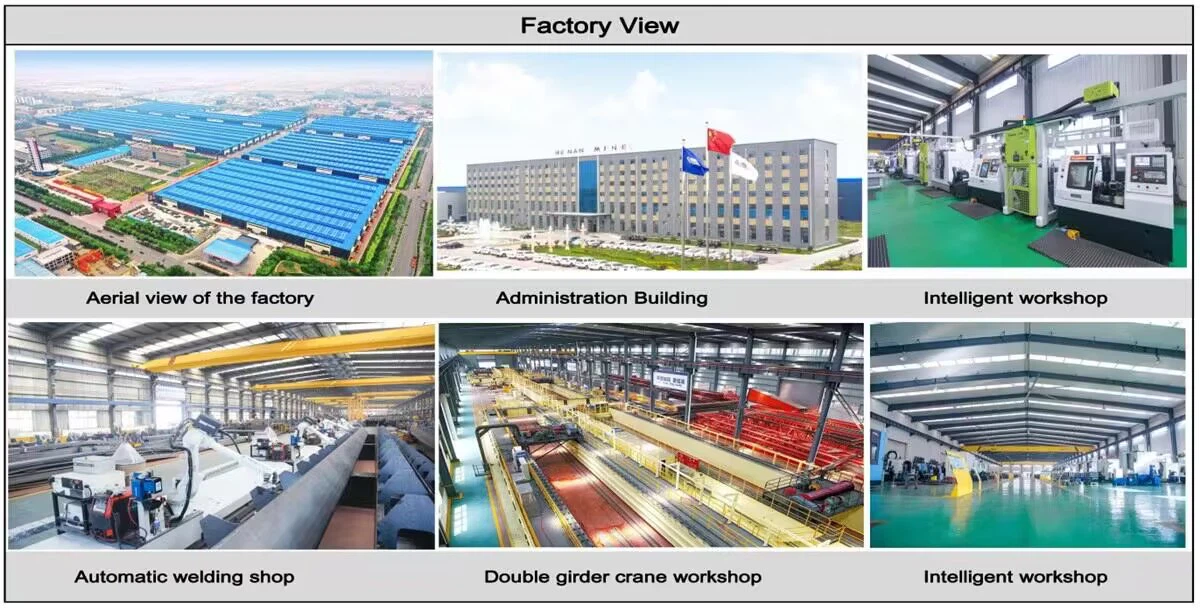
The company has installed an intelligent equipment management platform, and has installed 310 sets (sets) of handling and welding robots. After the completion of the plan, there will be more than 500 sets (sets), and the equipment networking rate will reach 95%. 32 welding lines have been put into use, 50 are planned to be installed, and the automation rate of the entire product line has reached 85%.


Hot Tags: double girder overhead crane for factory, China double girder overhead crane for factory manufacturers, suppliers, factory, Double Girder Overhead Travelling Crane, Double Girder Overhead Crane
You Might Also Like


Send Inquiry