










Workstation Bridge Crane
Products Description
A workstation bridge crane is a specialized material handling system designed to enhance productivity, safety, and efficiency in various industries. These cranes are ideal for repetitive tasks that involve moving lighter loads across a designated workspace.
Workstation bridge crane Key Features:Ergonomic Design: Engineered for ease of use, enabling smooth and precise handling with minimal physical effort.Lightweight Construction: Often made from aluminum or steel, these cranes are robust yet easy to maneuver.Load Capacities: Typically designed to handle loads ranging from 125 kg to 2,000 kg, suitable for lighter material handling needs.
Workstation bridge crane Flexible Installation: Available in freestanding or ceiling-mounted configurations to adapt to workspace constraints.
Low-Maintenance Operation: Built with durable components to ensure long-term reliability and minimal downtime.Scalable Solutions: Modular systems allow for future expansion or reconfiguration as operational demands grow.Benefits:Increased Efficiency: Reduces manual labor and speeds up repetitive lifting and positioning tasks.
3)Workstation bridge crane Space Optimization: Freestanding systems or ceiling mounts free up valuable floor space.Cost-Effective Investment: Offers a durable and long-lasting solution with minimal maintenance costs.Typical Applications:Manufacturing: Moving tools, equipment, and components on production lines.Assembly Work: Positioning and securing parts during assembly processes.Warehousing: Handling lighter goods for storage or dispatch.Precision Industries: Transporting delicate or sensitive items in labs or electronics facilities.
Warranty:1 Year
Weight (KG):2000 kg
Feature:Bridge Crane
Condition:New
Rated Lifting Moment:50KN-3000KN
Max. Lifting Load:500ton
Span:10-80m
Color:Optional
Capacity:1-20t
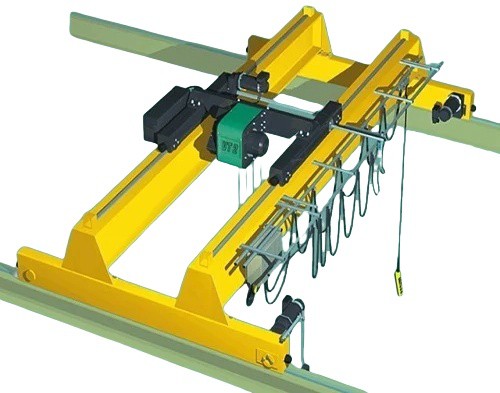
Type:Double beam
Lifting mechanism:Eliectric Hoist
Work Duty:A3-A4

Pictures & Components
1.Main beam
The main beam is a crucial component of a workstation bridge crane, forming the structural backbone that supports and transfers the load. It is designed to deliver strength, stability, and precision, ensuring safe and efficient material handling.
workstation bridge crane Key Features of the Main Beam:High-Strength Materials: Constructed from durable materials such as steel or aluminum to handle various load capacities while minimizing weight.Customizable Lengths: Tailored to meet the specific span requirements of the workspace, ensuring optimal coverage.Lightweight Design: Aluminum beams are commonly used for their strength-to-weight ratio, enabling smoother and easier movement.
Workstation bridge crane Integrated Tracks: Features built-in running surfaces or tracks for the trolley and hoist to glide seamlessly along the beam.Modular Construction: Allows for easy assembly, disassembly, or future system upgrades without extensive modifications.Low Deflection: Engineered to maintain rigidity under load, reducing sway and enhancing operational precision.
Workstation bridge crane Functions of the Main Beam:Load Transfer: Supports the trolley and hoist, evenly distributing the weight of the load across the beam and the supporting structure.Guided Movement: Provides a stable path for the trolley, ensuring smooth, controlled horizontal movement.Durability: Resists wear and tear from repetitive use, ensuring long-term reliability in demanding environments.
Workstation bridge crane Customization Options:Material Choices: Steel for heavy-duty applications; aluminum for lighter operations requiring ease of movement.Coatings: Options for corrosion resistance or specialized finishes to suit environments such as clean rooms or outdoor areas.Beam Profile: Available in various profiles like box, I-beam, or custom extrusions based on load requirements.
Lifting System
The lifting system is the core mechanism of a workstation bridge crane, responsible for safely raising, lowering, and positioning loads. It typically consists of a hoist, trolley, and associated controls, all designed to work seamlessly within the crane system.
workstation bridge crane is Key Components of the Lifting System:The primary device for lifting and lowering loads.Types include electric chain hoists, manual hoists, or pneumatic hoists, depending on the application.Equipped with safety features such as load limiters and overload protection.
Control System:May include pendant controls, radio remote controls, or integrated control panels.Provides operators with precise control over load movement and positioning.
Features of the Lifting System:Variable Load Capacities: Handles loads typically ranging from 125 kg to 2,000 kg, with options for customization.Smooth Operation: Designed for controlled and jerk-free movement to ensure load stability.Compact Design: Optimized for workstation use, providing high performance within limited spaces.
High Safety Standards: Includes fail-safes such as emergency stop functions, brake systems, and overload sensors.Durable Construction: Made with high-quality materials to withstand repeated use and reduce wear.
 |
 |
End carriage
Workstation Bridge Crane - End Carriage Overview The end carriage is a critical component of a workstation bridge crane, supporting the main beam and facilitating smooth movement along the crane's runway. It ensures stability, alignment, and efficient operation of the entire system.
Key Features of the End Carriage:Structural Design:Fabricated from high-strength steel or aluminum to provide durability and support for the crane's load.Designed to evenly distribute the load across the runway rails or tracks
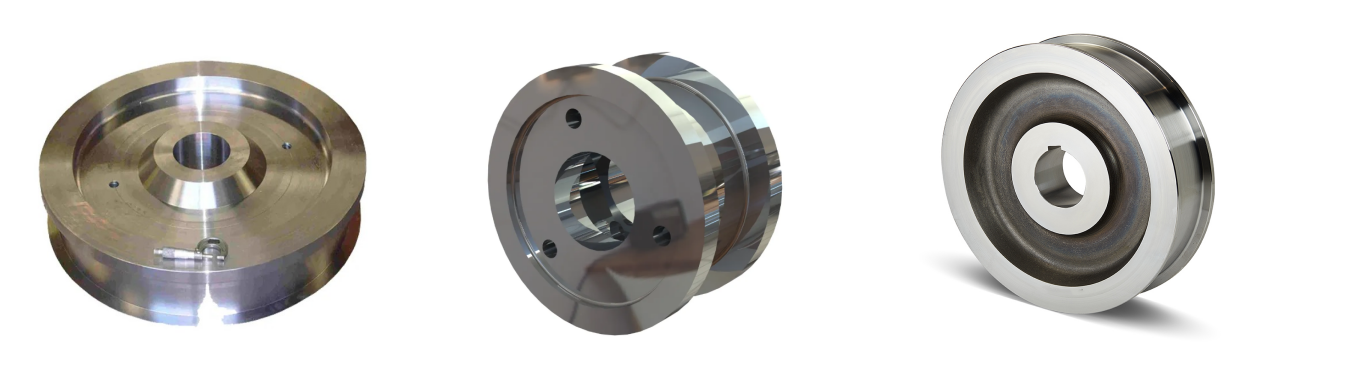
Equipped with precision-engineered wheels made from robust materials such as forged steel or polymer.Wheels may have a flat or tapered profile, depending on the runway type.Features anti-friction bearings to ensure smooth, low-resistance movement
Travel Mechanism:Can be manual, electric, or pneumatic, depending on the application and operational needs.Electric end carriages include motors with variable speed drives for precise control.
Compact Design:Optimized for minimal space requirements, ensuring a low-profile fit within the crane structure.
 |
 |
4.Crane travelling mechanism
The crane travelling mechanism is a fundamental component of a workstation bridge crane, enabling smooth horizontal movement of the crane along its runway. This mechanism ensures precise positioning and efficient material handling within the workspace.
Key Components of the Crane Travelling Mechanism:Travel Drive System:Manual Travel: Operated by pushing or pulling, suitable for lighter loads and smaller works paces.Motorized Travel: Uses electric motors to drive the crane along the runway for faster and more automated operations.
Variable Speed Control: Allows operators to adjust the travel speed for precision and safety.Wheels and Bearings:Precision-engineered wheels made from durable materials such as steel or polyurethane.Equipped with anti-friction bearings for smooth, noise-free movement.Wheels may have a flat or tapered profile depending on the runway design.
Runway System:The tracks or rails along which the crane moves.Can be floor-mounted or ceiling-supported, depending on the workstation configuration.
5.Trolley travelling mechanism
Key Components of the Trolley Travelling Mechanism:Trolley Frame:The structural base that supports the hoist.Made from high-strength steel or aluminum for durability and lightweight operation.
Wheels: Typically made of steel or nylon, designed to move smoothly along the track or beam.Bearings: Anti-friction bearings ensure smooth and quiet movement, even under load.
Drive System:Manual Drive: Operated by pushing or pulling the trolley, suitable for lighter loads.Motorized Drive: Uses electric or pneumatic motors for faster and automated movement, ideal for heavier loads or frequent operations.Variable Speed Control: For precise adjustment of the trolley's travel speed.
Guide Rollers:Help maintain alignment and reduce lateral movement.Prevent the trolley from derailing during operation.
Crane wheel
Material Composition:Typically made from high-strength materials like forged steel, cast iron, or polyurethane to ensure durability and resistance to wear.
Design Profiles:Flat Profile: Commonly used on flat tracks for maximum stability.Tapered Profile: Ensures self-alignment on specific rail designs, minimizing side-to-side movement.
Bearing Systems:Equipped with anti-friction bearings to minimize rolling resistance and ensure smooth motion.Designed to handle both radial and axial loads effectively.
Customization:Wheel sizes, materials, and profiles can be tailored to meet specific application needs.Options for noise-dampening or low-friction designs for specialized environments.Functions of Crane Wheels:Load Transfer: Distributes the combined load of the crane and its payload to the runway system.
Crane Hook
Key Features of Crane Hooks:Material and Construction:Made from high-strength alloy steel to handle heavy loads and resist deformation.Forged or heat-treated for increased durability and toughness.
Load Capacities:Available in various capacities, typically ranging from 125 kg to 2,000 kg for workstation cranes.Equipped with a safety margin to handle unexpected load fluctuations.
Hook Design:Single Hook: Commonly used for standard lifting applications.Double Hook: For larger or more balanced loads requiring dual-point lifting.
Safety Features:Latch Mechanism: Prevents accidental detachment of the load, ensuring secure lifting.Swivel Functionality: Allows the hook to rotate 360 degrees, improving load alignment and reducing stress on the lifting mechanism.

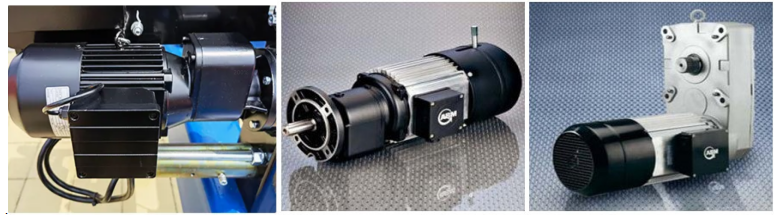
Motor
Key Features of Crane Motors:Types of Motors:Hoist Motor: Powers the lifting mechanism, designed for precise vertical movement.Travel Motor: Drives the trolley or crane along the tracks or runway for horizontal movement.Dual-Purpose Motors: Used in compact designs to handle both lifting and movement.
Power Supply:Operates on electric power (most common) with single-phase or three-phase options, depending on load capacity and application.Pneumatic motors may be used for specialized environments like explosion-proof or hazardous areas.
Speed Control:Includes variable frequency drives (VFD) to allow precise speed adjustment for controlled movement.Supports both low and high-speed operations for diverse handling needs.
Design Features:Compact and Lightweight: Optimized for workstation environments with space constraints.Low Noise and Vibration: Enhances operator comfort and workplace safety.High Efficiency: Reduces energy consumption during prolonged use.
Safety Enhancements:Thermal Protection: Prevents overheating with built-in sensors.Overload Protection: Ensures the motor stops operating if the load exceeds the safe limit.Brake Systems: Electromagnetic or mechanical brakes for instant stopping in emergencies.

.
Sound and light alarm system & limit switch
Sound and Light Alarm System Key Features:Audible Alerts:Equipped with a loud siren or buzzer to warn operators and nearby personnel of crane movement or potential hazards.Sound levels are adjustable to suit the workplace environment.
Visual Signals:Bright LED or strobe lights provide visual warnings, ensuring visibility in noisy or low-light conditions.Multi-color lights (e.g., red for danger, yellow for caution) for clear communication of the crane's operational status.
Integrated Design:Activated automatically during lifting, lowering, or travel operations.Can be synchronized with other safety systems like overload protection or emergency stops.
Applications:Used in environments with heavy machinery, high worker density, or limited visibility to ensure everyone remains aware of crane movements.

Safety Devices
Overload Protection Device,Purpose: Prevents the crane from lifting loads that exceed its maximum capacity.Functionality:Monitors the weight of the load in real-time.Activates alarms or stops lifting operations if the load exceeds the safe limit.
Limit Switches;Purpose: Controls the range of motion for the crane, trolley, and hoist.Types:Hoist Limit Switch: Stops lifting or lowering when the maximum or minimum height is reached.Travel Limit Switch: Prevents the crane or trolley from overrunning the runway.
Benefits:Protects the crane from mechanical stress.Prevents collisions and over-travel accidents.3. Anti-Collision System Purpose: Prevents collisions between multiple cranes operating on the same runway or within close proximity.
Sound and Light Alarm System Purpose: Alerts workers of crane operations to prevent accidents.Functionality:Emits audible and visual signals during lifting, lowering, or travel.
. Emergency Stop System;Purpose: Allows immediate halting of crane operations during emergencies.Functionality:
11.Control Mode
1) Manual control: The operator directly controls the various operating mechanisms of the crane through buttons or switches on the manual control panel. Simple operation, suitable for small or short-term operations; can be quickly adjusted according to specific needs.
2) Wireless remote control: The various functions of the crane are controlled by a wireless remote control, and the operator can operate at a safe distance. Improves the flexibility and safety of operation, especially suitable for complex or dangerous working environments.
3) Wired remote control: Operate through the control line connected to the crane, and the operator inputs instructions through a handheld controller. Compared with wireless remote control, the signal is stable and not easily interfered with, which is suitable for operation in a fixed area.
4) Automated control: Automated operation is achieved through PLC (Programmable Logic Controller) or computer system, and the operation of the crane is controlled according to the preset program. Improves the accuracy and consistency of operation, suitable for large-scale and repetitive operations, and reduces interference from human factors.
5) Frequency conversion control: The speed of the motor is adjusted by the frequency converter to achieve precise control of the operating speed of the crane. It can smoothly accelerate and decelerate, improve the safety and efficiency of lifting operations, and reduce the impact on equipment.

12.Sketch

Main technical

Advantages
1) High load-bearing capacity
Double-beam bridge cranes adopt a double main beam structure, which can carry heavier loads and are suitable for lifting heavy materials. They are often used in industries such as steel, shipbuilding and heavy machinery manufacturing.
2) Strong stability
The double-beam design provides better stability and rigidity, which can effectively reduce the tilting and shaking when lifting heavy objects, ensuring safe operation.
3) Large lifting height
Due to the design of the main beam, double-beam bridge cranes can provide a larger lifting height, which is suitable for high-altitude operations and large space environments.
4) Wide span range
This type of crane can be designed with different spans according to needs, suitable for various sites, can cover a larger working area, and improve work efficiency.
5) Flexible operation
Double-beam bridge cranes are usually equipped with trolleys and large vehicles, which can move flexibly on the main beam to achieve multi-directional lifting and adapt to complex operation requirements.
6) Safe operation
Equipped with a variety of safety devices, such as overload protection, limit switches and sound and light alarm systems, to ensure safety during operation and reduce the risk of accidents.
Application
Manufacturing: Used to lift billets, steel and other heavy materials in steel mills. Lift large mechanical parts and tools in machine tool workshops.
Construction: Used to lift building materials such as concrete components, steel structures and other heavy equipment. Handle heavy materials in the construction of high-rise buildings.
Shipbuilding: Used to lift and move large hulls, cabins and equipment, suitable for complex shipbuilding processes.
Warehousing and logistics: Used to lift and stack heavy objects in large warehouses and logistics centers to improve operating efficiency. In ports and container terminals, double-beam bridge cranes are used to move containers and have strong adaptability.
Mining: Used to lift heavy equipment, ores and other materials in mines to adapt to harsh working environments.
Power industry: Equipment installation and maintenance in power plants, especially in high-altitude operations. Used to lift and move heavy power generation equipment.
Transportation industry: Used to move heavy goods and improve cargo loading and unloading efficiency.
Crane production procedure
1. Design stage: Understand the specific needs of customers, including load-bearing capacity, span, height and use environment. Carry out preliminary design according to the needs and draw scheme drawings, including structural design, power system and control system design. Carry out structural strength, stability and dynamic analysis to ensure that the design meets relevant standards and specifications.
2. Material preparation: Select suitable materials according to design requirements, such as high-strength steel, aluminum alloy, etc., to ensure good mechanical properties and durability. Purchase the required raw materials and components according to the design drawings, including motors, reducers, hooks, control systems, etc.
3. Processing and manufacturing: Cut the steel and process the main beam, end beam and other structural parts according to the design dimensions. Connect the cut parts by welding to form the main structural frame of the crane. Finish the welded components, including drilling, turning and milling, to ensure the matching accuracy of each component.
4. Assembly: Preliminary assembly of the processed components to check the stability and matching of the structure. Install the lifting mechanism, trolley running mechanism and trolley running mechanism to ensure that all moving parts can run smoothly.
5. Electrical system installation: Install motors, inverters, control panels and other electrical components to ensure that the electrical system is connected correctly. Arrange the cable lines reasonably to ensure safety and beauty, and reduce interference and wear.
6. Commissioning and testing: Test the various functions of the crane, including lifting, moving, braking and alarm systems, to ensure that all functions are normal. Carry out safe load tests to ensure that the crane operates stably under maximum load and meets safety standards.
7. Inspection and quality control: Carry out quality inspections on each link of production to ensure that all components meet design and standard requirements. Carry out qualification certification according to relevant regulations to ensure that the equipment meets national and industry standards.
8. Delivery and installation: Transport the manufactured crane to the customer site. Install it at the customer site, including fixing the foundation, commissioning and connecting the power supply. Provide operation training to customers to ensure that they can use the equipment safely and effectively, and officially deliver it for use.

Workshop view:
The company has installed an intelligent equipment management platform, and has installed 310 sets (sets) of handling and welding robots. After the completion of the plan, there will be more than 500 sets (sets), and the equipment networking rate will reach 95%. 32 welding lines have been put into use, 50 are planned to be installed, and the automation rate of the entire product line has reached 85%.


Hot Tags: workstation bridge crane, China workstation bridge crane manufacturers, suppliers, factory, Bridge Crane, Double Girder Bridge Crane with Electric Hoist
You Might Also Like


Send Inquiry