







Double Girder Bridge Travelling Crane
Products Description
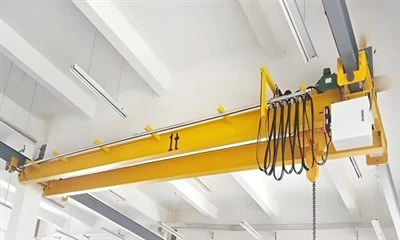
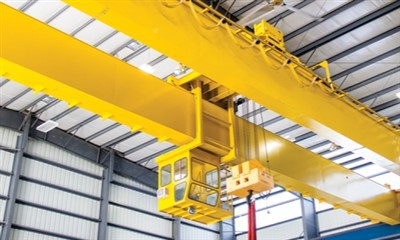
The Double Girder Bridge Travelling Crane is an advanced lifting solution designed for heavy-duty industrial applications. Featuring a robust double-girder design, it ensures exceptional strength, stability, and safety. This crane is widely utilized in manufacturing, logistics, and construction industries, offering efficient material handling across large spans and heavy loads.
The Double Girder Bridge Travelling Crane has high load capacity, capable of handling loads from 10 to 500 tons (customizable). Equipped with advanced motor and control system, it operates smoothly. The span can be customized to meet different application requirements. High-quality steel structure ensures long-term performance. Integrated safety features such as overload protection and anti-collision system.
The Double Girder Bridge Travelling Crane is an advanced material handling solution designed for heavy-duty industrial applications. Featuring robust construction and cutting-edge technology, this crane is ideal for lifting and moving large loads with precision and safety. It is widely used in factories, warehouses, shipyards, and other industrial environments requiring efficient load handling.
The double girder overhead travelling crane offers semi-automatic and fully automatic operating modes to increase productivity and ease of use. Supports a wide range of lifting attachments such as hooks, grabs, magnets and spreader beams to handle different types of materials. Suitable for long span operations, the crane can be customized to suit spans from 10 meters to over 35 meters based on specific requirements. The double girder design is built to handle heavy loads, ensuring excellent strength and durability, with capacities ranging from 5 tons to over 100 tons.
Core Components:Gearbox, Motor, Gear
Place of Origin:Henan, China
Warranty:1 Year
Weight (KG):10000 kg
Video outgoing-inspection:Provided
Machinery Test Report:Provided
Span:6.5m-28.5m or customized
Rated Lifting Moment:Customized
Max. Lifting Load:Customized
Max. Lifting Height:Customized

Pictures & Components
1.Main beam
The main beam of a Double Girder Bridge Travelling Crane is a critical structural component designed to support and guide the crane's load-handling operations. The main beam consists of two parallel girders, providing enhanced strength and stability.The girders are connected by crossbeams or spacers for rigidity.
The beams are often fabricated as box girders or I-beams using welded steel plates.This design minimizes weight while maximizing load capacity and structural integrity.Typically made of high-strength steel, such as Q235B or Q345B, ensuring durability and resistance to stress under heavy loads.
The length of the main beam depends on the span of the crane, which can vary according to the facility's layout.Mounted on top of the main beams for the trolley and hoist to travel along.The main beam is connected to end trucks that run along the crane runway rails.
The double girder setup ensures even distribution of the load, allowing for higher capacity compared to single-girder cranes.Main beams can be customized for specific applications, such as high-temperature or corrosive environments.Ideal for handling heavy loads, as the dual girder design reduces the risk of deflection or instability.
Lifting System
1) Motor: The motor of the lifting system for a double girder bridge travelling crane is a critical component that directly impacts the crane's performance and efficiency.
2) Reducer: The reducer of a lifting system in a double-girder bridge traveling crane plays a crucial role in reducing the high-speed rotational power from the motor to the appropriate speed and torque required for lifting and hoisting operations.
3) Drum: The drum is a cylindrical component where the hoisting wire rope is wound and unwound during lifting and lowering operations.It ensures controlled and precise movement of the load, contributing to the safety and efficiency of the crane.
4) Wire rope:Wire rope is made of high-strength steel for durability and load-bearing capacity.Typically designed to withstand tension, abrasion, and fatigue from repetitive operations.
5) Pulley block: A pulley block in the lifting system of a double girder bridge travelling crane is a crucial component that enhances the crane's lifting capacity and operational efficiency.
6) Lifting device: The lifting device in the lifting system of a double-girder bridge traveling crane is a crucial component that ensures the safe and efficient hoisting and lowering of loads.
 |
 |
3.End carriage
The end carriage of a double girder bridge travelling crane is a critical component that connects the crane bridge to the crane runway. It plays a significant role in enabling the crane to move along the rails installed on the gantry or runway beams.Typically made of robust steel to support the load of the crane and the hoisted material.Designed to align with the crane girders and maintain stability during operation.
Functions
Mobility:Allows the entire crane bridge to move horizontally along the runway.Ensures the crane can reach different parts of the workspace efficiently.
Load Bearing:Supports the weight of the bridge, trolley, and the load being handled.
Stability and Precision:Maintains alignment with the runway rails to ensure safe and accurate crane operations.
 |
 |
4.Crane travelling mechanism
1) Working principle
Power Supply: The mechanism is powered by an electric motor, which is typically controlled by a drive system and connected to the crane's power supply.Drive Mechanism: The motor rotates a shaft that is connected to a gearbox. The gearbox reduces the speed of the rotation and transmits the power to the wheels mounted on the end carriages.Wheel Movement: The wheels rotate and move along the rails fixed on the runway. This allows the entire bridge (with the trolley and hoist) to travel horizontally across the length of the runway.Braking System: The crane includes braking mechanisms to ensure controlled stopping and safety during operation.Control and Steering: The operator can use a remote control or control panel to move the crane forward or backward, depending on the job requirements.
2) Functions of the crane operating mechanism
Horizontal Movement
The primary function of the travelling mechanism is to facilitate the horizontal movement of the entire bridge structure across the length of the crane runway.It enables the crane to move from one end of the bay to the other, covering the entire work area of the facility.
Load Transportation
The travelling mechanism supports and moves the load-bearing structure, ensuring that loads can be transported across the full span of the crane's operational area.This function is essential for moving materials efficiently within a factory, warehouse, or construction site.
Precision and Control
The mechanism provides precise control over the speed and positioning of the crane as it travels. This helps in handling loads accurately and reduces the risk of accidents or damage.Advanced controls may include features such as variable frequency drives (VFDs) for smooth acceleration and deceleration, contributing to better load management and safety.
Power Transmission
The crane travelling mechanism incorporates motors, gear systems, and wheels that transmit power from the motor to the wheels, allowing the bridge to move along the rails.The power transmission system is designed to handle the weight of the crane and the loads it carries, ensuring reliable operation.
Stability and Safety
The travelling mechanism is designed to maintain stability and prevent swaying or tipping during movement. This is achieved through properly designed wheels and rail systems that distribute weight evenly.Safety features, such as emergency stops and limit switches, are often integrated to protect the crane and its operators.
Energy Efficiency
Modern crane travelling mechanisms often use energy-efficient motors and regenerative braking systems to reduce power consumption and enhance overall efficiency.This contributes to lower operating costs and a reduced environmental impact.
Adaptability to Different Workloads
The design allows the crane to handle a range of loads, from lightweight materials to heavy industrial equipment, by adjusting the motor power and control systems.This adaptability helps the crane perform effectively in various industrial settings.
Maintenance and Durability
The travelling mechanism must be designed for easy maintenance to ensure long-term performance. This includes features such as accessible lubrication points and wear-resistant components.Durable materials are used to construct the mechanism to withstand constant use and harsh conditions typically found in industrial environments.
5.Trolley travelling mechanism
1) Structural composition
Trolley frame: The frame is the backbone of the trolley and supports all other components. It is usually made from high-strength steel for durability and load-bearing capacity.
Wheel set: The trolley is fitted with wheels that run on rails mounted on the bridge's girders. These wheels are typically made from hardened steel to withstand wear and provide smooth travel.
Drive device: Electric motors are usually employed to drive the wheels. The motor's torque is transmitted to the wheels through a gearbox or chain drive system..
Braking System: The braking system typically includes mechanical or electromagnetic brakes to stop the trolley effectively when required.
Gearbox and Reduction Units: Gearboxes and reduction units are used to reduce the motor's speed and increase torque, providing the necessary force for the trolley to move along the girder.
Suspension System: Ensures that the trolley maintains a stable ride and does not tilt or sway excessively while moving.
Electrical Control Panel: Houses the control circuitry and safety devices that regulate the operation of the motors and braking system.
2) Function of the trolley operating mechanism
Lateral movement: The main function of the trolley operating mechanism is to enable the lifting trolley to move laterally on the main beam, thereby achieving accurate positioning and handling of the goods.
Load bearing: The trolley can carry the weight of the lifting mechanism and the hoisted object. The design must ensure that its structural strength is sufficient to support the maximum load.
Operation flexibility: The flexibility of the trolley enables the crane to operate in different positions, improving work efficiency.
Crane wheel
A crane wheel of a double girder bridge traveling crane is an essential component that allows the crane to move along its track or rail. These wheels are mounted on the crane's trolley or bridge structure and are designed to support the entire weight of the crane while facilitating smooth movement.
1) Function of wheels
Load Capacity: Must be designed to handle the weight of the crane and the maximum load it can lift.
Durability: Engineered to resist wear, impact, and stress caused by high-speed or frequent operation.
2) Design requirements
Typically made of high-strength steel or other durable materials that can withstand heavy loads and frequent use.
Often have a groove or flange to fit securely on the rail track, ensuring stability during movement.

7.Crane Hook
A crane hook for a double-girder bridge traveling crane is a critical component used to lift and move heavy loads. This type of crane is commonly found in industrial settings where heavy material handling is required, such as factories, warehouses, and construction sites.
Key Features of Crane Hooks for Double Girder Bridge Traveling Cranes:
Design: Typically, the hook is designed to be robust and can handle high loads. It often features a forged steel construction for durability and strength.
Capacity: Hooks can vary in lifting capacity, with some capable of handling several tons, depending on the size and purpose of the crane.
Safety Features:
Latch Mechanism: Many crane hooks come with a safety latch or mechanism to prevent accidental load release.
Slinging Points: The hook should be designed to accommodate a variety of lifting slings and attachments, which adds flexibility to its use.
Swivel Functionality: Some crane hooks have a swivel feature, allowing the hook to rotate, which helps in better load positioning and maneuverability.

Motor
The motor of a double girder bridge traveling crane is a key component that drives the crane's movement along the bridge and allows for lifting operations. This type of crane, often used in industrial and construction settings, is designed to handle heavy loads with precision.
Type of Motors:
Synchronous Motors: Common for large cranes where precise speed control is required.
Asynchronous (Induction) Motors: Frequently used due to their simplicity, reliability, and cost-effectiveness.
DC Motors: Sometimes used in older models for smooth speed control and high starting torque.
Motor Functions:
Travelling Motor: Moves the bridge along its rails.
Hoist Motor: Lifts and lowers the load.
Trolley Motor: Moves the hoist trolley across the bridge.
Companies like Siemens, ABB, and SEW Eurodrive are well-known for producing motors suitable for heavy-duty cranes.Specialized crane motor manufacturers also provide tailored solutions for durability and performance under challenging industrial conditions.

.
Sound and light alarm system & limit switch
1) Sound and light alarm system
A sound and light alarm system for a double girder bridge travelling crane is designed to ensure safety during operations by alerting nearby personnel of the crane's movements or any potential hazards.
Audible Indicators: These consist of sirens or buzzers that emit sound signals to alert workers of the crane's operation or emergencies. The volume and tone can vary, with specific patterns used to denote different types of warnings (e.g., continuous or intermittent sound for different warning levels).
Visual Indicators: Typically, these include LED light bars or flashing lights that can be mounted on the crane's body or on surrounding structures.
2) Limit switch
A limit switch in a double girder bridge traveling crane is an essential safety device used to protect the crane's mechanical components and ensure safe operation. These switches are typically installed at the end of the crane's travel path and act as a safeguard to stop the crane or its hoisting mechanism when it reaches a predefined position.
Function of Limit Switches:
Over-travel Protection: The primary function of the limit switch is to stop the crane or the trolley's movement when it reaches the limit of its travel range to prevent mechanical damage or accidents.
Safety Compliance: It ensures the crane operates within the boundaries set for safe operation, preventing it from traveling too far and potentially damaging the structure or endangering operators.
Automatic and Manual Control: Limit switches can be part of an automatic control system but may also be manually activated for maintenance or specific operations.
Types of Limit Switches:
Mechanical Limit Switches: These use physical contacts that are triggered by the movement of the crane or trolley. They are reliable and commonly used for basic applications.
Electronic Limit Switches: Utilize sensors or other electronic components to detect the crane's position and send a signal to the control system to stop movement. These can offer more precise control.
Rotary Limit Switches: Used to monitor the rotation of parts, such as the crane's wheels, and activate a stop function when they rotate beyond a set point.
Reed Switches: A type of electronic switch that works with a magnetic field to detect position changes.

10.Safety Devices
1. Limit Switches
End Stop Limit Switches: Prevent the crane from traveling beyond its designated range, which helps avoid collisions or derailment.Height Limit Switches: Stop the hoist at the upper and lower limits to prevent over-travel and ensure safe load handling.
2. Overload Protection Device
Monitors the weight of the load being lifted and activates an alarm or stops the hoist if it exceeds the rated capacity to prevent potential damage or accidents.
3. Emergency Stop Buttons
Located at convenient positions, these buttons allow operators to stop the crane immediately in case of an emergency, preventing accidents and damage.
4. Anti-Collision System
Collision Prevention Sensors: Detect potential collisions with other equipment or structures and send warnings or trigger automatic stops.Automatic Stop Systems: Used in areas with multiple cranes to ensure they don't interfere with each other's paths.
5. Brake Systems
Emergency Brakes: Engage automatically if there's a sudden failure in the power supply or if the operator releases the controls.Parking Brakes: Keep the crane securely stationary when not in operation.
6. Hoist Safety Devices
Load Holding Brake: Ensures that the load remains secure and doesn't drop if the main power supply is cut off.Wire Rope Safety Device: Prevents the wire rope from slipping or being pulled off its drum.
7. Crane Warning System
Audible Alarms and Flashing Lights: Alert people in the vicinity when the crane is in operation, making it safer for nearby workers.Load Indicators: Display the weight of the load in real-time to ensure operators are aware of current load conditions.
8. Guarding and Shields
Safety Guards: Cover moving parts to prevent accidental contact with operators or bystanders.Shielding around Hoists and Trolleys: Protects workers from moving machinery and reduces the risk of entanglement.
9. Operator Safety Cabin
Enclosed Cabins: Protect operators from falling objects and environmental hazards while providing clear visibility.Ergonomic Controls: Designed to reduce operator fatigue and improve response time.
10. Regular Inspection and Maintenance Systems
Automated Diagnostics: Used to monitor the performance of crucial components and alert operators to required maintenance.RoutineChecks: Safety protocols mandate periodic inspection and testing of all safety devices to ensure they function as intended.
11. Electrical and Power Safety
Circuit Protection: Ensures that electrical circuits are protected from overcurrent, short circuits, and power surges.Grounding Systems: Protect against electrical shock and prevent electrical fires.
12. Remote Control and Wireless Operation
Provides greater safety by allowing operators to control the crane from a distance, reducing their exposure to potentially hazardous situations.
11.Control Mode
1. Pendant Control
Description: The operator uses a handheld pendant control with buttons to operate the crane from a distance. The pendant usually features buttons for lifting, lowering, moving horizontally, and other functions.
2. Radio Remote Control
Description: Uses a wireless handheld device to control the crane, allowing the operator to move freely within a range and have a clear view of the operation.
3. Cab Control (Operator Cabin)
Description: The crane has an enclosed operator cabin from which the crane can be operated. The cabin may be located on the bridge or on one side of the crane.
4. Automatic or Semi-Automatic Control
Description: Cranes can be operated in fully automated mode or semi-automated mode. In automatic mode, the crane follows a pre-set program, which can be controlled via a computer system or integrated sensors.
5. Dual Control Mode
Description: Combines different modes such as pendant and radio remote control or pendant and cab control. This allows flexibility depending on the operational needs.
Each control mode has its own set of benefits and is chosen based on factors like operational environment, cost considerations, and desired level of control and safety.

12.Sketch

Main technical

Advantages
1. Higher Lifting Capacity
Increased Load Capacity: Double girder cranes can typically handle larger and heavier loads compared to single girder cranes. The two supporting girders distribute the load more evenly, allowing for the lifting of more substantial weights.
Heavy Duty Applications: Ideal for industries requiring heavy lifting, such as manufacturing, steel mills, and warehouses handling bulky materials.
2. Better Lifting Height
Increased Clearance: Double girder designs allow for better vertical lifting height (hoist travel). The hoist can travel along the top of the girders, maximizing the lifting height within the same height of the building, which is useful for lifting tall loads or for high-bay storage areas.
3. Stability and Safety
More Stability: The design of two parallel girders offers superior structural stability, reducing sway and movement during operation. This helps in improving precision and safety while handling heavy or delicate loads.
Balanced Load Distribution: Since the load is distributed across both girders, there is less stress on any single part of the crane, reducing wear and tear, and increasing the lifespan of the equipment.
4. Improved Lifting Speed and Efficiency
Higher Speed: Double girder cranes are often equipped with more powerful hoist mechanisms, enabling faster lifting and traveling speeds, which improves overall efficiency in material handling processes.
More Efficient Use of Space: The hoist is located between the girders, which saves space below and allows for better use of the building's floor area.
5. Longer Span Capabilities
Wider Coverage: Double girder cranes can span wider distances (longer spans) than single girder cranes, making them more suitable for large facilities or areas where material needs to be moved over long distances.
6. Customizability
Adaptability: Double girder cranes can be customized for a variety of operational needs, including different load capacities, span lengths, and hoisting speeds, offering flexibility for various industries.
Variety of Hoist Options: A range of hoist types (e.g., electric, manual, or chain hoists) can be used depending on the requirements of the application.
7. Durability
Longer Lifespan: Due to the robust construction of double girder cranes, they are generally more durable and capable of withstanding harsher working conditions compared to single girder cranes.
Suitable for Harsh Environments: These cranes can be designed to operate in challenging environments, such as high temperatures or extreme weather, making them suitable for industries like steel manufacturing or outdoor applications.
8. Minimal Maintenance
Reduced Wear and Tear: The structural design minimizes stress on individual components, leading to lower wear and tear over time and reducing maintenance requirements.
Ease of Maintenance: Due to their robust and accessible design, maintenance and repair tasks are generally easier to perform compared to other crane types.
9. Smooth and Precise Operation
Precise Control: Double girder cranes often come with advanced control systems that allow for smoother, more precise operation, essential for handling sensitive or high-value loads.
10. Flexibility in Operation
Multi-functional Use: Can be used for a variety of lifting tasks, from lifting heavy equipment to moving materials across a factory floor, making them highly versatile.
Application:
1. Heavy Industry and Manufacturing
Steel Mills and Foundries: Double girder cranes are used for handling molten metal, heavy steel rolls, and large components in the production process.
Automotive Manufacturing: These cranes are employed to lift and move heavy automotive parts or entire vehicles during the production and assembly stages.
Aerospace Industry: For assembling large aircraft parts and components, double girder cranes are essential due to their high lifting capacity and precision.
2. Construction Sites
Construction and Infrastructure Projects: Used for lifting large building materials, prefabricated sections, or machinery. Their capacity makes them suitable for moving heavy loads on construction sites, particularly when space and height restrictions are a concern.
3. Shipbuilding
Shipyards: Double girder cranes are commonly used in shipbuilding to lift and transport heavy parts, such as ship hull sections, engines, and large materials, within the dockyard.
4. Warehouses and Distribution Centers
Material Handling: These cranes are used to move large and heavy items within storage facilities, distribution centers, and warehouses. They can handle pallets, containers, or bulky goods with high efficiency.
5. Power Plants and Energy Sector
Power Plant Maintenance: In power plants, particularly those with nuclear or thermal energy, double girder cranes are used to move heavy equipment, such as generators, turbines, and other critical machinery.
Wind Turbine Manufacturing and Maintenance: These cranes are also used for assembling wind turbines, including lifting blades and large structural components.
6. Ports and Shipping
Cargo Handling: Double girder cranes are used in ports to unload and load heavy containers or cargo from ships. Their high lifting capacity is essential for handling large shipping containers and bulky items.
7. Mining and Heavy Equipment Handling
Mining: In mining operations, double girder cranes are used to transport heavy equipment, machinery, and materials within the mining site, including transporting mined minerals or rocks.
Heavy Equipment Factories: For assembling and testing large machines, such as cranes, bulldozers, and excavators.
8. Railroads and Transportation
Railway Maintenance: Double girder cranes are employed in railroad yards for lifting and transporting heavy parts, such as rail tracks and railway cars.
Transporting Large Parts for Vehicles: Cranes are used in transportation industries to load and unload large components of vehicles or machinery.
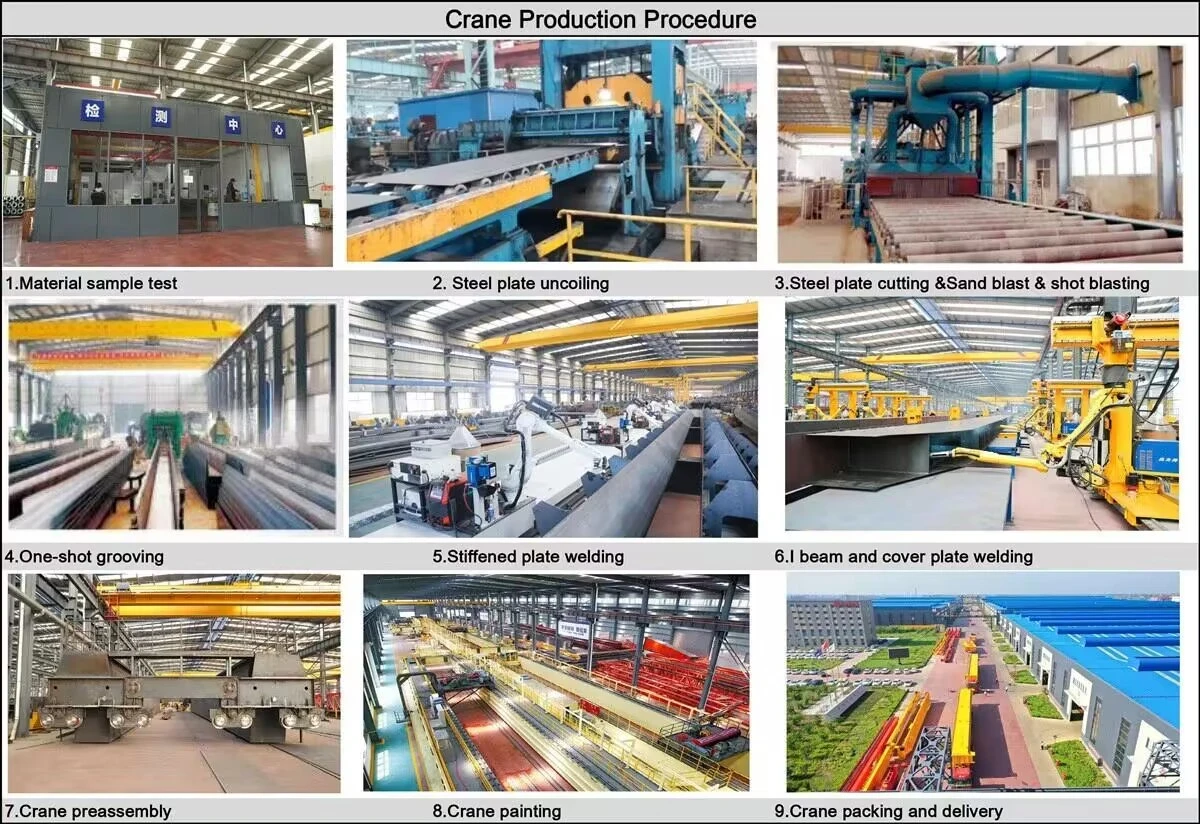
Crane production procedure
1. Design and Engineering
Initial Design: Based on customer specifications (lifting capacity, span, lifting height, speed, etc.), engineers design the crane's structure. This involves detailed drawings and calculations to ensure structural integrity, stability, and compliance with safety standards.
Load Calculation: Determining the crane's lifting capacity, load distribution, and stress points on the bridge, trolley, and hoisting system.
Selection of Components: Choose materials for the girders, hoist, wheels, motors, electrical components, and safety devices.
2. Material Procurement
Raw Materials: High-quality steel and other materials are sourced for the manufacturing of the crane's structural components (e.g., girders, end carriages, etc.).
Subcomponents: Components like the hoisting mechanism, wheels, electric motors, control systems, and safety devices are procured from specialized suppliers.
3. Fabrication of Structural Components
Girder Manufacturing: The main girders are fabricated by cutting, welding, and assembling steel plates and profiles into the desired structure. The double girder configuration involves two parallel beams, one on each side of the trolley, supporting the bridge.
End Carriages and Trolleys: The end carriages are fabricated, which support the bridge girder and allow it to travel along the runway. The trolley, which moves along the girder, is also constructed at this stage.
Hoist Assembly: The hoisting mechanism is assembled, including the drum, wire rope, motor, and brake system.
4. Assembly of the Crane
Bridge Assembly: The fabricated girders are lifted and placed onto the end carriages. The trolley and hoisting mechanism are then mounted onto the girder.
Electrical and Control Systems Installation: The electrical systems, including the wiring for motors, control panels, limit switches, and other electrical components, are installed and integrated.
Safety Equipment: Install safety features such as overload protection, emergency stop buttons, anti-collision sensors, and limit switches.
5. Testing and Inspection
Load Testing: A static load test is conducted to ensure the crane can lift the rated load without any deformation or failure. This may involve testing with loads at maximum capacity or slightly above.
Functional Testing: The crane is tested for proper movement and operation. This includes checking the traveling speed, hoisting and lowering speed, braking system, and response to control inputs.
Electrical Testing: Verify the correct operation of the electrical systems, including the power supply, control panels, and safety systems.
Final Inspection: Inspect all welds, joints, and structural components for quality and compliance with standards. Ensure all parts are aligned and move smoothly.
6. Final Adjustments and Painting
Adjustments: Make any necessary adjustments to ensure proper alignment, movement, and functionality.
Painting and Coating: After the assembly and testing, the crane is usually painted to prevent corrosion. Protective coatings are applied to exposed parts.
7. Commissioning
Site Preparation: Ensure that the crane's installation site (such as a factory or warehouse) is ready. This includes ensuring that the runway is level and able to support the crane's weight.
Transportation and Installation: The fully assembled crane is transported to the site (or partially assembled, depending on size), where it is mounted on the tracks or rails for operation.
On-Site Testing: Perform final tests at the installation site to ensure the crane functions correctly in its operational environment.
8. Training and Handover
Operator Training: Provide training to the end-user operators on how to safely operate the crane, including proper handling of loads, safety procedures, and emergency protocols.
Documentation: Provide the customer with all necessary documentation, such as operation manuals, maintenance guidelines, safety protocols, and warranty information.
9. Maintenance and After-Sales Service
Preventive Maintenance: Regular maintenance services should be provided to ensure long-term performance and safety, including lubrication, cleaning, and inspection of key components.
Workshop view:
The company has installed an intelligent equipment management platform, and has installed 310 sets (sets) of handling and welding robots. After the completion of the plan, there will be more than 500 sets (sets), and the equipment networking rate will reach 95%. 32 welding lines have been put into use, 50 are planned to be installed, and the automation rate of the entire product line has reached 85%.


Hot Tags: double girder bridge travelling crane, China double girder bridge travelling crane manufacturers, suppliers, factory, Bridge Crane, Double Girder Bridge Crane with Electric Hoist
Previous
Workstation Bridge CraneYou Might Also Like




Send Inquiry