










Double Girder Bridge Crane With Hoist
Products Description
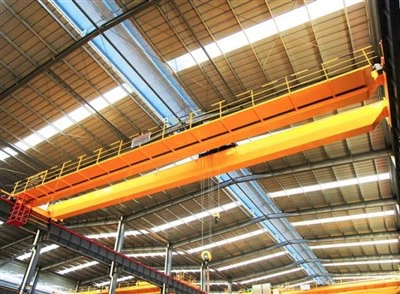
The Double Girder Bridge Crane with Electric Hoist is a robust, high-capacity lifting solution designed for industrial applications where heavy loads need to be lifted, moved, and positioned with precision. It consists of two parallel girders (main beams) supporting a trolley and hoist system that moves along the bridge to lift and transport materials within a large work area. This crane is ideal for factories, warehouses, steel mills, and construction sites where heavy-duty lifting is required.
Key Features of the double girder bridge crane with electric hoist:Provides superior stability and strength compared to single girder cranes.Ideal for lifting heavy and bulky loads with minimal deflection.It's suitable for lifting capacities ranging from several tons to hundreds of tons.
The double girder bridge crane with electric hoist provides superior stability and strength compared to single girder cranes.Ideal for lifting heavy and bulky loads with minimal deflection. It 's suitable for lifting capacities ranging from several tons to hundreds of tons.Features an electric hoist system for efficient vertical lifting.High-performance electric motor ensures fast, reliable, and energy-efficient operations.Offers smooth lifting and lowering with precise control.Optional hook, lifting platform, or magnetic lifting devices for various applications.
The double girder bridge crane with electric hoist is built with high-quality materials such as steel for added durability and resistance to wear and tear.Safety features include overload protection, emergency stop buttons, limit switches, and anti-collision systems.Compliant with international standards such as ISO, IEC, and OSHA for safety and performance.
The Double Girder Bridge Crane with Electric Hoist is an essential lifting solution for heavy-duty industrial applications. It provides high load capacity, enhanced safety features, and the flexibility to work in diverse environments, making it a go-to choice for industries requiring reliable, efficient, and powerful lifting solutions.
Core Components:Engine, Motor
Place of Origin:Henan, China
Warranty:3 years
Weight (KG):1000 kg
Video outgoing-inspection:Provided
Machinery Test Report:Provided
After-sales Service Provided:Field installation, commissioning and training
Control Method:cabin control/wire rope remote control
Lifting speed:5-15M/MIN
Color:On request
Power Supply:380V 50Hz or on request
Crane running speed:50-100M/MIN
Protection grade:IP54
Insulation grade:F
Working duty:A6
Pictures & Components
Products Description
1.Main beam
1) The main beam of a Double Girder Bridge Crane is a key structural component that supports the load, including the electric hoist, trolley, and any material being lifted. The main beam (or girder) is the horizontal supporting structure that spans the distance between the two bridge cranes' end trucks (the outer frames that sit on the rails).It supports the hoist mechanism and trolley, allowing vertical lifting and horizontal movement of loads.It acts as the primary load-bearing element, distributing the weight of the lifted material and the hoist.
2) The main beam is typically made from high-strength steel or steel alloys to provide maximum strength and durability while maintaining a light enough weight to facilitate crane movement.Common cross-sectional shapes include box girder, I-beam (or H-beam), and other types, depending on the required strength and application. Box girders are often used in double girder cranes for better stability and load distribution.
3) The span of the beam can vary depending on the width of the bridge and the load requirements. The beam must be designed to handle both the static and dynamic forces generated by lifting operations.The height and width of the main beam are crucial to the crane's load capacity. Larger beams are used for heavy-duty cranes to support higher loads..
Lifting System
1) Motor: When the crane operator activates the hoist, the motor begins to turn the drum. Depending on the load and the crane's design, the motor may start at a lower speed to avoid excessive stress.In a double girder bridge crane with electric hoist, the lifting motor is typically part of a larger crane system that is designed for high-load capacity and precision control.
2) Reducer: The reducer in a lifting system of a double girder bridge crane with an electric hoist plays a crucial role in the mechanical transmission of power. It is typically used to reduce the speed of the motor driving the hoist and increase the torque to lift heavy loads more efficiently.
3) Drum: The drum is a cylindrical component that holds and winds the wire rope used to lift and lower the load. When the electric hoist is activated, the drum rotates to wind or unwind the rope, allowing the hoist to lift or lower the load.
4) Wire rope: The primary function of the wire rope is to lift and lower heavy loads by transmitting mechanical energy from the hoist motor to the load itself. Wire ropes are designed to withstand significant tension and compression forces. They must be durable and resistant to wear, corrosion, and fatigue, as they operate under heavy loads and in dynamic environments.
5) Pulley block: The pulley block helps distribute the load across multiple ropes or cables. It reduces the strain on any single cable and ensures more efficient lifting.It helps change the direction of the load by guiding the rope or chain as the electric hoist raises or lowers the load.The use of multiple pulleys in the block reduces friction, helping to extend the lifespan of the hoisting rope or cable.
6) Lifting device: The lifting device of a Lifting System of a Double Girder Bridge Crane with Electric Hoist is typically composed of several key components that work together to lift, lower, and move loads efficiently.
 |
 |
3.End carriage
The end carriage of a double girder bridge crane with an electric hoist is an integral component that provides the mobility to the crane along the crane rails or runway beams.
The end carriage frame is usually made from steel and houses the wheels, axle, and electric motor drive system. It is designed to carry the entire weight of the crane, hoist, and the load being lifted, ensuring that it can travel smoothly across the rails.The end carriage is usually equipped with electric brakes or mechanical brakes to stop the crane at specific locations. These brakes ensure safe operation, particularly during emergency stops or when the crane is parked in a particular position.Rail guides are fitted to ensure that the wheels of the end carriage stay aligned with the rails, preventing derailing and ensuring stability during operation.
The electric hoist typically features an electric motor that powers the end carriage to move the entire crane along the rails. This drive system can be either single or dual, depending on the crane's configuration, and often includes variable frequency drives (VFDs) for smoother, more precise movement.
The end carriage's design and features directly affect the crane's performance in terms of speed, stability, and the capacity for precise positioning of the load. It works in conjunction with the main girder, hoist, and other crane components to provide efficient lifting and transportation.
 |
|
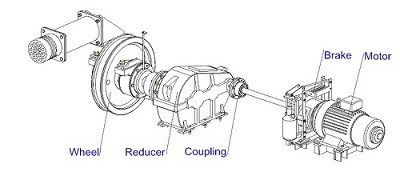
4.Crane travelling mechanism
1) Working principle
The electric motor in the traveling mechanism is activated when the crane operator uses the control system to start movement. The motor is connected to the gear system which drives the wheels of the end trucks.As the motor turns the wheels, the end trucks move along the runway rail tracks, causing the entire bridge (with the hoist and trolley) to travel horizontally.The crane's movement along the track allows the load to be positioned anywhere along the span of the crane, from one end of the bridge to the other.
2) Functions of the crane operating mechanism
The crane traveling mechanism is responsible for the movement of the crane along the length of the runway or bridge rails. It allows the entire crane structure (with the hoist) to travel horizontally across the workspace.
The crane traveling mechanism is responsible for the movement of the crane along the length of the runway or bridge rails. It allows the entire crane structure (with the hoist) to travel horizontally across the workspace.
The traveling mechanism supports the movement of loads from one location to another within the crane's operational range. When combined with the hoist, it facilitates both horizontal and vertical movement of materials.
Electric hoist systems often feature adjustable speed control, which is critical for controlling the rate of travel for precise load placement and safety. The speed can be varied depending on the load, the environment, and the specific task at hand.
The crane traveling mechanism must ensure that the entire crane system is stable during movement, preventing tipping or sudden shifts in the load. This stability is ensured by the mechanical design, rail alignment, and precise control systems.
5.Trolley travelling mechanism
1) Structural composition
Trolley frame: The trolley frame is the primary structure that holds and supports the hoist mechanism. It is typically made from high-strength steel or alloy steel to provide stability and durability.
Wheel set: The trolley wheels allow the trolley to travel along the rails on the bridge girder.These wheels are typically made of forged steel or cast steel to handle heavy loads. The material selection ensures they are both strong and wear-resistant.
Drive device: The drive mechanism is responsible for moving the trolley along the girder rails.This is usually a motorized system that includes an electric motor, gearbox, and drive sprockets or gears. The motor is typically controlled by a frequency drive or stepless drive to regulate speed and torque.
2) Function of the trolley operating mechanism
Movement of the Hoist:The trolley mechanism allows the hoist (the device responsible for lifting and lowering loads) to move horizontally along the bridge, covering the span of the crane.
Electric Drive System:The trolley is powered by an electric motor that drives the wheels. The motor is often connected to a reduction gear to adjust the speed and torque to the required level for smooth and precise movement.
Load Distribution:The trolley is designed to distribute the load evenly across its wheels and the girder rails. This ensures the crane can carry heavy loads without straining the structural integrity of the crane or the traveling mechanism
.6.Crane wheel
1) Function of wheels
Load-bearing Capacity:The crane wheel is designed to bear the weight of the bridge crane, including the load being lifted by the electric hoist. This wheel typically operates on a rail system (often overhead or on a runway) and is made of strong, durable materials, such as forged steel, to support the high loads.
Movement:The wheels are mounted on the ends of the bridge crane girders and allow the entire bridge to travel along the rails. In a double girder system, there are typically two rails (one for each girder), and the wheels move the crane horizontally along the length of the runway.
2) Design requirements
High-Strength Steel: Crane wheels are typically made from high-strength materials, such as forged steel or cast steel, to withstand high loads and wear. Materials with high wear resistance properties (e.g., alloy steels) should be chosen to extend the life of the wheel.If the crane is used in harsh environments, the materials should have good resistance to corrosion (e.g., coating or alloy selection). .

7.Crane Hook
1) The crane hook is attached to the lifting mechanism of the hoist (usually through a lifting block or other rigging system).It is the part that connects directly to the load and is designed to safely lift, move, and lower materials.
2) Crane hooks are usually made of high-strength materials like forged steel, designed to handle the high forces involved in lifting heavy loads.They often come with features such as safety latches to prevent the load from slipping off during lifting.

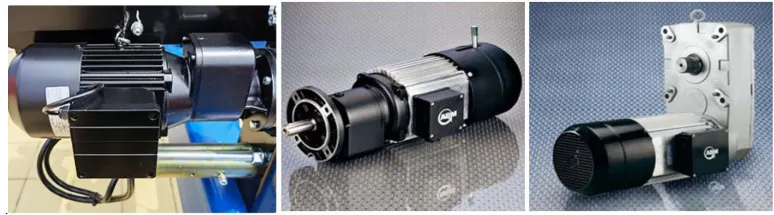
Motor
1) Bridge Movement (Travelling Motor):The bridge travel motor drives the entire crane along the runway beams. It is usually a variable-speed AC motor or DC motor with a gearbox that allows the bridge to move horizontally across the length of the crane's runway.
2) Trolley Movement (Cross Travel Motor):The trolley travel motor controls the movement of the trolley along the bridge. The trolley carries the hoist and can move across the bridge, enabling the lifting mechanism to cover the entire width of the crane. This motor is similar to the bridge motor in function but typically smaller in size.
3) Hoist Movement (Lifting Motor):The hoist motor is the most critical motor in the crane system, as it powers the hoisting mechanism, which lifts and lowers the load.
.
Sound and light alarm system & limit switch
1) Sound and light alarm system
A sound and light alarm system on a Double Girder Bridge Crane with an Electric Hoist is a safety feature designed to alert operators and surrounding personnel to the crane's operating status or any potential hazards.
Sound Alarm (Horn or Siren):Typically a loud horn or siren that emits an audible warning signal when certain conditions are met.This could include warning signals when the crane is in operation, if it is moving in an unsafe manner, or if there is a malfunction or overload.Different sound patterns or frequencies may be used to signal specific events, such as a continuous sound for normal operation or an intermittent beep for warnings.
Light Alarm (Flashing Lights or Beacons):Visual alarms such as flashing lights, strobe lights, or rotating beacons placed on the crane or around the crane's operational area.These are typically bright and easily visible from a distance, especially in environments with high noise levels or where visual indicators are more noticeable.The lights may flash in different colors (e.g., red for danger, yellow for caution, or green for safe operation) to indicate different types of conditions.
2) Limit switch
A limit switch in a double girder bridge crane with an electric hoist plays a critical safety role. It helps prevent the crane and hoist from exceeding their designed travel limits, ensuring safe operation by automatically cutting off power when the crane or hoist reaches a predefined position.
Limit Switches: These are mechanical or electronic devices installed at the ends of the crane's travel paths (both horizontal and vertical) to detect the positions of the hoist or trolley. They function as safety stops to prevent over-travel.
Travel Limit Switches (Horizontal):These are installed at the ends of the crane's rail tracks or girder travel paths. They stop the crane from moving beyond the track limits, preventing collision with walls or other obstacles.
Hoist Limit Switches (Vertical):These are typically installed at the upper and lower limits of the hoist's travel (the maximum height the hoist can lift or the minimum height it can lower). They stop the hoist from over-lifting, which could damage the load or the crane structure.
10.Safety Devices
1) Overload protection device: Overload Limit Switch prevents the crane from lifting a load that exceeds its rated capacity. It automatically halts the hoist when an overload condition is detected.Load Indicator displays the current load being lifted and helps operators to avoid overloading.
2) Limit Switches:End Travel Limit Switch are used to limit the horizontal travel of the crane and prevent the trolley or bridge from moving beyond their designated travel limits.Hoisting Limit Switch ensures that the hoist does not lift the load too high, preventing it from damaging the crane or hitting the top of the structure.Lowering Limit Switch prevents the hoist hook from lowering the load too far and causing damage.
3) Anti-Sway Device:Some double girder cranes are equipped with an anti-sway system that reduces load swing during lifting and lowering, improving stability and safety.
4) Emergency Stop Button:Located on the crane control panel, it immediately shuts down the crane's operations in case of an emergency.
5) Safety Limiters:Trolley Travel Safety Limiters prevent the trolley from exceeding its travel limit along the girder.Bridge Travel Safety Limiters prevent the bridge from moving beyond its travel limits on the rail.
6) Brake Systems: Stops the load from falling if power is lost or if the operator accidentally releases the controls.Crane Brake prevents unintended movement of the crane when not in operation.
11.Control Mode
1) Manual control: In manual mode, the crane operator controls the crane and hoist functions through a pendant control or joystick. This mode is often used for fine-tuned movements and during maintenance.
2) Radio Remote Control Mode: In this mode, the crane operator controls the crane from a distance using a handheld wireless remote. It allows greater flexibility and safety by allowing the operator to move freely around the crane and the load, particularly useful when working in hazardous environments or tight spaces.
3) Cab Control Mode: For large double girder bridge cranes, especially those handling very heavy loads, the operator may control the crane from a cabin situated on the crane itself, often mounted on the bridge girder. This mode provides better visibility and control over the entire lifting process.
4) Automatic Control Mode:Some modern cranes offer automatic or semi-automatic operation. In this mode, the crane can perform repetitive tasks (such as lifting and moving loads along a defined path) without manual intervention. This is often used for applications like material handling in factories.
5) PLC (Programmable Logic Controller) Control: A more advanced control mode involves PLC-based automation, which uses a programmable controller to execute a series of programmed operations based on input from sensors and user commands. This mode is more common in industrial settings where high precision and safety are crucial.

12.Sketch

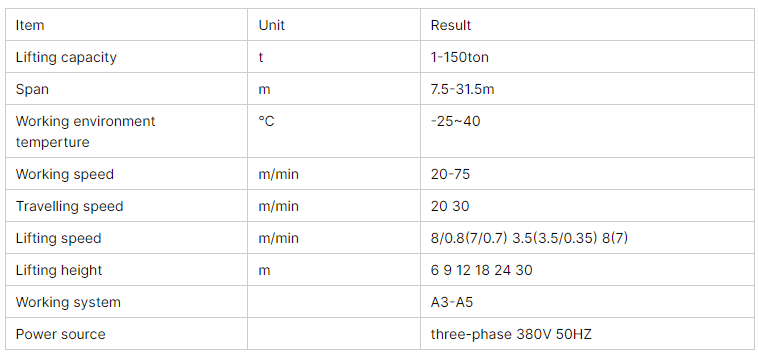
Main technical
Advantages
Higher Lifting Capacity
Double girder design: The two girders provide greater support, allowing the crane to handle heavier loads compared to single girder cranes.Suitable for larger, heavier machinery or large-scale industrial applications.
Increased Vertical Lifting Height
With the hoist placed between the two girders, the design allows for a higher lifting height, making it ideal for operations requiring significant clearance or for lifting bulky materials.
Enhanced Stability
The double girder configuration offers superior stability and less sway during operation, which helps improve safety and precision during lifts, especially with heavier loads.
Better Hook Coverage
The two girders provide a wider span, meaning that the crane can cover a larger area within the workspace, allowing for more efficient material handling across different sections of a facility.
More Efficient Hoist Movement
The electric hoist, which operates with minimal friction and power loss, can quickly move the load along the bridge, reducing overall cycle time and increasing productivity.
Durability and Longevity
Double girder cranes are typically more robust and can withstand harsh working conditions, offering a longer service life compared to single girder cranes. Their rugged design reduces wear and tear.
Improved Safety
The heavy-duty construction reduces the risk of structural failure under high loads. Additionally, the hoist's electric operation offers better control over load movements, minimizing risks associated with manual handling.
Customization for Specific Needs
Double girder bridge cranes can be designed and modified to meet specific requirements such as wider spans, higher lifting heights, or specialized hoists depending on the load types.
Ease of Maintenance
With the electric hoist and modular design of double girder cranes, maintenance and repairs can be carried out more easily, ensuring less downtime and reducing overall maintenance costs.
Energy Efficiency
Electric hoists are typically more energy-efficient compared to manual or pneumatic systems. These cranes also have the option for variable frequency drives (VFDs) that allow for more controlled movements, reducing energy consumption.
Reduced Footprint for Large Facilities
Although double girder cranes have a larger initial footprint compared to single girder cranes, their ability to lift heavier loads and cover a wider span can eliminate the need for multiple smaller cranes, reducing space utilization in large industrial plants.
Application:
Heavy Lifting Operations
Double girder cranes are designed to carry large loads, often in the range of several tons, making them ideal for lifting heavy machinery, equipment, or raw materials in heavy-duty industries.The electric hoist adds efficiency and precision in lifting and lowering loads, especially for heavy or bulky items. It provides smooth, consistent operation compared to manual hoisting systems.
Manufacturing and Assembly Lines
In production environments, where heavy components (such as large motors, turbines, or automotive parts) need to be assembled or positioned accurately, a double girder bridge crane with an electric hoist allows for high precision and speed in moving the materials.It also helps reduce manual labor and enhance safety, as workers can focus on assembly tasks while the crane handles the lifting of heavy parts.
Warehousing and Material Handling
In large warehouses, double girder cranes with electric hoists are used for transporting goods, loading and unloading containers, or moving bulk materials across long distances.The cranes allow for high vertical lifting capacity, which is useful for maximizing storage space, as well as handling large or heavy inventory items that need to be lifted to elevated storage locations.
Shipyards and Ports
These cranes are frequently used in ports and shipyards to handle shipping containers, load and unload cargo, or lift heavy maritime equipment and components.The electric hoist ensures smooth operation during long shifts, while the double girder design provides the structural strength needed for large-scale operations.
Construction Sites
In construction, particularly for high-rise buildings or large infrastructure projects, double girder cranes are used to lift steel beams, concrete panels, machinery, and construction materials to elevated areas.The electric hoist allows for precise positioning of materials, reducing the risk of accidents and improving overall site efficiency.
Maintenance and Repair of Heavy Equipment
For maintenance tasks in heavy industries such as steel mills, power plants, or industrial facilities, double girder cranes with electric hoists can be used to lift and position large, heavy equipment for servicing or repairs.The hoists can be equipped with special attachments or slings to handle specific parts or machinery, ensuring safe and efficient handling during maintenance operations.
Steel Mills and Foundries
Steel mills and foundries typically use double girder cranes for lifting and transporting molten metal, steel slabs, and other heavy materials within the facility.The electric hoist enables precise and smooth handling of such materials, ensuring safety and minimizing downtime.
Power Plants
In power plants, double girder bridge cranes are used for lifting heavy equipment, such as turbines, generators, and boilers, during installation, inspection, or repair.The high load capacity and precision of these cranes make them ideal for handling large components safely and efficiently.
Aerospace and Aircraft Manufacturing
In aerospace industries, where large and sensitive components (like aircraft wings or fuselages) need to be lifted and moved with high precision, double girder bridge cranes with electric hoists are invaluable.The hoist provides smooth lifting, while the crane structure allows for the movement of large components along the production line or to assembly areas.
Mining Industry
For moving heavy mining equipment, large stones, or extracted materials in and out of the mining operation, these cranes offer the lifting power needed for such applications.The electric hoist adds a level of safety and reliability to the process of lifting heavy and possibly hazardous materials..
Crane production procedure
Design and Engineering: Understand the crane's load capacity, span, lift height, and operational requirements.Engineers create detailed drawings and specifications for the crane structure, electrical components, and hoisting mechanism, often using CAD software.
Material Procurement: High-strength structural steel (such as Q235, Q345, or equivalent) is ordered for the girder, trolley, and other structural parts.Electric motors, wire ropes, brakes, and other mechanical parts are sourced.This includes the electrical panel, control systems, cables, and safety devices.
Fabrication of Girders: Steel plates are cut according to the design specifications using CNC plasma cutting or laser cutting machines.The cut steel pieces are welded together to form the two main girders of the crane. The welding process must ensure the structure is strong enough to support the loads.After welding, the girder may be heat-treated (stress relieved) to avoid warping and residual stresses.
Surface Treatment: The steel is usually sandblasted and then coated with primer and paint for corrosion protection.
Fabrication of End Carriages: These support the girders on the runway rails. They are fabricated by cutting, welding, and assembling steel components, similar to the process for the girders.The end carriages are fitted with wheels (usually steel with bearings) that allow the crane to move along the bridge.
Assembly of Crane Bridge: The two girders are mounted onto the end carriages and aligned for assembly. This forms the main bridge structure of the crane.Cross beams are installed to reinforce the structure and provide mounting points for the hoist and trolley systems.The electric hoist, including the motor, rope drum, and hook, is installed onto the trolley, which will travel along the bridge.
Hoisting System Fabrication: The electric hoist unit, including the motor, gearbox, wire rope or chain drum, and hoist hook, is assembled.A high-strength wire rope or chain is installed and tested for proper tension and smooth movement.Hoist brakes are installed to provide precise load control and safety during lifting operations.
Trolley Assembly: The trolley is assembled with its wheels, which run along the girders of the crane bridge. It is designed to carry the hoisting mechanism across the full span of the crane.The trolley is equipped with an electric drive system that includes motors, gearboxes, and electrical components for precise control.
Electrical and Control System Installation: The electrical control panel is installed, including safety features, limit switches, speed controls, and overload protection.Wiring for the hoist, trolley motors, and crane bridge system is carefully installed and tested. A remote control or pendant control is integrated for easy operation of the crane.
Testing and Inspection: The crane is subjected to load testing to verify that it can safely lift and carry the designed load capacity.The hoisting, trolley movement, bridge movement, and safety systems are tested to ensure proper functioning.The crane is checked for compliance with local safety standards (e.g., ISO, CE, OSHA).
Painting and Final Assembly: The crane's structure is thoroughly cleaned and repainted to provide additional corrosion resistance. All parts are put together, and any last adjustments are made.
Shipping and Installation: The crane may be partially disassembled to make transportation easier, especially for large cranes.On-site, the crane is assembled on the rails (runway system) and connected to the electrical system. The crane is then tested one final time.
Post-Installation Testing and Handover: A final inspection is done by a certified technician or inspector to ensure everything is functioning correctly. The crane is handed over to the customer with a user manual, maintenance schedule, and safety guidelines.

Workshop view:
The company has installed an intelligent equipment management platform, and has installed 310 sets (sets) of handling and welding robots. After the completion of the plan, there will be more than 500 sets (sets), and the equipment networking rate will reach 95%. 32 welding lines have been put into use, 50 are planned to be installed, and the automation rate of the entire product line has reached 85%.


Hot Tags: double girder bridge crane with hoist, China double girder bridge crane with hoist manufacturers, suppliers, factory, Electric Hoist Single Girder Gantry Crane, Magnetic Overhead Crane, Ladle Foundry Bridge Crane, Single Girder Gantry Crane, Single Beam Explosion Proof Overhead Crane, Steel Factory Overhead Crane
Previous
Rolling Bridge CraneYou Might Also Like



Send Inquiry