







Top Running Bridge Crane
Products Description
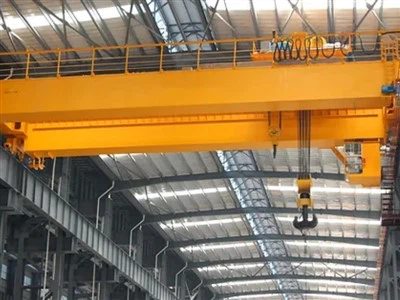
A Top Running Bridge Crane is a type of overhead crane that runs along fixed rails installed on the top of the structure (such as the building's roof or crane beams). It is widely used in various industries for heavy lifting and material handling applications, particularly in factories, warehouses, and construction sites.
The Top Running Bridge Crane consists of a bridge that moves along the rails, a hoist mechanism for lifting loads, and an end truck that moves along the rails on either end of the bridge.These cranes are made from high-quality steel and built for heavy-duty operations, making them durable and capable of operating in tough environments.
Top running bridge cranes are designed to handle large loads, often exceeding several tons. They are ideal for industries requiring the lifting of heavy machinery, components, or construction materials.Includes various safety mechanisms like limit switches, emergency stop functions, overload protection, and anti-collision sensors to ensure safe and reliable operations.
The Top Running Bridge Crane can be used for various tasks like loading/unloading, material transport, and assembly line operations. It can be operated manually or with automated systems for more complex operations.Due to the top running system, this type of crane can span wider areas and utilize the maximum height of a building, improving the lifting range and increasing operational efficiency.
Top running bridge cranes require regular maintenance to ensure the rails, motors, and hoist systems remain in optimal condition. Maintenance checks include inspections of the rail system, hoisting mechanisms, and power supply systems.In summary, a top running bridge crane offers a robust and reliable solution for industries requiring large-scale material handling, and it provides high capacity, durability, and operational efficiency in lifting heavy loads across vast spaces.
Core Components:Motor
Place of Origin:Henan, China
Warranty:1 Year
Weight (KG):4500 kg
Video outgoing-inspection:Provided
Machinery Test Report:Provided
Speed:Single/Double/Frequency Inverter
After Warranty Service:Field maintenance and repair service
Certification:CE ISO GOST
Color:Customer Request
Girder Type:Single Box
Work Duty:A4
Capacity:3t 5t 10t 15t 20t
Material:Q235B
Control method:pendent line control or remote control

Pictures & Components
1.Main beam
1) The main beam of a top running bridge crane is the primary horizontal structural element that supports the weight of the crane's trolley, hoist, and the load it is lifting. This beam runs along the length of the crane bridge and is mounted on the runway beams, which are part of the building structure.
2) Key Characteristics of the Main Beam:
Material: Typically made of steel, which provides the necessary strength and durability.
Design: It is designed to withstand the stresses and forces imposed during operation, including the weight of the load, the dynamic forces from lifting and moving the load, and the forces from the trolley movement.
Shape: Often an I-beam or box girder design, depending on the load requirements and the span of the crane.
Function: It serves to support the trolley and hoist system and allows for horizontal movement across the crane's span. The trolley runs along the top of the main beam, and the hoist mechanism is usually suspended from it.Connections: The main beam is connected to the end trucks (or end carriages) on either side, which move along the rails mounted on the building's walls or structural supports.
The design of the main beam is crucial for the overall safety and performance of the crane. It must be strong enough to handle the maximum load capacity and ensure smooth operation over time.

Lifting System
Bridge: The main horizontal structure that runs along the top of the building or structure. It supports the hoist and trolley.
Trolley: A mobile unit that travels along the bridge and carries the hoist. It moves horizontally across the length of the bridge.
Hoist: The lifting device, often equipped with a hook or other attachment, responsible for raising and lowering the load. The hoist typically moves vertically along the trolley to lift and lower the load.
End Trucks: The mechanical units at both ends of the bridge that allow the bridge to move along the rails mounted on the top of the building structure.
Rails/Runways: The tracks mounted on the ceiling or on top of the building where the crane's bridge moves.
Motor and Drive Mechanism: The motor that powers both the bridge's horizontal movement (along the runways) and the trolley's movement (across the bridge). The drive mechanism typically includes gears and chains that transfer the power from the motor to the wheels on the end trucks and trolley.
Control System: The electrical system or operator interface used to control the crane's movements. This can be done via a pendant, remote control, or an overhead control panel.
Safety Features: Top-running bridge cranes often have built-in safety features like limit switches, emergency stop buttons, load limiters, and anti-collision devices to ensure safe operation.

3.End carriage
1) The end carriage of a top-running bridge crane is an essential component that supports the overall structure and allows the crane to move along the tracks or rails. It is located at the ends of the crane's bridge.
2) The end carriage frame provides structural support and houses other components. It is designed to withstand the weight of the crane and the load being lifted.The end carriage is equipped with wheels or rollers that move along the crane rails or tracks. These wheels are typically made of steel and are designed for durability and smooth movement.
3) The drive system, usually consisting of a motor and gearbox, is responsible for propelling the end carriage along the crane rails. It provides the necessary motion to move the crane's bridge horizontally.The end carriage is equipped with a braking system to control its movement and ensure safety during operation. The brakes can be mechanical, electrical, or hydraulic, depending on the crane design.The end carriage is connected to the bridge structure, which houses the hoist mechanism, trolley, and other components. It allows the bridge to move across the span of the crane while carrying the load.

4.Crane travelling mechanism
1) Operation principle
The crane traveling mechanism is a complex system of motors, gears, wheels, and control systems designed to move the crane along the runway. It operates through electric motors that drive the wheels, with additional components like brakes and a control system to ensure smooth, controlled movement.
The crane travel motors provide the necessary power for horizontal movement. These are typically electric motors, and each motor drives one or more wheels.The motors are connected to gearboxes, which transmit the rotational energy to the wheels. The gearbox may be connected to a chain drive, bevel gear drive, or direct coupling, depending on the crane design.The crane is mounted on wheels, which run along the rails (crane track) fixed to the runway. These wheels allow the crane's bridge to move smoothly across the runway.The drive wheels are powered by the electric motors through the gear system, enabling the crane to move forward or backward. There are typically two drive wheels, one on each side of the bridge, but more can be used for larger cranes.
2) Functional characteristics
Smooth and Efficient Movement
The crane travelling mechanism is designed for smooth horizontal motion along the runway beams. It typically uses electric motors to drive the wheels, which are supported by the crane's trolley structure.
The system should minimize jerks or uneven movement to ensure smooth load handling and prevent strain on the crane structure and the load being carried.
High Load Capacity
The mechanism must be robust enough to handle the load capacity of the crane, which can range from several tons to hundreds of tons. The wheels and rails must be designed to withstand the high forces generated during movement.
Precision Control
For accurate positioning of loads, the travelling mechanism often includes precise control systems, including variable frequency drives (VFD) or servo motors for smooth speed control and positioning accuracy.
It ensures that the load can be moved precisely along the crane's runway to different positions.
Reversible Movement
The crane travelling mechanism should allow for both forward and reverse movement to position the crane at any point along the runway. It typically uses a motor in combination with a gear system to achieve this functionality.
Safety Features
Anti-collision Systems: The mechanism may include sensors or limit switches that prevent collisions with end stops or other structures along the runway.
Emergency Braking Systems: In case of power failure or other issues, the mechanism should have emergency brakes that can halt the crane movement safely.
Overload Protection: The system should be equipped with overload detectors to prevent damage to the crane or load when the maximum capacity is exceeded.
Trolley travelling mechanism
1) Operation principle
The trolley travelling mechanism of a top-running bridge crane functions by using an electric motor, gears, and a drive system to move the trolley horizontally along the bridge rails. The control system allows precise movement, and safety features ensure smooth and secure operation.
The bridge crane consists of a bridge structure (the main beam), which runs along two parallel rails (located on the top of the supporting structure or building).The trolley is mounted on the bridge and carries the lifting mechanism (usually a hoist). It moves horizontally along the bridge's length, positioning the load for lifting and transport.
2) Functional characteristics
Movement Control
The trolley is powered by an electric motor, typically connected to a gear system, allowing precise control of its horizontal movement along the bridge.It operates by using a rail system mounted on the crane's bridge, providing a stable track for the trolley to travel back and forth across the entire span.The speed of movement is often adjustable, allowing for smooth acceleration and deceleration depending on the load being transported.
Load Handling Capacity
The trolley is designed to carry heavy loads, with its capacity determined by the crane's lifting capacity and the design of the trolley itself.It often includes load wheels or rollers that are in contact with the crane bridge's track, ensuring the stability and smooth movement of heavy loads.
Precision and Stability
Trolley movement is typically highly precise, which is critical for tasks requiring exact positioning of the load.It is designed to ensure minimal sway of the load during movement, reducing the risk of load instability and accidents.
Motors and Drives
The trolley is equipped with drive motors that power its movement. These motors are generally powered by electric systems, with varying voltages depending on the crane's design and operational requirements.Trolley motors are typically equipped with brake systems that allow for safe stopping and positioning of the trolley under load.
Safety Features
The mechanism includes safety brakes that engage when power is lost or in the event of an emergency, preventing the trolley from moving unexpectedly.Some trolleys also have limit switches that prevent the trolley from moving beyond predefined track limits, protecting both the load and surrounding infrastructure.
Steering and Tracking
Depending on the design, some trolleys may feature steering mechanisms that allow for controlled turning and curved movement along the track, allowing the crane to be used in more complex layouts.The tracking system ensures that the trolley stays aligned with the track, preventing derailing and minimizing wear and tear.
6.Crane wheel
The crane wheel of a top-running bridge crane is a critical component designed to support and guide the crane along its runway beams. These wheels are robust, durable, and engineered to withstand high loads while enabling smooth, efficient movement.
Crane wheels are typically made of high-grade steel or forged steel to ensure durability and wear resistance. Available in single, double or flangeless designs, depending on the application and track configuration. Precision machined to ensure proper alignment and smooth operation. Designed to handle large loads depending on the rated capacity of the crane. Often heat treated to increase hardness and resistance to wear and deformation. Many wheels have integrated or external lubrication systems to reduce friction and wear.

7.Crane Hook
The crane hook of a top-running bridge crane is a crucial component designed to safely lift and carry heavy loads. The hook is the part of the crane where the load is attached, typically via slings, chains, or other rigging devices.
Crane hooks for overhead cranes are typically made of high-strength forged steel to ensure strength and durability under heavy loads. Equipped with safety latches to prevent the load from sliding out during operation. Rated to the maximum load capacity of the crane (e.g. 5 tons, 10 tons, 50 tons). Some hooks can rotate 360°, allowing flexibility in positioning the load.
Benefits of Top-Running Bridge Cranes with Hooks
Stability: Positioned above the runway beams, providing higher lifting capacity and reducing stress on the building structure.
Wide Coverage: Ideal for applications in warehouses, workshops, and assembly lines.
Customizability: Hooks can be paired with different types of hoists (electric wire rope, chain hoists) to meet specific needs.

Motor
The motor of a top-running bridge crane is a critical component that powers the crane's movement across the runway beams and facilitates hoisting or lowering of loads.
Types of Motors in Bridge Cranes
Travel Motors: Drive the crane's horizontal movement along the rails on the runway beams.
Hoist Motors: Control the lifting and lowering of the load.
Key Features
Power and Torque: The motor must generate sufficient torque to handle the maximum rated load and ensure smooth acceleration and deceleration.
Speed Control: Most modern bridge cranes use variable frequency drives (VFDs) to regulate motor speed, enabling precise load handling and minimizing wear.
Duty Cycle: Motors are designed for heavy-duty operations, often categorized under "crane duty" or "duty class" standards (e.g., FEM or CMAA classification).
Braking System: Includes integrated or external brakes for safe stopping and load holding.

.
Sound and light alarm system & limit switch
1) Sound and light alarm system
A sound and light alarm system for a top-running bridge crane is an essential safety feature designed to enhance operational safety by alerting workers to crane movements and potential hazards.
Audible Alarm (Sound Alarm):Emits a loud warning sound, such as a horn, buzzer, or siren, to alert personnel in the crane's vicinity.Features adjustable volume and different sound patterns to distinguish between movement types (e.g., traveling, hoisting, or emergency).
Visual Alarm (Light Alarm):Includes flashing or rotating warning lights, typically using bright LEDs for visibility.Often color-coded (e.g., red for danger, yellow for caution) to provide visual alerts in addition to sound.
2) Limit switch
The limit switch of a top-running bridge crane is a crucial safety device that prevents the crane or its components from traveling beyond predefined limits, ensuring safe operation.
Functions
Stops travel when the crane reaches the pre-set maximum or minimum limit of motion:
Bridge Travel: Prevents the bridge from running off the runway.
Trolley Travel: Stops the trolley from traveling too far on the bridge.
Hoist Travel: Prevents over-hoisting or over-lowering of the load.
Types of Limit Switches
Rotary Limit Switch:Monitors the rotation of the hoist drum or motor shaft.Commonly used to control the height of the hoist (up/down).
Lever-Type Limit Switch:Activated when a mechanical lever is physically contacted by the trolley or bridge.Used for trolley or bridge travel limits.

10.Safety Devices
1. Overload Protection Device
Prevents the crane from lifting loads beyond its rated capacity.
Often uses load sensors to monitor the weight being lifted.
2. Limit Switches
Travel Limit Switches: Stop the crane from traveling beyond its allowed range on the runway.
Hoisting Limit Switches: Prevent the hook block from being over-lifted (two-blocking) or lowered too far.
3. Anti-Collision Devices
Sensors or proximity devices to prevent collisions with other cranes or obstacles on the runway.
4. Emergency Stop System
A clearly marked and easily accessible emergency stop button to cut power to the crane immediately in case of an emergency.
5. Load Brakes and Hoist Brakes
Load Brakes: Hold the load in position when the hoist is not moving.
Hoist Brakes: Stop the hoist motion precisely and safely.
6. Wire Rope and Chain Safety Features
Includes anti-derailment devices and proper lubrication systems to prevent wire rope wear or chain breakage.
7. Over-Speed Protection
Prevents the hoist from descending too quickly due to gravity or mechanical failure.
8. Anti-Sway System
Reduces the swinging of the load, ensuring more precise and safe operations.
9. Shock Load Prevention
Helps minimize the effects of sudden jerks caused by starting or stopping the hoist abruptly.
10. End Stops and Buffers
Installed at the end of the runway or bridge travel to absorb energy and prevent the crane or trolley from over-traveling.
11.Control Mode
1. Pendant Control
Description: The operator controls the crane using a wired pendant that hangs from the crane or hoist. The buttons on the pendant control lifting, lowering, and travel movements.
Advantages:Simple and cost-effective.Provides direct manual control.
Disadvantages:Operator must follow the crane, which could be unsafe in hazardous environments.Limited operational range due to cable length.
2. Radio Remote Control
Description: The crane is operated using a wireless handheld transmitter, which sends signals to the crane's receiver.
Advantages:Greater mobility for the operator.Safer operation as the operator can maintain a safe distance.Reduces physical strain on the operator.
Disadvantages:Requires regular maintenance of the transmitter.Possible interference in areas with many wireless devices.
3. Cabin Control
Description: The operator sits in a cabin mounted on the crane, from where they have a full view of the work area.
Advantages:Ideal for heavy-duty operations.Provides excellent visibility and control for precise operations.
Disadvantages:More expensive setup.Limited to the operator's presence in the cabin.
4. Semi-Automatic Control
Description: The crane performs specific movements or operations automatically based on predefined instructions while requiring some manual intervention.
Advantages:Increased productivity.Reduces operator fatigue.
Disadvantages:Higher cost of implementation.Requires trained personnel to manage the system.
5. Fully Automatic Control
Description: The crane is fully automated and operates based on programmed instructions or integration with an industrial control system.
Advantages:Maximum efficiency and precision.
Ideal for repetitive tasks in manufacturing or warehouse environments.
Disadvantages:High initial cost.Complex system requiring regular maintenance and skilled personnel for troubleshooting.

12.Sketch

Main technical

Advantages
1. Higher Lifting Capacity
Top-running bridge cranes can handle heavier loads compared to other types of cranes. They are designed to lift and transport large weights, making them suitable for industries like steel, shipbuilding, and heavy manufacturing.
2. Maximized Vertical Space
Since the crane operates on rails mounted on top of the runway beams, it allows maximum utilization of vertical space in a facility. This is particularly useful in buildings with height constraints.
3. Versatility
These cranes are highly versatile and can be customized to fit specific operational needs, including dual girders for extra strength, special hoists, and various control systems.
4. Wide Coverage
Top-running bridge cranes cover a larger work area as they can span wide bays and provide better flexibility in material handling.
5. Durability
Built with robust materials and components, they are long-lasting and require minimal maintenance, making them cost-effective in the long run.
6. No Floor Space Obstruction
Since they operate above the floor, there's no obstruction on the ground, allowing for better movement of workers, vehicles, and other equipment.
7. Ease of Integration
Top-running bridge cranes can be integrated into existing infrastructures or designed as part of new constructions, making them adaptable to different environments.
8. Enhanced Safety
Advanced safety features such as anti-collision systems, overload protection, and emergency stop mechanisms improve workplace safety.
9. Energy Efficiency
Modern top-running bridge cranes are equipped with energy-efficient motors and systems that reduce power consumption during operations.
10. Multiple Configurations
These cranes are available in single-girder or double-girder configurations, allowing businesses to choose the best fit for their operational requirements.
Application
1. Manufacturing Industry
Assembly Lines: Used to move raw materials and finished goods across production areas.
Machinery Installation: Assists in lifting and placing heavy machinery components during manufacturing processes.
2. Warehousing and Logistics
Loading and Unloading: Facilitates efficient handling of goods in storage facilities.
Storage Organization: Used for stacking and organizing heavy products on racks or shelves.
3. Steel and Metalworking
Handling Heavy Metals: Commonly used for moving steel coils, billets, and large metal sheets.
Machining Operations: Supports operations like cutting, bending, and welding by positioning workpieces.
4. Construction Industry
Material Transport: Moves heavy construction materials like beams and girders.
Precast Concrete: Lifts and places precast concrete segments for infrastructure projects.
5. Mining Industry
Material Extraction: Handles the transportation of ore, rock, and other materials.
Maintenance: Lifts and positions mining equipment during repairs or servicing.
6. Power Plants
Turbine Maintenance: Used to lift and transport turbine components.
Equipment Handling: Moves generators, transformers, and other heavy equipment.
7. Shipbuilding
Hull Assembly: Assists in positioning large sections of ship hulls.
Equipment Installation: Lifts and installs engines, propellers, and other ship components.
8. Automotive Industry
Vehicle Assembly: Moves large automotive parts such as engines and chassis.
Tooling Management: Transfers molds and dies in production processes.
9. Aerospace Industry
Aircraft Assembly: Lifts and transports airplane components like wings and fuselages.
Maintenance Operations: Assists in repairing and maintaining aircraft.
10. Paper and Pulp Industry
Roll Handling: Moves large paper rolls during production and storage.
Machine Maintenance: Lifts and positions equipment during repairs.
Crane production procedure
1. Design and Engineering
Customer Requirements: Collect detailed specifications from the customer (load capacity, span, lifting height, environment, etc.).
Structural Design: Create structural and mechanical designs using CAD and engineering software. Ensure compliance with relevant industry standards (e.g., ISO, ASME, FEM).
Electrical Design: Develop the electrical control system, including motors, wiring, and control panels.
Load Calculations: Perform stress and load calculations to ensure safety and durability.
Approval: Submit designs for customer approval before proceeding.
2. Material Procurement
Raw Materials: Source high-quality steel plates, beams, and other materials.
Components: Procure key components like motors, gearboxes, control panels, end trucks, and wire ropes from trusted suppliers.
Quality Check: Inspect materials and components for defects or deviations from specifications.
3. Fabrication
Cutting and Shaping: Cut steel plates and sections to size using CNC cutting machines, plasma cutters, or laser cutters.
Welding: Weld the structural components (e.g., bridge girder, end trucks) following strict quality standards.
Machining: Machine the end trucks, wheels, and other components to ensure precise fit and alignment.
Nondestructive Testing (NDT): Inspect welds and structural parts for defects using methods like ultrasonic or radiographic testing.
4. Assembly
Bridge Girder Assembly: Assemble the main girders, end trucks, and connecting plates.
Trolley Assembly: Install the hoist, motor, drum, and trolley components.
Electrical Installation: Install control panels, wiring, limit switches, and safety devices.
5. Surface Treatment
Cleaning: Sandblast or clean all surfaces to remove rust and impurities.
Coating: Apply anti-corrosion primer and paint according to the operating environment (e.g., outdoor or corrosive environments).
6. Testing and Quality Control
Static Load Testing: Test the crane with a stationary load exceeding its rated capacity.
Dynamic Load Testing: Test the crane under operating conditions with varying loads.
Electrical Testing: Ensure proper operation of the electrical system, including safety devices and controls.
Certification: Certify the crane to meet national and international standards.
7. Packaging and Delivery
Disassembly (if necessary): Disassemble the crane into transportable components.
Packaging: Pack all components securely for transport.
Shipping: Arrange delivery to the customer's site.
8. Installation and Commissioning
Site Preparation: Inspect the site and ensure all necessary preparations are complete.
Erection: Assemble and install the crane components at the site.
Alignment: Align the crane tracks, wheels, and structural parts.
Final Testing: Conduct on-site testing to verify functionality and safety.
9. Training and Handover
Operator Training: Train the customer's team on crane operation and maintenance.
Documentation: Provide manuals, maintenance schedules, and certification documents.
Handover: Complete the project and hand over the crane to the customer.

Workshop view:
The company has installed an intelligent equipment management platform, and has installed 310 sets (sets) of handling and welding robots. After the completion of the plan, there will be more than 500 sets (sets), and the equipment networking rate will reach 95%. 32 welding lines have been put into use, 50 are planned to be installed, and the automation rate of the entire product line has reached 85%.


Hot Tags: top running bridge crane, China top running bridge crane manufacturers, suppliers, factory, Bridge Crane, Double Girder Bridge Crane with Electric Hoist
Previous
Overhead Isolation CraneYou Might Also Like




Send Inquiry