










100 Ton Bridge Crane
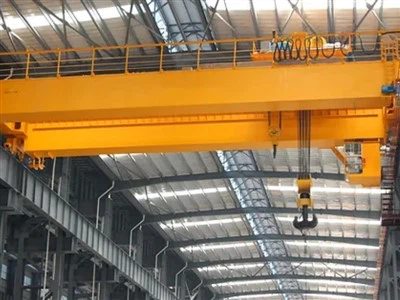
1.100 Ton Bridge Crane is a bridge-type lifting equipment designed to lift and move objects weighing up to 100 tons. Its bridge structure spans between two supporting points, can move on the horizontal plane, and is equipped with a hoisting mechanism and a traveling mechanism for different lifting tasks. It consists of a bridge, main beam, trolley and lifting mechanism to provide stable lifting operations. It is suitable for lifting and moving various heavy objects, and can be configured with different spreaders and accessories as needed. The design is stable, which can effectively reduce shaking and vibration during work and improve working accuracy.
2.The application field of 100 Ton Bridge Crane is manufacturing industry: used for the transportation and installation of large equipment and components. Metallurgical industry: suitable for handling furnace materials and lifting steel. Construction sites: used for lifting and installation of building materials. Warehousing and logistics: efficiently transport heavy objects and improve warehouse operation efficiency.
3.The 100 Ton Bridge Crane is an efficient and reliable lifting equipment that is suitable for a variety of industrial environments and can significantly improve operating efficiency and safety.
Max. Lifting Height:up to you, 40m
Warranty of core components:2 years
Warranty:2 years
Weight (KG):100000 kg
Max. Lifting Load:100 ton
Span:10-60m
Power Source:3 Phase 380V 50hz
Industrial voltage:380V50Hz or on request

Pictures & Components
1.Main beam
1. The main beam of a 100-ton bridge crane is one of its key structural components, responsible for supporting the weight of the crane and bearing various forces in the lifting operation.
2. The following are some of the main features and design points of the main beam of a 100 Ton Bridge Crane
It consists of two parallel main beams connected by crossbeams and supporting members to provide a larger span and load-bearing capacity. It is suitable for applications with larger spans and heavy loads. High-strength steel, such as Q235, Q345, etc., is usually used, which has good strength and toughness. When designing, it is necessary to ensure that the main beam can withstand the rated load of the crane and other forces (such as wind loads, seismic loads, etc.). Carry the weight of the crane and the hoisting load to ensure the stability of the crane. Transfer the hoisting load to the supporting structure or track to ensure that the load can be evenly distributed. Provide a smooth moving track for the trolley and lifting mechanism.
The main beam of a 100 Ton Bridge Crane is the skeleton part of the bridge crane, and the quality of its design and manufacturing directly affects the performance and safety of the crane. Therefore, special attention needs to be paid during the design, manufacturing, installation and maintenance process.

Lifting System
1. The lifting system of a 100 Ton Bridge Crane is its core component, responsible for the actual lifting and lifting of heavy objects. This system usually includes components such as a hoist, a trolley, a winch and an electric motor.
2. The following is a detailed introduction to the lifting system of a 100-ton bridge crane:
Hoist (Hoist) Function: Responsible for the actual lifting and lowering of heavy objects. The hoist is the core component of the entire lifting system. Double-beam trolley: For bridge cranes with double main beams, it is divided into a main beam trolley and a secondary beam trolley, which bear different loads and functions respectively. Winch Function: Provide the power required by the hoist, and lift or lower the heavy objects through wire ropes or chains. Motor Function: Provide power for the hoist, trolley and winch.
The design and maintenance of the lifting system directly affects the performance and safety of the 100 Ton Bridge Crane, so special attention needs to be paid to the quality and operating status of its various components.


End Beam
1. The end beam of a 100 Ton Bridge Crane is an important part of the bridge crane structure, responsible for connecting and supporting the main beam, and providing stability and support for the crane.
2. The following are detailed information about the end beam:
The end beam of a 100-ton bridge crane connects the main beam and the supporting structure (such as legs or tracks) to ensure the stability of the bridge crane. Transfer the load of the main beam and the trolley to the supporting structure or track, share and evenly distribute the load. Support the horizontal movement of the main beam and the trolley, and allow the crane to run smoothly on the track.
The end beam of a 100 Ton Bridge Crane is usually welded or assembled from steel and is designed as a rectangular or box section to provide sufficient strength and stability. Including support columns, brackets, connectors, etc., to ensure the stable connection of the end beam to the supporting structure or track. Tracks or pulleys are usually installed on the end beam for the trolley and main beam to move along the horizontal track.
The length of the end beam of a 100-ton bridge crane usually matches the span of the crane to ensure that it can support the entire main beam and trolley. According to the design requirements, it can be I-beam, box section or other structural forms. Box section is usually used for higher load-bearing capacity and stability requirements. High-strength steel, such as Q235, Q345, etc., is generally used to ensure the strength and durability of the end beam.
3.The end beam of the 100-ton bridge crane plays a vital role in the bridge crane, ensuring the stability and safety of the crane. Its design, manufacturing and maintenance require special attention to ensure the long-term stable operation of the equipment.


Crane travelling mechanism
1. The Crane travelling mechanism of a 100-ton bridge crane is an important part of the crane, responsible for moving the trolley (also called crane or running crane) horizontally on the main beam. The main function of this mechanism is to achieve lateral movement of the crane, so that it can cover the entire working area.
2. The following is a detailed introduction to the Crane travelling mechanism:
The main components of Crane travelling mechanism, trolley body: a frame structure installed on the main beam, 100-ton bridge crane supports the hoist and other related components. Including electric motors, reducers and drive wheels to provide the movement power of the trolley. The guide rail system and wheels of the trolley on the main beam ensure smooth movement.
The design of the crane of a 100-ton bridge crane needs to be able to withstand a maximum load of 100 tons. The horizontal movement speed of the crane is generally between 20-60 meters/minute, which is adjusted according to work needs. Rails or tracks are usually set on the main beam for the crane to run smoothly on it. Common drive methods are electric drive and hydraulic drive, and the specific choice depends on the design and needs of the equipment.
The 100-ton bridge crane uses a drive system and wheels to achieve horizontal movement on the main beam to cover the working area of the crane. The crane needs to be able to support the weight of the hoist and spreader, as well as the hoisting load. The design of the crane's operating mechanism needs to ensure that the crane can accurately move the load to the specified position.
3. The Crane travelling mechanism plays an important role in the 100-ton bridge crane. It ensures the lateral movement ability and load support capacity of the equipment. Its design and maintenance need to be carried out strictly in accordance with standards and requirements to ensure the safe and efficient operation of the crane.
Trolley travelling mechanism
1. The trolley mechanism of a 100-ton bridge crane is the part of the crane responsible for moving on the main beam. Its main function is to support and drive the hoist to move precisely horizontally along the horizontal track of the main beam.
2. The following is a detailed introduction to the trolley mechanism:
The trolley of a 100-ton bridge crane is welded or assembled from steel and is designed as a sturdy and stable frame to support the hoist and other related components. Carry the hoist and load to achieve smooth movement along the main beam.
The guide rails of the trolley on the main beam ensure the smooth movement of the trolley. Common track types are steel rails or track grooves.
Control system of the trolley mechanism of a 100-ton bridge crane:
Control panel: The interface for operating the trolley, including buttons, switches and displays.
Remote control: An optional wireless remote control that provides remote control capabilities.
Automation system: Integrate PLC (Programmable Logic Controller) or other automation equipment to achieve precise control and data monitoring.
The trolley mechanism of a 100-ton bridge crane needs to be able to support the weight of the hoist and sling, as well as the hoisting load. For a 100-ton bridge crane, the rated load of the trolley should be 100 tons.
3. The trolley operating mechanism plays a key role in the 100-ton bridge crane, ensuring the lateral movement ability and load support capacity of the equipment. Its design, manufacturing and maintenance need to be carried out strictly in accordance with standards and requirements to ensure the safe and efficient operation of the crane.
6.Crane wheel
1. The wheels of a 100-ton bridge crane are one of the most important moving parts of the crane. They support and guide the trolley and the car to run smoothly on the main beam.
2. The wheels of a 100-ton bridge crane carry the weight of the crane trolley, the trolley and the hoisted load, dispersing the gravity to the rails of the main beam. The wheels are in contact with the rails to ensure that the trolley and the car move smoothly and accurately on the main beam. The wheels achieve horizontal movement through a drive system (such as an electric motor), allowing the crane to cover the working area.
3. The wheels of a 100-ton bridge crane usually use high-strength alloy steel or cast steel to ensure the wear resistance and load-bearing capacity of the wheels. The surface of the wheel may be hardened or coated with wear-resistant materials to extend its service life.
4. The diameter of the wheels of a 100-ton bridge crane is usually selected according to the design requirements and load-bearing capacity of the crane. For a 100-ton bridge crane, the wheel diameter is usually in the range of 200-500 mm. Each wheel needs to be able to bear the weight of the trolley, the trolley and the hoisted load, and is usually designed to be able to bear more than 20 tons of load per wheel.
5. The manufacturing process of the wheels of 100-ton bridge cranes includes steel processing, casting or forging, wheel surface treatment (such as heat treatment or spraying), etc. The strength, precision and durability of the wheels need to be ensured. The wheels need to be precisely aligned during installation and docked with the axles and rails. Special tools and equipment are usually required during installation to ensure the smooth operation of the wheels.
6. The wheels play a vital role in 100-ton bridge cranes, and they directly affect the operating stability and safety of the equipment. The design, manufacture and maintenance of the wheels require special attention to ensure the long-term and efficient operation of the crane.


Crane hook
1.The hook of a 100-ton bridge crane is a key component for hanging and carrying heavy objects. It directly affects the operating efficiency and safety of the crane.
2.The hook of a 100-ton bridge crane is used to hang heavy objects on the crane for movement and positioning. The suspended load is transferred to the hoisting mechanism, and the load is lifted or lowered by the hoist. Ensure the stability and safety of the load during the lifting process.
3.The main hook part of a 100-ton bridge crane is usually made of bent steel and is capable of carrying larger loads. The opening part of the hook is used to hang a sling or chain. The design should ensure that the load can be firmly grasped. Some hooks are equipped with locking devices to prevent the load from slipping during lifting.
4.100-ton bridge cranes have single hooks: a common type of hook suitable for lighter to medium-weight loads. The design is simple and widely used. Double hook: has two hooks for larger loads or applications that require dual-point hanging. The double hook design provides greater stability and even distribution of loads. The hook with electric device can automatically complete the opening, closing and locking functions, which is suitable for automated working environment.
5. The manufacturing process of the hook of 100-ton bridge crane includes cutting, forming, welding and heat treatment of steel. The strength and durability of the hook need to be ensured. The hook needs to be properly docked with the hoist and sling or chain during installation. Pay attention to the centering and fixing of the hook during installation to ensure its normal operation.
6. The hook plays a vital role in the 100-ton bridge crane, which ensures the safe hanging and handling of heavy objects. Its design, manufacturing and maintenance need to be carried out strictly in accordance with standards and requirements to ensure the safe and efficient operation of the crane.
 |
 |
 |
Motor
1. The motor of a 100-ton bridge crane is an important part of its power system, providing power for the movement of the hoist, trolley and car. The selection and configuration of the motor directly affects the performance and efficiency of the crane.
2. The motor of a 100-ton bridge crane provides the necessary power for the hoist, trolley and car to drive them for lifting, horizontal movement and other operations. The movement of the crane is precisely controlled by adjusting the running speed and direction of the motor. The smooth operation of the motor ensures that the crane maintains stability and safety during lifting and moving.
Types of motors
3. The 100-ton bridge crane has AC motors (AC Motor):
Features: high stability, easy maintenance, suitable for standard power supply environments.
Application: commonly used in the drive system of trolleys and cars, as well as the power system of the hoist.
And DC motors (DC Motor):
Features: has good speed regulation performance, can provide smooth low-speed operation, suitable for occasions requiring precise control.
Application: sometimes used in crane operating environments that require precise control.
The manufacture of the motor for a 100-ton bridge crane includes the processing of motor windings, stators and rotors, as well as the manufacture of the casing. It is necessary to ensure that the quality and performance of the motor meet the design requirements.
4. The motor of a 100-ton bridge crane needs to be equipped with an overload protection device to prevent failure or damage caused by overload operation. Install a temperature sensor or overheating protection device to prevent the motor from being damaged by overheating. Ensure that the electrical connection of the motor meets safety standards to avoid leakage or short circuit.
5. The motor is the core power source in a 100-ton bridge crane, and its performance and maintenance directly affect the efficiency and safety of the crane. Correct selection, installation and maintenance of the motor are essential to ensure the reliable operation of the crane.

.


Sound and light alarm system & limit switch
1.The sound and light alarm system and limit switch of the 100-ton bridge crane are important components to ensure the safe operation of the equipment. These systems are used to prevent equipment overload, abnormal movement or other potential safety hazards, and ensure that the crane can issue an alarm in time and automatically take measures during operation.
Sound and light alarm system
Function Warning effect: When the crane has an abnormal situation (such as overload, operating failure or approaching a dangerous area), the sound and light alarm system will emit sound and light signals to remind the operator and surrounding personnel to pay attention.
Safety guarantee: Improve the vigilance of operators and surrounding personnel and reduce the possibility of accidents.
Composition Sound alarm: Usually a buzzer or siren, which emits a high-decibel sound signal to attract the attention of operators and surrounding personnel.
Light alarm: Usually a flash light or LED light, which provides a visual warning through a flashing light signal, especially in a noisy environment.
Working principle
Alarm trigger: When the system detects a preset abnormal state (such as overload, equipment failure, limit trigger, etc.), the sound and light alarm will be automatically activated.
Warning signal: The sound and light alarm emits sound and flashing light signals at the same time to ensure that the warning information can be received in time.
Limit switch
Function Prevent overload: The limit switch is used to detect the range of motion of the crane, prevent the crane from exceeding the safe working range, and protect the safety of the equipment and operators.
Automatic control: When the movement of the crane exceeds the preset range, the limit switch will automatically trigger to control the equipment to stop or return to a safe position.
Working principle
Detection: The limit switch detects the movement position of the equipment through sensors or switch contacts. When the equipment is detected to be close to or beyond the set limit position, the switch will be activated.
Control: When the limit switch is activated, it will trigger the control system to automatically stop the movement of the equipment or sound an alarm to prevent equipment damage or danger.
2.Summary
The sound and light alarm system and limit switch are key safety devices in 100-ton bridge cranes. The sound and light alarm system increases the alertness of operators and surrounding personnel through sound and light signals, and the limit switch prevents overload and abnormal operation by monitoring the range of motion of the equipment. Proper installation, maintenance and regular inspection of these systems are essential to ensure the safe operation of the crane.

Safety Devices
Braking System
Function
Stability: Ensures that the crane can hold its position firmly when stopped or parked.
Safety: Prevents the crane from moving unexpectedly during operation.
Type
Electromagnetic brake: Commonly used in the braking system of trolleys and carts.
Mechanical brake: Used in the braking system of hoists.
Safety ropes and chains
Function
Backup support: Provides backup support in the event of a sling or chain failure.
Protect the load: Ensure that the load does not fall due to failure of the main sling.
Type
Wire rope: Commonly used for high-intensity lifting operations.
Chain: Used for heavy load lifting and provides additional safety.
Emergency stop device
Function
Emergency stop: Immediately stops all movement of the crane in an emergency.
Protect equipment and personnel: Prevent further damage and injury.
Type
Manual emergency stop button: Installed in key locations on the operating console and equipment, allowing operators to stop the machine quickly.
Automatic emergency stop device: Automatically triggers a shutdown when an abnormal situation is detected.
Safety shields and guardrails
Function
Prevent accidental contact: Prevent operators from contacting moving parts or hot surfaces.
Protect personnel safety: Reduce risks during operation.
Type
Protective cover: Covers moving parts such as the drum and motor of the crane.
Guardrail: Set around the operating platform and high-risk areas.
Operation recording and monitoring system
Function
Record operation data: Record the operating status, load and operation log of the crane.
Real-time monitoring: Monitor the operation of the crane in real time through the video monitoring system.
Type
Data recorder: Records load, operating time and other key data.
Surveillance camera: Provides visual monitoring to help operators view the crane working area in real time.
Control Mode
Remote control mode
Function
Remote operation: Use a remote control or wireless device to control the various functions of the crane from a location far away from the crane.
Flexible and convenient: The operator can operate the equipment in a safer location, especially for hazardous environments.
Composition
Wireless remote control: Includes control buttons and a display screen, providing wireless communication with the crane.
Receiver: Installed on the crane, receives signals from the remote control and performs corresponding operations.
Features
High safety: The operator can control away from the dangerous area.
Flexible operation: Can move freely around the crane, suitable for large-scale operations.
Automatic control mode
Function
Preset program: Automatically complete the operation tasks of the crane according to the preset program.
Precise control: High-precision control through a computer system, suitable for tasks with high repetitiveness.
Composition
Control system: Includes computer controllers, sensors and actuators for automatic operation.
Programming interface: Used to set and modify automatic control programs.
Features
Efficient: Reduce manual operation and improve work efficiency.
Consistency: Ensure consistency and accuracy of each operation.
Semi-automatic control mode
Function
Combination of manual and automatic: Some operations are performed manually, and some operations are completed by the automatic system.
Flexibility: Suitable for scenarios where manual intervention is required but automation is still desired to improve efficiency.
Composition
Automatic control module: Handles partially automatic operations such as positioning and speed control.
Manual control device: Operators can intervene and adjust the automatic system.
Features
High flexibility: Combines the flexibility of manual control with the efficiency of automatic control.
Strong adaptability: Suitable for complex or variable operation tasks.
Remote monitoring and control
Function
Remote monitoring: Real-time monitoring of the status of the crane through the network or dedicated system.
Remote control: Control the operation of the crane through a computer or mobile device.
Composition
Monitoring system: Includes cameras, sensors and data recorders for real-time monitoring of equipment status.
Remote control interface: Control the crane through a network-connected computer or mobile device.
Features
Real-time feedback: Provides real-time data on equipment status to facilitate remote operation and management.
Data analysis: Data recording and analysis can be performed to optimize equipment operation and maintenance.

Sketch

Main technical data

Advantages
1. High load capacity
Heavy load lifting: It can carry up to 100 tons of weight, suitable for lifting and handling heavy machinery, steel structures, large equipment and other items.
Strong stability: Even when carrying high loads, the crane can still maintain stable operation and operation.
2. Efficient operation
Quick movement: The bridge crane can move quickly in a large working area, shorten the material handling time and improve work efficiency.
Multi-tasking: It can perform multiple operations such as lifting, moving, rotating, etc. at the same time, improving operation flexibility and efficiency.
3. Precise control
Precise positioning: Through precise control systems and limit devices, the load can be accurately positioned and the operation error can be reduced.
Smooth operation: Equipped with frequency converters and advanced control systems, the speed and acceleration of the crane can be accurately controlled to ensure the smoothness of the lifting process.
4. High safety
Multiple protection devices: Including limit switches, overload protection, sound and light alarm systems, etc., to ensure the safety of personnel and equipment during operation.
Emergency stop function: In an emergency, the operator can immediately stop all operations of the crane through the emergency stop button to avoid accidents.
5. Strong adaptability
Wide application scenarios: It can adapt to different working environments, such as workshops, docks, warehouses, etc., and is suitable for various complex working conditions.
Multiple control modes: It has multiple control modes such as manual, automatic, and remote control to adapt to different operating needs.
6. Long life and durability
Sturdy structure: The use of high-strength materials and precision manufacturing processes ensures that the crane can withstand high-load work for a long time and has strong durability.
Low maintenance requirements: The design is simple and easy to maintain, and daily maintenance and overhaul are convenient, reducing maintenance costs and downtime.
Application:
1. Heavy Industry
Steel Plant: Used to carry and hoist heavy materials such as steel, steel coils, and steel plates, and assist various heavy operations in the steel production process.
Shipyard: Used to hoist large hull modules, engines, and other heavy components during the hull construction and assembly process.
Machinery Manufacturing: Used to hoist and carry large mechanical equipment and molds, such as machine tools, die-casting machines, heavy punching machines, etc.
2. Construction Engineering
Bridge Construction: Used to hoist and install heavy components such as steel beams, concrete components, and large bridge piers of bridges.
High-rise Buildings: Used to hoist and install steel structure frames, prefabricated concrete parts, and other large building materials in the construction of high-rise buildings.
Power Construction: Used to hoist and install large power generation equipment, transformers, boilers, and other heavy equipment in the construction of power plants.
3. Ports and Terminals
Container Terminals: Used to load and unload large containers, and quickly and efficiently complete the transshipment and loading and unloading tasks of goods.
Bulk Cargo Terminals: Used to carry and load and unload bulk cargo, such as coal, ore, grain, etc.
Large equipment loading and unloading: used for lifting and handling of large equipment and heavy machinery in ports and docks.
4. Logistics and warehousing
Large storage centers: used for handling and stacking heavy goods, such as steel, mechanical parts, large packaging boxes, etc.
Logistics distribution centers: used for loading and unloading large goods to improve logistics efficiency.
Raw material storage: used for lifting and storing heavy raw materials such as steel coils, copper plates, aluminum ingots, etc. in raw material warehouses.
5. Military industry
Warship manufacturing and maintenance: used for lifting and installing large ship modules, military equipment and heavy weapon systems.
Aircraft manufacturing: used for lifting and installing large components such as aircraft bodies and engines in aircraft manufacturing and maintenance.
Missile assembly: used for handling and assembling large military equipment such as missiles and rockets.
Crane production procedure
1. Design stage
Requirement analysis: Determine the specifications, load capacity, working range, control method, etc. of the crane according to the customer's needs and working environment.
Preliminary design: Develop a preliminary design plan, including the design of key parts such as the main beam, trolley, trolley running mechanism, and lifting system.
Detailed design: Complete detailed design drawings and technical documents, including structural design, material selection, mechanical calculation, electrical system, etc.
Design review: Conduct design review to ensure that all designs meet safety standards and customer requirements.
2. Material procurement
Material selection: Select appropriate materials such as steel, aluminum alloy, welding materials, electrical components, etc. according to design requirements.
Supplier selection: Select qualified suppliers for material procurement to ensure the quality and delivery time of materials.
Material inspection: Inspect the purchased materials to ensure that they meet the design requirements and quality standards.
3. Manufacturing stage
Processing: Process the main beam, trolley, trolley and other components, including cutting, welding, drilling, machining, etc.
Surface treatment: Surface treatment of processed parts, such as painting, anti-rust treatment, heat treatment, etc., to improve durability and appearance.
Assembly: Component assembly, including assembly of main beam, trolley, trolley running mechanism, lifting system, control system, etc.
4. Assembly stage
Preliminary assembly: Preliminary assembly is carried out in the factory to check the matching and installation accuracy of each component.
Debugging: Debug the crane after preliminary assembly, including wiring of electrical system, setting of control system, operation debugging of trolley and trolley, etc.
Trial operation: Trial operation is carried out to test various functions of the crane, such as lifting, lowering, moving, load capacity, etc., to ensure the normal operation of the equipment.
5. Testing and inspection
Performance test: Performance test of the crane, including load test, speed test, stability test, etc., to ensure its performance under actual working conditions.
Safety inspection: Check the safety equipment and systems of the crane, such as sound and light alarm, limit switch, overload protection device, etc., to ensure compliance with safety standards.
Quality inspection: Conduct a comprehensive quality inspection on the whole machine to ensure that all components and systems meet the design requirements and quality standards.
6. Final inspection
Appearance inspection: Check the appearance of the crane, including coating, welding joints, logos, etc., to ensure that it meets customer requirements and aesthetic standards.
Document preparation: Prepare relevant technical documents, such as operation manuals, maintenance guides, certificates of conformity, etc., and deliver them to customers together with the equipment.
7. Delivery and installation
Transportation: Organize the transportation of the crane to ensure that no damage occurs during transportation.
On-site installation: Install and debug at the customer's site to ensure the correct installation and normal operation of the crane.
Customer training: Provide operation and maintenance training to customers to ensure that they can use the crane safely and effectively.
8. After-sales service
Maintenance and support: Provide equipment maintenance and technical support services to ensure the long-term stable operation of the equipment.
Fault handling: Handle problems encountered by customers during use, and provide necessary technical support and spare parts replacement services.
Feedback collection: Collect customer feedback, make improvements and optimizations, and improve product quality and service levels.
Crane production procedure

Workshop view
The company has installed an intelligent equipment management platform, and has installed 310 sets (sets) of handling and welding robots. After the completion of the plan, there will be more than 500 sets (sets), and the equipment networking rate will reach 95%. 32 welding lines have been put into use, 50 are planned to be installed, and the automation rate of the entire product line has reached.


Hot Tags: 100 ton bridge crane, China 100 ton bridge crane manufacturers, suppliers, factory, Magnetic Overhead Crane, Forged Crane Wheels, Rolling Mill Overhead Crane, Single Girder Overhead Crane, Forged Part, Wheels
Previous
Electric Hoist Bridge CraneYou Might Also Like


Send Inquiry