










80 Ton Portal Crane
Products Description
An 80-ton portal crane is a heavy-duty, versatile lifting machine characterized by its iconic gantry-like structure, or "portal," under which trains, trucks, and other traffic can pass. The "80-ton" designation refers to its maximum lifting capacity, which is 80 metric tons (approximately 176,000 lbs) under specific, ideal conditions.
1. Key Defining Feature: The Portal
The most distinguishing feature is its large, bridge-like frame consisting of two robust legs supported by end trucks (wheel assemblies). This creates a tunnel or "portal" through the crane's structure. This design is crucial for its function in environments where space beneath the hook is needed for traffic or storage.
Types of 80T Portal Cranes:
Single Girder Gantry Crane: Lighter, cost-effective, and ideal for medium-duty applications.
Double Girder Gantry Crane: More robust, provides higher stability, and is suited for heavy-duty lifting.
Rubber-Tired Gantry (RTG) Crane: Mobile and flexible for outdoor applications.
Rail-Mounted Gantry (RMG) Crane: Runs on fixed tracks for precise and efficient operation.
Core Components:Bearing, Gear, Gearbox, Motor
Place of Origin:Henan, China
Warranty:1 Year
Weight (KG):2000 kg
Video outgoing-inspection:Provided
Machinery Test Report:Provided
Keywords:gantry crane
Color: Customized
Size: Customized
Design: computer optimization design
Safety: High flexible flat cable power
Application: construction industrial,workshop,warehouse
Working class: A3-A8
Certification: ISO,CE,BV,S GS,TUV
Power Source: 380~480V,customized

Pictures & Components
Portal Frame (Gantry): The rigid steel structure that forms the legs and the upper cross beam (bridge girder). It is designed to handle the massive loads and dynamic forces during operation.

End Trucks: Located at the base of each leg, these house the drive motors, brakes, and wheels. The crane travels on fixed rails embedded in the ground, ensuring precise and stable movement along a predefined path.
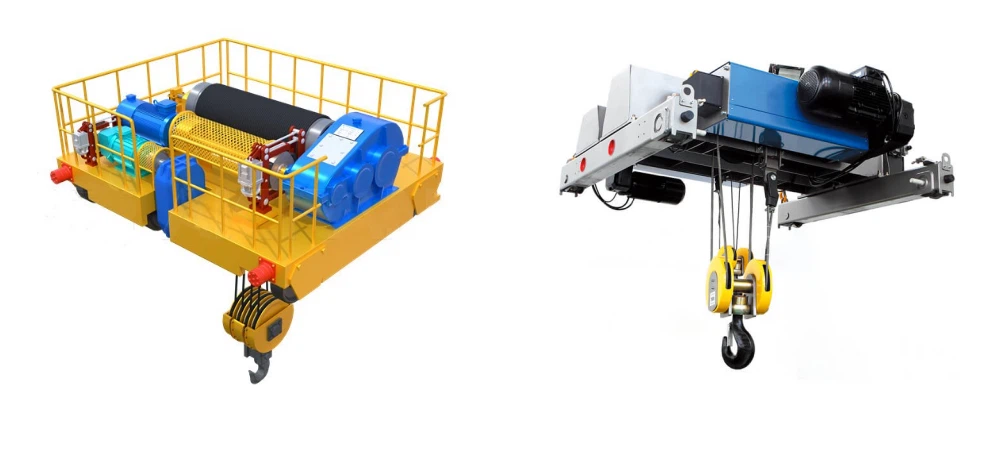
Hoist Unit: The primary winching system located on the trolley. It consists of a powerful electric motor, gearbox, drum, and wire rope that performs the actual lifting and lowering of the load.

Trolley: The unit that carries the hoist and moves laterally (traverses) along the length of the bridge girder. This allows for positioning the load across the width of the working area.
Crab Unit: On some larger models, the hoist and trolley mechanisms are combined into a single module called a crab, which runs on rails on top of the bridge girders.
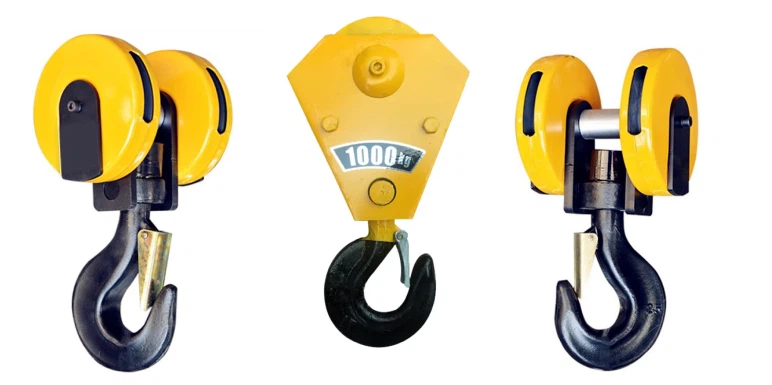
Hook Block: The assembly that connects to the load. For an 80-ton crane, this is a heavy-duty, multi-sheave block to handle the large number of wire rope parts needed for such capacity.
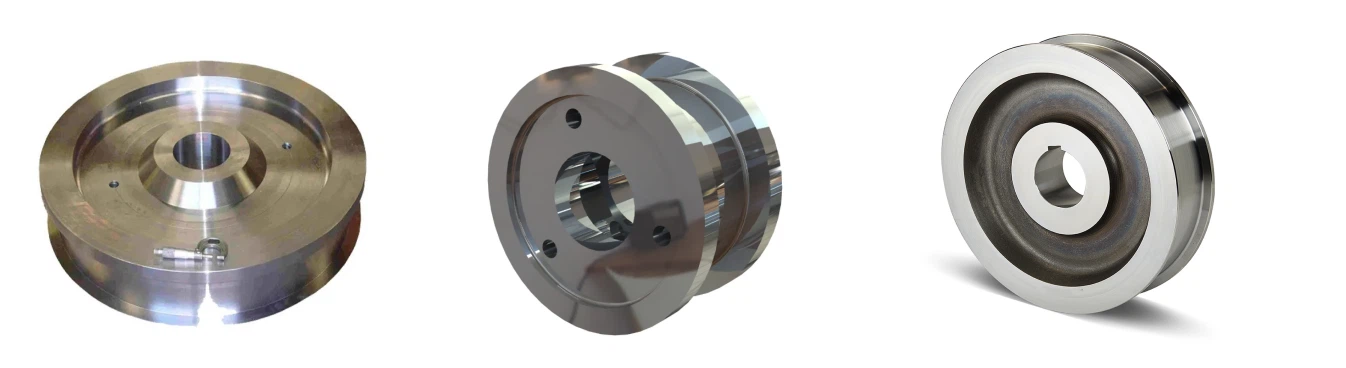
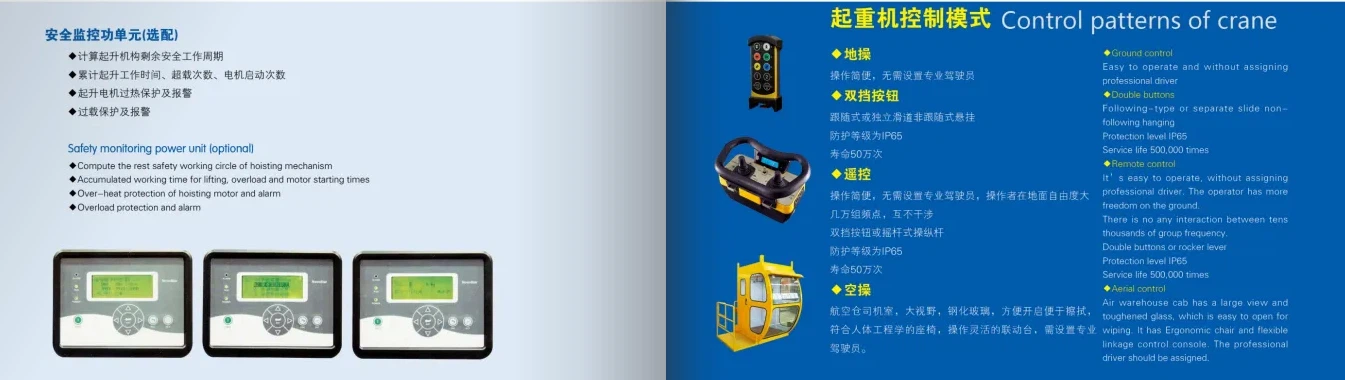
Cab (Operator's Cabin): Usually mounted on the portal frame or on the trolley, providing the crane operator with a clear view of the lifting area. Operations can also be controlled via a remote pendant (pendant control) or radio remote control.
Electrical System: Includes the main power supply (often high-voltage), a generator set (if diesel-powered), motors for all motions, advanced control systems, and safety devices.

.
3. Typical Specifications (Example)
Lifting Capacity: 80 metric tons (at a specified radius, e.g., 20m). Capacity decreases as the load radius increases.
Span: The distance between the legs. Can range from 20 meters to over 40 meters (65 ft to 130+ ft), depending on the application.
Lifting Height: Under the hook height can be 20 meters to 30 meters (65 ft to 100 ft) or more, especially for shipbuilding.
Lifting Speed: Main hoist speed is relatively slow for precision and safety, e.g., 0.5 to 5 meters/minute under full load, with higher speeds available for lighter loads.
Trolley Traverse Speed: ~20-40 m/min.
Crane Travel Speed (Long Travel): ~20-60 m/min.
Power Source: Typically electric (connected to the grid) or diesel-electric (self-contained with a diesel generator).

Safety Features
Overload Protection: Prevents lifting beyond the crane's capacity.
Emergency Stop System: Allows immediate shutdown in case of danger.
Anti-Sway System: Reduces swinging of loads for precise handling.
Buffer & Bumper System: Protects the crane from impacts.
11.Control Mode
1)1. Manual Control
Description: Operators manually control the crane using push-button pendants, levers, or control panels directly on-site.
Features:
Simple to use and maintain.
Suitable for less complex lifting tasks.
Applications: Used in smaller-scale operations or locations with low automation requirements.
2. Remote Control
Description: Operators use a wireless remote control device to operate the crane from a safe distance.
Features:
Improved safety by allowing the operator to stay clear of the load.
Greater operational flexibility.
Can handle more complex movements.
Applications: Warehousing, logistics yards, and other environments requiring higher precision.
3. Cabin Control
Description: The operator sits in a cabin attached to the crane and controls operations using joysticks or control panels.
Features:
Provides the operator with a clear view of the load and working area.
Suitable for heavy-duty and long-duration operations.
Applications: Large-scale industrial sites, such as shipyards, steel mills, or construction sites.
4. Semi-Automatic Control
Description: Some operations (like repetitive movements) are automated, while others require manual input.
Features:
Reduces operator workload.
Increases efficiency for repetitive tasks.
Applications: Assembly lines, logistics hubs, and tasks involving repeated lifting and positioning.
5. Fully Automatic Control
Description: The crane operates autonomously based on pre-programmed instructions or sensor inputs.
Features:
High precision and efficiency.
Eliminates human error and reduces labor costs.
Often integrated with smart systems or IoT for monitoring and data analysis.
Applications: Ports, automated warehouses, and environments requiring high-speed, precise operations.
6. Hybrid Control (Manual + Automatic)
Description: Combines manual and automatic control options, allowing flexibility based on task requirements.
Features:
Adaptable to varying operational needs.
Enhances efficiency without sacrificing control.
Applications: Sites that require both human supervision and automation.
12.Sketch
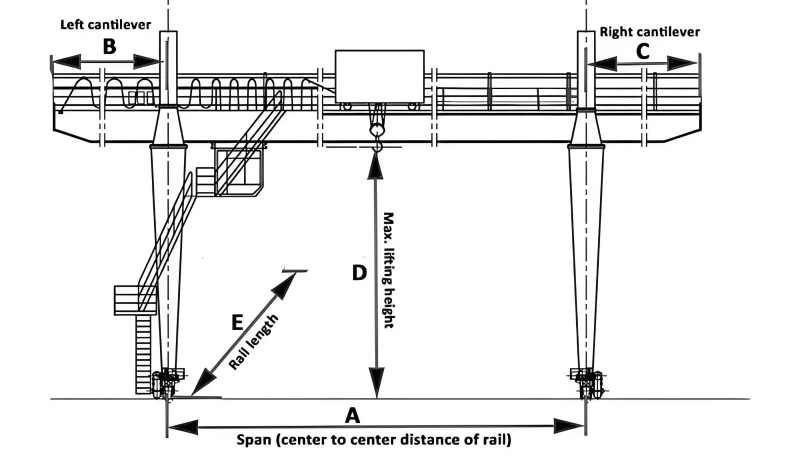
Main technical
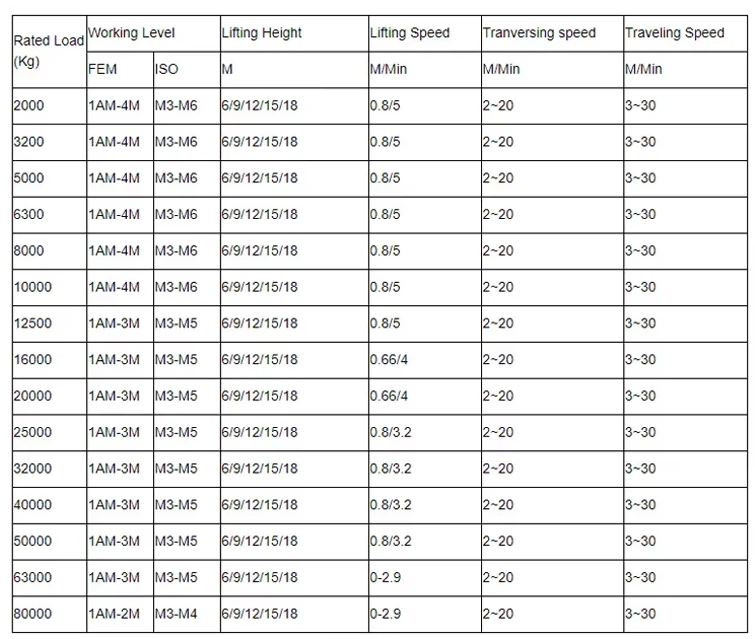
Advantages
1. Unmatched Spatial Efficiency and Layout Flexibility
Straddle Capability: This is its core advantage. The crane's legs run on rails, allowing it to travel over and around objects on the ground. This frees up the entire floor space beneath it for storage, production lines, rail sidings, or vehicle traffic.
Elimination of Obstructions: Unlike a standard overhead bridge crane that requires supporting runway columns, the portal crane's support is at the very edges of its span. This creates a completely clear, unobstructed work area beneath the crane, maximizing usable space.
2. Heavy Lifting and High Performance
Substantial Capacity: An 80-ton capacity places it in the category of a very powerful crane, capable of handling extremely heavy loads like large machinery, ship sections, prefabricated concrete elements, transformers, and heavy industrial modules.
Full Coverage: The combination of the long travel (moving the entire crane along its rails), cross travel (moving the hoist across the bridge), and hoisting provides full 3D coverage over a large rectangular area. Many models also offer a rotating trolley for precise load positioning.
3. Versatility and Adaptability
Wide Range of Applications: They are indispensable in:
Shipyards: For moving large ship components and blocks.
Heavy Fabrication Shops: For assembling large structures.
Ports and Terminals: (Especially for project cargo and smaller ports) for unloading heavy items directly onto the quay or onto transport.
Power Plants: For handling turbines, generators, and transformers.
Precast Concrete Plants: For moving large concrete beams and panels.
Railway Depots: For lifting locomotives and railcars for maintenance.
Customizable Attachments: They can be fitted with various hooks, grabs, magnets, or other specialized lifting attachments to handle diverse materials like scrap metal, bulk goods, or containers.
4. Outdoor Capability and Robustness
Built for the Elements: Portal cranes are inherently designed for outdoor use. Their structure is built to withstand wind loads, rain, and other environmental conditions.
High Lifting Height: The portal design allows for a very high lift under the hook, which is essential for stacking heavy items or loading onto tall transport.
5. Economic Advantages
Space Optimization: By utilizing air rights over existing infrastructure (like roads or rails), companies can expand their operational capacity without acquiring more land, which is a significant cost saving.
Reduced Ground Handling: The crane can move loads directly over obstacles to their precise location, minimizing or eliminating the need for intermediate transport by forklifts or trucks, streamlining the workflow.
6. Safety and Control
Stable Structure: The wide leg base provides excellent stability when lifting and moving massive loads, reducing the risk of tipping.
Precise Load Control: Modern 80-ton portal cranes are equipped with sophisticated control systems, often from a cab mounted on the crane with full visibility. This allows for extremely precise and safe load placement.
Application
The 80-ton capacity makes it a workhorse for heavy industrial and logistical operations.
1. Port Terminals & Harbor Operations (Most Common):
Ship Loading and Unloading (STS): Its primary role is efficiently moving standard and heavy containers (20', 40', 45', high-cube) between a container ship and the quay. An 80-ton capacity is crucial for handling:
Heavy-lift Cargo: Extra-heavy containers (e.g., loaded with machinery, steel coils, or granite).
Double Lift Operations: Lifting two 20-foot containers or four empty containers simultaneously, drastically improving productivity.
Reefer Containers: Managing refrigerated containers without issue.
Breakbulk Cargo: While less common now, some portal cranes can be fitted with hooks to handle non-containerized project cargo like large machinery parts, wind turbine components, or heavy industrial modules.
2. Intermodal Yards and Logistics Hubs:
Transferring Containers: Moving containers directly from trains to trucks (or vice versa) under its portal, facilitating seamless intermodal transport.
Stacking Containers: While less efficient than dedicated stacking cranes (RMG/RTG), it can be used for organizing containers in a yard, especially in smaller terminals.
3. Heavy Industrial Facilities:
Large Manufacturing Plants: Used in shipyards, heavy machinery factories, and large fabrication shops for moving massive sub-assemblies.
Power Plants: Handling large components during construction or maintenance, such as turbines, transformers, and heat exchangers.
Large-Scale Precast Concrete Production: Moving and positioning massive concrete elements.

Workshop view:
The company has installed an intelligent equipment management platform, and has installed 310 sets (sets) of handling and welding robots. After the completion of the plan, there will be more than 500 sets (sets), and the equipment networking rate will reach 95%. 32 welding lines have been put into use, 50 are planned to be installed, and the automation rate of the entire product line has reached 85%.




Hot Tags: 80 ton portal crane, China 80 ton portal crane manufacturers, suppliers, factory
You Might Also Like


Send Inquiry