






10 Ton Single Girder Overhead Crane For Factory Building Use manufacturers
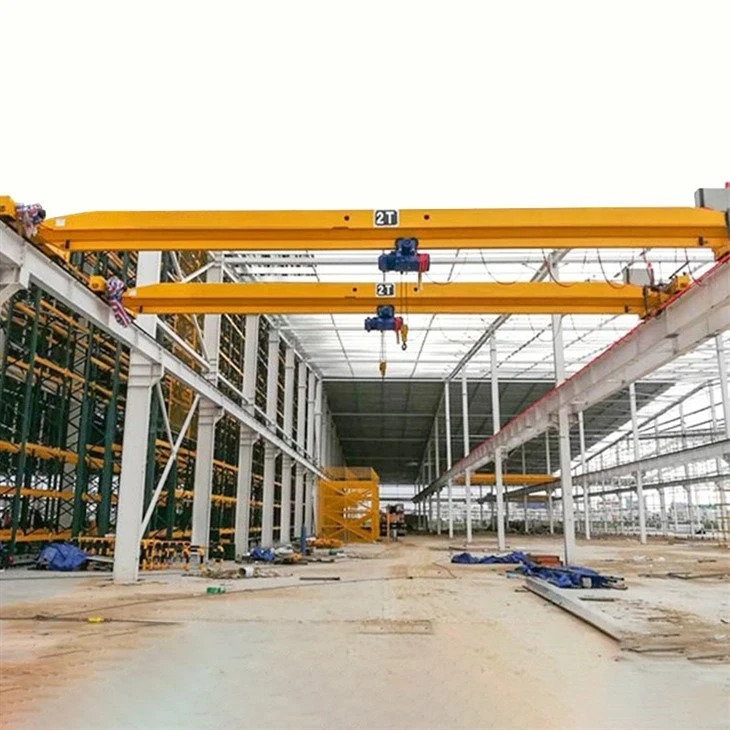
10 Ton Single Girder Overhead Crane For Factory Building Use suppliers
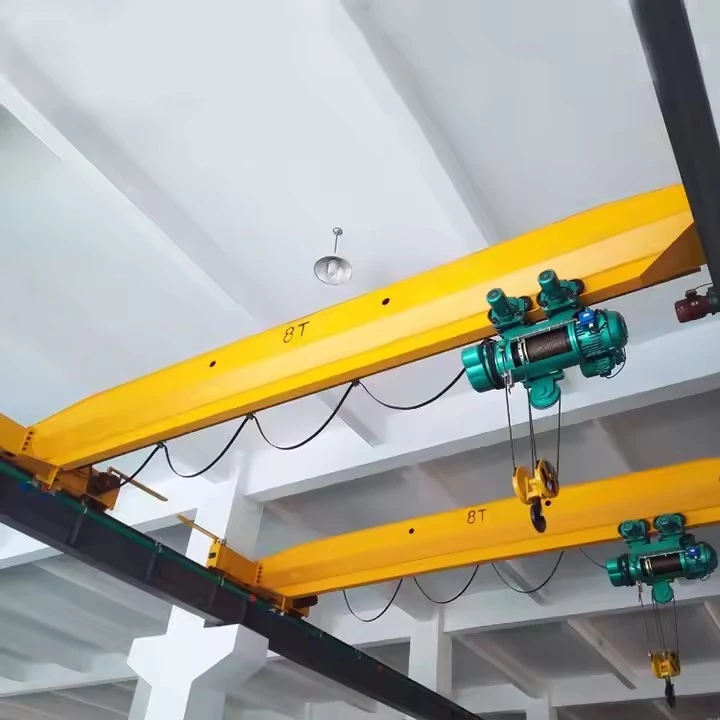
10 Ton Single Girder Overhead Crane For Factory Building Use factory
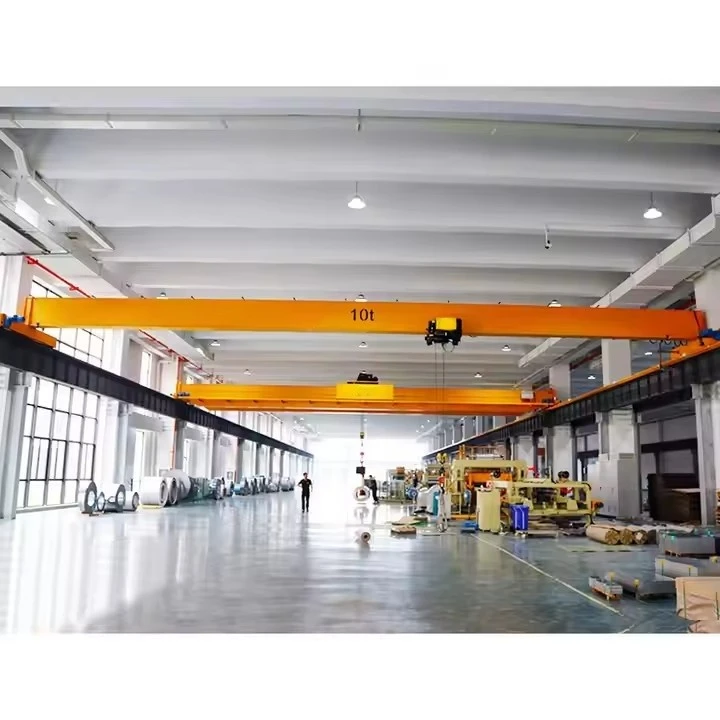
10 Ton Single Girder Overhead Crane For Factory Building Use best
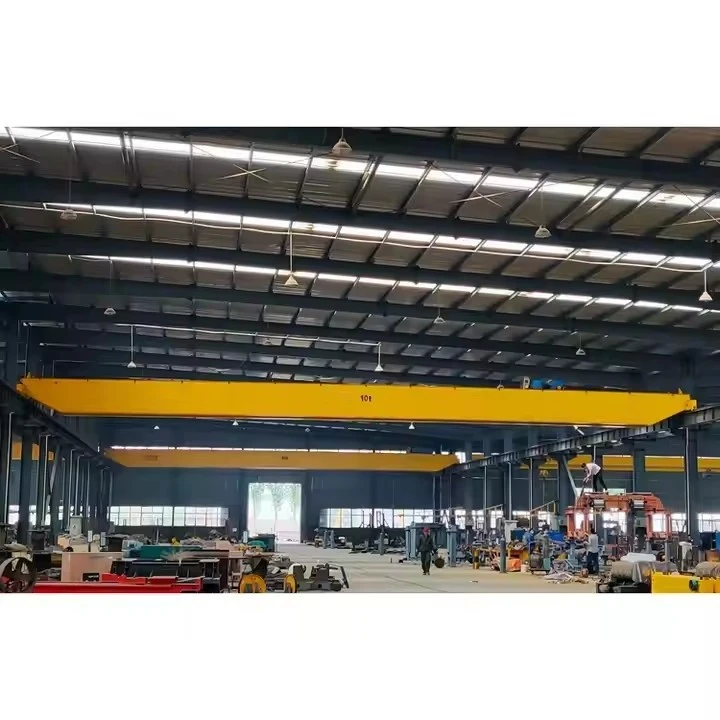
10 Ton Single Girder Overhead Crane For Factory Building Use high quality
10 Ton Single Girder Overhead Crane For Factory Building Use
Products Description
A 10-ton single girder overhead crane is a type of material handling equipment used in factories, warehouses, and workshops. It consists of a single main beam (girder) that spans across the factory building and moves along runways, with a trolley and hoist mounted on it.
10-ton capacity means it can lift up to 10,000 kg of load.
Single girder refers to one main beam, as opposed to a double girder crane which has two beams.
Lifting Capacity 1 – 20 tons (custom up to 50+ tons)
Span 5 – 30 meters
Lifting Height 3 – 30 meters
Lifting Speed 1 – 20 m/min (adjustable)
Trolley Speed 5 – 30 m/min
Crane Travel Speed 10 – 60 m/min
Power Supply 380V/415V, 50Hz (3-phase)
Duty Class FEM A3-A5 (Medium to Heavy Duty)

Pictures & Components
A. Main Girder
The horizontal beam that spans the width of the factory.
Carries the trolley and the load.
Made from high-strength steel (I-beam or box-section).
B. End Trucks
Mounted at each end of the girder.
Roll along the runway rails on the factory building.
Equipped with wheels and bearings to support the full crane weight + load.
Performance Indicators
Deflection Control: Under full load (20 tons), deflection is strictly limited to ≤ L/1000 (e.g., for an 18m span, deflection ≤ 18mm).
Lower Flange Track: The lower flange plate of the box girder is specifically machined to serve as the running track for the electric hoist.

2. End Carriages & Bridge Travel Mechanism
The end carriages are mounted at each end of the main girder. They house the wheels and travel drives that move the entire crane along the runway rails.
End Carriage Structure
Fabrication: Made from welded rectangular steel tubes or folded steel plates using Q235B/Q355B material.
Connection: Connected to the main girder using Class 10.9 high-strength bolts and precision locating pins (tolerance ±1mm) for structural integrity and easy transport.
Buffer & Safety: Equipped with rubber or polyurethane buffers and anti-derailing end plates at both ends.
 |
 |
C. Trolley and Hoist
Trolley: Moves along the girder to position the load.
Hoist: Lifts or lowers the load. Can be electric chain or wire rope hoist.
 |
 |
D. Runway System
Rails installed on the factory building's support structure.
Guides the crane along the building's length.

4. Power Supply & Electrical Systems
This system distributes power and controls the crane's movements. European designs standardize on high-ingress protection ratings.
Power Supply Methods
Conductor Bar (Busbar) System: Enclosed IP54-rated copper or aluminum bars mounted along the runway and main girder.
Festoon Cable System: Flat cables running on sliding trolleys, ideal for lower amperage or complex environments.
Control System
Core Technology: Programmable Logic Controller (PLC) + Variable Frequency Drive (VFD) + Contactor coordination.
VFD Benefits: Provides "stepless" speed control, anti-sway functionality (minimal starting impulse <0.3g), and energy savings.
Control Modes:
Pendant Control: Low-voltage (24V) push-button station, standard for ground operation.
Radio Remote Control: Wireless operation with up to 100m range, allowing the operator to choose the safest viewing position.
Cab Control: Optional heated/air-conditioned cabin for high-frequency or high-altitude operation.
E. Crane Control System
Can be pendant control, radio remote, or cabin control.
Controls hoist lifting/lowering, trolley travel, and crane movement.

Safety & Monitoring Features
Overload Protection: Cut-off at 105% of rated load (21 tons).
Limit Switches: Dual-stage lifting height limiters, plus travel end limiters.
Audible/Visual Alarms: Standard for zone warning.

.
5. Trolley Travel Mechanism
While integrated with the hoist in single-girder designs, the trolley specifically moves the hoist across the main girder.
Structure & Drive
Side-Hanging Design: The trolley hangs from the lower flange of the main girder, utilizing a side-hanging structure to minimize the building's headroom requirement.
Wheels: Forged steel wheels, heat-treated to a tread hardness of HRC55–60 for wear resistance.
Drive: Independent motor (typically 0.75–1.5kW for 20T models) with VFD, achieving speeds of 2–20 m/min.
F. Safety Devices
Limit switches (prevent over-travel).
Overload protection.
Emergency stop buttons.


Sketch

Main technical

Advantages
Here's a detailed breakdown of the advantages of a 10-ton single girder overhead crane for factory use, explained clearly and practically:
1. High Load Capacity
Can lift up to 10 tons, making it suitable for heavy industrial materials like machinery, steel coils, and engines.
Reduces manual labor and enhances workplace efficiency.
2. Cost-Effective
Single girder design requires fewer materials and simpler structure than double girder cranes.
Lower manufacturing, installation, and maintenance costs.
3. Space-Efficient
Requires less headroom than double girder cranes.
Ideal for factories with limited vertical clearance.
4. Easy Installation
Lightweight and simpler structure means faster and easier installation.
Can be retrofitted into existing factory buildings without major structural modifications.
5. Versatile Material Handling
Moves loads longitudinally along the runway and laterally across the girder.
Suitable for a variety of industries: manufacturing, assembly, warehouses, workshops.
6. Enhanced Safety
Equipped with limit switches to prevent over-travel.
Overload protection prevents lifting beyond 10 tons.
Emergency stop ensures immediate shutdown in unsafe conditions.
7. Reduced Labor and Time
Lifts and positions heavy materials quickly and precisely.
Reduces reliance on manual cranes or forklifts, improving work efficiency.
8. Low Maintenance
Fewer moving parts than double girder cranes.
Simple structure allows easy inspection and maintenance, reducing downtime.
9. Flexibility
Can handle long spans and high lift heights depending on factory design.
Trolley can move loads to any position along the girder.
✅ Summary
A 10-ton single girder overhead crane offers a perfect balance of capacity, simplicity, cost-efficiency, and safety for factory material handling. It's ideal for medium to heavy industrial operations where space and budget are considerations.
Application:
| Machinery Manufacturing | Assembling heavy equipment (e.g., presses, turbines), moving large components between production lines, handling raw steel plates and finished parts . |
| Warehousing & Logistics | Loading/unloading steel coils, heavy pallets, or containers; serving automated three-dimensional warehouses; managing large inventory in material yards . |
| Energy & Heavy Industry | Handling pipes, large storage tanks, and petrochemical equipment; maintenance of heavy parts in power plants (limited to ambient temperatures -20°C to 40°C) . |
| Building Materials & Construction | Lifting prefabricated concrete elements, steel structures, wood, and paper rolls . |
| Automotive & Assembly | Handling large stamping dies and performing precision assembly of large automotive or aviation parts where smooth, anti-sway control is critical . |
| Specialized Environments | Available with specific modifications for cold chain logistics, clean rooms (dust-free lubrication), or nuclear power facilities (e.g., stainless steel components) |
Crane Production Procedure
Absolutely! Let's go step by step through the production procedure of a 10-ton single girder overhead crane for factory use. I'll keep it detailed and structured so you can understand the entire process from design to installation.
1. Design & Planning
Determine specifications:
Lifting capacity (10 tons), span length, lift height, and trolley speed.
Factory building constraints like headroom, runway length, and support structure.
Structural Analysis:
Design the main girder and end trucks for strength, deflection limits, and safety.
Electrical & Control Design:
Select hoist type (wire rope or chain), motor power, control method (pendant, cabin, or radio remote).
Safety Considerations:
Include limit switches, overload protection, brakes, and emergency stop systems.
2. Material Preparation
Steel Selection:
High-strength steel for main girder and end trucks.
Mechanical Components:
Wheels, bearings, shafts, couplings, motors, hoist drum.
Electrical Components:
Motors, cables, contactors, control panels, limit switches.
3. Fabrication of Components
Main Girder:
Cut and weld steel plates to form I-beam or box-section girder.
Install stiffeners to resist bending under 10-ton load.
End Trucks:
Weld frame, attach wheels, bearings, and mount motors for crane movement.
Trolley & Hoist Assembly:
Assemble trolley frame and attach hoist mechanism.
Install wire rope or chain, motor, drum, and braking system.
4. Sub-Assembly
Combine main girder with end trucks in factory or assembly yard.
Mount trolley on girder for preliminary fit and travel testing.
5. Control System Installation
Install pendant, cabin, or radio control system.
Wire all motors (hoist, trolley, crane movement) and integrate safety devices.
Connect limit switches, emergency stop, and overload protection sensors.
6. Testing & Calibration
No-Load Test: Move crane along runway, trolley along girder, and operate hoist without load.
Load Test: Lift 10 tons (or slightly more as safety margin) and test all movements.
Safety Checks: Confirm limit switches, brakes, and overload protection function correctly.
Speed & Travel Adjustment: Ensure smooth motion of crane and trolley.
7. Surface Protection
Cleaning: Remove oil, dust, and rust from steel surfaces.
Painting/Coating: Apply anti-corrosion paint or powder coating to girder, end trucks, and trolley.
8. Packaging & Shipping
Disassemble components if needed for transport.
Carefully load girder, end trucks, trolley, and control panels onto trucks or containers.
9. On-Site Installation
Mount runway rails in the factory building (if not already installed).
Assemble girder, end trucks, and trolley on runway.
Connect electrical systems and control panels.
Perform final load test and safety inspection before commissioning.

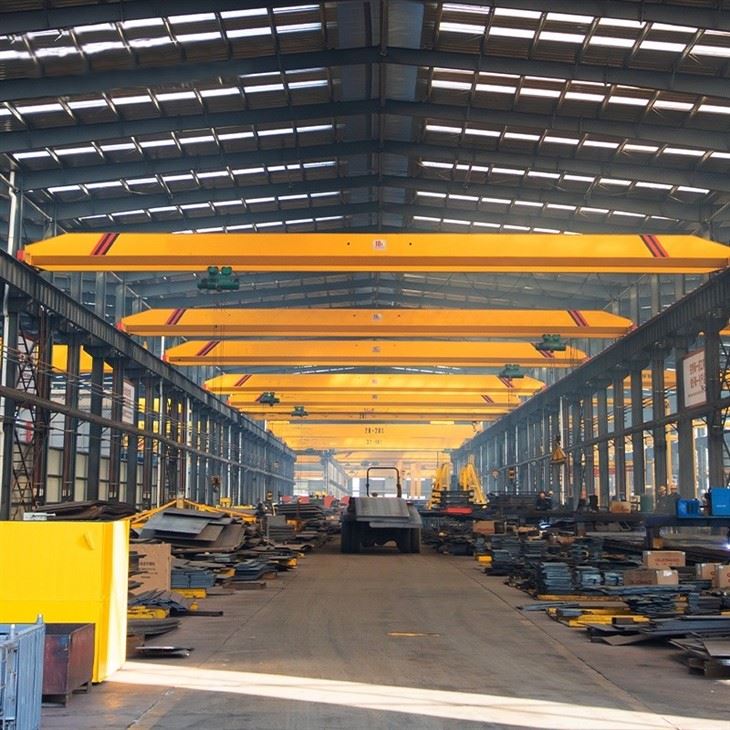
Workshop view:
The company has installed an intelligent equipment management platform, and has installed 310 sets (sets) of handling and welding robots. After the completion of the plan, there will be more than 500 sets (sets), and the equipment networking rate will reach 95%. 32 welding lines have been put into use, 50 are planned to be installed, and the automation rate of the entire product line has reached 85%.


Hot Tags: 10 ton single girder overhead crane for factory building use, China 10 ton single girder overhead crane for factory building use manufacturers, suppliers, factory
You Might Also Like



Send Inquiry