










Shop Gantry Crane
Products Description
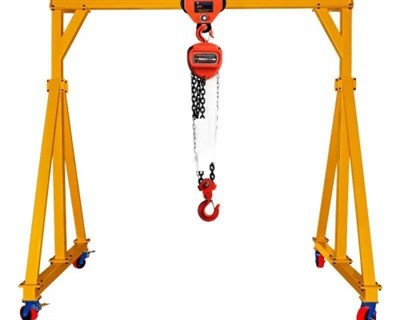
1.The Single Girder Shop Gantry Crane is a cost-effective and efficient lifting solution designed for indoor and outdoor material handling operations. It features a single girder supported by two legs, running on rails or wheels, making it an excellent alternative to overhead cranes when a permanent structure is not feasible. This crane is widely used in workshops, warehouses, maintenance shops, and assembly lines.
2.Key Features
Lightweight & Compact Design – Saves space and reduces installation costs.
High Efficiency – Smooth operation with precise lifting and positioning.
Flexible Mobility – Available in fixed rail-mounted or portable wheeled models.
Strong & Durable – High-quality steel structure with anti-corrosion coating.
Enhanced Safety – Equipped with overload protection, emergency stop, and anti-collision systems.
Place of Origin:Henan, China
Warranty:2 years
Weight (KG):60000 kg
Video outgoing-inspection:Provided
Machinery Test Report:Provided
Application:warehouses,factory and other place
Crane type:box type gantry crane
Travelling speed:20m/min
Lifting mechanism:Electric Hoist
Control method:Ground Control+ Remote Control (customized)
Working duty:A5
Working Temperature:-20~+40℃
Industrial voltage:380V50HZ3Phanse or other
Color:Customised
Customization:Accepted

Pictures & Components
1.Main beam
1)Structure & Material:
Made of high-strength steel (e.g., Q235B or Q345B).
Typically a box girder or I-beam structure, depending on load requirements.
Designed with reinforcements to prevent deflection and bending.
2)Load-Bearing Function:
Supports the electric hoist or trolley, allowing horizontal movement.
Transfers the load to the legs and then to the ground through the wheels.
3)Connection & Assembly:
Connected to the legs using bolted or welded joints.
Equipped with end carriages for stability.
4)Customization & Design Considerations:
Span & length depend on the workshop size.
Lifting capacity usually ranges from 1 ton to 20 tons.
Can include walkways and maintenance platforms if needed.

2.Lifting System
1)Lifting Mechanism (Hoist or Trolley)
Usually an electric wire rope hoist or an electric chain hoist, depending on the lifting capacity.
Moves along the main beam to position the load accurately.
Controlled by a motorized system with a gearbox for smooth operation.
2)Hoist Motor & Gearbox
Powered by an electric motor (often a three-phase motor for industrial applications).
Includes a reduction gearbox to adjust speed and provide torque.
Equipped with brakes for safe load holding.
3)Hook & Load Handling Devices
Heavy-duty steel hook for secure lifting.
Some models have attachments like lifting magnets, clamps, or spreader beams for specialized loads.
4)Wire Rope or Chain System
Wire rope hoists use steel wire ropes wound around a drum.
Chain hoists use heavy-duty lifting chains.
5)Safety Features
Limit switches to prevent over-lifting or over-lowering.
Overload protection to prevent excessive loads.
Emergency stop system for quick halts. failure.


3.End carriage
1)Structure & Design
Typically made of high-strength steel.
Consists of a welded or bolted frame to ensure durability.
Houses the wheel assemblies that allow smooth movement along the track.
2)Components
Wheels: Can be made of forged steel or polyurethane, depending on the application.
Drive System: Usually equipped with a motor-driven mechanism for controlled movement.
Bearings: Reduce friction and enhance movement efficiency.
Buffers: Installed to prevent excessive impact at the track ends.
3)Functions
Supports and stabilizes the single girder structure.
Ensures smooth longitudinal movement along the shop floor.
Works in coordination with the crane's motor and control system for precise positioning.
4)Types of End Carriages
Motorized End Carriage: For larger, powered movement.
Manual End Carriage: Suitable for small-scale applications where manual movement is sufficient.


4.Crane travelling mechanism
1)Main Components
End Carriages: Houses the wheels, motor, and drive system to support and guide movement.
Travel Wheels: Typically made of forged steel or polyurethane, depending on the floor or rail type.
Drive Mechanism: Includes an electric motor, gearbox, and brake system for controlled movement.
Control System: Can be operated via pendant control, remote control, or a cabin (if applicable).
Buffers & Limit Switches: Prevent the crane from overrunning the track ends and enhance safety.
2)Types of Travel Mechanisms
Motorized Travel Mechanism (Electric Drive)
Uses electric motors to drive the wheels.
Provides smooth acceleration and deceleration.
Equipped with VFD (Variable Frequency Drive) for speed control.
Ideal for frequent and heavy-duty operations.
5.Trolley travelling mechanism
1)Trolley Drive Motor: The drive motor is usually an electric motor that provides the power for the trolley's movement along the crane girder. It is typically connected to the trolley's wheels through gears and other mechanical components.
2)Trolley Wheels: The wheels are mounted on the trolley, allowing it to travel along the rail or beam of the crane's girder. These wheels are designed to handle the weight of the trolley and the load it carries.
3)Rail or Track: The crane girder is fitted with a rail or track that the trolley wheels run on. This ensures smooth movement and supports the entire weight of the trolley and its load.
4)Electric Control System: The trolley's movement is usually controlled through an electric control system that allows the operator to control the direction, speed, and stopping of the trolley.
5)Brakes: To stop the trolley when necessary, an electromagnetic brake system is typically used. This ensures the trolley can halt safely even if the power is cut off.
6)Bearings and Supports: Bearings are used to reduce friction and wear between the trolley wheels and the crane girder. The supports keep the trolley aligned and in place during operation.
7)Drive Mechanism: The mechanism typically consists of a motor, gearbox, and chain or rope, which transmit power to the wheels, allowing the trolley to travel along the girder.
8)Safety Features: Features like limit switches, anti-collision devices, and overload protection ensure the safe operation of the trolley mechanism.
6.Crane wheel
Function of Crane Wheels:
1)Load Support: The primary function of crane wheels is to support the weight of the entire crane structure, including the load it is carrying. The wheels help distribute the load evenly over the tracks to prevent excessive wear on the rail.
2)Movement: The wheels allow the crane to travel smoothly along the rail or track, enabling the gantry crane to move horizontally across the work area.
3)Stability: Properly designed wheels ensure that the crane remains stable during operation. The wheels, along with the tracks, guide the crane's movement and prevent tipping or derailing.

7.Crane Hook
1)Hook Body:
The hook body is typically made of high-strength steel or alloy to withstand the heavy loads it carries. It is shaped with a wide opening at the top and a pointed or tapered end at the bottom for hooking the load securely.
2)Safety Latch:
The hook often includes a safety latch or catch to prevent the load from accidentally detaching. This latch may be spring-loaded and is designed to automatically close over the load's lifting point to prevent unhooking during crane operation.
Some hooks are equipped with locking mechanisms to further enhance safety during lifting.
3)Swivel Mechanism:
The hook can be mounted on a swivel, allowing it to rotate freely. This feature helps the hook stay aligned with the load and reduces the risk of twisting or strain on the lifting cable or chain. The swivel mechanism also provides greater maneuverability when moving the load.

8.Motor
Motor Maintenance:
1)Regular Inspections:
Regular inspections are essential to ensure the motor operates efficiently. Key areas to check include the electrical connections, cooling system, bearings, and motor casing for signs of wear or overheating.
2)Lubrication:
The motor's bearings and moving parts should be properly lubricated to reduce friction and prevent damage due to overheating or wear.
3)Cleaning:
Dirt, dust, and debris can affect the motor's performance, especially in industrial environments. Regular cleaning of the motor and its components helps maintain efficient operation and prevent overheating.
4)Replacement of Worn Parts:
Over time, parts of the motor, such as brushes or bearings, may wear out and need to be replaced. Timely replacement of these parts ensures the motor runs smoothly and avoids unplanned downtime.

.
Sound and light alarm system & limit switch
1)Sound and Light Alarm System:
The sound and light alarm system is a safety feature that alerts both the crane operator and nearby personnel about critical operating conditions or abnormal situations. These alerts can prevent accidents and ensure safe crane operation in busy or noisy environments.
2)Limit Switch:
Purpose and Functionality:
A limit switch is a safety device used to prevent the crane from moving beyond its predefined range of motion, either vertically (hoist or lift) or horizontally (trolley or gantry movement). The limit switch helps prevent mechanical damage to the crane, rails, or structure by ensuring it doesn't overrun and cause mechanical failure.

10.Safety Devices
1)Overload Protection Device:
Purpose: The overload protection device prevents the crane from lifting loads that exceed its maximum safe working load (SWL). Overloading can cause structural damage to the crane and pose serious risks to safety.
2)Limit Switches:
Purpose: Limit switches are used to restrict the crane's movement to predetermined safe positions, both vertically and horizontally, to avoid mechanical damage or dangerous situations.
3)Safety Latch on Crane Hook:
Purpose: The safety latch (or safety catch) prevents the load from accidentally detaching from the crane hook during lifting or movement.
4)Emergency Stop Button:
Purpose: The emergency stop button is a crucial safety feature that allows the crane operator to immediately stop all crane movements in case of an emergency or dangerous situation.
5)Sound and Light Alarm System:
Purpose: The alarm system alerts both the operator and nearby workers to potential hazards or critical conditions.
11.Control Mode
1)Cabin Control (Operator's Cabin Control):
Description: In this control mode, the crane operator is located inside a cabin (usually positioned on the crane or on a platform) from where they can directly control the crane's movements.
2)Pendant Control (Cable Remote Control):
Description: In pendant control, the crane operator uses a remote control device (pendant) attached to the crane by a cable to control its movements.
3)Radio Remote Control:
Description: Radio remote control is a wireless control system that allows the crane operator to control the crane from a distance, using a hand-held device with radio communication.
4)Automatic Control (Automated or Semi-Automatic Control):
Description: In automated control, the crane's movements are controlled by pre-programmed settings or algorithms, which can be operated without continuous human intervention. This system is often used for repetitive tasks or when precision and efficiency are paramount.

Sketch

Main technical

Advantages
1. Cost-Effectiveness
Lower Initial Investment: A single girder gantry crane generally costs less to manufacture and install compared to double girder cranes because it uses fewer materials (one girder instead of two).
Reduced Maintenance Costs: With a simpler structure, the maintenance requirements and costs are lower compared to more complex crane designs.
2. Space Efficiency
Maximized Headroom: Because a single girder crane has a simpler structure, it can be designed to maximize headroom, offering more vertical space for lifting operations.
Compact Design: Its compact design makes it ideal for environments where space is limited. The single girder structure allows for efficient use of space, making it suitable for smaller workshops or warehouses.
3. Flexibility in Design
Customizable: Single girder gantry cranes can be customized to fit various working environments, including adjusting the crane's span, lifting height, and load capacity to meet specific operational needs.
Adaptability: These cranes can be tailored for indoor or outdoor use, with different configurations of rails or tracks, depending on the layout of the workspace.
4. Efficiency in Operation
Improved Lifting Speed: Single girder gantry cranes can be designed for faster lifting and lowering speeds, improving productivity in warehouses or factories with high throughput requirements.
Simpler Operation: With fewer components than double girder cranes, single girder gantry cranes are easier to operate, allowing for quicker adaptation by crane operators.
5. Increased Safety
Stable Load Handling: The design of the single girder crane ensures stable and reliable load handling, reducing the risk of tipping or swinging loads.
Limit Switches and Safety Features: Single girder cranes often come equipped with limit switches, overload protection devices, and alarm systems to enhance operational safety and prevent accidents.
6. Lower Power Consumption
Energy Efficiency: With a lighter frame and simpler components, single girder cranes typically consume less power than double girder cranes. This can result in lower operating costs over time.
Efficient Motor Usage: The crane's lifting capacity is often adequate for many industrial applications, meaning less power is required to lift the same weight.
Application:
1. Manufacturing and Assembly Lines
Application: In factories and production facilities, single girder gantry cranes are used to lift and transport raw materials, components, and finished products along the assembly line.
Benefits: These cranes can handle moderate to light loads efficiently, improving production throughput and ensuring smooth workflow in the manufacturing process.
2. Warehouses and Distribution Centers
Application: In warehouses, single girder gantry cranes are employed to move goods, pallets, and other items across the floor. They are ideal for lifting and placing materials into storage racks or unloading trucks.
Benefits: Their space-saving design allows them to work in tight aisles and improve storage organization, making them perfect for warehouses with limited space.
3. Machine Shops
Application: In machine shops, these cranes are used to handle heavy machinery, tools, and workpieces, facilitating the movement of equipment or raw materials for processing.
Benefits: They allow for precise handling of equipment that requires careful lifting and positioning in confined or busy environments.
4. Construction and Site Work
Application: On construction sites, single girder gantry cranes can be used for moving construction materials, tools, and pre-fabricated components like beams, pipes, and columns.
Benefits: These cranes are perfect for environments where space is limited, or the crane needs to be portable and set up quickly on a construction site.
5. Loading and Unloading
Application: Single girder gantry cranes are often used for loading and unloading materials from trucks, containers, or railcars in logistics and transportation sectors.
Benefits: They improve the speed and efficiency of loading and unloading processes, especially for medium-weight loads, ensuring smooth material handling.
6. Maintenance and Repair Shops
Application: In maintenance and repair workshops, single girder gantry cranes are used for lifting and moving equipment, machinery, or vehicles for repairs, servicing, or maintenance.
Benefits: These cranes make it easy to lift and position heavy components that need to be repaired or serviced, improving workflow and reducing downtime.
Crane production procedure
1. Design and Planning
Requirements Analysis: The production process begins with understanding the customer's specific needs, such as the crane's lifting capacity, span, height, and operating environment (indoor or outdoor).
Design: Engineers create a design based on the requirements. The crane's structural components (girder, trolley, hoist, etc.) are designed using CAD software, ensuring that they meet the necessary safety standards and performance specifications.
Approval: Once the design is completed, the plans are reviewed and approved by the customer or relevant authorities before moving to the manufacturing stage.
2. Material Selection
Steel and Components: The materials used for constructing the crane (steel for the girder, hoist, trolley, etc.) are selected based on strength, durability, and resistance to environmental factors.
Standard Parts: Components such as wheels, bearings, motors, electrical systems, and other accessories are sourced from approved suppliers. These parts must meet industry quality standards.
3. Fabrication of Components
Cutting and Shaping: The steel plates, beams, and other structural materials are cut, shaped, and welded according to the design specifications. CNC machines are often used for precision cutting.
Welding: The various parts, such as the main girder, end beams, and support structures, are welded together. Welding is done by experienced welders to ensure strength and precision.
Machining: Some components may require machining for precise fit, such as the fabrication of the crane's wheels, gearboxes, or other mechanical parts.
4. Assembly of Structural Components
Girder Assembly: The main single girder, typically made from I-beams or box beams, is assembled first. This involves joining the steel plates and beams to form the main structural framework of the crane.
End Beams and Support Frames: The end beams, which allow the crane to travel along the rails, are fabricated and attached to the main girder. Support frames and mounting points for the trolley and hoist are also added.
Trolley and Hoist Assembly: The trolley, which moves along the girder, is assembled along with the hoisting mechanism, including the hoist motor, drum, rope, and lifting hook.
5. Installation of Electrical and Mechanical Systems
Motor and Electrical System: The motor, electrical wiring, and control panels are installed on the crane. These systems will control the movement of the crane (hoisting, trolley, gantry travel) and integrate safety features like limit switches and overload protection.
Control System: The crane is equipped with control systems such as pendant controls, cabin controls, or radio remote controls, depending on the design specifications. The control panels and wiring are carefully installed and tested.
Safety Devices: Safety features such as limit switches, alarms, and overload protection are installed and wired into the electrical system to ensure safe operation.
6. Final Assembly and Adjustments
Wheel and Rail Installation: The crane's wheels, which allow it to travel along the track, are mounted onto the structure. These wheels are typically fitted with high-strength bearings for smooth movement.
Final Structural Assembly: All remaining components, such as the lifting hook, lifting block, and additional supports, are installed.
Adjustments and Fine-Tuning: The crane is adjusted to ensure all components are aligned and that the movement is smooth and free of any obstruction. Tolerances are checked, and any necessary fine-tuning is performed.
7. Testing
Load Testing: The crane undergoes load testing to ensure that it can safely lift and carry the required weight. Testing is done at various load levels to ensure the crane operates safely within its design capacity.
Movement Testing: All motions of the crane, such as trolley travel, hoisting, lowering, and gantry movement, are tested for smooth operation and proper functioning.
Safety System Testing: The crane's safety systems, such as limit switches, emergency stops, and overload protection, are tested to ensure they function correctly under load.
Electrical Testing: The crane's electrical systems are thoroughly tested for power consumption, control system response, and the proper operation of motors and safety alarms.
8. Inspection and Quality Control
Visual Inspection: The crane is inspected for any visible defects in the welding, finish, and assembly. This inspection also includes checking for proper alignment and smooth operation of all moving parts.
Certification: A final quality control check is carried out, often involving third-party inspection to verify that the crane meets all safety and operational standards. The crane is then certified for use, and a compliance certificate is issued if required.

Workshop view:
The company has installed an intelligent equipment management platform, and has installed 310 sets (sets) of handling and welding robots. After the completion of the plan, there will be more than 500 sets (sets), and the equipment networking rate will reach 95%. 32 welding lines have been put into use, 50 are planned to be installed, and the automation rate of the entire product line has reached 85%.


Hot Tags: shop gantry crane, China shop gantry crane manufacturers, suppliers, factory, Forged Train Wheels, Electric Hoist Single Girder Gantry Crane, Crane Parts, Single Girder Gantry Crane, Eot Crane, Rolling Mill Overhead Crane
Previous
Rail-mounted Gantry CranesYou Might Also Like




Send Inquiry