










Small Portable Gantry Crane
Products Description
The small portable gantry crane is a lightweight, mobile lifting solution designed for a variety of industrial, commercial, and residential applications. These cranes provide efficient material handling capabilities, making them ideal for environments where flexibility and maneuverability are essential. They're commonly used in manufacturing, maintenance, construction, and warehouse settings for tasks like lifting heavy machinery, assembling parts, or transporting materials.
The small portable gantry crane can be designed for easy transportation and quick setup, the small portable gantry crane is equipped with wheels for smooth mobility across surfaces. Many models come with lockable casters for secure positioning while in use.Many cranes have adjustable height and span, allowing for customization to meet specific project requirements. This adjustability makes them versatile for varied lifting tasks and compatible with different work environments.
The small portable gantry crane is often designed to be quickly assembled and disassembled, making them ideal for temporary setups or when space-saving storage is required.Compared to larger, permanently installed overhead cranes, small portable gantry cranes are more affordable and provide an economical lifting solution for businesses and individuals with occasional lifting needs.
Core Components: PLC, Bearing, Gearbox, Motor, Gear
Place of Origin: Henan, China
Warranty: 1 Year
Weight (KG): 500 kg
Video outgoing-inspection: Provided
Machinery Test Report: Provided
Color: Customized
Crane feature: Easy Operated
Capacity: 1-20t
Type : Single Girder
Power supply: 110V/220V/230V/380V/440V
Control Method: Ground Control+ Remote Control (customized)
MOQ: 1 Set
Lifting mechanism: Eliectric Hoist
Work Duty: A3-A4

Pictures & Components
1.Main beam
1) The main beam of a small portable gantry crane, also called the "girder" or "I-beam," is the primary horizontal component responsible for bearing the load and distributing it evenly across the crane structure.
Typically made of high-strength steel, as it must support the weight of both the load and any trolley equipment moving along it. Some smaller or specialized models may use aluminum for lightweight portability.
The main beam's load capacity is designed to match the maximum load the crane can handle. For small portable gantry cranes, capacities can range from a few hundred kilograms up to several tons, depending on the application.Portable gantry cranes often have adjustable main beam lengths to accommodate different workspaces or to allow for flexibility in positioning loads.
The main beam plays a crucial role in the safety, efficiency, and versatility of a portable gantry crane, so it's essential to choose a beam that matches the load requirements and environment where the crane will be used.

Lifting System
Motor: The motor of a small portable gantry crane is a crucial part of its lifting system, enabling smooth and reliable hoisting operations. Here's a brief overview of the motor and lifting system in such cranes:Small portable gantry cranes usually use electric motors for efficient lifting. Depending on the model, these can be single-phase or three-phase motors.The power output varies depending on the crane's capacity, typically ranging from 0.5 HP to 5 HP.Generally, 220V to 380V is standard for these motors, ensuring they're compatible with typical power supplies.
Reducer: The reducer in a small portable gantry crane is a crucial component in the lifting system. It plays a vital role in converting the high-speed, low-torque output of the motor into a lower-speed, higher-torque force, which is essential for safely and efficiently lifting heavy loads.The reducer (also known as the gearbox) helps control the lifting speed and torque of the crane.It ensures smooth, precise operation by reducing the rotational speed and amplifying the torque to the required levels for lifting heavy loads.
Drum: The drum in a small portable gantry crane's lifting system is a vital component for controlling the hoisting mechanism, which enables safe and effective lifting of loads. Typically designed to wind and unwind the lifting rope or cable, the drum operates within a system that includes a motor, gearbox, and braking mechanisms.
Wire rope: The wire rope of a small portable gantry crane is a critical component within its lifting system.The wire rope acts as the main hoisting element responsible for lifting, holding, and lowering the load.It transfers the force generated by the hoist mechanism to the load, ensuring smooth and controlled lifting operations.Made of high-strength steel wires, which are twisted together to form a sturdy and flexible rope.Typically constructed to resist wear, corrosion, and fraying, given the heavy-duty requirements of cranes.Often galvanized or coated to provide additional durability, especially for outdoor use where exposure to weather elements is expected.
Pulley block: The pulley block of a small portable gantry crane is a crucial component of the lifting system. This part consists of a system of wheels, sheaves, and ropes or chains that facilitate the lifting and lowering of heavy loads with minimal effort.The pulley block typically includes multiple wheels (sheaves) set within a frame that allows a rope or chain to pass over them.By utilizing a combination of fixed and moving pulleys, the system can multiply the force applied, enabling operators to lift much heavier loads than would be possible with direct force.The design reduces friction, allowing for smooth and efficient operation when lifting or lowering loads.
Lifting device:
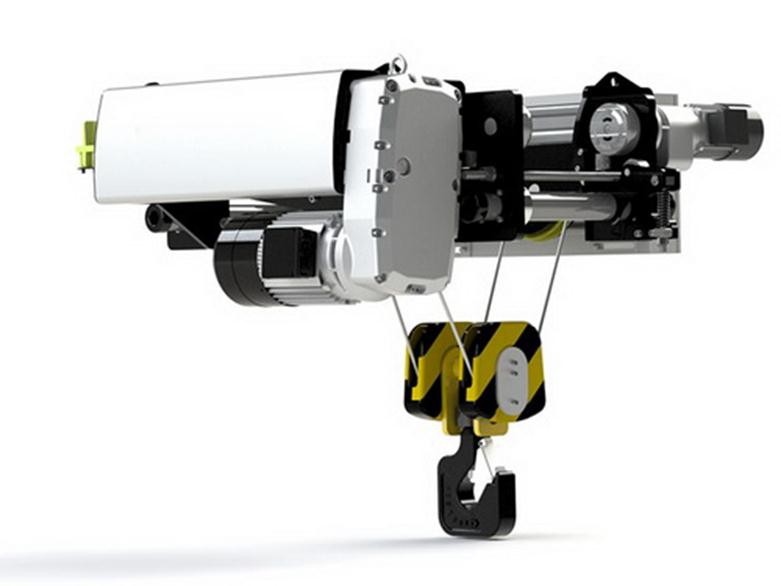
Hoist Mechanism:The hoist is the core lifting device on a gantry crane and is responsible for raising and lowering loads. In a small portable gantry crane, this is usually an electric chain or wire rope hoist.This is powered by electricity, allowing for easier and quicker lifting. A hand-operated chain hoist is used where electric power is not available or for very light loads.
Trolley System:The trolley allows horizontal movement along the beam of the gantry crane. This trolley carries the hoist along the length of the crane's beam, allowing the lifting system to move along the gantry to reach the load and position it as needed.
Lifting Mechanism Controls:Controls for the lifting device can be manual, pendant-controlled, or remote-controlled.
Safety Mechanisms:Safety is a priority, and portable gantry cranes are often equipped with load limiters, overload protection, and emergency stop functions in the control system. These features help prevent accidental overloading or unsafe operation.
Portable and Adjustable Features:Many small portable gantry cranes are designed with height-adjustable and collapsible features. The lifting system is typically lightweight and easy to disassemble, making it convenient to transport or move from one location to another.
 |
 |
3.End carriage
1) The end carriage is a crucial component of a Small Portable Gantry Crane, designed to provide efficient support and smooth movement along the gantry structure. Built to handle moderate loads while maintaining easy maneuverability, this end carriage enables the crane to operate safely and with precision.
2) The end carriage is Ideal for confined spaces, it allows easy installation and movement.The End Carriage is Manufactured with durable materials for strength and longevity. Equipped with high-precision wheels and bearings, ensuring seamless travel along the gantry rails.Easy Assembly & Disassembly: Designed for quick setup and transport, enhancing crane portability.Built-in safety features reduce risks during operation.
3) The end carriage for small portable gantry cranes is suitable for Warehouses,Workshops,Light industrial environments and Maintenance facilities.
 |
 |
4.Crane travelling mechanism
1) Working principle
Typically consists of a lightweight aluminum or steel frame with a horizontal beam (often called the bridge or crossbeam) supported by two vertical legs. The crane usually has wheels or casters at the base for easy movement.A hoist or trolley is mounted on the horizontal beam to handle the lifting and lowering of loads. These cranes have relatively low load-bearing capacities (often from a few hundred kilograms up to a few tons), which makes them suitable for lighter, manageable loads.The legs of the gantry crane are equipped with swivel or fixed casters, allowing the entire structure to be manually pushed to different locations. Some cranes may have locking wheels to keep the crane stationary when lifting loads.
Push or Motorized Travel: For lightweight, manually-operated portable gantry cranes, operators push or pull the crane to move it. Heavier-duty portable gantries may have motorized wheel systems.
2) Functions of the crane operating mechanism
A small portable gantry crane is a versatile and mobile lifting device designed for handling heavy loads in various environments, especially in smaller or confined spaces. It typically features a lightweight frame and is easy to move around. These cranes are particularly useful in warehouses, workshops, construction sites, and other areas where space is limited but lifting capabilities are required.As the name suggests, a portable gantry crane is designed to be easily moved from one location to another. This mobility makes it ideal for workplaces where the crane needs to be relocated frequently or used in different areas.Portable gantry cranes help reduce the risk of manual handling injuries by providing a mechanical means to lift and move heavy loads.
5.Trolley travelling mechanism
1) Structural composition
The trolley traveling mechanism in a small portable gantry crane is a key component that allows the crane's hoisting trolley to move along the crane's beam or girder. This system enables precise positioning of the load within the gantry crane's coverage area.
Trolley Frame: Typically made of steel or high-strength alloy for durability and stability.
Traveling Wheels or Rollers: The wheels are typically mounted at each corner of the trolley and are designed to roll along the crane's rail system (beam or girder).
Motors and Drive Mechanism: Most trolley travel systems use electric motors for smooth operation. These motors are connected to a drive shaft, which rotates the wheels or sprockets that move the trolley.
End Carriages or End Trucks: Mounted at the ends of the trolley to provide a stable connection to the crane's main structure and allow the trolley to move along the horizontal beam.
Braking System: Essential for controlling the speed and stopping the trolley safely when required. These systems are often automatic and activated during emergency stops.
Control and Safety Features: Installed at the end of the track to prevent the trolley from traveling too far and derailing.
Track or Rail System:Typically made of high-strength steel to withstand the stress from the trolley's movement and weight.
Suspension and Mounting Components:The trolley is suspended from or mounted on the crane's girder using high-strength pins, bolts, or other secure mounting systems, ensuring the trolley remains firmly in place during movement.
2) Function of the trolley operating mechanism
The trolley traveling mechanism in a small portable gantry crane is a crucial component designed to facilitate the horizontal movement of the crane's hoist along the gantry beam. The function of this mechanism is to enable the smooth and controlled movement of the load over a specific area, enhancing the crane's overall efficiency.
6.Crane wheel
The crane wheel on a small portable gantry crane plays an essential role in enabling the crane to move along a track or a rail system. These wheels are typically made of high-strength steel or cast iron to withstand the load-bearing demands and the constant movement of the crane.For a small portable gantry crane, the crane wheels are designed for smooth operation on either a concrete surface or a specialized track. The design of the wheels must accommodate the weight of the crane as well as the load it will lift. They are often mounted on either side of the crane's base and provide mobility for positioning the crane.

7.Crane Hook
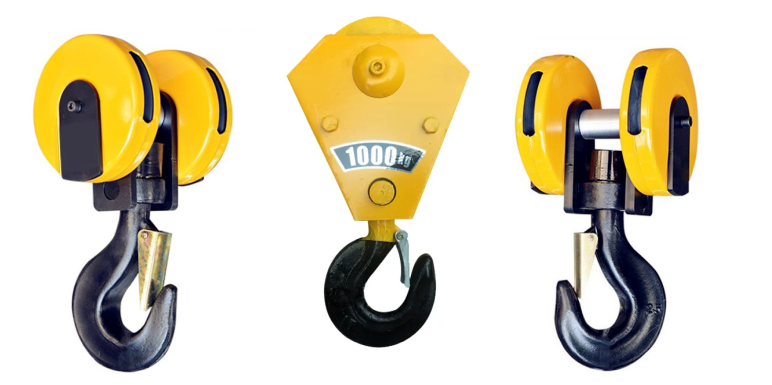
1) The crane hook on a small portable gantry crane is a key component used for lifting and moving heavy loads. The hook is typically made of strong, durable materials such as forged steel to ensure it can handle the load capacity of the crane.
2) The crane hooks are commonly made from high-strength steel or alloy steel to resist deformation under heavy loads.The hook is usually shaped with a curved, pointed end to securely hold a load via a lifting sling, chain, or rope. Some hooks may include a latch or safety mechanism to prevent the load from slipping off.The size and strength of the crane hook must match the rated load capacity of the gantry crane. Small portable gantry cranes generally have a lighter lifting capacity, often ranging from 500 kg to 2 tons..
Motor
AC Motors are widely used in smaller cranes due to their simplicity and availability.DC Motors are used for better speed control, although less common than AC motors in gantry cranes.
Portable gantry cranes may run on standard residential or industrial voltages like 110V, 220V, or 380V, depending on the crane's design and intended use. Smaller models usually operate at lower voltages, while larger ones may require 380V or higher.

.
Sound and light alarm system & limit switch
1) Sound and light alarm system
A sound and light alarm system for a small portable gantry crane is a safety feature designed to alert operators and nearby personnel about the crane's operation status, potential hazards, or emergency situations. These systems are crucial for preventing accidents and ensuring safe operation in environments where cranes are used.
Sound Alarm : The sound alarm alerts people within the vicinity that the crane is in operation or that there is a potential hazard.Usually mounted on the crane's structure, near the operating controls, or at key locations around the crane's working zone.
Light Alarm: Light Alarm: The light alarm provides a visual cue to nearby personnel, especially useful in noisy environments where audible alarms may not be effective. The light is typically installed on the crane itself, or in key areas such as near the operator's cabin or in areas where visibility is crucial.
Overload conditions: When the crane exceeds its safe load capacity..
2) Limit switch
A limit switch on a small portable gantry crane is a critical component used to prevent the crane from exceeding its designed operational range, ensuring safety and proper functionality.
Functions: The limit switch prevents the gantry crane from traveling beyond its designated track limits, which could damage the crane or the load it is handling.It serves as a safeguard for the crane's moving parts, ensuring they don't operate beyond safe distances (either vertically or horizontally).When the crane reaches the end of its travel path, the limit switch automatically triggers the crane's motor to stop or reverse, depending on the design.
Types: Mechanical Limit Switches,Operates using physical contact. When the crane moves to a certain point, a lever or actuator presses a button or switch, signaling the end of travel.Proximity Limit Switches,Non-contact type sensors that detect the position of the crane parts. These are often more durable and less prone to wear and tear than mechanical switches.

10.Safety Devices
Overload Protection:This device prevents the crane from lifting loads that exceed its rated capacity.It typically includes load sensors that trigger an alarm or stop the operation when the crane is overloaded, preventing structural damage or accidents.
Limit Switches: Limit switches control the range of motion of the crane's components.These switches ensure that the hoist and trolley do not move beyond their designated limits, reducing the risk of mechanical damage or safety hazards.
Emergency Stop Button: An easily accessible button to immediately halt crane operations in case of an emergency.It ensures that the crane can be stopped instantly, preventing accidents during unexpected situations.
Braking System: Brakes are used to control the movement and to hold the load safely in position.This feature prevents the load from drifting or falling when the crane is stopped. It can be either mechanical or electric.
Anti-Tilt Feature: This safety feature ensures that the crane does not tip over during operation.It often includes a system to stabilize the crane and prevent movement when it is not on level ground.
Swing Stop Device: This device is designed to stop the crane from swinging uncontrollably.It limits the horizontal movement of the load, ensuring greater control and reducing the risk of swinging accidents.
Inspection and Maintenance Tags: Tags or systems that help monitor the crane's condition. Regular inspections are critical to identifying wear and tear, ensuring that all parts are functioning properly and reducing the risk of failure.
Warning Lights or Audible Alarms: Warning indicators provide visual or auditory alerts.These devices signal when the crane is nearing its load limit or if it is malfunctioning, ensuring that operators are always aware of the crane's status.
Lockout/Tagout Systems: A safety protocol for locking the crane out of operation during maintenance or repair. Ensures that no one can accidentally operate the crane while it is being serviced, preventing injuries.
Load Indicator: A system that indicates the actual weight of the load being lifted.It helps the operator stay within safe operating limits, preventing overload conditions.
Manual and Remote Control Systems: Cranes may come with manual or remote control systems for better control during operation. This allows the operator to maintain a safe distance from the load and reduce the risk of injury.
Protective Barriers or Guardrails: These are physical barriers or railings that prevent accidental contact with moving parts.They safeguard the operator and other personnel from falling or being struck by the crane's components.
11.Control Mode
Manual Control: A wired or wireless control pendant that the operator holds to control the crane's movements. This can control the hoist (lifting and lowering), trolley (horizontal movement), and gantry (longitudinal movement).In some simpler cranes, a hand chain or crank is used to manually lift or move loads.Basic electric cranes may have simple buttons or switches for movement control.
Radio Remote Control: For safety and convenience, portable gantry cranes can be equipped with wireless remote control systems, allowing the operator to control the crane from a distance, increasing safety and accessibility, especially in hazardous or tight work environments.
Joystick Control:Some small gantry cranes may have joystick controls, providing a more intuitive and precise control over the movements of the hoist, trolley, and crane base.
Automated Control:Programmable Logic Controllers (PLC): More advanced models may include PLC systems that allow for automated movements, such as preset positioning, load sensing, and safety features. These systems can be programmed for specific lifting and positioning tasks.
Mobile App Control (Advanced):For some newer models, crane controls can be integrated with mobile applications for smartphones or tablets, where the operator can monitor and control the crane remotely.

12.Sketch

Main technical

Advantages
Portability and Flexibility: These cranes are designed to be lightweight and mobile, allowing easy transport and relocation between different work areas.Their smaller size makes them ideal for environments with limited space or where cranes need to be set up and moved frequently.
Cost-Effective: Compared to larger, fixed cranes, small portable gantry cranes have a lower purchase cost, making them more accessible for small businesses or operations with budget constraints.
Reduced Operating Costs: They require minimal maintenance and can be used in a variety of environments, reducing the need for multiple pieces of specialized equipment.
Ease of Setup: Portable gantry cranes are often designed to be easy to assemble and disassemble without the need for professional assistance, allowing faster setup times.Unlike larger cranes, portable gantry cranes don't require installation of complex infrastructure or support systems.
Versatility: These cranes can be used in various industries such as construction, automotive repair, warehouses, and manufacturing for tasks like lifting heavy equipment, materials, or machinery. Many models allow for adjustable height and span, offering additional flexibility depending on the task at hand.
Space-Saving Design: Small portable gantry cranes can often be folded or stored in small spaces when not in use, saving valuable storage space in crowded environments like workshops or warehouses.
Increased Productivity: The ability to move loads quickly and easily within the work area can help increase workflow and productivity, especially in tight or congested spaces.
Reduced Labor Costs: By enabling fewer workers to handle larger loads, portable gantry cranes reduce the need for manual labor, improving safety and reducing fatigue.
Improved Safety: The crane helps to lift and move heavy loads safely, minimizing the risk of worker injuries associated with manual lifting.Despite their portability, these cranes are designed with stability in mind, offering secure lifting solutions in various environments.
Application:
Warehouse Operations: Used for moving heavy items like pallets, machinery, or equipment within a warehouse.Helps in efficiently organizing materials and products by lifting them onto shelves or storage systems.
Manufacturing and Assembly: These cranes are used in assembly lines to lift and position heavy components or machinery parts during production.Can be used for maintenance or repair work on equipment, where lifting is required for installation or removal of parts.
Construction and Renovation Projects: Perfect for lifting and moving materials like steel beams, concrete blocks, or piping in construction sites with limited space. Ideal for lifting smaller equipment or tools, reducing the need for larger, cumbersome cranes.
Automotive Industry: Commonly used in automotive shops for lifting engines or other heavy components during repairs or maintenance.Can be used for moving auto parts like transmissions, suspension systems, or other heavy components.
Shipyards and Marinas: Used for lifting and transporting small boats, engines, or parts in boatyards or marinas.Assists in maintenance tasks by lifting equipment or machinery for servicing.
Heavy Equipment Maintenance: In places like farms or construction sites, small portable gantry cranes can lift heavy machinery parts for repair or replacement.Used in garages or industrial settings for lifting engines and other heavy mechanical parts.
Research and Laboratories: In research labs or small factories, they can be used to move sensitive equipment, machinery, or chemicals with care and precision.
Power Plants: Small gantry cranes can be used in power plants for lifting and moving components, tools, or parts for routine inspections and maintenance.
Shipping and Logistics: Used in shipping yards or logistics hubs for loading and unloading smaller items from trucks or containers, improving workflow efficiency.
Arts and Sculpture: Can be used to move large sculptures or heavy artwork pieces in galleries or installation spaces, allowing safe lifting without damaging the pieces.
Crane production procedure
Design Phase:Determine the maximum load capacity, lifting height, and span required for the crane based on its intended use (e.g., lifting tools, machinery, or construction materials). Using software (such as AutoCAD or SolidWorks), create detailed engineering drawings for the gantry crane. This includes dimensions, material specifications, and key components like beams, columns, and wheels.Ensure that the design meets relevant safety standards (e.g., OSHA, ISO) for cranes, lifting equipment, and portable structures.
Material Selection: Steel or aluminum is commonly used for the frame. Steel is preferred for higher load capacities due to its strength, while aluminum may be used for lighter cranes. Durable, heavy-duty rubber or polyurethane wheels should be selected for smooth movement, depending on the crane's weight and the surface it will be used on. A hoist or winch with a suitable lifting mechanism (manual or electric) and wire rope or chain are essential components.
Fasteners and Welding Material: High-strength bolts, nuts, and welding rods for assembly.
Fabrication Process: Use a cutting machine (plasma cutter, laser cutter, or saw) to cut the steel or aluminum components based on the design specifications. This includes beams, legs, cross members, and supports.The frame components are welded or bolted together to form the gantry's basic structure. Welding is preferred for permanent joints, while bolting may be used for parts that need to be disassembled for portability. Attach the wheels or casters to the base of the gantry. Ensure that the wheels are aligned for smooth movement and have the appropriate load rating. Install the hoist, winch, or pulley system at the top of the gantry structure. The lifting mechanism should be aligned for optimal operation.
Assembly of the Gantry Crane: Assemble the main gantry frame by attaching vertical columns, horizontal beams, and cross braces. Ensure that the frame is square and level during this process.
Wheel Installation: Mount the wheels or casters onto the frame, ensuring they rotate freely and can bear the weight of the crane and the load it will lift. Mount the hoisting system (manual or electric) at the top of the gantry. This should include securing the winch, hook, wire rope, or chain, and ensuring it can safely lift the intended loads.Add necessary brakes or locks to prevent the crane from moving during lifting. Ensure that there is a safety mechanism to prevent overloads.
Painting and Coating: Sandblast or clean the frame to remove any rust, oil, or contaminants from the metal surfaces.Apply a corrosion-resistant paint or coating to protect the crane from wear and environmental factors. This can include a primer followed by one or more top coats.After painting, check the crane for any areas that might have missed coating or are prone to corrosion.
Testing and Quality Control: Perform a load test to ensure that the crane can handle its rated capacity safely. The load test should be performed with a weight that is at or slightly above the crane's maximum rated load.Test the movement of the gantry on its wheels, ensuring smooth operation. Also, test the hoisting mechanism and brakes for reliability. Ensure all safety features are functioning correctly, including the locking mechanisms, emergency stop buttons, and overload protection systems.
Final Inspection and Documentation:Conduct a final inspection to verify all components are properly installed, the crane is structurally sound, and it is operating as intended. Prepare an operator's manual that includes safety instructions, load limits, assembly instructions, and maintenance guidelines.Once the crane passes all tests and inspections, it is disassembled (if necessary for portability) and packaged for shipping or delivery.
Delivery and Installation:Once completed and tested, the portable gantry crane is ready for delivery. If it is a large unit, it may be shipped in parts and assembled on-site. Set up the crane on-site, ensuring that it is positioned on a level surface and ready for operation.

Workshop view:
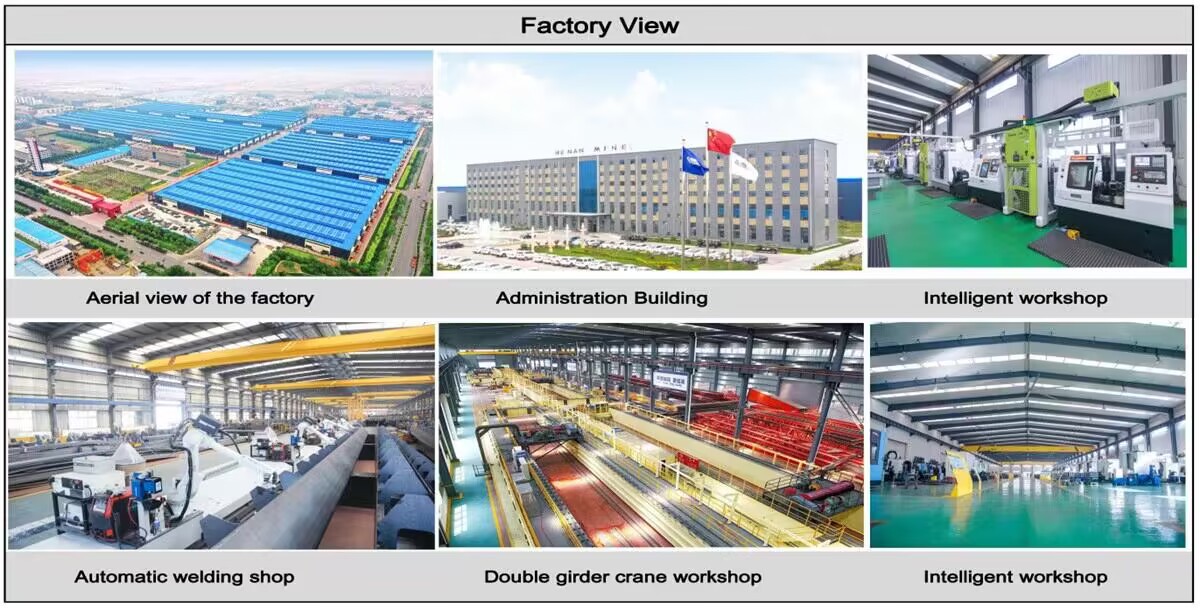
The company has installed an intelligent equipment management platform, and has installed 310 sets (sets) of handling and welding robots. After the completion of the plan, there will be more than 500 sets (sets), and the equipment networking rate will reach 95%. 32 welding lines have been put into use, 50 are planned to be installed, and the automation rate of the entire product line has reached 85%.


Hot Tags: small portable gantry crane, China small portable gantry crane manufacturers, suppliers, factory, Electric Hoist Single Girder Gantry Crane, Single Girder Gantry Crane, Gantry Crane
Previous
Mobile Girder Rail GantryYou Might Also Like


Send Inquiry