








2 Ton Gantry Crane
2 ton gantry crane
Product Introduction
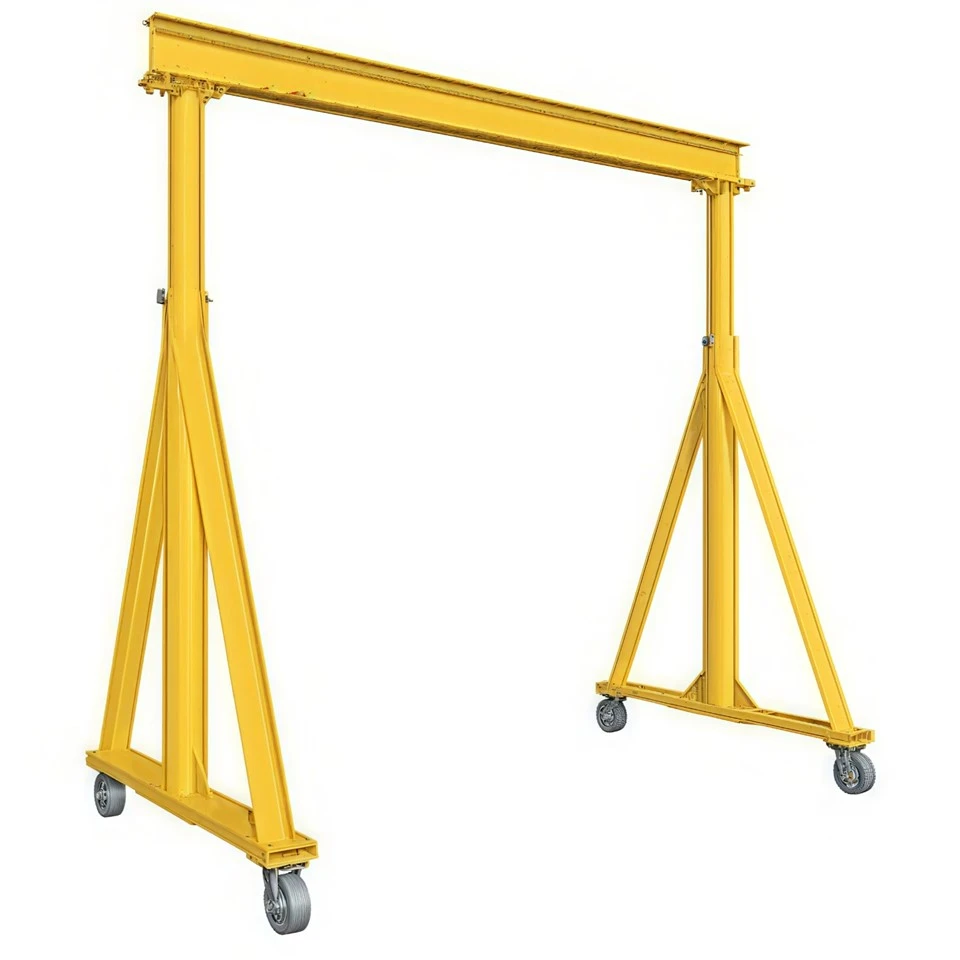
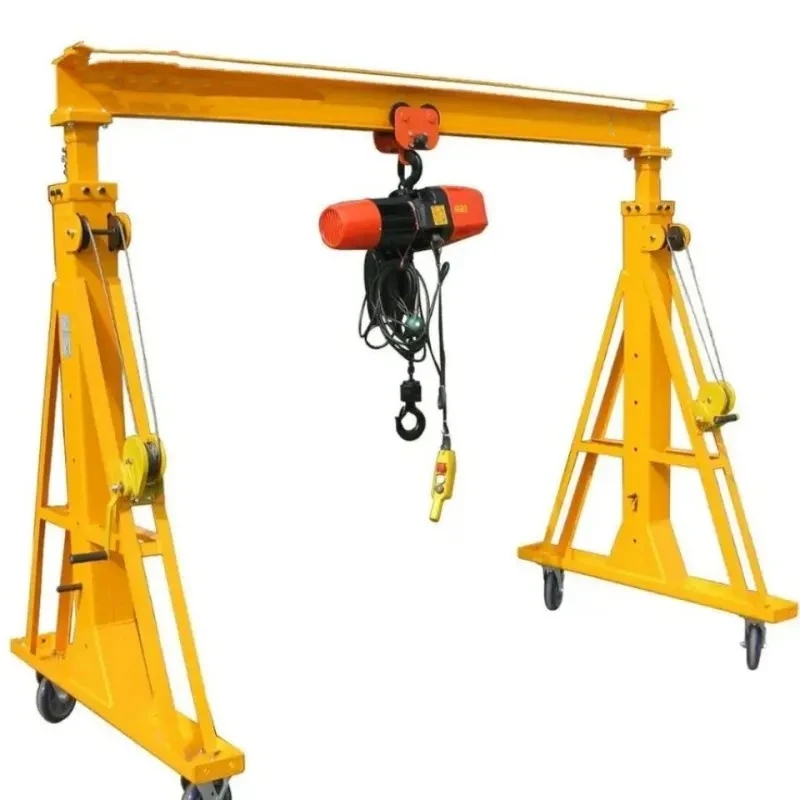
1)A 2-ton gantry crane is a lightweight, portable, and versatile lifting solution designed to handle light to moderate loads. It is ideal for various industries such as manufacturing, construction, workshops, warehouses, and maintenance facilities. This crane is engineered for reliability, ease of use, and efficiency, ensuring safe and effective material handling operations.
2)Key Features:Load Capacity: Rated to lift up to 2 tons (2000 kg), making it perfect for smaller lifting tasks.Adjustable Height and Span: Many models offer adjustable beam height and span to suit different applications and spaces.Portable and Compact Design: Equipped with wheels or casters for easy maneuverability and positioning within confined areas.
3)Durable Construction: Made of high-strength steel or aluminum, offering a robust and corrosion-resistant framework for long-term use.Ease of Assembly and Disassembly: Designed for quick setup, transport, and storage when not in use.Compatibility with Lifting Devices: Can be paired with manual or electric chain hoists, wire rope hoists, or other lifting mechanisms.
4)Benefits:Cost-Effective: Affordable alternative to fixed cranes, suitable for light-duty operations.Versatile: Adjustable and mobile design allows it to be used in multiple locations.Enhanced Safety: Incorporates safety features such as locking mechanisms, brake systems, and stable bases.Low Maintenance: Simple design with minimal moving parts reduces maintenance costs.
5)2 ton gantry crane is Customizations Available:Adjustable height ranges.Different spans to fit specific work spaces.Wheels or track systems tailored to the floor or operational environment.
Core Components Motor
Place of Origin China
Warranty 1 Year
Weight (KG) 1 kg
Lifting Capacity(ton) 0.5-20ton
Span(m) Up to 12m
Height(m) 1-15m
Power Supply 380V,50HZ,3-Phase or Customized
Work Class A3-A5
Motor Brand ABB/SIEMENS
Working Temperature 25~40℃
Pictures & Components
1.Main beam
1) Main Beam of a 2-Ton Gantry Crane The main beam is the central structural component of a gantry crane, responsible for supporting and transferring the load during lifting operations. In a 2-ton gantry crane, the main beam is designed to handle loads efficiently while maintaining structural integrity and safety.
2)Key Features of the Main Beam:Material:Typically constructed from high-strength steel (e.g., Q235 or Q345) to provide durability and resistance to deformation.In lightweight applications, aluminum alloys may be used for reduced weight and easier portability.
3)Design:I-Beam or Box Beam: Commonly features an I-beam design for strength and compatibility with hoists and trolleys.Welded Construction: Ensures uniform strength and rigidity across the beam.
4)Load Capacity:Engineered to support up to 2 tons (2000 kg) safely, with additional safety factors incorporated in the design.Span Length:Typically available in various lengths, depending on the model, with customization options to fit specific applications.Adjustable Span: Some designs allow slight adjustments to adapt to workspace requirements.
5)Surface Finish:Corrosion Resistance: Coated with rust-proof paint or powder coating for protection in indoor and outdoor environments.Smooth finish to ensure proper movement of the hoist or trolley along the beam.

Lifting System
The lifting system is the core mechanism of a 2-ton gantry crane, responsible for raising, lowering, and positioning loads safely and efficiently. It consists of key components such as the hoist, trolley, and supporting accessories, all designed to handle loads up to 2 tons with precision and safety.
Key Components of the Lifting System:Hoist:Manual Chain Hoist: Suitable for light-duty and cost-effective operations. Operates via a hand chain for lifting and lowering loads.Electric Hoist:Offers faster lifting speeds and higher efficiency.Available in single-speed or dual-speed models for precise control. Comes with overload protection and limit switches for added safety.
Wire Rope Hoist: Used in applications requiring minimal load sway and greater lifting precision (optional for 2-ton models).Trolley:Push/Pull Trolley: Manually moved along the main beam, ideal for lighter tasks.Geared Trolley: Operated using a hand chain for smoother and more controlled movement along the beam. Motorized Trolley: Provides powered movement for more efficient load handling, especially over longer spans.
Lifting Hook:Heavy-duty hook with a safety latch to secure loads during lifting operations.Swivel hook design allows for easy alignment of the load.
Control System (for electric hoists):Pendant Control: Provides simple and direct operation for lifting and moving.Remote Control: Offers wireless operation, increasing safety and convenience for operators.

3.End carriage
1) End Carriage of a 2-Ton Gantry Crane The end carriage is a vital structural and functional component of a 2-ton gantry crane. It connects the main beam to the supporting legs and ensures smooth and stable crane movement. The end carriage plays a critical role in distributing the crane's weight, maintaining balance, and providing mobility.
2)Key Features of the End Carriage:Structure:Made of high-strength steel or other durable materials to withstand loads and frequent movement.Designed for easy integration with the main beam and legs, forming a stable crane framework.
3)Wheels and Mobility:Steel Wheels: Hardened steel wheels designed for durability and smooth operation.Rubber-Coated Wheels: Optional wheels for use on delicate floors to prevent surface damage.Equipped with four or more wheels, depending on the crane's configuration, ensuring smooth load distribution.Some models offer directional locking or swiveling wheels for enhanced maneuverability.
4)Travel Mechanism:Manual Movement: Push/pull operation for small gantry cranes used in confined spaces or for light-duty tasks.Motorized Movement: For electric gantry cranes, end carriages may have integrated drive systems, enabling powered movement along tracks or the floor.
Guide Rails: Can include trackless or rail-mounted configurations, depending on operational needs.

4.Crane travelling mechanism
1)Crane Traveling Mechanism of a 2-Ton Gantry Crane The crane traveling mechanism is an essential system that enables the smooth and controlled movement of the 2-ton gantry crane along the workspace. Whether manual or motorized, this mechanism ensures mobility, stability, and precision during operations.
2)Key Components of the Crane Traveling Mechanism:Wheels:Made of hardened steel or polyurethane for durability and smooth operation.
Configurations include:Swivel Wheels: For easy direction changes.Fixed Wheels: Provide straight-line movement along a specific path.Some wheels are rubber-coated to protect delicate flooring.
3)Drive System:Manual Traveling:Movement is achieved by pushing or pulling the crane. Ideal for light-duty applications where powered movement isn't necessary.Motorized Traveling:Equipped with electric motors to power the wheels, providing efficient and consistent movement.Includes frequency converters or variable speed drives for controlled acceleration and deceleration.Travel speeds range from 15–25 m/min, depending on the model.
5.Trolley travelling mechanism
1)Trolley Traveling Mechanism of a 2-Ton Gantry Crane The trolley traveling mechanism is a critical component of a 2-ton gantry crane. It allows the hoist to move horizontally along the main beam for precise positioning and load handling. The system can be either manually operated or motorized, depending on the crane's design and application requirements.
2)Key Components of the Trolley Traveling Mechanism:Trolley Frame:Made of high-strength steel, the frame supports the hoist and ensures structural stability during operation.Designed to fit securely on the main beam, usually compatible with I-beams or box girders.
3)Wheels:Steel Wheels: High-durability wheels that ensure smooth rolling along the beam.Flanged Wheels: Designed to grip the edges of the I-beam for added stability.Bearings integrated into the wheels reduce friction and ensure quiet, efficient movement.
4)Control Options:Pendant Control: Attached to the crane, allowing the operator to move the trolley and hoist easily.Wireless Remote Control: Offers greater flexibility and safety by allowing operators to control the mechanism from a distance.
6.Crane wheel
1)Crane Wheel of a 2-Ton Gantry Crane The crane wheels are essential components of a 2-ton gantry crane, enabling smooth movement of the crane along its designated path or workspace. These wheels are designed for durability, load-bearing efficiency, and safe operation, ensuring the crane's mobility and stability during material handling tasks.
2)Key Features of Crane Wheels:Material:Hardened Steel: Commonly used for industrial applications due to its high load-bearing capacity and resistance to wear.Polyurethane-Coated Wheels: Optional for cranes operating on delicate flooring to prevent surface damage and reduce noise.Cast Iron: Occasionally used for lightweight and budget-friendly designs.
3)Wheel Types:Single-Flanged Wheels: Designed to fit rails and guide the crane along a predefined path, minimizing derailment risk.Double-Flanged Wheels: Provide additional stability, often used in rail-mounted systems for precise travel.Flat Wheels: Used for trackless gantry cranes that operate on flat surfaces like concrete floors.
4)Wheel Size and Dimensions:The diameter and width of the wheels are proportional to the load capacity and the crane's design. For a 2-ton gantry crane, wheel diameters typically range from 100 mm to 200 mm, depending on the manufacturer and model.

Crane Hook
Crane Hook of a 2-Ton Gantry Crane The crane hook is a critical lifting component of a 2-ton gantry crane, used to attach and secure loads during lifting and material handling operations. Designed for durability, safety, and reliability, the hook ensures smooth and secure load handling.
Key Features of a Crane Hook:Material:Made of high-strength alloy steel or forged carbon steel to ensure resistance to deformation, wear, and heavy loads.Heat-treated to enhance durability and tensile strength, allowing safe handling of loads up to 2 tons.
Hook Safety Latch:Equipped with a spring-loaded safety latch to prevent accidental disengagement of the load.The latch ensures the load remains securely attached during lifting and movement.
Load Capacity:Rated for 2-ton capacity, with a built-in safety factor (e.g., 4:1 or 5:1) to handle sudden stresses or dynamic forces during operation.
Surface Finish:Coated with anti-corrosion paint or galvanization to prevent rust and wear, ensuring longevity even in harsh environments.

Motor
Motor of a 2-Ton Gantry Crane The motor is the powerhouse of a motorized 2-ton gantry crane, responsible for driving the lifting and traveling mechanisms. High-performance motors ensure the crane operates efficiently, safely, and reliably in various material-handling applications.
Key Features of a 2-Ton Gantry Crane Motor:Types of Motors:Hoist Motor:Powers the hoisting mechanism to lift and lower loads.Features high torque to handle heavy loads smoothly and safely.
Power Rating:Typically ranges from 1.5 kW to 3.0 kW, depending on the specific requirements of the crane's lifting and traveling capacities.Designed to provide consistent performance while operating under a full 2-ton load.
Thermal Protection:Built-in sensors to prevent overheating and motor damage.Overload Protection:Automatically shuts down the motor when excessive loads are detected.Emergency Stop:Ensures immediate halt in case of emergencies.

.
Sound and light alarm system & limit switch
1) Sound and light alarm system
Function: The sound and light alarm system is mainly used to provide visual and auditory warnings during the operation of the crane. When the crane approaches the limit position, the load exceeds the standard, or a fault occurs, the system will sound an alarm to alert the operator.
Components: The warning light is usually a flashing red or yellow light, which can visually alert the operator to the danger. The buzzer makes a sound to attract the operator's attention, especially in a noisy environment.
Application scenario: During the start, stop, and operation of the crane, the alarm is issued in time to ensure that the operator has a clear understanding of the equipment status.
2) Limit switch
Function: The limit switch is used to monitor the operating range of the crane to prevent it from exceeding the designed limit position and ensure the safe operation of the equipment.
Type: The upper limit switch is used to limit the operation of the crane when it is raised to the maximum height to prevent the lifting parts from colliding with the ceiling or other obstacles. The lower limit switch is used to limit the operation of the crane when it is lowered to the lowest position to avoid equipment damage or material falling. The side limit switch is used to limit the lateral movement of the trolley to ensure the stable operation of the crane on the track.
Working principle: Limit switches are usually set at key positions of cranes. When crane components (such as hooks, main beams, etc.) touch the limit switches, the switches will automatically cut off the power supply or stop the motor to ensure the safety of the equipment.

10.Safety Devices
1) Overload protection device: prevent the crane from overloading. When the actual load of the crane exceeds the rated lifting weight, the overload protection device will automatically cut off the power supply or sound an alarm to prevent damage to equipment and personnel.
2) Emergency stop device: used to manually stop the operation of the crane in an emergency. The operator can quickly cut off the power supply of the equipment by triggering the emergency stop button to prevent accidents.
3) Windproof device: prevent the crane from being blown by strong winds when working outdoors. The windproof device can be a mechanical locking device or an electric locking device. When the wind speed exceeds the safety standard, the crane will automatically lock to prevent the equipment from being dangerous due to wind.
4) Electrical protection device: prevent equipment damage or safety accidents caused by electrical faults. Electrical protection devices include short-circuit protection, undervoltage protection, phase failure protection, etc., which can automatically cut off the power supply when the electrical system is abnormal to prevent damage to the equipment or affect safety.
5) Anti-sway device: reduce or prevent the swing of the hook and load during lifting, ensure the stability of material handling, and prevent the material from falling off due to swinging.
6) Buffer device: A buffer is installed at the terminal position of the crane. When the equipment or vehicle approaches the end of the track, the buffer device can absorb part of the impact force to avoid damage to the equipment or personnel.
11.Control Mode
1) Ground handle control: The operator controls the operation of the crane by holding a control handle connected by a cable. There are multiple buttons on the handle, which are used to control the lifting, lateral movement and trolley movement of the crane. The cable is generally of a certain length, allowing the operator to operate at a safe distance.
2) Wireless remote control: The operation of the crane is controlled by a wireless remote control, which usually has buttons or rockers to control lifting, lateral movement and trolley operation. Without cable connection, the operator can move freely and operate the equipment at a long distance.
3) Cab control: The operator sits in the cab installed on the crane and operates directly through handles, buttons or joysticks. The cab is usually installed on the trolley or car of the crane, and the operator can directly observe the lifting operation site.
4) Centralized control (PLC control system): Use a programmable logic controller (PLC) for automated control to control the various actions of the crane through pre-programmed programs. The operator can control and monitor the operating status of the crane in the central control room or remotely through the human-machine interface (HMI).

Sketch

Main technical

Advantages
Advantages of a 2-Ton Gantry Crane A 2-ton gantry crane offers versatility, efficiency, and cost-effectiveness for lifting and material handling in various industrial and commercial environments. Its design and features provide numerous advantages, making it an excellent choice for businesses requiring a reliable lifting solution.
Portability Easily Movable:Many 2-ton gantry cranes are equipped with wheels, allowing them to be relocated within the workspace effortlessly.Ideal for workshops, warehouses, and outdoor sites where flexibility is essential.Trackless Option:Freely movable on flat surfaces without the need for rails, enhancing usability in diverse environments.
Compact and Space-Saving Efficient Design:The crane's lightweight and compact structure make it easy to operate in confined spaces.Adjustable Height and Span:Many models feature adjustable frames, enabling them to fit different work spaces and tasks.
Versatility;Wide Range of Applications:Suitable for lifting and moving loads in manufacturing, assembly lines, repair workshops, warehouses, and construction sites.Multi-Environment Use:Can be used indoors or outdoors, with corrosion-resistant options available for harsh conditions.
Cost-Effectiveness Affordable Solution:Compared to permanent overhead cranes, a 2-ton gantry crane is significantly more economical.Lower Maintenance Costs:Simple design with fewer components reduces the frequency and cost of maintenance.
6) Easy Installation and Operation Quick Setup:Requires minimal effort to assemble and disassemble, making it perfect for temporary or semi-permanent use.
Simple Controls:Intuitive control systems (manual or motorized) ensure ease of use, even for operators with minimal training.
Application:
A 2-ton gantry crane is commonly used in various industries for lifting and moving heavy loads in a safe and efficient manner. Here are some common applications of a 2-ton gantry crane
Manufacturing and Industrial Workplaces:Assembly Lines: It helps in moving parts or products from one workstation to another.Machinery Maintenance: Used for lifting and transporting heavy machinery or components for maintenance or repairs.
Warehouse Operations:Storage and Retrieval: A gantry crane can be used in warehouses to lift and move products, pallets, or materials.Sorting and Organizing: It can be employed to help in sorting items within a warehouse, lifting bulk materials, and organizing the stock.
Construction:Construction Sites: Used to lift materials, tools, and equipment to higher levels of construction sites, especially in smaller to medium-scale projects.Precast Concrete Panels: Transporting heavy concrete elements for installation in building projects.
Port and Dock Operations:Cargo Handling: It can be used to move cargo containers, heavy packages, or shipments within the port area, especially in smaller docks or warehouses.Automotive and Aerospace:Engine Lifting: In automotive repair shops, it is used to lift and move heavy engines or parts.Aircraft Maintenance: Used in aerospace facilities for moving components or parts for repair and assembly.
Small Factories or Workshops:Light to Medium Duty Lifting: Ideal for small businesses or workshops that need a cost-effective and space-efficient lifting solution.
Crane production procedure
1. Design stage: Determine the parameters of the crane, such as rated load, span and lifting height, according to the customer's needs and working environment. Carry out detailed structural design, including main beam, end beam, crane, lifting mechanism, etc., to ensure that the design meets safety standards and usage requirements. Select appropriate materials according to the design, usually high-strength steel to ensure the stability and durability of the structure.
2. Manufacturing stage: Prepare the required raw materials and parts according to the design drawings. Cut, bend and shape the steel to prepare structural components such as main beams and end beams. Weld the various components and assemble them into an overall structure. This step requires guaranteed welding quality to ensure strength and stability.
3. Machining: Machining key components such as motors, gears, bearings, etc. to ensure that their size and accuracy meet the requirements. Anti-corrosion treatment of components, such as painting and galvanizing, increases the durability and aesthetics of the equipment.
4. Electrical system installation: Install electrical components such as motors, controllers, switches, sensors and alarm systems. Connect and wire cables to ensure the normal operation of the electrical system.
5. Assembly phase: Assemble all components and systems as a whole, connect the lifting mechanism, trolley running mechanism and control system. Perform a comprehensive inspection of the assembled crane to ensure that all components and systems are working properly, and perform preliminary debugging.
6. Testing phase: Perform static load test on the crane to check the structural strength and stability. Perform dynamic test on the crane, including tests on lifting, moving, braking and other functions, to ensure that its performance meets the design requirements. Check the functions of safety devices, such as limit switches, overload protection, etc., to ensure the safety of the equipment during operation.
7. Quality control: Perform quality control on each link in the production process to ensure compliance with industry standards and customer requirements. Record various data and inspection results in the production process for subsequent traceability and analysis.
8. Delivery and installation: Pack and prepare the completed crane for transportation to ensure that it is not damaged during transportation. Deliver the crane to the customer's site for installation, and perform on-site debugging and acceptance. Provide operation training to customers to ensure that they are proficient in the use and maintenance of the crane.

Workshop view:
The company has installed an intelligent equipment management platform, and has installed 310 sets (sets) of handling and welding robots. After the completion of the plan, there will be more than 500 sets (sets), and the equipment networking rate will reach 95%. 32 welding lines have been put into use, 50 are planned to be installed, and the automation rate of the entire product line has reached 85%.


Hot Tags: 2 ton gantry crane, China 2 ton gantry crane manufacturers, suppliers, factory, Electric Hoist Single Girder Gantry Crane, Gantry Crane, Single Girder Gantry Crane
Previous
Shop Gantry CraneYou Might Also Like




Send Inquiry