










Gantry Crane A Frame
Products Description
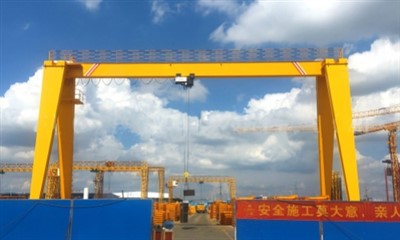
A gantry crane a frame is a type of crane used for lifting and moving heavy loads within an industrial environment, typically found in outdoor settings such as warehouses, construction sites, or ports. This type of crane is characterized by its structure, where a single girder (horizontal beam) supports the crane's trolley and hoist, which are used to lift and lower loads.
2.The crane features a single girder supported by two vertical legs, creating an "A" frame.
The girder runs along the top of the crane and supports a hoist that moves along the length of the beam.gantry crane a frames are designed to handle moderate to heavy loads, typically ranging from 1 ton to 20 tons, depending on the specifications.They are suitable for both indoor and outdoor applications, providing high efficiency in environments such as storage yards, shipping docks, or assembly lines.Due to their simpler design and lighter structure compared to double girder gantry cranes, they are generally more affordable and easier to maintain.
3.The crane offers great flexibility, with the hoist and trolley system allowing for precise movement of loads across a wide span.Built for tough conditions, these cranes are resistant to weather elements like rain or extreme temperatures, making them perfect for outdoor use.Can be customized for various applications, including adding different hoist types, control systems (remote or cabin), and mobility features (rail mounted or rubber-tired).
Weight (KG):10000 kg
Video outgoing-inspection:Provided
Machinery Test Report:Provided
Color:Customized
Power Supply Mode:Synchro lines, cable reels or generators
Spreader:Customized
Control Method:Wireless romote, pendent or cabin control
Warning Device:Provided
Cross-over Track Design:Provided
Electrical:Schnider, SIMENS or as request
Motor:Chinese famous brand
Wearing Parts:Random free wearing parts

Pictures & Components
1.Main beam
1)Design:
The main beam is designed to be lightweight yet strong, providing the necessary support while minimizing the crane's weight to reduce cost.
Box-type beams are often used because they are structurally efficient and capable of handling high loads without significant deformation.
I-beams (steel I-sections) may also be used in some designs, providing a cost-effective option for lower load capacities.
2)Length and Span:
The length of the main beam varies depending on the required span of the crane. A longer beam allows the crane to cover a larger area, while a shorter beam is more compact and suitable for smaller spaces.
The span is the distance between the two vertical legs or supports of the gantry crane.

Lifting System
1)Operation of the Lifting System:
Lifting the Load:
The operator moves the hoist vertically using the control system. The hoist's rope or chain winds around the drum, raising the hook and any attached load.
Moving the Load Horizontally:
Once the load is lifted, the trolley moves along the main beam to transport the load horizontally across the crane's span. The trolley is powered by the traveling motors, which move the crane's trolley along the tracks.
Lowering the Load:
To lower the load, the operator reverses the direction of the hoist, allowing the rope or chain to unwind and gently lower the load to the ground or desired position.
2)Summary of the Lifting System Components:
Hoist: Raises and lowers the load.
Trolley: Moves the hoist along the main beam.
Traveling Mechanism: Moves the trolley horizontally.
Hook/Lifting Attachment: Connects to the load.
Control System: Manages hoist and trolley movements.
Safety Features: Includes overload protection, limit switches, and emergency stop.

3.End carriage
Function of the End Carriage in Crane Operation:
1)Horizontal Movement:
The primary function of the end carriage is to move the entire crane along its track. The wheels and drive system of the end carriage allow the crane to travel horizontally across the entire span of the work area, positioning the load precisely where needed.
2)Load Distribution:
The end carriages help distribute the weight of the crane and the load evenly across the entire crane system. By supporting the main girder, trolley, and hoist, the end carriages ensure that the crane operates efficiently and safely, preventing undue stress on any one component.
3)Stability and Safety:
The end carriage plays a critical role in maintaining the crane's stability during operation. It helps prevent tipping or wobbling of the crane by providing support at each end of the main girder, ensuring balanced operation during lifting and transportation.
4)Positioning for Loading/Unloading:
The end carriage allows the crane to position itself in front of a load, facilitating the lifting and unloading process. It ensures the crane has the mobility to reach all areas within the workspace, such as warehouses, docks, or construction sites.

4.Crane travelling mechanism
Features and Functions of the Crane Traveling Mechanism:
1)Mobility:
The traveling mechanism allows the crane to move horizontally along the rails or tracks, giving it access to different areas of the workspace.
It enables efficient transportation of heavy loads over long distances.
2)Precision Movement:
With variable speed control, the mechanism can be operated at slow speeds for precise positioning or faster speeds for quick transport.
3)Load Handling:
The mechanism is designed to handle the combined weight of the crane, the hoist, and the load, ensuring smooth and stable movement under heavy loads.
4)Safety:
The inclusion of brakes, limit switches, and emergency stop features ensures the crane can be operated safely, even in demanding environments.
5)Durability:
The components of the traveling mechanism are made from high-quality materials to withstand continuous use and exposure to harsh environmental conditions.
5.Trolley travelling mechanism
1)Advantages of the Trolley Traveling Mechanism:
Smooth and Precise Operation: Equipped with advanced motors and drives for controlled movement.
Durability: High-quality components like steel wheels and guide rollers ensure long service life.
Safety Features: Includes brakes, limit switches, and guide rollers for safe and reliable operation.
Customizability: Can be designed to meet specific load capacities and operating requirements.
2)Maintenance Considerations:
Lubrication: Regular lubrication of wheels, bearings, and gears reduces friction and wear.
Inspection: Periodic inspection of wheels, rails, and limit switches ensures the mechanism remains in good condition.
Motor and Gearbox: Regular checks on the motor and gearbox for signs of wear, overheating, or misalignment.
Cleaning: Keep the rails and trolley components free of debris to ensure smooth operation.
6.Crane wheel
Maintenance Considerations for Crane Wheels:
1)Inspection:
Regularly inspect the wheels for wear, cracks, or deformation. Excessive wear on the wheel surface or flange can lead to operational issues and derailment.
Check for signs of misalignment, which can cause uneven wear on the wheels and rails.
2)Lubrication:
Ensure proper lubrication of the wheel bearings to minimize friction and reduce the risk of overheating or damage.
3)Alignment:
Proper alignment of the wheels and rails is crucial for smooth movement. Misaligned wheels can cause excessive wear on both the wheels and rails, leading to premature failure.
4)Material Wear:
Monitor the hardness and surface condition of the wheels. Over time, the rolling surface may require re-machining or replacement to maintain optimal performance.
5)ail Condition:
Inspect the rails for damage or wear, as poor rail conditions can accelerate wheel degradation and affect crane stability.

7.Crane Hook
1)Material:
Crane hooks are typically made of high-strength forged steel or alloy steel, ensuring durability and the ability to withstand high stress and heavy loads.
The material is heat-treated to increase hardness, toughness, and resistance to wear and deformation.
2)Design:
Hooks are designed to evenly distribute the load and prevent damage to the material being lifted.
The most common design is the single-hook or double-hook configuration:
Single Hook: Used for lighter loads.
Double Hook: Used for heavier loads, where better balance and distribution are required.

Motor
Types of Motors in a gantry crane a frame:
1)Lifting Motor:
Powers the hoist to lift and lower loads.
Designed for high torque and precise control.
Often equipped with a variable frequency drive (VFD) to allow smooth acceleration and deceleration, improving load control.
2)Trolley Traveling Motor:
Moves the trolley horizontally along the main girder.
Requires precise speed and direction control to position the hoist above the load or destination.
Typically paired with a gearbox for torque multiplication.
3)Crane Traveling Motor:
Drives the end carriages, enabling the entire crane to move along the runway or ground rails.
Can operate in synchronization (one motor per end carriage) for balanced movement.
Equipped with brakes and VFDs for smooth starting, stopping, and speed regulation.

.
Sound and light alarm system & limit switch
1)Sound and Light Alarm System in gantry crane a frame
The sound and light alarm system of a gantry crane a frame serves as an essential safety feature, alerting operators and nearby personnel to the crane's operation and potential hazards. It ensures safe working conditions by providing visual and audible warnings during critical operations.
2)Limit Switch in gantry crane a frame
The limit switch is a safety device installed on gantry crane a frames to prevent excessive movement of the crane, trolley, or hoist, which could lead to accidents or equipment damage.

10.Safety Devices
1)Overload Protection Device
Purpose: Prevents the crane from lifting loads that exceed its safe Protects the crane from structural damage.Prevents wire rope or chain failure.
2) Limit Switches
Purpose: Stops crane motion when it reaches preset limits to prevent overtravel.Prevents collisions, derailment, and equipment damage.
3)Emergency Stop Button
Purpose: Provides immediate power cut-off to stop all crane operations in case of emergencies.Quick response to emergencies ensures personnel safety and prevents equipment damage.
4)Sound and Light Alarm System
Purpose: Alerts workers to crane movements and hazardous situations.Improves workplace awareness, especially in noisy environments.
5)Anti-Collision System
Purpose: Prevents the crane from colliding with other cranes or objects on the same runway.Protects cranes, cargo, and nearby structures.
6)Overload Warning System
Purpose: Alerts the operator when the load is approaching the crane's maximum capacity.Warns operators early, reducing the risk of overload.
11.Control Mode
1. Pendant Control (Wired Control)
A handheld device connected to the crane via a cable.The operator controls the crane by pressing buttons on the pendant.Simple and cost-effective.Offers basic control for lifting, lowering, and crane/trolley movement.
2. Remote Control (Wireless Control)
Operated via a wireless transmitter, such as a handheld remote control or a joystick controller.Uses radio frequency (RF) or infrared (IR) technology.Provides full control of the crane from a distance.
Can include advanced features such as speed adjustment and multi-crane control.
3. Cabin Control
The crane is controlled from an operator's cabin attached to the crane structure.Equipped with joysticks, levers, or a control panel for comprehensive crane operation.The operator has a full view of the work area from the cabin.Suitable for heavy-duty operations and large-scale industrial applications.
4. Automatic Control (Programmed or Semi-Automatic Control)
Uses a programmed control system for semi-automatic or fully automatic crane operations.Often integrated with sensors, PLCs (Programmable Logic Controllers), and advanced software.Predefined movements and tasks can be executed automatically.The crane can adapt to input from sensors or environmental conditions.
5. Dual Control Mode
Combines two or more control modes (e.g., pendant control and remote control).Operators can switch between modes based on the specific operational requirement.Offers flexibility for various tasks or environments.

12.Sketch

Main technical

Advantages
1. Cost-Effective
Lower Initial Investment:
Uses a single main girder, requiring less material compared to double girder gantry cranes.
Reduced Maintenance Costs:
Simpler design and fewer components result in lower maintenance and repair costs.
Economical Installation:
Easier and faster to install, reducing labor and installation expenses.
2. Lightweight Design
Lower Dead Weight:
The lightweight design reduces the load on the crane's wheels and structure.
Easier Transportation:
Its lighter weight allows for easier and more economical transport to the installation site.
Reduced Foundation Requirements:
Generates less stress on rails and foundations, often eliminating the need for complex structural reinforcements.
3. Versatile Applications
Suitable for a wide range of industries, including:
Manufacturing.
Warehousing.
Construction.
Logistics and shipping yards.
Can handle various types of loads, such as bulk materials, machinery, and containers.
4. Space-Efficient
Compact Structure:
Requires less headroom and working space compared to double girder gantry cranes.
Maximized Usage of Space:
Ideal for environments with limited space or lower clearance heights.
5. Ease of Operation
Simple Control Options:
Available with pendant control, remote control, or cabin control, offering operational flexibility.
User-Friendly Design:
Straightforward to operate and suitable for operators of various skill levels.
Smooth Operation:
Advanced motor and drive systems ensure precise and smooth crane movements.
Application:
1. Manufacturing Industry
Purpose:
Moving raw materials, components, and finished products within production facilities.
Common Uses:
Loading and unloading machines.
Assembling and positioning parts during manufacturing processes.
Transporting goods within workstations.
2. Warehousing and Storage
Purpose:
Efficiently handling inventory in warehouses and storage facilities.
Common Uses:
Loading and unloading pallets, boxes, or containers.
Stacking and organizing inventory.
Transferring goods to and from delivery vehicles.
3. Construction Sites
Purpose:
Assisting in material handling tasks on construction projects.
Common Uses:
Lifting construction materials like steel beams, concrete blocks, and prefabricated components.
Supporting assembly and erection processes for building structures.
Moving equipment and tools across construction sites.
4. Logistics and Shipping Yards
Purpose:
Facilitating the handling of goods in freight and logistics hubs.
Common Uses:
Loading and unloading trucks, railcars, or ships.
Organizing cargo containers or materials in outdoor yards.
Transporting bulky goods within logistics facilities.
5. Automotive Industry
Purpose:
Assisting in the production, assembly, and maintenance of vehicles.
Common Uses:
Handling car parts, engines, and frames.
Positioning components during the vehicle assembly process.
Transporting spare parts or finished vehicles in manufacturing plants.
Crane production procedure
1. Design stage: Determine the parameters of the crane, such as rated load, span and lifting height, according to the customer's needs and working environment. Carry out detailed structural design, including main beam, end beam, crane, lifting mechanism, etc., to ensure that the design meets safety standards and usage requirements. Select appropriate materials according to the design, usually high-strength steel to ensure the stability and durability of the structure.
2. Manufacturing stage: Prepare the required raw materials and parts according to the design drawings. Cut, bend and shape the steel to prepare structural components such as main beams and end beams. Weld the various components and assemble them into an overall structure. This step requires guaranteed welding quality to ensure strength and stability.
3. Machining: Machining key components such as motors, gears, bearings, etc. to ensure that their size and accuracy meet the requirements. Anti-corrosion treatment of components, such as painting and galvanizing, increases the durability and aesthetics of the equipment.
4. Electrical system installation: Install electrical components such as motors, controllers, switches, sensors and alarm systems. Connect and wire cables to ensure the normal operation of the electrical system.
5. Assembly phase: Assemble all components and systems as a whole, connect the lifting mechanism, trolley running mechanism and control system. Perform a comprehensive inspection of the assembled crane to ensure that all components and systems are working properly, and perform preliminary debugging.
6. Testing phase: Perform static load test on the crane to check the structural strength and stability. Perform dynamic test on the crane, including tests on lifting, moving, braking and other functions, to ensure that its performance meets the design requirements. Check the functions of safety devices, such as limit switches, overload protection, etc., to ensure the safety of the equipment during operation.
7. Quality control: Perform quality control on each link in the production process to ensure compliance with industry standards and customer requirements. Record various data and inspection results in the production process for subsequent traceability and analysis.
8. Delivery and installation: Pack and prepare the completed crane for transportation to ensure that it is not damaged during transportation. Deliver the crane to the customer's site for installation, and perform on-site debugging and acceptance. Provide operation training to customers to ensure that they are proficient in the use and maintenance of the crane.

Workshop view:
The company has installed an intelligent equipment management platform, and has installed 310 sets (sets) of handling and welding robots. After the completion of the plan, there will be more than 500 sets (sets), and the equipment networking rate will reach 95%. 32 welding lines have been put into use, 50 are planned to be installed, and the automation rate of the entire product line has reached 85%.


Hot Tags: gantry crane a frame, China gantry crane a frame manufacturers, suppliers, factory, Electric Hoist Single Girder Gantry Crane, Gantry Crane, Single Girder Gantry Crane
Previous
2t Mobile Gantry CraneYou Might Also Like




Send Inquiry