










2t Mobile Gantry Crane
Products Description
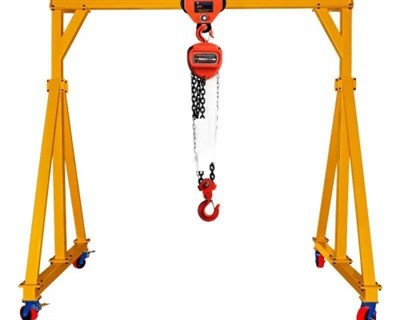
The 2t mobile gantry crane is a versatile and cost-effective lifting solution designed for a wide range of industrial applications. It is primarily used for material handling in outdoor or indoor spaces where overhead crane systems are impractical. Its compact design, efficient operation, and reliability make it ideal for construction sites, warehouses, factories, shipyards, and maintenance areas.
Manufactured using high-quality steel, ensuring strength and durability.Space-saving structure with optimized weight distribution.Lifting capacity typically ranges from 1 ton to 50 tons, customizable based on requirements.Equipped with advanced electric hoists for efficient and precise lifting.Simple assembly and disassembly for flexible use in various environments.Can be tailored with specific spans, heights, and lifting mechanisms to suit unique needs. Includes overload protection, limit switches, and emergency stop functions for safe operation.
3) The 2t mobile gantry crane runs along the main beam through an electric hoist, and the motor drives the walking mechanism and lifting mechanism to complete the horizontal and vertical material handling. The entire operation is adjusted by the electronic control system to ensure smooth and safe operation.
Core Components:PLC, Bearing, Gearbox, Motor, Gear
Condition:New
Warranty:1 Year
Weight (KG):500 kg
Feature:Gantry Crane
Color:Customized
Capacity:1-20t
Type:Single Girder
Power supply:110V/220V/230V/380V/440V
Control Method:Ground Control+ Remote Control (customized)
Lifting mechanism:Eliectric Hoist
Work Duty:A3-A4

Pictures & Components
1.Main beam
Features of the Main Beam
1)High-Strength Material:
Typically made of Q235B or Q345B carbon structural steel to ensure durability and resistance to stress and deformation.
The material is carefully selected for its high load-bearing capacity and long service life.
2)Box or I-Beam Structure:
Most main beams are constructed in an I-beam or box beam design to ensure maximum load distribution while keeping the structure lightweight.
The structure minimizes deflection and maximizes efficiency in load handling.
3)Welded Design:
The main beam is fabricated using advanced welding techniques such as submerged arc welding, ensuring precision, uniformity, and a strong bond.
Welded seams are inspected to meet strict safety and quality standards.
4)Customizable Span and Dimensions:
The length and width of the main beam can be customized to match the 2t mobile gantry crane's application, span, and load capacity.

Lifting System
Features of the Lifting System
1)High Lifting Efficiency:
Electric hoists provide smooth and rapid lifting and lowering for improved operational efficiency.
2)Precise Control:
Variable speed controls enable accurate positioning of loads, reducing risks of mishandling.
3)Customizable Lifting Height:
The lifting height can be customized, typically ranging from 6 meters to 18 meters, depending on the application.
4)Safety Measures:
Built-in limit switches stop the hoist at safe upper and lower positions, preventing over-travel of the hook.
5)Durability:
Components are made of high-strength materials designed to endure heavy-duty cycles in harsh environments.

3.End carriage
1)Frame:
Fabricated from high-strength steel, such as Q235B or Q345B, to ensure durability and rigidity.
Designed to withstand loads transferred from the main beam and maintain the 2t mobile gantry crane's balance during operation.
2)Wheel Assemblies:
Equipped with forged steel wheels or cast steel wheels, designed to handle high loads while minimizing wear.
Available in two configurations: rail-mounted wheels for fixed tracks or rubber wheels for portable, free-moving cranes.
Wheels may include flanges to prevent derailment during movement.

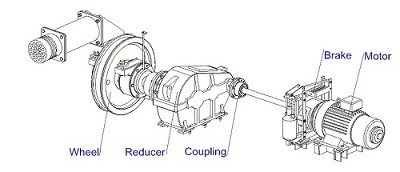
4.Crane travelling mechanism
1)Smooth and Precise Movement:
Controlled acceleration and deceleration provide smooth motion with minimal vibration or noise.
2)High Load Capacity:
Designed to accommodate the 2t mobile gantry crane's maximum load with stability and reliability.
3)Customizable Speeds:
Standard travel speeds range between 3–30 m/min, but speeds can be tailored for specific applications.
4)Durable Components:
High-quality materials and advanced manufacturing techniques ensure longevity and resistance to wear and tear.
5)Safety Features:
Overcurrent protection, limit switches, and emergency stop buttons are integrated for safe operation.
5.Trolley travelling mechanism
Customization Options
1)Speed Control:
Choose between single-speed or dual-speed motors. Variable frequency drives (VFD) can be added for precise speed adjustments.
2)Trolley Type:
Options include manual trolleys (for lighter loads) or motorized trolleys (for heavier loads and frequent use).
3)Wheels and Tracks:
Wheels can be customized for wear resistance, noise reduction, or specific track sizes and materials.
4)Safety Enhancements:
Additional limit switches, overload sensors, and anti-sway devices can be integrated for improved safety.
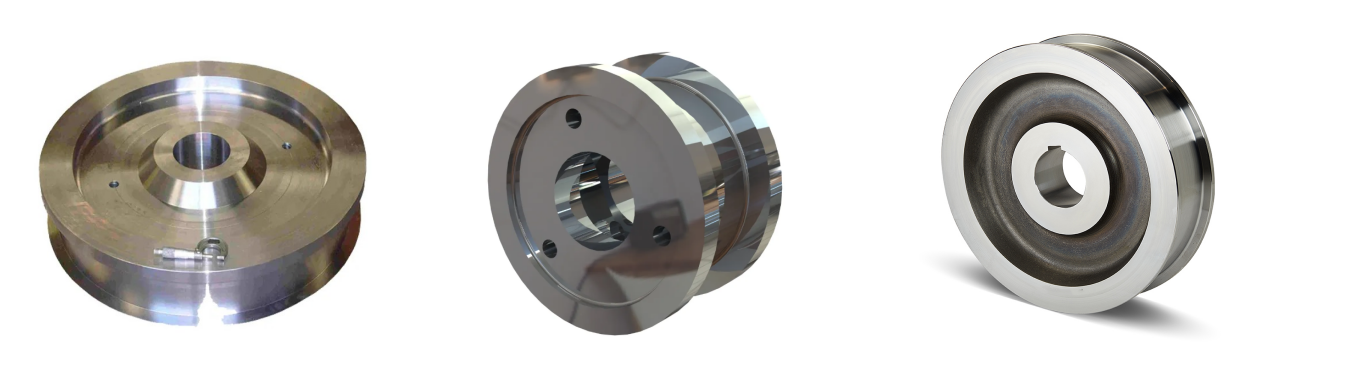
6.Crane wheel
Types of Crane Wheels
1)Single Flanged Wheels:
Feature a flange on one side to guide the wheel on the rail.
Commonly used for gantry cranes with guided tracks.
2)Double Flanged Wheels:
Flanges on both sides for added stability and to prevent derailment.
Suitable for applications requiring high safety and precision.
3)Flat Wheels:
No flange; used in systems with external rail guides or in rubber-tired gantry cranes.
4)Rubber-Coated Wheels:
Coated with polyurethane or rubber for noiseless and smooth movement on surfaces without steel rails.
Common in portable gantry cranes or special-purpose applications.
7.Crane Hook
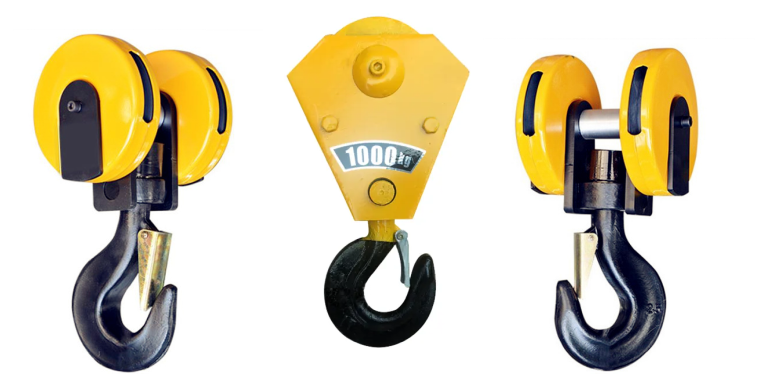
Components of the Crane Hook
1)Hook Body:
The main structure of the hook, often made from forged alloy steel, provides the strength to lift heavy loads.
The shape is carefully designed to optimize strength and minimize the risk of fatigue.
2)Safety Latch:
A spring-loaded latch or locking pin that secures the load to the hook, preventing accidental disconnection during movement.
The latch mechanism is typically manual or automatic.
3)Hook Eye:
The top part of the hook, where the lifting chain, wire rope, or shackles are attached.
It is designed for optimal strength and durability.
4)Load Bearing Surface:
The part of the hook where the load is applied. This area is designed to ensure that the load is evenly distributed and does not cause localized stress.
5)Swivel Mechanism (Optional):
Some cranes are equipped with hooks that feature a swivel mechanism to allow the hook to rotate freely. This is particularly useful in applications where the load must be rotated during lifting or positioning.
Motor
Control and Protection Features
1)Variable Frequency Drive (VFD):
A VFD is used in many crane motors to control the speed and torque of the motor. This allows for smoother acceleration and deceleration, reducing mechanical wear on the crane and providing better load handling precision.
2)Overload Protection:
Motor protection systems are in place to prevent the motor from burning out under excessive load conditions. These protection features monitor the motor's current and temperature, triggering an automatic shutdown if needed.
3)Soft Start/Stop:
A soft starter gradually increases the voltage supplied to the motor, reducing mechanical stresses during startup and shutdown. This also helps avoid sudden jerks when starting or stopping the crane, especially under heavy loads.
4)Thermal Overload Protection:
Many motors are equipped with thermal sensors or built-in protection mechanisms that disconnect the motor if it exceeds a safe operating temperature. This prevents motor damage and ensures the crane operates within safe parameters.
.
Sound and light alarm system & limit switch
1)Sound and Light Alarm System
The sound and light alarm system serves as a critical safety feature in gantry cranes, alerting operators and workers nearby about crane movements or specific actions like lifting, lowering, and approaching load limits. This system enhances safety by providing audible and visible warnings of potential hazards or abnormal situations.
2)Limit Switches
A limit switch is a mechanical or electrical device used to restrict or limit the movement of the crane, preventing it from exceeding safe operational limits. These are critical safety features, ensuring that the crane does not run into physical obstructions or exceed its operational parameters.

10.Safety Devices
1. Overload Protection Device: Prevents the crane from lifting loads beyond its rated capacity.Prevents structural damage to the crane and accidents caused by overloading.
2. Limit Switches: Restrict the movement of various crane mechanisms to prevent over-travel or collision. Stops the crane from moving beyond its track limits. Prevents mechanical damage and ensures safe operation within predefined boundaries.
3. Anti-Collision System: Avoids collisions between two cranes or between the crane and obstacles in the working area.Ensures safe operation in environments with multiple cranes or restricted spaces.
4. Emergency Stop Button: Allows operators to immediately halt all crane operations in case of emergencies.Provides a quick response mechanism to address unforeseen hazards.
5. Sound and Light Alarm System: Alerts nearby personnel about crane operations or dangerous situations.Ensures the safety of personnel working near the crane, particularly in noisy environments.
6. Overheating Protection for Motors: Prevents motor overheating during prolonged or heavy-duty operations.Protects the motor from damage and extends its service life.
11.Control Mode
1)Pendant Control (Wired Control)
Description:A handheld controller connected to the crane by a cable (pendant).The pendant hangs down from the crane or moves along the bridge or trolley, allowing the operator to walk alongside the crane while controlling it.
2)Remote Control (Wireless Control)
Description:Uses a wireless transmitter (radio remote control) to operate the crane.The operator can control the crane from a safe distance without being tethered by a cable.
3)Cabin Control (Operator Cab)
Description:The operator sits in a cabin mounted on the crane and controls it using joysticks, levers, or panels.The cabin provides a direct line of sight to the operation area.
4)Semi-Automatic Control
Description:Combines manual operation with pre-programmed automation for specific tasks.The operator provides general commands while the crane performs certain actions automatically, such as lifting to a preset height or moving to a predefined location.
5)Fully Automatic Control
Description:The crane operates without manual intervention, guided by advanced software, sensors, and PLCs.Used for predefined tasks in industries like warehousing, container handling, or manufacturing.

Sketch

Main technical

Advantages
1. Cost-Effectiveness
Lower Initial Investment: Compared to double girder gantry cranes, single girder models require fewer materials for construction, reducing manufacturing costs.
Lower Maintenance Costs: With fewer components and simpler systems, the maintenance costs are relatively lower, ensuring long-term affordability.
2. Lightweight Structure
Less Dead Weight: The single girder design results in a lighter structure, reducing stress on the supporting foundations or tracks.
Easier Installation: Its lightweight nature makes transportation and installation simpler and quicker compared to heavier cranes.
3. Space-Saving Design
Compact Structure: Requires less headroom and clearance, making it ideal for facilities with limited space.
Enhanced Maneuverability: The compact design allows efficient use in narrow or constrained spaces.
4. Energy Efficiency
Lower Power Consumption: With a lighter structure and fewer moving parts, it consumes less energy during operations, reducing overall operating costs.
5. Versatility
Wide Range of Applications: Suitable for industries such as manufacturing, construction, warehousing, logistics, and more.
Customizable: Can be tailored to meet specific requirements, including different spans, lifting heights, and capacities.
6. Ease of Operation
Simple Control Modes: Compatible with pendant, remote, or cabin controls, making it user-friendly for operators.
Smooth Operation: Equipped with advanced hoisting mechanisms and precise control systems for safe and smooth lifting operations.
7. Flexibility in Installation
Freestanding Design: Does not require a dedicated building structure or runway beams, making it ideal for outdoor or temporary operations.
Easily Relocatable: Can be dismantled and moved to a new location with minimal effort.
Application
1. Manufacturing and Production Facilities
Material Handling: A 2t mobile gantry crane is ideal for moving raw materials, parts, or components around a factory or assembly line.
Assembly Line Support: Used to lift heavy equipment or parts for assembly, increasing workflow efficiency.
Maintenance and Repairs: Handy for lifting machinery or equipment for maintenance and repair work in a production environment.
2. Warehousing and Distribution
Loading and Unloading: Efficient for loading and unloading goods from trucks or containers in warehouses and distribution centers.
Stacking and Sorting: Can be used to stack materials or sort products, especially in high-density storage areas.
Inventory Management: Helps in organizing and relocating stock within storage areas, making operations more organized and efficient.
3. Construction Sites
Material Transport: 2t mobile gantry cranes are frequently used to move construction materials like steel beams, concrete blocks, and other heavy items.
On-Site Lifting: Ideal for lifting heavy tools and machinery or transporting materials across construction sites, especially in open-air or outdoor areas.
Portable and Temporary Setup: Often used on construction sites that require mobile or temporary cranes due to their ease of assembly and portability.
4. Shipyards and Ports
Shipbuilding: Used for lifting and positioning heavy components during the construction and assembly of ships or boats.
Docking and Undocking: 2t mobile gantry cranes are perfect for handling smaller boats and ships, moving them in and out of docks.
Container Handling: In ports, these cranes can be used to move lighter containers or cargo in container yards, increasing port efficiency.
5. Machine Shops
Machinery Lifting: Can be used for lifting and relocating large machinery or equipment in machine shops or production facilities.
Tool Handling: Lifting heavy tools or equipment for maintenance, repair, or operation.
Heavy Part Handling: Used for lifting heavy parts or components in workshops, particularly when machining larger products.
Crane production procedure
1. Design stage: Determine the parameters of the crane, such as rated load, span and lifting height, according to the customer's needs and working environment. Carry out detailed structural design, including main beam, end beam, crane, lifting mechanism, etc., to ensure that the design meets safety standards and usage requirements. Select appropriate materials according to the design, usually high-strength steel to ensure the stability and durability of the structure.
2. Manufacturing stage: Prepare the required raw materials and parts according to the design drawings. Cut, bend and shape the steel to prepare structural components such as main beams and end beams. Weld the various components and assemble them into an overall structure. This step requires guaranteed welding quality to ensure strength and stability.
3. Machining: Machining key components such as motors, gears, bearings, etc. to ensure that their size and accuracy meet the requirements. Anti-corrosion treatment of components, such as painting and galvanizing, increases the durability and aesthetics of the equipment.
4. Electrical system installation: Install electrical components such as motors, controllers, switches, sensors and alarm systems. Connect and wire cables to ensure the normal operation of the electrical system.
5. Assembly phase: Assemble all components and systems as a whole, connect the lifting mechanism, trolley running mechanism and control system. Perform a comprehensive inspection of the assembled crane to ensure that all components and systems are working properly, and perform preliminary debugging.
6. Testing phase: Perform static load test on the crane to check the structural strength and stability. Perform dynamic test on the crane, including tests on lifting, moving, braking and other functions, to ensure that its performance meets the design requirements. Check the functions of safety devices, such as limit switches, overload protection, etc., to ensure the safety of the equipment during operation.
7. Quality control: Perform quality control on each link in the production process to ensure compliance with industry standards and customer requirements. Record various data and inspection results in the production process for subsequent traceability and analysis.
8. Delivery and installation: Pack and prepare the completed crane for transportation to ensure that it is not damaged during transportation. Deliver the crane to the customer's site for installation, and perform on-site debugging and acceptance. Provide operation training to customers to ensure that they are proficient in the use and maintenance of the crane.

Workshop view:
The company has installed an intelligent equipment management platform, and has installed 310 sets (sets) of handling and welding robots. After the completion of the plan, there will be more than 500 sets (sets), and the equipment networking rate will reach 95%. 32 welding lines have been put into use, 50 are planned to be installed, and the automation rate of the entire product line has reached 85%.


Hot Tags: 2t mobile gantry crane, China 2t mobile gantry crane manufacturers, suppliers, factory, Gantry Crane, Electric Hoist Single Girder Gantry Crane, Single Girder Gantry Crane
Previous
Portable Aluminum Gantry CraneYou Might Also Like



Send Inquiry