










Small Gantry Crane
Products Description
The small gantry crane is a type of lifting equipment designed for light to moderate material handling tasks in industrial, warehouse, or construction settings. It consists of a crane structure mounted on wheels or fixed rails, with a hoist system that can move horizontally and vertically to lift and transport loads. These cranes are typically used in spaces where overhead cranes or larger gantry cranes may not be practical due to space or budget constraints.
The small gantry crane can be designed as a mobile gantry crane with wheels or as a fixed crane depending on operational needs. The small gantry crane is suitable for a wide range of applications, such as lifting heavy equipment, machinery, or loads in a workshop, warehouse, or small factory. Many small gantry cranes offer adjustable height settings to accommodate different lifting requirements.
The small gantry crane is a versatile, affordable, and space-efficient solution for various lifting and material handling tasks. They are particularly suitable for smaller workshops, warehouses, and construction environments, offering the benefits of flexibility and mobility without the need for complex infrastructure. Whether you need a crane for occasional or daily use, a small gantry crane could be the perfect addition to your operations.
Core Components: PLC, Bearing, Gearbox, Motor, Gear
Place of Origin: Henan, China
Warranty: 1 Year
Weight (KG): 500 kg
Video outgoing-inspection: Provided
Machinery Test Report: Provided
Color: Customized
Capacity: 1-20t
Type : Single Girder
Power supply: 110V/220V/230V/380V/440V
Lifting mechanism: Eliectric Hoist
Work Duty: A3-A4
Selling Units: Single item
Single package size: XX cm
Single gross weight: kg

Pictures & Components
1.Main beam
1) A small gantry crane typically consists of a main beam that is supported by two legs or columns, allowing it to move along a track. The main beam is one of the most critical structural components of the crane, as it supports the hoisting mechanism, which lifts and moves loads.
The main beam is usually made from steel or a similar high-strength material to support the weight and ensure durability. Some smaller cranes may use aluminum for weight reduction, but steel is more common in heavier-duty models.The length and height of the main beam are determined by the required span (distance between supports) and the weight it needs to support. Smaller gantry cranes often have a main beam span between 5 and 20 feet, while larger ones can go much further.
3) The main beam must be designed to handle the load capacity of the crane, which can vary from a few hundred kilograms to several tons depending on the application.The main beam typically slides or moves along rails or tracks, allowing the crane to span across a workspace. Some gantry cranes also feature a hoist or trolley that moves along the main beam to lift and transport loads. Smaller gantry cranes often have a main beam span between 5 and 20 feet, while larger ones can go much further.

Lifting System
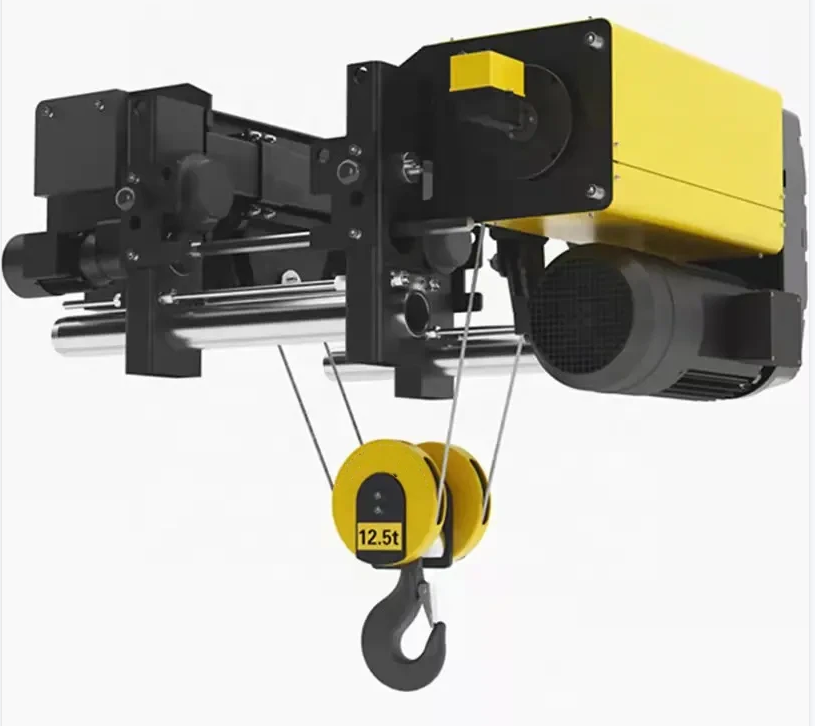
Motor: The motor of a small gantry crane's lifting system plays a crucial role in providing the necessary mechanical power to lift and lower loads. Small gantry cranes typically use electric motors to drive the lifting mechanism, which is usually a hoist or winch. The motor must be selected based on the load capacity, the required lifting speed, and the frequency of operation.
Reducer: The reducer in the context of a small gantry crane's lifting system refers to a mechanical device used to reduce the speed of the motor and increase the torque. While reducing speed, the reducer simultaneously increases torque (the rotational force).
Drum: The drum-based lifting system for small gantry cranes typically refers to the use of a drum and cable arrangement for lifting and lowering loads. This system is commonly seen in smaller industrial or warehouse cranes. The drum is a cylindrical device around which the lifting cable or wire rope is wound. The drum is usually powered by an electric motor, hydraulic system, or manual mechanism.
Wire rope: The cable or rope is wound around the drum, and it serves to lift or lower the load. It is typically made of steel for strength and durability.The wire rope is typically connected to the hook or lifting device that grabs or secures the load. The rope is spooled onto a drum or reeved through a series of pulleys, depending on the crane's design.The wire rope must have high tensile strength to withstand the forces applied when lifting heavy loads.It needs to be flexible enough to wind and unwind smoothly on the hoist drum or through the crane's pulley system.
Pulley block: The pulley block system often uses a combination of fixed and movable pulleys to create a mechanical advantage, allowing the crane to lift heavier loads than would otherwise be possible with a single rope or chain.The pulleys reduce friction and wear on the rope, helping maintain the efficiency and lifespan of the lifting system.The block can help change the direction of the force applied by the crane's hoist, allowing the operator to control the movement of the load more precisely.The pulleys help distribute the load evenly, preventing strain on a single point in the lifting system.
Lifting device: The he hoist is the primary lifting mechanism, consisting of a motorized winch that raises or lowers a load. It may use a chain, wire rope, or synthetic rope, depending on the crane's design and the weight of the load.The lifting beam or hook is attached to the hoist and holds the load. The beam provides stability and can be designed to lift various types of loads (e.g., boxes, containers, or equipment).The hook or lifting attachment may include slings, chains.The trolley is a movable platform that holds the hoist. Small gantry cranes usually operate on a set of rails or tracks that guide the crane's movements along a predetermined path.The gantry itself is the frame that supports the lifting system.The control system allows operators to control the crane's movements, including lifting, lowering, and moving the hoist along the track.Electric hoists are commonly used in small gantry cranes for their efficiency and ability to lift heavy loads. In applications where electric power is unavailable or where minimal lifting is required, manual hoists (often hand chain hoists) may be used. Overload Protection prevents the crane from lifting loads beyond its capacity, protecting both the equipment and operators.Limit Switches stop the hoist from moving beyond certain limits, preventing damage to the crane or load. A mechanism to immediately halt all operations in case of an emergency.
  |
3.End carriage
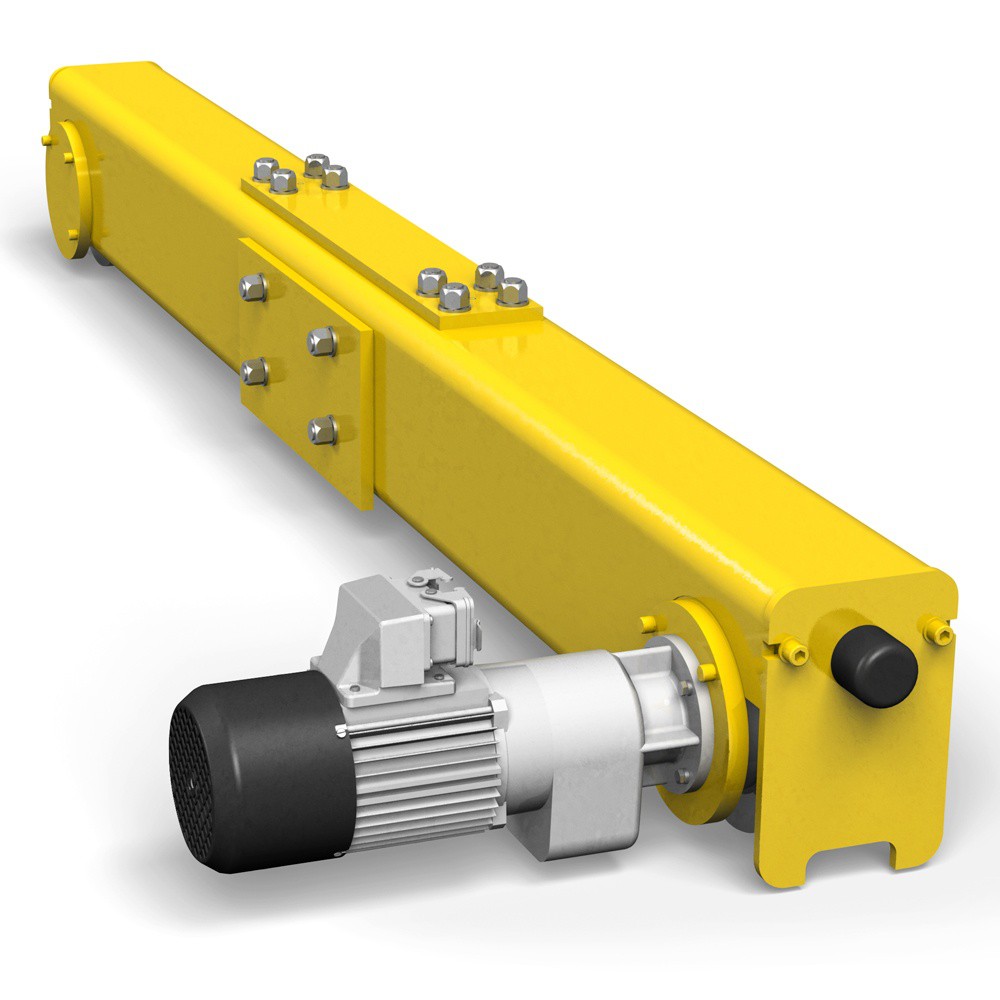
1) The end carriage of small gantry cranes refers to the part of the crane that moves along the track or rail and supports the rest of the crane structure. It is typically mounted on wheels and is designed to provide the mobility for the gantry crane to travel along a predefined path, usually in an industrial or warehouse setting.
2) The end carriage helps to evenly distribute the load of the crane and the lifted materials across the track. This ensures stability and prevents damage to both the crane and the track.The end carriage is powered by a motorized system that can be either electric or manual. In most small gantry cranes, electric motors are used to move the crane along the rails.
3) The wheels on the end carriage are typically made from steel or other durable materials and are designed to run along the crane track or rail system, ensuring smooth travel. These wheels can be designed to minimize wear and tear over time, and some may be equipped with a locking mechanism to keep the crane in place.Small gantry cranes often include safety features such as limit switches to prevent the crane from moving beyond its designated range and safety brakes to stop the crane safely in case of an emergency.
4)The end carriage is often made from robust steel or other strong alloys to withstand the stresses of crane movement and lifting. In small gantry cranes, the design is generally more compact and optimized for limited space..
 |
 |
4.Crane travelling mechanism
1) Working principle
A small gantry crane is a type of crane where the hoisting mechanism (the lifting component) is supported by a gantry (a structure that provides support for the crane's motion). The crane is often used for lifting and transporting materials in smaller workshops, factories, or outdoor environments where overhead space is limited or not available. The key to understanding the crane's operation is looking at its travelling mechanism, which enables the crane to move horizontally along a track or beam.
2) Functions of the crane operating mechanism
Horizontal movement: The travelling mechanism enables the gantry crane to move back and forth along a fixed track or rail system. This movement is typically powered by an electric motor or a manual drive system.
Positioning of the Load: The mechanism allows the crane to position the load precisely within the operational area. This is especially important in environments where precise handling and placing of materials or equipment are required.
Safety Features: Modern crane travelling mechanisms often include safety features such as limit switches, emergency stop buttons, and sensors to prevent over-travel or unintended movement, ensuring safe operation during horizontal travel.
5.Trolley travelling mechanism
1) Structural composition
The trolley travels along the gantry rails, powered by an electric motor connected to a transmission system.The wheels are mounted on the trolley frame and support its movement along the gantry.The system may include limit switches and safety features to prevent accidents or damage.The motor is controlled via a control panel or remote system, ensuring that the trolley moves with precision.
2) Function of the trolley operating mechanism
The trolley operating mechanism of a small gantry crane is responsible for the horizontal movement of the load along the gantry crane's beam or rail system.
6.Crane wheel
The crane wheel on small gantry cranes plays a vital role in supporting the structure and enabling movement along the tracks. These wheels are designed to support the weight of the entire crane and its load while providing smooth movement across the tracks. For small gantry cranes, which are often used for lighter lifting applications in industries like warehouses, construction, or shipping yards, the crane wheels are typically mounted on the lower portion of the crane's frame and move along rails.

7.Crane Hook
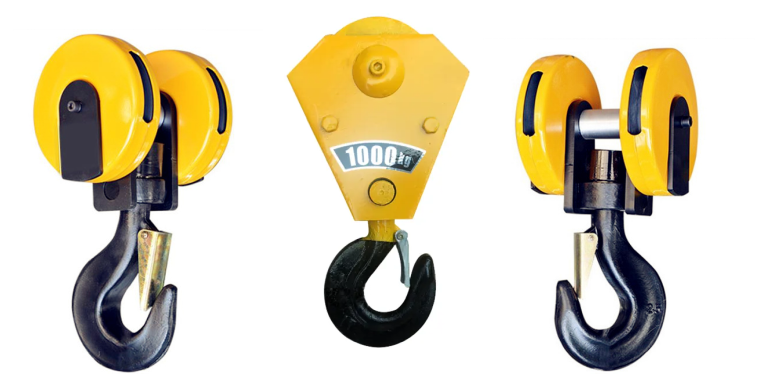
1) The crane hook is an essential component of a crane used for lifting and lowering loads. In the case of a small gantry crane, the hook typically serves as the primary interface between the lifting mechanism (such as the hoist) and the load being lifted. The crane hook is usually designed in a curved shape to secure the load's lifting point. The hook is typically attached to the hoist's lifting cable, chain, or rope. The hook is typically made of high-strength steel, as it needs to withstand heavy loads and the dynamic forces involved in lifting.
2) The Small gantry cranes are often used for tasks like moving equipment in a workshop, lifting materials for construction, or shifting parts in factories, all of which rely on the hook to perform the lift.
Motor
AC Motors: Commonly used in small gantry cranes due to their reliability, efficiency, and ease of control.These motors are powered by alternating current (AC), and they can be controlled with variable frequency drives (VFD) to adjust the speed and torque for the crane's movements. DC Motors: Direct current (DC) motors are also used, particularly for applications requiring precise control of speed and torque.They are often used in smaller or more specialized gantry crane designs where smooth and fine control is important.DC motors can be equipped with speed controllers to regulate performance.
Variable Frequency Drives (VFD): These are used to control AC motors, allowing for adjustable speeds, smoother starts, and better energy efficiency.Synchronous Motors operate at a constant speed and are used in applications that require precise synchronization with the power grid.
Stepper motors are sometimes used in smaller or automated gantry cranes, particularly in the case of very precise movements, like in robotics or light-duty applications.

.
Sound and light alarm system & limit switch
1) Sound and light alarm system
A sound and light alarm system for small gantry cranes is an important safety feature designed to alert workers of potential hazards or operational conditions that require attention.
Sound Alarm:Horns or Sirens: Horn or Siren: Commonly used to produce a loud, attention-grabbing sound that can be heard over long distances or in noisy environments.Buzzer or Beeper: A less intense sound that still serves the purpose of alerting nearby personnel of an issue.
Light Alarm: Flashing Lights or Strobes: Bright flashing lights, typically red, yellow, or orange, are used to signal alarms visually.Some systems use steady or flashing LED lights in various colors (green for operational, yellow for warning, red for emergency) to provide more detailed information about the status of the crane.
Overload Alarm: Activated when the crane's load capacity is exceeded. Travel Warning: A sound and/or light alarm is triggered when the crane is moving, especially in congested or high-traffic areas. Emergency Stop: In case of an emergency, the system will activate both sound and light alarms to immediately warn all personnel to stay clear or evacuate. End of Travel: Alert when the crane is approaching the limit of its travel path to avoid collisions.
2) Limit switch
A limit switch on a small gantry crane is a safety and operational control device that is used to detect the position of the crane's moving parts, such as the trolley, hoist, or gantry itself.
Functions: Minimizes the risk of accidents by stopping the crane's motion in hazardous situations (e.g., exceeding the safe range of travel). These switches are crucial for ensuring that the crane doesn't exceed its designated travel limits, which helps prevent mechanical damage and ensures safety for operators and nearby personnel.
Types: End-of-Travel Limit Switches are mounted at both ends of the crane's travel path (either horizontal or vertical). Overload Limit Switches are often used in conjunction with load cells and ensure the crane does not lift or carry more weight than its rated capacity, preventing mechanical failure or tipping.Height Limit Switches (Hoist Limit) are Used to control the vertical travel of the hoist. Position Limit Switches for Trolley Travel ensure that the trolley doesn't travel too far along the beam, which could cause strain or damage to the crane's structure.

10.Safety Devices
11. Limit Switches:Purpose is to prevent over-travel of the crane's hoist and trolley. Types are Overload limit switch, hoisting limit switch, and trolley travel limit switch.
2. Overload Protection:Purpose is to ensure that the crane does not lift loads beyond its rated capacity, preventing mechanical failure.
3. Emergency Stop Button
Purposeis to provide an immediate stop to the crane's operation in case of an emergency.
4. Load Moment Indicator (LMI)
Purpose: Monitors the crane's load and operating radius in real-time to ensure that the load being lifted is within safe limits.
5. Anti-Two Block System
Purpose: Prevents the hoist block from making contact with the hook, which could damage the crane's components.
6. Safety Latches and Hooks
Purpose: Ensures that the load is securely attached to the crane hook and prevents accidental disengagement.
11.Control Mode
1. Manual Control:
Hand Crank: For very small gantry cranes, a hand crank can be used to move the crane along its rail system. Manual Push/Pull: The crane can be pushed or pulled manually by an operator, usually along the rail system. This is common for non-electric or lower capacity gantry cranes.
2. Electric Control:
Pendant Control (Wired): A pendant controller, connected by a cable to the crane, allows an operator to control the crane's movement (up/down, left/right, hoisting, lowering, etc.). The operator uses the pendant to direct movement and operation at a safe distance.Wireless Control: Similar to the wired pendant but operated remotely without cables, often using a radio frequency (RF) signal or Bluetooth. This provides more flexibility in operation and eliminates the risk of tripping over wires.
3. Automated Control:
Radio Frequency (RF) Control: A more advanced mode that allows the operator to control the crane from a distance using a handheld device.
PLC (Programmable Logic Controller): Some small gantry cranes can be integrated with automated systems that use PLCs to handle the crane's movements based on pre-programmed instructions, sensors, and feedback loops.
4. Joystick Control:
In some modern small gantry cranes, a joystick or control lever is used, which allows for more precise, real-time control of the crane.
5. Load-Sensing and Safety Systems:
Many cranes, even small ones, come with load sensors, emergency stop buttons, and overload protection mechanisms to ensure safe operation.

Sketch

Main technical

Advantages
1. Space Efficiency
Compact Design: Small gantry cranes are designed to be space-efficient, making them ideal for facilities with limited floor space. Their ability to operate in smaller or constrained areas is particularly useful in workshops, warehouses, and production lines.Some models allow for adjustable height and span, providing flexibility to accommodate various tasks and equipment.
2. Cost-Effective
Small gantry cranes generally cost less than larger overhead cranes or bridge cranes, making them a more affordable option for businesses with a limited budget.Due to their smaller size and lower maintenance requirements, these cranes are also more cost-effective in terms of ongoing operating and maintenance costs.
3. Portability and Mobility
Many small gantry cranes are designed to be portable, which allows them to be moved from one area to another within a facility. This is particularly beneficial for dynamic work environments where tasks and layouts change frequently.With wheels or casters, some small gantry cranes can be pushed to different locations, which is advantageous for operations requiring mobility.
4. Ease of Installation and Setup
Small gantry cranes are usually easier and quicker to assemble and install compared to larger, more complex lifting systems. This reduces downtime and increases productivity.These cranes can often be installed without the need for extensive modifications to the facility, such as reinforced ceilings or large overhead beams.
5. Versatility
Wide Range of Applications: They can be used for a variety of tasks such as lifting, moving, and positioning materials or equipment in environments like workshops, factories, warehouses, and garages. Small gantry cranes can often be customized with different hoists, attachments, or lifting capacities to meet specific operational needs.
6. Enhanced Safety
These cranes offer controlled lifting and moving, which minimizes the risk of accidents or damage to both workers and goods.The use of a gantry crane can reduce the physical strain on workers who would otherwise have to manually handle heavy loads, contributing to a safer workplace.
7. Durability
Strong Construction: Small gantry cranes are typically built with durable materials such as steel, ensuring they can handle a wide range of loads and resist wear and tear over time.
8. Increased Productivity
By automating the lifting and transportation of materials, small gantry cranes help increase the speed and efficiency of workflows, leading to enhanced overall productivity in a facility.
9. Environmental Benefits
Energy Efficiency: Many small gantry cranes are electrically powered and consume relatively low energy, which is more environmentally friendly than some other heavy-duty lifting solutions.
Application:
Warehouse and Material Handling
Small gantry cranes are frequently used to move heavy items like machinery, components, or raw materials within warehouses or production areas.They help in organizing goods and retrieving stored items that are difficult to move by hand.
Manufacturing and Assembly
In factories, small gantry cranes are used to position heavy or large parts onto assembly lines or workstations. They can be used to lift parts like engines, frames, and panels.They are helpful for installing or removing machinery in tight workshops or small production areas.
Workshop and Garage Use
Small gantry cranes are often used in auto repair shops for lifting engines, gearboxes, and other heavy parts from vehicles.
Construction Sites
Small gantry cranes are used on small to medium-sized construction sites to lift and position materials such as bricks, pipes, and other construction equipment.
Testing and Research Laboratories
In labs where sensitive or large equipment needs to be moved or set up, small gantry cranes are often used for safe handling without causing damage.In industries like aerospace or electronics, they can assist in the calibration and positioning of large equipment.
Marine and Dockside Operations
In boatyards or docks, small gantry cranes are used to lift and move boats, engines, and other heavy equipment.They can help in loading and unloading materials at docks or quaysides, particularly where space is confined.
Aerospace Industry
In aerospace manufacturing or maintenance, small gantry cranes can be used to move heavy parts like fuselage sections, engine components, or other large, delicate items.
Storage and Shipping
Small gantry cranes can be used in shipping containers or smaller warehouse facilities to load and unload packages or items onto trucks.
Energy Sector (Wind, Solar, and Power Plants)
In wind farms, small gantry cranes are used to lift turbine parts, such as blades and nacelles, for maintenance.
Heavy Equipment Maintenance
Engine Lifting: In industries where large engines or generators need to be serviced, small gantry cranes can be used to remove or install these heavy parts.
Crane production procedure
1. Design and Planning
Determine the specifications of the gantry crane, including load capacity, span, lifting height, and mobility. Engineers create detailed designs using CAD (Computer-Aided Design) software. Choose appropriate materials for the crane structure, such as high-strength steel for the frame, and ensure other components (motors, wheels, etc.) are selected based on the crane's requirements.
2. Fabrication of Components
The steel plates, beams, and other components are cut according to the design specifications.The various steel components are welded or bolted together to form the crane's main structure (the gantry frame). This involves careful alignment to ensure the structure is level and stable.
3. Assembly of Sub-Systems
The lifting mechanism (hoist) is assembled. The trolley that moves along the gantry frame is assembled. This includes the drive mechanism (typically an electric motor and wheels) and the mounting system for the hoist.The wheels for the crane's travel system are installed, which allow the gantry crane to move across its track or ground system.
4. Electrical and Control Systems
Wiring is installed for the crane's control system, power supply, and safety features (limit switches, emergency stop buttons, etc.).The crane control panel is installed, including the controller for the hoist, trolley, and gantry movement. This is typically linked to the electrical system to ensure smooth operation.
5. Final Assembly and Integration
All components (structure, hoist, trolley, electrical system, wheels) are integrated together into the final gantry crane. Adjustments are made to ensure everything moves smoothly.Safety features such as emergency brakes, overload protection, limit switches, and grounding are thoroughly checked.Lubricants are applied to parts that require it (such as the wheels, trolley rails, and hoist system).
6. Testing and Quality Control
The crane is tested under load conditions to ensure it can lift and move safely within the specified capacity.The gantry crane is tested for smooth operation of the hoist, trolley, and travel system.All safety features, such as limit switches and emergency stops, are thoroughly tested.
7. Painting and Finishing
The crane's frame and components are cleaned and treated to prevent corrosion. This may involve sandblasting or priming.The gantry crane is painted, typically with a protective coating such as epoxy or polyurethane paint, to ensure durability and corrosion resistance.A final inspection is performed to ensure all components are properly installed, painted, and meet the design specifications.
8. Delivery and Installation
If necessary, the crane may be partially disassembled for transport.
Upon reaching the installation site, the crane is reassembled, and the system is installed in place. This may include mounting it on a track system or securing it in its designated area.The crane is tested one final time in its operating environment to ensure it functions correctly and safely.
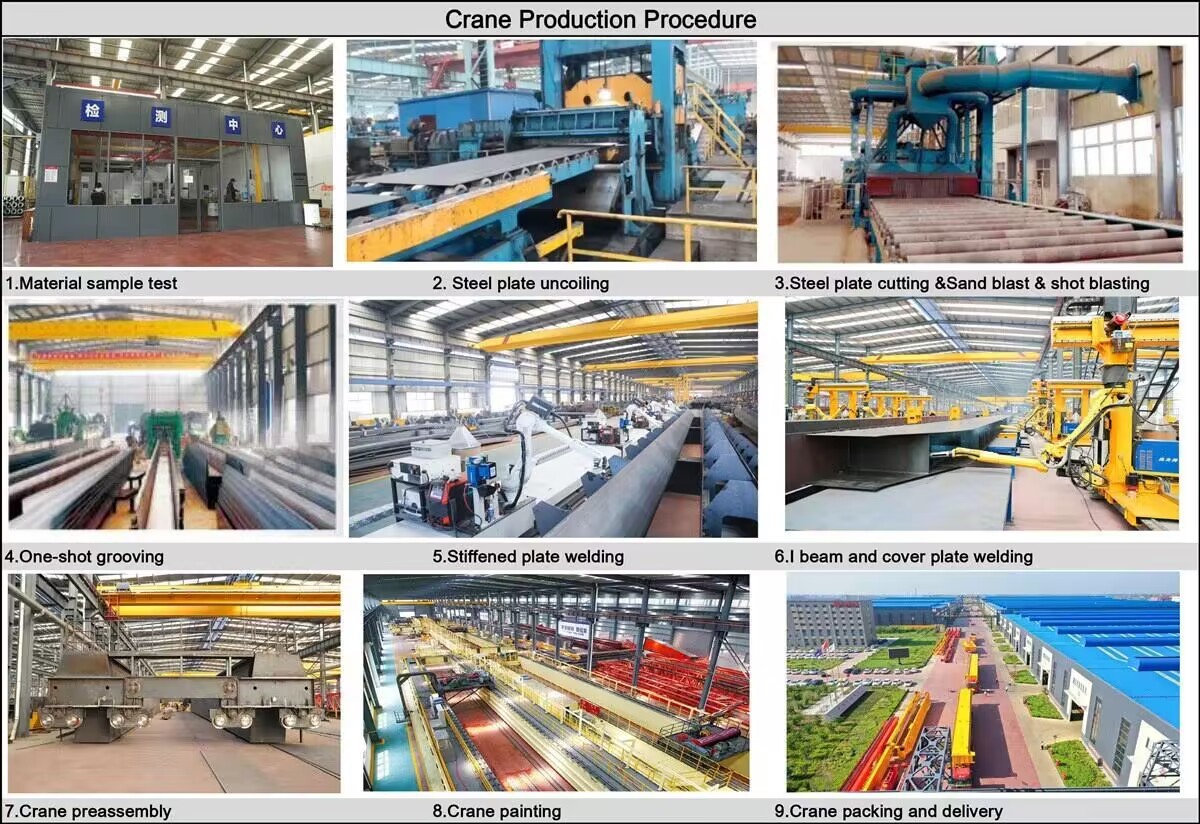
Workshop view:
The company has installed an intelligent equipment management platform, and has installed 310 sets (sets) of handling and welding robots. After the completion of the plan, there will be more than 500 sets (sets), and the equipment networking rate will reach 95%. 32 welding lines have been put into use, 50 are planned to be installed, and the automation rate of the entire product line has reached 85%.


Hot Tags: small gantry crane, China small gantry crane manufacturers, suppliers, factory, Gantry Crane, Electric Hoist Single Girder Gantry Crane, Single Girder Gantry Crane
You Might Also Like


Send Inquiry