







A Frame Lifting Gantry Crane
Products Description
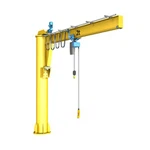
A Frame Lifting Gantry Crane is a type of overhead crane designed to lift and move heavy materials across a wide area within an industrial setting, typically in outdoor environments or large warehouses. It is equipped with a single horizontal beam (the girder) supported by two legs or columns. These cranes are typically used for material handling in environments like construction sites, ports, or factories.
A Frame Lifting Gantry Crane makes the crane more compact and lightweight compared to a double girder crane. This design reduces the overall construction cost while still offering high efficiency.The crane's sturdy girder supports significant loads while ensuring smooth, stable operation during lifting and lowering activities.
3)Suitable for various industries such as construction, manufacturing, mining, and shipping. It can be used for loading and unloading materials, lifting heavy equipment, or transporting goods across large distances.A Frame Lifting Gantry Crane can be equipped with electric motors or manual controls, depending on the requirements of the user. Electric versions offer enhanced performance and ease of use, while manual versions can be more economical for smaller operations.The crane can be designed to fit specific space requirements, with customizable girder lengths, lifting capacities, and crane heights.These cranes come with various safety measures, including overload protection, emergency stop buttons, limit switches, and automatic safety braking systems, to ensure safe operations.
Place of Origin:Henan, China
Warranty:2 years
Weight (KG):60000 kg
Video outgoing-inspection:Provided
Machinery Test Report:Provided
Application:warehouses,factory and other place
Crane type:box type gantry crane
Travelling speed:20m/min
Lifting mechanism:Electric Hoist
Control method:Ground Control+ Remote Control (customized)
Working duty:A5
Working Temperature:-20~+40℃
Industrial voltage:380V50HZ3Phanse or other
Color:Customised
Customization:Accepted

Pictures & Components
1.Main beam
1)Material:
The main beam is typically made from steel or alloy steel, which offers a good balance of strength, weight, and durability. Steel beams can be fabricated in various profiles, such as I-beams, box beams, or trusses, depending on the load capacity and design requirements.
2)Design Types:
Box Beam: A hollow rectangular or square cross-section beam is often used for A Frame Lifting Gantry Cranes. It provides high strength and rigidity with reduced weight.
I-Beam: A traditional design with a cross-section resembling the letter "I." It is cost-effective but may be less rigid than a box beam for very heavy loads.
Truss Beam: A lattice-like structure that provides excellent strength-to-weight ratio and can be used for longer spans or higher load capacities.

Lifting System
Lifting System Design Considerations:
1)Load Capacity:The hoist, trolley, and beam must all be designed to handle the expected load capacity. The lifting system should be tested and rated for the maximum weight it will be required to lift.
2)Lifting Height:The height at which the crane is designed to lift and lower the load must be considered when designing the hoisting mechanism. Hoists can be tailored for specific lifting heights, ranging from a few meters to several dozen meters.
3)Speed and Efficiency:The lifting speed (both hoisting and horizontal travel) should be considered based on the requirements of the application. Some cranes feature adjustable speeds or two-speed systems for more controlled operations.
4)Safety Features:Safety is a primary concern in lifting operations, so the system must be equipped with features such as:Overload protection,Limit switches to prevent over-travel,Emergency stop buttons,Anti-sway systems (for better load stability),Safety brakes that engage in case of a power failure. 

3.End carriage
Key Functions of the End Carriage:
1)Support:
The end carriage supports the weight of the crane, including the main girder, hoist, trolley, and any load that is being lifted. It helps to distribute the weight evenly across the rails to ensure smooth operation.
2)Movement:
The end carriage allows the entire crane system (including the girder and hoist) to move along the runway rails. This horizontal movement, called the crane travel, enables the crane to cover a wide area for load handling.
3)Load Transfer:
It transfers the weight of the crane and the load to the wheels, which run on the runway tracks or rails. The wheels are designed to handle the static and dynamic forces generated during operation.


4.Crane travelling mechanism
1)The crane travelling mechanism of a A Frame Lifting Gantry Crane is responsible for the horizontal movement of the crane system, allowing it to move across the runway rails. Key components like the end carriages, wheels, motorized drive systems, and braking mechanisms work together to provide efficient, safe, and controlled crane travel. Design considerations such as load capacity, speed, environmental factors, and track alignment are critical for ensuring reliable and long-lasting crane performance. Whether motorized or manual, the travelling mechanism is integral to the crane's ability to lift, move, and position heavy loads across large areas efficiently.
2)The crane's travelling mechanism must be designed to support the total weight of the crane, hoist, trolley, and the load being lifted. The wheels, motors, and drive components must be sized accordingly to handle the total load, including dynamic forces during movement.The desired speed of travel depends on the specific application. Cranes designed for high-speed operations require more powerful motors and advanced control systems. Alternatively, for precise load positioning, slower speeds are often preferred, which can be achieved with variable-speed drives.
5.Trolley travelling mechanism
Advantages of Trolley Traveling Mechanism:
1)Precision Load Handling: The ability to move the hoist and load along the girder with high precision allows for accurate placement and handling of materials.
2)Flexibility: A motorized trolley allows for easy and quick adjustment of load positions along the crane's span.
Increased Safety: The ability to stop the trolley immediately using limit switches and braking systems ensures safe and controlled operations.
Efficient Operations: The trolley traveling mechanism contributes to the overall efficiency of the crane by allowing for the quick positioning of loads in various areas of the workspace.
6.Crane wheel
1)Support:
Crane wheels support the entire weight of the crane, including the lifting system (hoist and trolley), the girder, and any load being moved. Proper wheel design ensures that the weight is evenly distributed across the rails to avoid excess wear or damage.
2)Movement:
The wheels allow the crane to move horizontally along the runway rails, facilitating longitudinal travel (movement along the length of the rails) and crane travel (movement of the crane along the span of the structure). Smooth movement is critical to ensuring that the crane operates efficiently and that the load is safely transported.
3)Stability:
Crane wheels are designed to provide stability during operation, preventing derailment or misalignment. The correct alignment of wheels ensures the crane moves in a straight line and avoids potential safety hazards.

7.Crane Hook
1)Load Attachment:
The primary function of the crane hook is to attach and secure the load to the crane's hoisting system (such as a rope, chain, or steel cable). It holds the lifting sling, chain, or other load-bearing devices that are used to lift the load from one point to another.
2)Lifting and Lowering:
The hook allows the crane to lift and lower the load smoothly. By attaching the load securely to the hook, the crane can safely raise and lower heavy objects while maintaining control over their movement.
3)Load Stability:
The crane hook plays a role in maintaining load stability during movement. It helps prevent the load from swinging excessively or becoming detached from the crane, which could pose a safety risk.

Motor
1)Regular Inspections:
Crane motors should be regularly inspected for signs of wear, overheating, or malfunction. Key areas to check include motor windings, bearings, cooling systems, and braking systems.
Lubrication of bearings and other moving parts should be done periodically to ensure smooth operation.
2)Motor Protection:
Overload protection is essential to prevent damage to the motor in case of excessive load. Thermal protection is commonly used to prevent overheating by automatically shutting off the motor if it reaches unsafe temperatures.Fuses and circuit breakers provide additional protection to the motor and electrical system.
3)Noise and Vibration Monitoring:
Motors should be monitored for excessive vibration or noise, which may indicate mechanical problems, such as misalignment, bearing failure, or imbalance.

.
Sound and light alarm system & limit switch
1)Sound and Light Alarm System
The sound and light alarm system is used to alert the operator and nearby personnel about the status of the crane or any potential dangers during crane operation. These systems are vital for ensuring safety in environments with high noise levels or areas with limited visibility.
2)Limit Switches
Limit switches are mechanical devices installed on the crane to prevent over-travel of the crane's moving parts, such as the hoist, trolley, or traveling mechanism. Limit switches are essential for controlling the position of various crane components and ensuring safe operation.

10.Safety Devices
1)Overload Protection Device
The overload protection system uses sensors and load cells to continuously monitor the weight of the load being lifted. If the load exceeds the crane's rated capacity, the system will trigger an audible alarm and/or stop further operation of the crane.
2)Limit Switches
Limit switches are mechanical devices that automatically stop or reverse the movement of the crane once a predefined position is reached (e.g., upper or lower limit of hoisting travel, or end travel positions for the trolley and crane).
3)Emergency Stop Button (E-Stop)
The emergency stop button is typically located on the operator's cabin and at various points around the crane for quick access. Pressing the button cuts off power to the crane's motor and immediately stops its movement.
4)Braking System
Cranes are equipped with mechanical, electrical, or hydraulic brakes to stop the crane's motion safely. The braking system is activated either automatically (in response to limit switch activation) or manually (by the operator).
11.Control Mode
1)Cabin Control (Operator Cabin Control)
In this mode, the crane is operated from an operator's cabin that is mounted on the crane structure, typically located at the end of the girder or on a dedicated platform. This mode is most commonly used for larger gantry cranes or when the operator needs to oversee the entire operation from a fixed position.
2)Remote Control (Radio Control)
Remote control allows the crane to be operated from a distance using a wireless handheld remote control. This mode is used in situations where the operator needs flexibility, such as in large workspaces, hazardous environments, or when the operator needs to move around the site.
3)Ground Control (Wired Control)
This mode uses wired control panels or pendant controllers connected to the crane via a cable. The operator is on the ground and controls the crane from a distance, using a fixed cable that connects the control unit to the crane.
4)Automated Control (Automatic Operation)
Automated or semi-automated control is used in modern gantry cranes that are equipped with advanced sensors and control systems. This mode allows the crane to perform specific tasks with minimal human intervention, based on pre-programmed instructions or input from sensors.

Sketch

Main technical

Advantages
1. Cost-Effective Solution
Lower Initial Cost: Compared to a double girder gantry crane, a A Frame Lifting Gantry Crane is more affordable due to its simpler structure and fewer components. This makes it an attractive option for businesses with budget constraints.
2. Space Efficiency
Compact Design: A A Frame Lifting Gantry Crane requires less headroom and offers more flexible installation options, making it ideal for areas with limited space or low ceiling heights. This is particularly useful in warehouses and factories with confined workspaces.
3. Lightweight Structure
Reduced Weight: The single girder design is inherently lighter than double girder cranes, which can reduce the overall weight of the crane system. This lightweight structure makes it easier and less expensive to install and transport, as well as reducing the load on the supporting structure or building.
4. High Flexibility and Versatility
Wide Range of Applications: A A Frame Lifting Gantry Crane can be used in a variety of environments, including indoor, outdoor, and semi-enclosed spaces. It is versatile for handling different types of loads, from light to moderate duty tasks.
5. Ease of Operation
Simplified Controls: A Frame Lifting Gantry Cranes are typically easier to operate compared to larger cranes. The reduced complexity of the crane's design allows operators to quickly learn how to use the system, resulting in better productivity and less training time.
6. Increased Lifting Speed
Higher Efficiency in Lifting: The A Frame Lifting Gantry Crane's lightweight design allows for quicker acceleration and deceleration, which results in faster lifting cycles. This improves operational efficiency, particularly in high-throughput applications like warehouses or manufacturing plants.
7. Improved Safety
Stable and Safe Design: A Frame Lifting Gantry Cranes are designed with safety in mind. Their low center of gravity and simple structure make them stable during operation, reducing the risk of tipping or instability.
Application:
1. Warehouses and Distribution Centers
Material Handling: A Frame Lifting Gantry Cranes are commonly used in warehouses for lifting and moving goods, including boxes, pallets, and heavy items. These cranes help with efficient loading, unloading, and sorting of materials.
2. Manufacturing and Assembly Lines
Production Line Support: In manufacturing plants, these cranes assist in moving parts, components, or subassemblies between different stations on an assembly line. They can be used to transport parts to the next stage of production, improving efficiency and reducing manual labor.
3. Shipping Yards and Ports
Container Handling: In shipping yards, A Frame Lifting Gantry Cranes are used for unloading and loading cargo containers from trucks or ships. They can also assist in organizing and stacking containers in yards.
4. Construction Sites
Heavy Lifting: On construction sites, A Frame Lifting Gantry Cranes can lift and transport building materials, such as steel beams, concrete blocks, and scaffolding, across the site.
Precast Concrete Panels: They are often employed to move precast concrete panels and modules into position during the construction of buildings, bridges, or large infrastructure projects.
5. Shipbuilding and Dry Docks
Shipyard Operations: In shipbuilding, A Frame Lifting Gantry Cranes are used for transporting parts and materials, such as metal sheets, machinery, and hull components, around the yard.
6. Aerospace Industry
Component Handling: In the aerospace sector, these cranes are used to handle large aerospace components, such as wings, fuselage sections, and engines during assembly and testing.
7. Metallurgical and Steel Plants
Steel Handling: A Frame Lifting Gantry Cranes are commonly used in steel mills, foundries, and metalworking plants to move steel beams, ingots, plates, and coils. They can assist in loading and unloading raw materials, transporting finished products, or positioning materials for further processing.
Crane production procedure
The production of a A Frame Lifting Gantry Crane involves a multi-step process that ensures quality, reliability, and safety at every stage. From initial design and material selection to final testing and installation, each phase is carefully planned and executed. The main steps include:
Design and Engineering
Material Procurement
Cutting and Fabrication
Machining and Assembly
Main Assembly
Electrical and Control Systems Installation
Testing and Quality Control
Final Inspection and Delivery
Installation and Commissioning
This well-organized process ensures that the finished crane meets all operational, safety, and regulatory standards while being fully functional and ready for service in various industrial applications.

Workshop view:
The company has installed an intelligent equipment management platform, and has installed 310 sets (sets) of handling and welding robots. After the completion of the plan, there will be more than 500 sets (sets), and the equipment networking rate will reach 95%. 32 welding lines have been put into use, 50 are planned to be installed, and the automation rate of the entire product line has reached 85%.


Hot Tags: a frame lifting gantry crane, China a frame lifting gantry crane manufacturers, suppliers, factory, Single Girder Gantry Crane, Gantry Crane, Electric Hoist Single Girder Gantry Crane
Previous
Single Beam Gantry CraneYou Might Also Like


Send Inquiry