










Mobile Boat Hoist
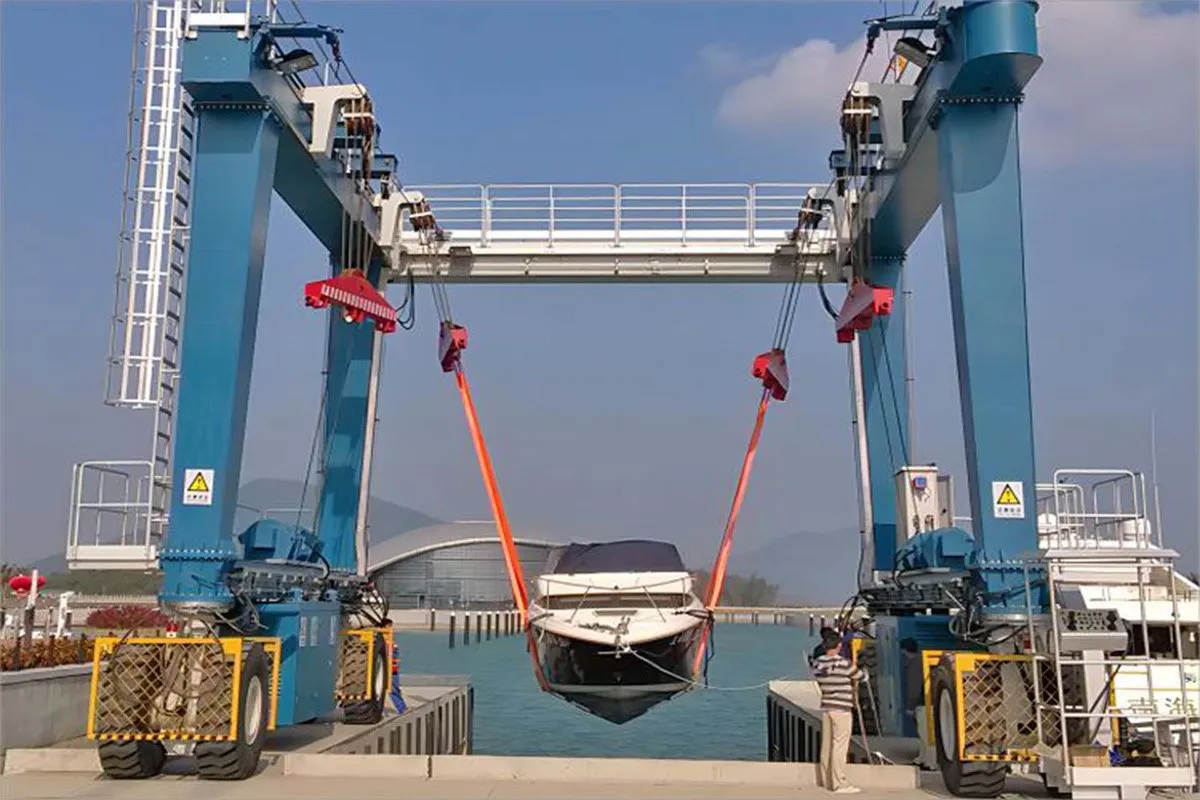
A mobile boat hoist is a specialized equipment designed for lifting and transporting boats, yachts, or other watercraft from one location to another within a marina or boatyard. This type of hoist provides a convenient and efficient solution for boat handling and maintenance, allowing for easy access to vessels for repair, maintenance, or storage.

Key Features
Mobile boat hoists are specialized lifting equipment designed for the handling and transportation of boats and yachts within marinas and boatyards. Key features of mobile boat hoists include:
- Capacity Range: Mobile boat hoists come in a range of capacities to handle various boat sizes. The capacity is usually specified in terms of maximum lifting weight, accommodating small boats to large yachts.
- Versatility: These hoists are versatile and can be used for multiple purposes, including launching, retrieving, and moving boats within a marina or boatyard. They can handle a variety of boat types and sizes.
- Mobility: Equipped with wheels or tracks, mobile boat hoists are easily movable within the marina or boatyard. Some models may have a self-propelled feature for better maneuverability.
- Lifting Mechanism: The hoist employs a reliable lifting mechanism powered by electric, hydraulic, or a combination of both systems. This mechanism includes slings, straps, or lifting arms to securely hold and lift the boat.
- Control System: A user-friendly control system is integrated into the hoist, allowing operators to precisely control lifting, lowering, and movement. This may include a control panel with buttons, levers, or a digital interface.
- Safety Features: Safety is a top priority, and mobile boat hoists are equipped with various safety features, including:
■Emergency stop buttons for immediate halting of operations.
■Overload protection to prevent lifting beyond the hoist's capacity.
■Secure locking mechanisms for slings or straps.
■Audible and visual alarms to alert operators and bystanders.
- Adaptability to Different Watercraft: Mobile boat hoists are designed to accommodate different types of watercraft, such as sailboats, powerboats, and yachts. The design may include adjustable slings or arms to fit the specific hull shape.
- Durability and Construction: Constructed from robust materials such as steel or aluminum, mobile boat hoists are built to withstand the marine environment and heavy-duty use. The frame and components are designed for durability and longevity.
- Weather Resistance: Mobile boat hoists are often built with weather-resistant features to withstand exposure to saltwater, rain, and other environmental conditions commonly found in marine environments.
- Ease of Maintenance: Manufacturers design these hoists with ease of maintenance in mind. They may provide accessible service points, clear maintenance guidelines, and support services to ensure the continued reliability of the equipment.
- Remote Operation (Optional): Some modern mobile boat hoists offer remote control capabilities, allowing operators to control the hoist from a distance. This can enhance safety and precision during boat handling operations.
- Customization Options: Manufacturers may offer customization options to meet specific customer requirements, such as adapting the hoist for unique boat designs or integrating additional features.

Parts & Components
A mobile boat hoist is a complex piece of machinery, and it consists of several key parts and components that work together to lift, transport, and handle boats. Here is an overview of the main parts and components of a typical mobile boat hoist:
- Frame: The frame forms the structural skeleton of the hoist, providing support and stability. It is usually made of durable materials such as steel or aluminum. The design of the frame takes into account the weight-bearing capacity and the overall stability of the hoist.
- Lifting Mechanism: The lifting mechanism is responsible for raising and lowering the boat. It can be powered by electric motors, hydraulic systems, or a combination of both. This mechanism often includes winches, pulleys, or cylinders that are connected to slings, straps, or lifting arms.
- Slings or Straps: Slings or straps are the components that directly come in contact with the boat's hull. They are attached to the lifting mechanism and are responsible for evenly distributing the load during lifting. Slings are typically made of strong and durable materials to ensure safe and secure lifting.
- Wheels or Tracks: Mobile boat hoists are equipped with wheels or tracks to facilitate movement along the ground. Depending on the design, these may be conventional wheels or specialized marine-grade wheels. Some hoists are self-propelled, allowing for easy navigation within a marina or boatyard.
- Control System: The control system enables the operator to manage the hoisting, lowering, and movement of the boat hoist. It includes a control panel with buttons, levers, or a digital interface. The control system is crucial for ensuring precision and safety during boat handling operations.
- Safety Features: Various safety features are integrated into the hoist to protect against accidents and equipment damage. These may include emergency stop buttons, overload protection, audible alarms, visual indicators, and secure locking mechanisms for slings or straps.
- Power Source: The power source provides the energy needed to operate the lifting mechanism. Mobile boat hoists are commonly powered by electricity or hydraulic systems. Electric hoists are often used for smaller capacities, while larger hoists may rely on hydraulic power for their strength and reliability.
- Remote Control: Some mobile boat hoists are equipped with remote control capabilities, allowing operators to control the hoist from a distance. Remote control can enhance safety and precision during boat handling operations.
- Weather-Resistant Components: Given the marine environment, many components are designed to be weather-resistant, with protective coatings and materials to prevent corrosion and degradation from exposure to saltwater and other environmental factors.
- Accessories: Depending on the manufacturer and specific requirements, mobile boat hoists may come with additional accessories or features, such as adjustable arms for different hull shapes, lighting for nighttime operations, or custom attachments for specialized tasks.
Product Parameters

Sketch

Advantages
Mobile boat hoists offer several advantages for marinas, boatyards, and waterfront facilities involved in boat handling and maintenance. Here are some key advantages of using mobile boat hoists:
- Versatility: Mobile boat hoists are versatile and can handle a wide range of boat sizes and types. They are suitable for lifting and moving boats of different shapes and weights, making them adaptable to the diverse needs of marinas and boatyards.
- Space Efficiency: Mobile boat hoists do not require permanent infrastructure like fixed cranes or boat lifts. This makes them a space-efficient solution, allowing marinas to maximize the use of available space for other purposes.
- Maneuverability: Equipped with wheels or tracks, mobile boat hoists are highly maneuverable. Some models are even self-propelled, enabling operators to easily navigate through tight spaces within a marina or boatyard.
- Cost-Effective: Compared to fixed infrastructure, mobile boat hoists are often more cost-effective to install. They don't require extensive construction or significant modifications to the facility, making them a more economical choice for boat handling.
- Time Efficiency: Mobile boat hoists enable quick and efficient launching, retrieving, and transportation of boats. This can significantly reduce turnaround times for routine maintenance, repairs, and other boat-related activities.
- Adaptability to Different Terrains: The mobility of these hoists allows them to operate on various terrains, including gravel, concrete, or even uneven surfaces. This adaptability is especially valuable in locations with diverse landscapes.
- Weather-Independent Operation: Mobile boat hoists are designed to operate in various weather conditions, allowing for year-round boat handling. This ensures that maintenance and servicing operations can continue even during adverse weather.
- Customization Options: Manufacturers often provide customization options to meet specific facility requirements or unique boat designs. This flexibility allows facilities to tailor the hoist to their specific needs.
- Reduced Infrastructure Maintenance: Since mobile boat hoists don't rely on fixed infrastructure like cranes or lifts, there is typically less maintenance required for the equipment itself. This can lead to cost savings over the long term.
- Remote Operation: Most mobile boat hoists come with remote control capabilities, enabling operators to control the hoist from a distance. This can enhance safety and precision during boat handling operations.

Application
Mobile boat hoists find diverse applications in the marine industry, serving various needs related to boat handling, maintenance, and storage. Here are some common applications of mobile boat hoists:
- Launching and Retrieving Boats: Mobile boat hoists are frequently used for launching boats into the water and retrieving them. This is a key application in marinas and boatyards where boats need to be moved in and out of the water regularly.
- Boat Transportation within a Marina: These hoists are utilized to transport boats within a marina, especially between different areas such as storage facilities, maintenance docks, and launching ramps. Their mobility allows for efficient boat movement without relying on fixed infrastructure.
- Routine Maintenance and Repairs: Mobile boat hoists play a crucial role in routine maintenance and repairs. By lifting boats out of the water, they provide easy access to the hull for tasks such as painting, cleaning, inspections, and repairs to propellers or other underwater components.
- Winter Storage: Mobile boat hoists are commonly employed in marinas and boatyards to lift boats out of the water for winter storage. This helps protect boats from the effects of freezing water, barnacle growth, and other issues associated with prolonged exposure to the elements.
- Transportation between Marinas or Yards: Mobile boat hoists with road transport capabilities are used to transport boats between different marinas, boatyards, or even overland to reach specific locations.
- New Boat Installations: When new boats are delivered to a marina or dealership, mobile boat hoists can be used to lift the boats from transport vessels and place them in the water or designated storage areas.

Production Procedure
- Design and Engineering: The production process begins with the design and engineering phase. Engineers work on creating detailed plans and specifications for the mobile boat hoist. This includes determining the load capacity, dimensions, structural design, and the type of lifting mechanism to be used.
- Material Selection and Fabrication: Once the design is finalized, materials are selected based on factors such as strength, durability, and resistance to corrosion. The frame and key components are typically made from materials like high-strength steel or aluminum. These materials are then cut, shaped, and fabricated according to the design specifications.
- Lifting Mechanism Manufacturing: The lifting mechanism is a critical component of the mobile boat hoist. Depending on the design, this may involve the manufacturing of winches, pulleys, hydraulic cylinders, or other components that contribute to the lifting and lowering of the boat.
- Component Manufacturing: Other components, such as wheels, tracks, slings, and control system elements, are manufactured separately. These components are often made to high precision to ensure smooth operation and safety.
- Surface Treatment: To protect the hoist from the corrosive effects of the marine environment, the components undergo surface treatment processes. This may include applying protective coatings, such as galvanization or specialized marine-grade paints.
- Assembly: The individual components are then assembled according to the design specifications. The frame is constructed, and various components, including the lifting mechanism, control system, wheels or tracks, and safety features, are integrated into the hoist.
- Quality Control and Testing: Quality control checks are conducted at various stages of the assembly process to ensure that each component meets the specified standards. Once the hoist is fully assembled, it undergoes rigorous testing. This includes load testing to verify its lifting capacity, functional tests for the control system, and safety tests to ensure that all safety features are working correctly.
- Installation of Optional Features: Depending on the specifications and customization options, additional features such as remote control capabilities, adjustable arms, or special attachments may be installed during this phase.
- Final Inspection: A final inspection is conducted to ensure that the entire mobile boat hoist meets safety standards, design specifications, and quality requirements. Any necessary adjustments or corrections are made at this stage.
- Shipping and Installation: Once the mobile boat hoist has passed all inspections and tests, it is prepared for shipping to the customer's location. Upon arrival, it is installed and commissioned by trained technicians. Installation may involve anchoring the hoist to a suitable foundation or ensuring that it is ready for operation on different types of surfaces.

Workshop View
The company has installed an intelligent equipment management platform, and has installed 310 sets (sets) of handling and welding robots. After the completion of the plan, there will be more than 500 sets (sets), and the equipment networking rate will reach 95%. 32 welding lines have been put into use, 50 are planned to be installed, and the automation rate of the entire product line has reached 85%.


Hot Tags: mobile boat hoist, China mobile boat hoist manufacturers, suppliers, factory
Previous
Shipbuilding Gantry CranesYou Might Also Like


Send Inquiry