










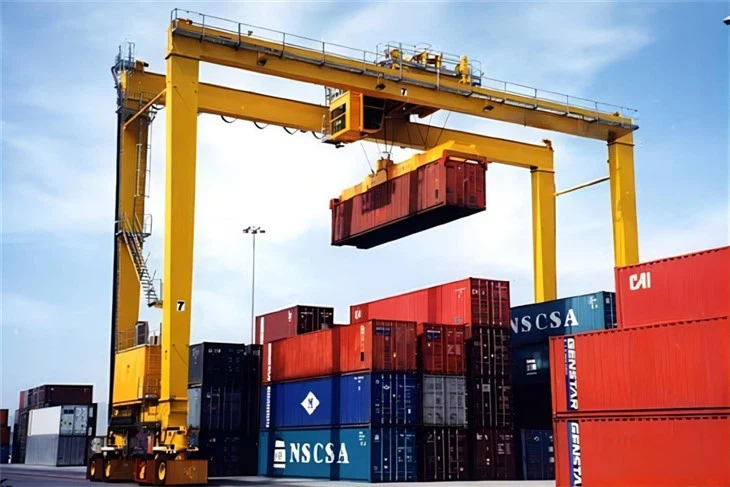


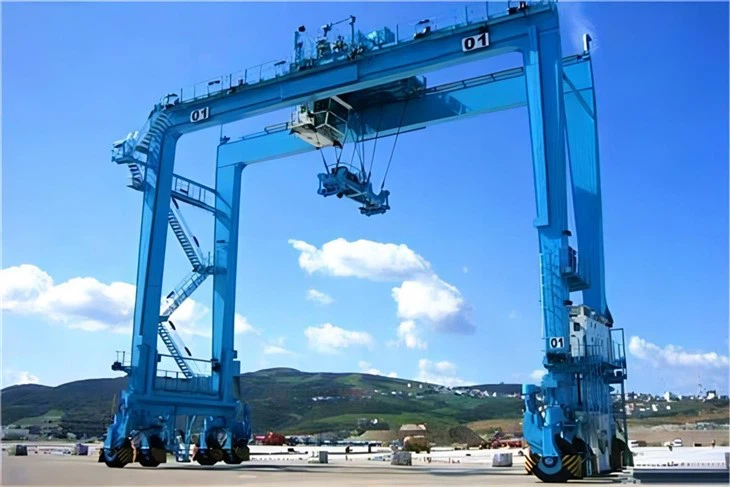
Rubber Tired Gantry Crane
A Rubber Tired Gantry Crane (RTG crane) is a type of mobile crane used in container terminals, intermodal yards, and other port facilities for handling shipping containers. It offers the flexibility and efficiency needed to move containers from ships to storage yards or vice versa. Here is a product introduction for a Rubber Tired Gantry Crane:
Key Features
● Mobility: Rubber Tired Gantry Cranes are mounted on rubber tires, allowing them to move freely within the container yard. They can easily navigate tight spaces and transport containers between stacks.
● High Capacity: RTG cranes are available in various configurations, with lifting capacities typically ranging from 30 to 65 tons. This makes them suitable for handling a wide range of container sizes and weights.
● Productivity: RTG cranes are known for their high productivity. They can efficiently load and unload containers from ships or trucks and stack them in the yard. Quick operation minimizes vessel turnaround time and enhances port efficiency.
● Electrification: Many modern RTG cranes are electrified, using electricity instead of diesel fuel for power. This reduces emissions, lowers operating costs, and provides a more environmentally friendly solution.
● Automation Ready: Rubber Tired Gantry Cranes can be equipped with automation systems for remote operation or full automation. This technology improves safety and optimizes operations.
● Adjustable Spreader: The spreader (the part that grips the containers) can be adjusted to handle different container sizes, including standard ISO containers and specialized containers like flat racks or open tops.
● Precision Control: RTG cranes are equipped with advanced control systems, ensuring precise positioning and smooth container handling.

Parts & Components
●Main Frame: The main frame is the structural backbone of the RTG crane. It supports all the other components and provides stability. It typically includes the gantry structure, legs, and the frame structure connecting the legs.
●Rubber Tires: The rubber tires are mounted on the crane's legs and are responsible for the crane's mobility. These tires allow the RTG crane to move horizontally within the container yard.
●Spreaders: The spreader is the attachment at the end of the crane's hoist cable that grips and lifts containers. It comes in various configurations to handle different container types, such as standard ISO containers, flat racks, and open tops.
● Hoist and Trolley Mechanism: This component consists of the hoist drum and trolley assembly, which raises and lowers the spreader. It's responsible for the vertical movement of containers.
●Power Systems:
■ Diesel Engine (for non-electric models): Some RTG cranes are powered by diesel engines, which provide the necessary energy for crane operation.
■ Electric Motors (for electric models): Electric RTG cranes use electric motors powered by a grid or other power source, making them more environmentally friendly and cost-efficient.
● Drive Systems: RTG cranes use a combination of electric motors, gearboxes, and drive wheels to move the crane horizontally. These components enable the crane to travel along the container rows.
● Control Cabin: The control cabin is where the crane operator is stationed. It is equipped with a control panel, instruments, and displays for monitoring and operating the crane.
● Electrical and Control Systems: These systems include sensors, controllers, and software that manage the crane's operations. They are responsible for precise positioning, load control, and safety features.
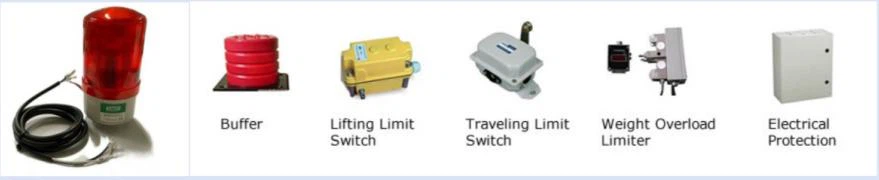
● Safety Features:
■ Anti-Collision Systems: These systems help prevent collisions between RTG cranes and other equipment in the yard.
■ Load Monitoring and Control: Sensors are used to monitor the load being lifted and ensure it stays within safe limits.
■ Emergency Stop Systems: These are crucial for immediate shutdown in case of any safety concerns.
● Braking System: RTG cranes are equipped with braking systems to ensure precise and safe stopping of the crane's movement.
● Lighting and Signaling Equipment: RTG cranes often have lighting and signaling equipment for safety and operational purposes. This can include signal lights, warning horns, and more.
● Wheels and Axles: The wheels and axles are crucial for the crane's mobility. They enable smooth movement along the container stacks and rows.
● Cable Reel System: This system manages the electrical and control cables, allowing them to be extended and retracted as the crane moves.
These are the essential parts and components that make up a Rubber Tired Gantry Crane. Depending on the manufacturer and specific model, there may be variations and additional features to enhance performance, safety, and efficiency

Sketch

Advantages
Rubber Tired Gantry Cranes (RTG cranes) offer several advantages that make them a popular choice for container handling operations in ports, container yards, and intermodal facilities. Here are some of the key advantages of RTG cranes:
● Mobility: Rubber Tired Gantry Cranes are mounted on rubber tires, which provide them with excellent mobility. They can move laterally along container rows and between stacks, making them highly adaptable to changing operational needs.
● Flexibility: RTG cranes can handle a variety of container sizes and types, including standard ISO containers, flat racks, open tops, and more. Their adjustable spreaders can accommodate different container dimensions.
● Productivity: These cranes are known for their high productivity. They can efficiently load and unload containers from ships and trucks, stack containers in the yard, and perform these tasks quickly, reducing vessel turnaround times and enhancing port efficiency.
● Space Efficiency: RTG cranes are ideal for ports with limited space. Their ability to stack containers in a compact and dense manner maximizes storage capacity in container yards.
● Quick Turnaround: The speed and efficiency of RTG crane operations help reduce vessel turnaround times, which is crucial in busy port environments.
● Environmental Friendliness: Many RTG cranes are electrified, using electricity as their power source instead of diesel fuel. This reduces emissions, making them more environmentally friendly and cost-effective in the long run.
● Automation Capability: RTG cranes can be equipped with automation systems, enabling remote operation and even full automation. Automation enhances safety and operational efficiency.
● Precise Positioning: RTG cranes are equipped with advanced control systems that ensure precise positioning of containers, minimizing the risk of accidents or damage.
● Cost Efficiency: Electrified RTG cranes generally have lower operating costs compared to diesel-powered models. Reduced fuel consumption and maintenance costs contribute to cost savings.
● Low Noise: Electric RTG cranes are quieter than diesel-powered alternatives, making them more suitable for areas with noise restrictions.
● Safety Features: RTG cranes are equipped with safety features, including anti-collision systems, load monitoring, and emergency stop mechanisms to ensure safe and reliable operations.

Application
Rubber Tired Gantry Cranes (RTG cranes) have a wide range of applications in the shipping and logistics industry due to their mobility, versatility, and efficiency. Some of the key applications of RTG cranes include:
● Container Terminals: RTG cranes are commonly used in container terminals to handle the loading and unloading of containers from ships. They efficiently move containers between ships, trucks, and container storage stacks, helping to expedite cargo operations.
● Intermodal Yards: RTG cranes are essential in intermodal facilities, where containers are transferred between different modes of transportation, such as ships, trains, and trucks. They play a crucial role in ensuring the smooth flow of goods between various transport systems.
● Container Depots: Container depots and storage yards utilize RTG cranes for stacking and organizing containers. They help maximize the use of available space and enable efficient container management.
●Logistics and Distribution Centers: Some large logistics and distribution centers use RTG cranes to manage containers and streamline the distribution process. These cranes help improve the speed and efficiency of cargo handling.
●Port and Harbor Operations: RTG cranes are integral to the operations of ports and harbors, where they facilitate the loading and unloading of cargo from ships. Their mobility and flexibility make them valuable in these busy waterfront environments.
● Inland Container Terminals: Inland container terminals located away from seaports also rely on RTG cranes to handle containers transferred by rail or road. RTG cranes ensure the smooth transition of containers between different modes of transport.
● Railway Freight Terminals: RTG cranes are used in railway freight terminals to load and unload containers from trains and stack them for storage or onward transportation.
● Dry Ports: Dry ports, which serve as inland extensions of seaports, often employ RTG cranes for container handling. These cranes help streamline cargo operations and reduce congestion at seaports.
● Automated Facilities: RTG cranes are increasingly being used in automated container handling facilities. Automation systems enable these cranes to operate without direct human intervention, improving safety and operational efficiency.

Production Procedure
The production procedure of Rubber Tired Gantry Cranes (RTG cranes) is a multi-step process that involves various stages, from design and manufacturing to assembly and testing. Here is an overview of the typical production procedure for RTG cranes:
● Design and Engineering: The production process begins with detailed design and engineering. This stage involves creating 3D models, structural analysis, and component selection to meet the specific requirements of the RTG crane, including capacity, span, and other technical parameters.
● Material Procurement: After the design phase, materials such as steel, electrical components, cables, tires, and other necessary parts are procured from suppliers.
● Steel Fabrication: The steel components, including the main frame, legs, and other structural elements, are cut, shaped, and welded according to the design specifications. This forms the main structural framework of the crane.
● Electrical and Control Systems Assembly: The electrical components, such as control panels, sensors, and cabling, are assembled and integrated into the crane. This includes the installation of motors, brakes, and other electrical systems.
● Tire Mounting: The rubber tires are mounted onto the crane's legs. These tires are an essential part of the crane's mobility.
● Spreader and Hoist Assembly: The hoist and spreader assembly, which is responsible for lifting and moving containers, is manufactured and integrated into the crane. This includes the installation of winches and hoist cables.
● Painting and Finishing: The crane's components and structural elements are painted to protect against corrosion and enhance aesthetics. This stage also includes adding safety markings and labels.
● Assembly and Integration: The various components, including the main frame, electrical systems, tires, and spreader, are assembled and integrated into the RTG crane's final structure.
● Precision assembly is crucial to ensure safe and reliable operation.
● Quality Control and Testing: Before the crane is ready for operation, it undergoes a series of quality control tests. These tests include load testing, functionality checks, and safety inspections to ensure that the crane meets design specifications and safety standards.
● Documentation and Certification: Necessary documentation, including user manuals and safety certificates, is prepared for the RTG crane. This documentation is essential for the safe and compliant operation of the crane.
● Delivery and Installation: Once the crane passes all quality control tests and receives necessary certifications, it is prepared for shipment to the customer's location. Installation teams may be dispatched to assemble and install the crane at the intended site.
● Training and Commissioning: Operators and maintenance personnel receive training on how to operate and maintain the RTG crane. The crane is commissioned and tested in its operational environment to ensure it functions correctly.

Workshop View


Hot Tags: rubber tired gantry crane, China rubber tired gantry crane manufacturers, suppliers, factory
Previous
Mobile Boat HoistYou Might Also Like


Send Inquiry