









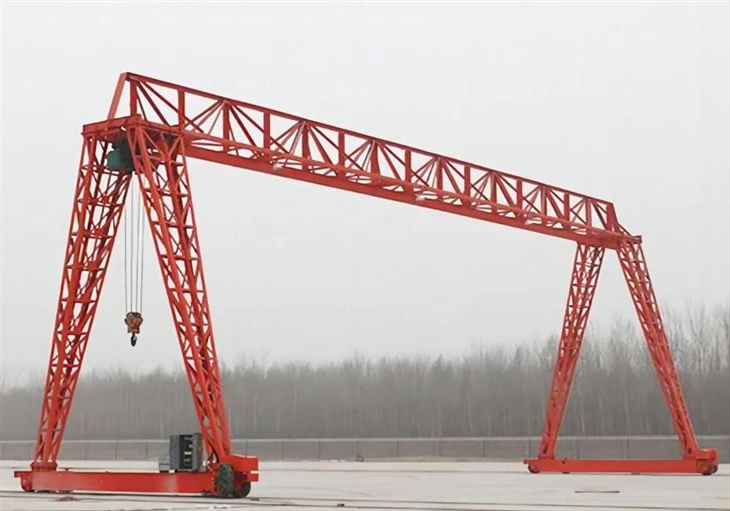
Gantry Crane For Bridge Construction
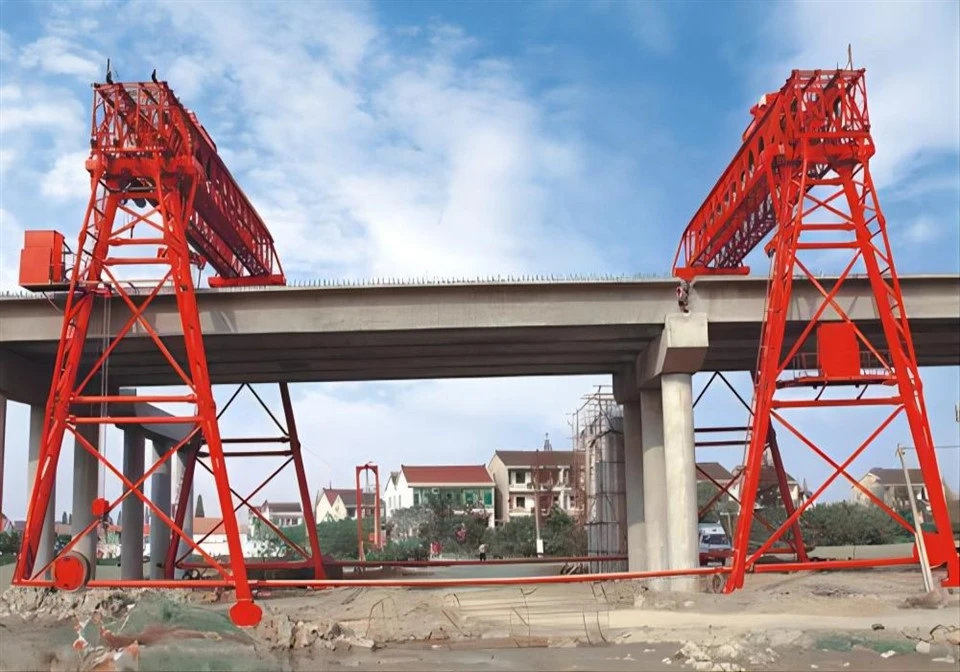
A gantry crane for bridge construction is a specialized piece of heavy machinery designed to assist in the construction and assembly of bridges. These cranes are essential for handling and positioning heavy bridge components such as girders, beams, segments, and other construction materials.
Key Features
● High Lifting Capacity: Our bridge construction gantry cranes are engineered to lift heavy loads, making them suitable for handling massive bridge components, even in challenging construction environments.
● Versatile Design: These gantry cranes come in various configurations, including single girder and double girder models, allowing you to choose the one that best suits your specific bridge construction needs.
● Precise Positioning: Equipped with advanced control systems and precision engineering, our gantry cranes offer precise load positioning and movement, ensuring accurate assembly of bridge segments.
● Mobility: Some models are designed with rubber tires or tracks, making them mobile and versatile on construction sites. This mobility enables the crane to be easily repositioned as needed.
● Safety: Safety is paramount in bridge construction. Our gantry cranes feature safety devices such as overload protection, emergency stop buttons, and anti-collision systems to ensure the well-being of both operators and the construction team.
● Remote Control: Some models can be operated remotely, allowing the operator to have a clear view of the work area and ensuring safe and efficient operation.
● Weather Resistance: Bridge construction often takes place in challenging weather conditions. Our gantry cranes are built to withstand various weather elements, ensuring reliable performance year-round.
● Ease of Maintenance: We understand the importance of minimizing downtime in construction projects. Our cranes are designed for ease of maintenance, with accessible components and user-friendly interfaces.
Technical Parameter

Pictures & Components
A gantry crane used in bridge construction consists of several key components that work together to lift, move, and position heavy bridge construction materials. Here are the primary components of a typical gantry crane for bridge construction:
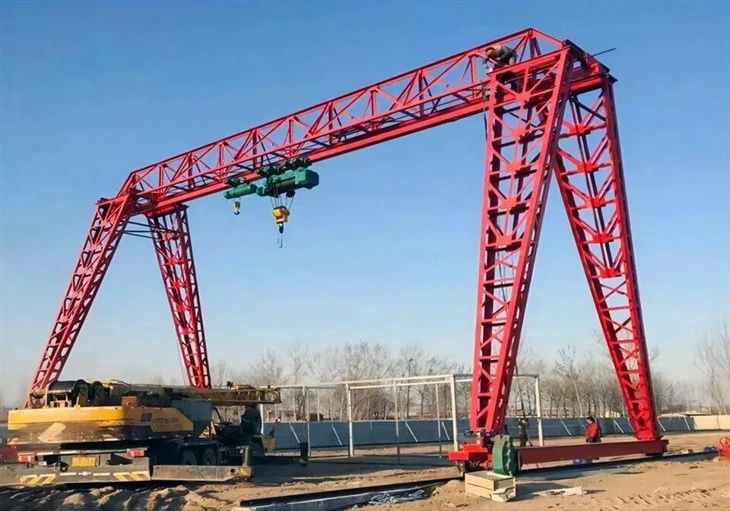
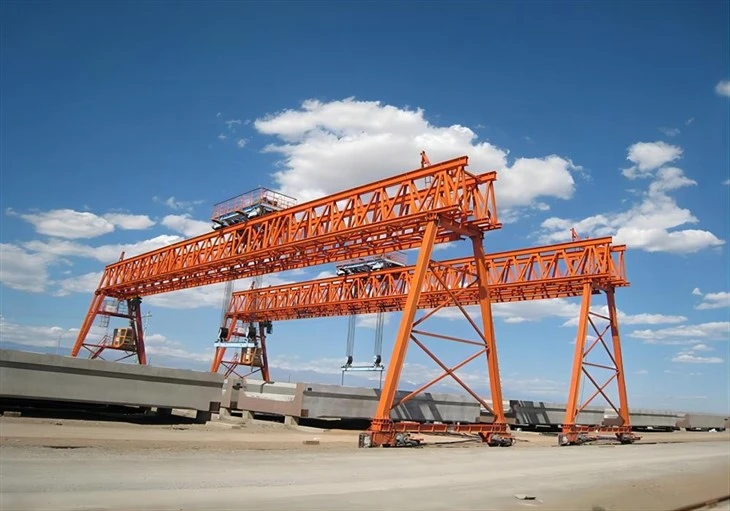
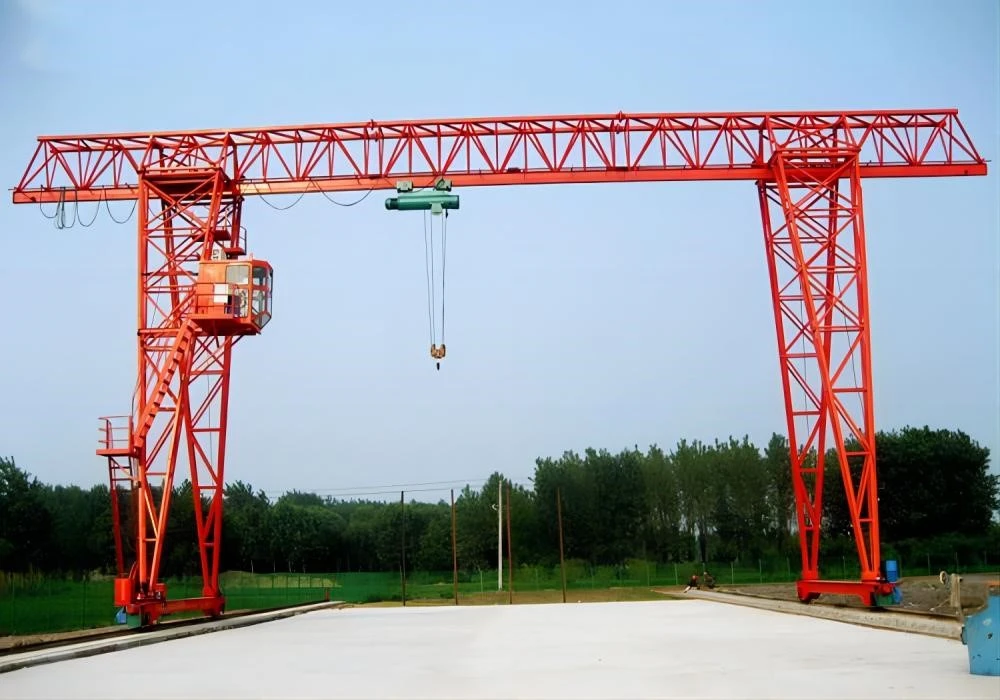
●Gantry Frame: The gantry frame is the main structure of the crane and provides the framework for the entire system. It typically consists of two vertical legs and a horizontal beam (single girder or double girder) that spans the gap between the legs. The gantry frame provides stability and support for the crane's operations.

● Lifting System: The lifting system of a gantry crane for bridge construction is a critical component responsible for hoisting and lowering heavy bridge construction materials. It consists of several key elements that work together to ensure safe and efficient lifting operations.
▄ Hoisting Mechanism: The hoisting mechanism includes the hoist motor, drum, and related components that control the lifting and lowering of the load. It is responsible for providing precise and controlled movement of the load
▄Hoist Motor: The hoist motor is an electric motor that provides the power needed to lift and lower loads. It is typically located near the top of the gantry crane's vertical legs or on the horizontal beam. The motor's power output is adjustable to accommodate varying load capacities.
▄Hoist Drum: The hoist drum is a cylindrical drum or spool around which the lifting cable or wire rope is wound. When the hoist motor turns the drum, it either raises or lowers the load, depending on the direction of rotation. The drum's size and design are determined by the crane's lifting capacity.
▄Wire Rope: The lifting cable or wire rope is attached to the hoist drum at one end and the lifting hook or other attachment point at the other end. It is the primary means of securing and lifting the bridge construction materials. These cables are made of high-strength steel and come in various diameters and configurations to match the crane's lifting capacity.
▄Lifting Hook or Attachment: The lifting hook or attachment is the device used to connect to the load being lifted. It is typically designed to securely hold the load and prevent it from slipping or falling during lifting. The hook can be equipped with safety latches or locking mechanisms for added security.
▄Brakes: Brakes are essential components of the hoist mechanism, and they provide controlled stopping and holding of the load. They engage when the hoist motor is not actively lifting or lowering a load, preventing unintended movement.

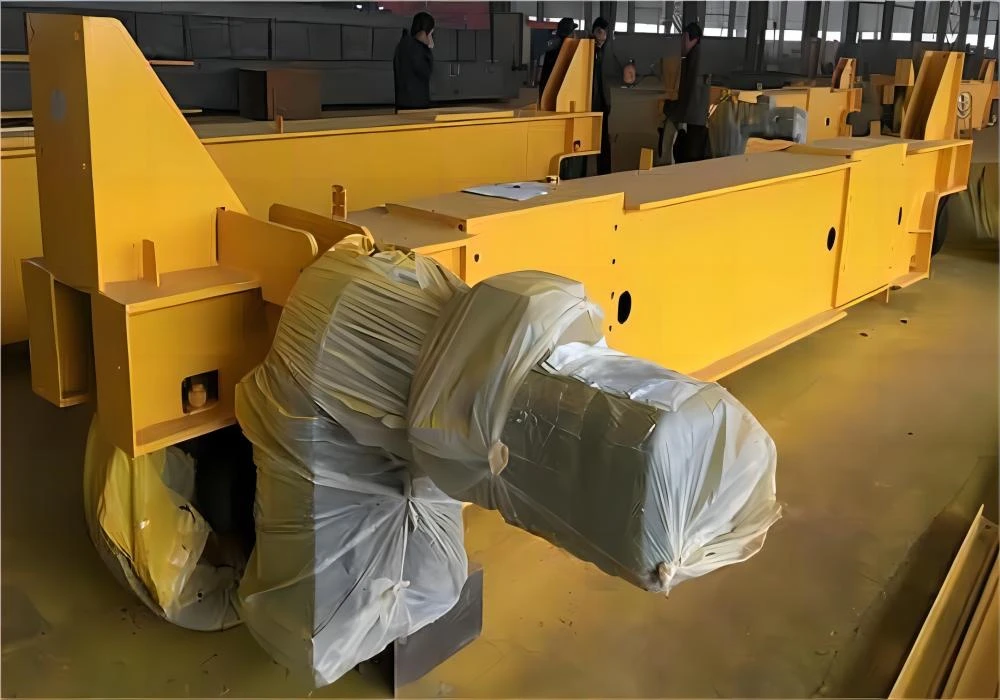
●Ground carriages: Also known as end trucks or trolley trucks, are essential components of a gantry crane used in bridge construction. They are responsible for supporting the crane's entire weight and facilitating its movement along the rails or tracks on the ground. Ground carriages play a crucial role in ensuring the crane's stability and mobility.
▄Wheel Assemblies: Ground carriages are equipped with wheel assemblies that make direct contact with the rails or tracks on the ground. These wheels are typically made of high-strength materials like steel to withstand heavy loads and ensure smooth movement. Some common types of wheels used include flanged wheels and V-groove wheels, depending on the design of the rails or tracks.
▄Drives and Motors: In some gantry crane designs, the ground carriages are motorized to enable self-propelled movement. Motors are connected to the wheel assemblies, allowing the crane operator to control the lateral movement of the crane along the rails or tracks. This motorization provides precise positioning and mobility.
▄Brakes: Brakes are integrated into the wheel assemblies to ensure that the gantry crane can stop and hold its position when required. These brakes can be engaged manually or automatically and are crucial for safety and precise load positioning.
▄Bearings and Axles: Ground carriages contain bearings and axles that allow the wheels to rotate smoothly. These components are designed to handle the crane's weight and any dynamic forces generated during crane movement.
▄Alignment and Tracking Systems: To ensure that the gantry crane moves in a straight and aligned path, alignment and tracking systems are often incorporated into the ground carriages. These systems help prevent derailment and maintain the crane's stability during travel.
▄Safety Features: Ground carriages, like other crane components, are equipped with safety features such as limit switches and anti-collision systems. These features help prevent accidents, protect the crane and its surroundings, and ensure safe operation on the construction site.
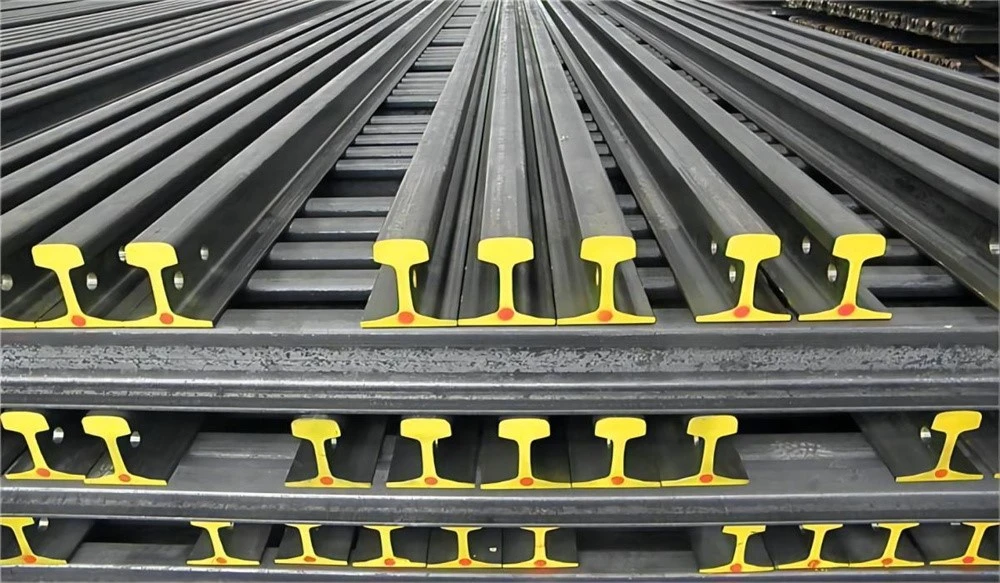
● Rails or Tracks: Rails or tracks are installed on the ground and serve as a guide for the movement of the gantry crane. The crane's end trucks move along these rails, enabling the crane to traverse the construction site and position itself where needed.
● Main Girder: The main girder, often referred to as the bridge girder or simply the girder, is a critical structural component of a gantry crane used in bridge construction. It plays a fundamental role in supporting the lifting mechanism and facilitating the movement of the crane along the span.
▄Girder Structure: The main girder is typically a horizontal, box-like or I-beam-shaped structure that spans the width between the two vertical legs of the gantry crane. It forms the upper frame of the crane and provides the primary support for the lifting mechanism.
▄Material: Main girders are constructed from high-strength materials, such as structural steel or specialized alloy steel, to ensure they can handle heavy loads and withstand the stresses imposed during bridge construction.
▄Girder Sections: Depending on the crane's design and lifting capacity, main girders may consist of one or more sections that are bolted or welded together. These sections are designed to distribute the load evenly and maintain structural integrity.
▄Cross Bracing: To enhance the girder's stability and rigidity, cross bracing may be incorporated into its design. These bracing components are positioned at various intervals along the length of the girder to prevent deformation and sway during lifting and movement.
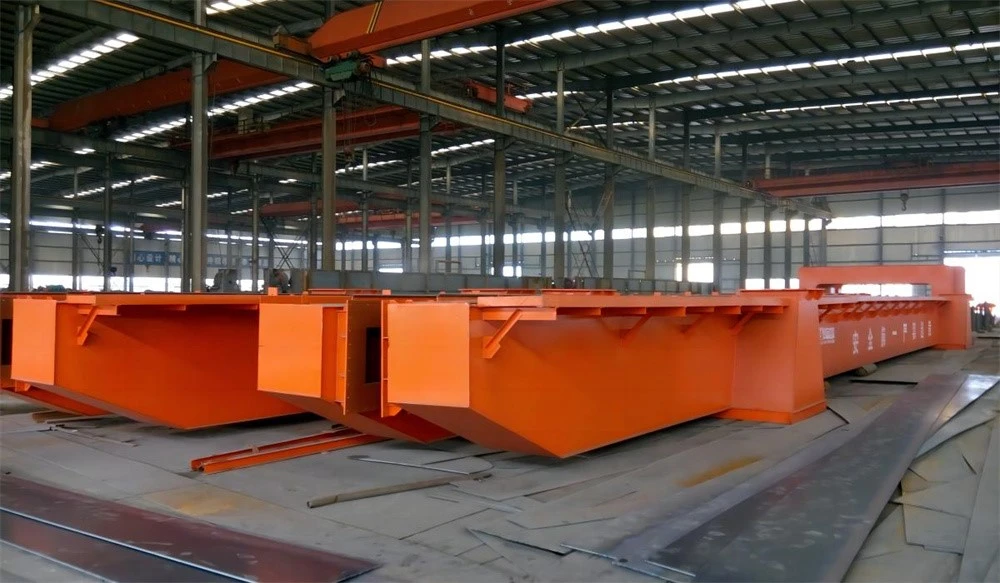
● The crane traveling mechanism of a gantry crane used in bridge construction is responsible for moving the entire crane along the rails or tracks on the ground. This mechanism enables the crane to traverse the construction site and position itself precisely where needed for lifting and assembly tasks.
▄ End Carriages: The end carriages are the wheeled or tracked assemblies that are attached to the ends of the main girder (horizontal beam) of the gantry crane. They support the weight of the crane and house the drive and control components necessary for movement.
▄ Wheels or Tracks: The end carriages are equipped with wheels or tracks that make contact with the rails or tracks laid on the ground. These wheels or tracks are designed to handle the crane's weight and ensure smooth movement along the specified path.
▄ Drive Motors: Typically, one or more drive motors are installed on each end carriage to provide the power needed to move the crane. These motors can be electric, hydraulic, or diesel-powered, depending on the crane's design and mobility requirements.
▄ Gearboxes and Transmission: Drive motors are connected to gearboxes and transmissions that control the speed and direction of the crane's movement. These components enable precise control during crane travel.
▄ Brakes: Brakes are integrated into the drive system to stop and hold the crane in place when necessary. These brakes are essential for safety and accurate positioning.
▄ Control System: The control system for the crane traveling mechanism includes the operator's controls, which allow the crane operator to move the crane forward, backward, left, and right. The control panel or cabin provides easy access to these controls.
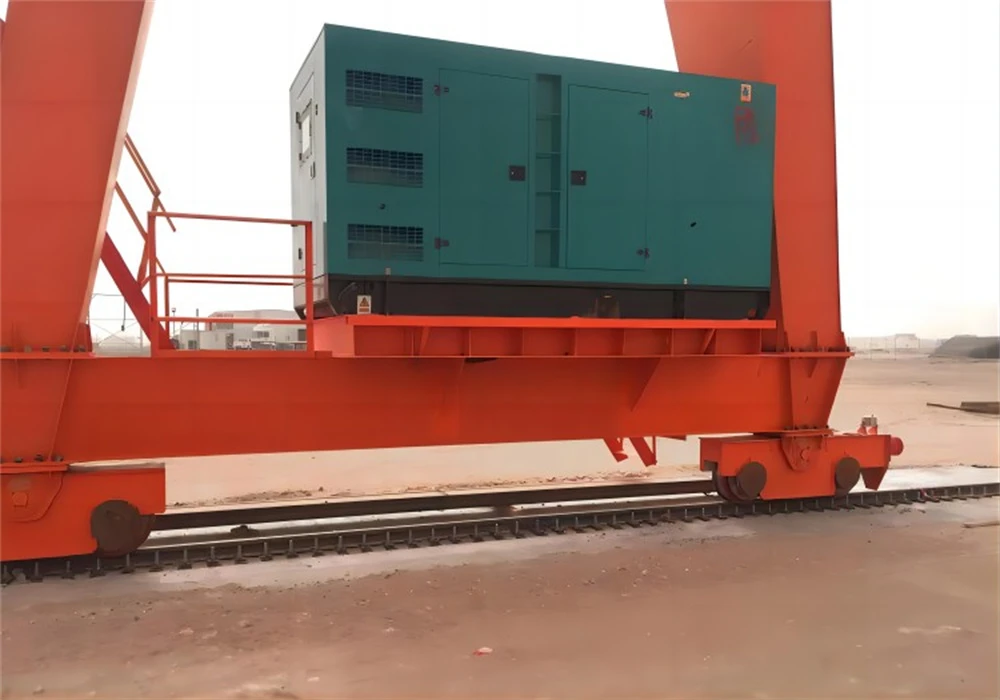
● Trolley Traversing Mechanism: The trolley traversing mechanism of a gantry crane used in bridge construction is responsible for moving the trolley along the main girder (horizontal beam) of the crane. This mechanism allows the trolley to position the lifting mechanism, such as the hoist and load block, precisely above the desired location for lifting or placing heavy bridge construction materials.
▄ Trolley Assembly: The trolley assembly is mounted on the main girder and houses the components needed for traversing along the girder. It typically consists of a frame, wheels or rollers, and drive components.
▄ Wheels or Rollers: The trolley is equipped with wheels or rollers that make contact with the bottom flange of the main girder. These wheels or rollers enable smooth and controlled movement along the length of the girder.
▄ Drive Mechanism: The drive mechanism is responsible for propelling the trolley along the girder. It is typically powered by an electric motor, which can be operated in both directions (forward and backward) to move the trolley to the desired position.
▄ Gearboxes and Transmission: Drive motors are connected to gearboxes and transmissions that control the speed and direction of the trolley's movement. These components provide precise control over the trolley's positioning.
▄ Brakes: Brakes are integrated into the trolley's drive system to stop and hold it in place when required. These brakes are crucial for safety and accurate positioning of the load.
▄ Control System: The control system for the trolley traversing mechanism includes the operator's controls, which allow the crane operator to move the trolley along the main girder. The control panel or cabin provides easy access to these controls.
▄ Limit Switches: Limit switches are installed on the trolley to prevent over-travel and ensure that the trolley does not move beyond the designated limits along the main girder. This prevents the trolley from reaching the end of the girder or colliding with the crane's structural components.
▄ Safety Features: The trolley traversing mechanism is equipped with various safety features to protect both the crane and its surroundings. These features may include emergency stop buttons, anti-collision systems to avoid collisions with obstacles, and warning alarms.
▄ Remote Control (Optional): Some gantry cranes offer remote control options for trolley movement, allowing operators to precisely position loads from a safe distance.
● Crane Wheel: The crane wheels are integral components of a gantry crane used in bridge construction. These wheels play a crucial role in supporting the crane's weight and facilitating its movement along the rails or tracks on the ground.
▄ Wheel Design: Crane wheels are typically designed with a flanged or V-groove profile, depending on the type of rails or tracks they run on. The design ensures that the wheels maintain contact with the rails and provide stability during crane movement.
▄ Material: Crane wheels are constructed from high-strength materials such as steel or specialized alloys. The choice of material depends on factors such as the crane's load capacity and the type of surface they will traverse.
▄ Bearings: Wheel assemblies are equipped with high-quality bearings that allow the wheels to rotate smoothly. These bearings are designed to withstand the crane's weight and the dynamic forces generated during movement.
▄ Axles: Axles are responsible for connecting the wheels to the wheel assembly or end carriage. They play a crucial role in ensuring that the wheels are properly aligned and securely attached.
▄ Wheel Alignment: Proper wheel alignment is essential to maintain the crane's stability and prevent derailment. The wheel assemblies may be equipped with alignment systems that help ensure the wheels remain on the rails or tracks.
▄ Brakes: Brakes are integrated into the wheel assemblies to allow for controlled stopping and holding of the crane when necessary. These brakes are crucial for safety and accurate positioning of the crane.
▄ Safety Features: The crane wheels may include safety features such as anti-derailment devices that help prevent the crane from accidentally leaving the tracks or rails. These features enhance the safety of crane operations.
▄ Load Distribution: The crane wheels are designed to evenly distribute the crane's weight across multiple wheels and axles. This distribution is critical for maintaining stability, especially when lifting and moving heavy loads.

● Crane hook: The crane hook is an essential component of a gantry crane used in bridge construction, responsible for attaching to and lifting heavy bridge construction materials such as girders, beams, and segments. The design and construction of the crane hook are critical to ensure safe and efficient lifting operations.
▄ Hook Assembly: The crane hook assembly typically consists of a main hook, which is the primary lifting point, and often a secondary safety latch or latchlock. The main hook is designed to securely engage with the load, while the latch or latchlock helps prevent accidental unhooking of the load during lifting.
▄ Material: Crane hooks are usually made from high-strength steel or alloy materials, ensuring they can withstand heavy loads without deformation or failure. The material choice depends on the crane's lifting capacity and the specific application.
▄ Load Ratings: Crane hooks are rated for specific load capacities, which are clearly marked or labeled on the hook. These ratings provide information on the maximum weight the hook can safely lift.
▄ Throat Opening: The throat opening of the crane hook is the space between the inside edge of the hook and the tip of the latch or latchlock. It should be designed to accommodate the intended load attachment, such as slings, shackles, or other lifting devices.
▄ Latch or Latchlock: Many crane hooks are equipped with a latch or latchlock mechanism to prevent the load from accidentally coming off the hook during lifting. The latch or latchlock can be manually operated and often automatically engages when the load is lifted.
▄ Safety Features: Crane hooks are designed with safety in mind and may include additional features such as a swivel mechanism that allows the load to rotate while suspended or a built-in overload protection system that triggers an alarm if the load exceeds the hook's rated capacity.

● Motor: The motor is a vital component of a gantry crane used in bridge construction, as it provides the power needed to operate various mechanisms and functions of the crane. Motors used in gantry cranes are typically electric motors, and they serve different purposes within the crane's system.
▄ Hoist Motor: The hoist motor is responsible for lifting and lowering heavy bridge construction materials, such as girders, beams, and segments. It is directly connected to the hoist mechanism, which winds and unwinds the lifting cable or wire rope around a drum to raise and lower the load. Hoist motors are designed for high torque and precision control to ensure safe and accurate lifting operations.
▄ Trolley Motor: The trolley motor powers the trolley's movement along the main girder of the gantry crane. It allows the crane operator to position the lifting mechanism, such as the hoist and load block, accurately above the desired location for lifting or placing heavy bridge components. Trolley motors provide controlled lateral travel along the girder.
▄ Crane Travel Motor: Some gantry cranes are equipped with motorized end carriages or wheels that enable self-propelled crane movement along the rails or tracks on the ground. The crane travel motor powers these wheels, allowing the crane to traverse the construction site and position itself as needed for lifting and assembly tasks.
▄ Drive Motors (Optional): In certain configurations, gantry cranes may have additional drive motors on specific wheels or assemblies, turning them into drive wheels. These motors provide extra propulsion and control for precise positioning and maneuverability, especially in complex construction environments.

●Sound and light alarm system & limit switch & safety parts
▄ Sound and Light Alarm System: Sound and light alarm systems are designed to provide visual and audible warnings to crane operators, ground personnel, and other workers in the vicinity of the crane. These alarms alert individuals to potentially hazardous situations and prompt them to take appropriate actions. The alarm system can be triggered by various events, such as crane movement, approaching load limits, or specific conditions that require attention. The key components of a sound and light alarm system include:
▄Limit Switches:Limit switches are safety devices that are strategically placed on the crane to define safe operating limits. They are often positioned at the ends of the crane's travel path to prevent the crane from moving beyond these limits. Limit switches help prevent collisions, overtravel, and other unsafe situations. When the crane reaches the limit of its travel, the limit switch triggers the crane's controls to stop or reverse its movement. Limit switches can be used for both trolley and traveling motions.
▄Safety Parts:Various safety parts and mechanisms are employed in gantry crane systems to ensure safe operation. These components are designed to prevent accidents, minimize risks, and protect personnel and equipment. Examples of safety parts include:

●Control Mode: The control mode of a gantry crane used in bridge construction refers to the method and system used to operate and control the various crane functions, including lifting, trolley movement, and crane travel. The choice of control mode depends on factors such as the crane's complexity, the required precision of movements, and the operator's preferences.
▄ Control Mode: The control mode of a gantry crane used in bridge construction refers to the method and system used to operate and control the various crane functions, including lifting, trolley movement, and crane travel. The choice of control mode depends on factors such as the crane's complexity, the required precision of movements, and the operator's preferences.
▄ Cab-Controlled (Master-Slave Control): In this control mode, the gantry crane is typically equipped with an operator's cabin or control panel located on the crane itself. The crane operator sits in the cabin or stands at the control panel and operates the crane using a combination of joysticks, buttons, and switches. Cab-controlled cranes provide the operator with a close-up view of the work area and offer precise control over crane movements. This control mode is commonly used for larger and more complex gantry cranes.
▄ Remote Control: Some gantry cranes are equipped with radio remote control systems that allow the operator to control the crane from a distance. The operator carries a portable remote control device, which communicates wirelessly with the crane's control system. Radio remote control offers flexibility and safety, particularly when positioning loads in challenging or hazardous areas. It is often used for bridge construction projects where the operator needs a clear view of the entire construction site.
▄ Cabin-Controlled with CCTV: This control mode combines the benefits of a cabin-controlled crane with the addition of closed-circuit television (CCTV) cameras. The operator's cabin is equipped with cameras that provide real-time video feeds of the work area, allowing the operator to monitor and control crane movements with an enhanced view. This is especially useful when the operator's line of sight is obstructed or when working in confined spaces.
▄ Semi-Automatic Control: In semi-automatic control mode, the crane operator may use pre-programmed settings and automation features to perform repetitive tasks or movements. This mode can improve efficiency and consistency in tasks like lifting and placing pre-fabricated bridge components.
▄ Programmable Logic Controller (PLC) Control: Advanced gantry cranes may incorporate PLC-based control systems, which allow for precise automation and sequencing of crane movements. PLC control is highly customizable and can be programmed to perform complex tasks with minimal operator input.

Sketch
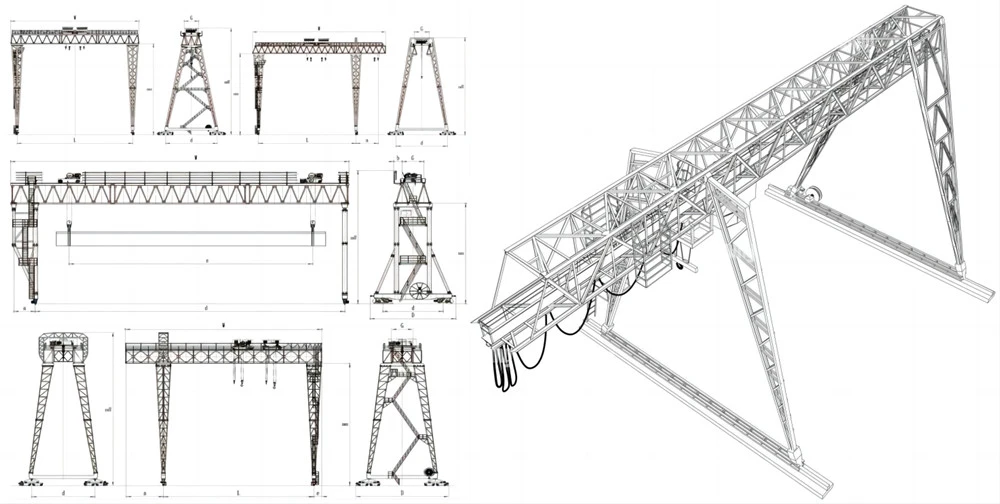
Main Technical Parameter
|
Item |
Value |
|||
|
Capacity (t) |
15 |
20 |
32 |
50 |
|
Span S (m) |
5-35 |
10.5-45 |
10.5-45 |
10.5-45 |
|
Lifting height (m) |
6-18 |
6~18 |
6~18 |
6~18 |
|
Lifting speed (m/min) |
9.6 |
7.2 |
6 |
6 |
|
Trolley Speed (m/min) |
44.1 |
44.1 |
42.4 |
38.5 |
|
Crane speed (m/min) |
40.1 |
40.1 |
38 |
44 |
|
Work duty |
A5-A6 |
A5-A6 |
A5~A6 |
A5~A6 |
|
Track type |
P38 P43 |
P43 |
QU70 |
QU80 |
Advantages
Gantry cranes offer several advantages when used for bridge construction projects. These advantages make them a popular choice for lifting and positioning heavy bridge components. Here are some of the key advantages of using gantry cranes in bridge construction:
● Versatility: Gantry cranes are versatile and can be used for a wide range of bridge construction tasks, from lifting and placing bridge girders to assembling precast concrete segments. They are adaptable to various project requirements and bridge designs.
● High Load Capacity: Gantry cranes are capable of lifting extremely heavy loads, making them suitable for handling large and bulky bridge components such as steel girders, concrete segments, and bridge decks.
● Precise Positioning: Gantry cranes offer precise control over load positioning. This precision is crucial when aligning and connecting bridge components, ensuring that they fit together accurately.
● Flexibility: Gantry cranes can be easily moved along rails or tracks on the ground, allowing them to position loads at different points along the construction site. This mobility is valuable for efficient project management.
● Safety: Gantry cranes are equipped with various safety features, including overload protection, limit switches, anti-collision systems, and emergency stop buttons, ensuring safe crane operations and protecting personnel and equipment.
● Remote Control: Many modern gantry cranes can be operated remotely, allowing the crane operator to control movements from a safe distance. Remote control enhances safety, especially in challenging or hazardous work environments.
● Efficiency: Gantry cranes are efficient in terms of load handling and placement. Their ability to move loads quickly and precisely can significantly reduce construction time, leading to cost savings.
● Reduced Labor: The use of gantry cranes can reduce the need for manual labor in heavy lifting tasks, minimizing the risk of worker injuries and fatigue.
● Cost-Effective: Gantry cranes are cost-effective when it comes to handling large and heavy bridge components. Their efficiency and load capacity often result in a quicker return on investment.
● Customization: Gantry cranes can be customized to meet the specific requirements of different bridge construction projects, including variations in load capacity, span width, and control systems.

Application
Gantry cranes play a crucial role in various aspects of bridge construction projects, thanks to their versatility and capacity for heavy lifting. Here are some of the key applications of gantry cranes in bridge construction:
● Lifting and Positioning Bridge Girders: Gantry cranes are commonly used to lift and precisely position bridge girders. They can transport these massive components from storage areas to the bridge construction site and accurately set them in place, ensuring proper alignment and fit.
● Handling Precast Concrete Segments: Many bridge construction projects use precast concrete segments for bridge deck construction.
● Gantry cranes are employed to lift and place these segments, creating a secure and consistent bridge deck.
● Setting Bridge Beams: Gantry cranes are ideal for setting bridge beams, including steel I-beams and concrete beams. They can position the beams with precision, ensuring they align correctly with the bridge's support structures.
● Assembling Bridge Deck Sections: Gantry cranes can be used to assemble individual sections of a bridge deck, particularly for cable-stayed and suspension bridges. They can lift and place prefabricated sections, helping to form the bridge deck's continuous structure.
● Positioning Bridge Piers and Abutments: Gantry cranes can lift and place bridge piers and abutments. This is crucial in the early stages of bridge construction, as it establishes the foundation for the entire bridge structure.
● Bridge Demolition: Gantry cranes are employed in bridge demolition projects to remove old or damaged bridge components. They can safely and efficiently dismantle and transport debris away from the construction site.
● Installing Bridge Bearings: Gantry cranes are used to position and install bridge bearings, which allow for controlled movement and expansion of bridge components due to temperature changes and structural loads.
● Maintenance and Repairs: Gantry cranes can assist with routine maintenance and repair work on bridges. They can transport workers and equipment to various parts of the bridge, facilitating inspections and repairs.
● Setting Bridge Expansion Joints: Gantry cranes can handle the installation of expansion joints on bridge structures, ensuring that they function correctly to accommodate temperature-related expansion and contraction.
● Bridge Cable Installation: For cable-stayed bridges, gantry cranes play a key role in the installation and tensioning of bridge cables. They can handle the complex task of precisely positioning and tensioning the cables that support the bridge's deck.

Production Procedure
The production procedure of a gantry crane for bridge construction involves several stages, from design and manufacturing to assembly, testing, and quality control. Here is an overview of the typical production procedure for a gantry crane used in bridge construction:
● Design and Engineering:
■ Preliminary Design: Engineers and designers work closely with the customer to determine the crane's specifications, including load capacity, span, and mobility requirements.
■ Detailed Design: Once the specifications are established, detailed engineering drawings and plans are created, including the structural design of the main girder, trolley, end carriages, and lifting mechanisms.
■ Control System Design: The control system is designed to ensure precise and safe operation, including the selection of motors, electrical components, and safety features.
● Material Procurement:
■ Materials Selection: High-quality materials, such as steel for the main girder and critical components, are selected based on design specifications.
■ Component Procurement: Components such as motors, wheels, bearings, and electrical systems are sourced from trusted suppliers.
● Manufacturing:
■ Cutting and Shaping: Steel materials are cut and shaped according to the design specifications.
■ Welding: Skilled welders assemble the main girder, end carriages, and other structural components through welding processes.
■ Machining: Precision machining is performed on critical components to ensure they meet design tolerances.
■ Painting or Coating: Steel components are treated with protective coatings, such as paint or galvanization, to enhance durability and corrosion resistance.
●Assembly:
■ Main Girder Assembly: The main girder is assembled, and cross bracing is added to enhance stability and strength.
■ End Carriage Installation: End carriages are attached to the main girder, and wheels or tracks are installed.
■ Trolley and Lifting Mechanism: The trolley assembly, including the hoist and load block, is installed and connected to the main girder.
●Electrical and Control System Installation:
■ Electrical Wiring: Electrical components, including cables, sensors, and controls, are installed and connected.
■ Control Panel: The operator's control panel or cabin is installed, and control systems are integrated.
●Quality Control and Testing:
■ Functional Testing: The crane undergoes comprehensive functional testing to ensure all systems work as designed. This includes load testing, speed control, safety features, and emergency stop tests.
■ Alignment and Calibration: The crane's alignment is checked to ensure smooth and precise movements.
■ Safety Checks: All safety features, including limit switches, overload protection, and emergency stop systems, are tested.
●Documentation and Certification:
■ Documentation: Technical manuals, operation manuals, and maintenance guides are prepared.
■ Certification: The crane is certified by regulatory authorities to ensure it meets safety and performance standards.
●Delivery and Installation:
■ The completed gantry crane is disassembled, transported to the construction site, and reassembled.
■ Commissioning: On-site commissioning is performed to verify the crane's proper operation and alignment.
●Training:
■Operators and maintenance personnel receive training on how to safely and effectively operate and maintain the gantry crane.

Workshop View
The company has installed an intelligent equipment management platform, and has installed 310 sets (sets) of handling and welding robots. After the completion of the plan, there will be more than 500 sets (sets), and the equipment networking rate will reach 95%. 32 welding lines have been put into use, 50 are planned to be installed, and the automation rate of the entire product line has reached 85%.


Hot Tags: gantry crane for bridge construction, China gantry crane for bridge construction manufacturers, suppliers, factory
Next
No InformationYou Might Also Like


Send Inquiry