






Train Wheels
1) Our train wheel products are designed to provide reliable and long-lasting performance for rail operators and railway systems. Whether you're looking for standard or custom solutions, we offer a diverse range of train wheels that are optimized for different types of rail applications.
2) Our products are made with high-quality materials and advanced manufacturing processes to ensure exceptional durability and safety. With a focus on innovation, we continually strive to develop new products that meet the evolving needs of the rail industry.
3) Whether you need new train wheels or replacement parts, we have you covered. Our team of experts are always on hand to help you find the right product for your specific needs and provide you with exceptional customer service.
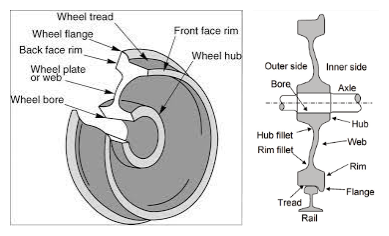
4) The high quality wheel set is made of 45# steel die forging, roughing, conditioning and finishing. The hardness of heat treatment is HB305 ~ 385, and the hardness of hardening layer at 18mm depth is not less than HB250. The wheel shaft is made of 45# steel, which is roughed, tempered and finished. The hardness of heat treatment is 250 ~ 280HB.

Material:
A) Carbon steel: A350LF2, A105, Q235, Q355D, A694F52, A516-GR65, EN10222, P280GH, P245GH, P250GH, JIS S25C, SS400, S20C, 16Mn, C22.8, Q345B/C/D, 1055, 1045, C50, C45, 10#, 20#, 35#, 45#, 40#, 50#, 55#, 60# and other carbon steel forgings.
B) Stainless steel: ASTM, A182, F304/304L, F316/316L, F316H, F310, F321, JB4728-2000, OCR18Ni10Ti, JB4728-2000, OCR17NI12Mo2, 2205, 2507, 2103, 904L, 254SMD, 304LN , 316LN, 1CR13, 2cr13, 3cr13, 4cr13, 321, 302, W1813N, W2014N, W2018N, W2020N, P550, Cr18Mn18N, 06Cr19Ni10(S30408), 022Cr19Ni10(S30403), 06Cr17Ni12Mo2(S31608), 022Cr17Ni 12Mo2(S31603), 06Cr25Ni20(S31008), 06Cr18Ni11Ti(S32168), 022Cr19Ni13Mo (S31703), 0Cr17Ni4Cu4Nb, 06Cr19Ni10N, 14Cr17Ni2, 13Cr13Mo, 06Cr13 and other stainless steel forgings.
C) Alloy steel: 40Cr, 15CrMo, 20CrMo, 25CrMo, 30CrMo, 35CrMo, 35CrMoV, 42CrMo, 20Cr2Ni4, 20CrNiMo, 40CrNiMo, 30Cr2Ni2Mo, 35CrMoV, 12Cr1MoV, 38CrMoAl, 18Cr2Nio4W, 40CrNi2Mo, 30CrMnSi, 25Cr2MoV, 17 Cr2Ni2Mo, 20MnMo, 20MnMoNb, 34CrNi3Mo, 20CrMnTi , 40CrMnMo, 30Cr2Ni2Mo, 34CrMo1, 20CrMnMo, 24CrMoV, 30Cr2MoV, 34CrNi1Mo, 17Cr2Ni2Mo, 34CrNi3MoV, 20CrMnTi, A182F1, F5, F9, F11, F22, 12Cr2Mo1, 10Cr9Mo1VNbN (F91), 10Cr9Mo W2VNbBN (F92), 12CrMoV, 4140, 4340, 4330 , 4130, 4150, 9CR2MO, 17NiCrMo6-4, 18CrNiMo7-6, 30CrNiMo8, 34CRNIMO, 34CrNiMo6, 36CrNiMo4, 34CrNi3Mo, 40CRNIMO, 40CrNiMoA, 50CrMo4, Q345D, 300M, 17-4PH, PH13-8Mo, 15-5PH, AerMet 100 and other alloys steel forgings.
- Diameter: Φ250, Φ350, Φ400, Φ500, Φ600, Φ700, Φ800, Φ 1000, Φ 1200 or as your requirement
- Technique: Casting or forging
- Quenching Depth: more than 25mm
- Heat Treatment: Quenching and tempering
- Work environment temperature: -25℃~+40℃, relative humidity ≤85%
- Reference Price Range: $80-1000/piece
- Rated Loading Capacity: 1~1200 ton
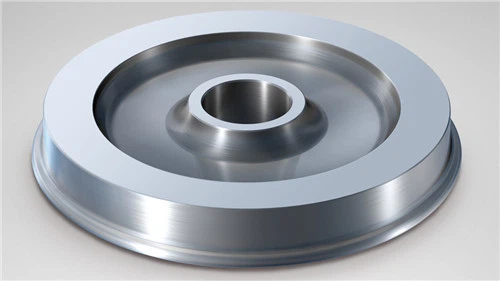
Sketch
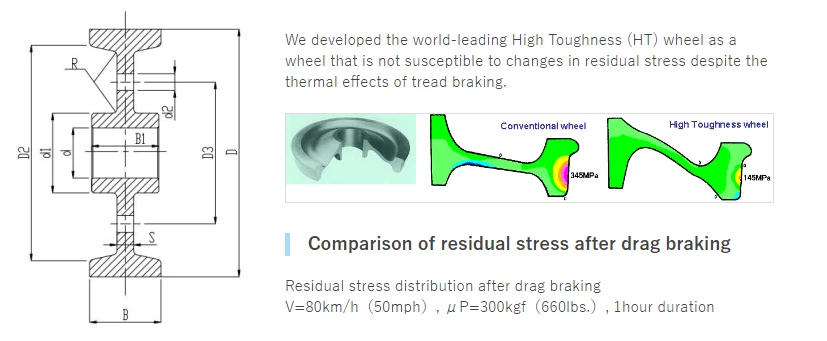
Advantages
1. Stability: Train wheels provide stability and balance to the train, reducing the chances of derailment.
2. Smooth ride: Train wheels are designed to reduce friction and provide a smoother ride for passengers and cargo.
3. Durability: Train wheels are made of sturdy materials like steel or cast iron, making them resistant to wear and tear.
4. Low Maintenance: Train wheels require minimal maintenance and can last for years without needing replacement.
5. Versatility: Train wheels can be used on various terrains, including uneven tracks and high-speed lines.
6. Cost-effective: Train wheels are cost-effective and efficient in transporting large quantities of goods across the country.
7. Safe: Train wheels provide a secure and safe means of transportation, reducing the risk of accidents and injuries.
Application
Forged train wheels are one of the essential components of the railway industry. They are used in various applications, including:
1. Passenger Trains: Forged train wheels are widely used in passenger trains as they require high-performance and are subjected to extreme conditions. They provide stability and reduce the risk of derailment, ensuring a safe and comfortable ride for passengers.
2. Freight Trains: Freight trains carry heavy loads and travel long distances, making them prone to wear and tear. Forged train wheels provide the necessary strength and durability to withstand the weight of the cargo and reduce maintenance costs.
3. High-Speed Trains: High-speed trains require superior quality wheels that can withstand high speeds, vibrations, and temperature changes. Forged train wheels offer these features and guarantee a smooth and safe ride for passengers.
4. Metro and Light Rail: Forged train wheels are also used in metro and light rail systems, providing high-quality wheels that are resistant to wear and have a longer lifespan. These wheels are designed to handle the constant starting and stopping required by these systems.
5. Industrial Applications: Forged train wheels are also used in various industrial applications such as cranes, mining equipment, and heavy machinery. They are ideal for high load-bearing applications that require superior strength and durability.
In conclusion, forged train wheels are critical components of the railway industry, offering superior quality, reliability, and durability. They are used in various applications and provide a safe and comfortable ride for both passengers and cargo.


Production Procedure
The production procedure of forged train wheels involves a series of processes that aim to create high-quality and durable wheels for trains. The following are the steps in the production procedure of forged train wheels:
1. Raw material preparation: The primary material used to make train wheels is steel. The steel is first melted in a furnace and then formed into billets.
2. Forging: The billets are heated and shaped into rough wheel blanks using a forging process. The blanks are then quenched and tempered to increase their strength and durability.

3. Machining: The rough blanks are then cut and machined to precise dimensions according to the specific requirements of the train manufacturer.

4. Heat treatment: The machined blanks are heated and then rapidly cooled to increase their hardness and durability.

5. Finishing: The finished wheels are cleaned, inspected for defects and polished to a smooth finish.

6. Quality control: Each finished wheel is tested for strength, durability and other performance criteria to ensure that it meets industry standards and specifications.

7. Delivery: The completed train wheels are loaded onto trucks, trains or ships and delivered to train manufacturers where they are installed on new trains or used to replace worn-out wheels on existing trains.


Workshop View
The company has installed an intelligent equipment management platform, and has installed 310 sets (sets) of handling and welding robots. After the completion of the plan, there will be more than 500 sets (sets), and the equipment networking rate will reach 95%. 32 welding lines have been put into use, 50 are planned to be installed, and the automation rate of the entire product line has reached.


Hot Tags: train wheels, China train wheels manufacturers, suppliers, factory, Crane Parts, Forged Train Wheels, Train Wheels, Forged Wheel, Forged Crane Wheels, Wheels
Previous
Forged Train WheelsYou Might Also Like


Send Inquiry